去非洲的想法应该有十多年了。一直没有成行是因为感觉非洲旅行一定很艰苦困难而且不安全,所以一直没有去规划。当贝版发出旅行消息时,我立即报名了,我想他们一定做了很多的调查和规划。太太很支持,一是疫情期间我一直没有出去旅行,二是趁旅行和贝版还有其他俱乐部成员好好交流,学习他们在各个行业和投资上的成功之道。贝版的《会走路的钱》很多人都读过。
准备
虽然旅行社说在坦桑尼亚旅行很安全,我还是不放心,因为我的邻居Elena说十多年前她去的时候被拦路抢劫过。尽管临行前两位好朋友都告诉我如果需要联系非洲当地政府,可以随时通知她们,我还是不放心,做了些调查,买来了 Garmin InReach Mini 2 卫星通讯器和 Fenix 7 智能手表。首先,卫星通讯器只需要交$15月费就可以在全球任何地方发简短的电话短信或电邮。InReach 和 Fenix 7 都有能在1-2秒钟内锁定全球十几个卫星定位的功能,如果手机没电或没有信号,可以依靠他们导航,两个设备的电池续航都在2周左右。危险的时候,可以直接按 SOS 来呼叫救援,直升飞机救援一般费用在两千美元左右,如果买每年30美金的保险则可在北美地区呼叫免费救援。为保障安全,这两个投资很值得,尤其去人生地不熟的非洲,平时各地游玩也都可以用,西雅图地区森林多,平时出去玩都可以随时带上确保安全。卫星通讯器可以预设一些免费信息方便快速发送,比如:“我被绑架,卫星定位位置是 … …“ “我受伤了,定位是 “ ”今晚在这里住“,”这个地点值得来“ 等等。 有备无患,功能强大。
到达
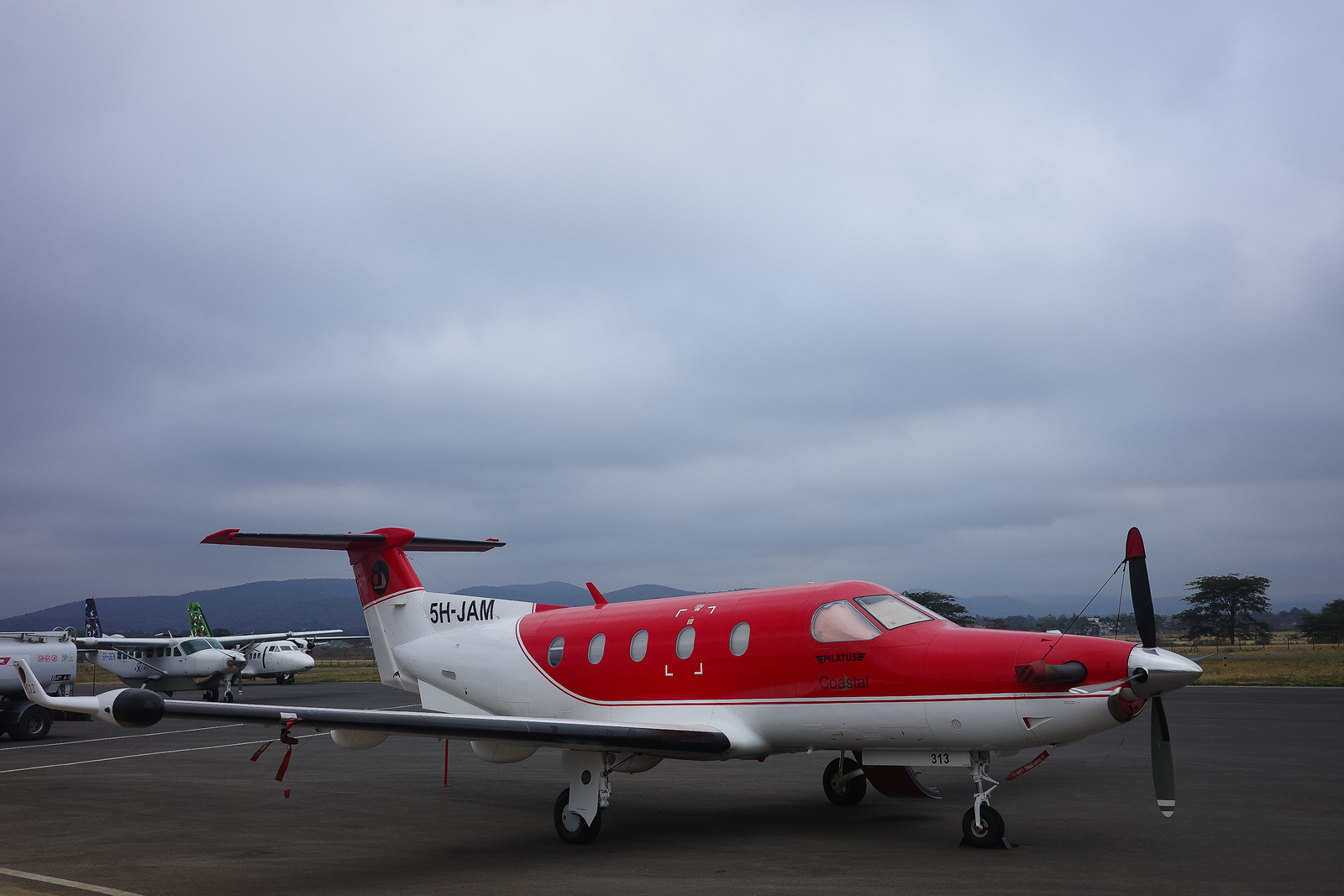
8月19日,经过24小时的颠簸(两程共20小时飞机-洛杉矶到阿姆斯特丹,然后到坦桑尼亚),我们到达了坦桑尼亚 JRO 机场。出关非常快捷,签证是出发前提前两周网上申请的,几分钟就出了关。在出口处,看到的全是当地的黑人,让人感觉到了另外一个世界。机场非常小,但也叫国际机场,来非洲旅行的人还是很多。
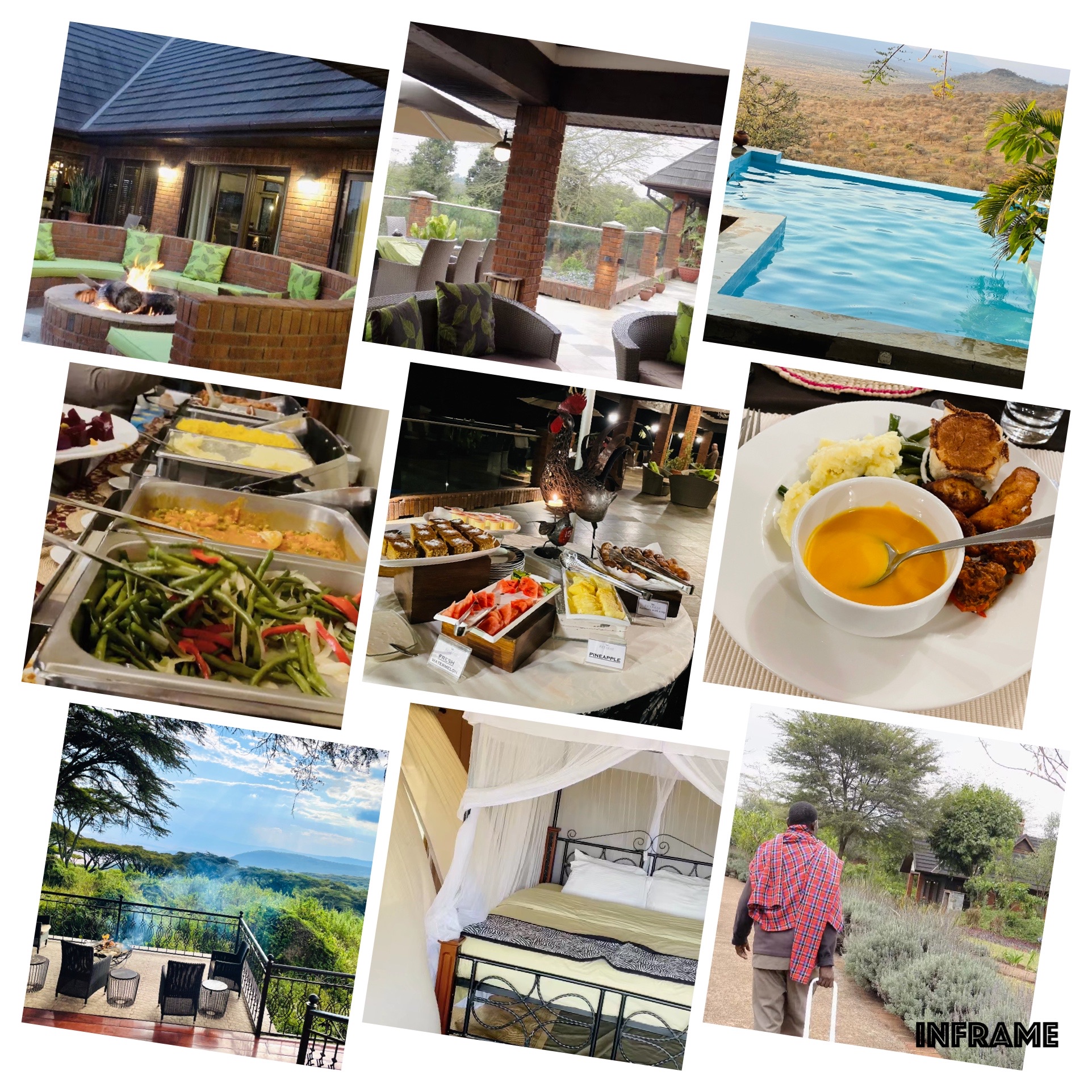
在非洲住的酒店大都还可以,价钱也贵,因为很多酒店都是在荒野里,建筑和维护成本都很高。我们住的几个酒店都有热水洗澡,洗手间,蚊帐,无线上网(网速很慢),洗衣服务,晚上出门护送等,服务专业成熟。吃的是简单的美餐,最多的咖喱鸡,以至于到第三天我就没有胃口了,现代人太挑剔了。
角马迁徙过河
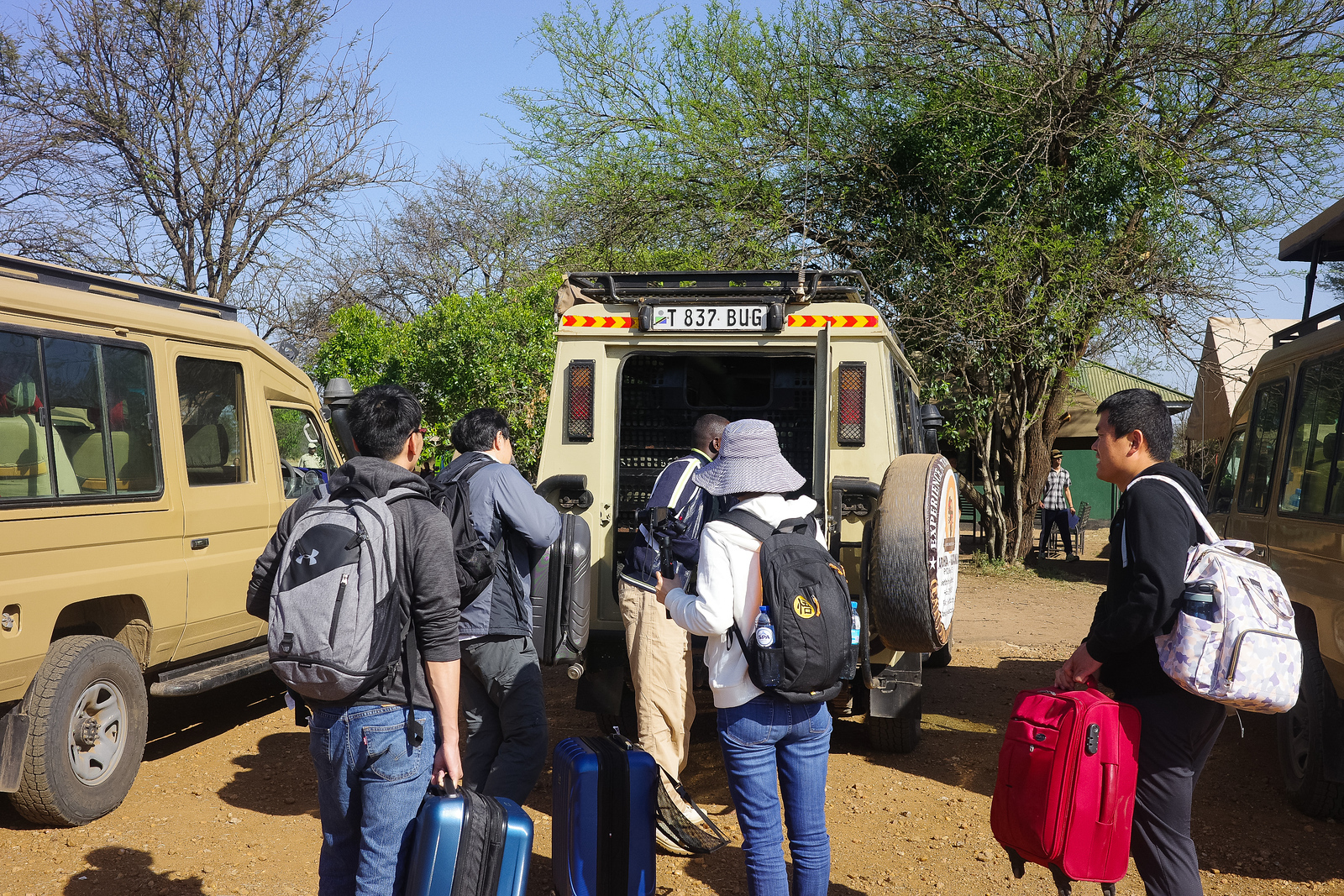
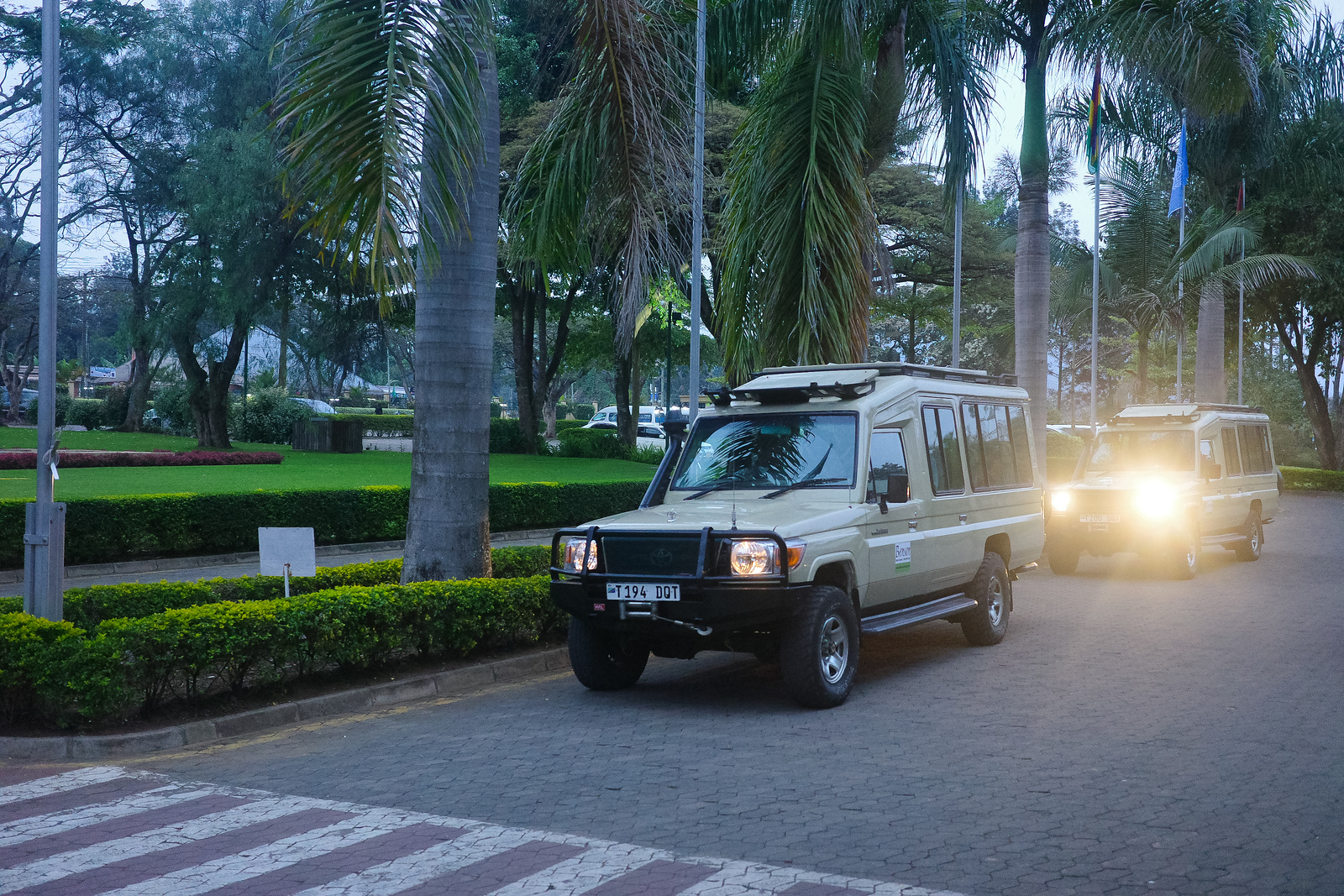
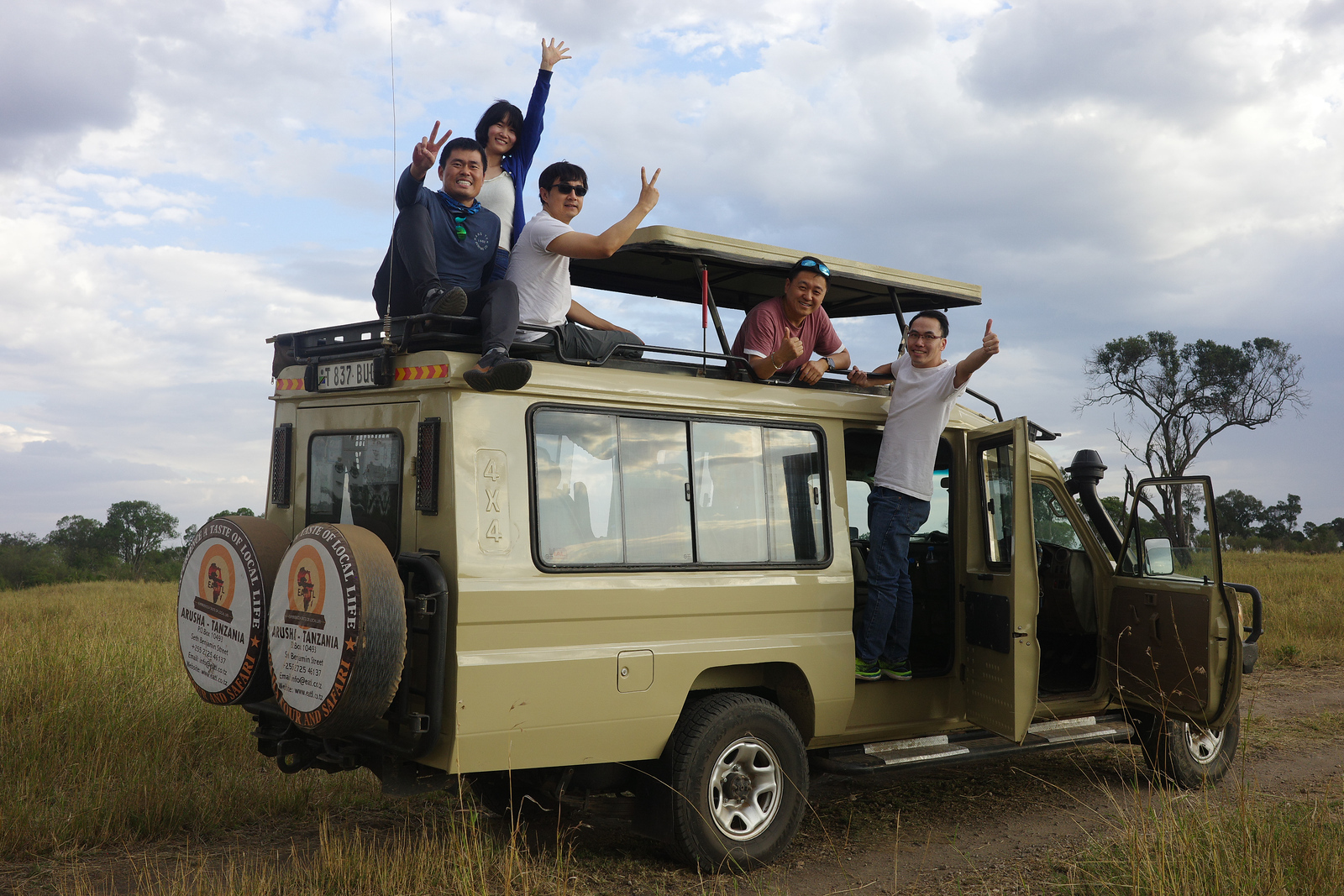
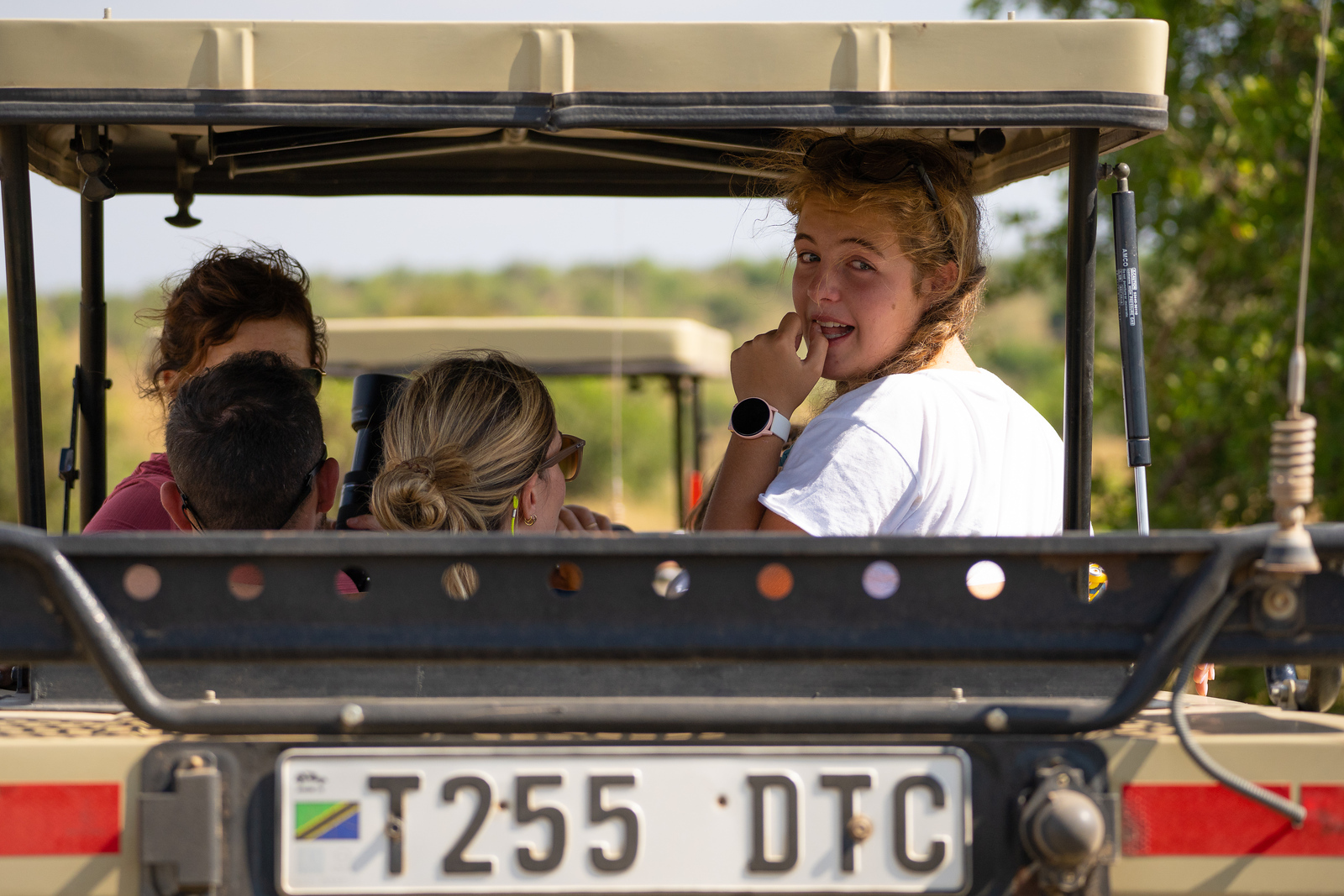
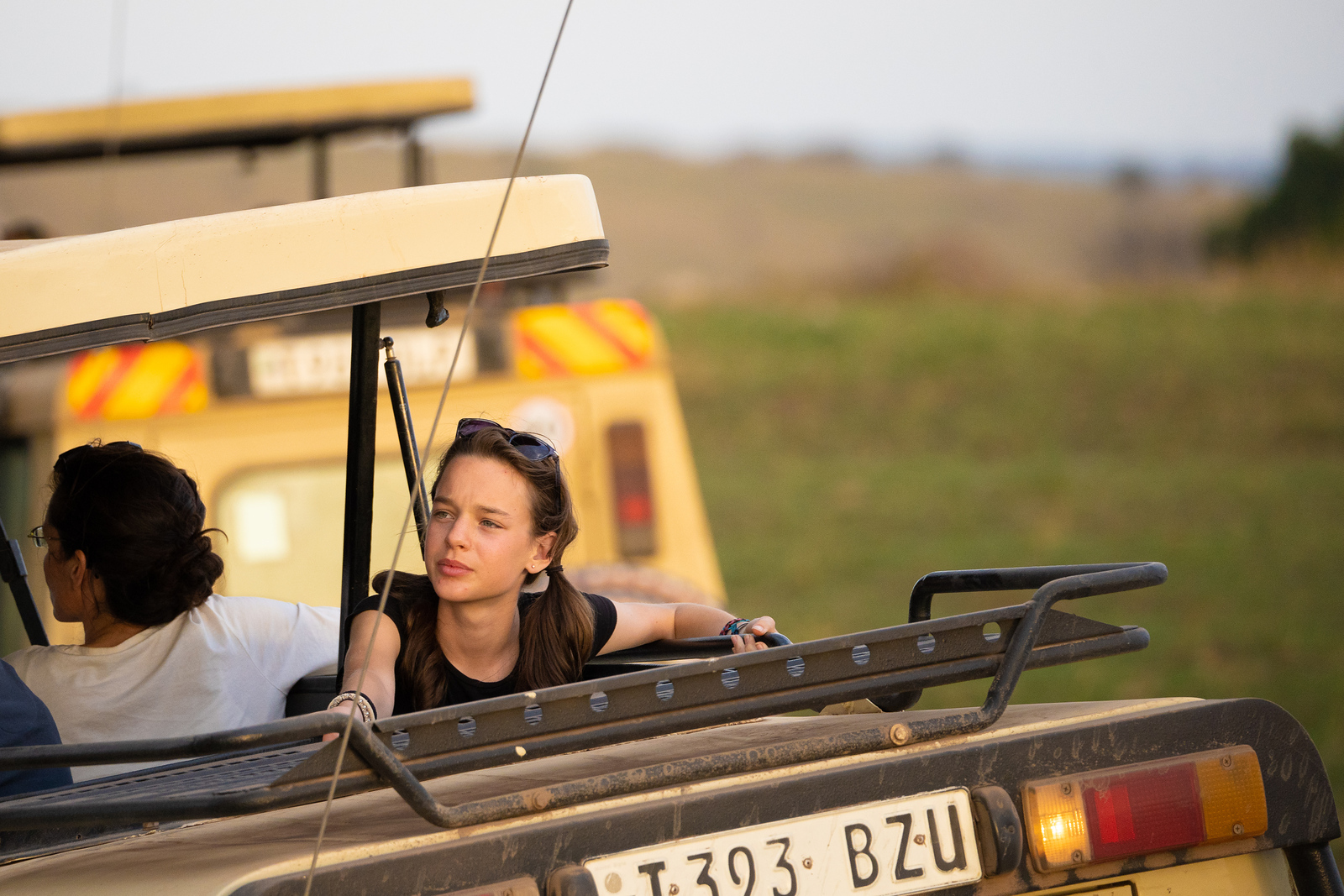
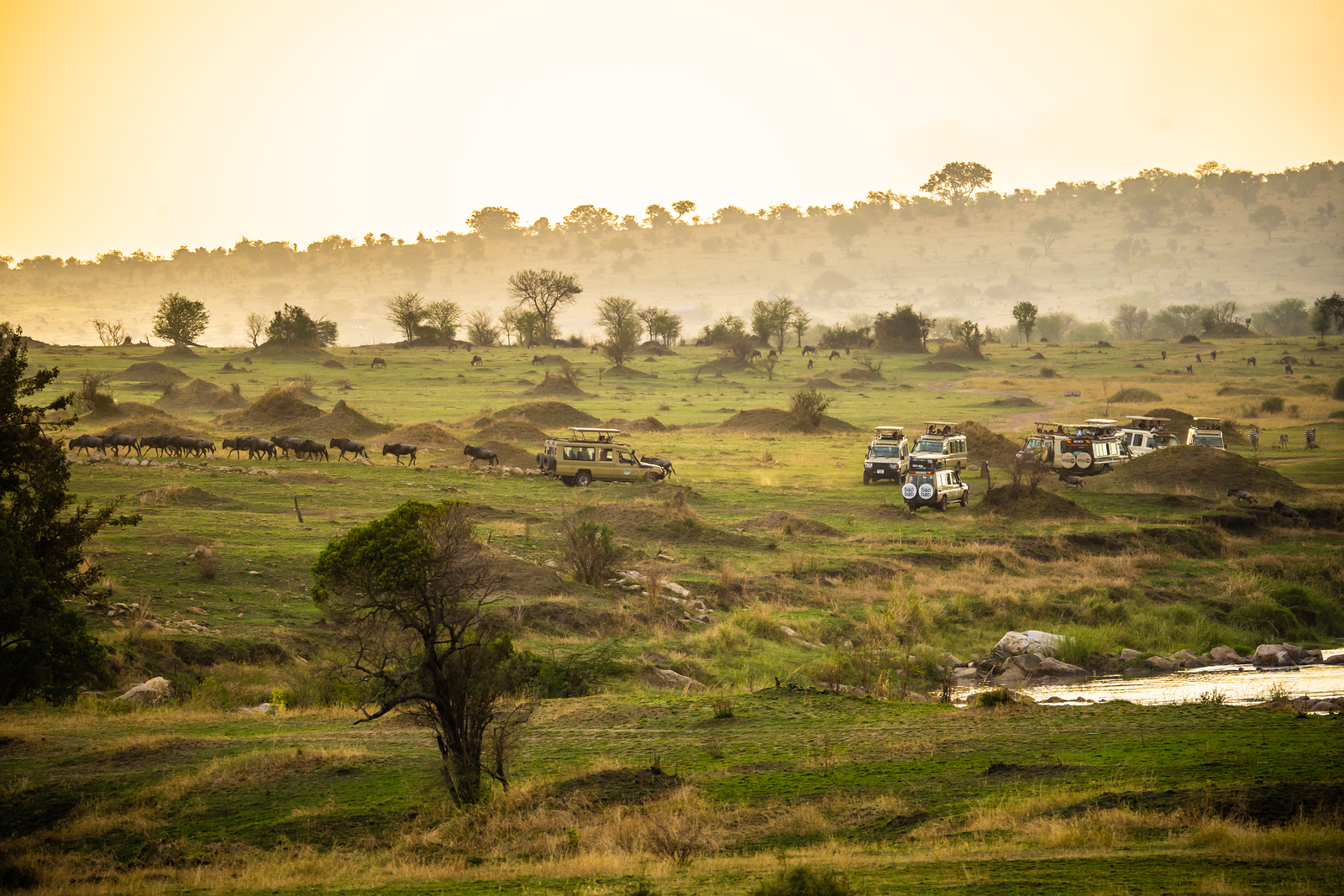
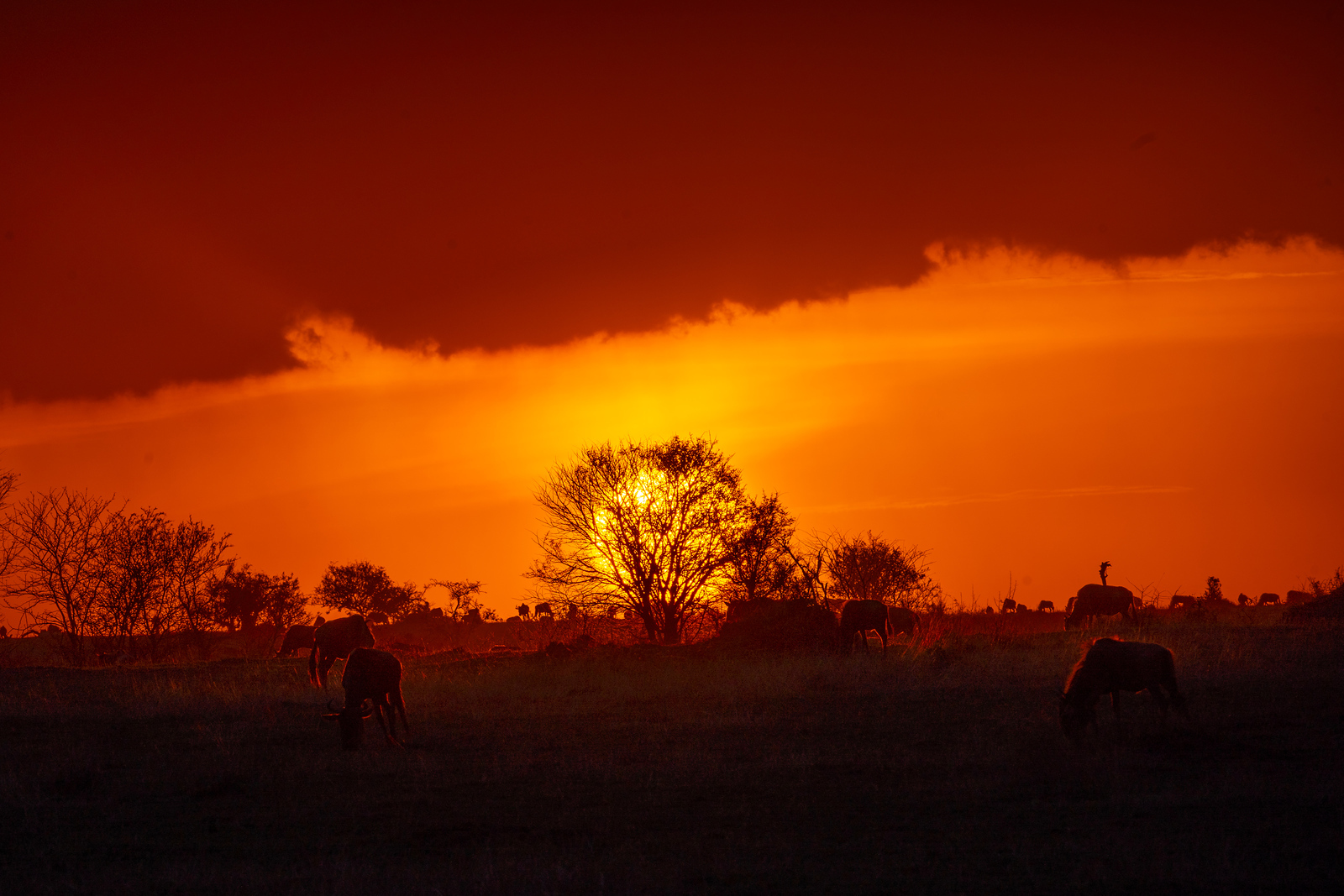
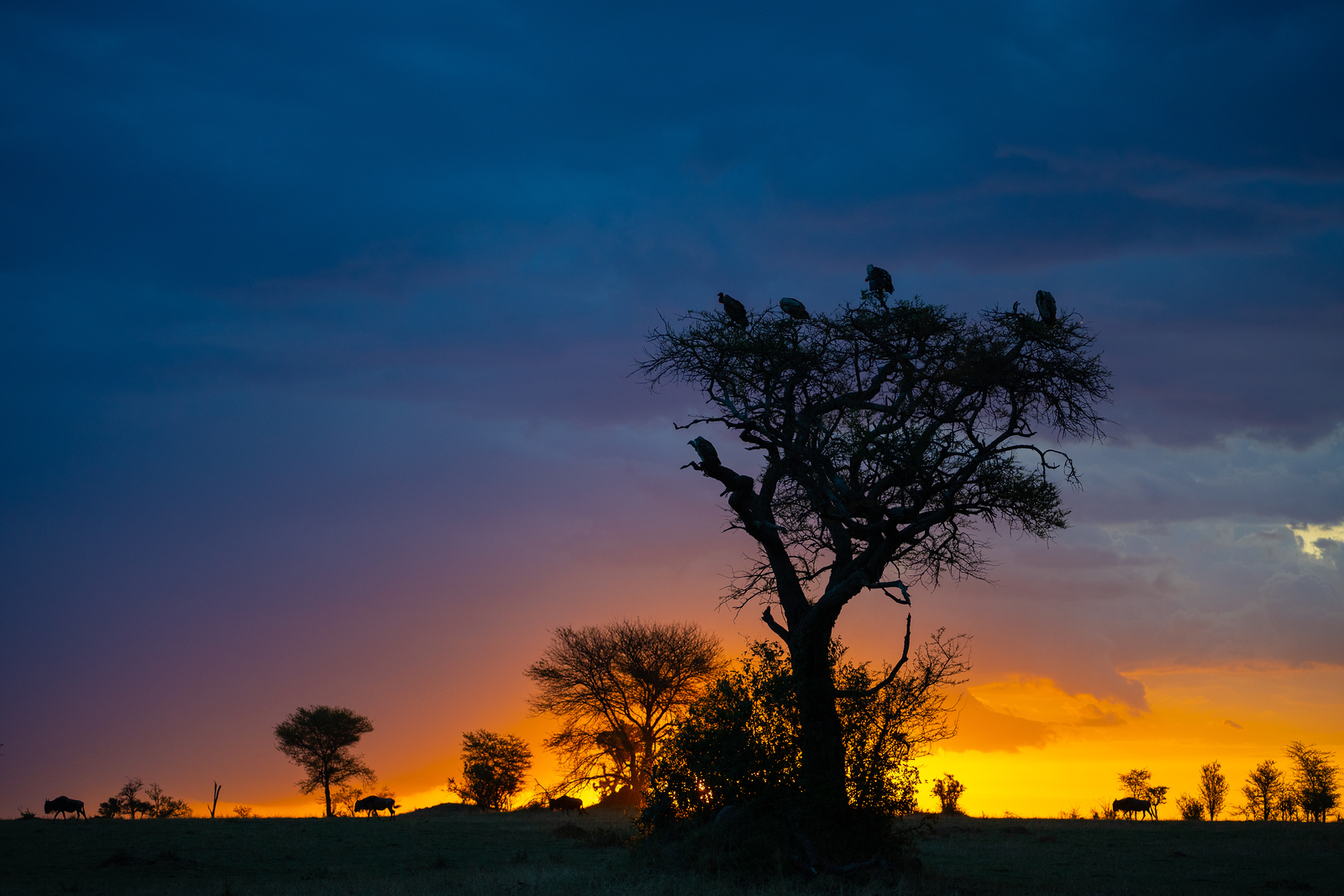
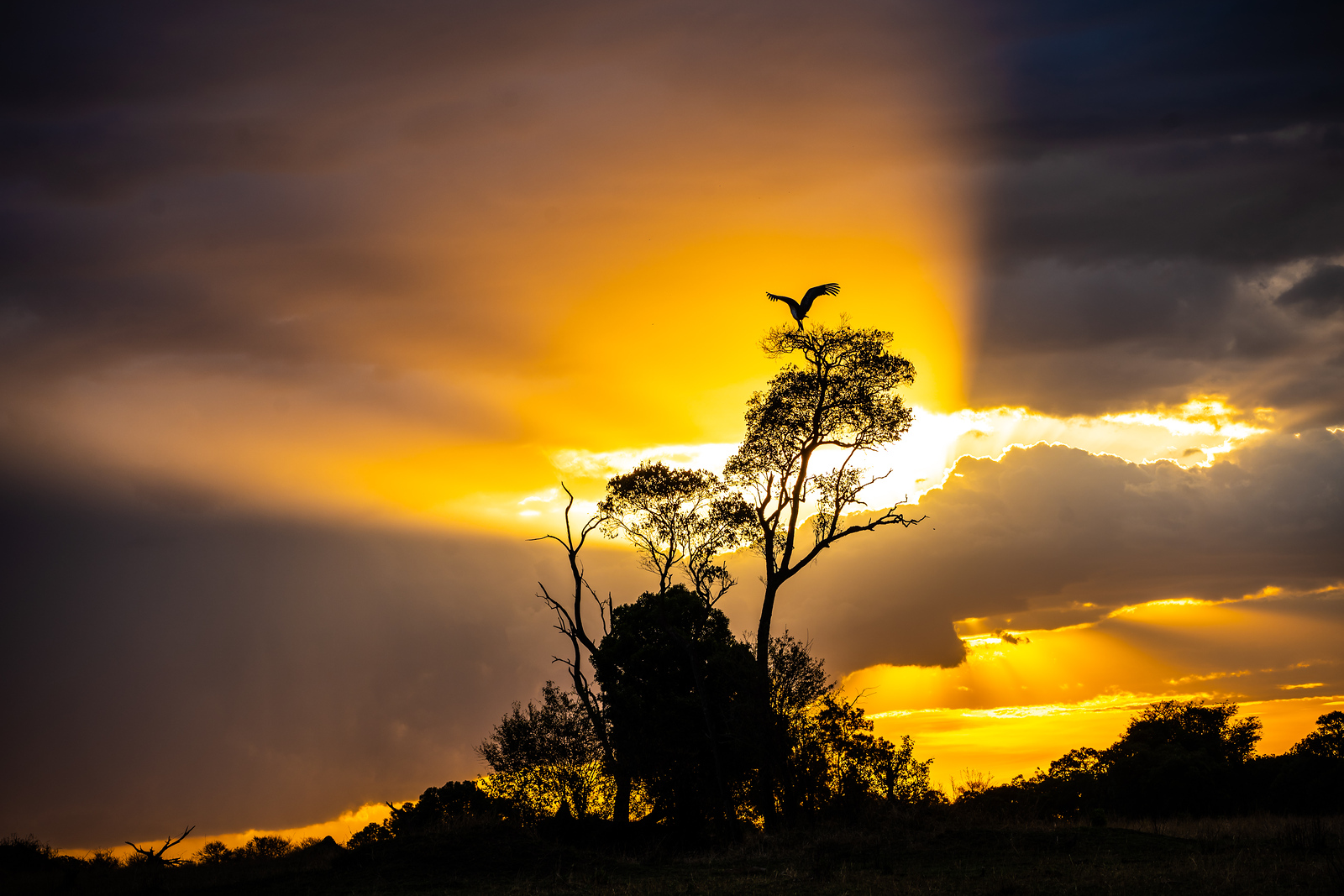
我们一行六人,我负责摄影,张导负责摄像。大家开始对摄影没有什么概念,只是听说非洲的日落会美的让人落泪。草原第一天晚上我们在红云日落中穿梭草原,让大家都体验到了风光摄影的兴奋。第二天,我说服大家早起去赶日出,虽然还是没来得及,但是早起让我们看到了浩浩荡荡的角马迁徙过河的壮观场面,一天内竟然看到三次。大家感觉很幸运。
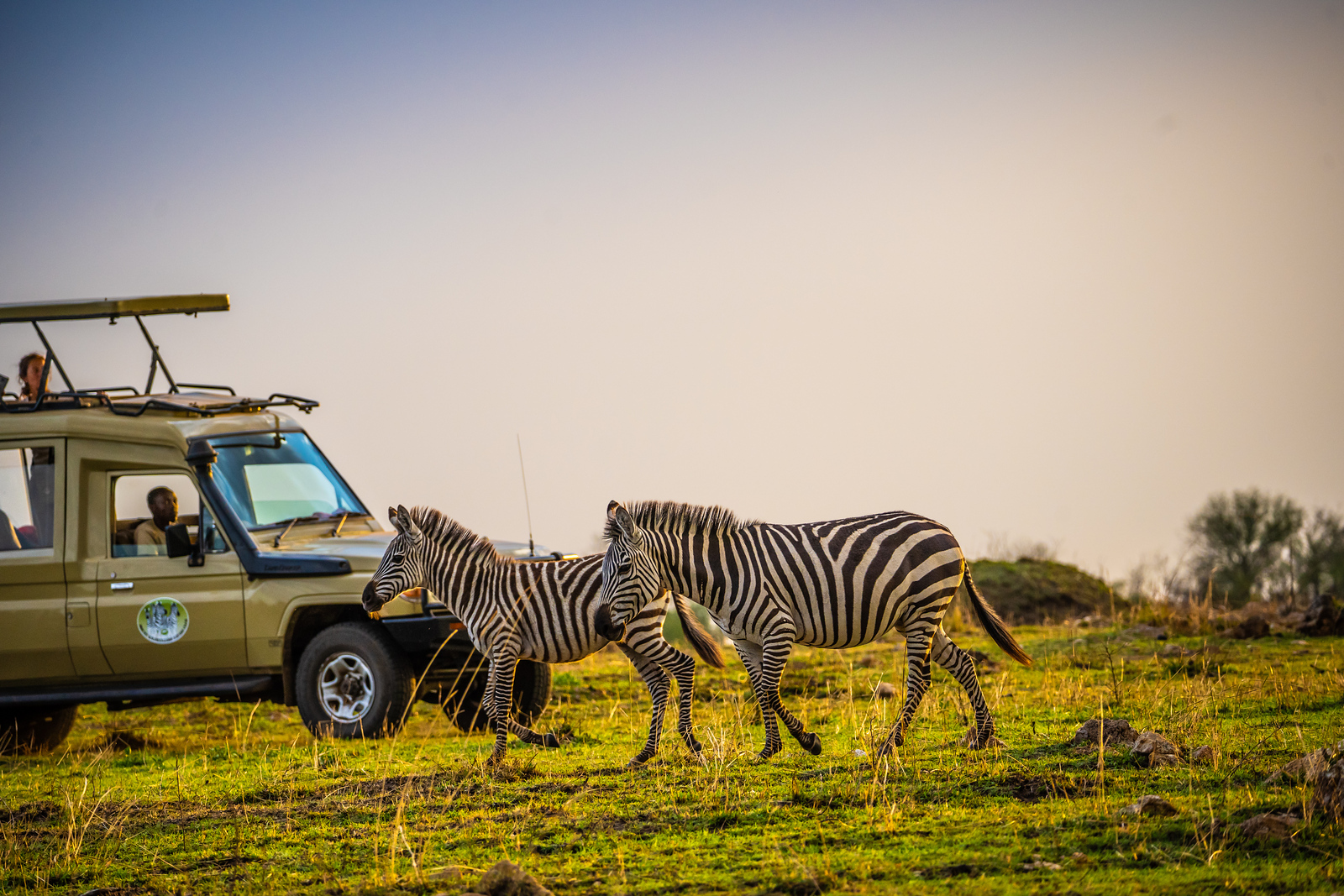
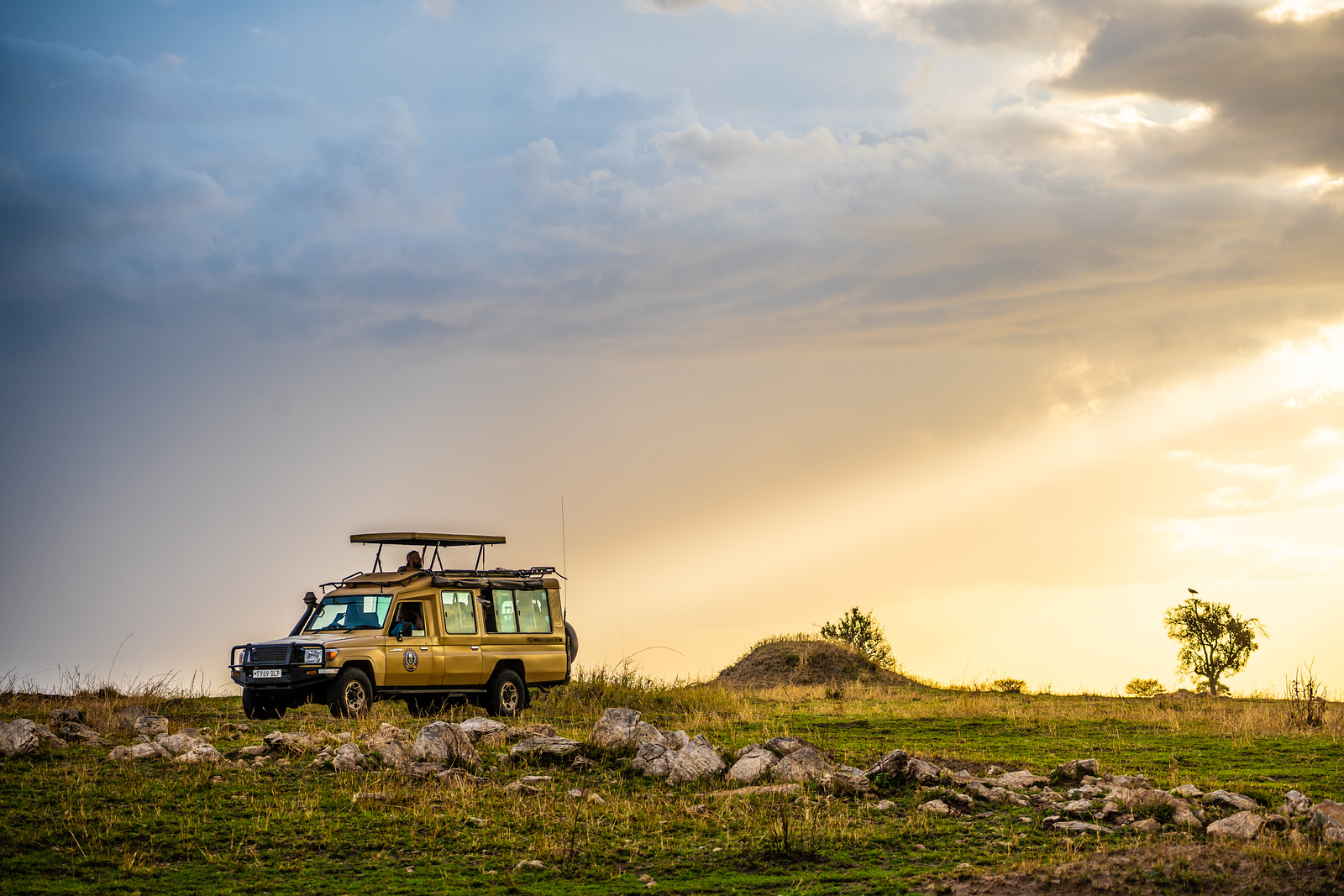
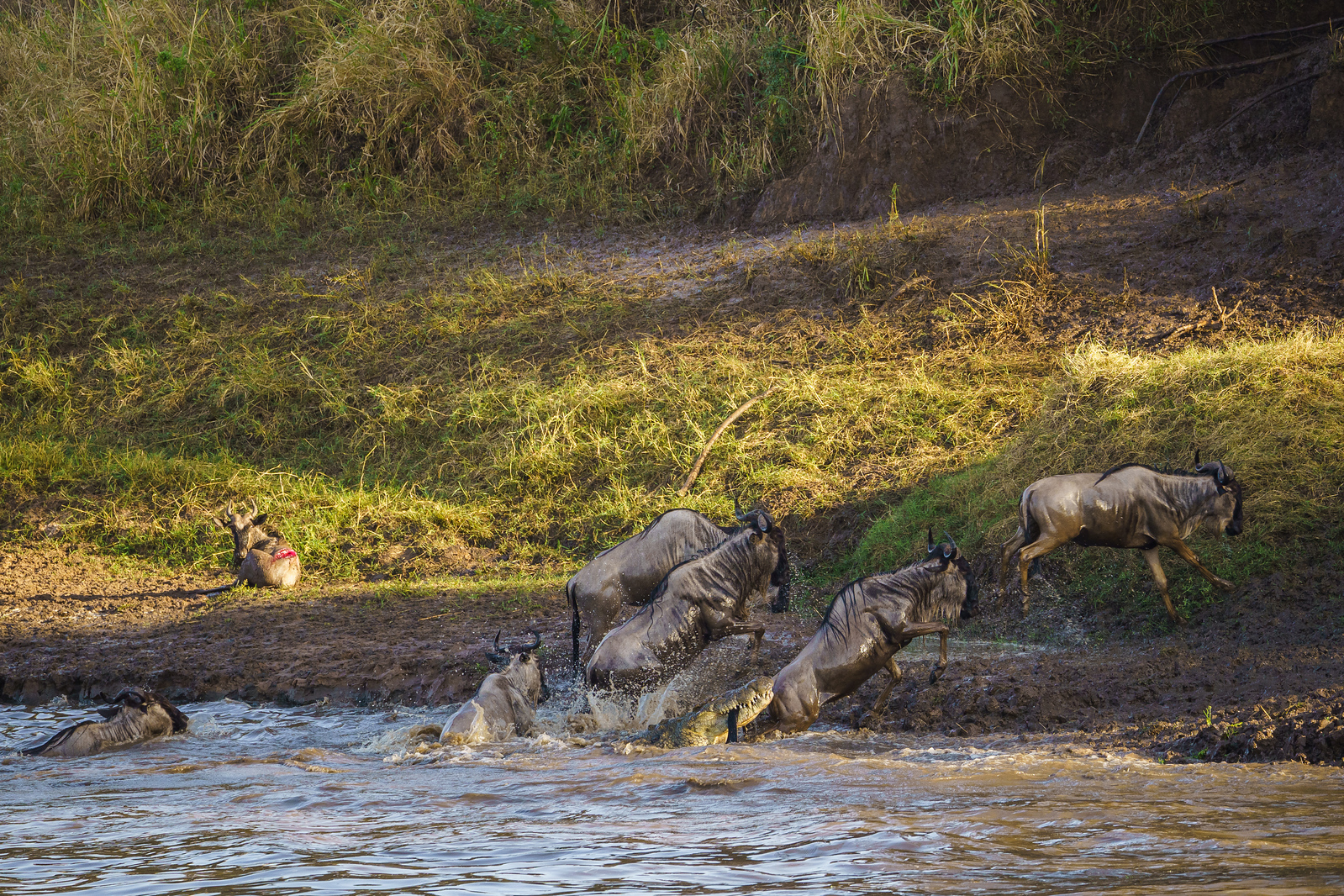
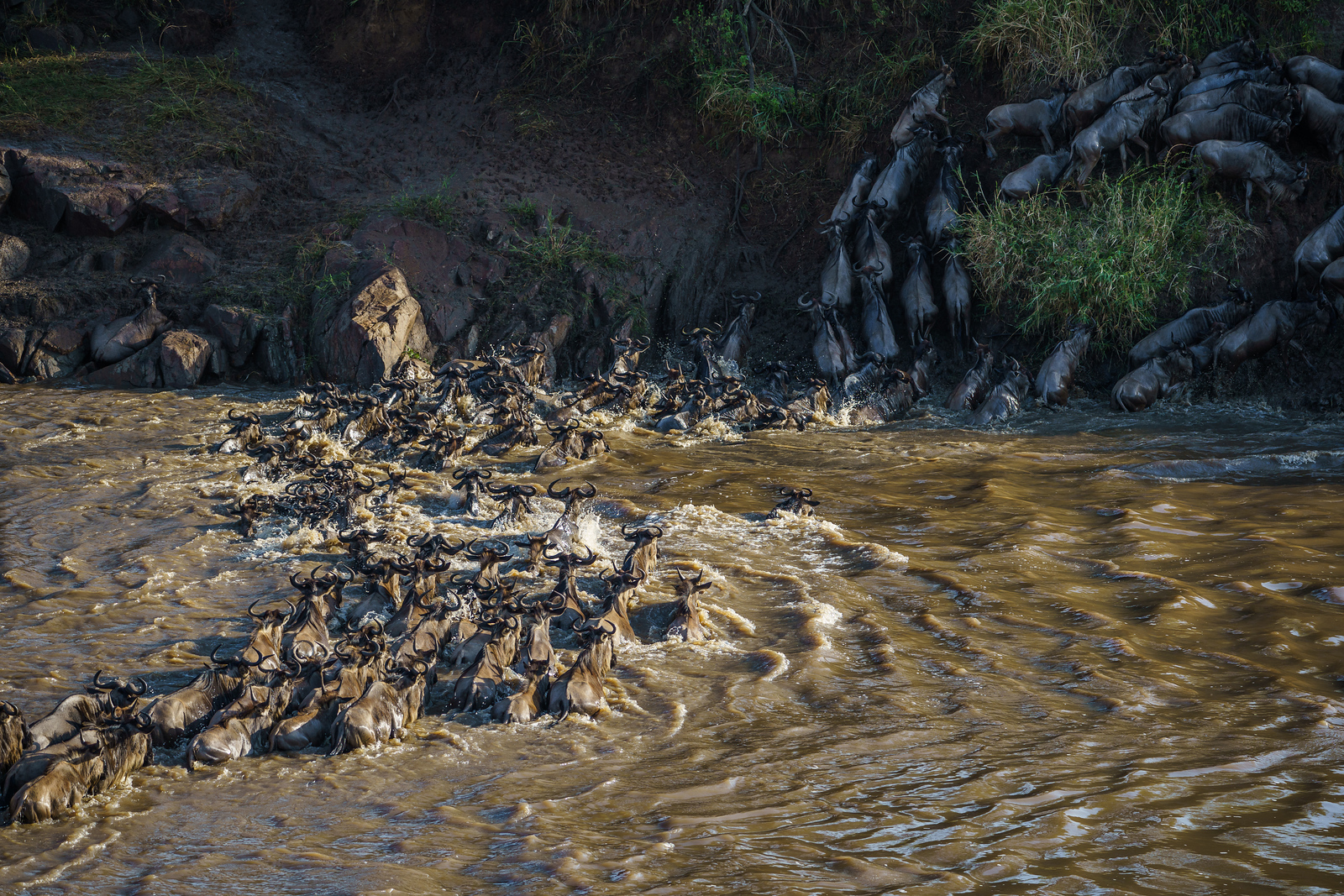
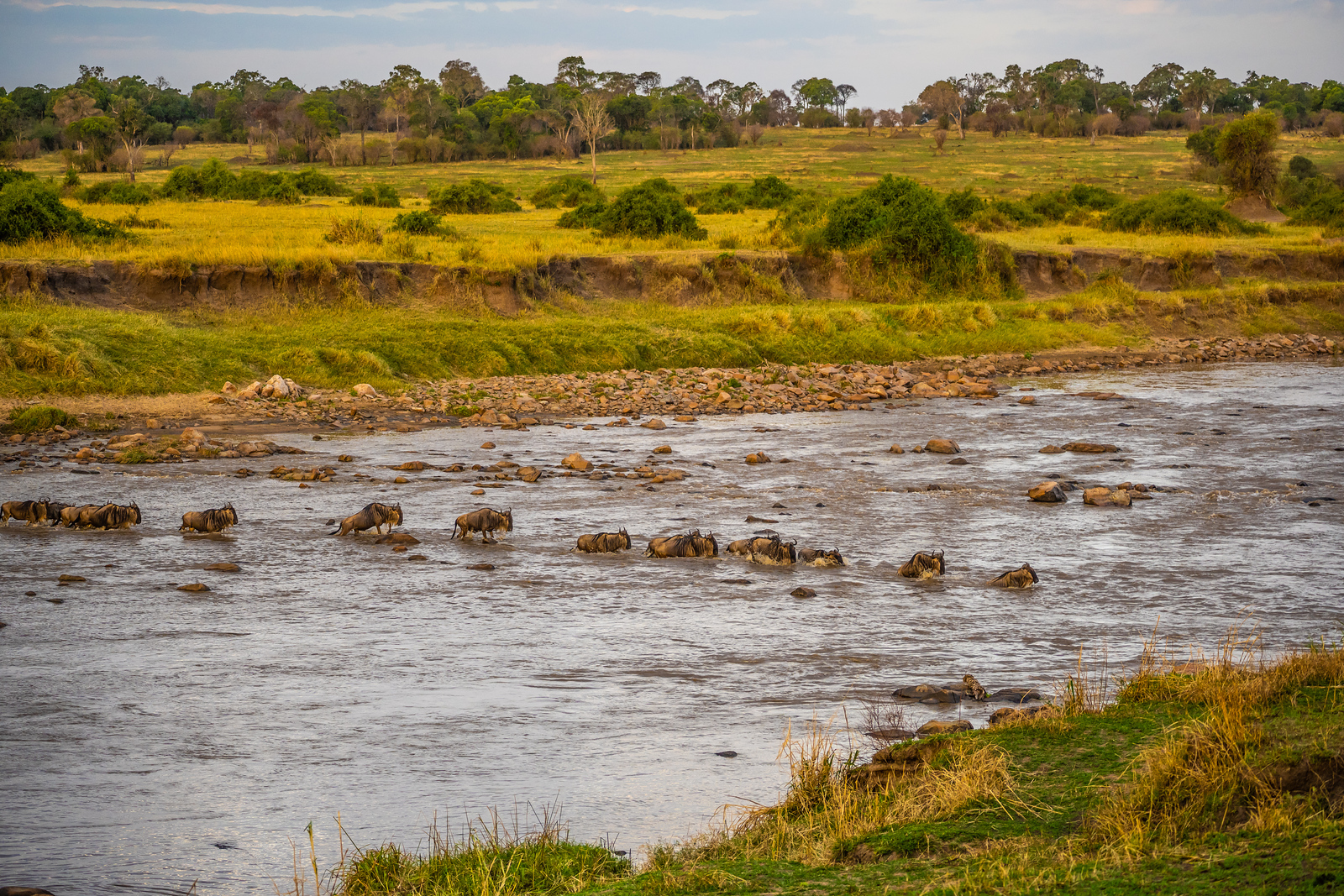
这么多年来,我每次摄影似乎都运气很好,从新疆的天鹅湖雾凇,到阿拉斯加的极光,从西雅图瑞尼尔山几次邂逅灵性十足的鹿,到瑞士曼特洪山的日出,到这次非洲动物大迁徙,我都能顺利拍到。这些景象有些摄影师花一周的时间也不一定都能赶上。和导游聊,问他能不能看到狮子猎杀的画面,他说不敢保证。确实,诺大的草原要到处跑多久才能碰上?
和谐壮烈
来到了无边无际的草甸子Serengeti, 导游机敏把我们拉到距离狮子6米的距离观察狮子。天太热,狮子白天睡觉没有捕猎的动力。看了鬃狗不成功的围捕角马和角马过河被鳄鱼捕食的凄烈场面。
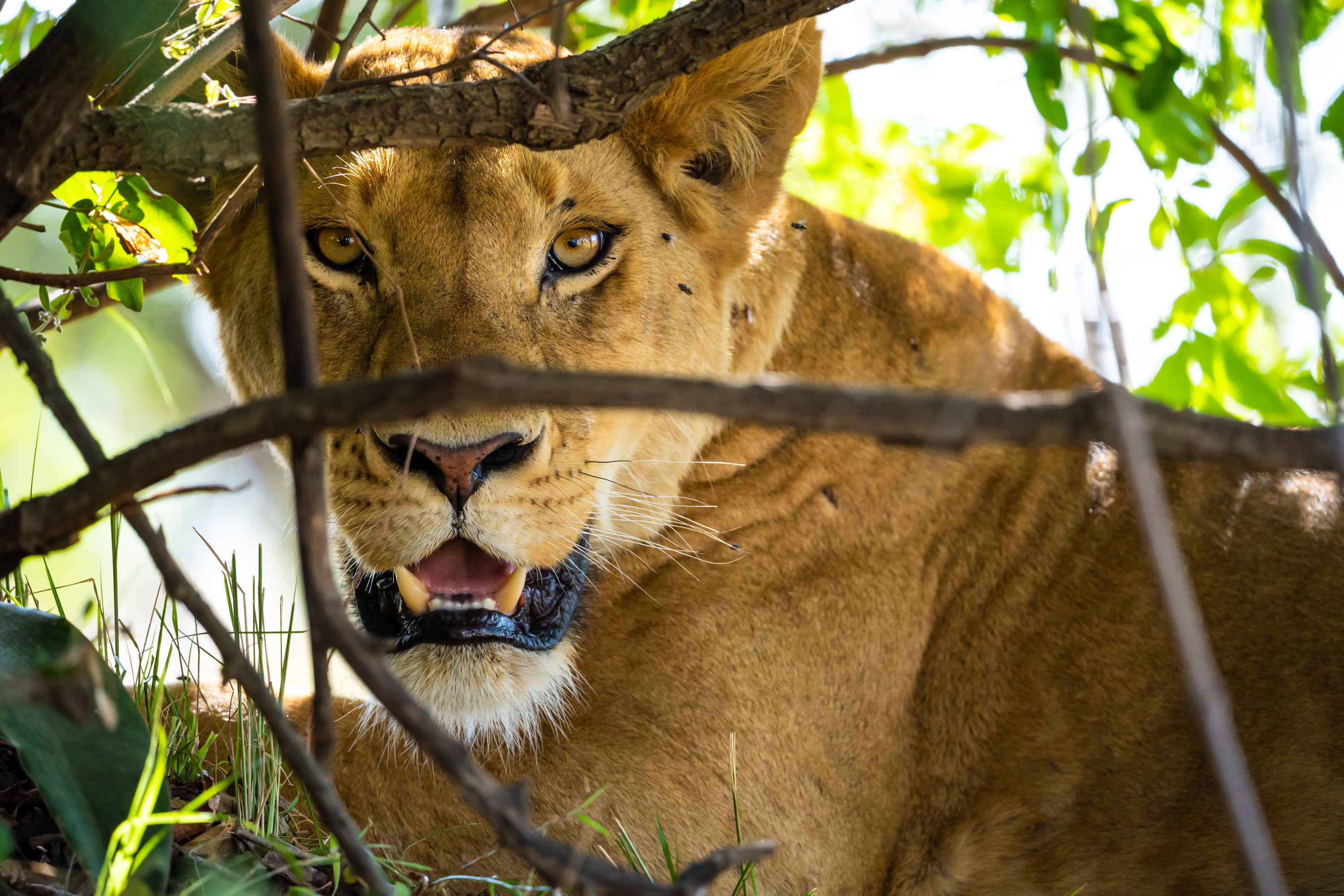
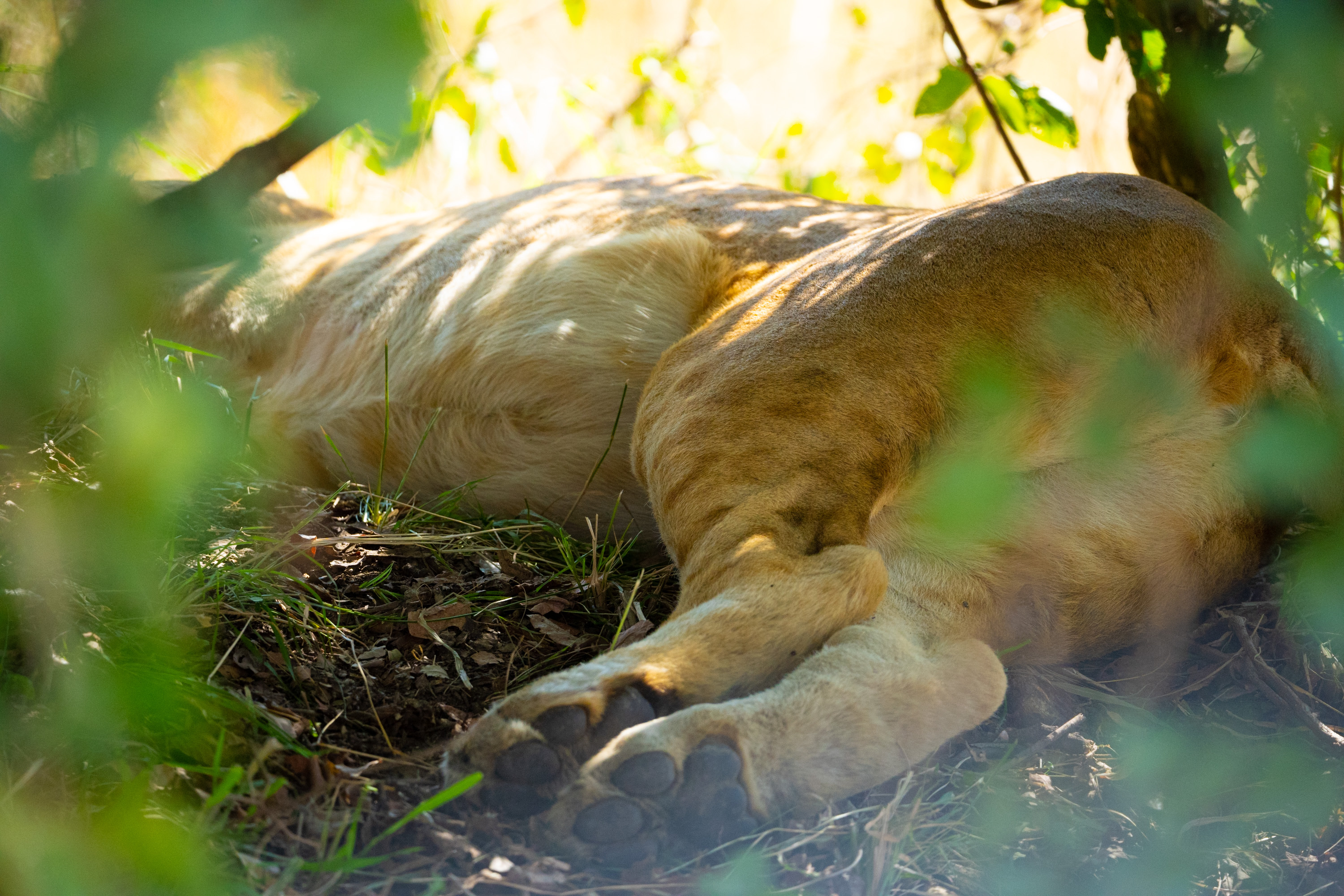
在这里大自然既和谐,又壮烈。团队合作是唯一生存的王道。
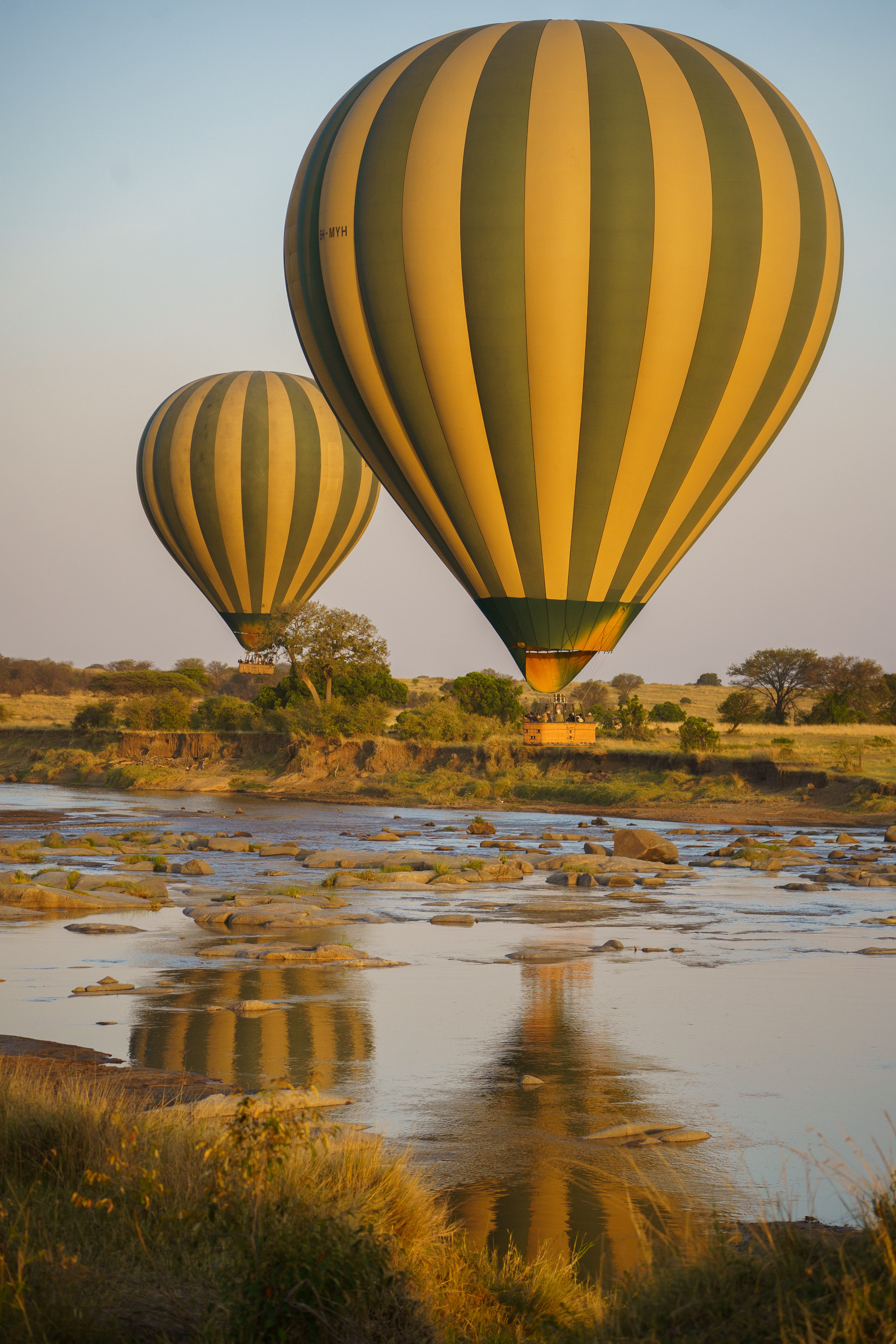
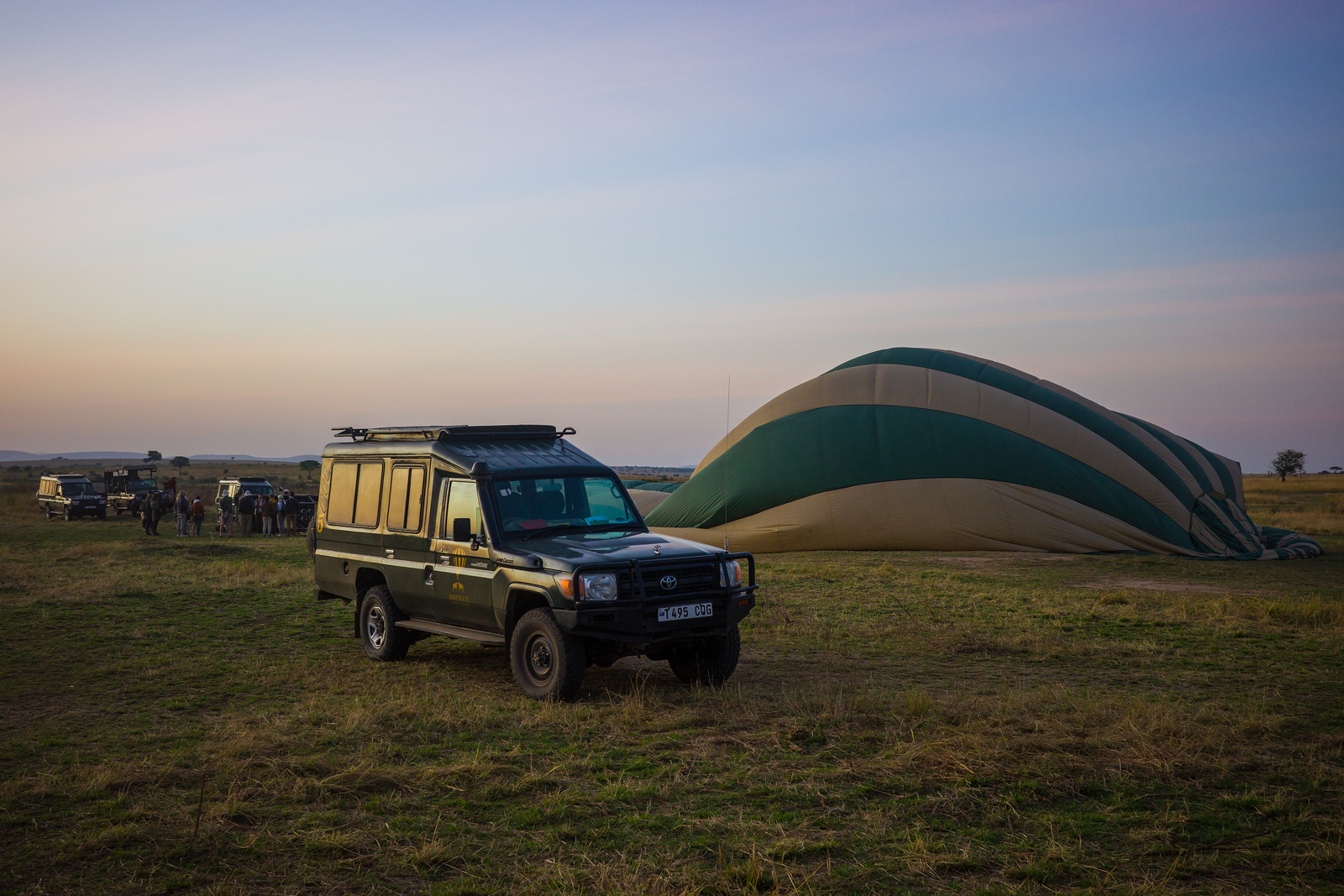
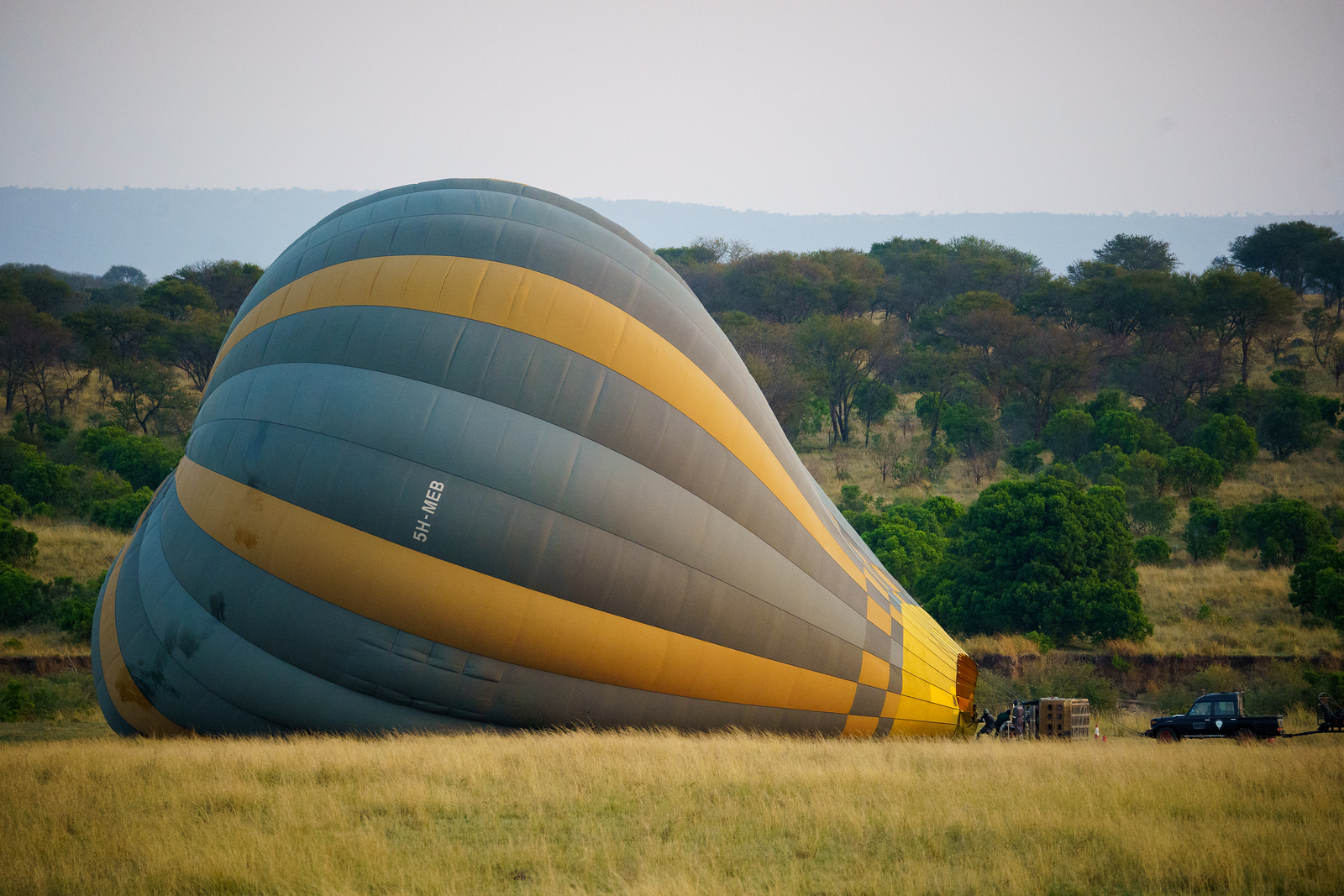
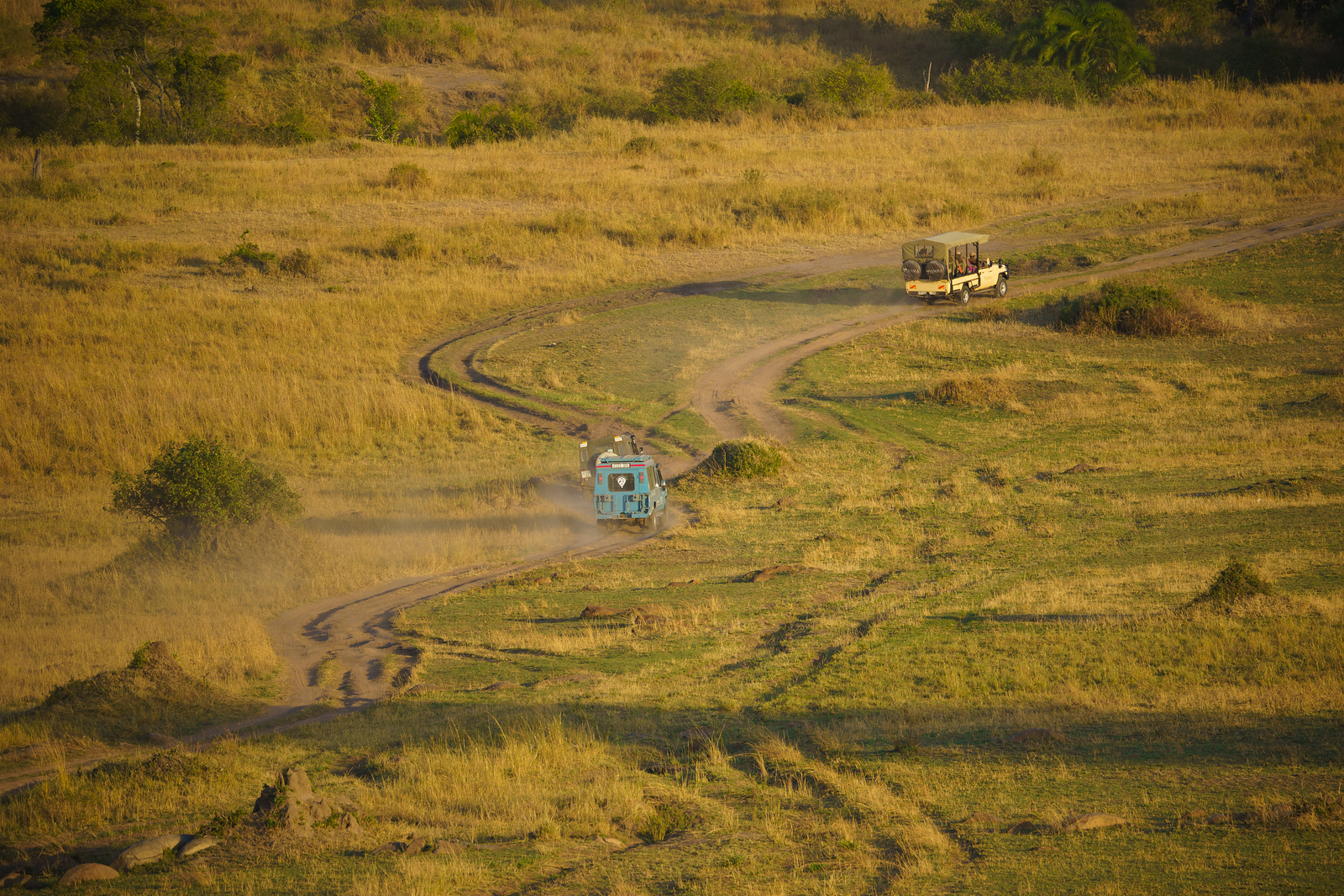
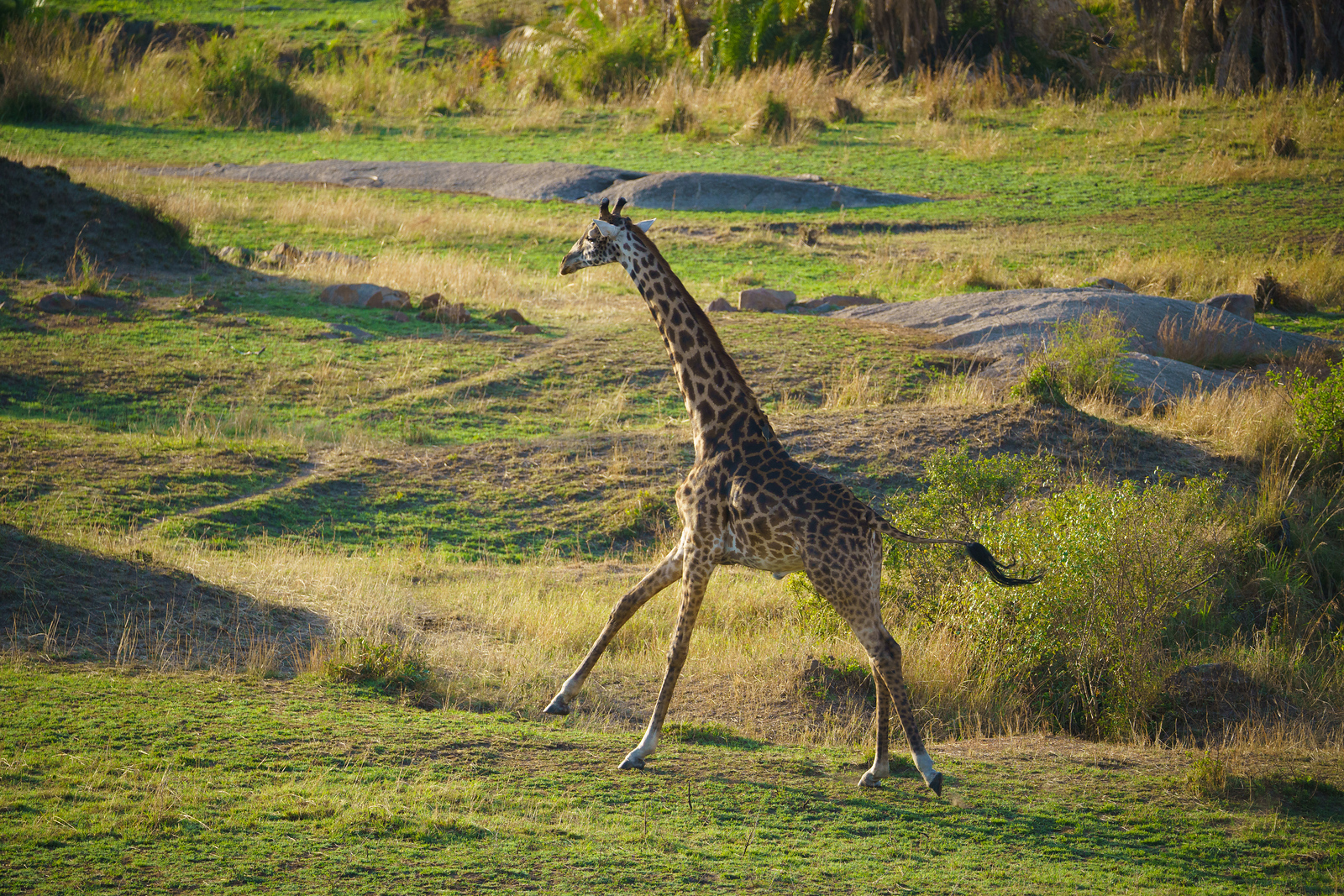
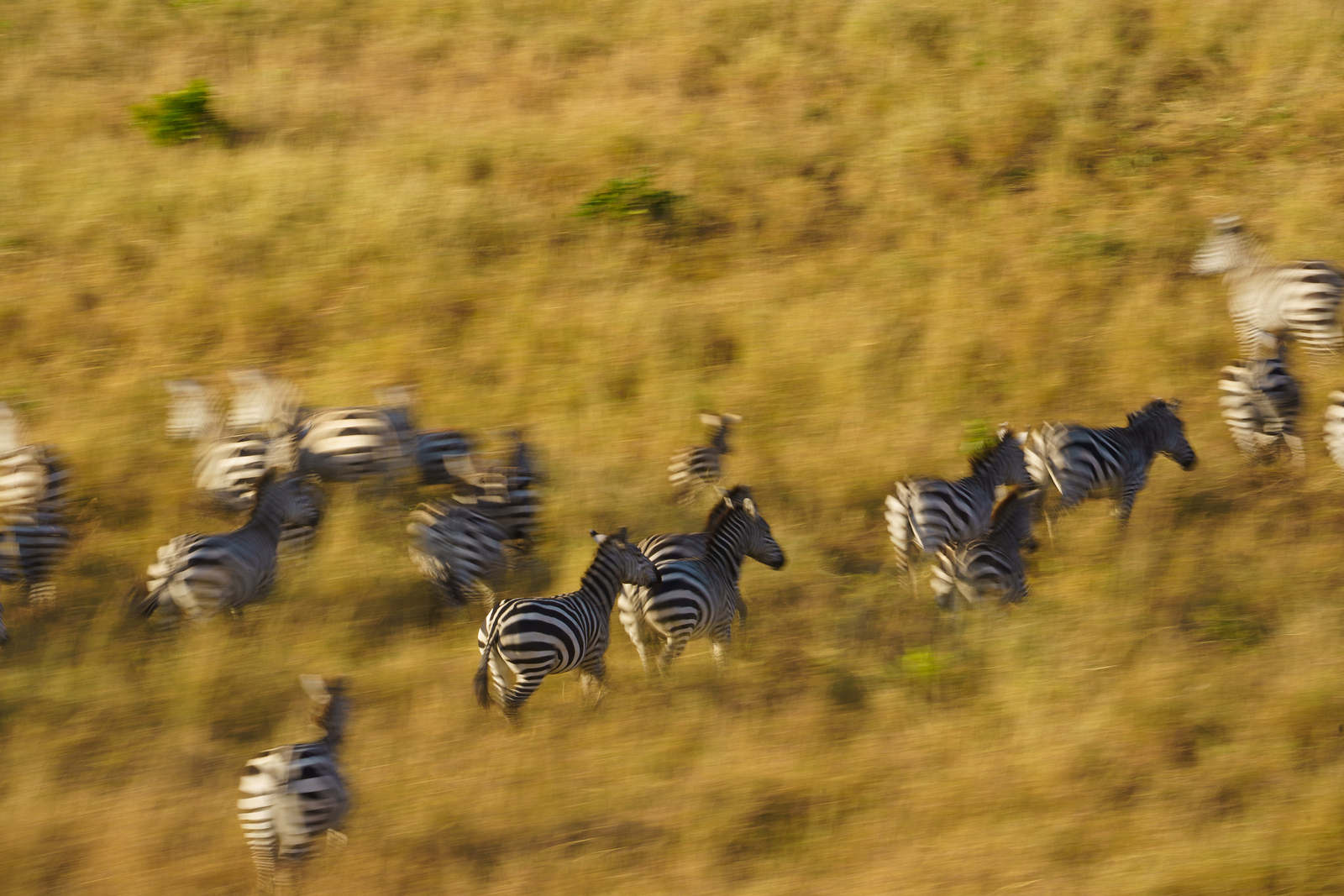
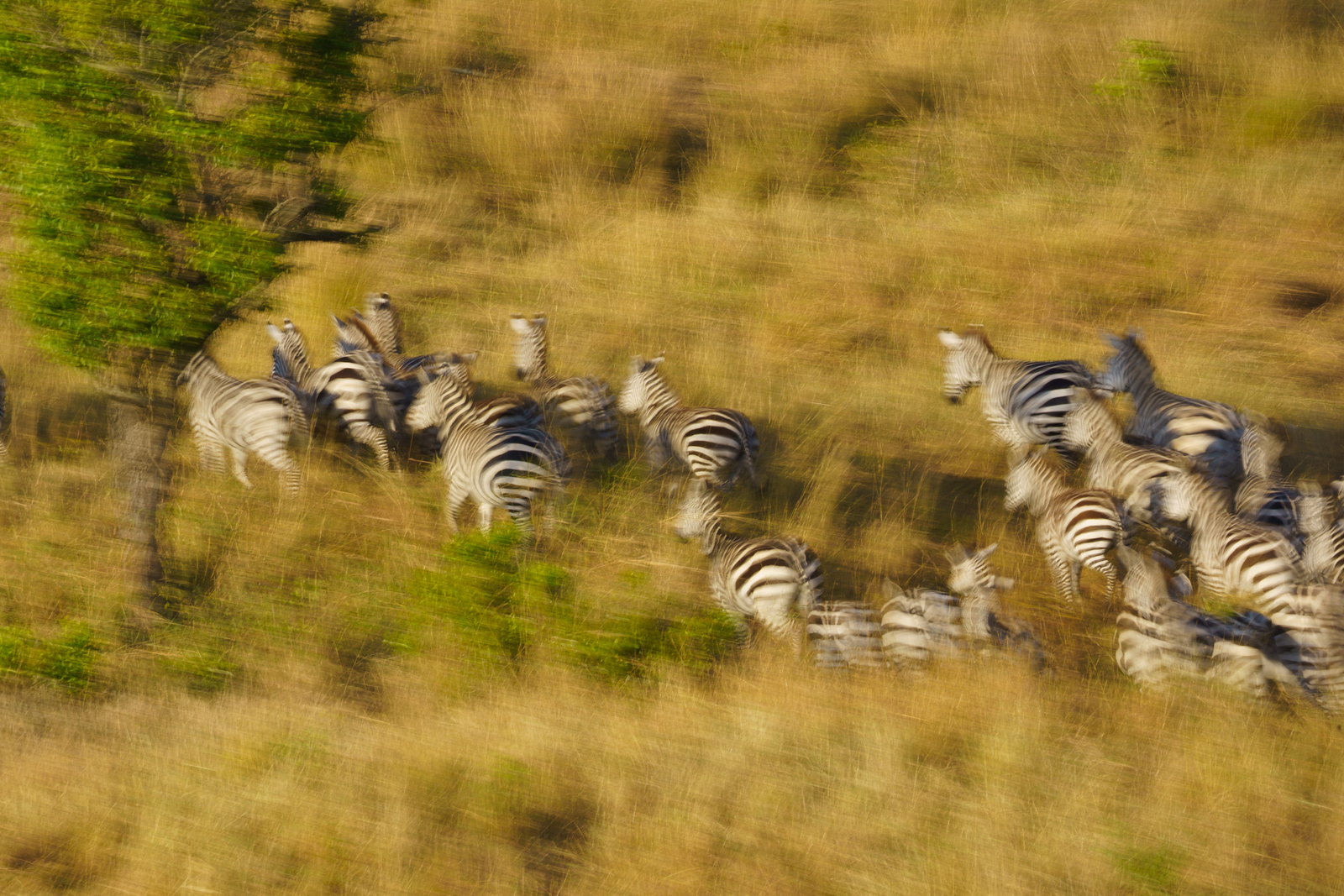
第三天早上我们乘坐了16人的热气球,俯瞰了日出光照下的万物一天之始,看着各种动物欢快的在草原上奔跑,我们也欢呼雀跃的放飞了自己的心情,注目百万生灵,观看着湖光倒影,触摸着灵魂深处的感动。
午夜游猎
来非洲之前,我经常看到一个以非洲为家的华人摄影家杰夫,发表他拍摄的狮子捕猎的作品。我告诉导游说我也想拍。导游笑着说,我尽力,但是不能保证。我心里也琢磨着,怎么能够碰到并用镜头捕捉到那么快速的猎杀场面呢?他要等多久才能等到合适的机会呢?
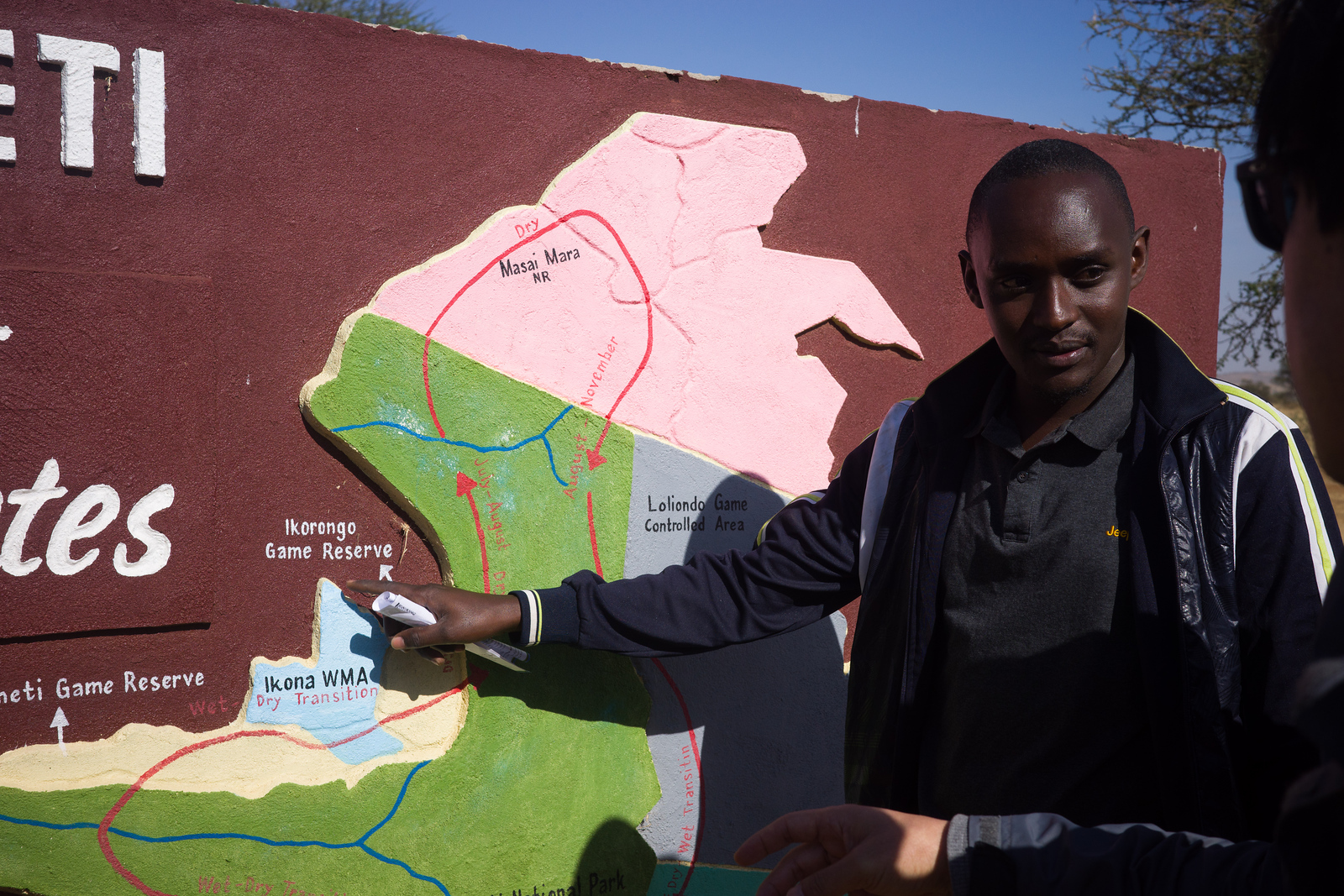
今天下午到了Serengeti公园的的中部帐篷旅馆。旅馆的条件非常好。晚餐后回到房间要工作一会儿,发现网络太弱。我用对讲机让工作人员Barick 到房间接我去前台工作,那里信号强。这里的安全规定是晚上天黑后不能独自行走。我们刚下车,突然听到很奇怪的从未听到过的低吼声。Barick 马上叫了一声 “Lion 狮子!”,忙乱之中,我冲出去,准备躲到车里。他说不要上车,然后安排我在大堂的一张桌子上工作。我坐在那里,打开电脑,听着持续的狮子吼声,电脑上什么字都没有看进去。我四处打量,大堂是敞开式的,只有半人高的墙和一个小门,另外一边还没有门,通向后院,狮子应该可以进来。我目光找到了厕所,决定如果狮子闯进来,我只有躲到厕所里。
没多久,Barick回来了,告诉我狮子已经从后面离开了。他安排我换到1号房,紧挨着大堂,网络信号最强。进去后,我让他帮我仔细检查了所有门和窗户是关闭的,并关上了窗帘,不能被狮子看到。他告诉我窗户和玻璃足够阻挡狮子了。然后我开始工作,近处时不时传来狮子的吼叫,这叫声透露着愤怒,让人感觉终身难忘。
20分钟后,晚10:30,我听到一段急促的敲门声。打开门后,Barick 喊着:“带上相机,快点跟我来”!我想,狮子怎么了?他告诉我,狮子刚刚猎杀了一头水牛!我们的车子慢慢的开进了大堂正对面的草甸子。我慌忙的拿出照相机,拍了一张,恰巧是狮子猎杀水牛的最后一扑。然后一只狮子咬着水牛的脖子将他按倒在地,另外一只狮子已经开始吃猎物了,水牛不能动了。
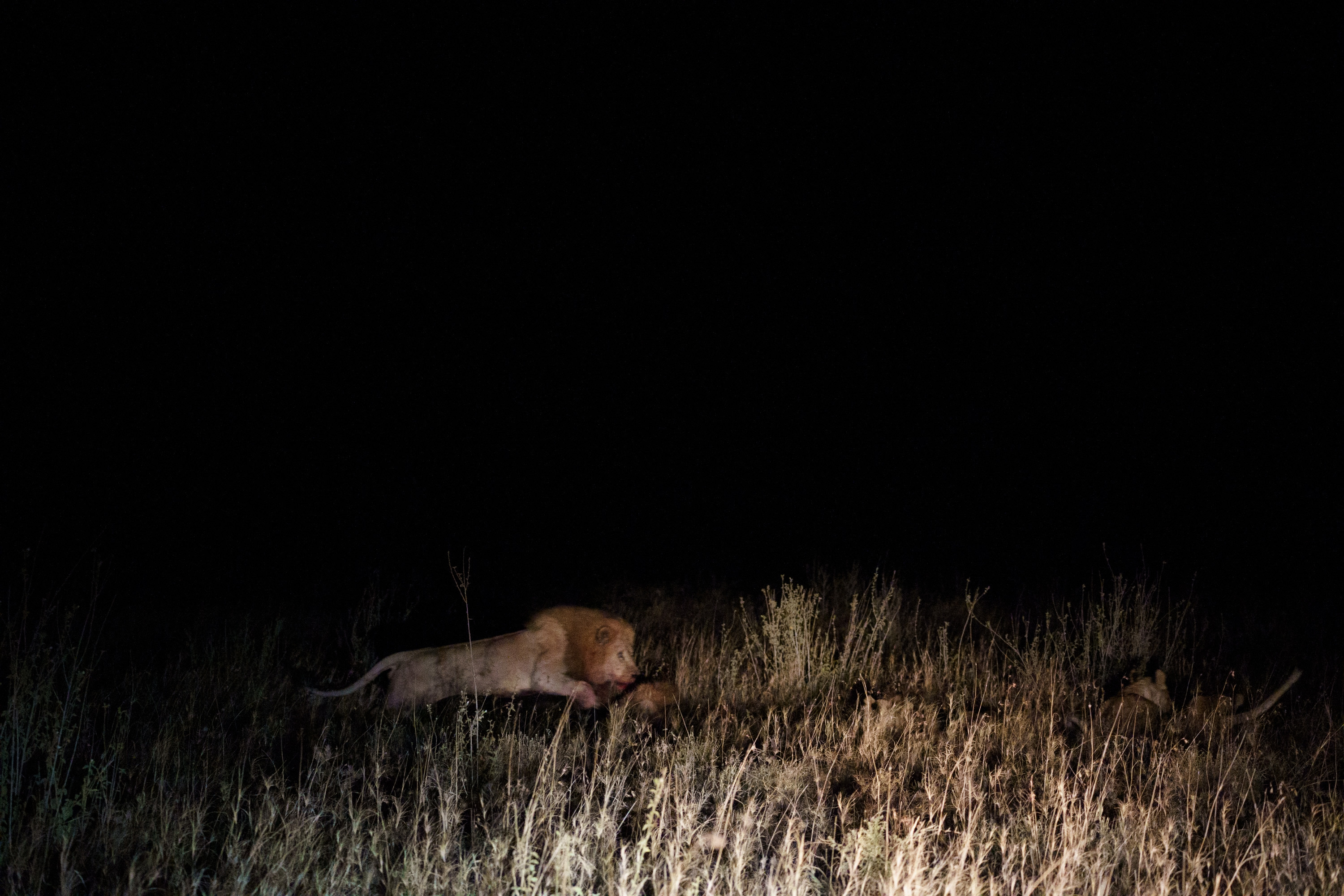
我拿出相机开始照相,Barick打开车大灯照射在狮子身上。车灯太亮,能看到狮子很难睁开眼睛,我非常担心这样会激怒他们。Barick 不断说“没有问题”,并给我讲述了如何10只水牛过来营救这只水牛,和近20只狮子,双方你追我赶,但是最终这头水牛伤势过重,无法跟随队伍逃离,被两只狮子猎杀了。我开始照相时,看到十几只狮子站在稍远处,然后慢慢消失,他们要等先锋吃完后才过来享受猎物。Barick讲到,看到猎杀场面,非常的美,又很让人为水牛伤感。
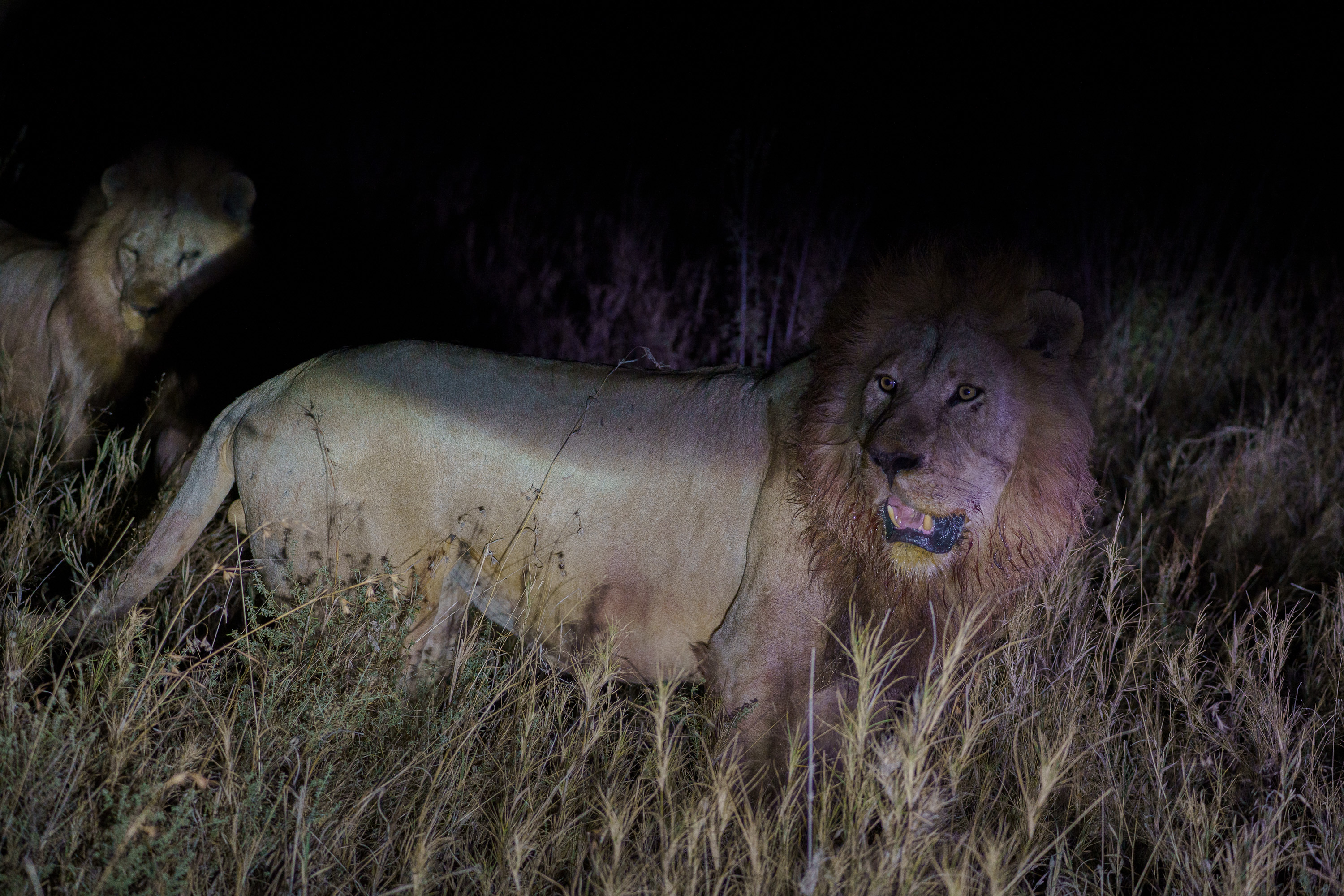
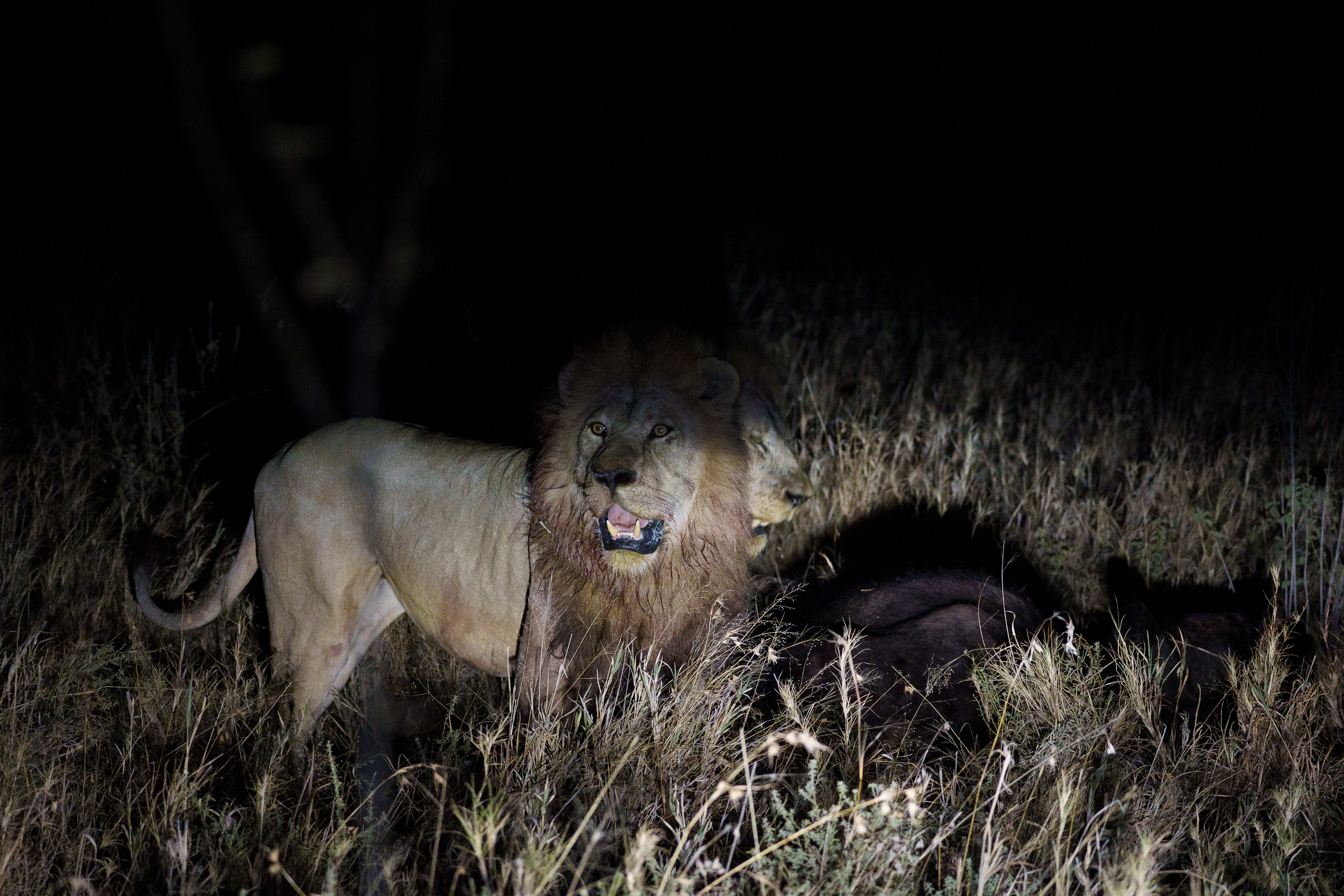
离狮子这么近,我很紧张,拍照的时候车窗要摇下来,照完我马上摇下来。Barick竟然告诉我窗子要一直打开,并且帮我摇下来一次。谈着谈着,他突然启动车,又往前开了好多步,我不断说 “可以了!”,我们距离狮子和猎物只有6尺(2-3米)左右。听着狮子撕咬猎物的声音和时不时的低哼声,我虽然语调平稳,还是能够正常交流,但是全身第一次感受到毛孔耸立的感觉。
也许因为灯照的不舒服,两只狮子突然起身向我们走来,威武的盯着我们。手忙脚乱的,我赶紧摇上车窗。Barick把车灯关掉,轻声告诉我“不要说话”。一只狮子在车右前方躺了下来,另外一只转身回去享受美食。
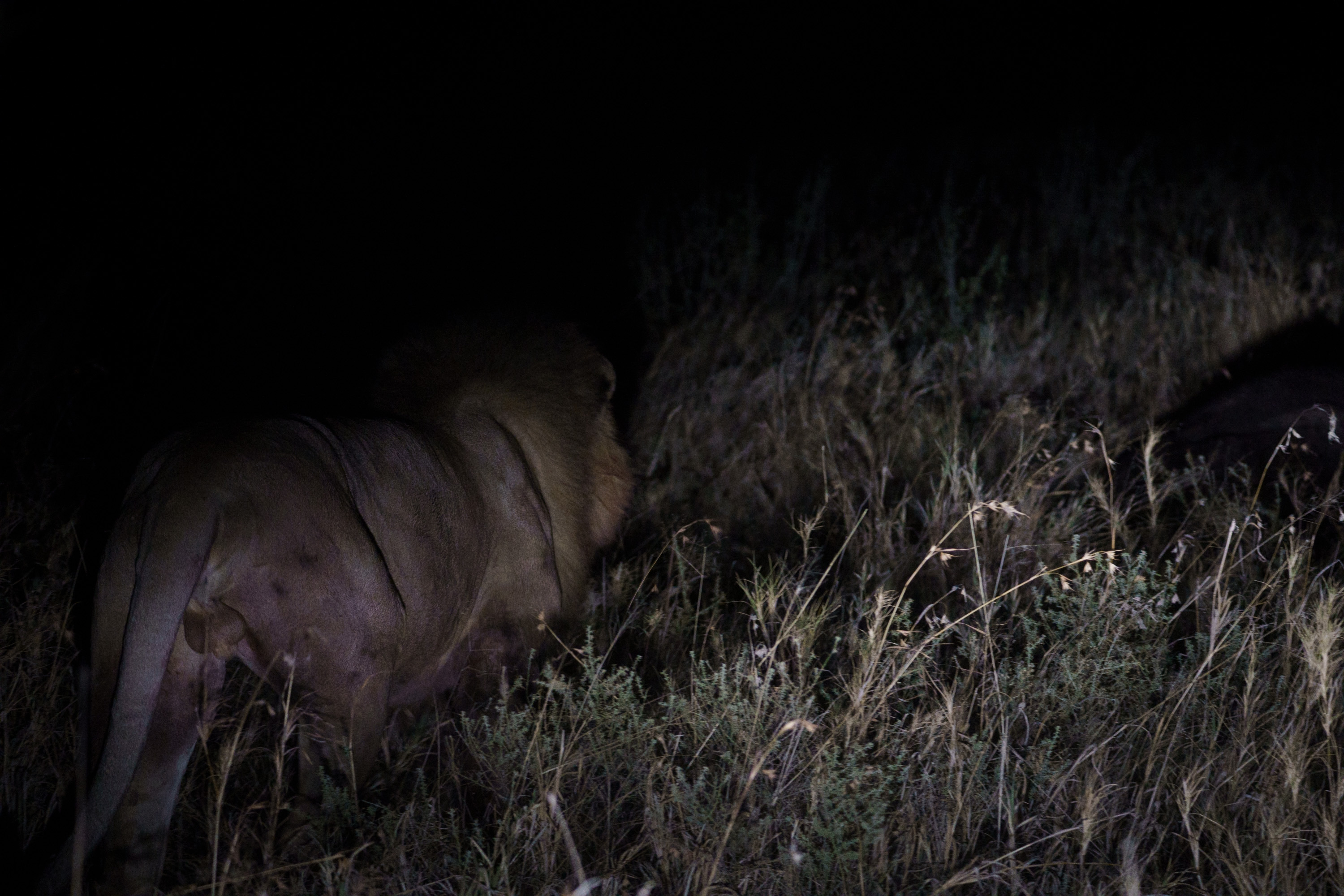
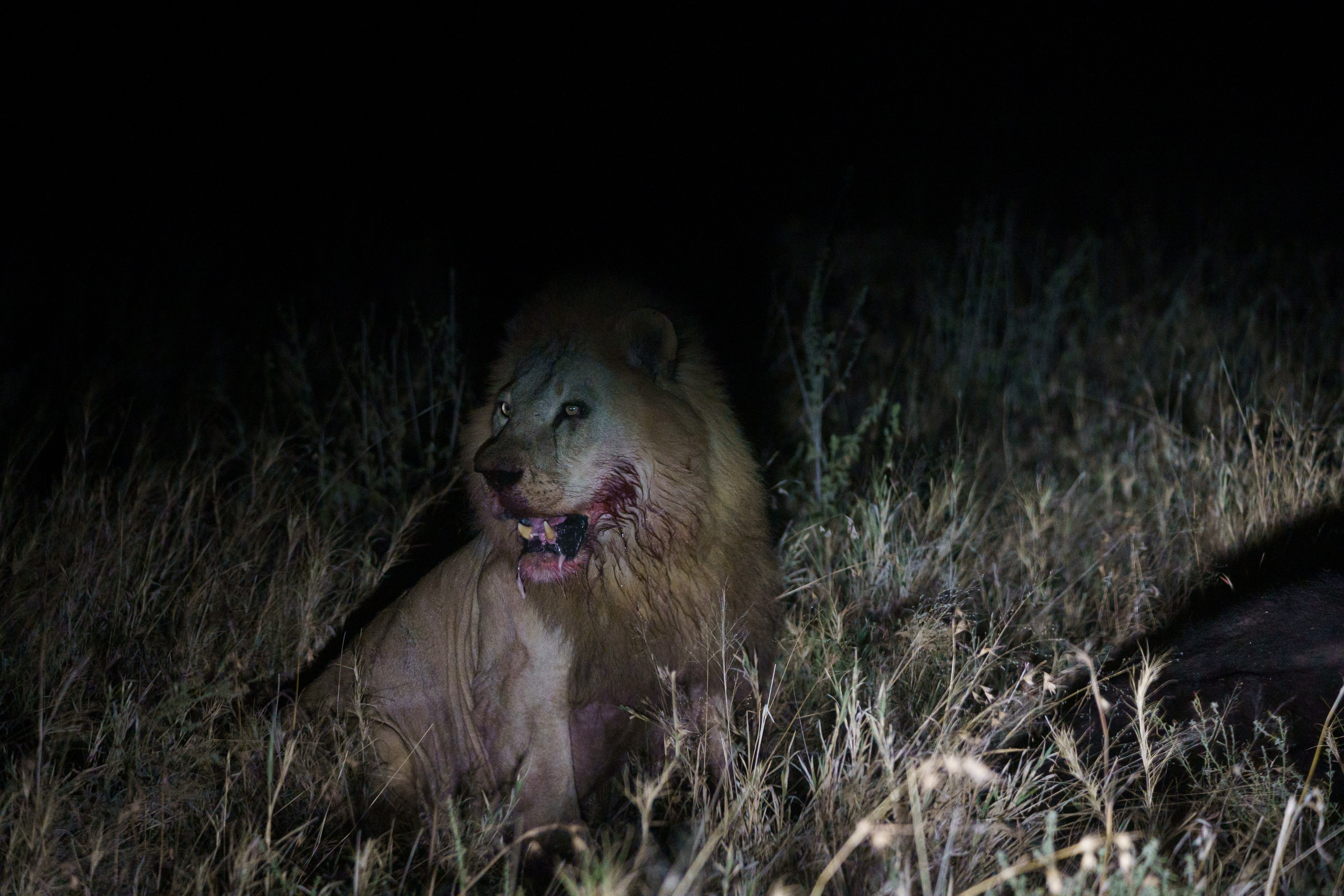
他们一会吃,一会儿休息,一会儿盯着我们看,一会儿绕着车转。先前晚上看到他们杀气重重的在院子前后转来转去,听见他们连续低声怒吼,让我毛发悚立,后背发凉。怎么也没想到雄狮就在眼前给我们上演了大自然的血腥猎杀,不知经常经历这些场面是否会让人经常分泌肾上腺激素而保持年轻。
我们这样静静地观看了一个多小时,直到这两只狮子也累了,带着感叹回到了房间,整晚听着时不时的狮子的低吼声…
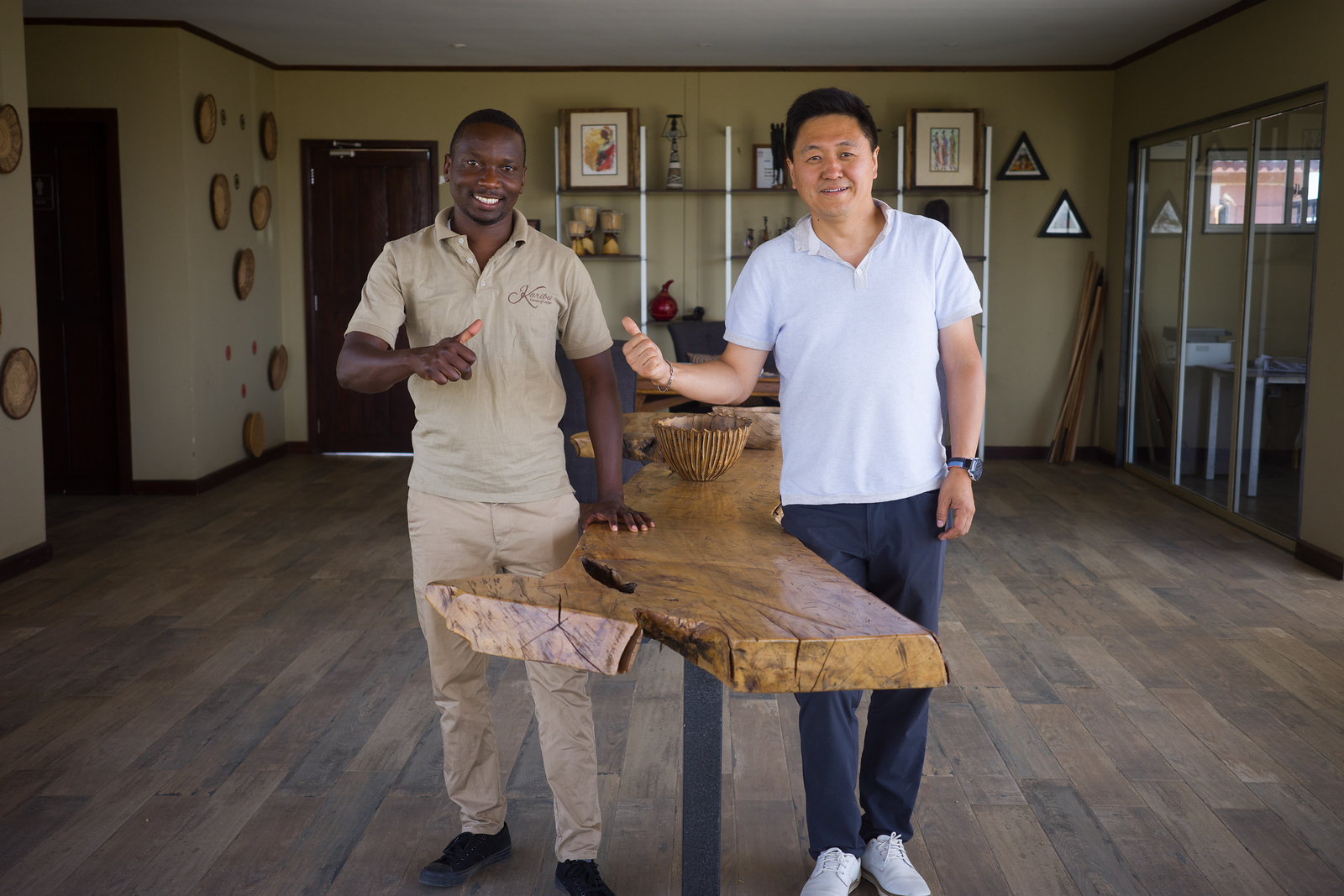
第二天早上狮子大家庭继续享用猎物,给每个人充分的拍照机会与体验。
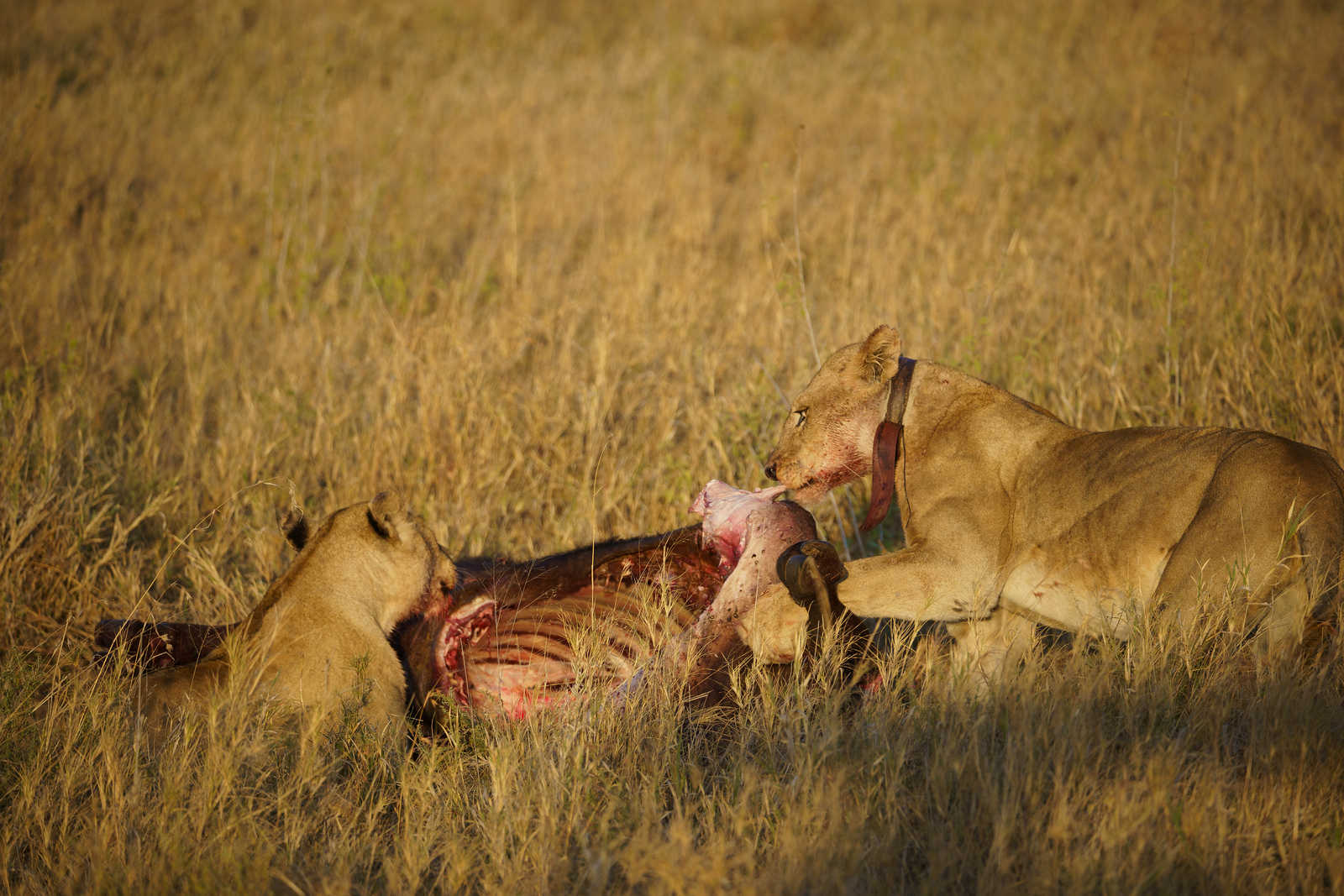
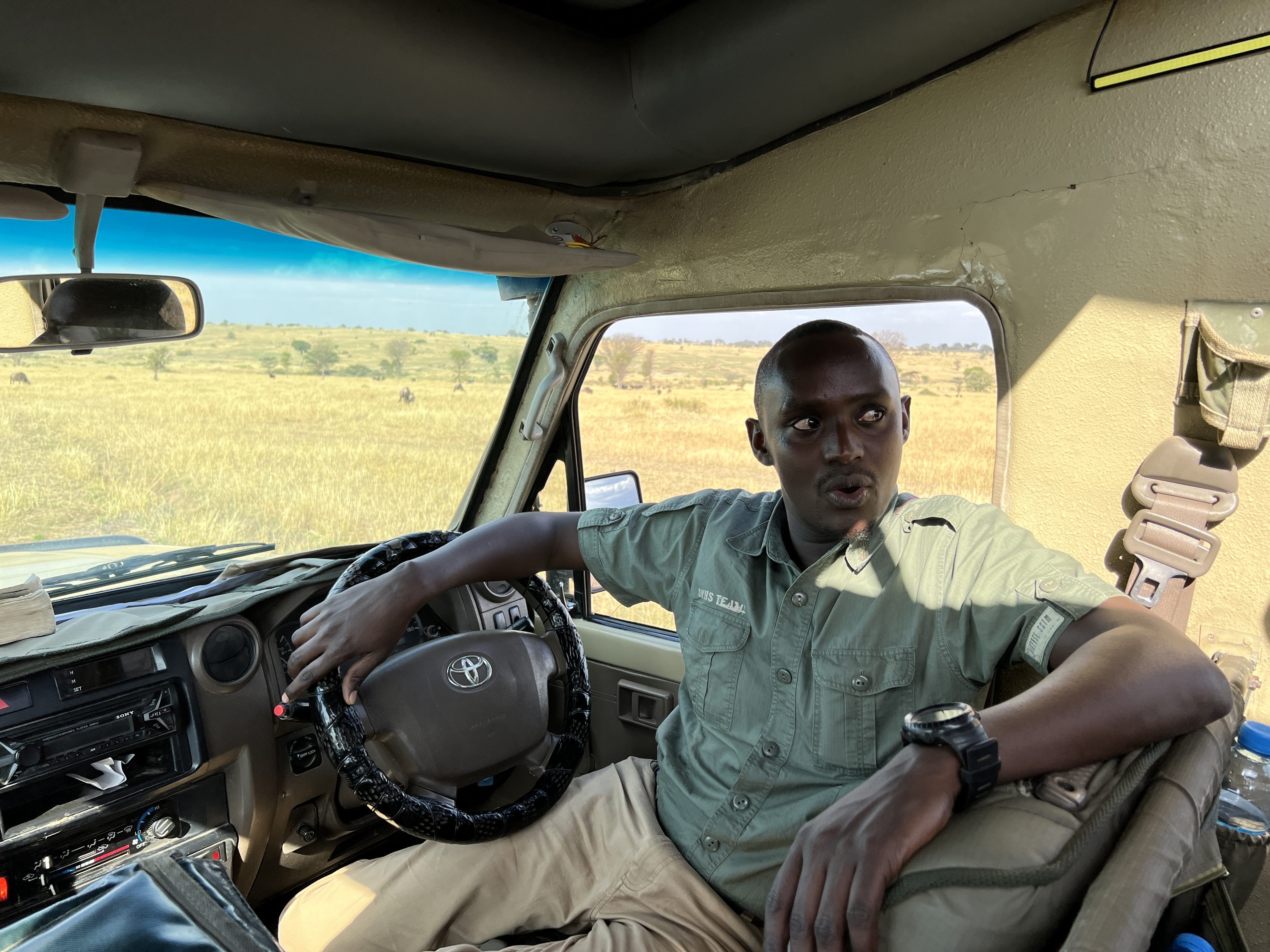
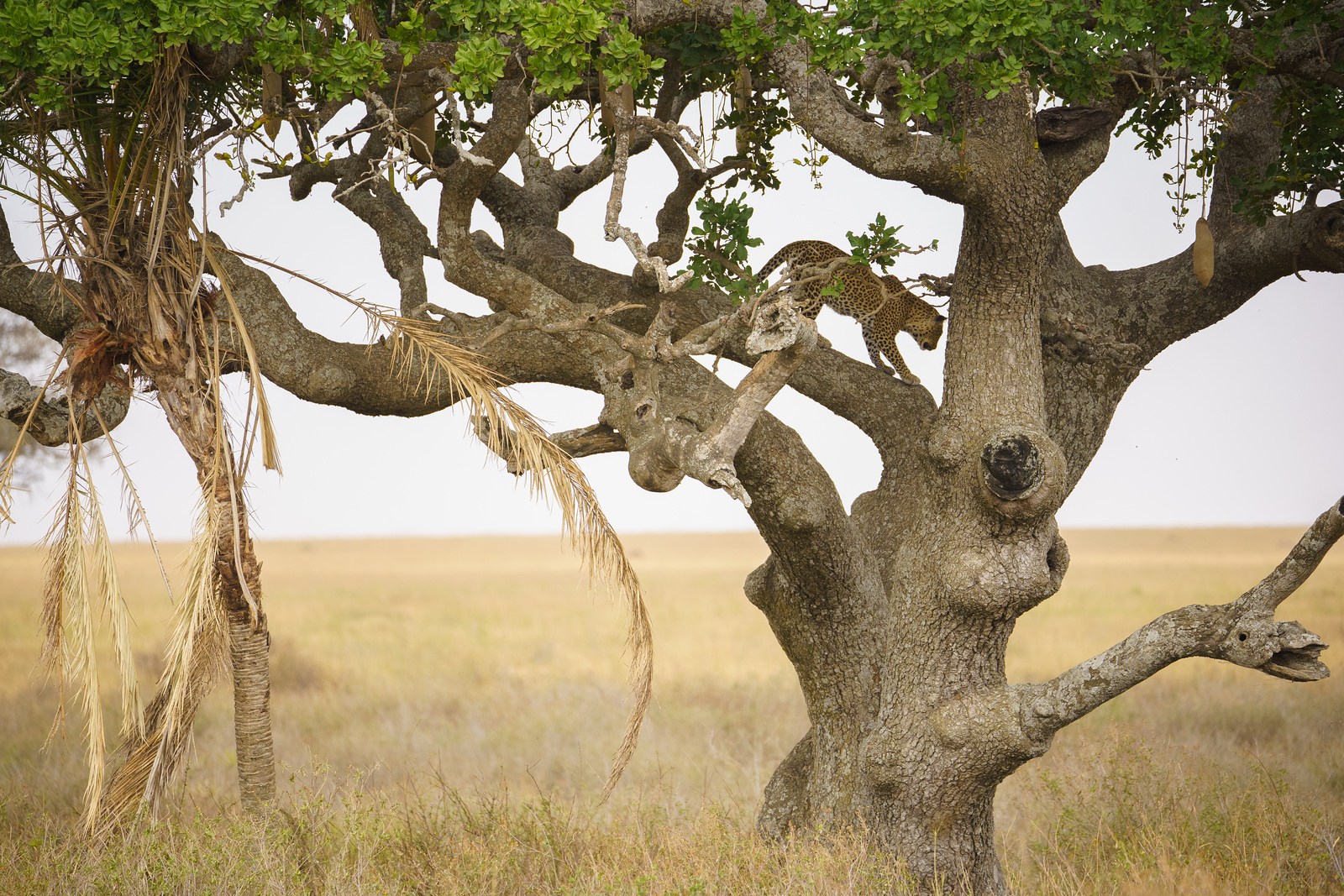
头两天草原游猎都很顺利,我们早起追看了浩荡的角马过河,美丽的斑马,威武的大象和大自然的各种生灵。导游Jackson说尽量让我们看到非洲的五霸:狮子,犀牛,大象,猎豹,和水牛。
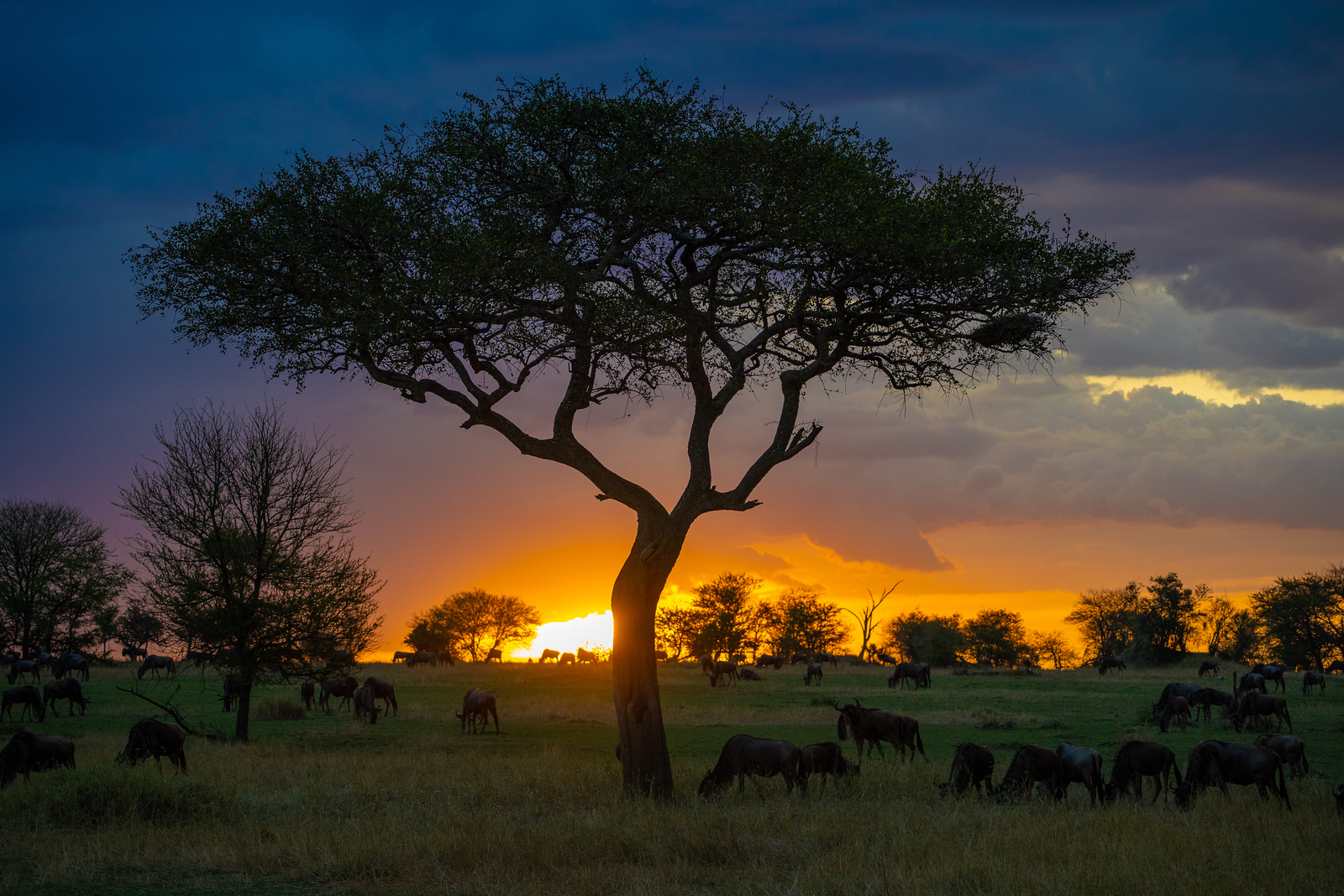
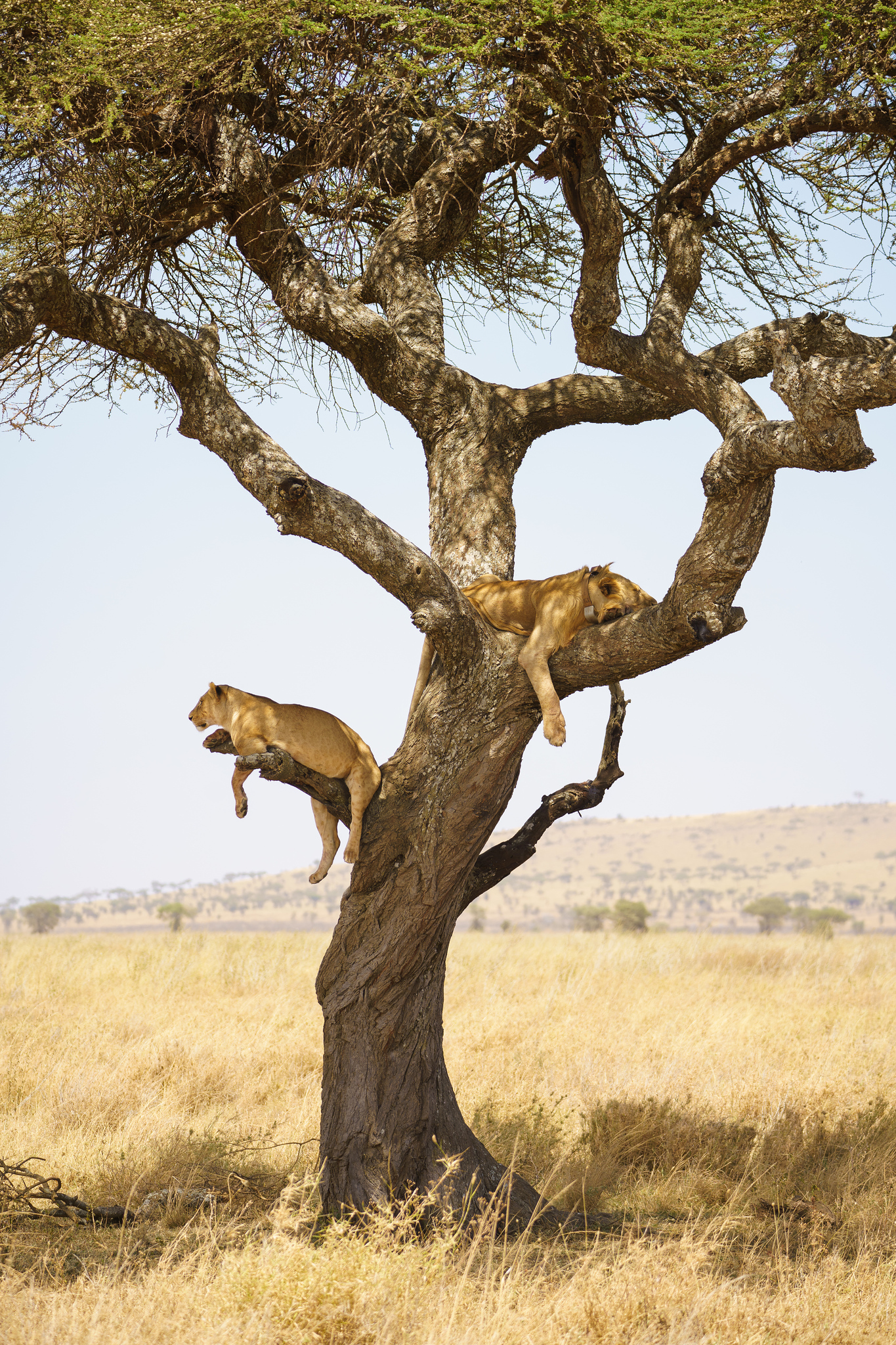
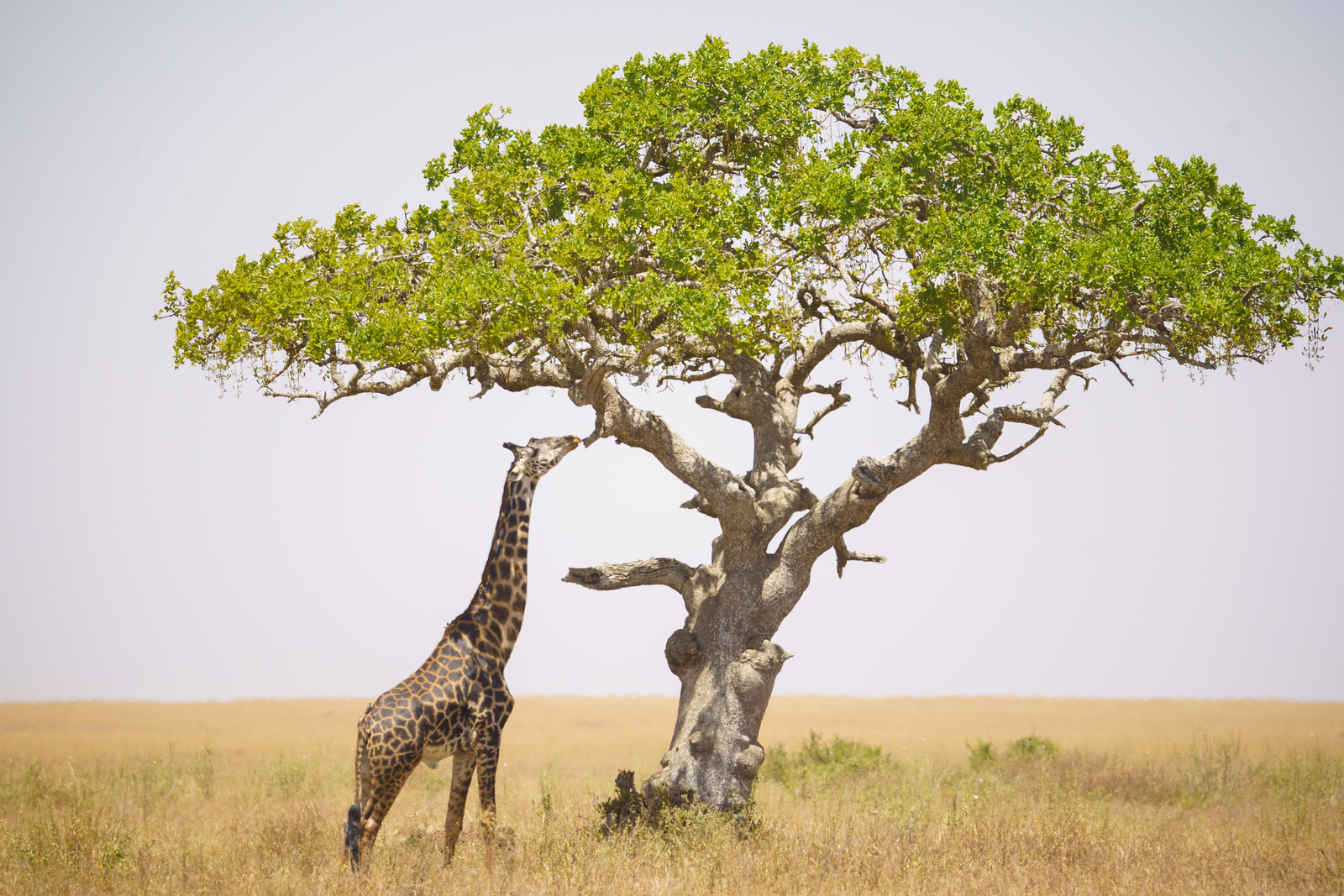
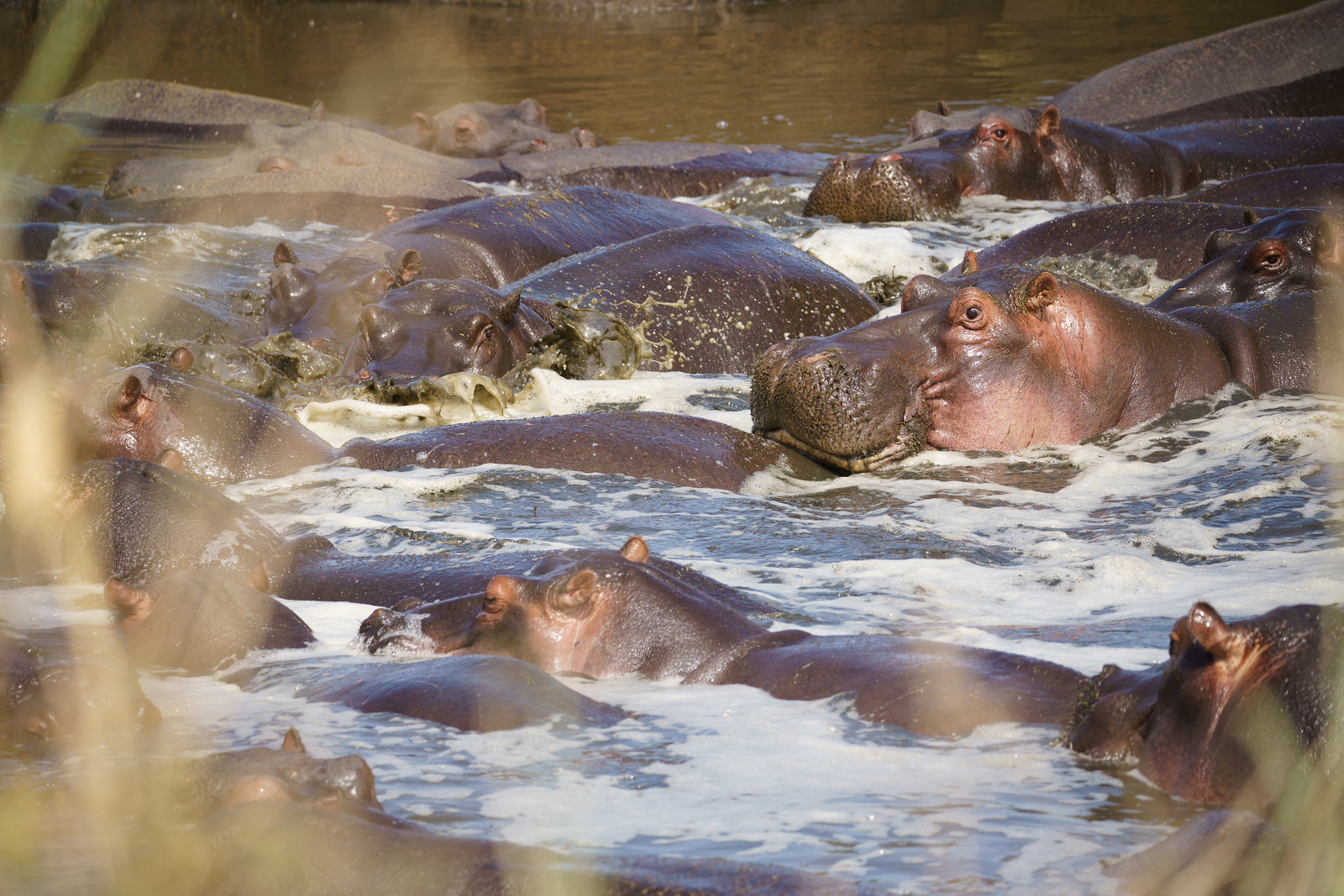
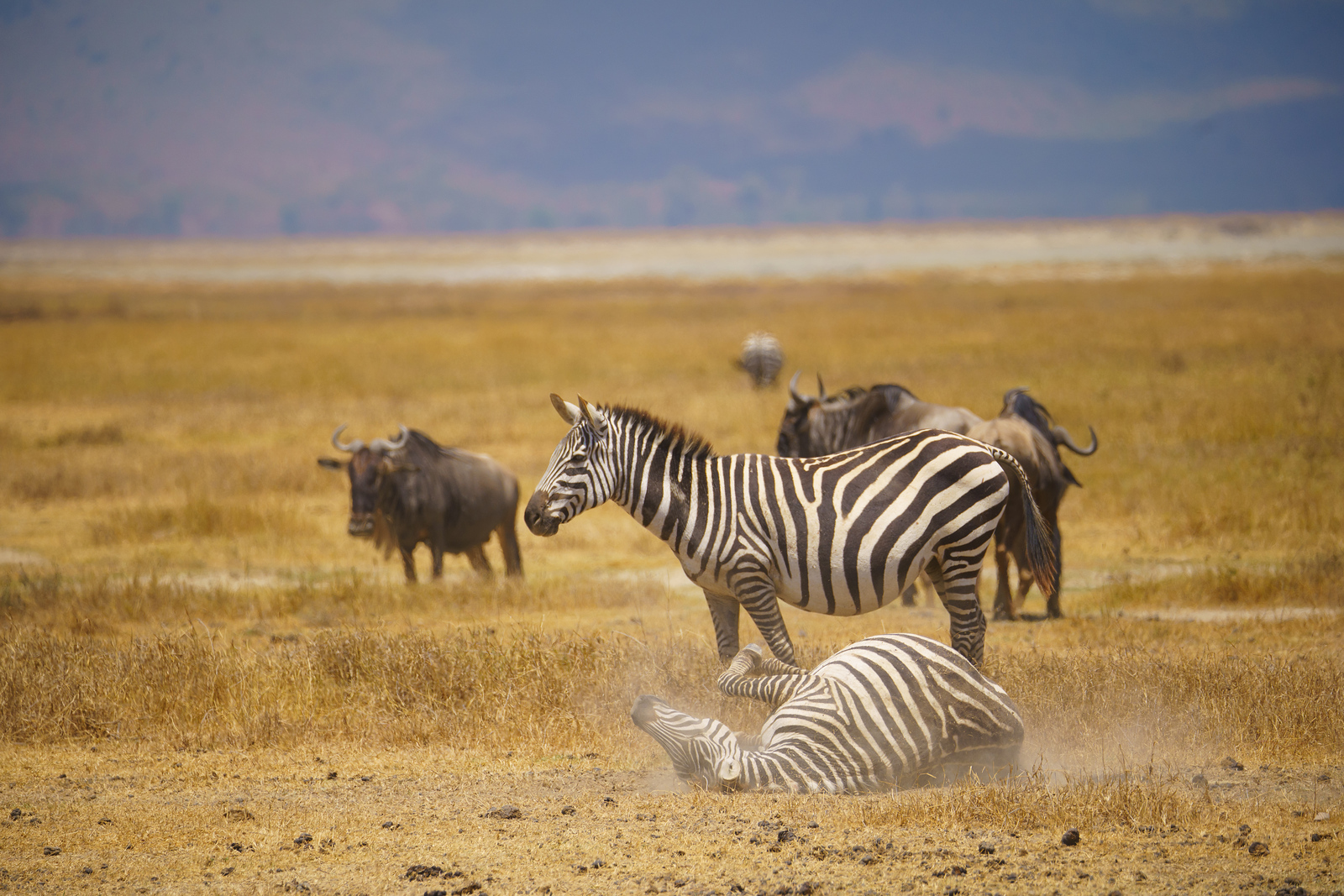
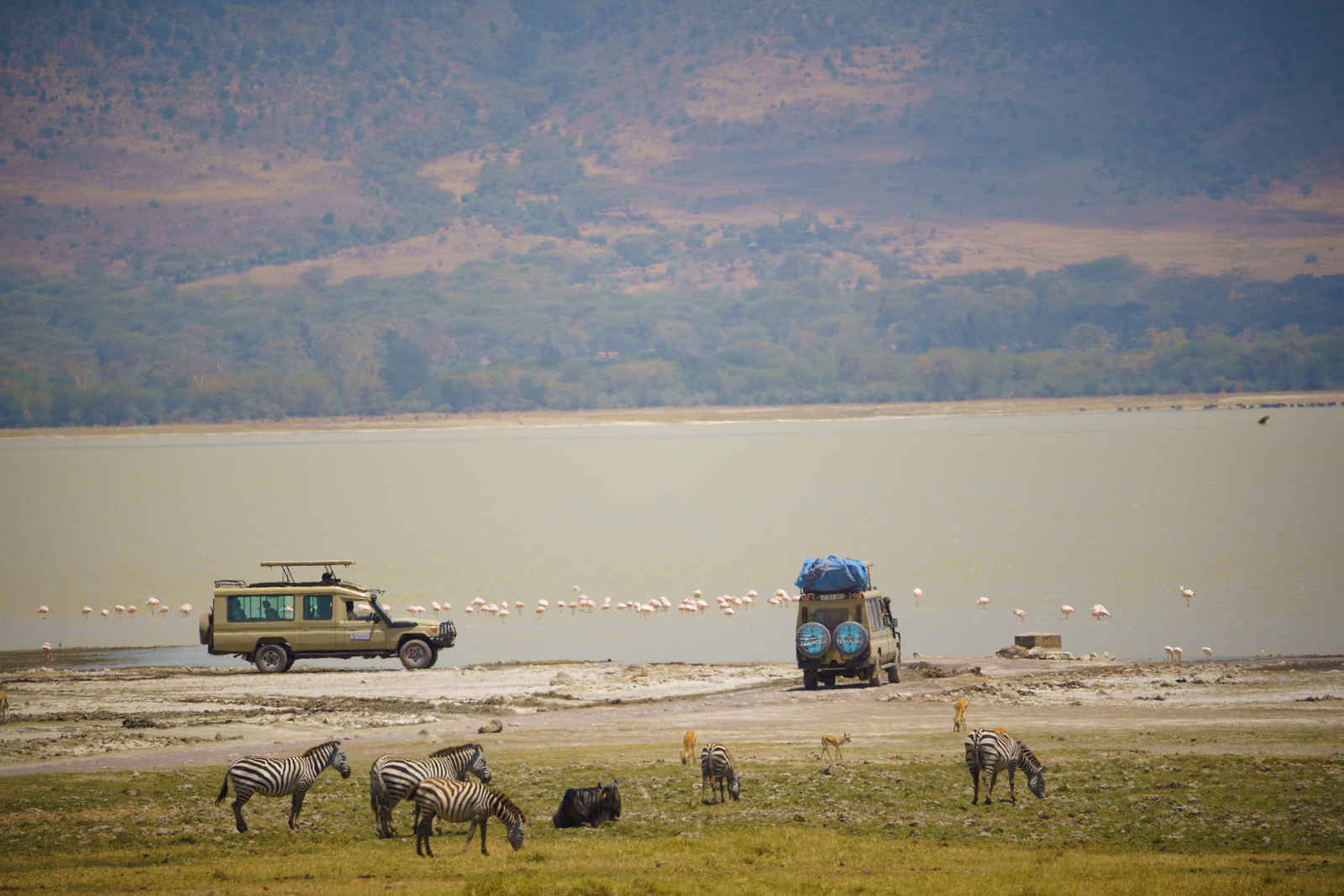
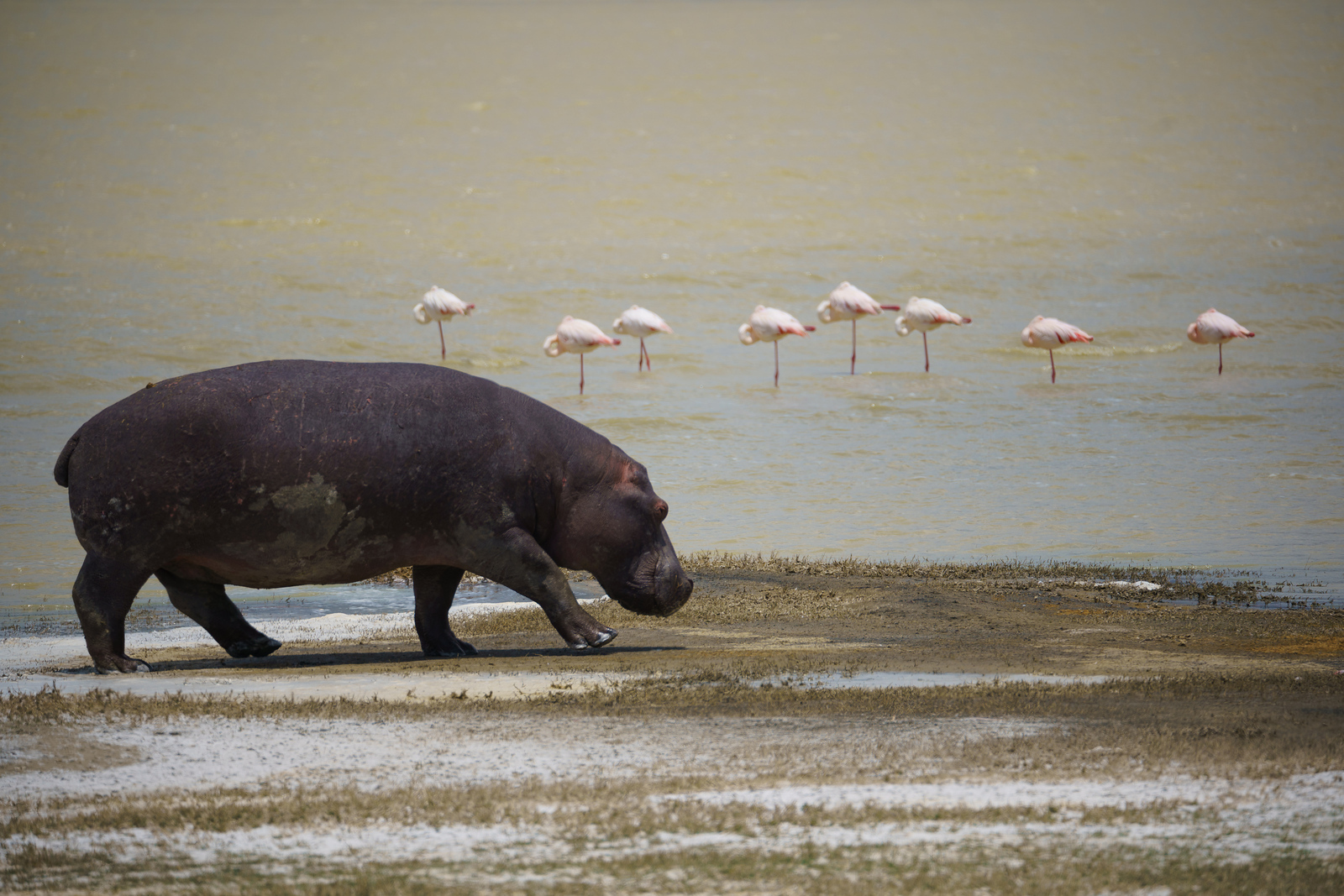
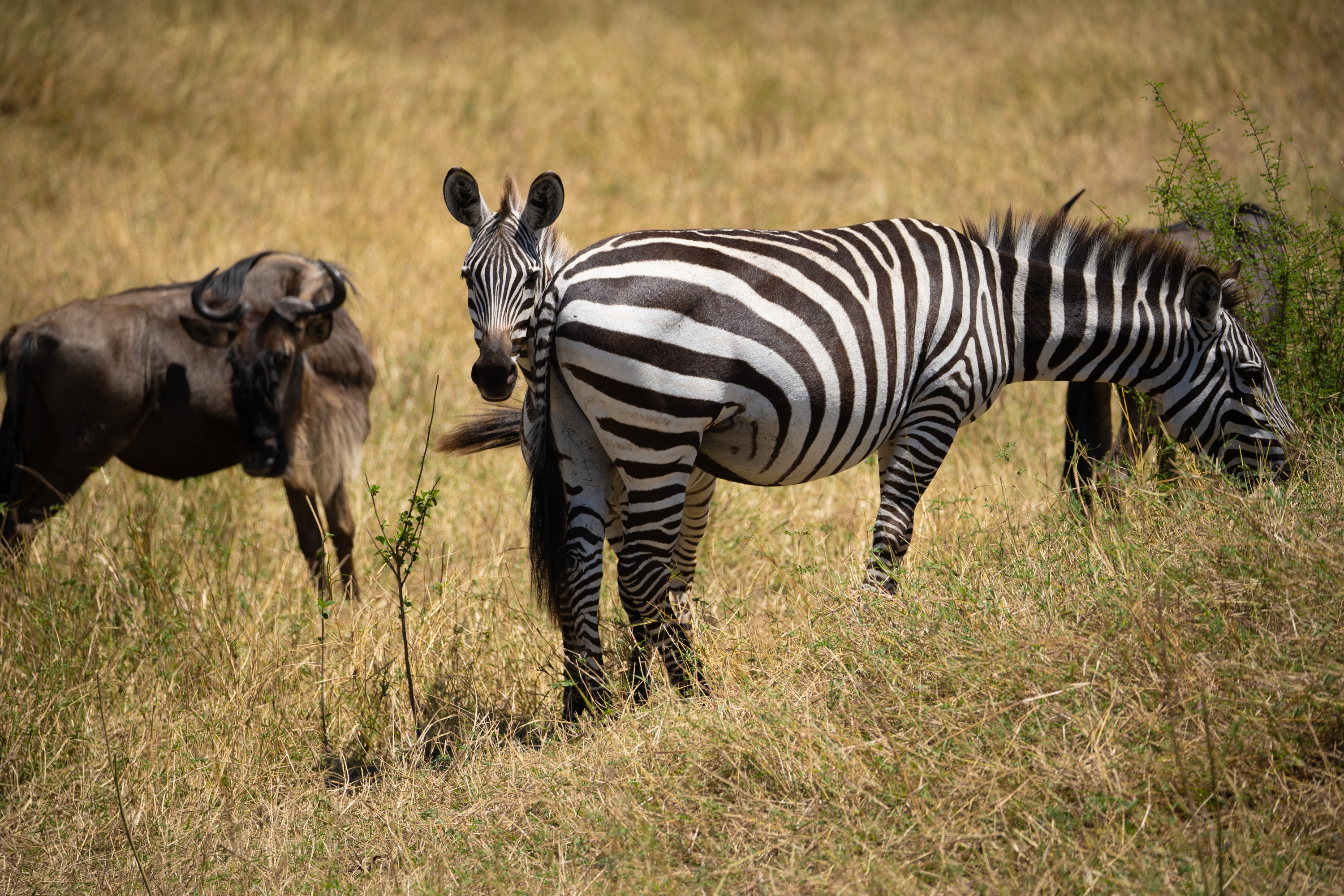
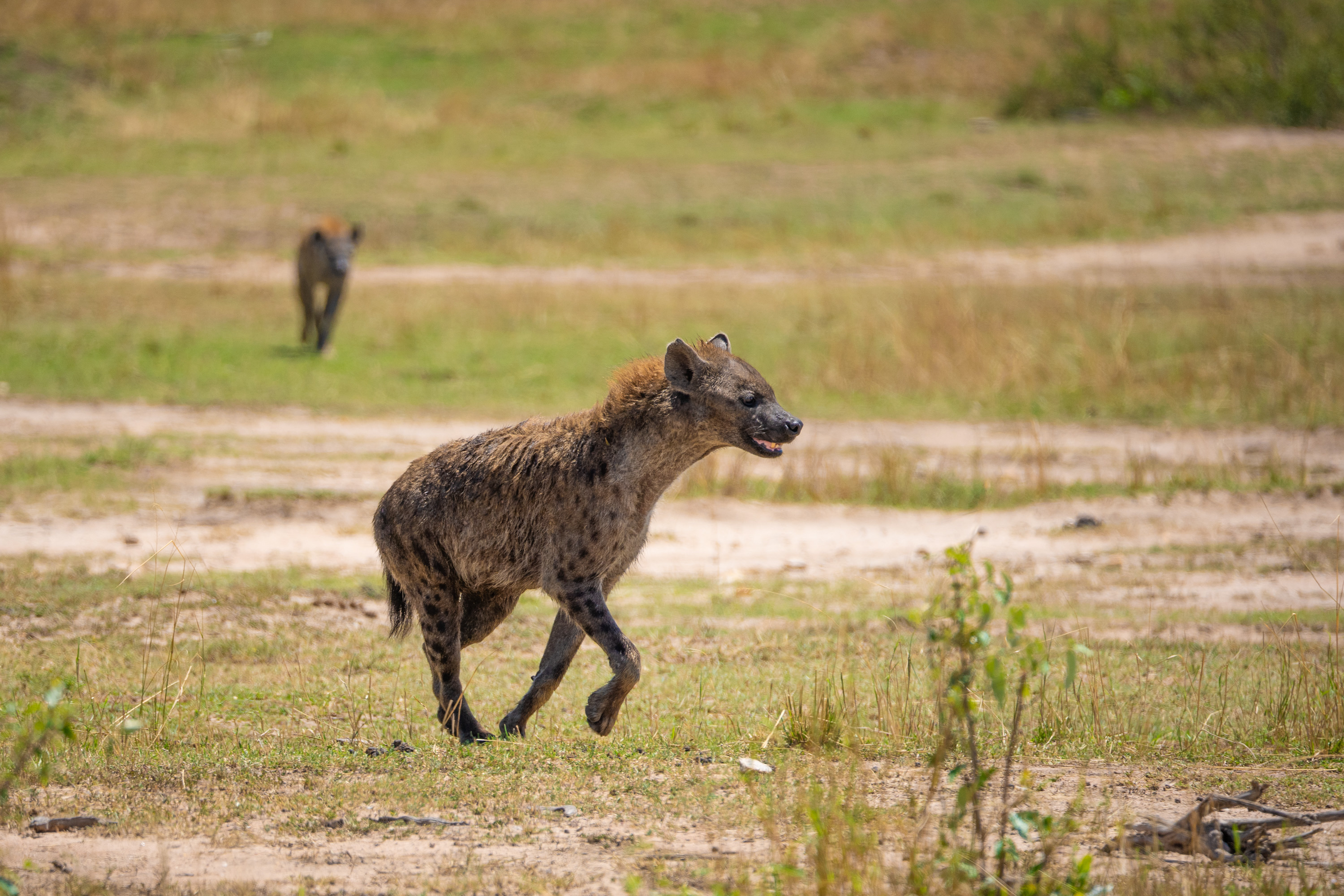
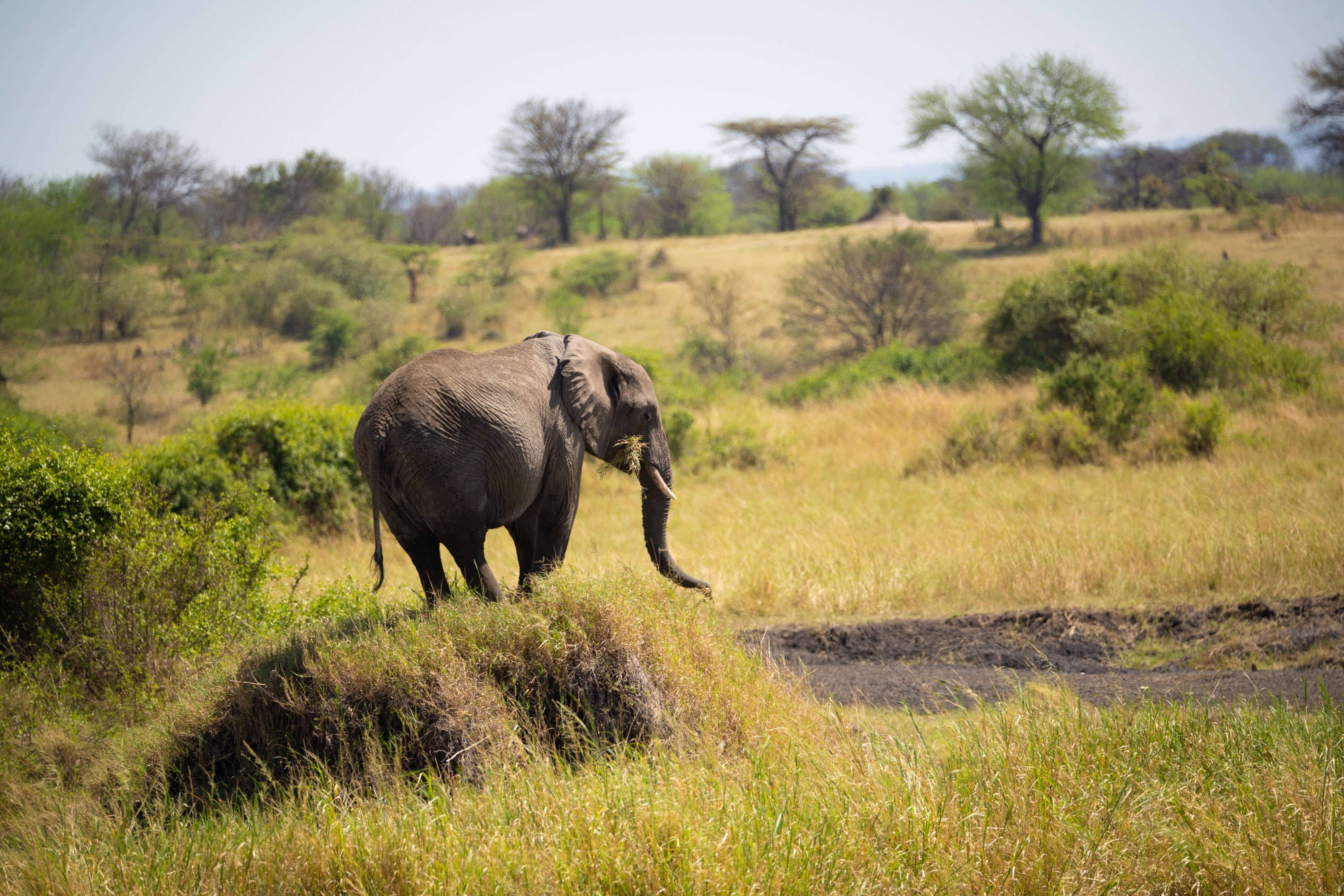
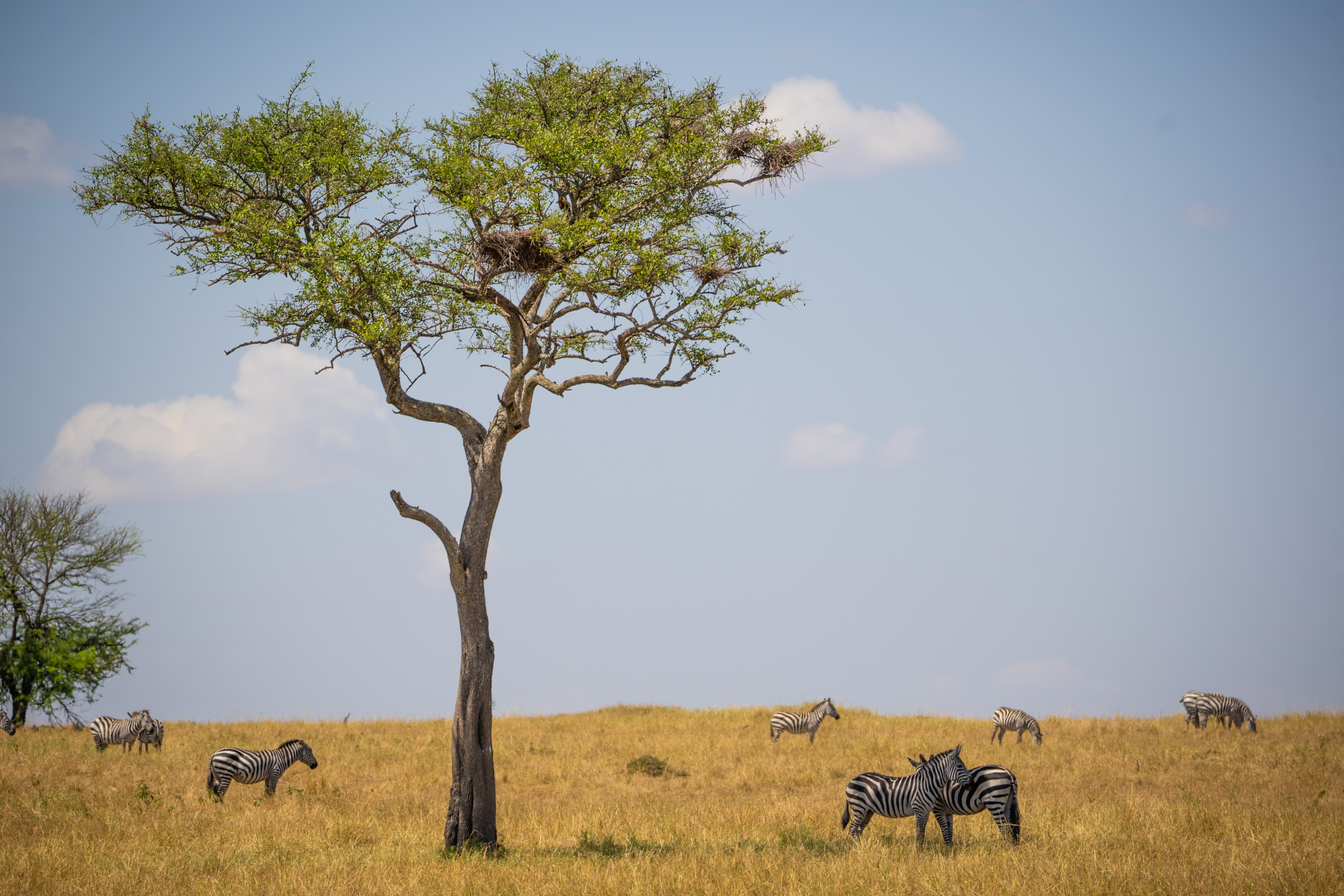
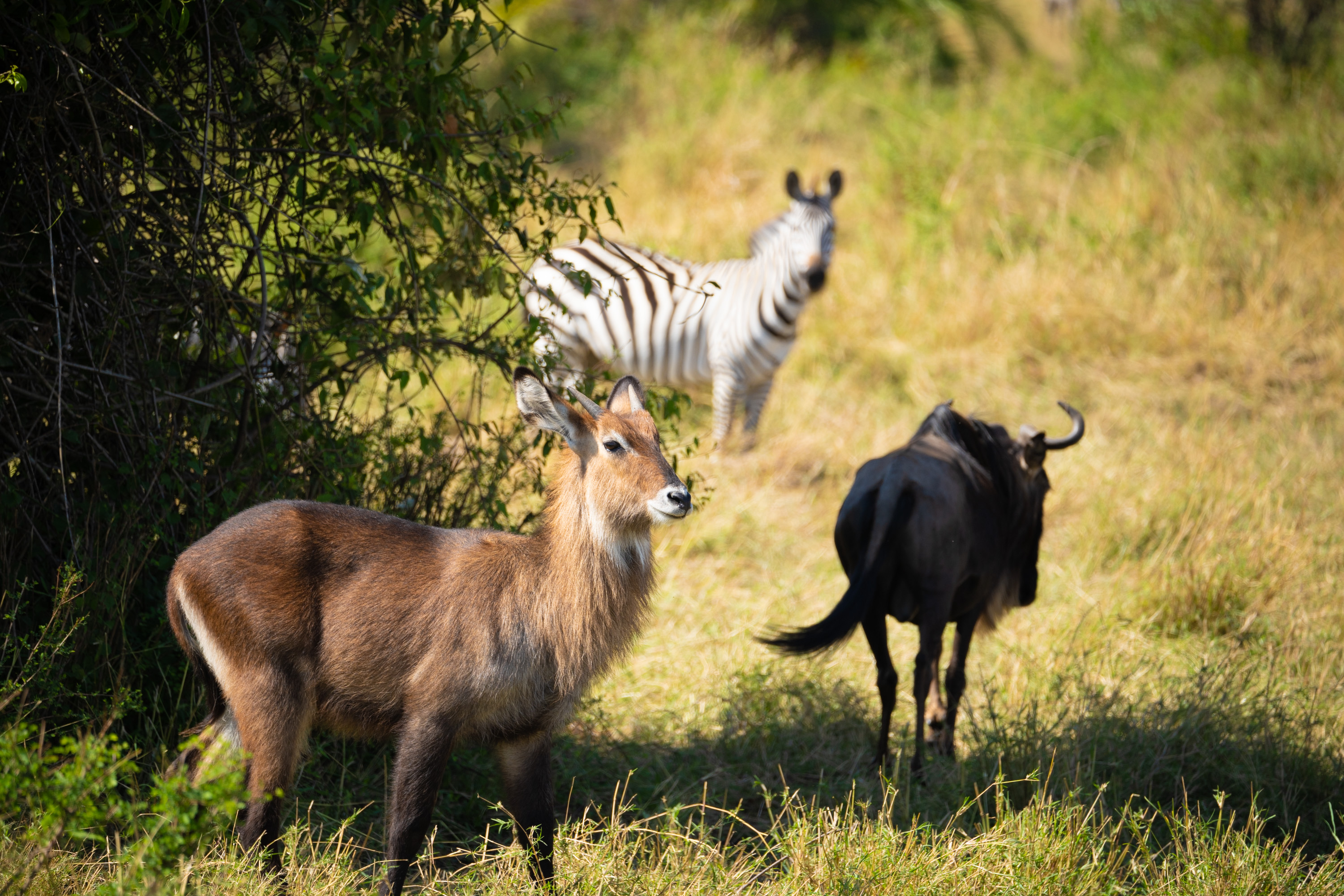
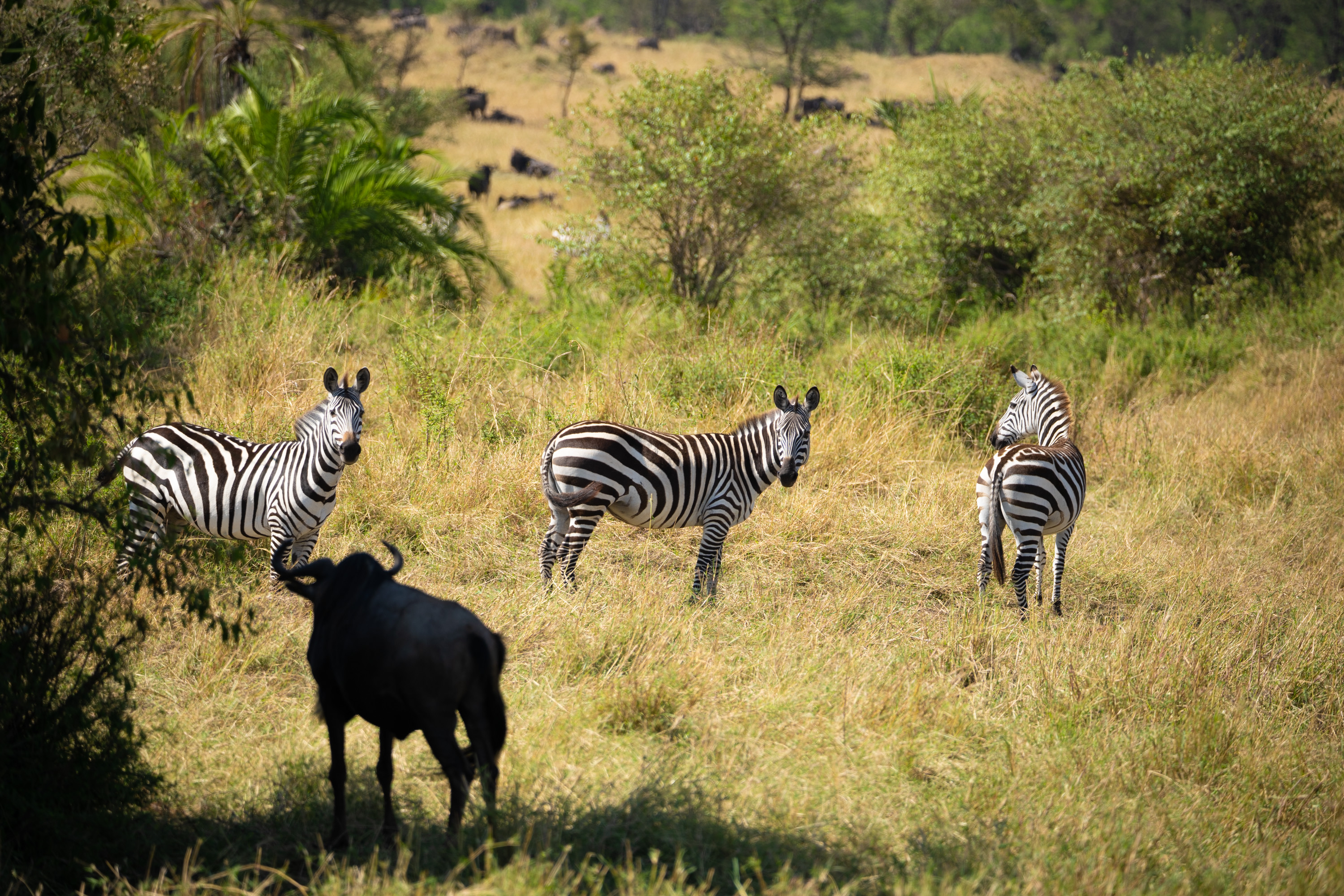
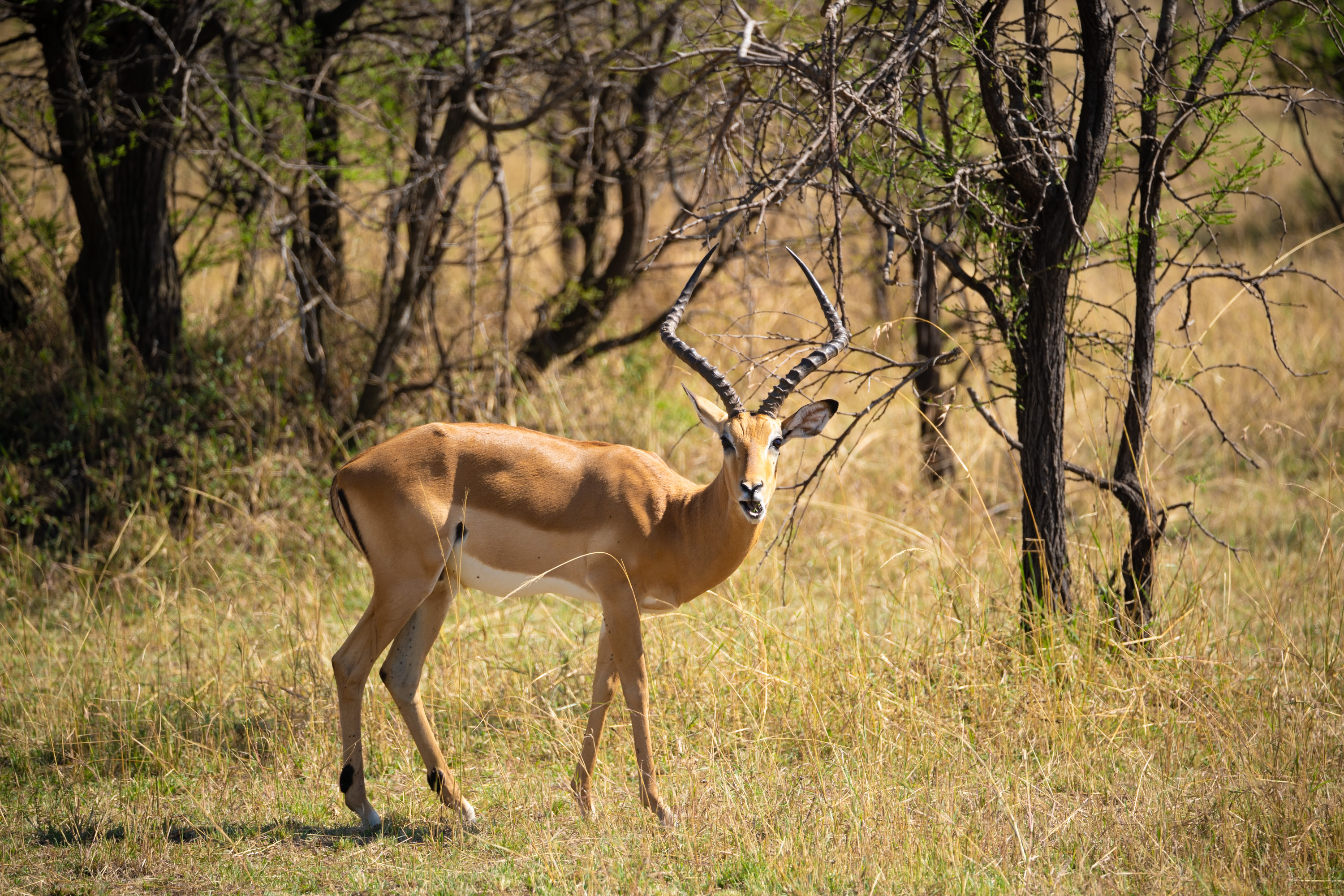
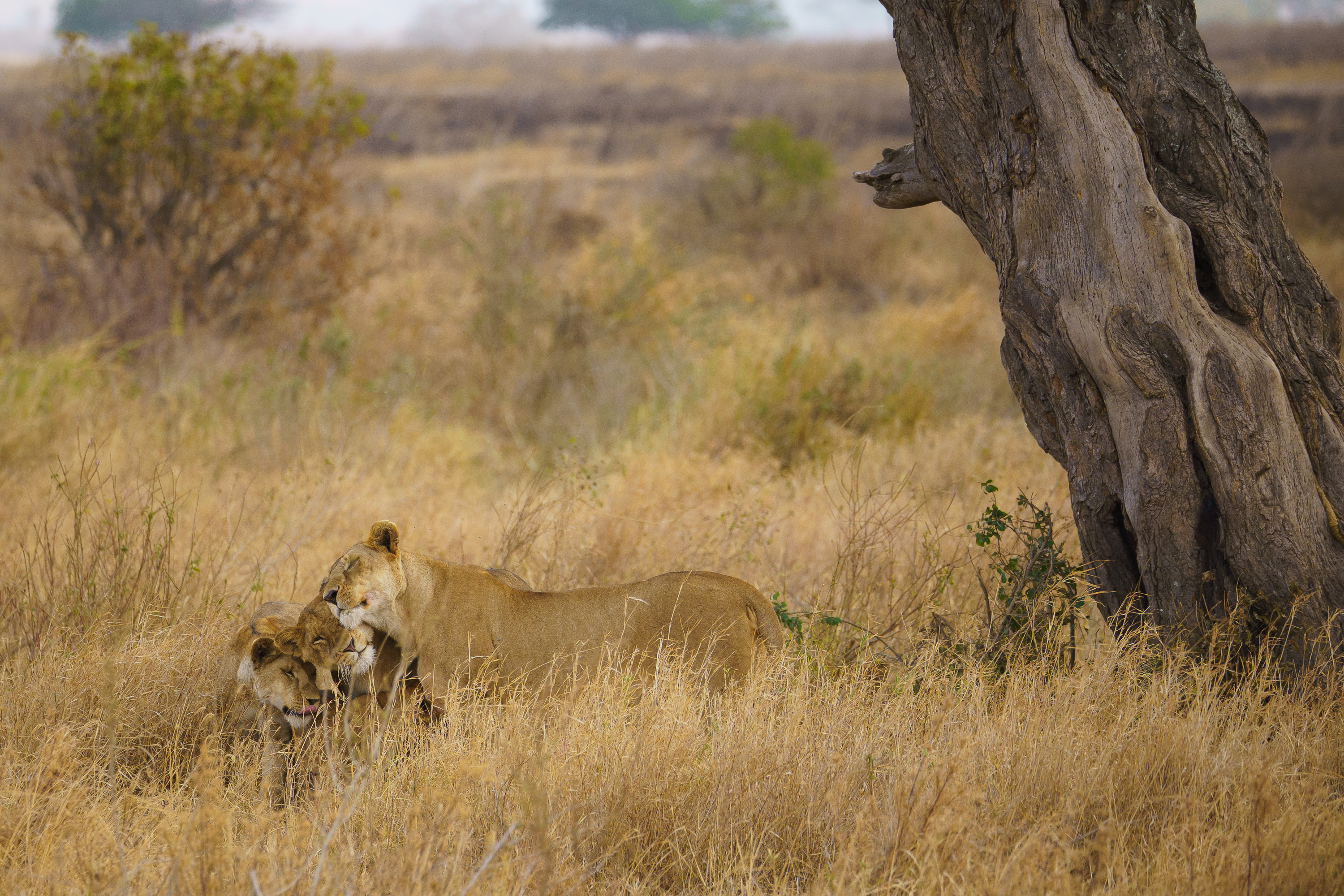
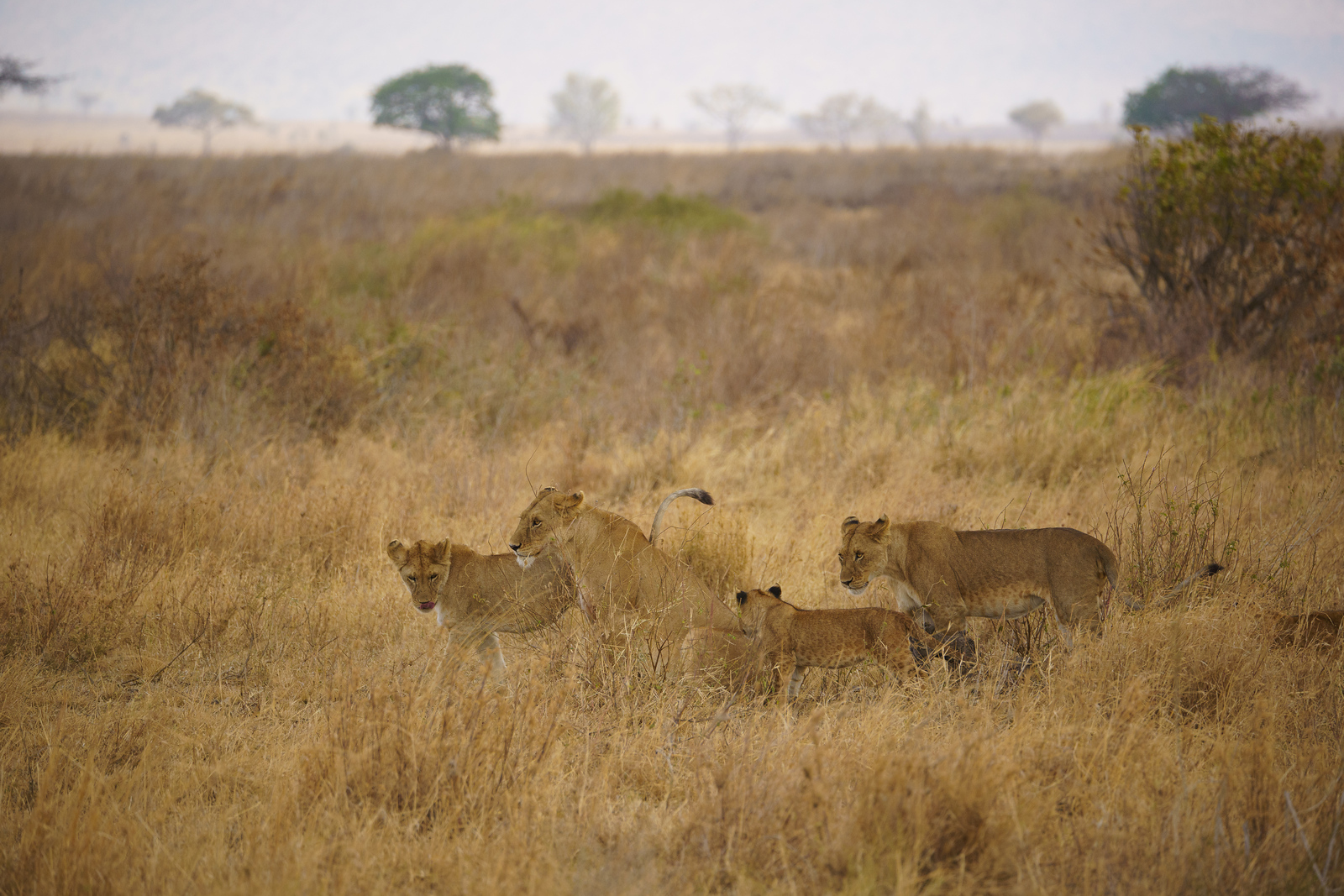
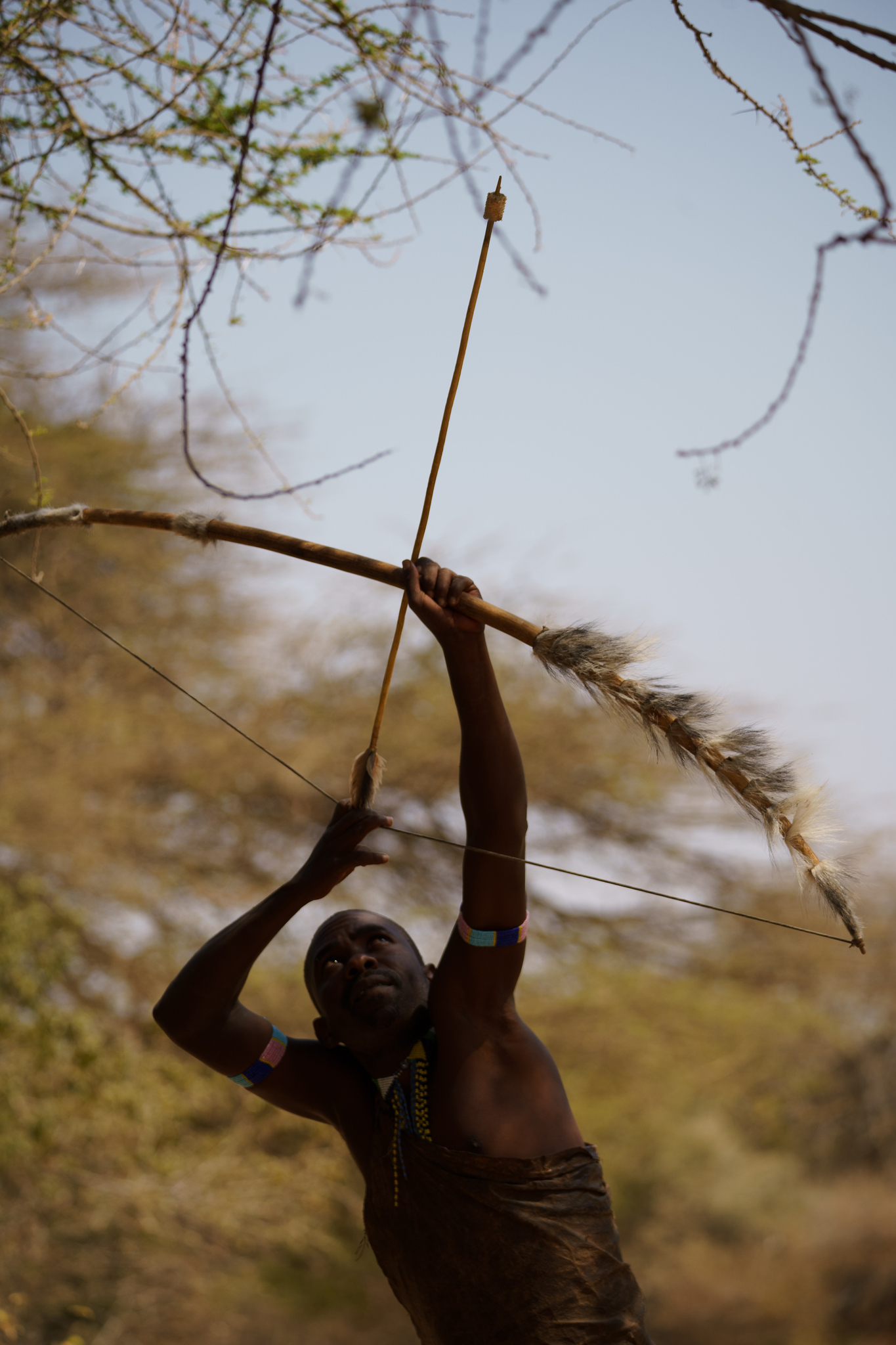
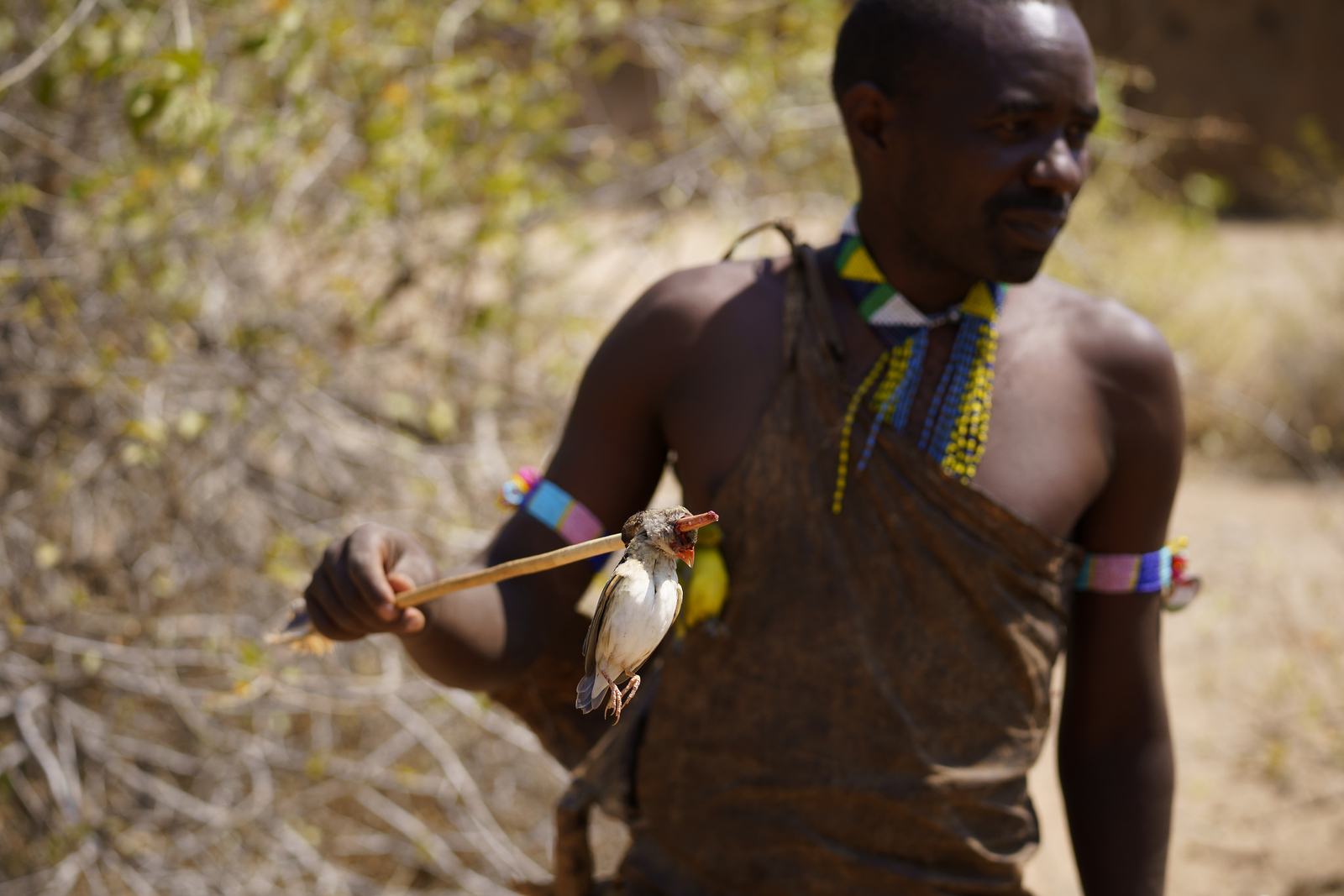
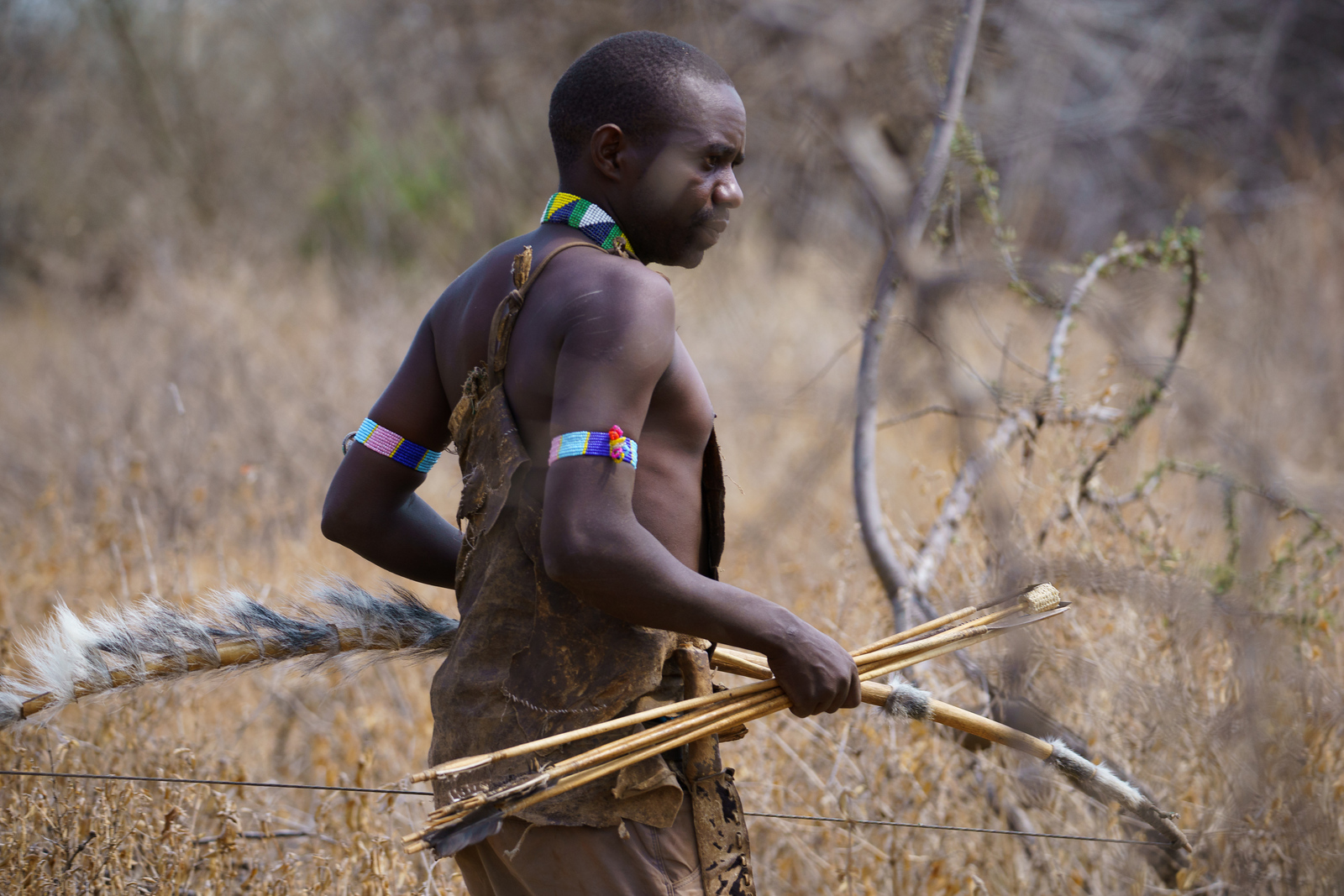
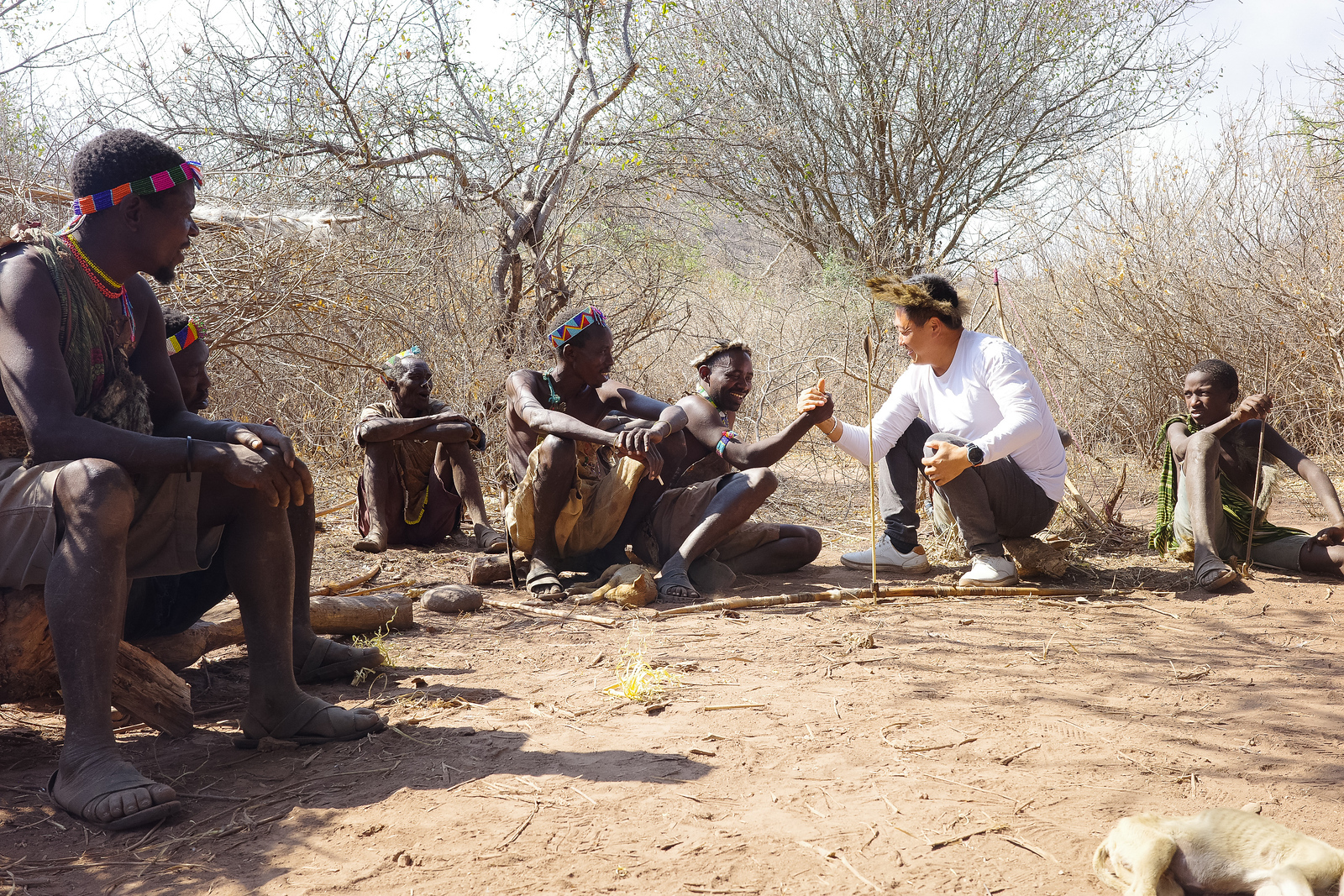
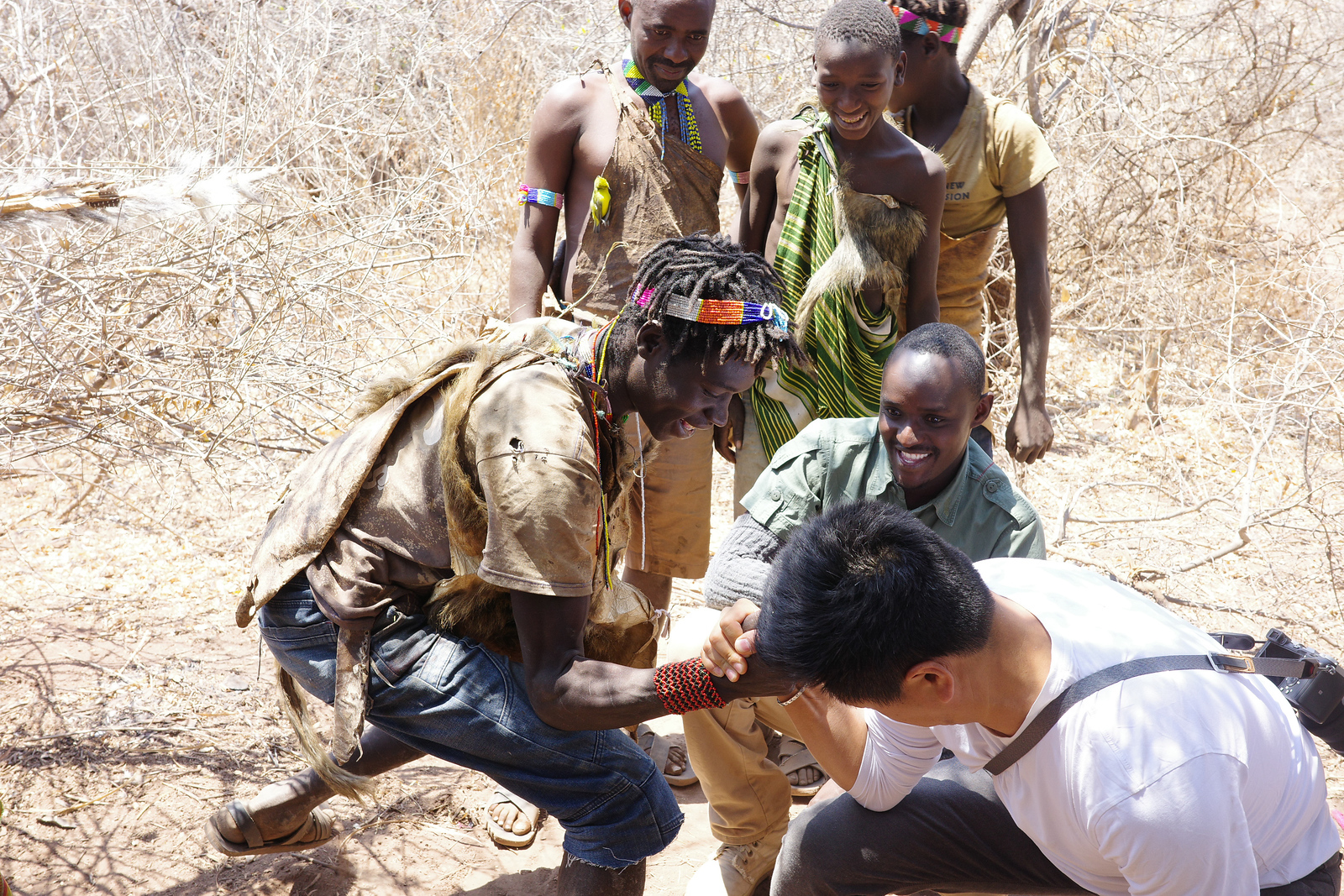
我早些时候拍到了狮子一家温存的照片,也拍到了晚上雄狮让人毛发悚然的时刻。短暂的三四天,摄影收获也很满,将来也可以和晚辈讲讲非洲的危险经历和与酋长掰手腕的故事。
苍野情怀
非洲的壮美在于她原生态的完好保护,在这里各种动物生灵有序生活,每天既和谐又充满杀机,真正物竞天择的天堂与战场。非洲是摄影师向往的拍摄胜地,是追梦人驻足不前的处女地,是原始部落梦牵魂绕虔诚守护的净土,也是欧洲资本集团疯狂掠夺的肥肉。因为她的原始,粗犷,落后,遥远,给她蒙上了层层的神秘面纱。每年最忙的七八月份大量的游客来这里观摩崇拜,体验着万亿年恒古不变的苍野情怀,聆听着那自然最清晰的厮杀声,看着草原最具生命力的光影错动,感叹着大自然的浩瀚和人类的渺小,也让人揣摩着千万年之身后计划 … …
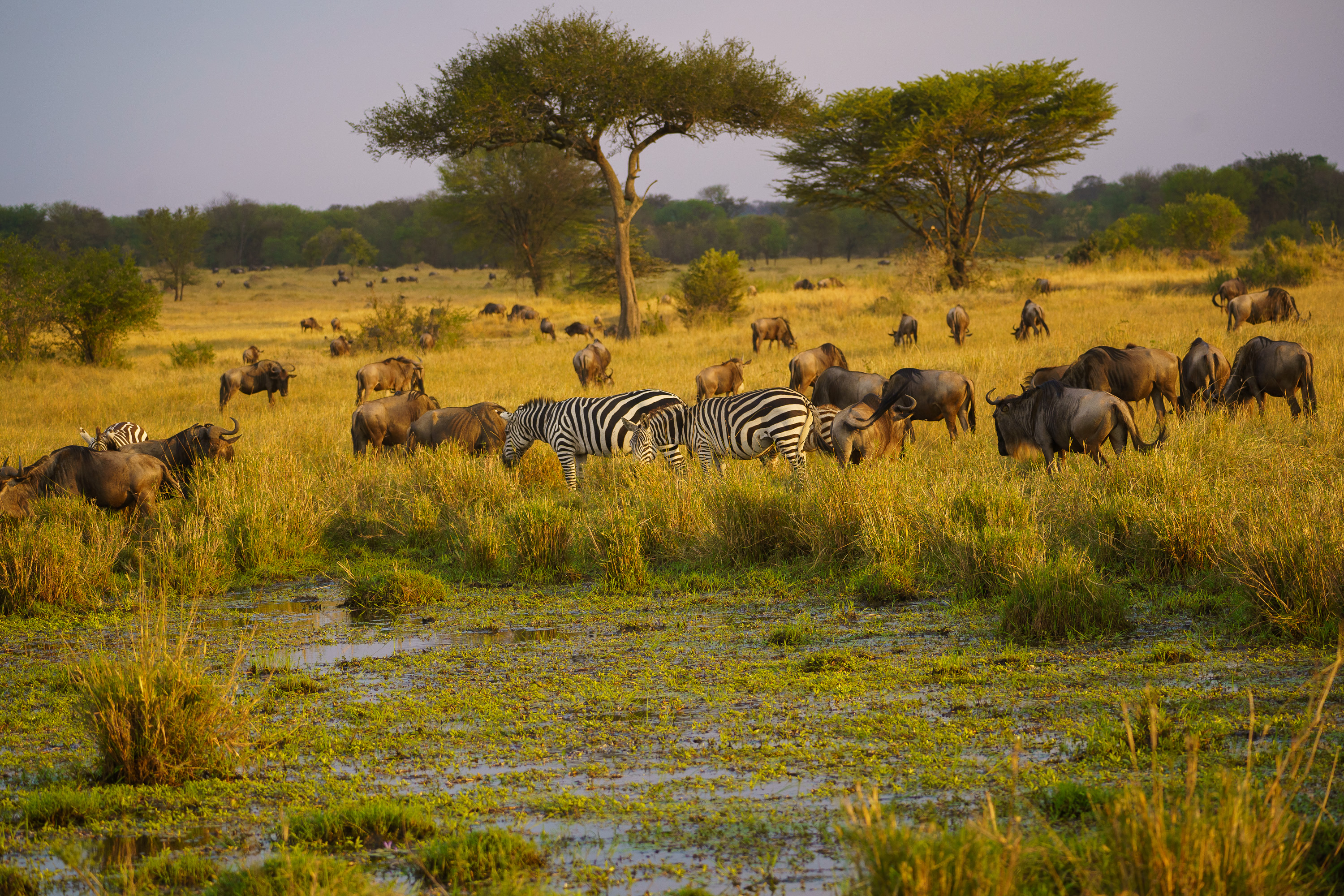
来非洲给人带来的触动,就像狮子被放出笼子一样。现代人在城市里住久了不觉得,实际上就像在笼子里一样,到这原野里一放飞,就不禁发出唏嘘声,有如灵魂被正骨师一顿推拿咔咔响后打通了一样。在体验草原美景和生灵带来的不断高涨的兴奋点后,人的心扉之栅栏也自然的打开,大家一路讨论着各种平时不太会交流的问题,有些听似单纯,但是却是困扰很多人多年的问题,大家慢慢打开了内心尘封多年的原始记忆,在草原夜幕降临后的篝火旁展开了热烈的讨论和交流,直到服务人员一再催促我们“转场”。
非洲思索
我们都知道非洲落后,但是现况如何,为什么这么落后,不是每个人都清楚。带着这些疑问,我看了一本书“欧洲如何坑了非洲” 作者 Walter Rodney。作者很多观点和马克思一样,但是他对非洲被欧洲掠夺的事实看的特别清楚犀利,导致他在38岁时被暗杀。书的原名是“How Europe Underdeveloped Africa”. 这里的 Underdevelop 意思是“不发达” “落后”,作为动词,就有些故意让他落后的意思,所以我翻译成“坑了”。非洲黑人被奴役有400-500年,从14世纪到19世纪,这四五百年正是欧洲通过殖民地掠夺和工业化发展飞速前进的时期,非洲被完全阉割掠夺了。他们的人口四百年来几乎没有增长,而那个时期人力是重要的发展资源。当时最重要的农业和造船业都需要很多人力,黑人奴隶给欧洲各国注入了无穷的动力,促进了农业转工业的飞速发展。非洲的矿产例如金子都被掠夺。非洲的矿产丰富,占世界的20-30%。 人类发展史上最凄惨的历史书写在非洲,没有其他,被掠夺的不仅仅是自然资源,也是发展的机会。现代时期,发达国家和世界银行对非洲援助不少,但是和非洲四五百年被掠夺的损失相比是杯水车薪,不足挂齿,最多只能说是欧洲人假惺惺的表达歉意的方式。
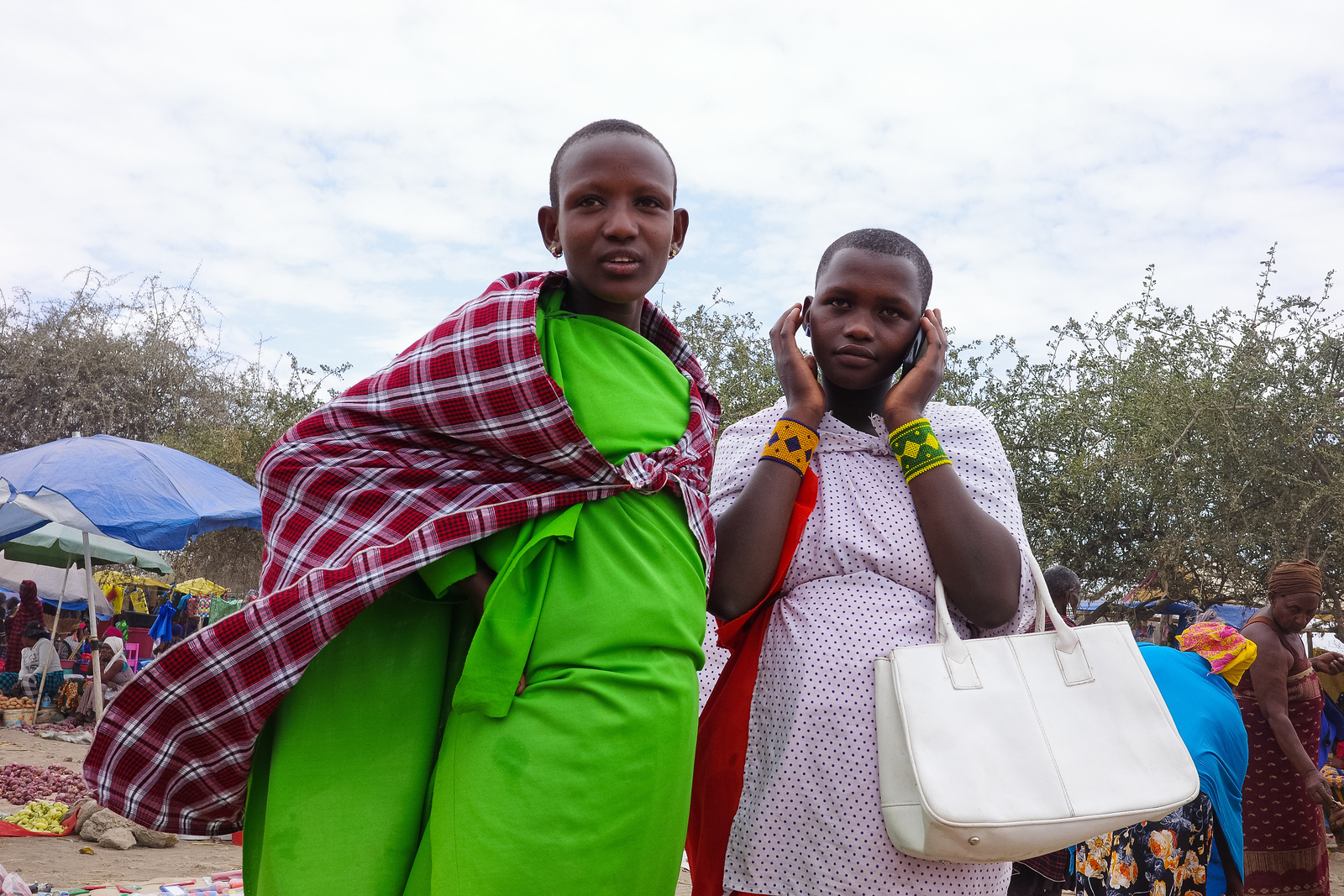
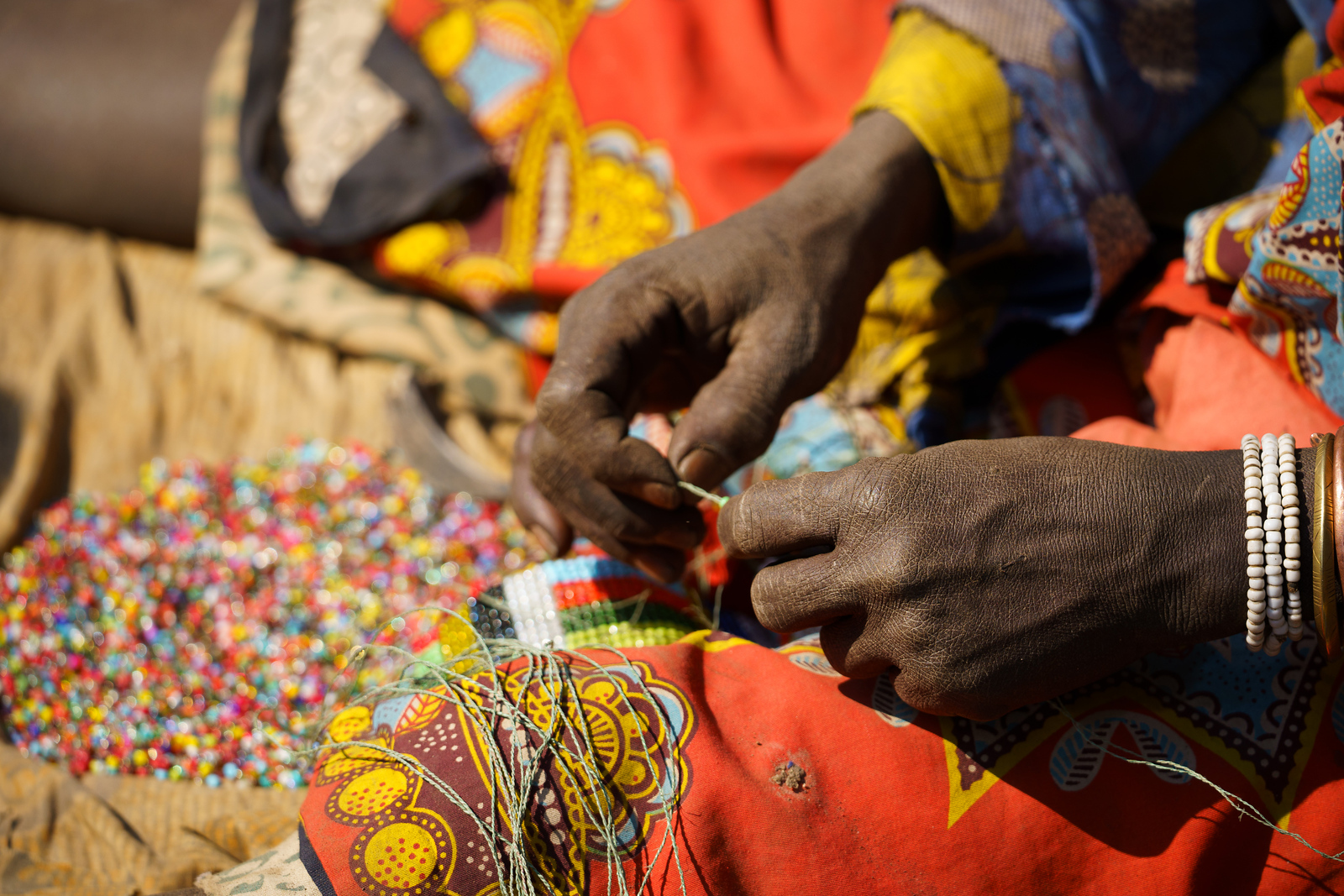
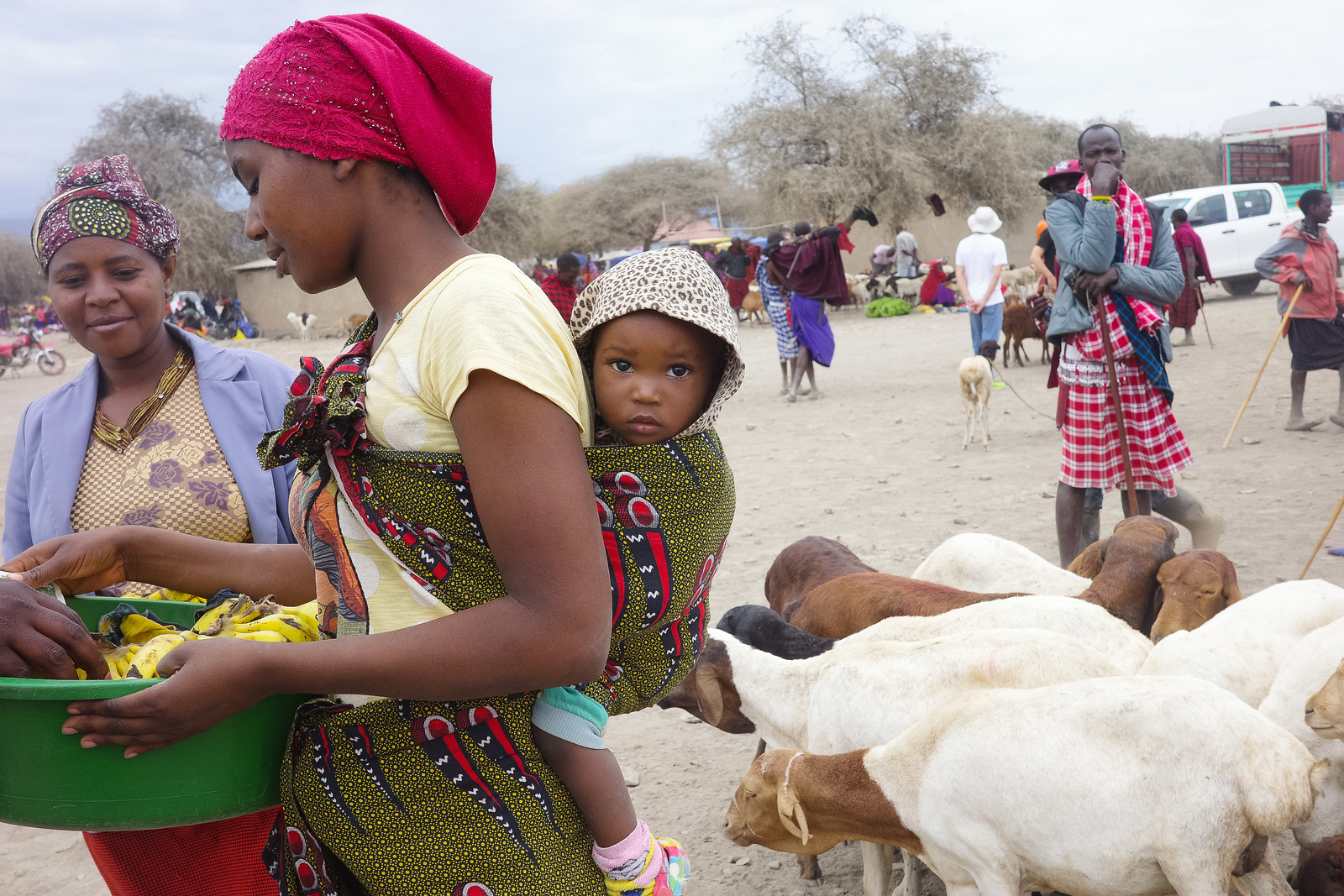
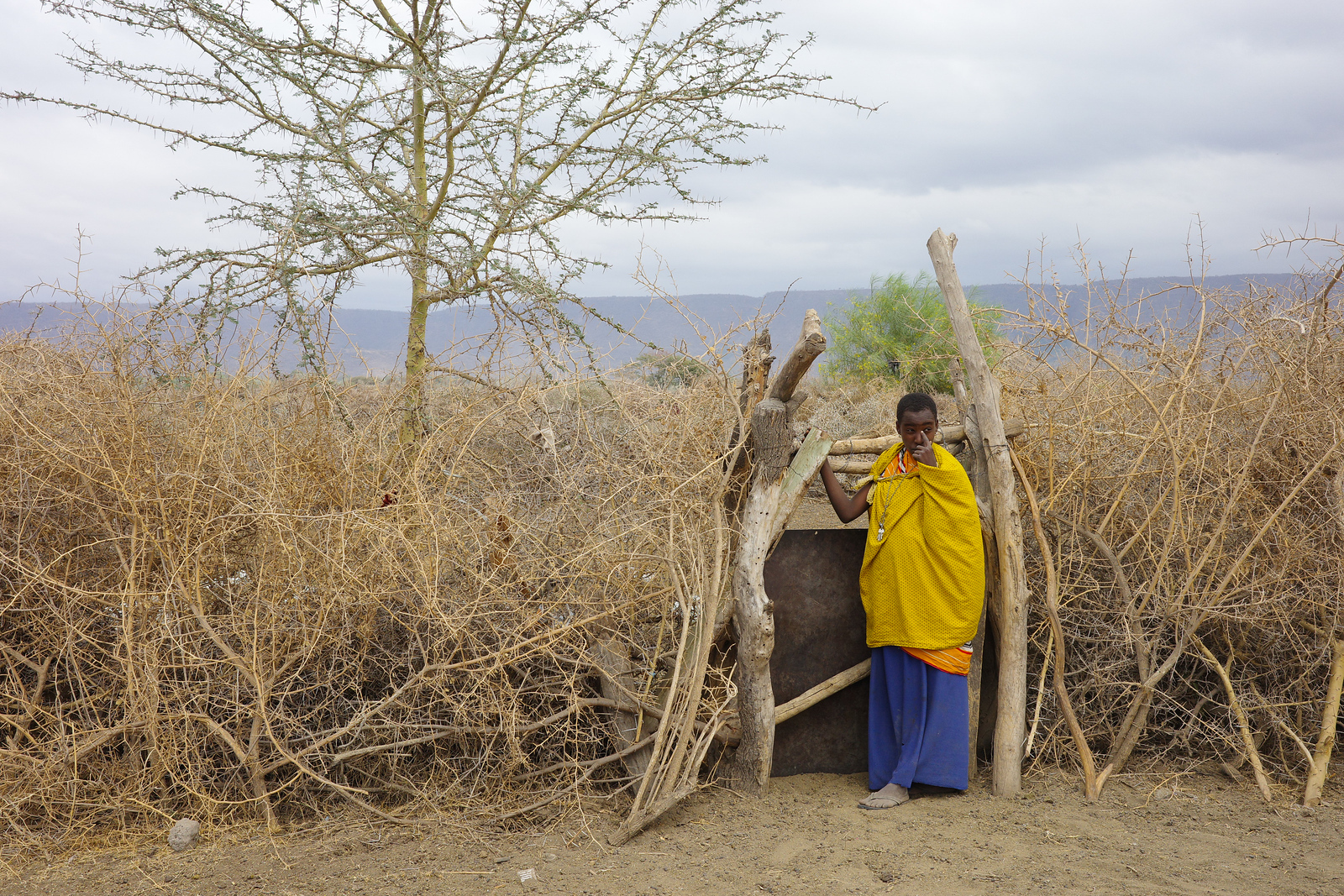
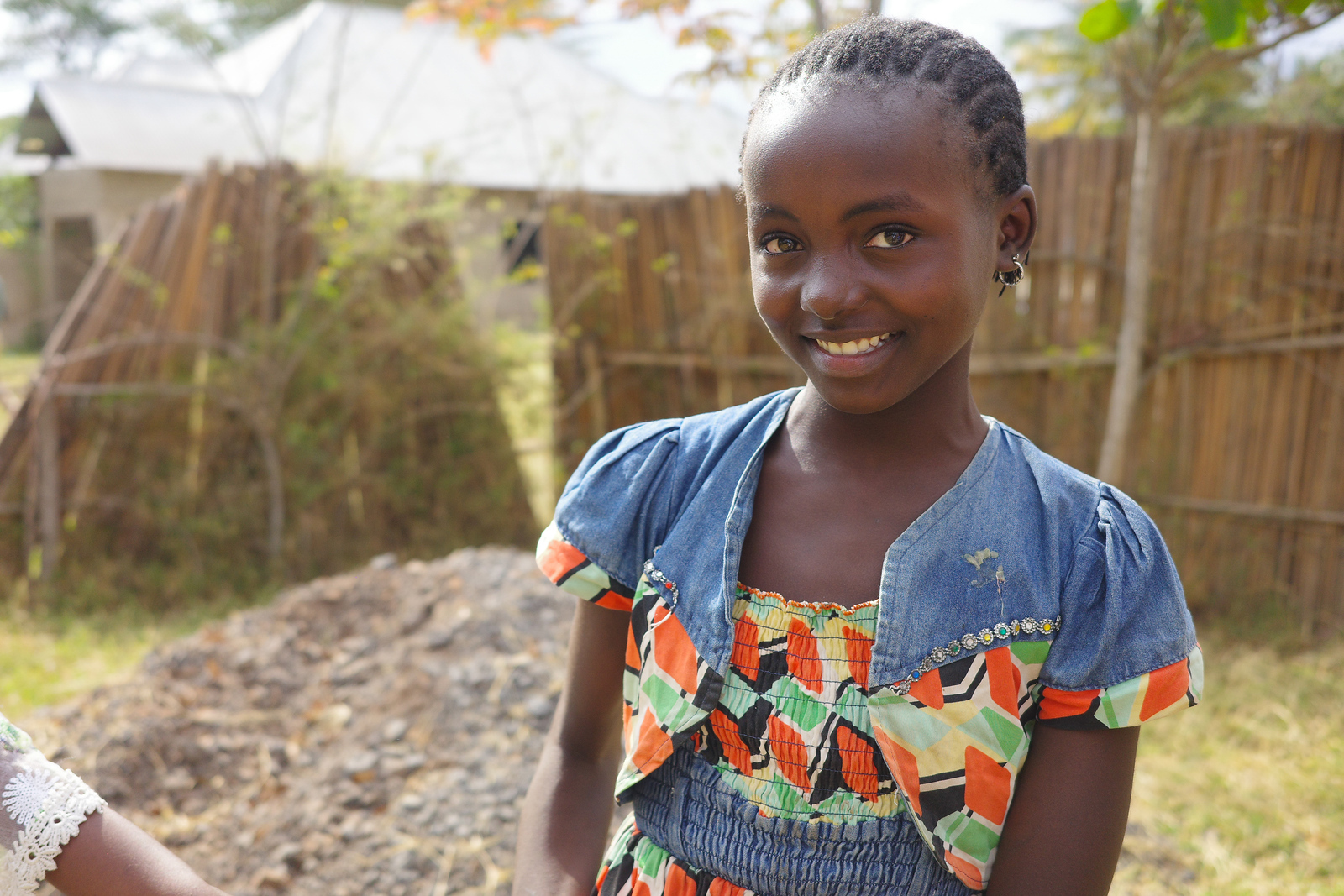
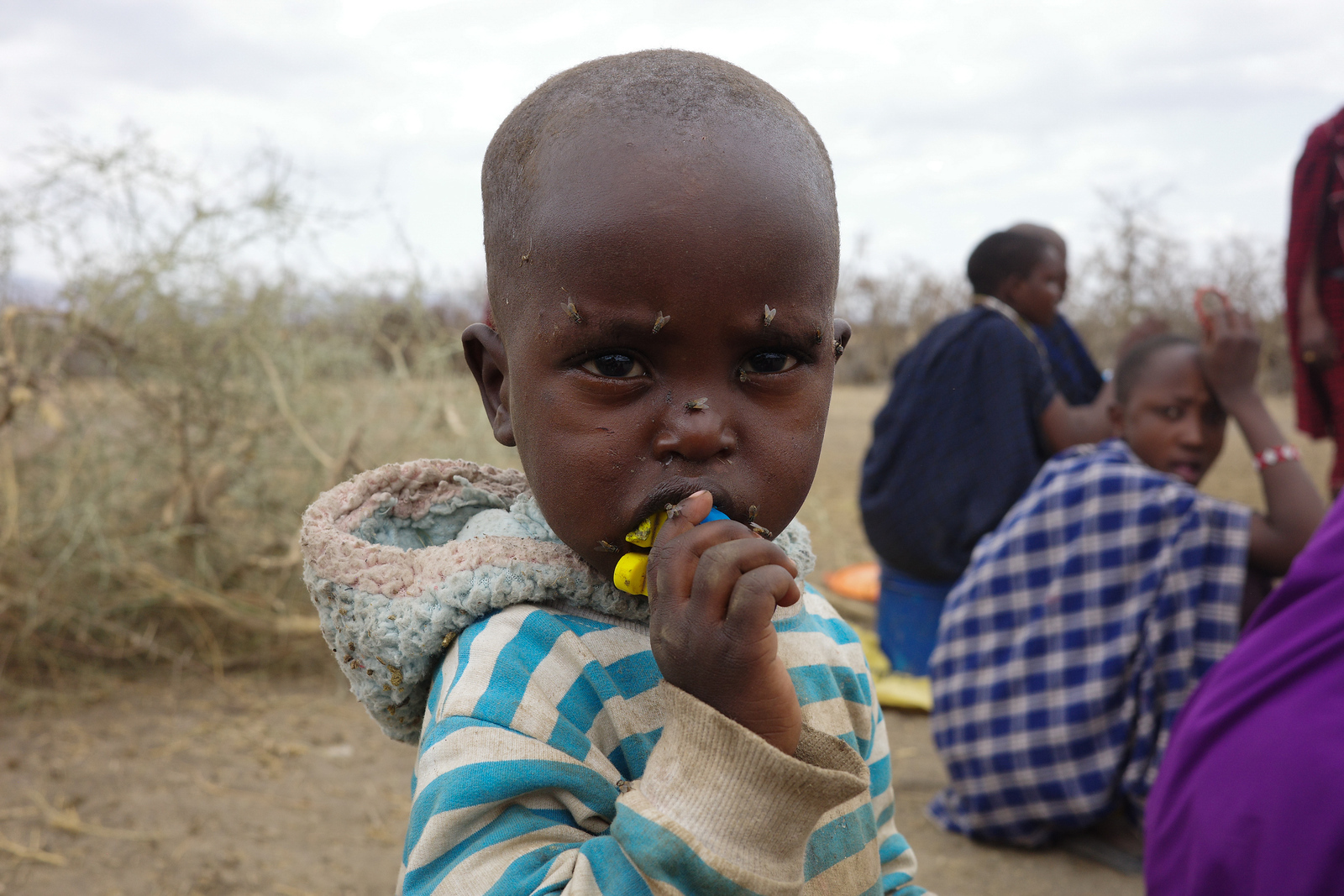
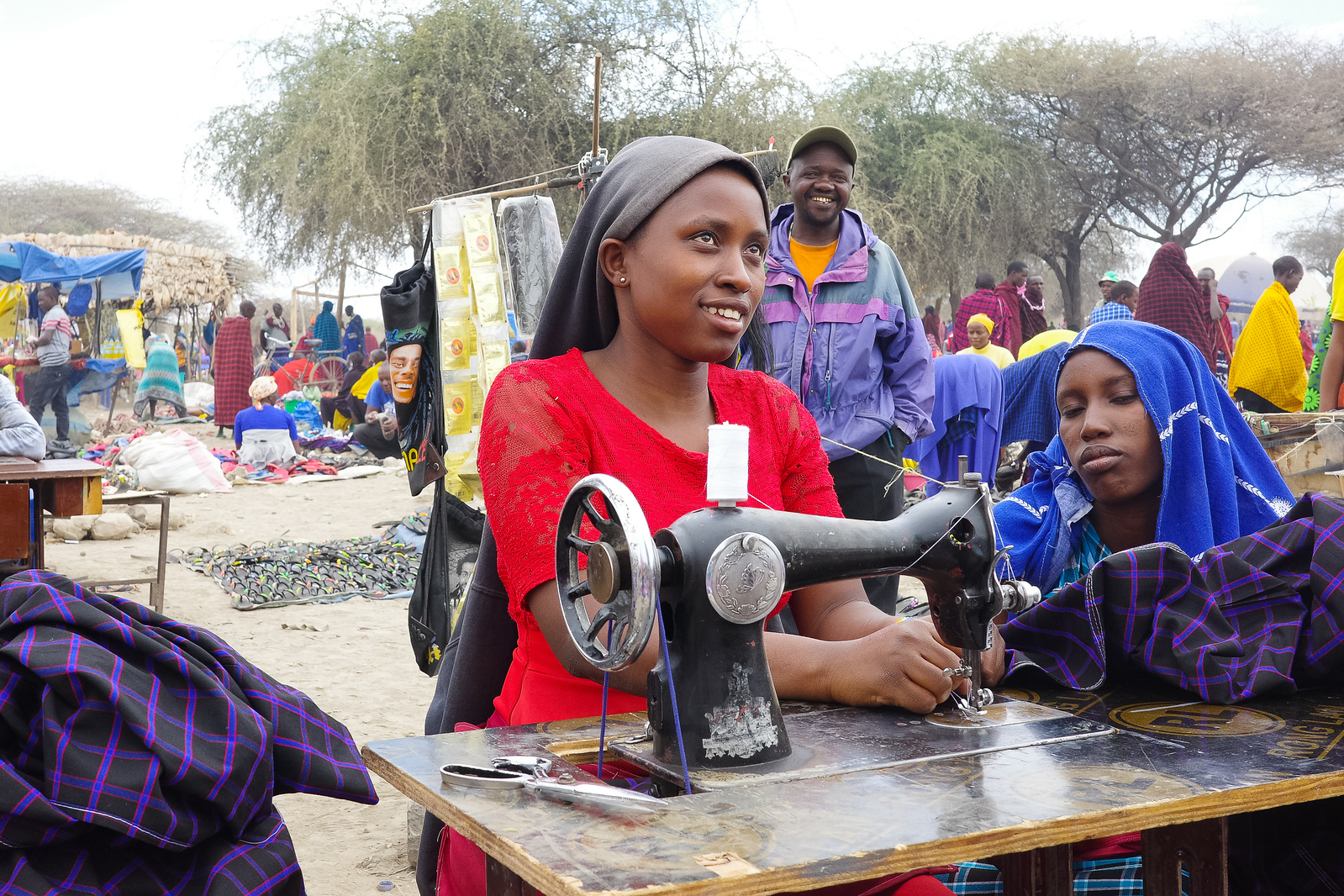
今天,当我们走入塞伦盖蒂国家公园,我们找不到一片垃圾。原始生态包括完好,是狮子的天堂。但是当我们一开出自然保护区,任何一个邻边的小镇都是垃圾遍地,愚昧落后,不堪入目。当地人过着尴尬的贫穷生活,无限风光只留给自然保护区的动物们和来自发达国家的金发碧眼白皮肤的白人和亚洲人。政府征收18%的旅游税收,但是当地居民丝毫没有受益,没有医疗改善,没有卫生改善,没有教育改善,更无从谈起生活品质的改善。在斯坦福大学胡佛研究所 Bueno de Mesquita 写的一本书“独裁者手册 (The Dictator’s Handbook)”中写到,再落后的国家都有能力抓教育投资,但是教育落后的原因不是因为经济,多数是因为政府不想让民众太聪明,会基本技艺能干活就好了,不需要提高智慧,因为提高了政府就不能很容易的剥夺了。在奴役和殖民地时代,黑人受歧视,那是赤裸裸的,到今天黑人同样受歧视,只不过是非常隐蔽的。不然如何解释塞伦盖蒂公园附近的旅游酒店都是在荒野里,除了自然环境的考虑,难道不是对当地居民的一种歧视和忽略吗?开发商和政府不会想到为了赚钱的同时也兼顾当地的基础设施改善,而是自然的形成一种屏蔽,如果你不去当地的农贸市场看看,你不会理解他们有多么艰难,多么无助。政府的欺骗是赤裸裸的,只有当地人民看不到。
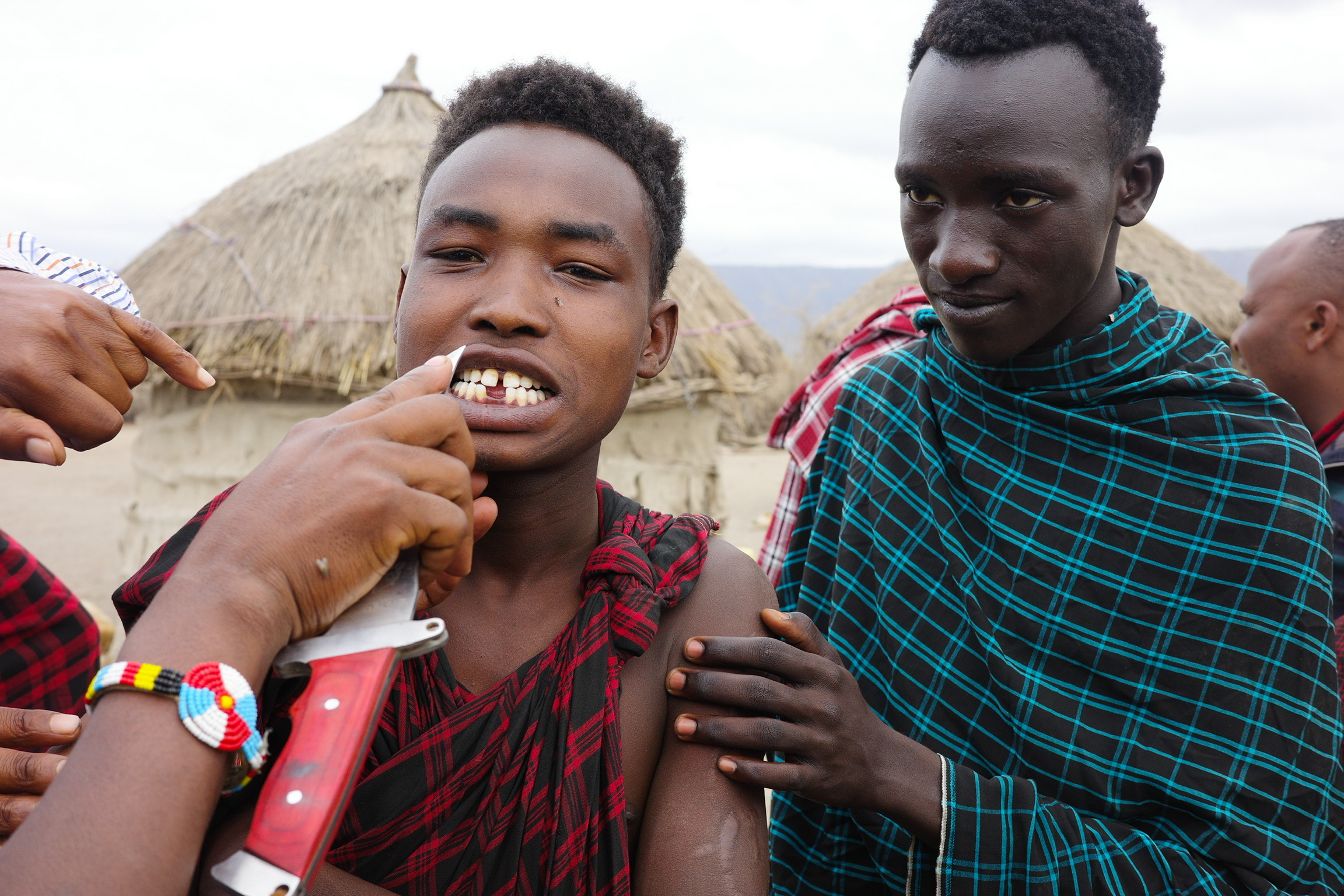
土著部落到今天还要在孩子三四岁的时候用刀子挖掉下门牙,为了是在病重时能够从下牙缺口灌进流质食物救活他们,因为他们没有医疗条件。据说乡镇级别医生和居民的比例是1比1万。
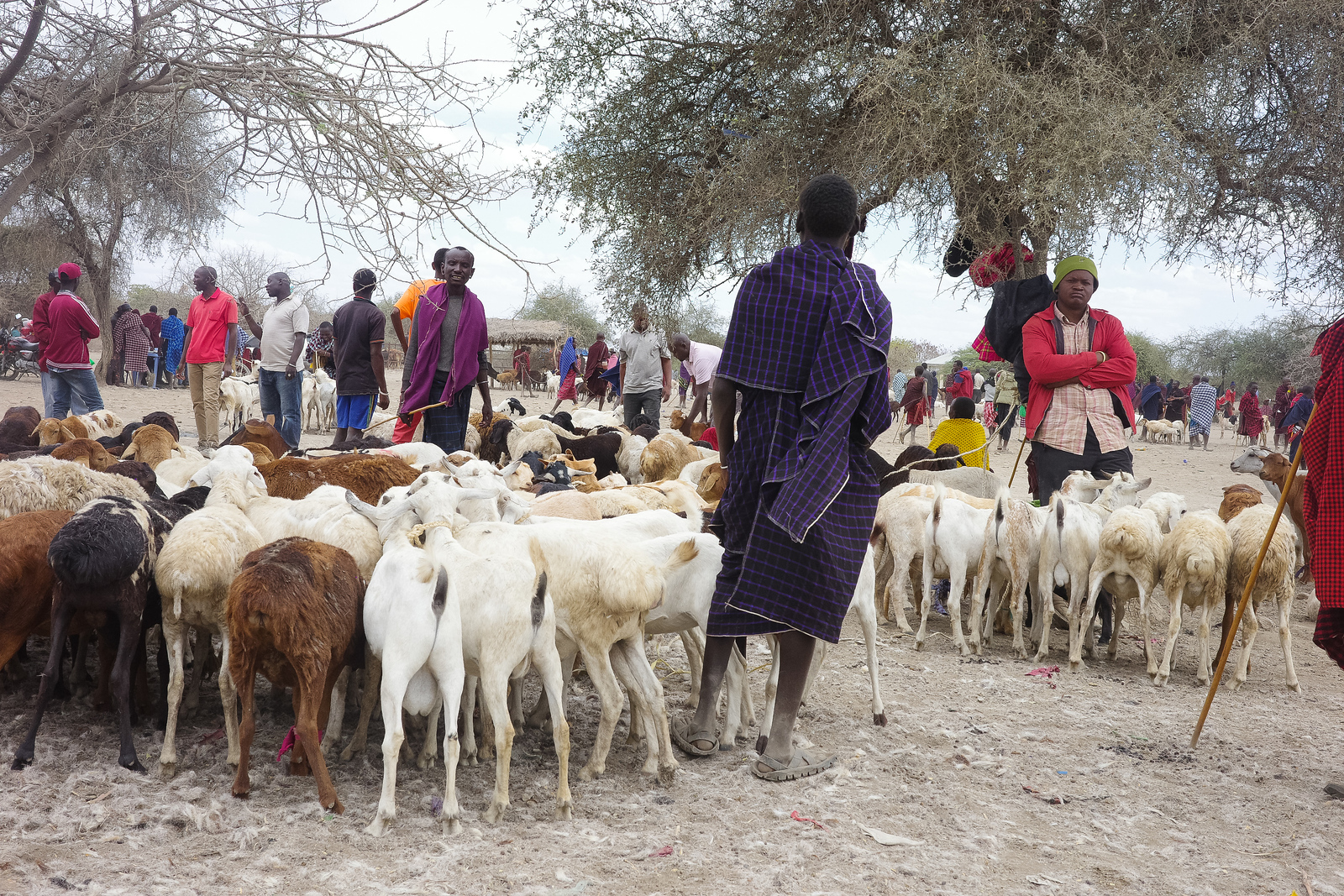
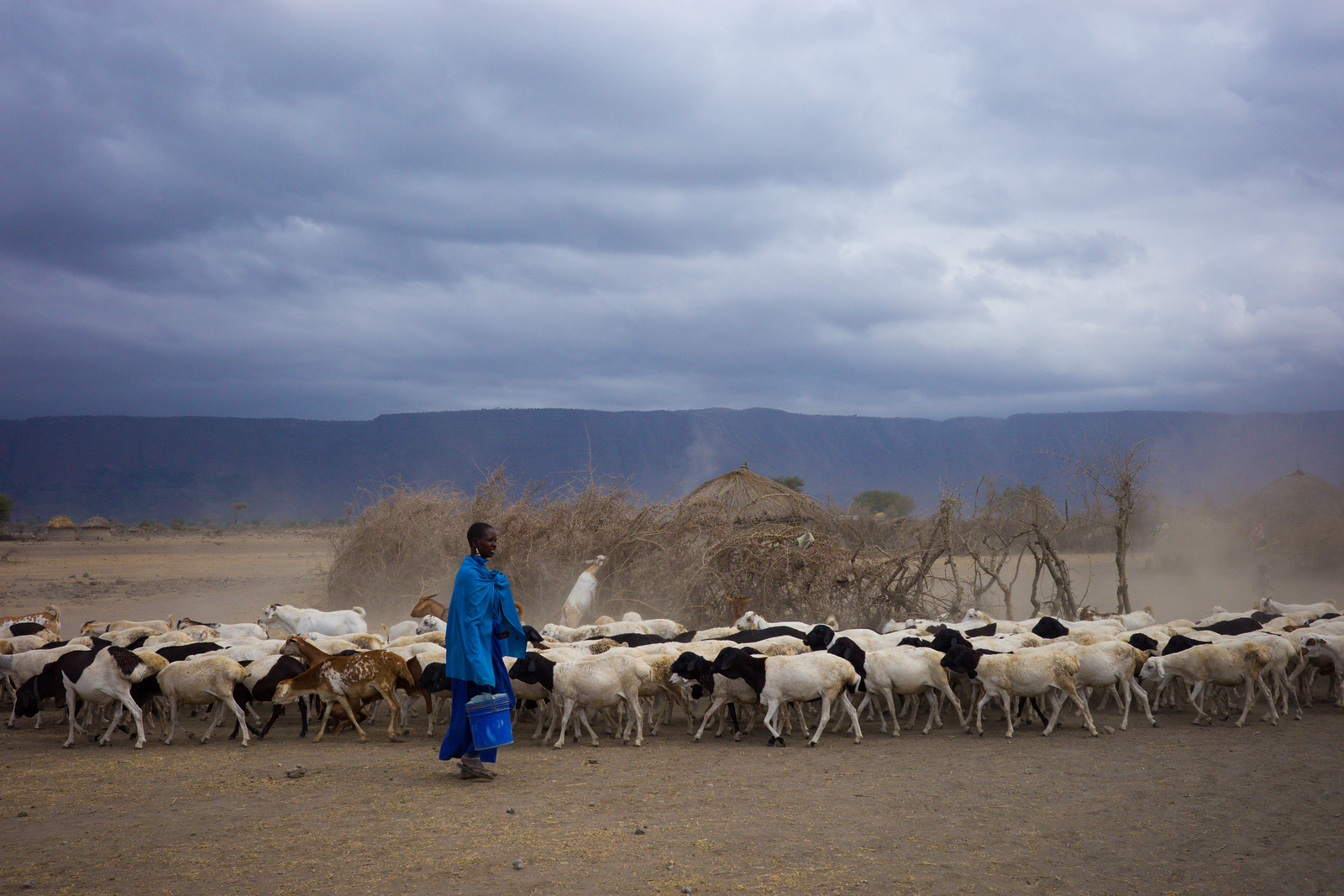
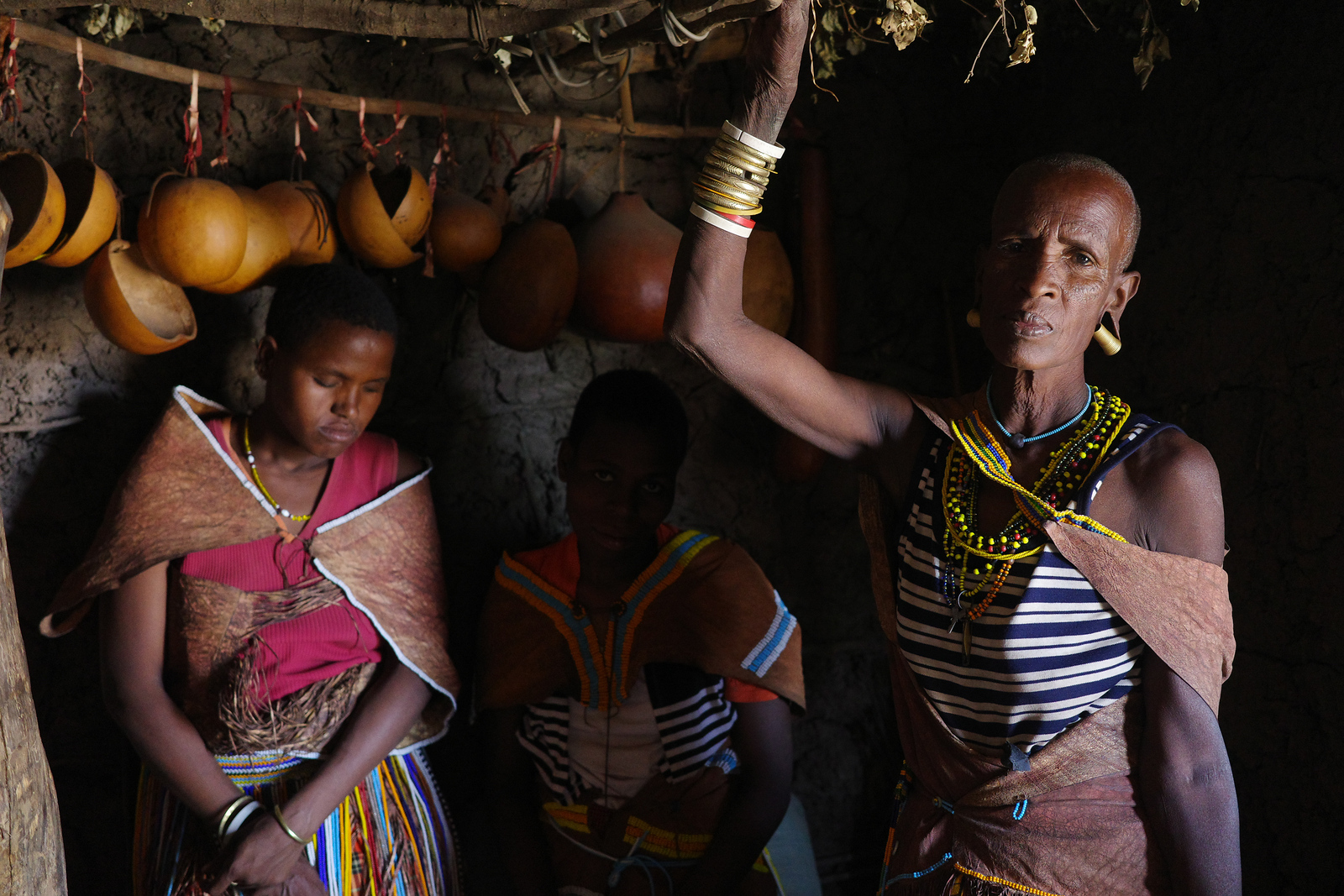
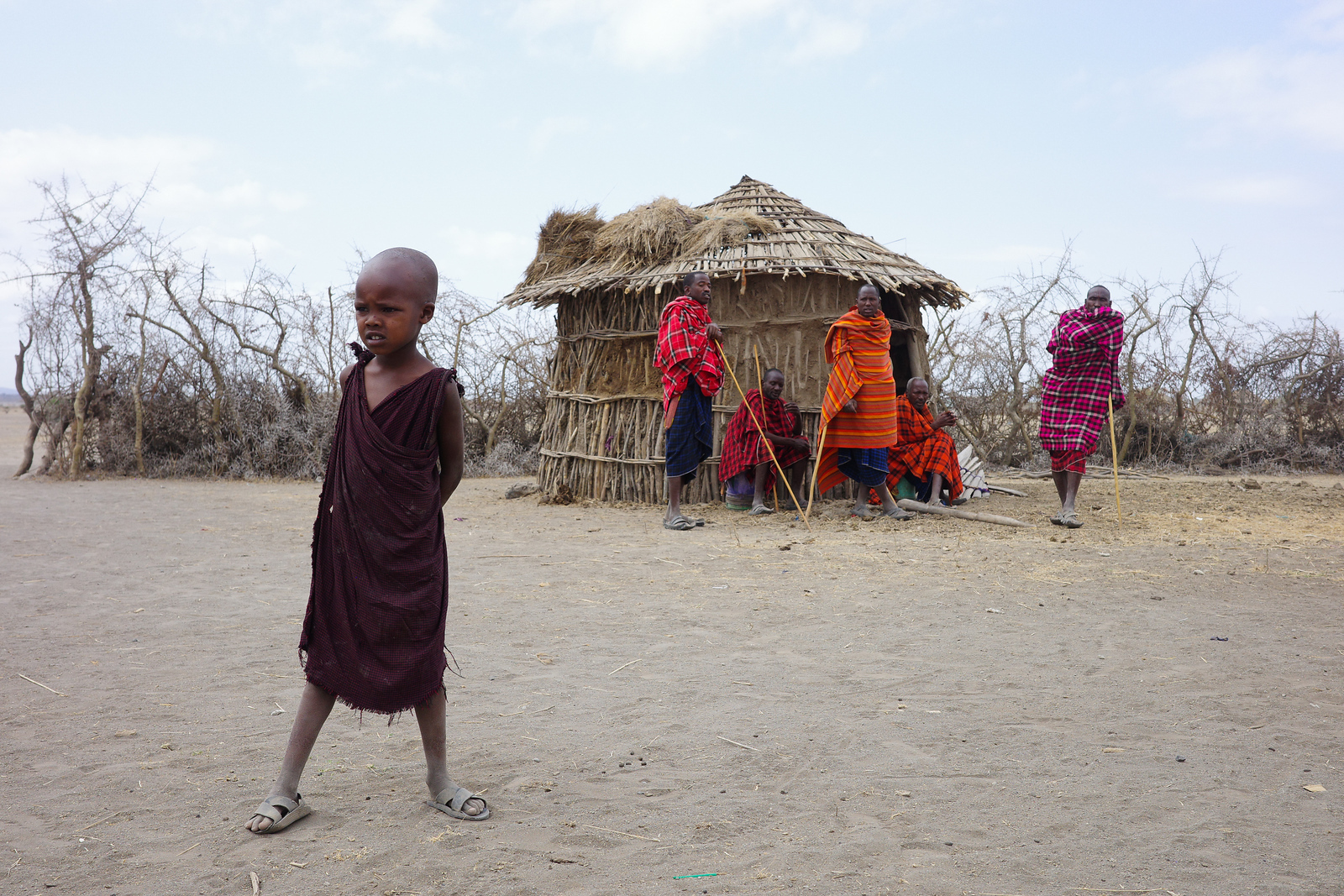
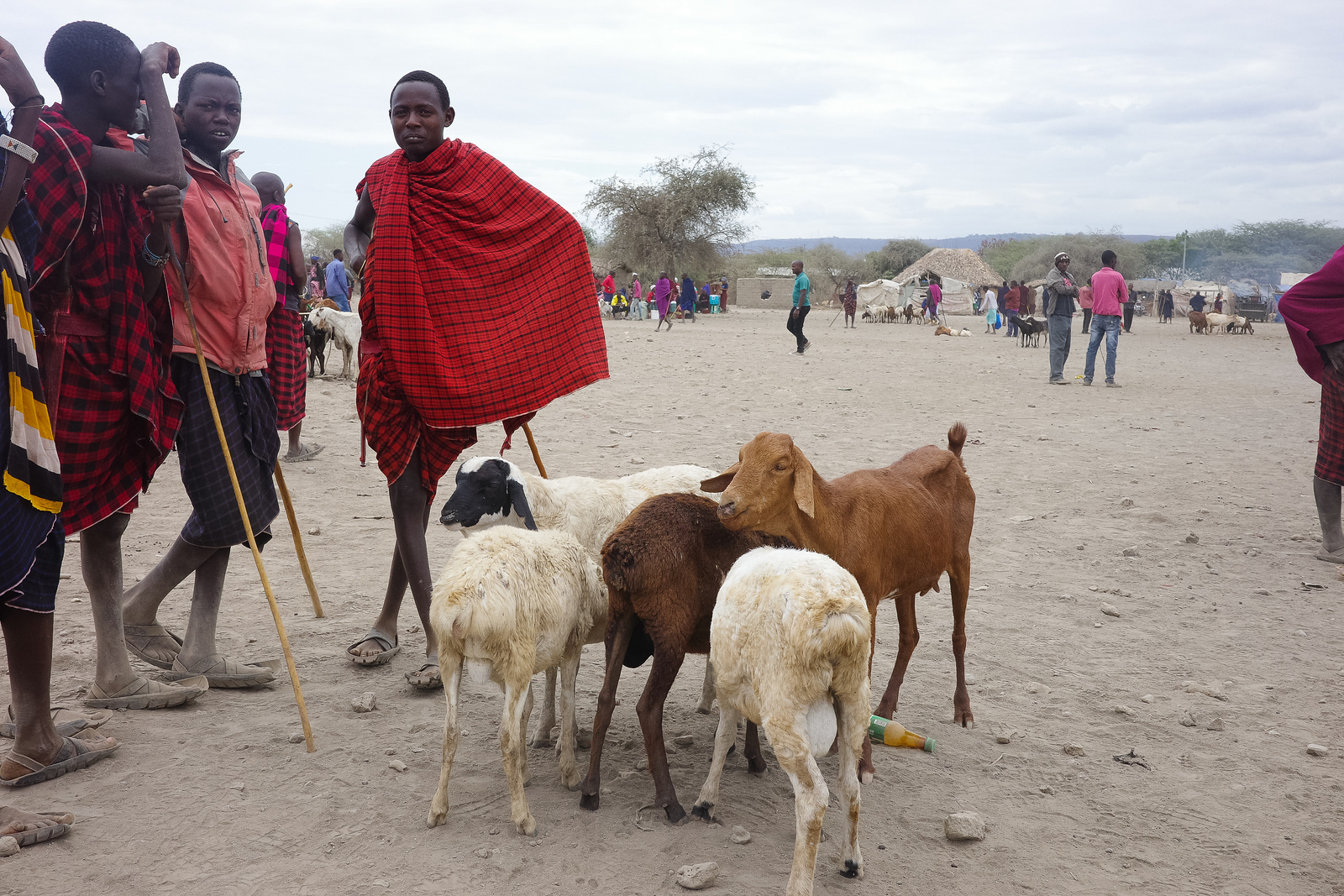
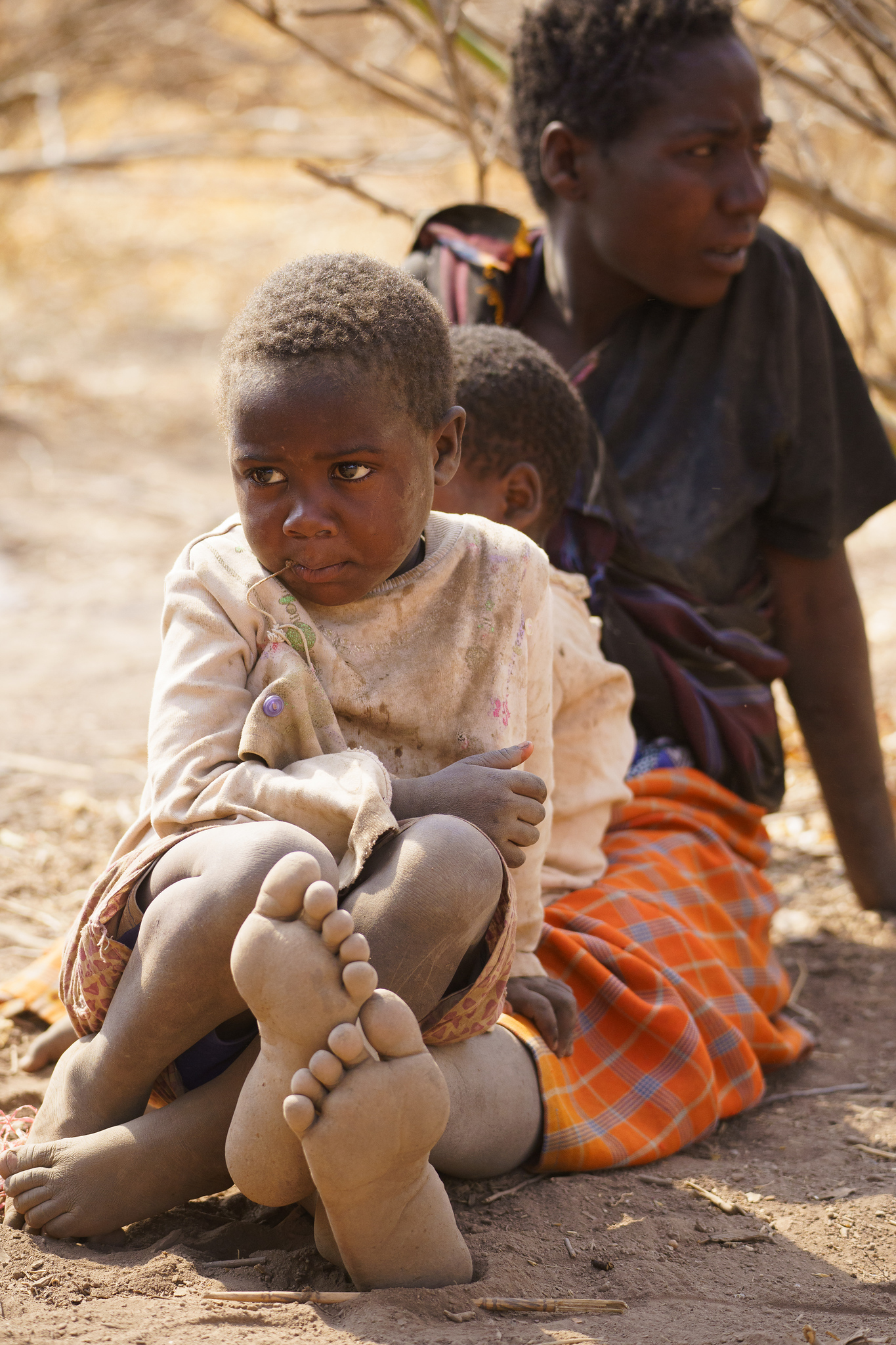
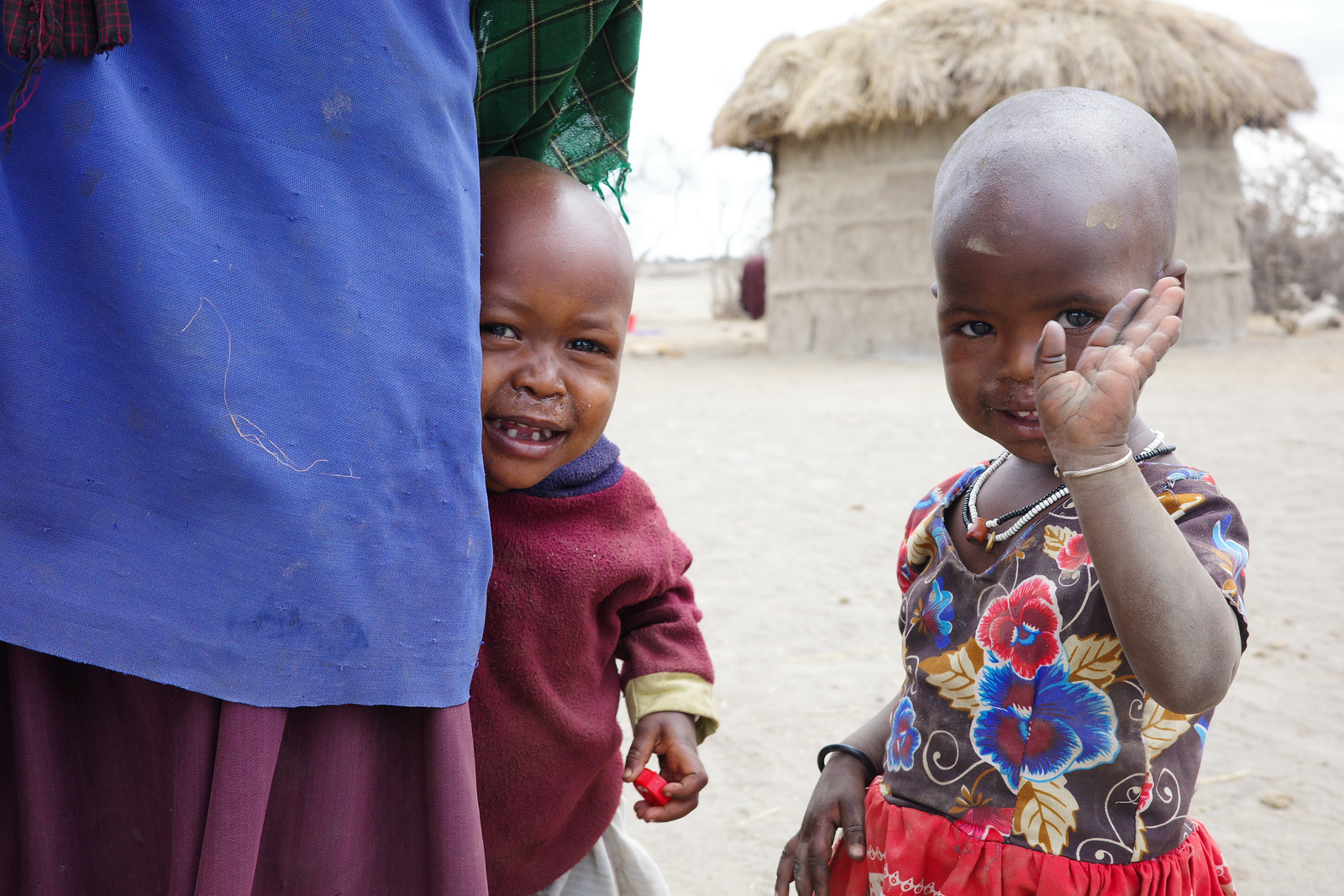
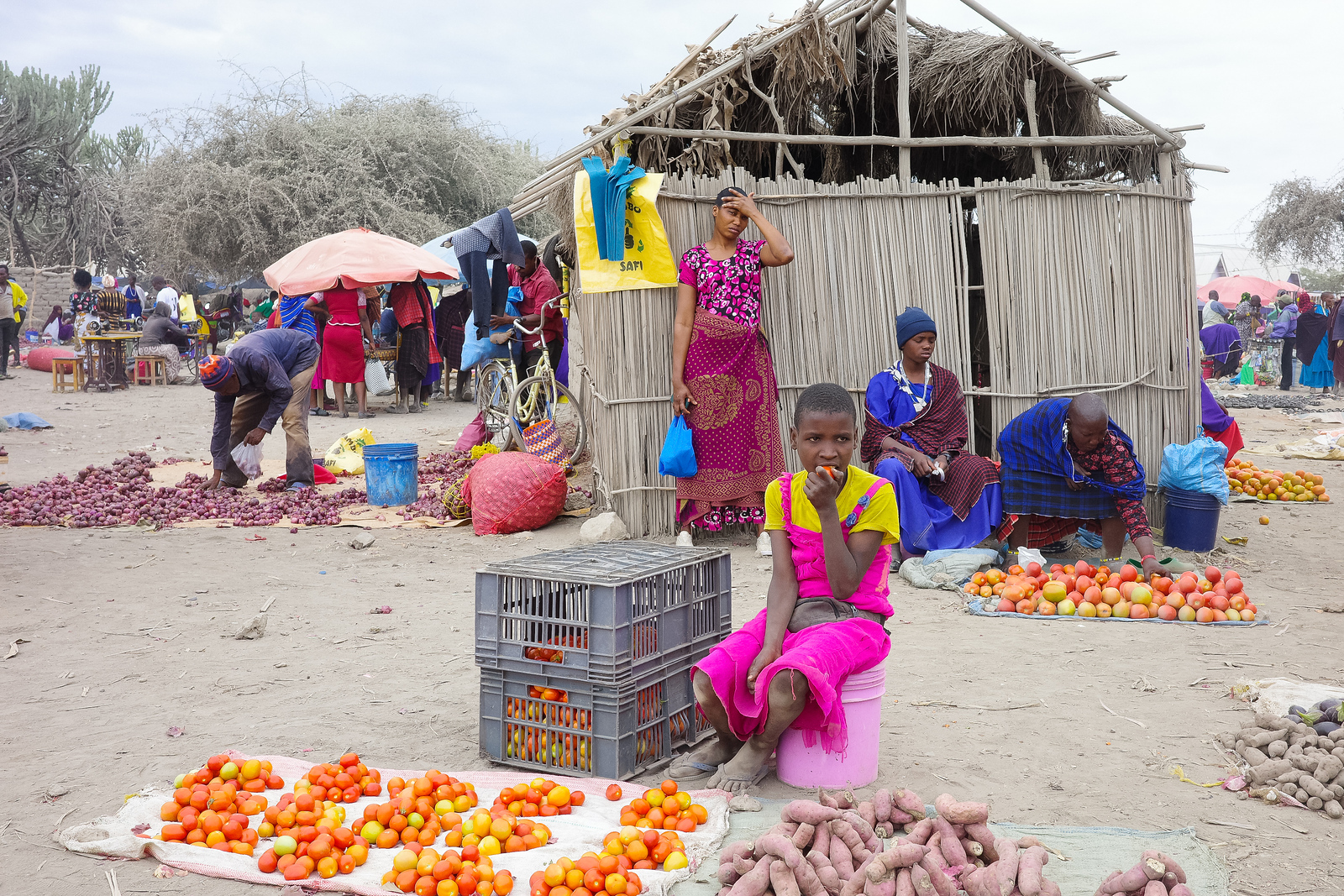
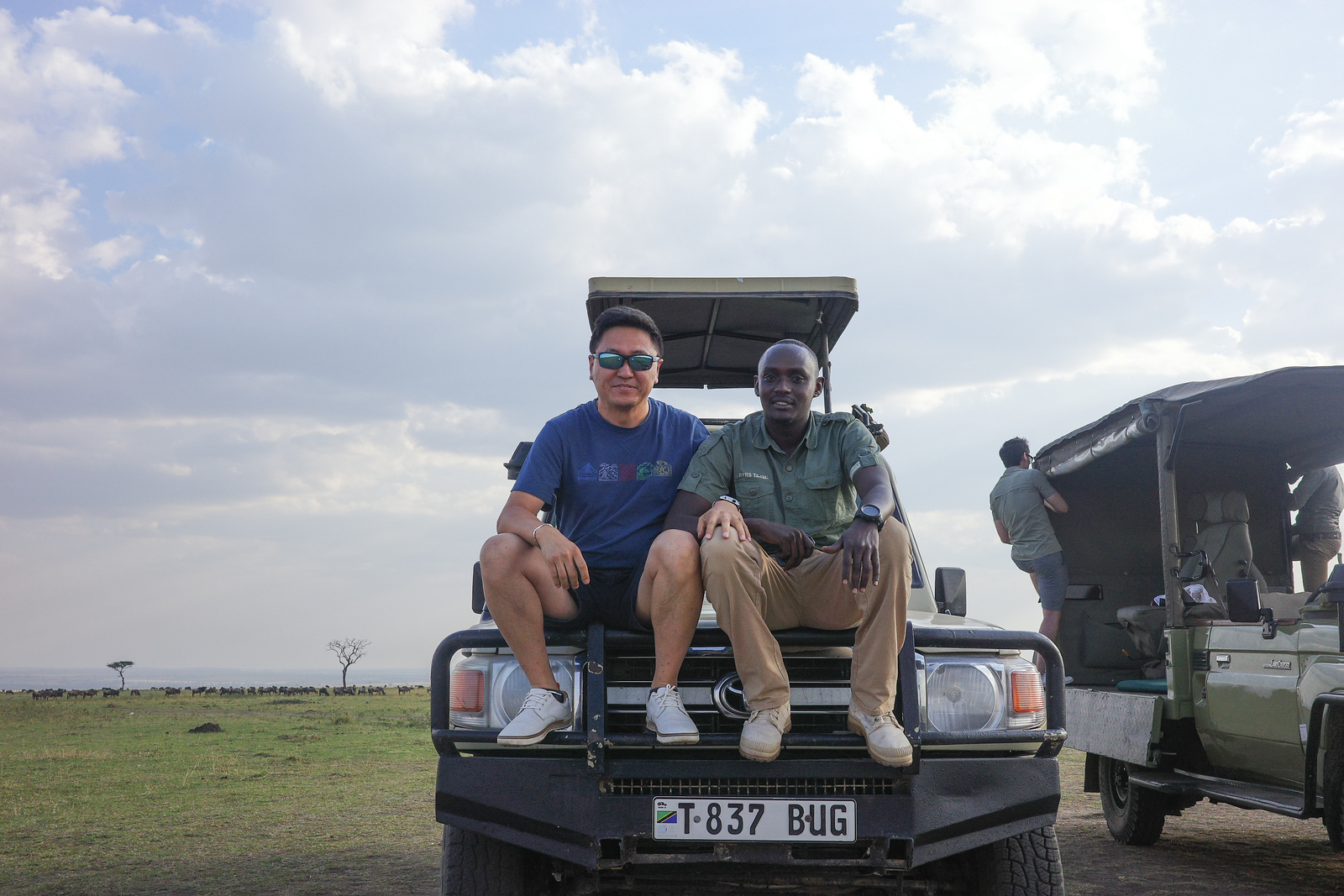
非洲的原始状况不知会持续多久,下次你去非洲尽管放心安全问题,只要不自己行动就可以了,花点钱什么都有保障。行程可以调整成先看非洲土著部落,然后旅行,这样再怎么苦都不会觉得苦了。
旅途愉快!
更多的照片:
https://dancewithlight.smugmug.com/Travel/Africa-Safari
贝版的《去非洲》科幻小说: https://a.co/d/3O6NFm6
I have wanted to go to Africa for more than ten years. I never made the trip because I assumed travel there would be hard, uncomfortable and unsafe, so I never started planning. When Bei Ban announced this trip, I signed up right away, confident that he and his team had done plenty of research and planning.
My wife was very supportive. I hadn’t traveled at all during the pandemic, and the trip was also a chance to spend time with Bei Ban and other club members and learn how they had succeeded in their industries and investments. Many people have read Bei Ban’s book Money That Walks (《会走路的钱》).
Preparation
Although the travel agency assured us Tanzania was safe, I wasn’t convinced. My neighbor Elena told me she had been robbed on the road when she visited more than ten years ago. Before I left, two good friends told me to contact them anytime if I needed to reach the local government, but I still felt uneasy. So I did some research and bought a Garmin inReach Mini 2 satellite communicator and a Fenix 7 smartwatch.
The satellite communicator costs just $15 a month and lets you send short text messages or emails from anywhere in the world. Both the inReach and the Fenix 7 can lock onto more than a dozen satellites within one or two seconds, so if your phone dies or loses signal, you can still navigate with them. Each has a battery life of about two weeks.
In an emergency, you can press SOS to call for rescue. A helicopter rescue usually costs around $2,000, but with a $30-a-year insurance plan, rescue in North America is free. For peace of mind, both devices were well worth it, especially in an unfamiliar place like Africa. They’re useful for everyday travel too: the Seattle area is full of forests, so I can bring them along on any outing.
The communicator also lets you preset free messages to send quickly, such as “I’ve been kidnapped; my satellite location is…”, “I’m injured; my location is…”, “Staying here tonight,” or “This place is worth visiting.” Better safe than sorry, and the features are powerful.
Arrival
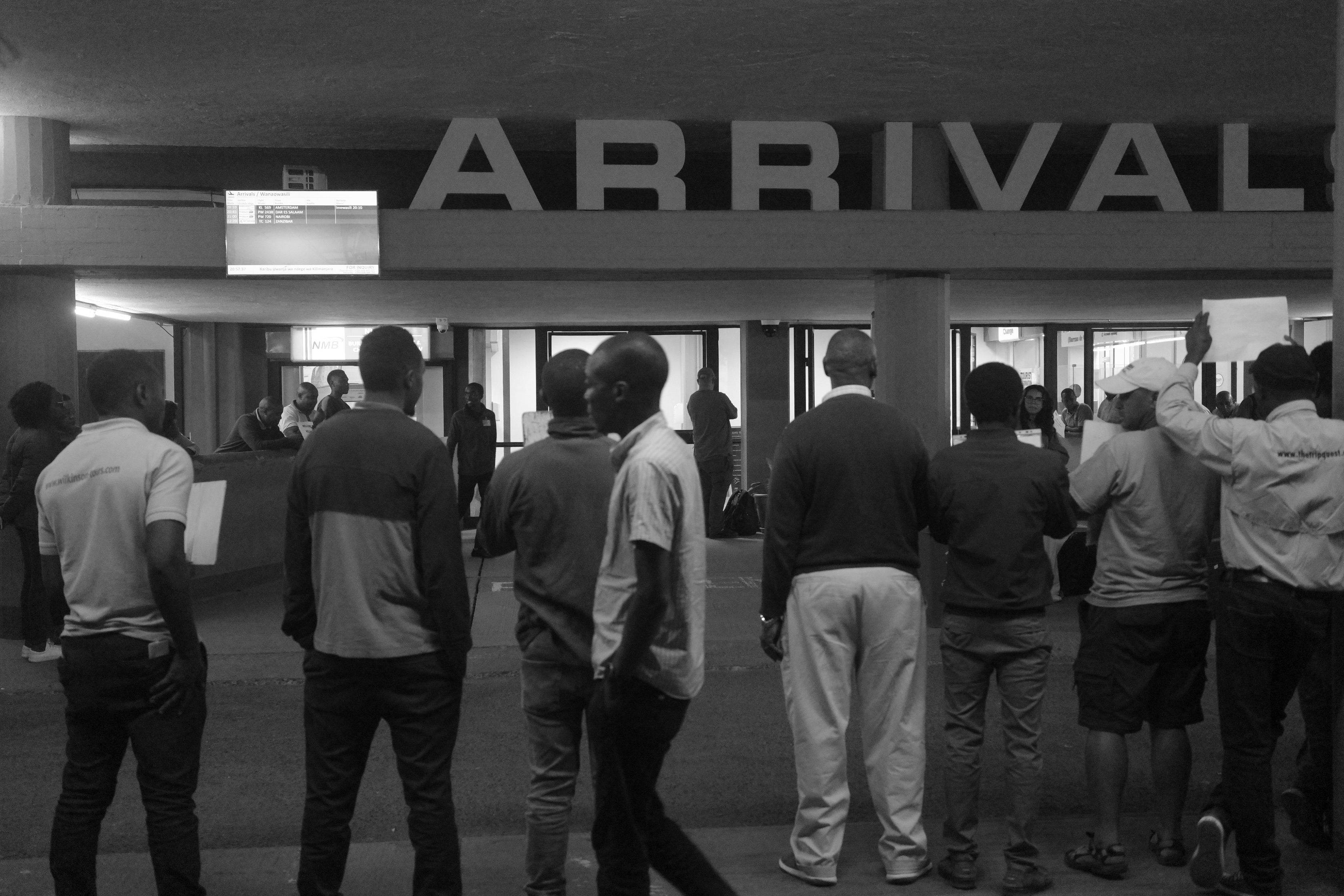
On August 19, after 24 grueling hours of travel (two flights totaling 20 hours, from Los Angeles to Amsterdam and then on to Tanzania), we landed at Kilimanjaro International Airport (JRO). Immigration was fast. I had applied for my visa online two weeks before departure, and I was through in minutes. At the exit, everyone around us was local, and it felt like stepping into another world. The airport is tiny, yet it is an international airport, and plenty of travelers come through it.
Most of the hotels we stayed at were good, though expensive, because many sit out in the wilderness where building and maintenance cost a lot. Every place had hot showers, private bathrooms, mosquito nets, Wi-Fi (very slow), laundry service and escorts after dark. The service was professional and well run. The food was simple Western fare, mostly chicken curry, so much of it that by the third day I had lost my appetite. We modern people are far too picky.
Wildebeest Crossing the River
There were six of us. I handled photography and Director Zhang handled video. At first, most of the group had no particular feel for photography; they had only heard that African sunsets are so beautiful they can bring you to tears. On our first evening on the savanna, we drove through the grasslands under a sunset of red clouds, and everyone felt the thrill of landscape photography. The next day I convinced everyone to get up early for sunrise. We didn’t make it in time, but rising early let us witness the spectacular sight of the great wildebeest migration crossing the river, three times in a single day. We all felt very lucky.
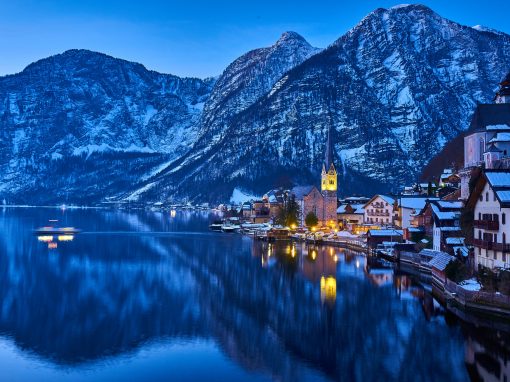
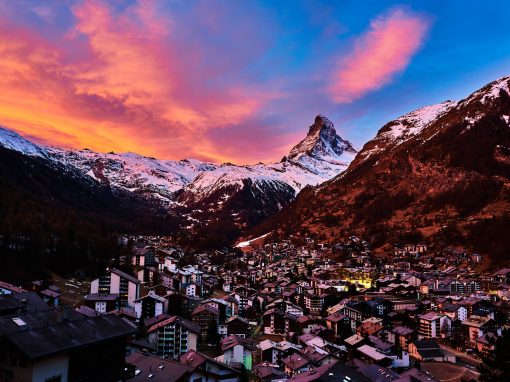
Over the years, I seem to have been lucky every time I go out to shoot: rime-frosted trees at Swan Lake in Xinjiang, the aurora in Alaska, several encounters with soulful deer on Mt. Rainier near Seattle, sunrise on the Matterhorn in Switzerland, and now the great migration in Africa. Some photographers spend a week and still miss scenes like these. I asked our guide whether we might see lions on a hunt. He said he couldn’t promise. Indeed, how long would you have to roam this vast savanna to come across one?
Harmony and Ferocity
We arrived at the endless grasslands of the Serengeti. Our quick-thinking guide brought us to within 6 meters of a lion. It was too hot, and the lions slept through the day with no urge to hunt. We watched hyenas fail to bring down a wildebeest, and saw the brutal sight of wildebeest taken by crocodiles as they crossed the river.
Here, nature is both harmonious and fierce. Teamwork is the only way to survive.
On the morning of the third day, we rode a 16-person hot-air balloon and looked down on the world beginning its day in the light of sunrise. Watching the animals run joyfully across the grassland, we cheered and let our spirits soar too, gazing over a million living creatures, taking in the reflections on the lakes, and feeling something stir deep in our souls.
Midnight Safari
Before coming to Africa, I often saw images by Jeff, a Chinese photographer who has made Africa his home, showing lions on the hunt. I told our guide I wanted to photograph that too. He laughed and said, “I’ll do my best, but I can’t promise.” I wondered how anyone could come across, let alone capture, such a fast kill. How long must he have waited for the right moment?
That afternoon we arrived at a tented lodge in the central Serengeti. The accommodations were excellent. After dinner I went back to my room to get some work done, but the internet was too weak. I radioed a staff member, Barick, to come walk me to the front desk, where the signal was stronger. The rule here is that no one walks alone after dark.
We had just gotten out of the car when we heard a strange, low growl unlike anything I had ever heard. Barick shouted, “Lion!” In a panic, I rushed toward the car to hide. He told me not to get in, and instead set me up at a table in the lobby. I sat there, opened my laptop and listened to the lion’s continuous roaring. I couldn’t take in a single word on the screen. I looked around: the lobby was open, with only waist-high walls and a small door, and the other side had no door at all, opening onto the back garden. A lion could easily walk in. My eyes found the restroom, and I decided that if a lion came in, that’s where I would hide.
Before long, Barick came back to say the lion had left through the back. He moved me to Room 1, right next to the lobby, where the signal was strongest. Once inside, I had him check that every door and window was shut, and I drew the curtains so the lions couldn’t see me. He assured me the windows and glass were strong enough to keep lions out. I got to work, but every so often a lion’s roar came from nearby. The sound carried an anger I will never forget.
Twenty minutes later, at 10:30 pm, there was an urgent knock at the door. When I opened it, Barick shouted, “Bring your camera, quick, follow me!” What had happened with the lions? He told me they had just killed a buffalo. Our vehicle crept into the grassland right across from the lobby. I fumbled for my camera and took one shot, which happened to catch the lion’s final lunge at the buffalo. One lion pinned the buffalo to the ground by its neck while another had already begun to eat. The buffalo could no longer move.
I kept shooting as Barick turned the headlights on the lions. The light was so bright they could barely open their eyes, and I worried it would anger them. Barick kept saying, “No problem,” and told me what had happened: ten buffalo had come to rescue this one, chasing back and forth with nearly 20 lions, but in the end this buffalo was too badly wounded to escape with the herd and was brought down by two lions. When I started shooting, I could see a dozen more lions standing a little farther off before slowly melting away. They would wait until the first two had eaten before coming for their share. Barick said that watching a kill is beautiful, and at the same time heartbreaking for the buffalo.
Being so close to the lions made me nervous. I had to roll down the window to shoot, and I rolled it back up the moment I finished. To my surprise, Barick said the window should stay open, and even rolled it down for me once. As we talked, he suddenly started the car and drove several more steps forward. I kept saying, “That’s close enough!” We were only about 6 feet (2–3 meters) from the lions and their kill. Listening to them tear at the carcass and grunt now and then, I kept my voice steady and could still talk normally, but for the first time in my life I felt every hair on my body stand on end.
Perhaps because the light bothered them, two lions suddenly got up and walked toward us, staring at us majestically. Flustered, I rushed to roll up the window. Barick turned off the headlights and whispered, “Don’t talk.” One lion lay down just off the front right of the car; the other turned back to its meal.
They ate for a while, rested for a while, stared at us for a while, and circled the car. Earlier that night I had watched them prowl menacingly around the grounds and heard their continuous low, angry roars, which sent chills down my spine. I never imagined these lions would stage nature’s bloody hunt right in front of us. I wonder whether witnessing scenes like this often keeps you young with all that adrenaline.
We watched quietly for more than an hour, until even the two lions grew tired. Full of wonder, I went back to my room, and all night I heard the lions’ occasional low growls…
The next morning, the whole pride was still feasting on the kill, giving everyone plenty of time to photograph and take it all in.
Africa’s Big Five
Our first two days on safari went smoothly. We rose early to watch the great wildebeest crossings and saw beautiful zebras, majestic elephants and all kinds of wildlife. Our guide Jackson promised to do his best to show us Africa’s Big Five: lion, rhino, elephant, leopard and buffalo.
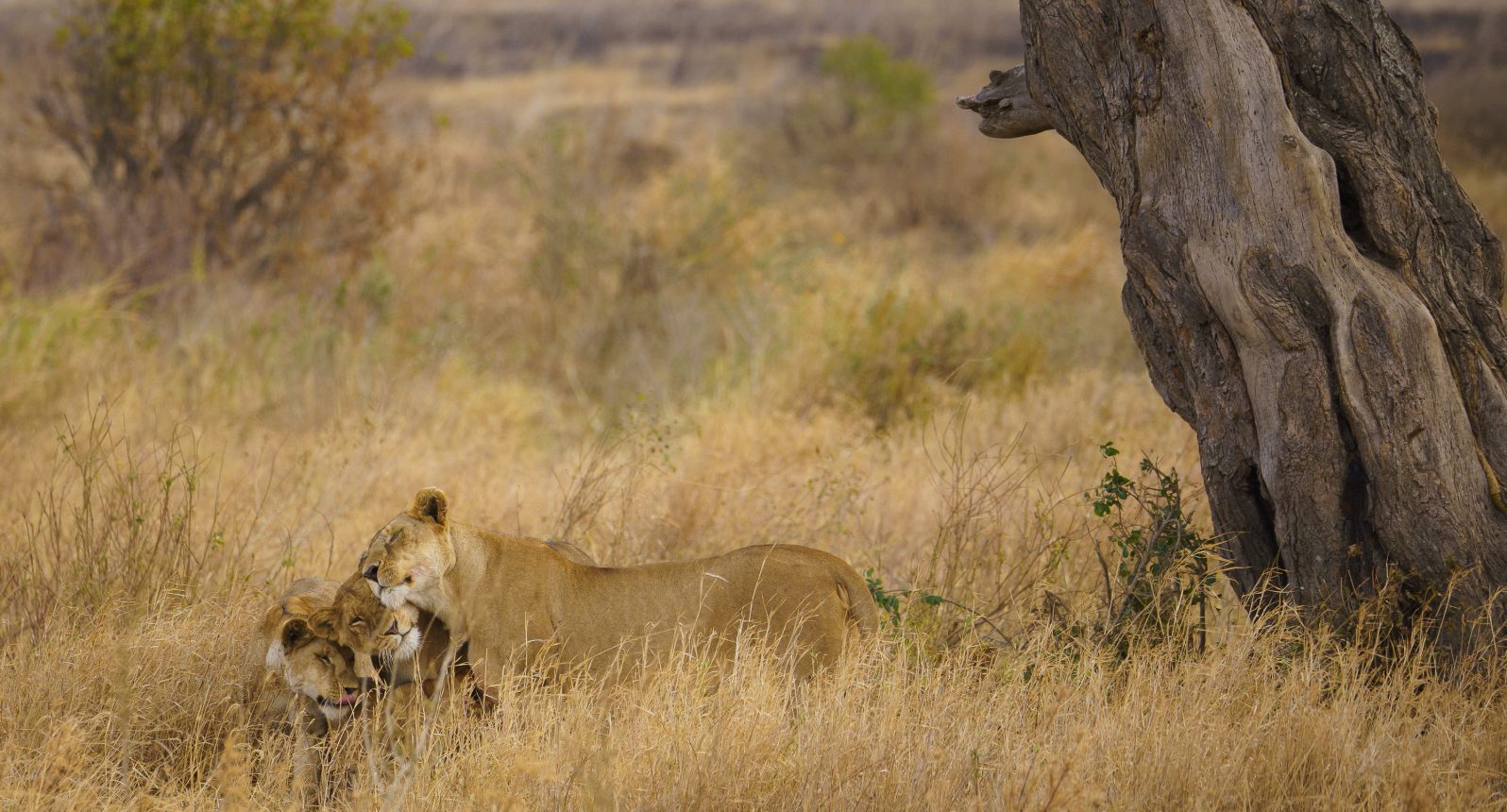
Earlier I had photographed a tender moment within a lion family, and later the hair-raising night with the male lions. In just three or four short days, my photography harvest was rich. Someday I’ll be able to tell the younger generation about my dangerous adventures in Africa, and about the time I arm-wrestled a tribal chief.
The Spirit of the Wild
Africa’s grandeur lies in how well its wilderness has been preserved. Here every creature lives in its own order, and each day is both harmonious and full of danger: a true paradise and battlefield of natural selection. Africa is a dream destination for photographers, an untouched land where dreamers linger, a sacred ground devoutly guarded by indigenous tribes, and a prize ravenously plundered by European capital. Its wildness, ruggedness, poverty and remoteness have wrapped it in layer upon layer of mystery.
Every July and August, the busiest months, crowds of visitors come to marvel and pay homage. They feel the timeless spirit of the wild, hear nature’s rawest sounds of struggle, watch the most vital play of light and shadow across the grasslands, and marvel at the vastness of nature and the smallness of humankind, pondering what the ages ahead may hold…
Coming to Africa feels like a lion being let out of its cage. Living in cities for so long, we don’t notice it, but we are living in cages. Released into the wild, you can’t help but sigh, as if a bonesetter had cracked your spine back into place and every channel in your soul had opened. After the ever-rising excitement of the savanna’s scenery and wildlife, the fences around our hearts opened naturally. Along the way we talked about things we would rarely discuss in daily life. Some questions sounded simple, yet they had troubled many of us for years. Slowly we opened memories sealed away for a long time, and around the campfire after nightfall we talked passionately until the staff urged us, again and again, to move on.
Reflections on Africa
We all know Africa is underdeveloped, but not everyone knows what conditions are really like, or why. With these questions in mind, I read How Europe Underdeveloped Africa by Walter Rodney. Many of his views echo Marx, but he saw with rare clarity how Europe plundered Africa, and he was assassinated at 38. The title is telling: using “underdevelop” as a verb implies that Africa was made backward on purpose.
Black Africans were enslaved for 400 to 500 years, from the 14th to the 19th century. Those centuries were exactly when Europe surged ahead through colonial plunder and industrialization, while Africa was stripped bare. Africa’s population barely grew for four hundred years, at a time when manpower was a crucial resource for development. Agriculture and shipbuilding, the key industries of the age, required enormous labor, and enslaved Africans gave European nations boundless power, fueling their rapid shift from agriculture to industry. Africa’s minerals, gold among them, were looted too; the continent holds 20 to 30 percent of the world’s mineral resources. The most tragic chapter in human history was written in Africa. What was taken was not only natural resources but the chance to develop. In modern times, developed countries and the World Bank have given Africa considerable aid, but compared with four to five centuries of plunder, it is a drop in the bucket, at best a hollow gesture of apology from Europe.
Today, when you enter Serengeti National Park, you won’t find a single piece of trash. The ecosystem is pristine, a paradise for lions. But the moment you drive out of the reserve, every neighboring town is strewn with garbage, poor and hard to look at. Local people live in grinding poverty, while the boundless scenery is reserved for the animals of the reserve and for blond, blue-eyed white visitors and Asians from developed countries. The government collects an 18 percent tourism tax, yet local residents see no benefit at all: no better healthcare, no better sanitation, no better schools, let alone a better quality of life.
In The Dictator’s Handbook, Bruce Bueno de Mesquita of Stanford’s Hoover Institution writes that even the poorest country can afford to invest in education. Education lags not because of economics but mostly because governments don’t want their people to be too smart. Basic skills to do the work are enough; there is no need to raise people’s understanding, because an informed population is harder to exploit. In the era of slavery and colonialism, discrimination against Black people was blatant. Today it continues, only far better hidden. How else to explain why the tourist hotels near the Serengeti all sit out in the wilderness? Beyond environmental reasons, isn’t it also a way of ignoring and shutting out local residents? Developers and the government don’t think to improve local infrastructure while making money; instead, a kind of barrier simply forms. Unless you visit a local farmers’ market, you won’t understand how hard and helpless their lives are. The government’s deception is blatant, yet the local people can’t see it.
To this day, some indigenous tribes still remove a child’s lower front teeth with a knife when the child is three or four, so that if the child falls seriously ill, liquid food can be poured through the gap to keep them alive, because there is no medical care. Reportedly, the ratio of doctors to residents at the township level is one to ten thousand.
Final Thoughts
No one knows how long Africa’s primitive conditions will last. If you go, don’t worry about safety; just don’t venture out on your own. Spend a little money and everything is taken care of. Consider visiting the indigenous tribes first and going on safari afterward. That way, no hardship will feel like hardship.
Have a wonderful trip!
More photos: dancewithlight.smugmug.com/Travel/Africa-Safari
Bei Ban’s science fiction novel Go to Africa (《去非洲》): a.co/d/3O6NFm6