慢慢来:八天走到珠峰大本营: 中文版 ↓
English
In October 2026 I trekked to Everest Base Camp in Nepal, 5,364 meters above the sea, with my friend Sara, a small team, and our guide, Buddhi. I kept a diary every day, dictating notes on the trail and writing them up at night in the teahouses. Here it is, from the morning I left Seattle to the afternoon I picked up my son at the school bus stop.
- Day 1 · October 13 — Departure
- Day 2 · October 16 — The Day Before the Trek
- Day 3 · October 17 — Into the Mountains
- Day 4 · October 18 — Turtle Steps to Namche
- Day 5 · October 19 — First Sight of Everest
- Day 6 · October 20 — Who We Come Here For
- Day 7 · October 21 — The Wind That Comes From Behind
- Day 8 · October 22 — Nine Peaks Catch the First Light
- Day 9 · October 23 — Heart and Body at Their Limit
- Day 10 · October 24 — Above the Peaks, Between Flying and Staying
- Epilogue · October 27 — From 5,364 Meters to the Bus Stop
Day 1 · October 13 — Departure
Seattle → Hong Kong → Kathmandu · about 14 hours plus 3.5 hours in the air
On the morning of departure I went through my luggage one last time. I took out a pair of gloves to free up space and added a small tech pouch for the mini flash and all the charging cables, including the ones for my Garmin watch and Oura ring. The trekking poles came along too, the same pair that carried me through my pilgrimage across Spain two years ago.
While I was in the shower, Benny came up to say “I love you, Daddy” and gave me a big hug on his way out to the school bus. We made a pinky promise: I will not go for the summit of Everest. For days he had been asking me not to go. “Why can’t you just buy a photo of Everest?” he asked.
In the nights before leaving I kept waking up, my mind circling between the two new stores about to open and the twelve days of hiking ahead. The past couple of months of training have paid off. I didn’t lose much weight, but my legs have hardened, and I feel strong and fit.
On the way to the airport I thanked Lynn for supporting my adventures. The night before, I had handed her the final tasks for opening our new San Ramon store, while Angela is taking care of the Las Vegas opening. I’m grateful to both of them.
Passing through security, a sudden feeling washed over me: this country gives us freedom and protection. The world outside is always unpredictable. I hadn’t even left yet, and I already couldn’t wait to come home.
Why Everest
The idea came from a few directions at once. I’d been reading The Comfort Crisis, and our company is going through real growing pains. I wanted to challenge myself and stand before the great peaks of the Himalayas. Eight of the world’s fourteen 8,000-meter mountains are in Nepal.
To be clear, I’m not climbing Everest. My goal is Everest Base Camp, at 5,364 meters on the Nepal side, where summit expeditions set up before their climb. Reaching it takes no ropes or mountaineering skills, just your own two feet. The classic route starts with a flight into Lukla, a tiny airstrip often called one of the most dangerous airports in the world. From there it’s about 130 kilometers round trip over roughly twelve days, through Namche Bazaar, Tengboche Monastery, and Sherpa villages inside Sagarmatha National Park.
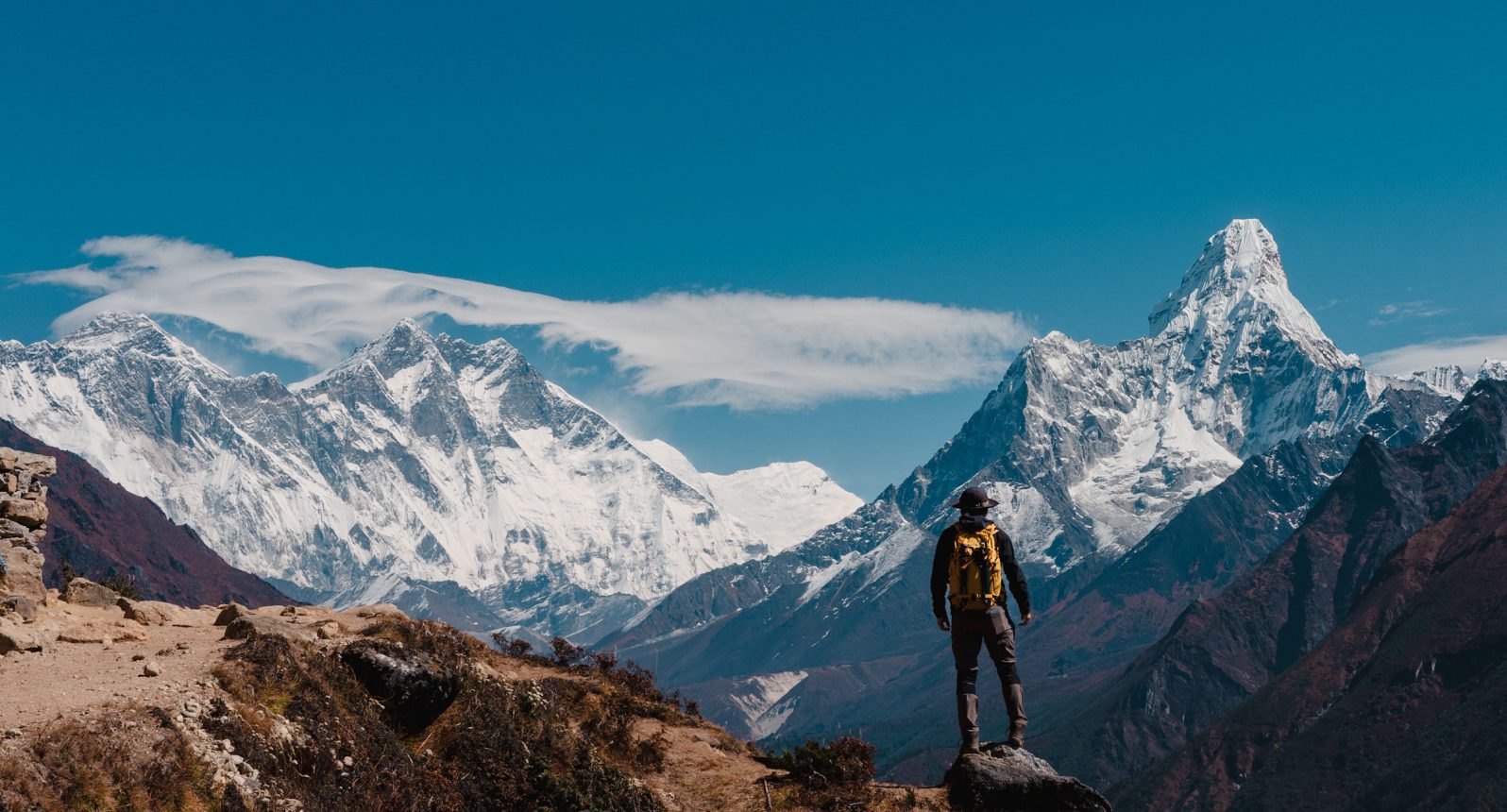
The difficulty isn’t technical; it’s the altitude. At base camp each breath holds only about half the oxygen it would at sea level. The trek is built around slow climbing and rest days so the body can adapt. Altitude sickness can still strike anyone, whatever their fitness. Tens of thousands of people from around the world make this trek every year anyway. It’s the closest most of us will ever get to the highest point on Earth. Along the way you walk beneath Ama Dablam, Lhotse, and Nuptse, and from Kala Patthar, just above base camp, you get a clear view of Everest itself. For many, it’s also a test of what they’re capable of, far from the comforts of home.
Benny once told me his friend Jack’s dad had trekked to Everest Base Camp. That turned out to be a story the six-year-olds had made up between them.
I have never been satisfied with the status quo, and my thoughts tend to race off in every direction. My childhood was split between Inner Mongolia and Shandong, and many of my deepest memories are of long journeys.
Sara invited me on this trip. She is a true world traveler who has quit her job entirely three times, and I know she can plan everything down to the last detail. Her travel book became a bestseller in China. She sold her house in Seattle and gave away everything she owned; I ended up with her TV and sound bar. She is incredibly talented, but she doesn’t enjoy social life in modern society. She is happiest among villagers in the most remote places. I was an introvert when I was young, and it took me years to grow out of it. We have that in common.
I told myself I needed something hard, something to pull me out of daily comfort and give me room to reflect. Everest felt like the perfect place for that. I love landscape photography. From wildflower-covered Mount Rainier near Seattle to the fairytale Matterhorn in Switzerland, mountains have left me with fond memories. Those peaks are beautiful. Everest, I expect, will be something else entirely: vast and magnificent.
Thirty years ago, my friend Ms. Wang, who reads the I Ching, wrote out my life’s fortune by hand. She said I would be diligent but never satisfied. I think she was right, and year after year her predictions have held true. I’ve kept that handwritten note in a small briefcase for thirty years. On the fourteen-hour flight I read it again. The ink has faded, and I thought about my life.
On the Flight
I barely slept. Following Claude’s advice, I set up my Garmin’s hiking data screens and alerts. It was more involved than I expected, but I learned a lot, and it’s useful. Then I read Ed Viesturs’s No Shortcuts to the Top. Viesturs climbed all fourteen of the world’s 8,000-meter peaks.
Two ideas stayed with me. The first: if you don’t mind, it doesn’t matter. The second: climbers tend to keep looking up and forget about the way down, and the way down is usually where the danger is. Getting to the top is optional. Getting home is mandatory.
That last line feels like a promise I’ve already made, to a little boy, with a pinky finger.
Day 2 · October 16 — The Day Before the Trek
Kathmandu
Last night a new teammate, Xia, flew in from Shanghai to join us. We went to a place called Paradise Spa for a 90-minute massage, and it was a disaster. The therapist had no feel for pressure and little skill. I went through two therapists before a third finally did an acceptable job. Dinner made up for it: good Chinese food at a Hunan restaurant.
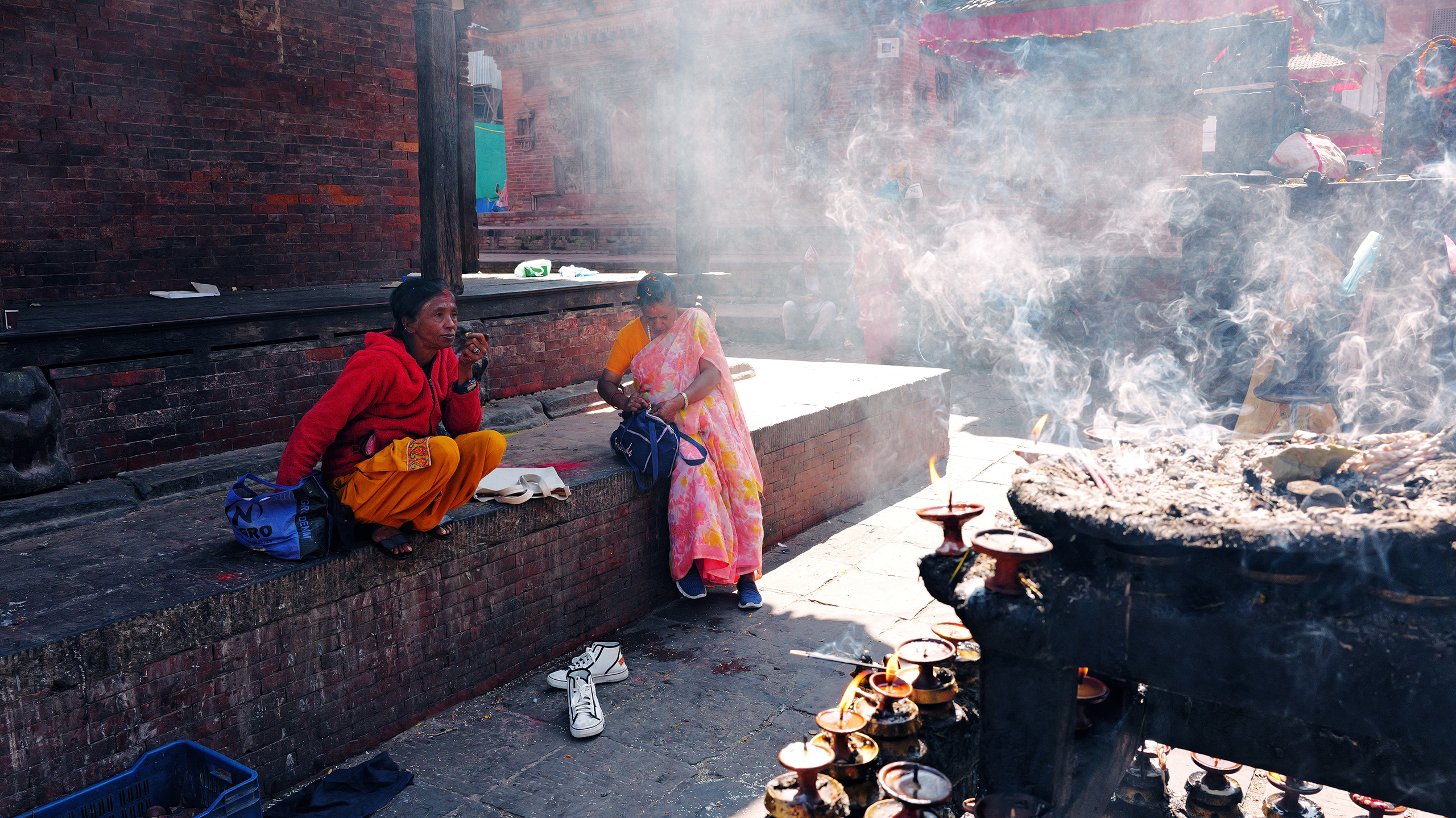
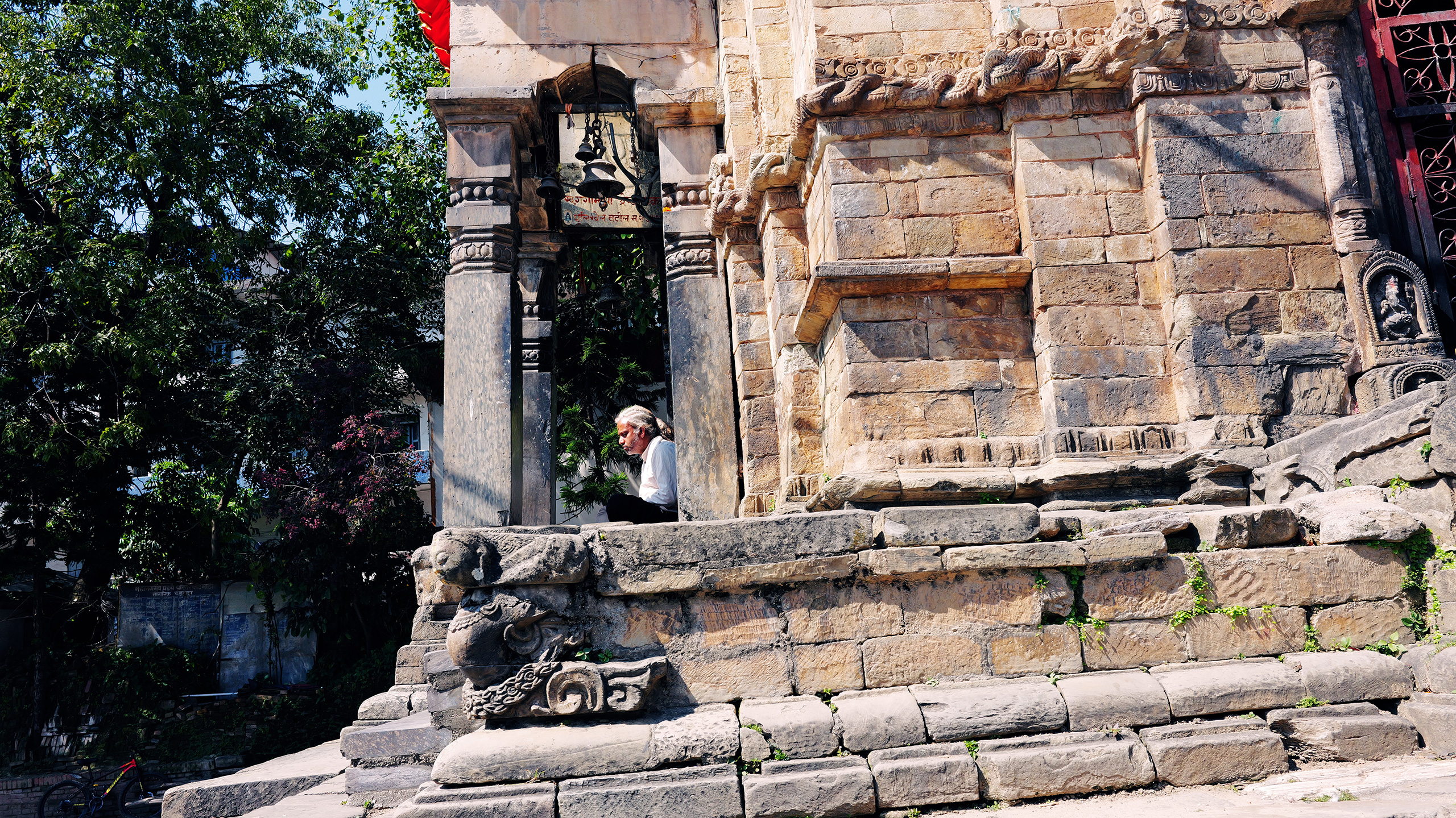
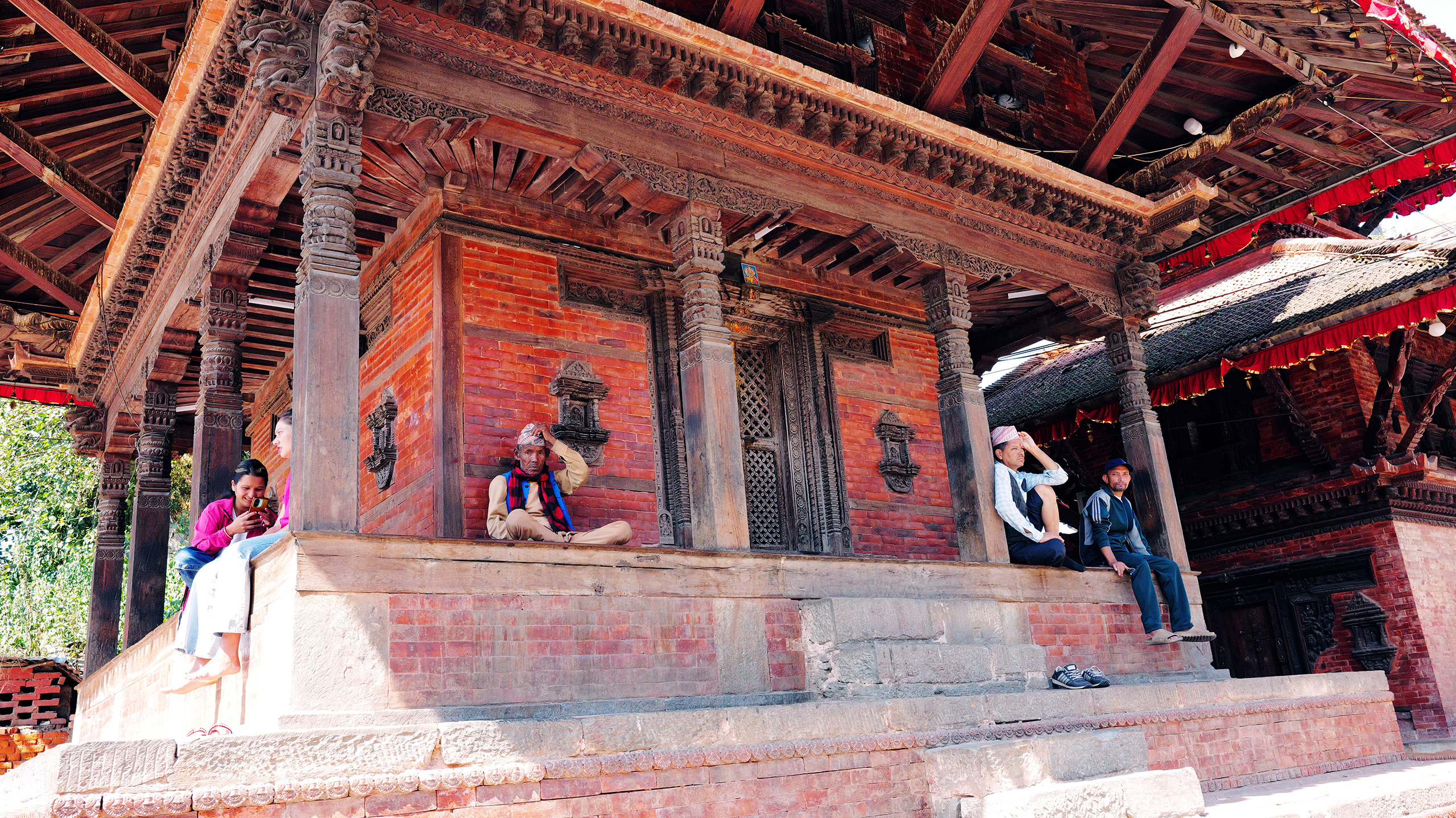
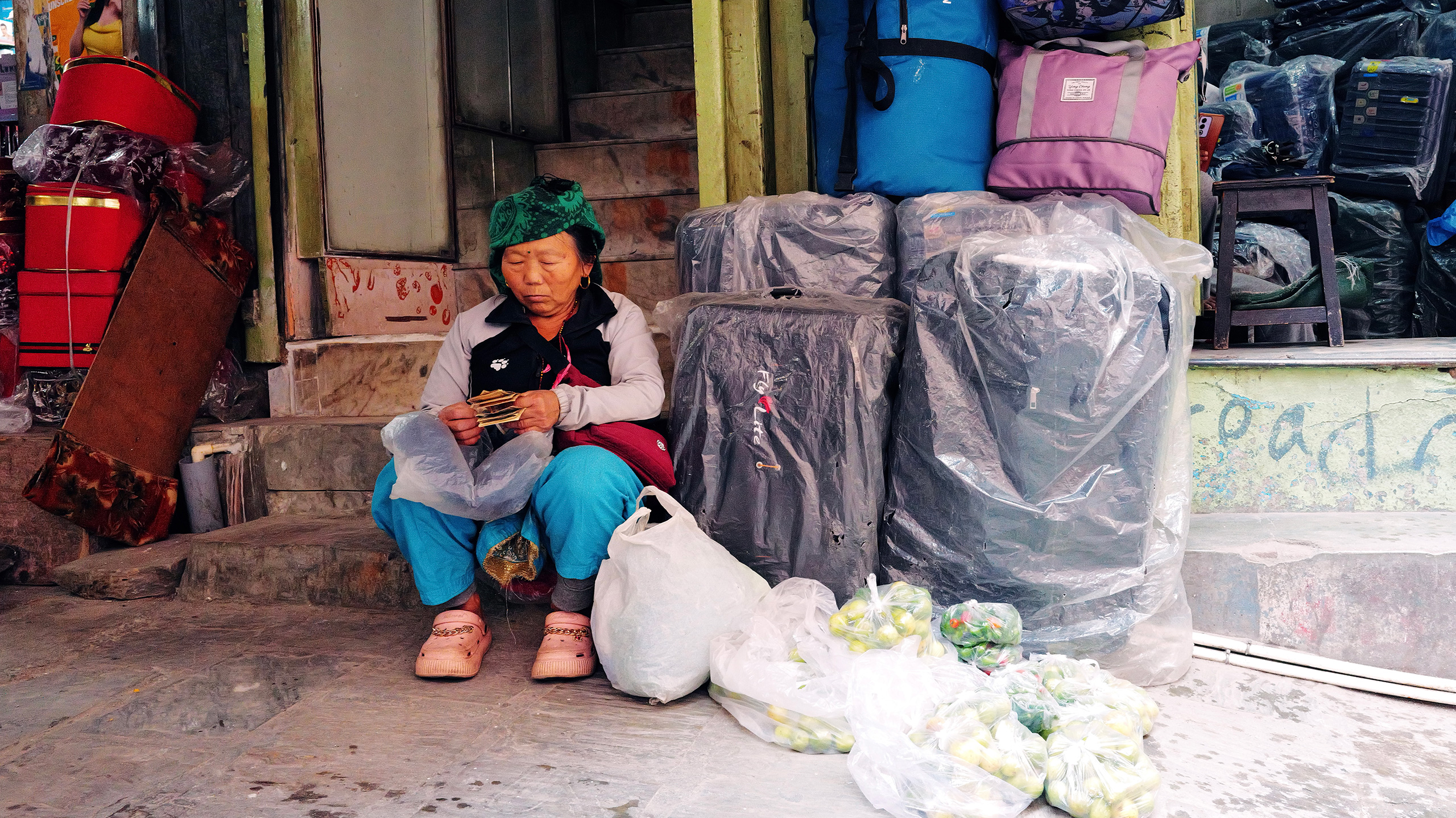
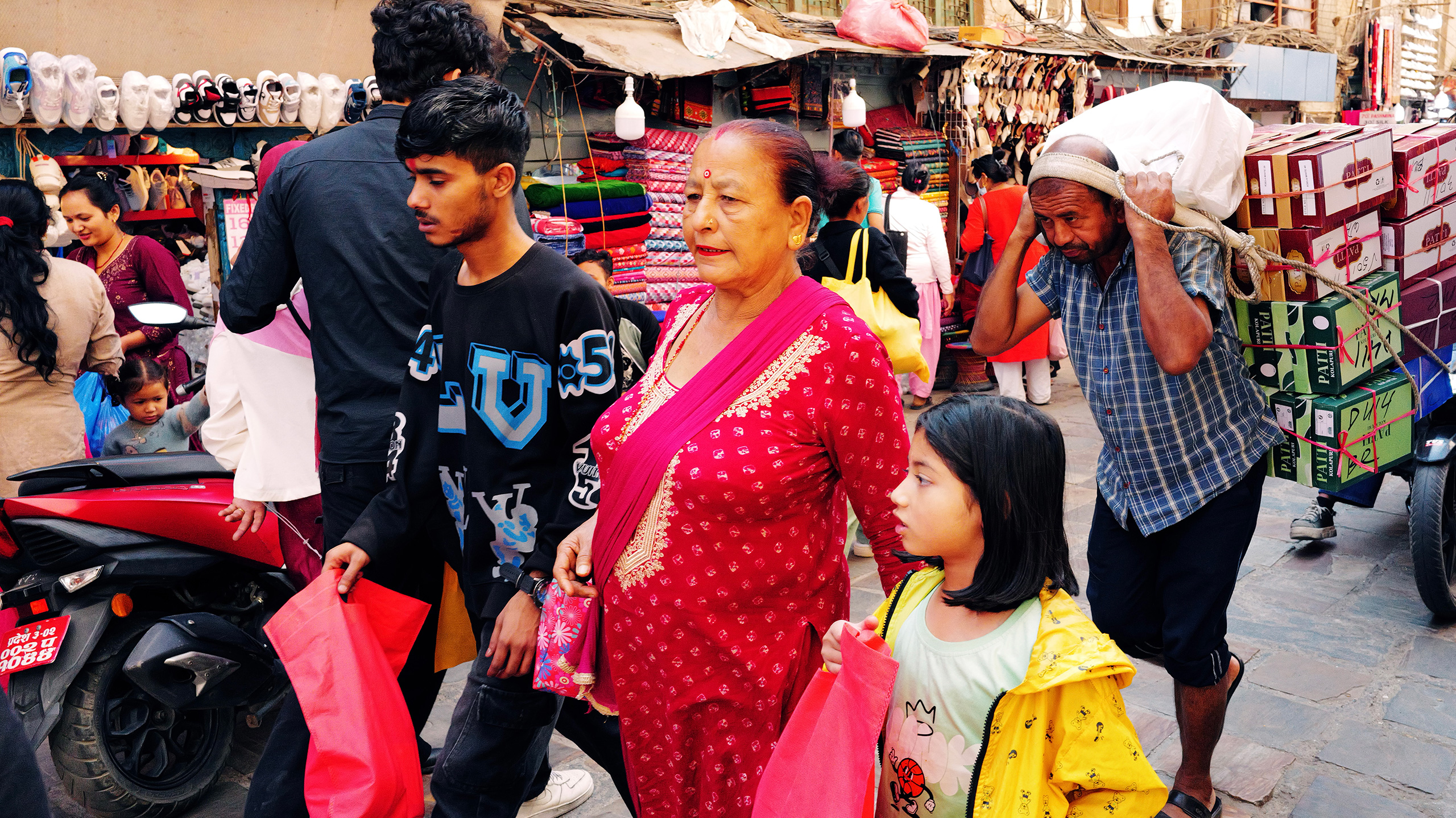
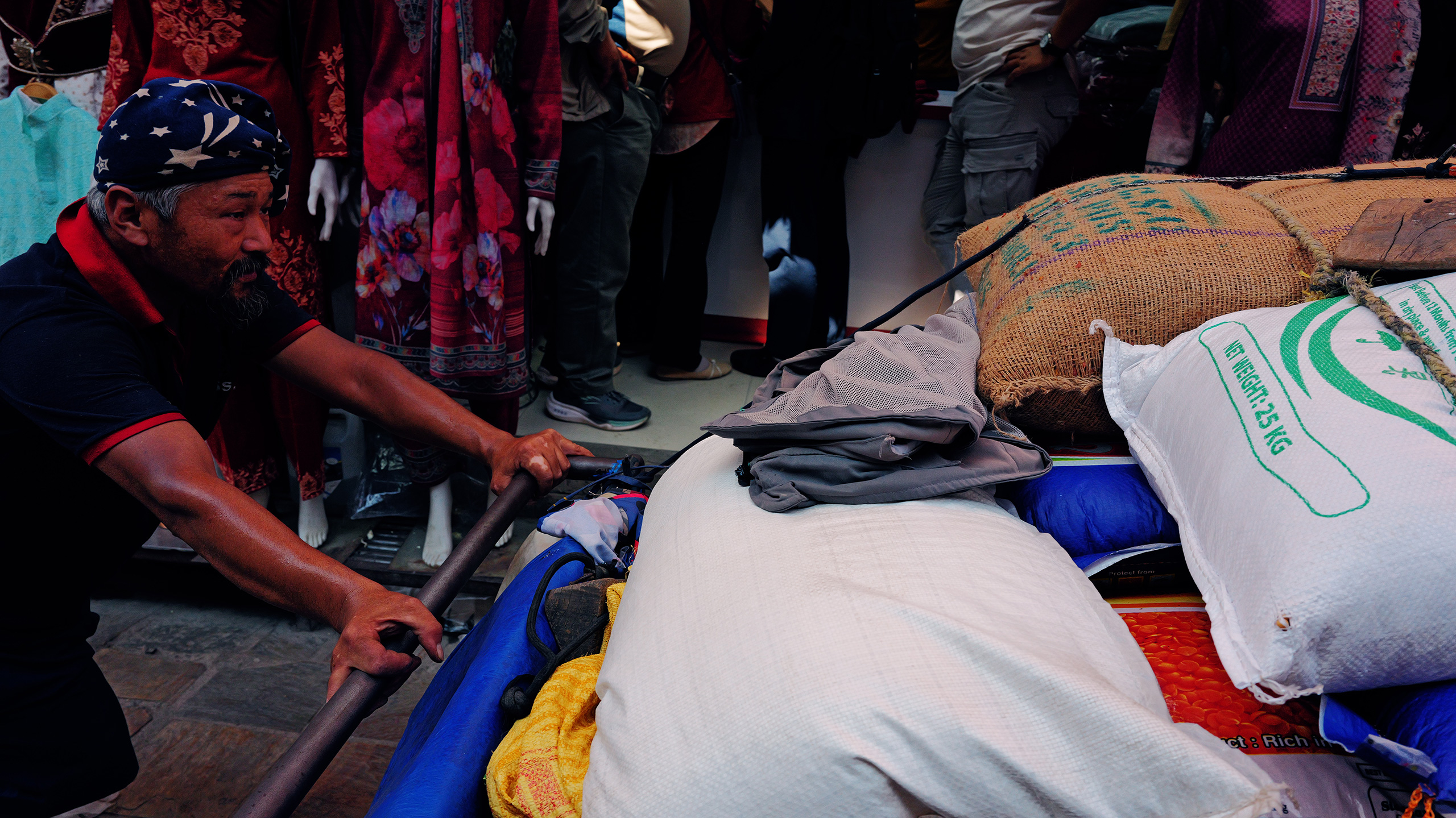
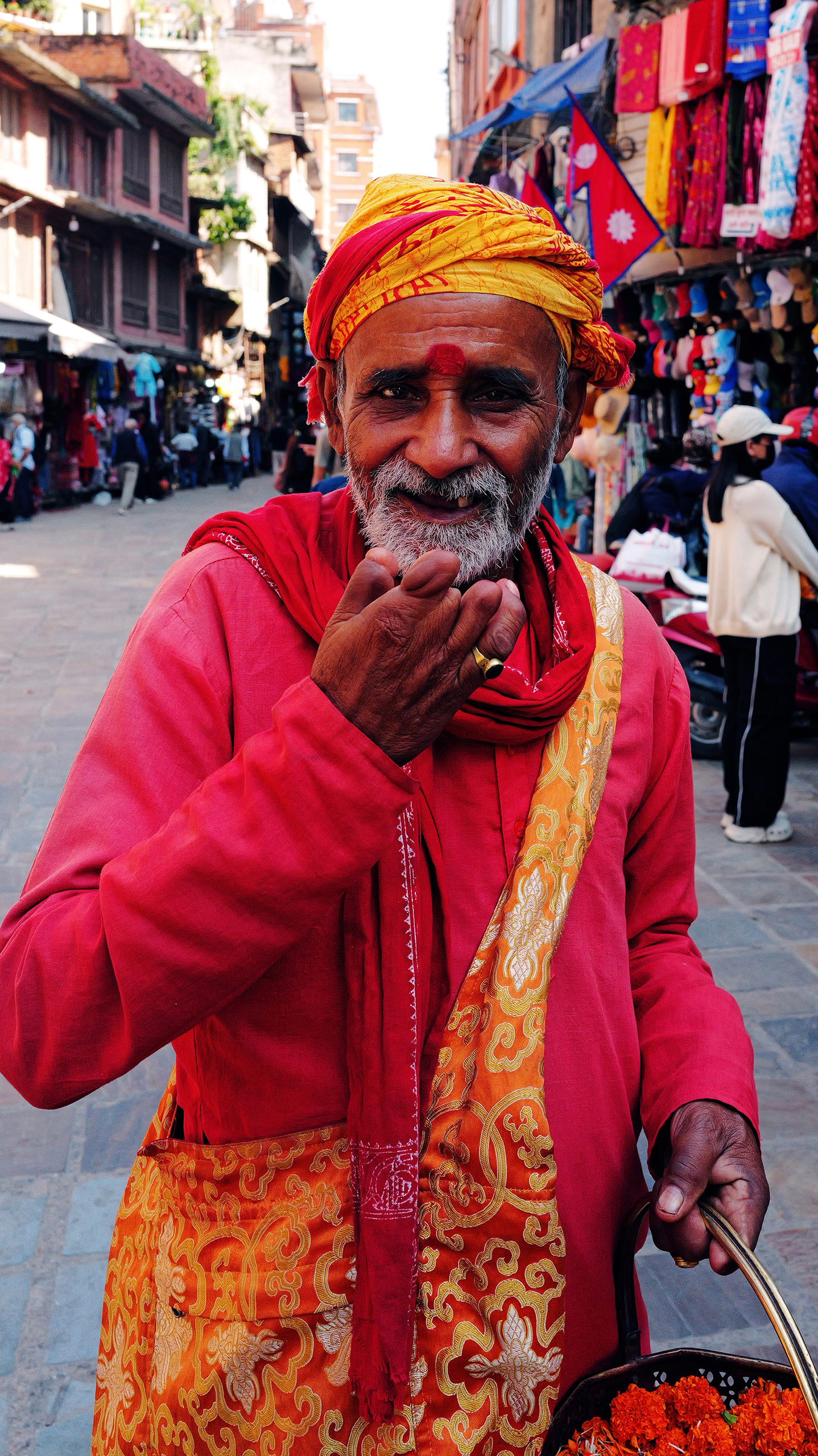
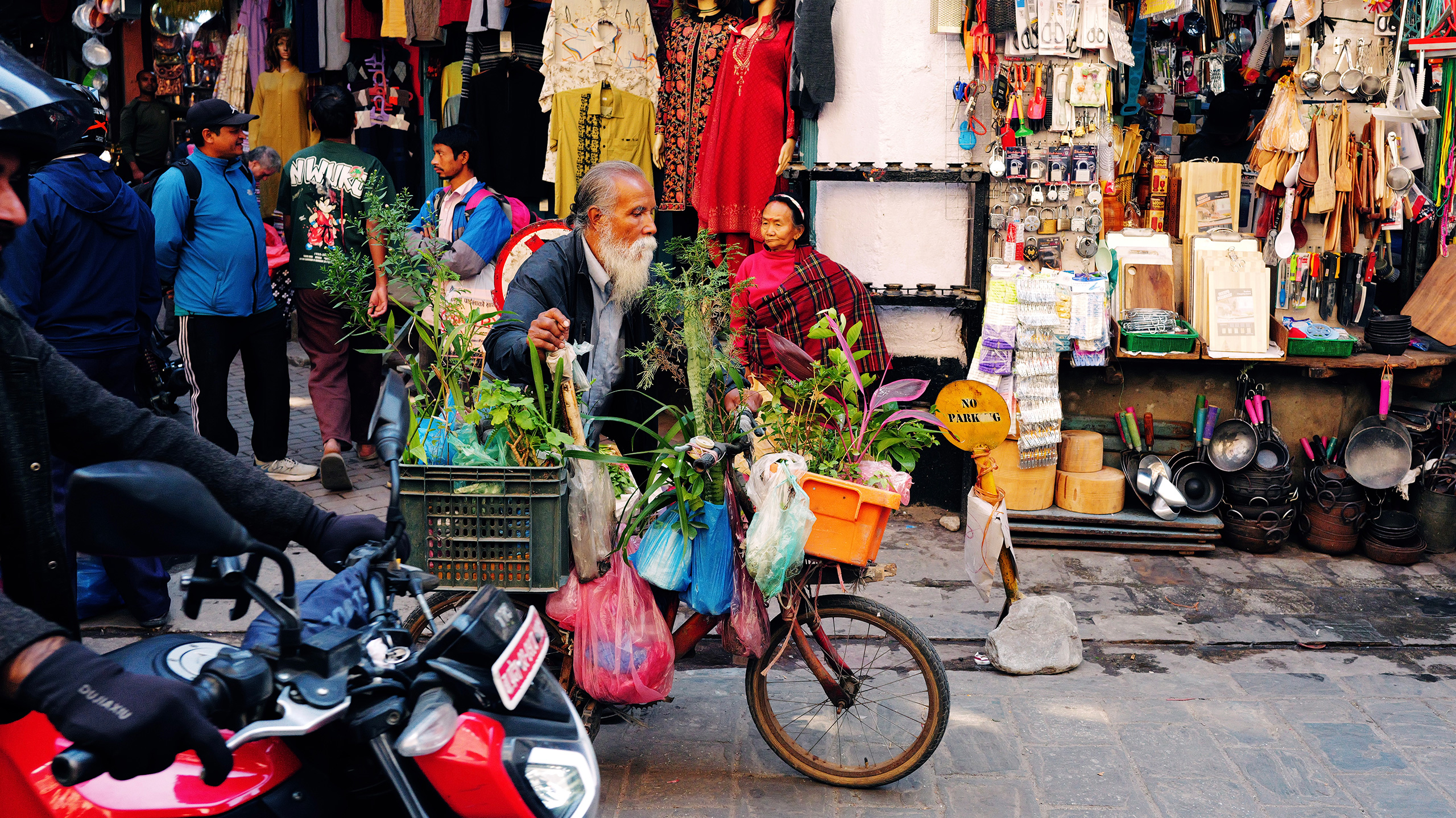
The commercial streets here are narrow and packed, every inch crowded with shops selling just about everything. This morning we went out for last-minute supplies. I picked up protein bars, a keychain, and a medal for Benny, something for him to wear and display at home. I want to make him proud.
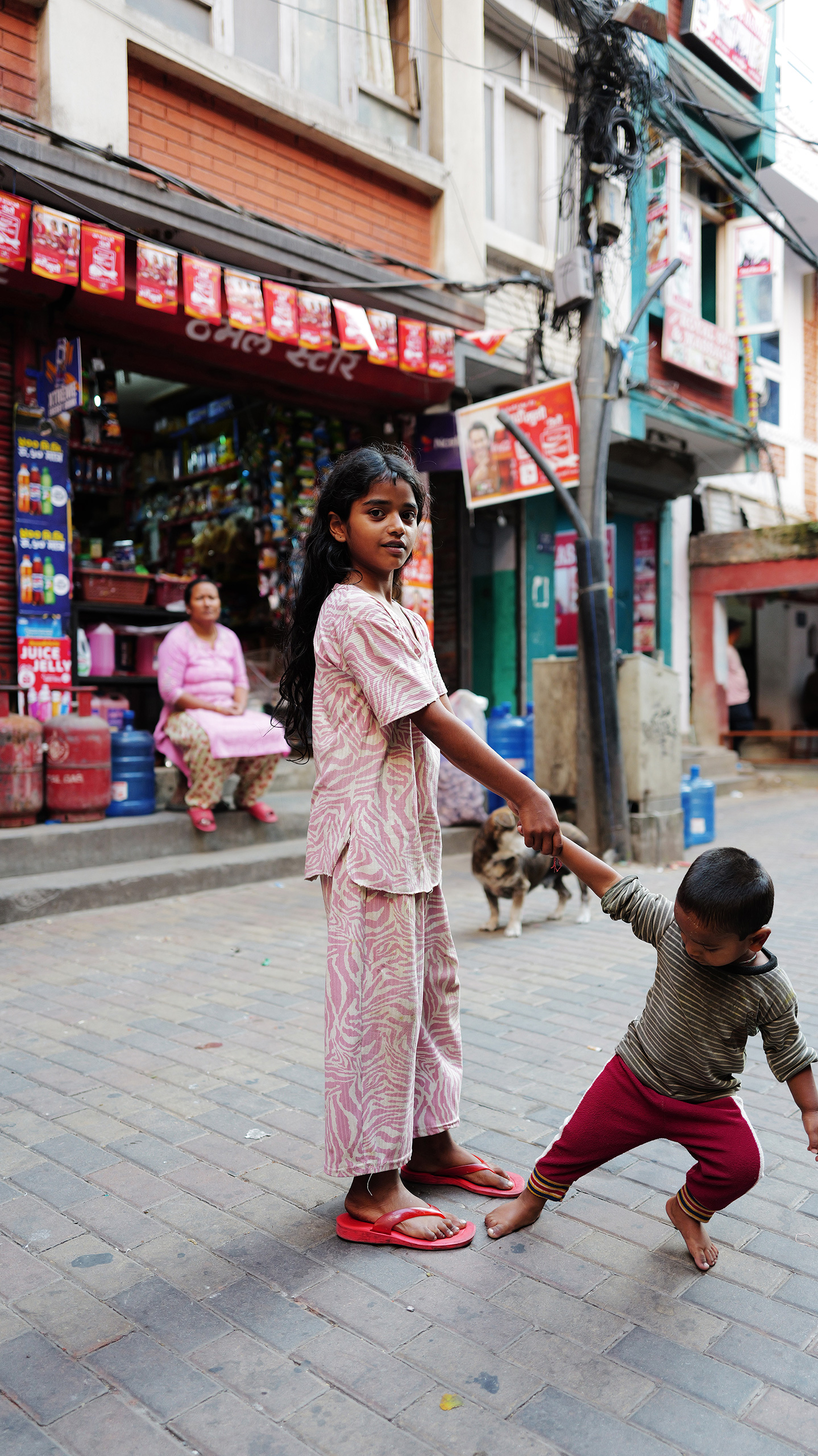
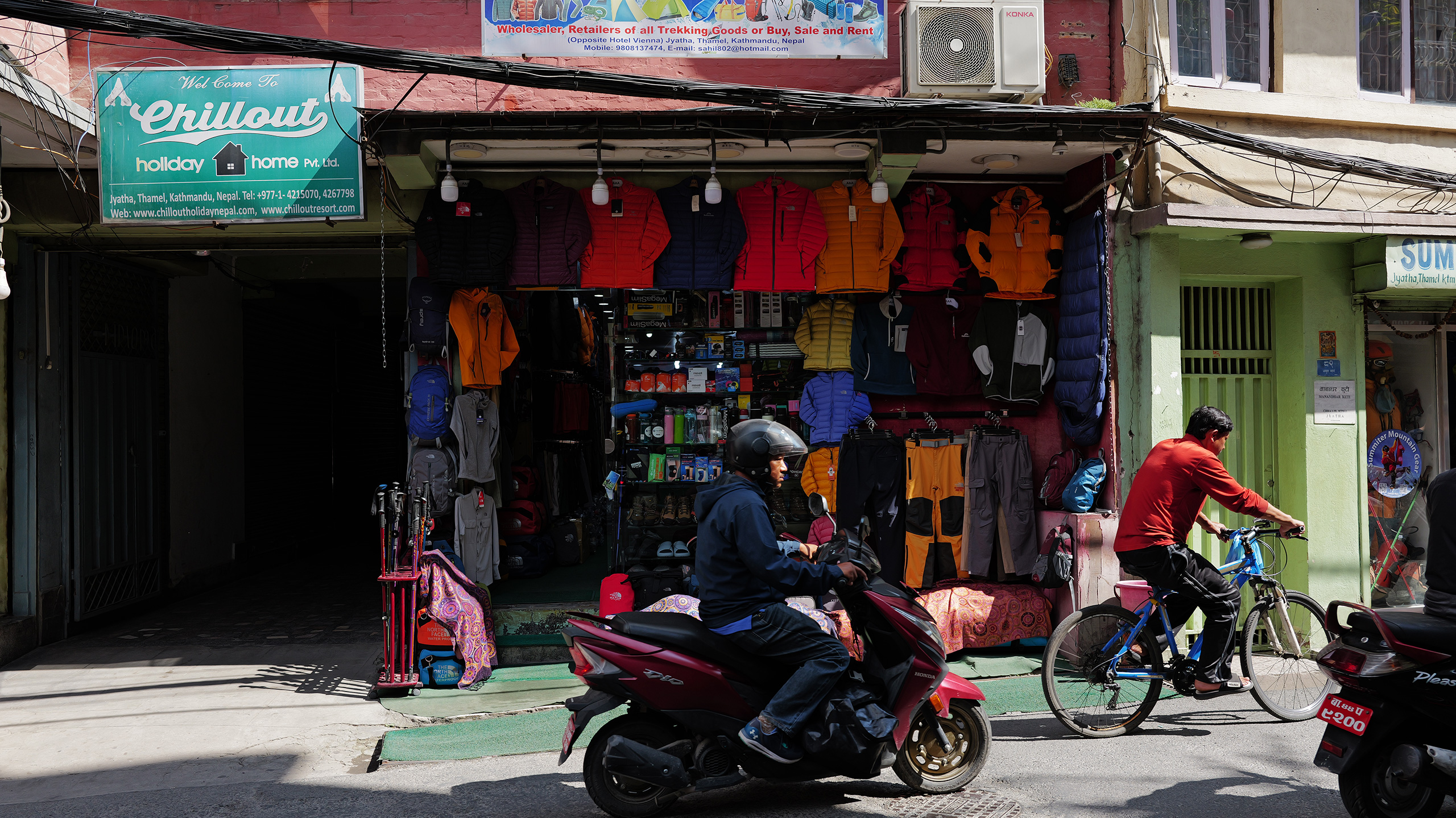
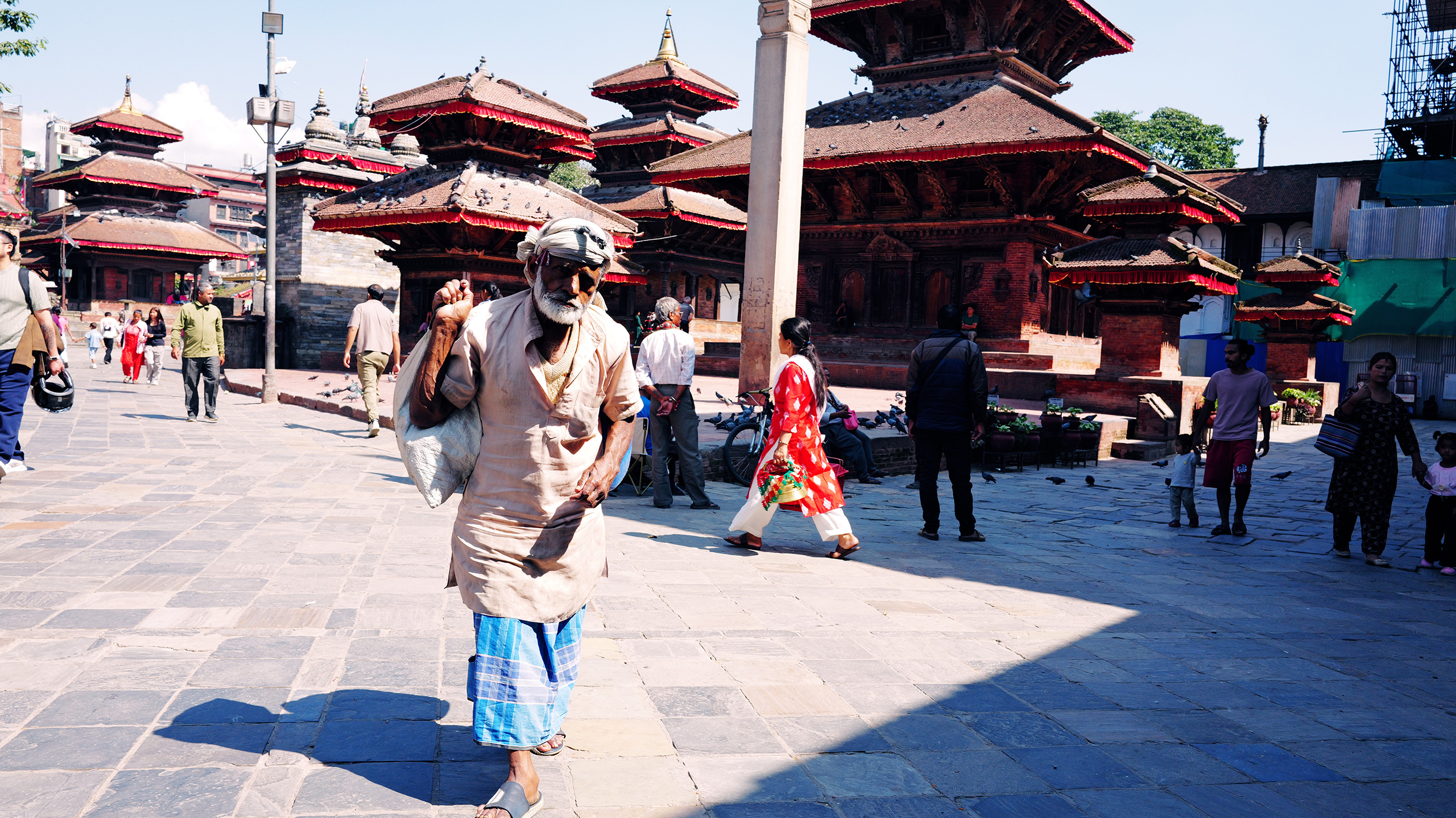
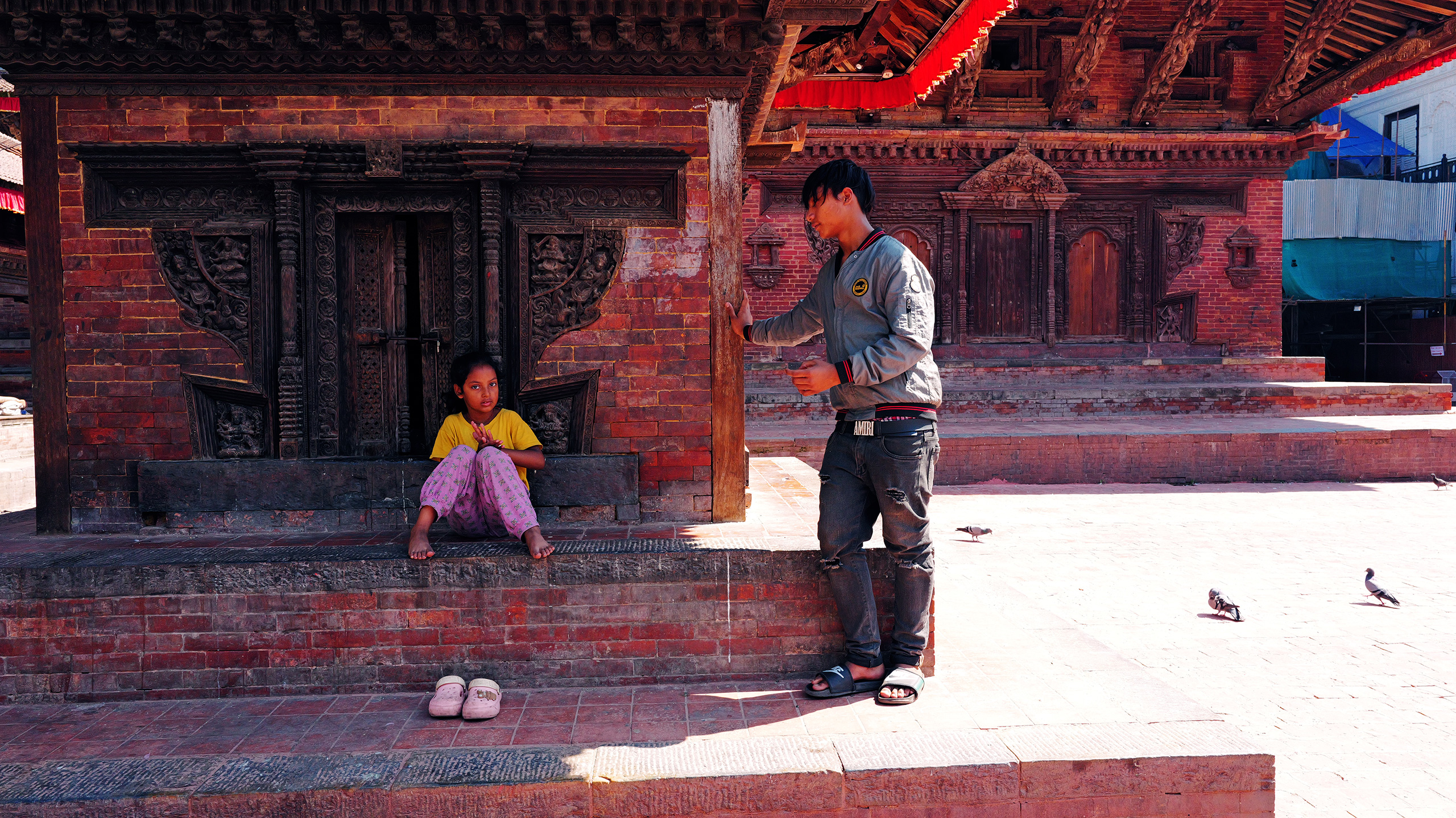
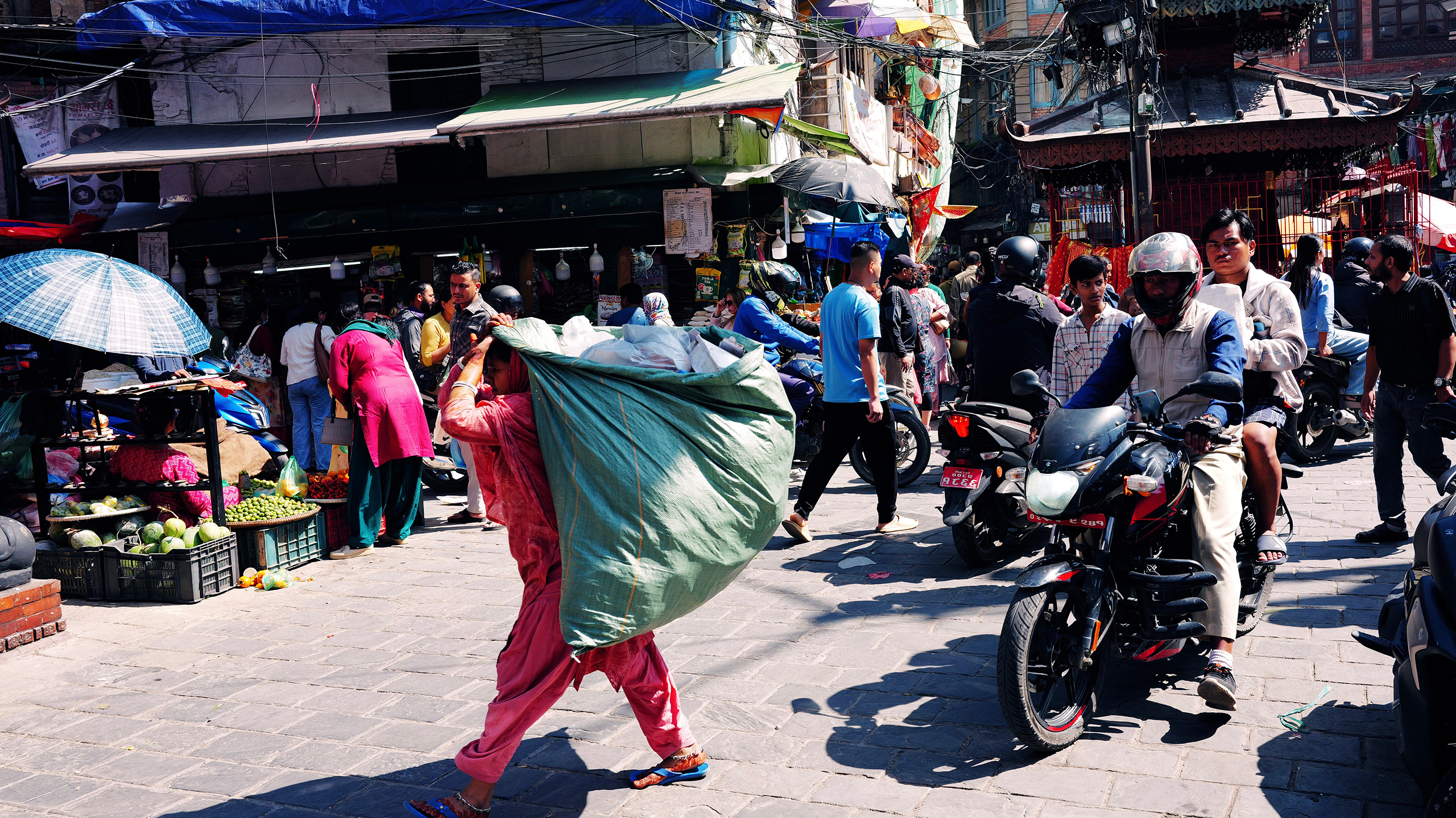
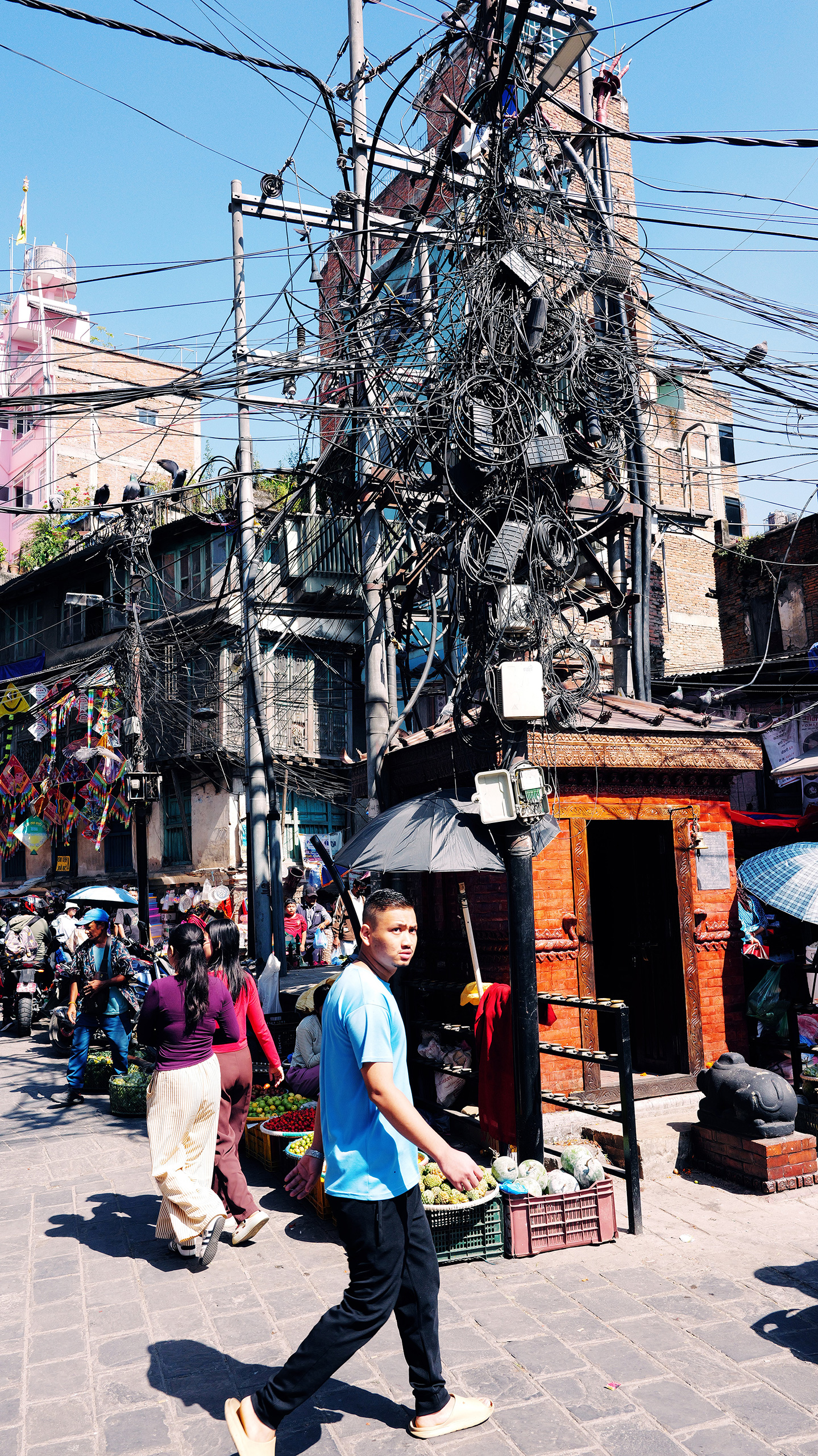
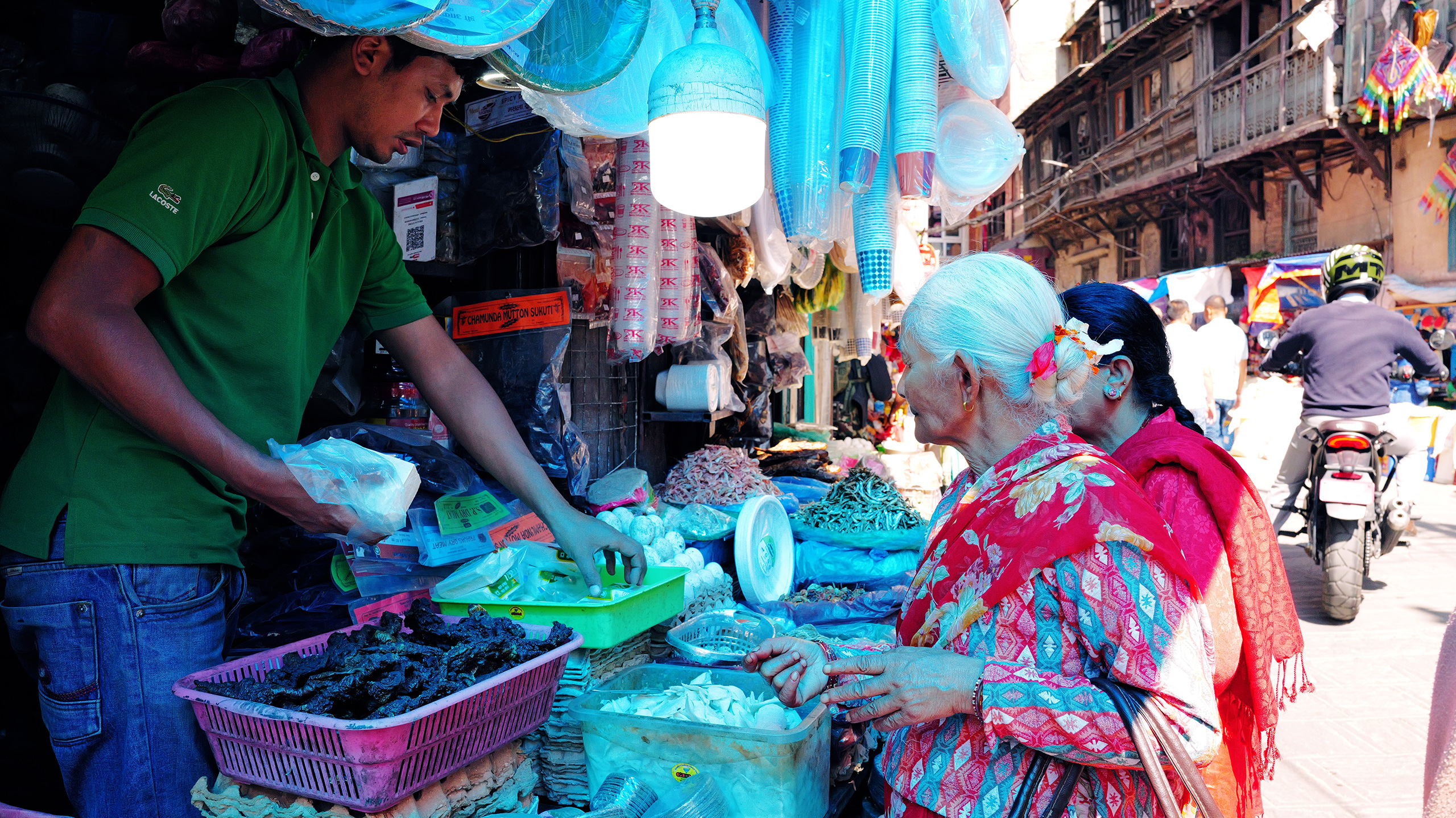
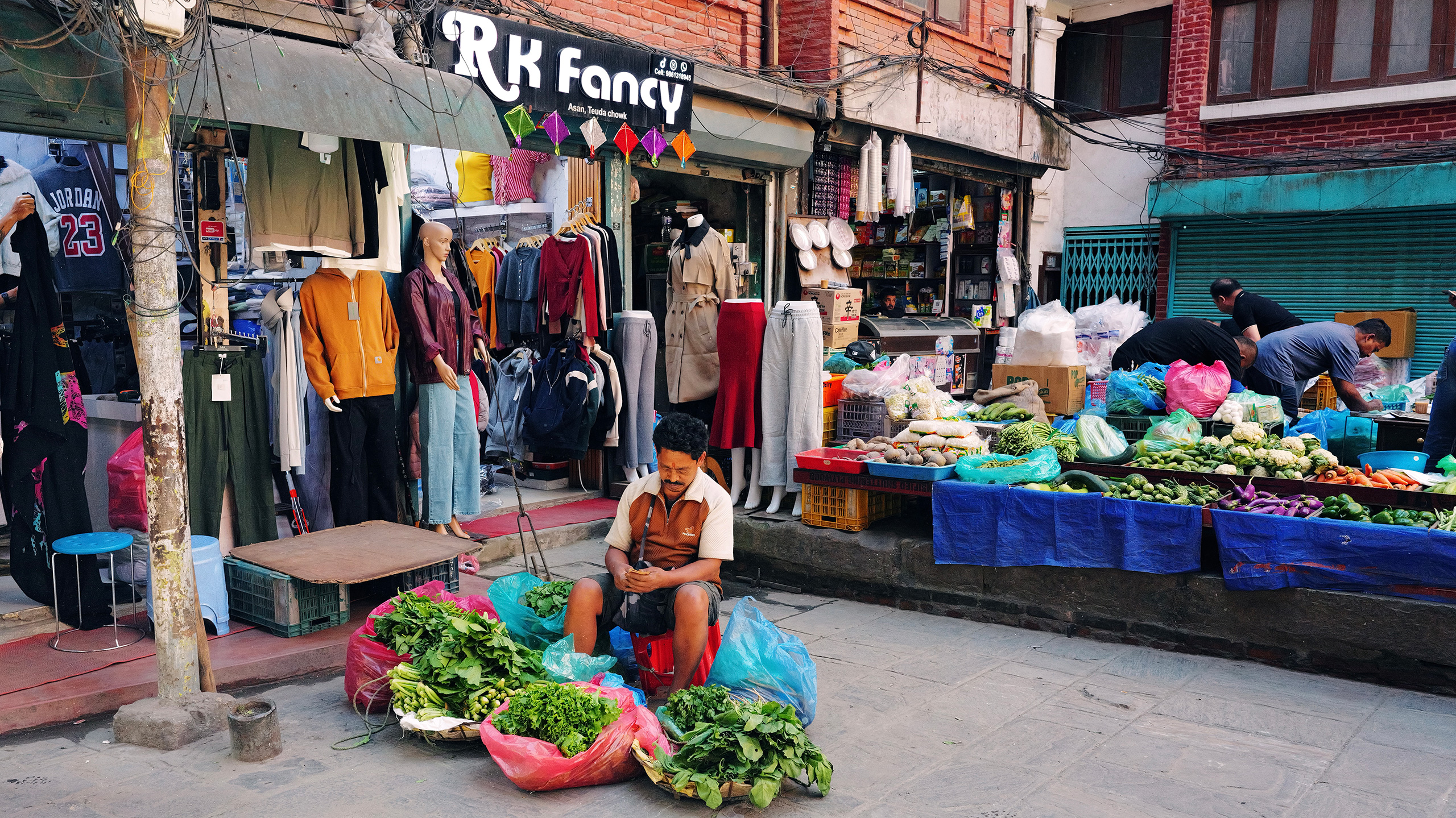
Reflections at the Garden Hotel
Afterward we sat at the Garden Hotel and talked about why each of us had come to Nepal.
For me, it’s this: since turning fifty, I find myself reflecting on my life more often. I’ve been busy day in and day out, yet comfortable. I wanted to stop and do something truly challenging, physically and mentally. Sara asked whether this was a midlife crisis. I told her mine came earlier than most people’s, in my thirties, and that after I came through it, I felt great.
Facing the Mountain’s Dangers
We spent a quiet stretch talking about how to face altitude sickness. This is no joke. It comes in three stages. The first is ordinary mountain sickness: headache, nausea, vomiting. The second is HAPE, high-altitude pulmonary edema. The third is HACE, high-altitude cerebral edema. The rule is simple: if any serious symptom appears, don’t push through. Turn around and descend.
We’ve been here only two nights, and every day we hear of another climber who didn’t make it home. One man collapsed but didn’t want to pay for a helicopter, so he refused it and asked to be carried down by porters for 10,000 RMB. He lost consciousness, and his sister chose the cheapest option of all: no rescue. He died. Another was a young Chinese woman who went without a guide and hiked at night. She got lost, tried a shortcut, and walked straight off a cliff.
The Himalayas have witnessed countless such tragedies. Mount Everest, called Sagarmatha in Nepali and Chomolungma in Tibetan, has been both a sacred peak and a deadly challenge for generations. The Sherpa people, who have lived in these mountains for centuries, treat her with deep reverence and perform Buddhist rituals before any ascent. Yet even with all their wisdom and respect, they know Everest demands humility from everyone who approaches her.
We were told that about 800 climbers reach the summit each year, and that most of the deaths come among amateurs who don’t understand the danger.
Our Pact
Half joking, we asked one another: who here would haggle over the price of a rescue helicopter if things turned serious? We all agreed that none of us would hesitate to pay. Then we posted everyone’s helicopter rescue insurance policy numbers and emergency phone numbers in the group chat. If one of us can’t act, the others can call for rescue on their behalf.
Sara kept reminding us of the dangers, almost to the point of scaring us. Before leaving home, I moved key passwords in 1Password into a private folder shared with my wife and my business partner, so they can access everything if anything happens.
We respect nature, and we understand the risks. We will be cautious. We will be smart.
Dreams and Goals
One of my goals is to make great landscape photographs. If I can’t reach Base Camp on foot, my plan B is to charter a helicopter for aerial photography. The flight from Base Camp down to Lukla costs about $700.
All four of us seem to share one goal: to come to the world’s most magnificent mountain for a kind of purification, a cleansing of the soul that renews our energy for the road ahead. I have no religion, but this adventure feels somewhat spiritual to me.
From a village to Mount Everest at fifty-two. That is something to celebrate. My legs are still a little sore from training, but I feel great about my overall fitness, and my weight is under control.
Tomorrow, we begin our true ascent.
Day 3 · October 17 — Into the Mountains
Kathmandu → Lukla by air (~2,860 m) → Phakding (~2,610 m) · about 3.5 hours on foot
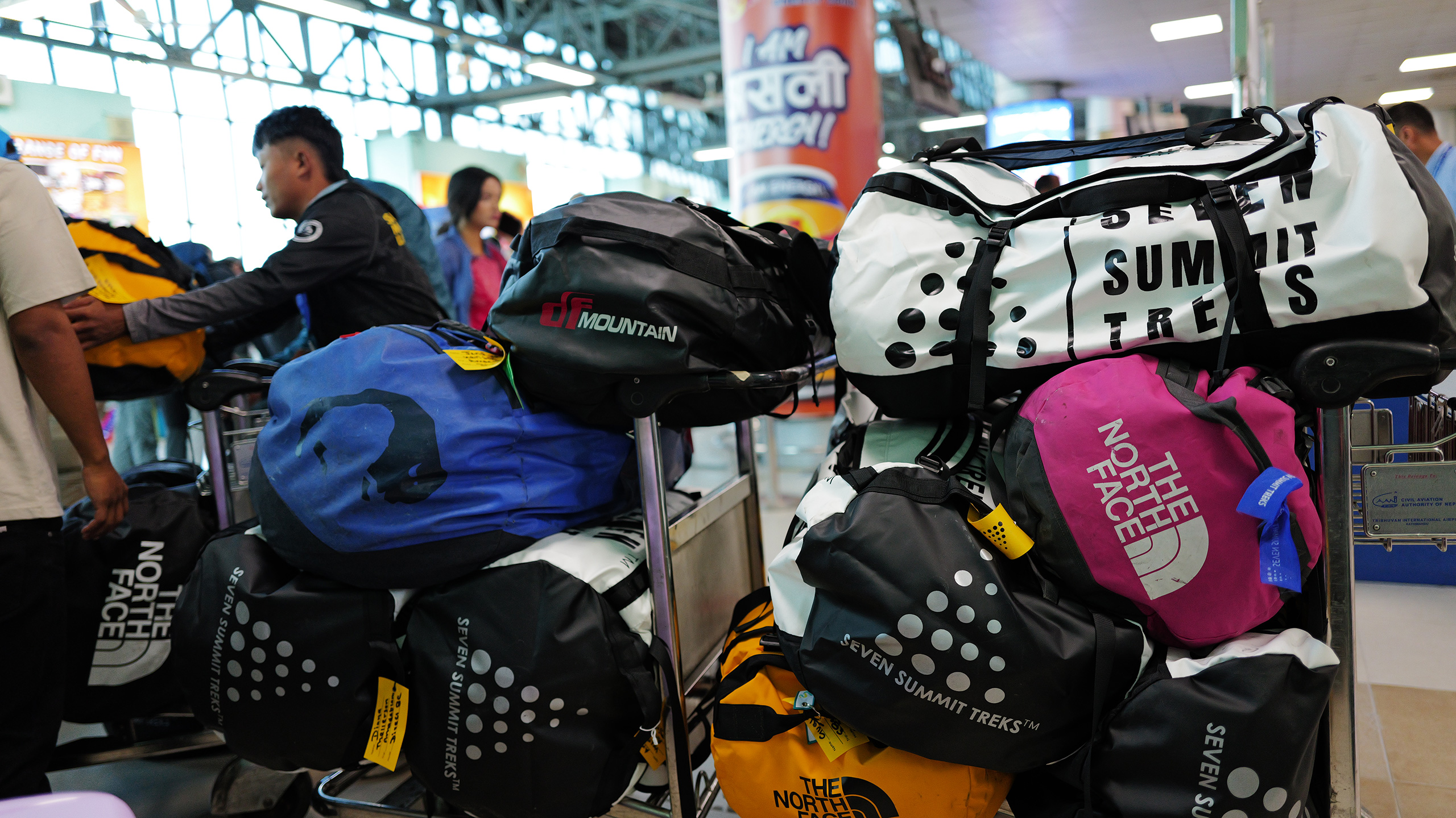
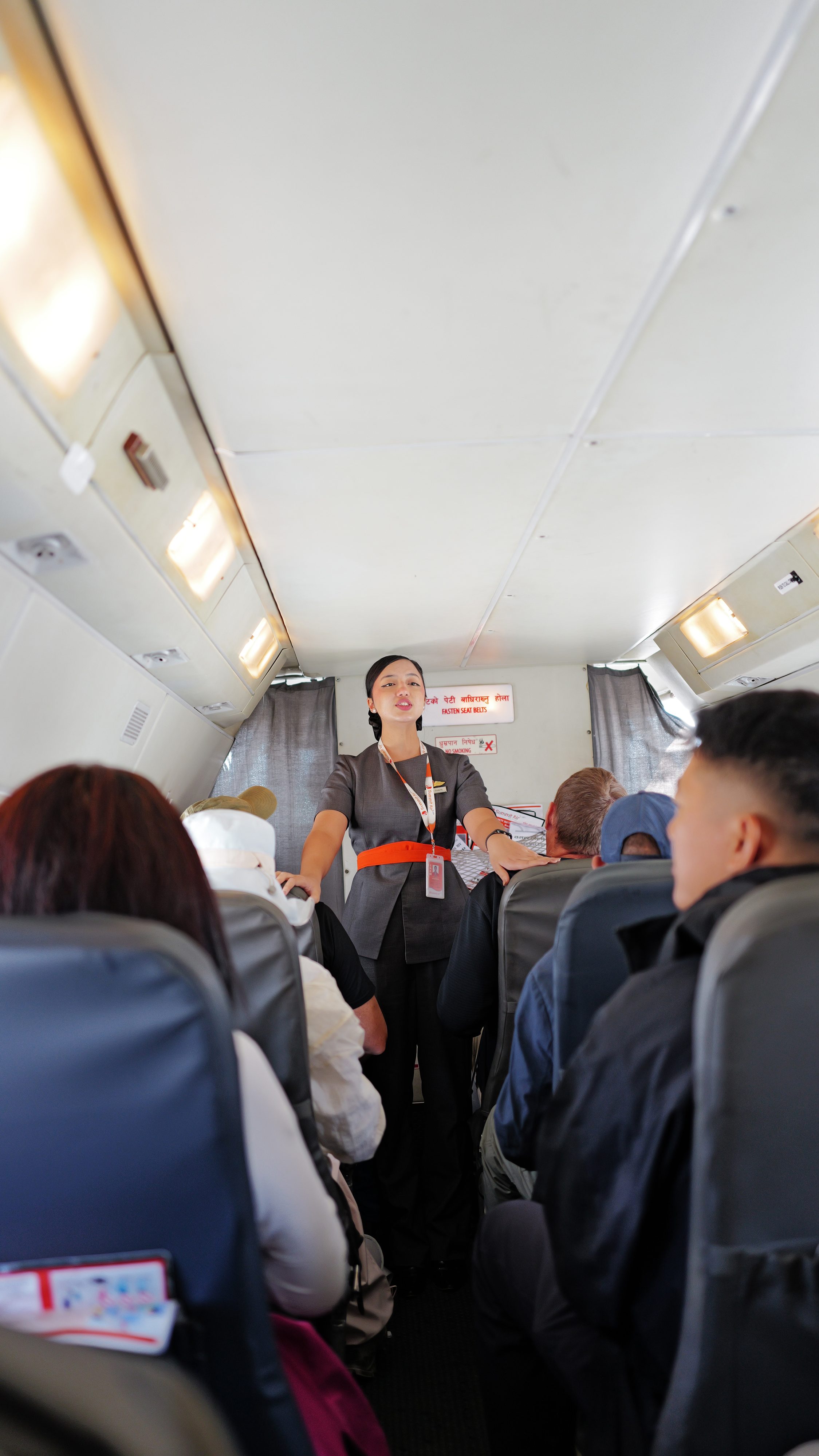
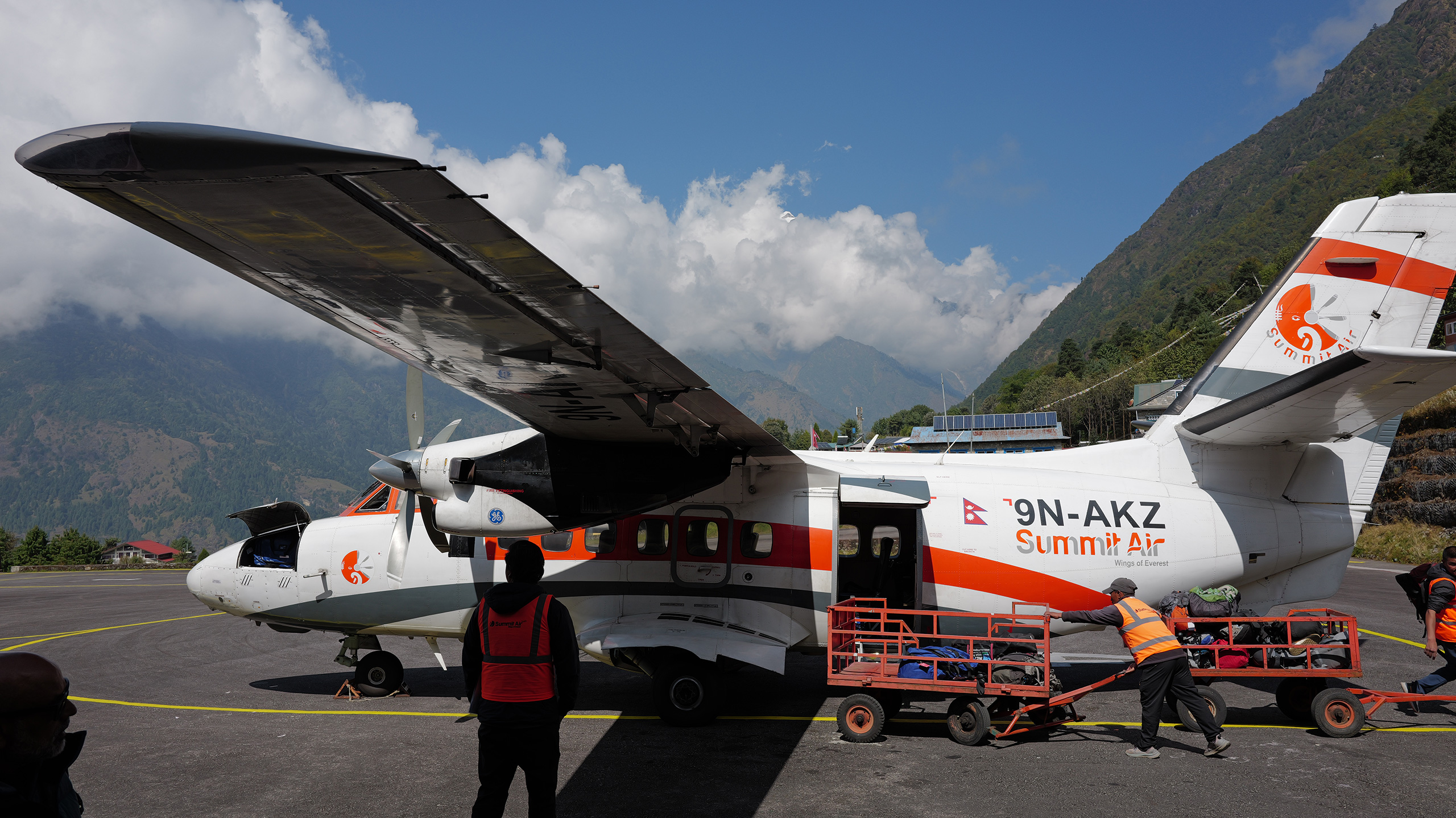
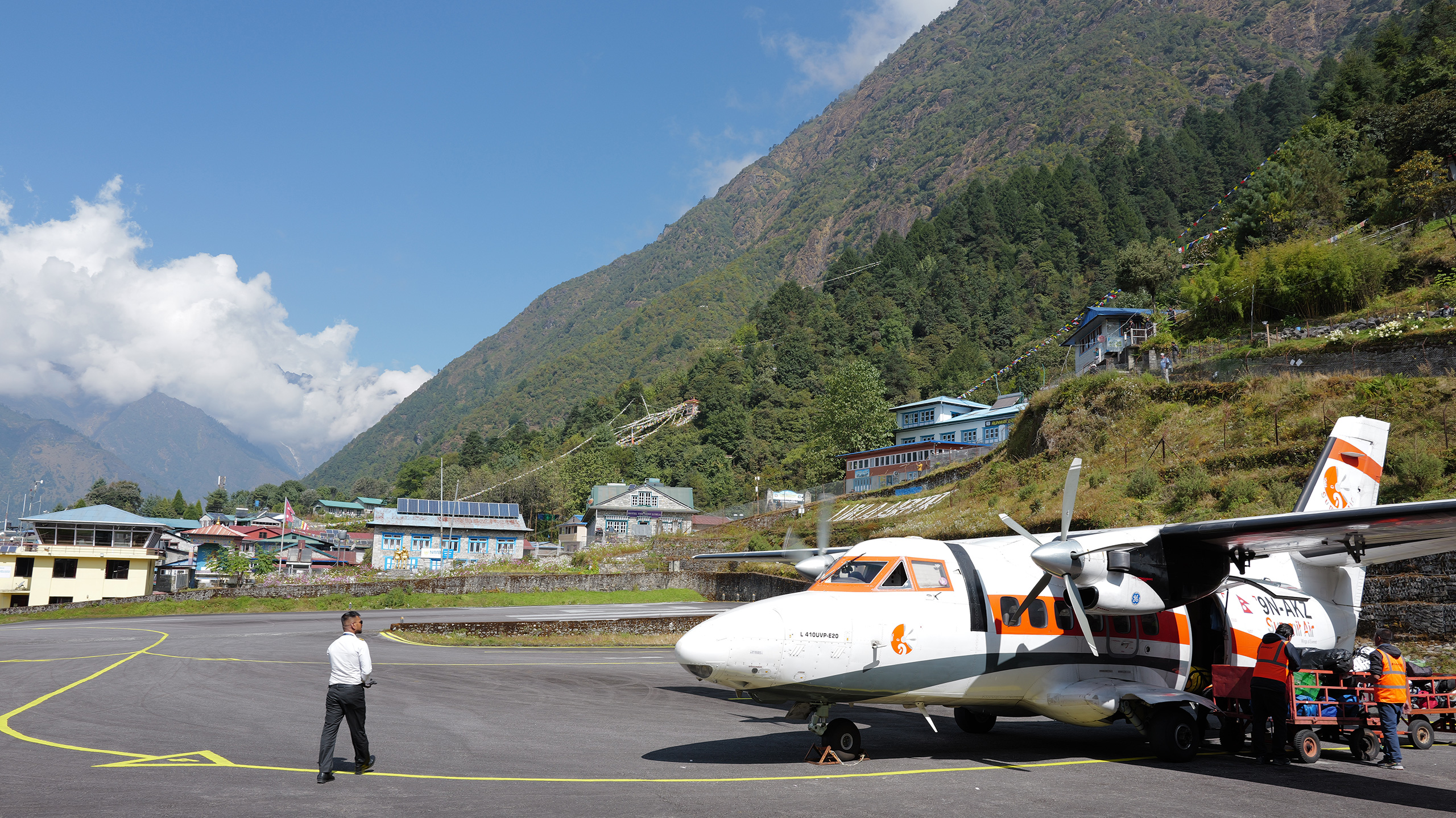
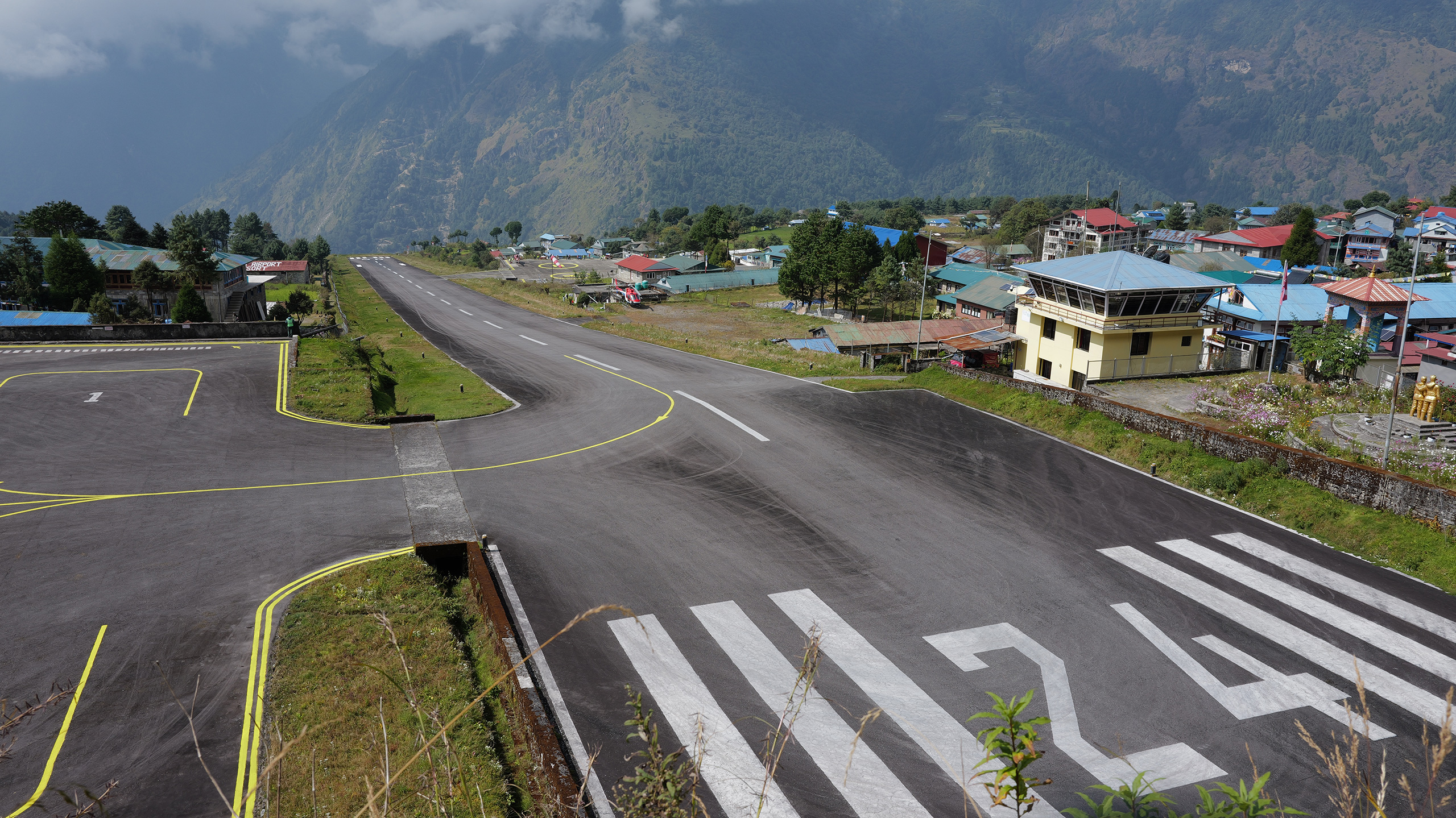
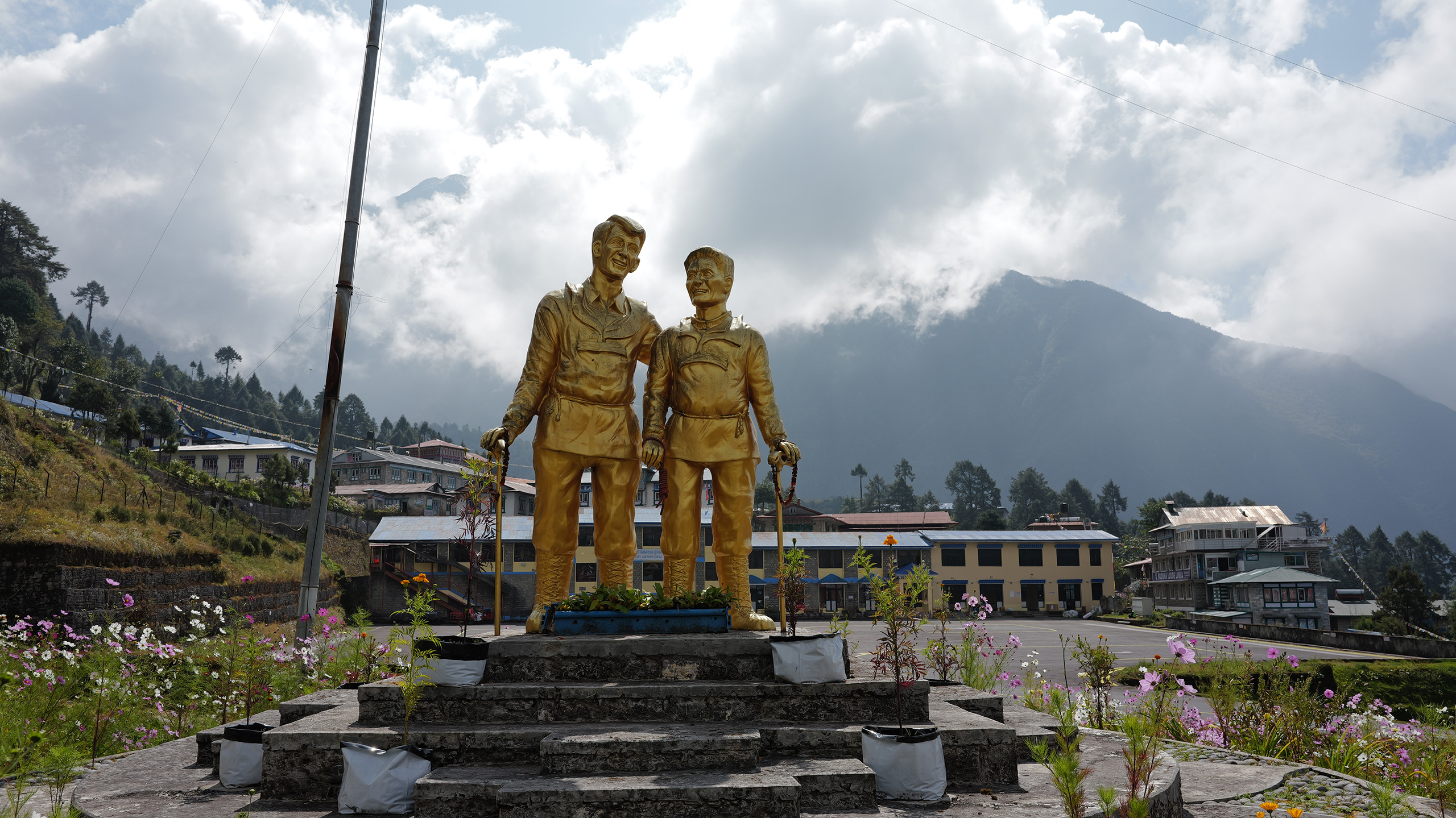
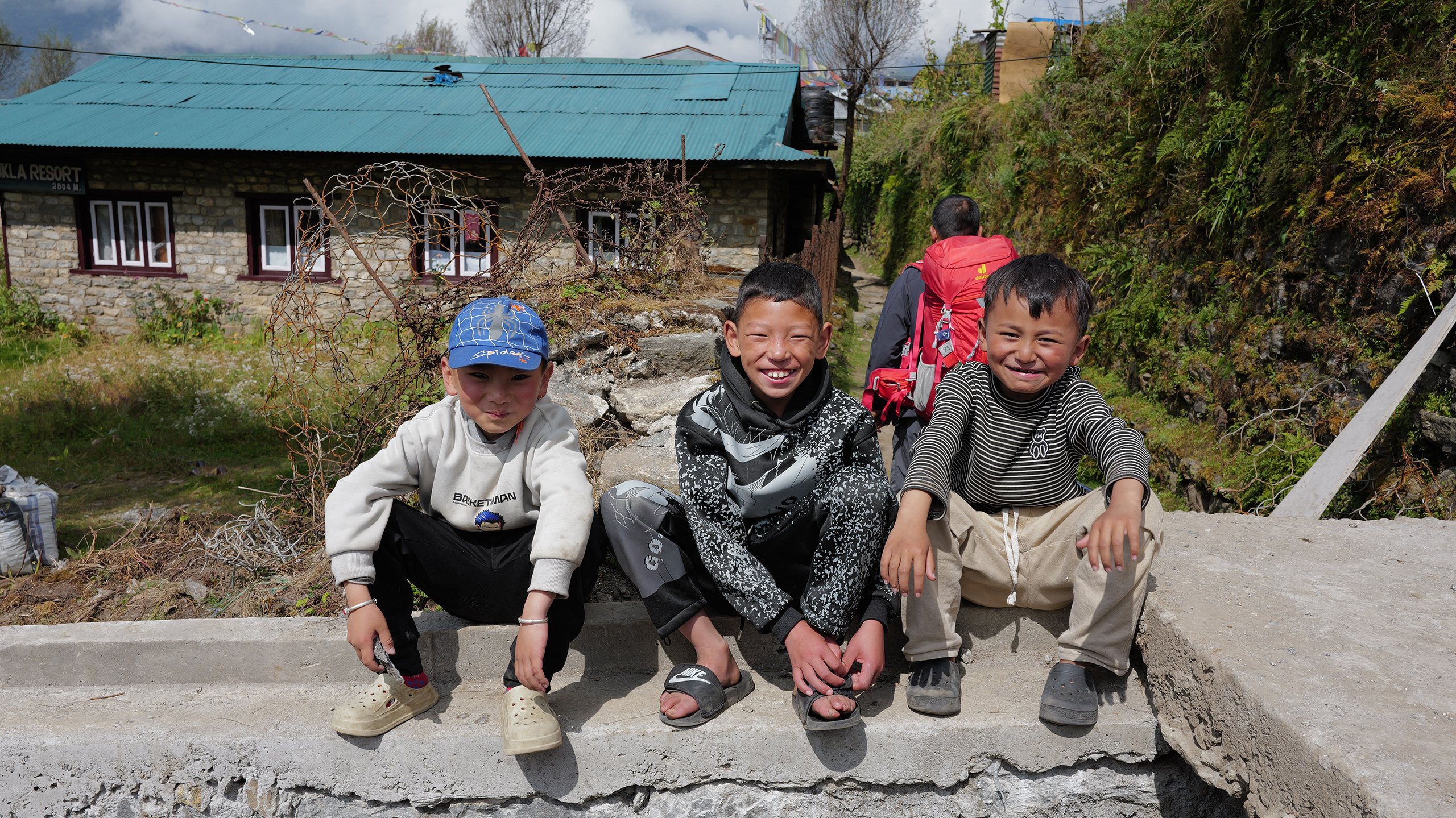
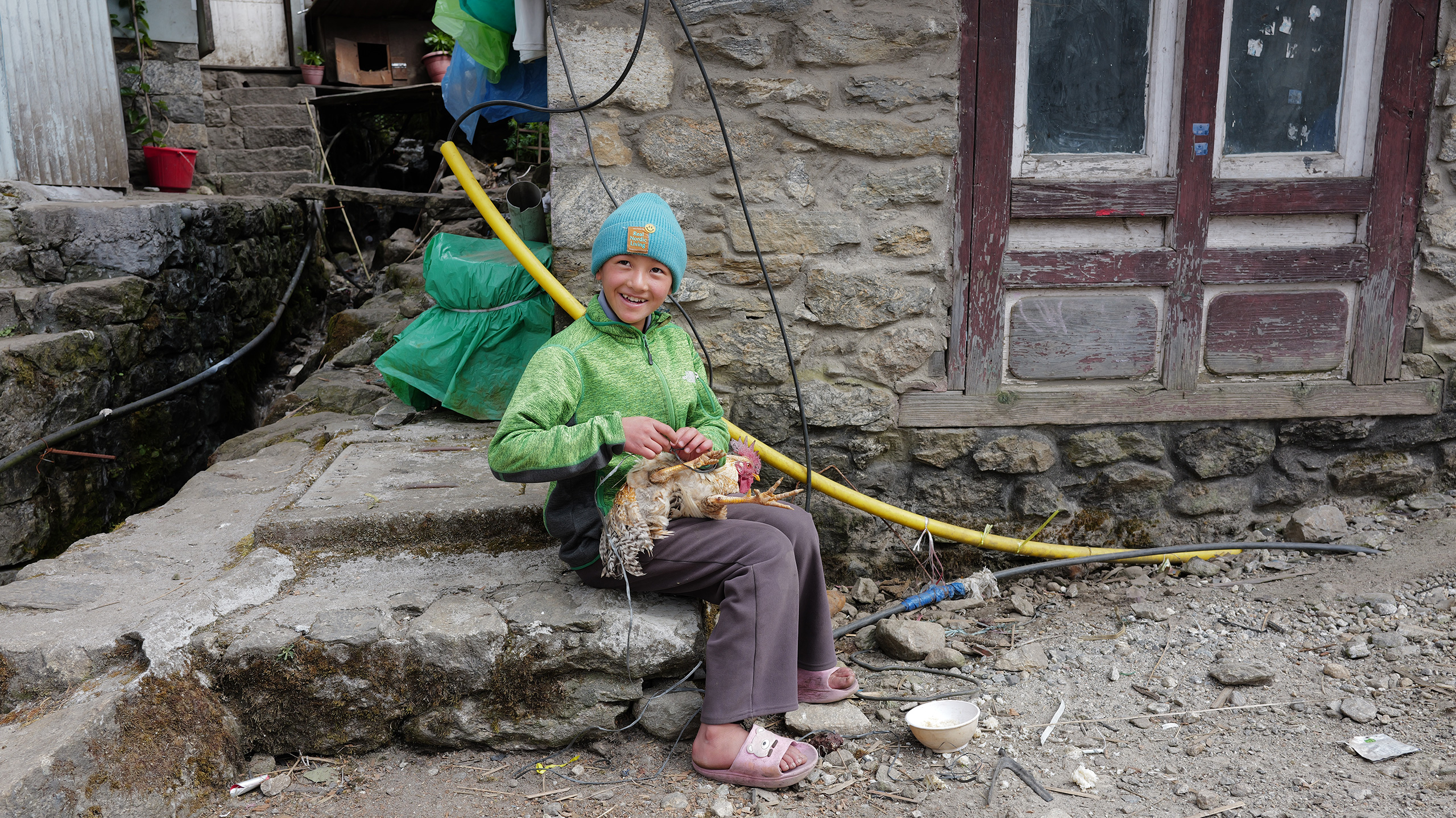
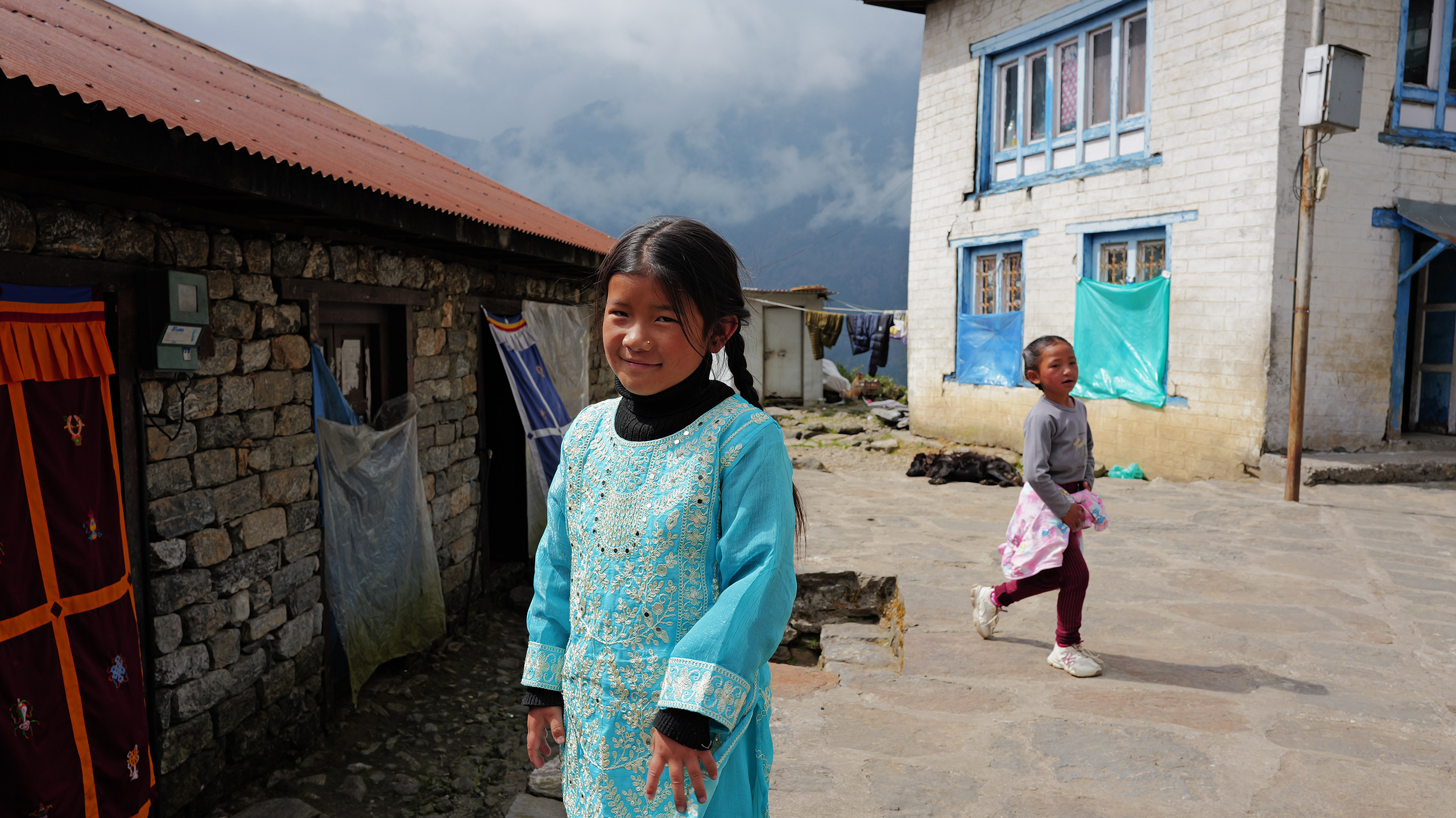
Leaving Kathmandu
We were up at 5:30. I took a really good shower, about one minute longer than usual for me, because once we’re on the mountain there will be no more showers. Staying warm and dry is part of keeping altitude sickness at bay. We met in the lobby at 6:00 sharp, and I told our guide I was glad he’d shown up even though we’d already paid him in full. He laughed. He’s a short man, somewhere between 45 and 50, with a face that seems to smile on its own.
From the van, the city rolled past in the early light. Far off on the horizon sat a thick bank of cloud. The air was better than in the daytime, but you could still smell it: dust, sweat, a little of everything. People walked by in every kind of outfit, and dogs crossed the road as if they understood the traffic better than anyone. Religious signs and posters were everywhere.
Messages Home
Last night I sent a message to the Cloud 9 team, telling them to get ready for the new attitude Cloud 9 is going to bring. This morning I wrote to my family, encouraging them to break out of comfort and change gears often in life. Both messages said the same thing, really: enjoy life, but also try something that isn’t easy. Lynn has been behind this family’s dreams for a long way.
The Airport
The domestic terminal was packed with people from all walks of life, every color, many of them bound for the same small mountain airport we were. Pro-grade gear and expedition duffels from all over the world. Check-in alone took almost an hour and a half.
Today I also started a new habit. I’m using Obsidian’s quick-capture plugin to dictate notes as I go, dropping them at the bottom of my EBC diary and organizing them each night before bed.
The Flight
The plane is tiny: 18 seats, 17 of us aboard, and extremely loud. One passenger, a gentleman of about 70 from Holland, a country that sits largely at or below sea level, was here for the ninth time, a big camera in his hands. I got a seat on the left side and managed a few quick photos and videos of the mountains. My heart rate shot up to 160, probably just excitement.
They call this the most dangerous airport in the world. The runway is only 500 meters long, and one end drops off a 1,000-meter cliff. We came in from the cliff side, touched down on an uphill incline that slowed us fast, then swung right to park. Truth be told, it wasn’t that scary. I suspect the flight out will be the scary one. We landed at about 2,860 meters.
I shared the story on WeChat. Dad replied: Must remember, safety first wherever you go.
First Steps on the Trail
The first day is meant to be easy: normally about three and a half hours, dropping 200 to 300 meters and then climbing to the small village of Phakding, mostly on stone paths. I felt totally fine.
Joanne did not. Her face was very pale, and she felt tired, cold, and headachy. She needed two breaks along the way. It worries me. I’m afraid she may not be able to go much higher. I hope it’s just the sleep: she got three hours last night, I got six. I’d saved two oranges and gave them to her at the end, hoping they’d give her some strength. I don’t think she’s getting enough energy from food.
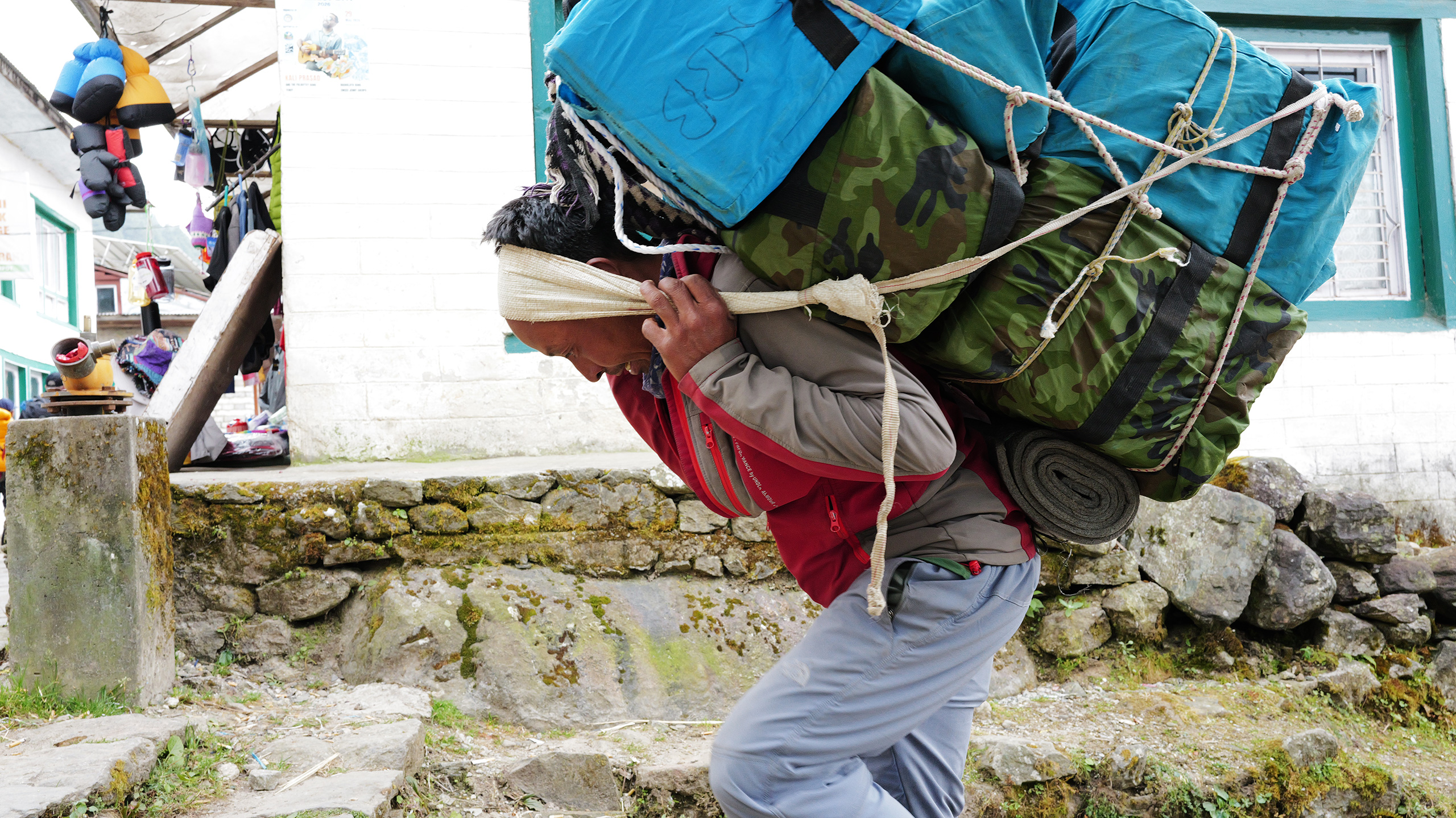
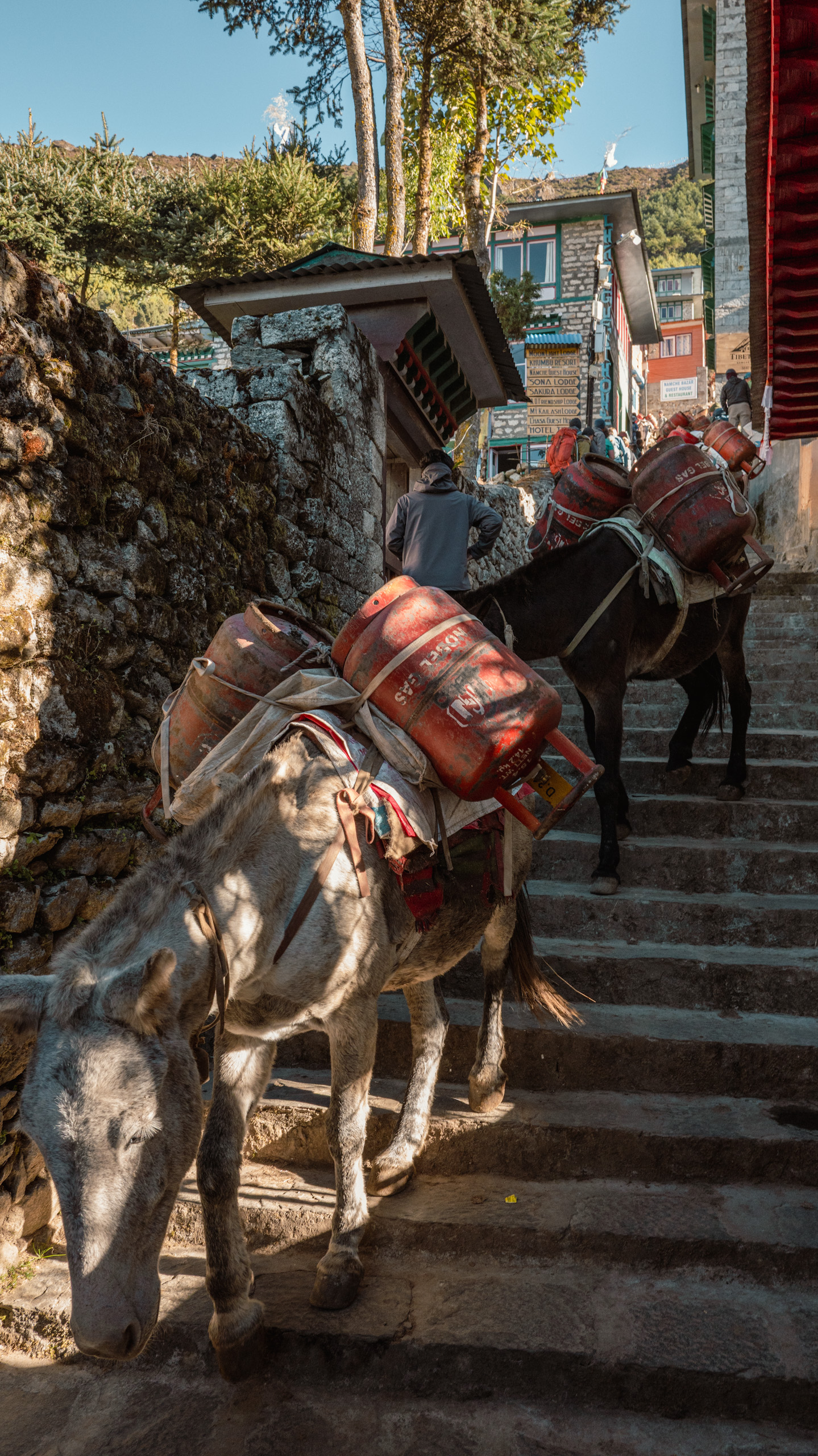
The main transport up here is human and animal. Porters carry huge loads with a strap across their heads, alongside donkeys and cattle. My own pack weighs only 6 to 7 kilograms.
The guide told us not to eat any meat, since it can cause severe diarrhea. We don’t want that, so we skipped the chicken too. I ordered vegetables and a tomato egg drop soup, which didn’t taste that great.
A Lesson from a Tailor
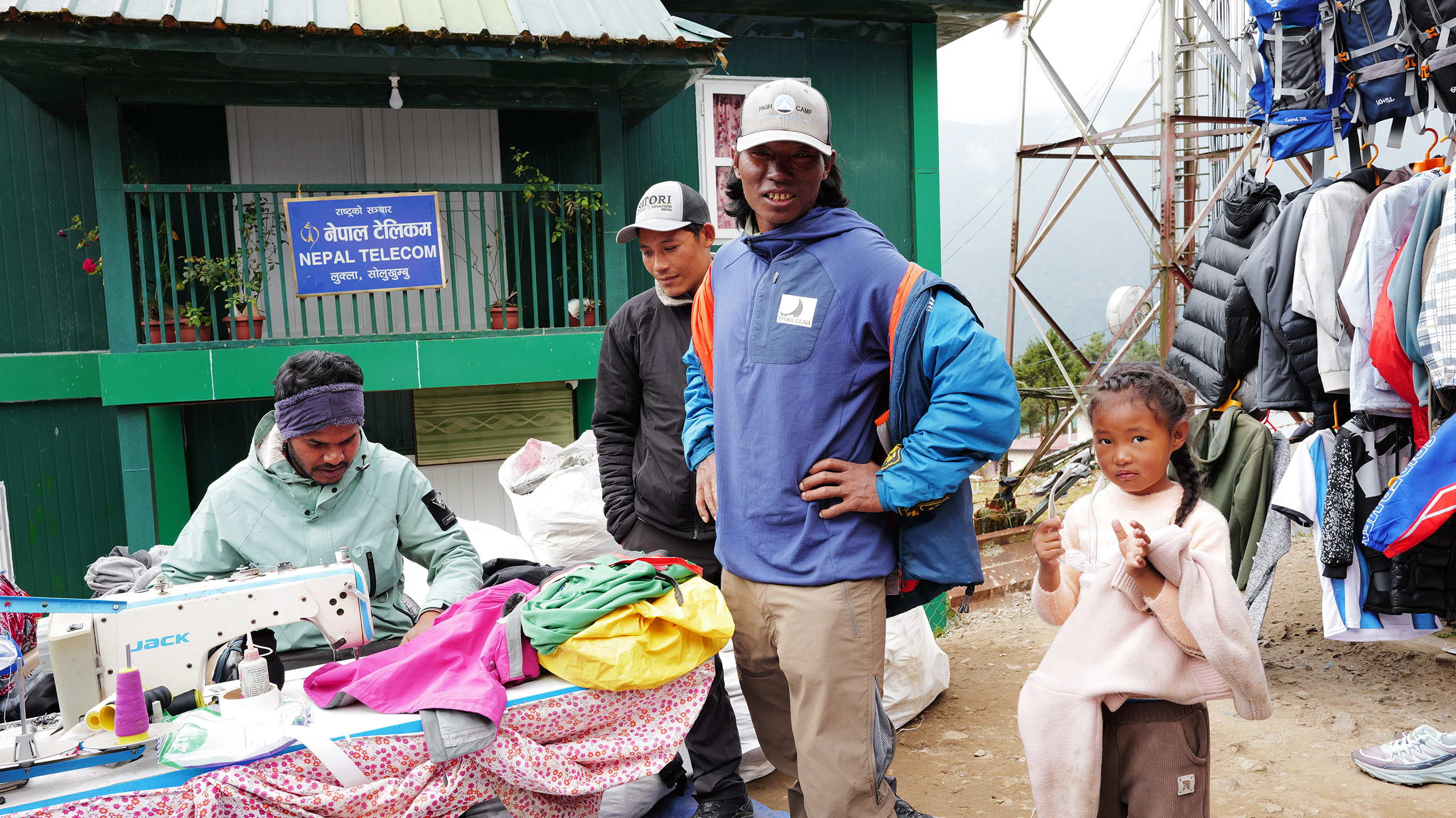
The first village was lined with shops selling hiking clothes, every famous brand, all fake. The one vendor doing real business was the tailor, a man at his sewing machine, busy nonstop while the shops around him had no customers. Even in Nepal, it’s better not to compete with everybody on something too common.
Day 4 · October 18 — Turtle Steps to Namche
Phakding (~2,610 m) → Namche Bazaar (~3,440 m) · ~900 m of ascent · about 8 hours
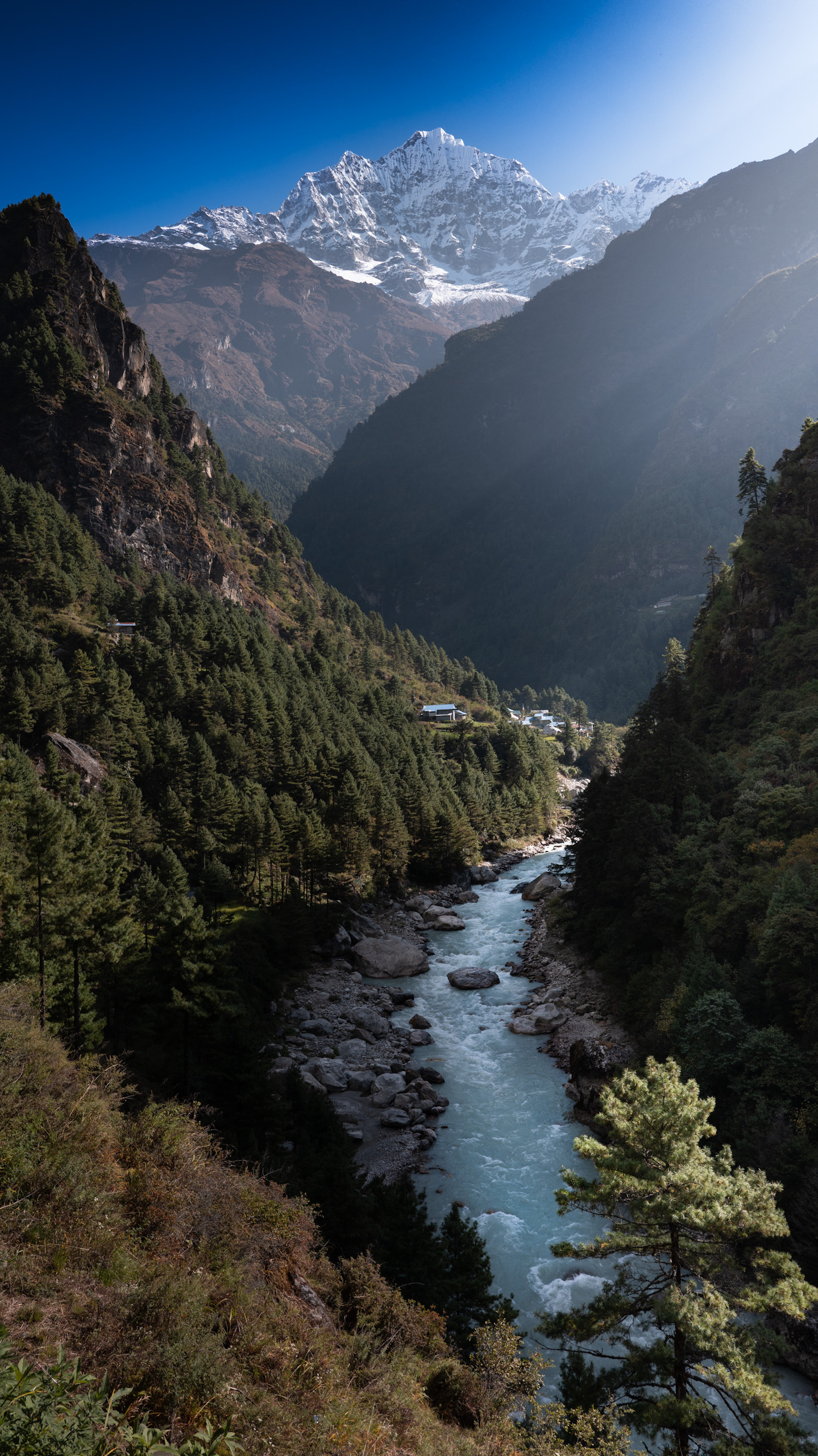
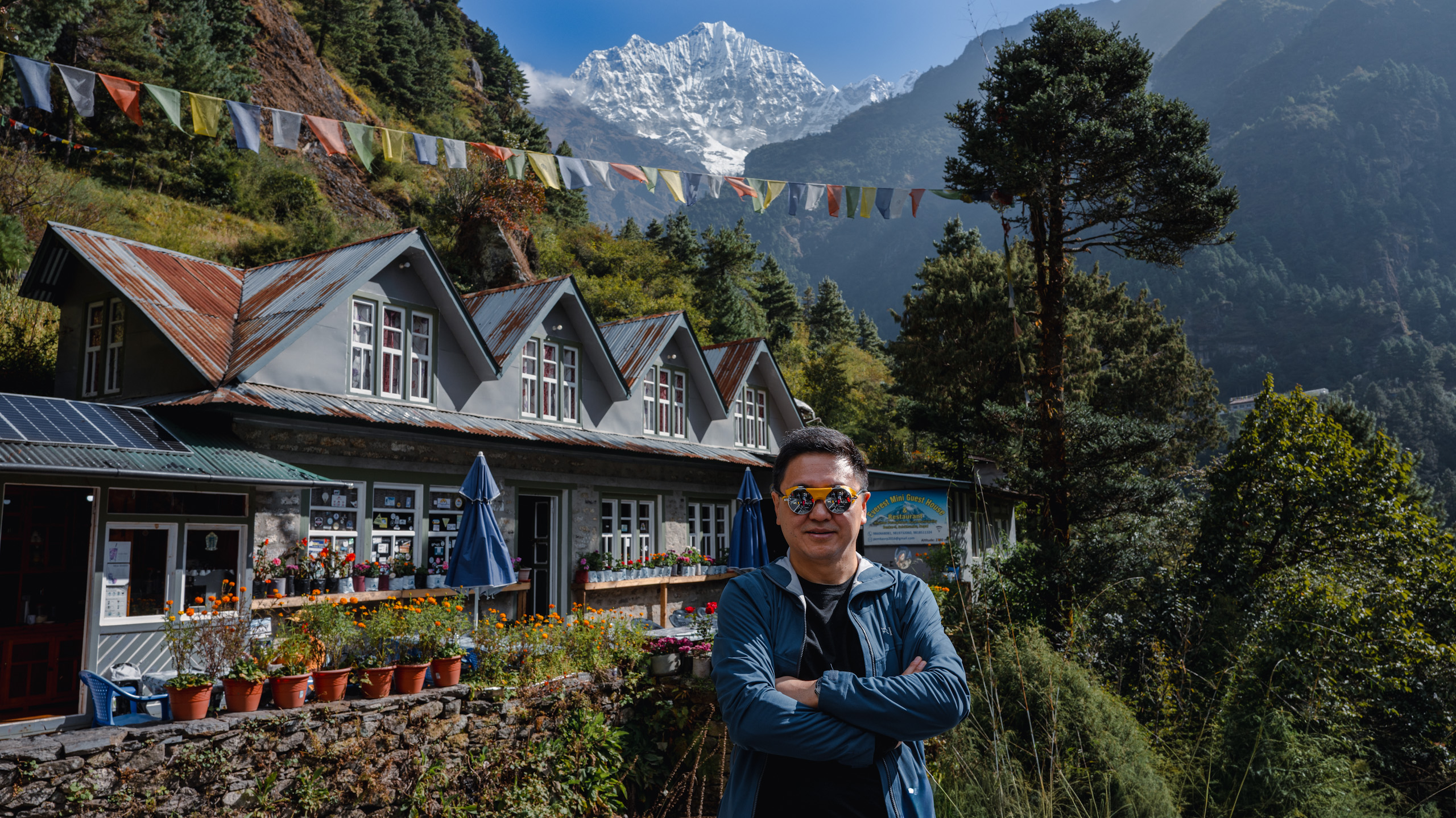
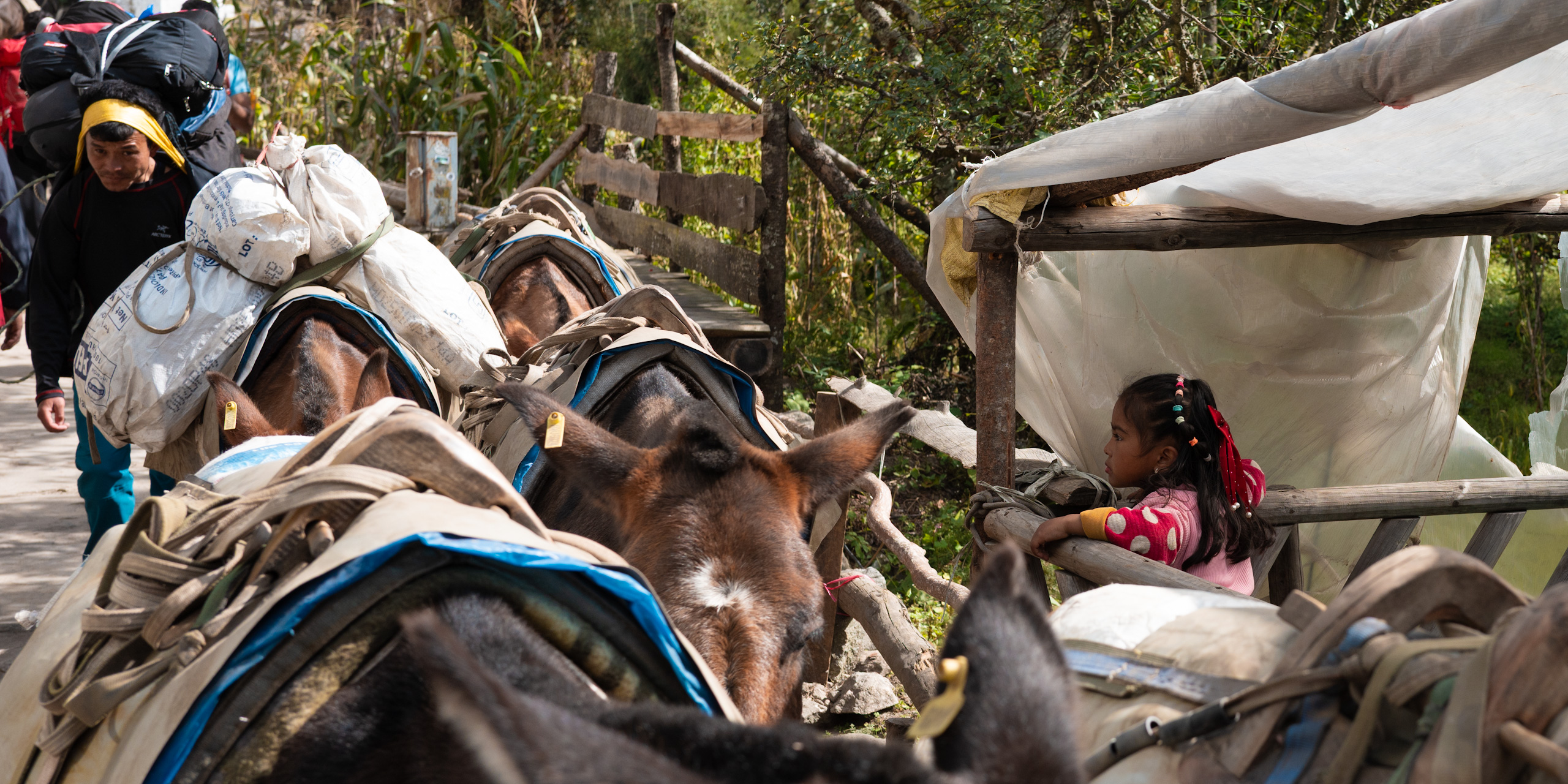
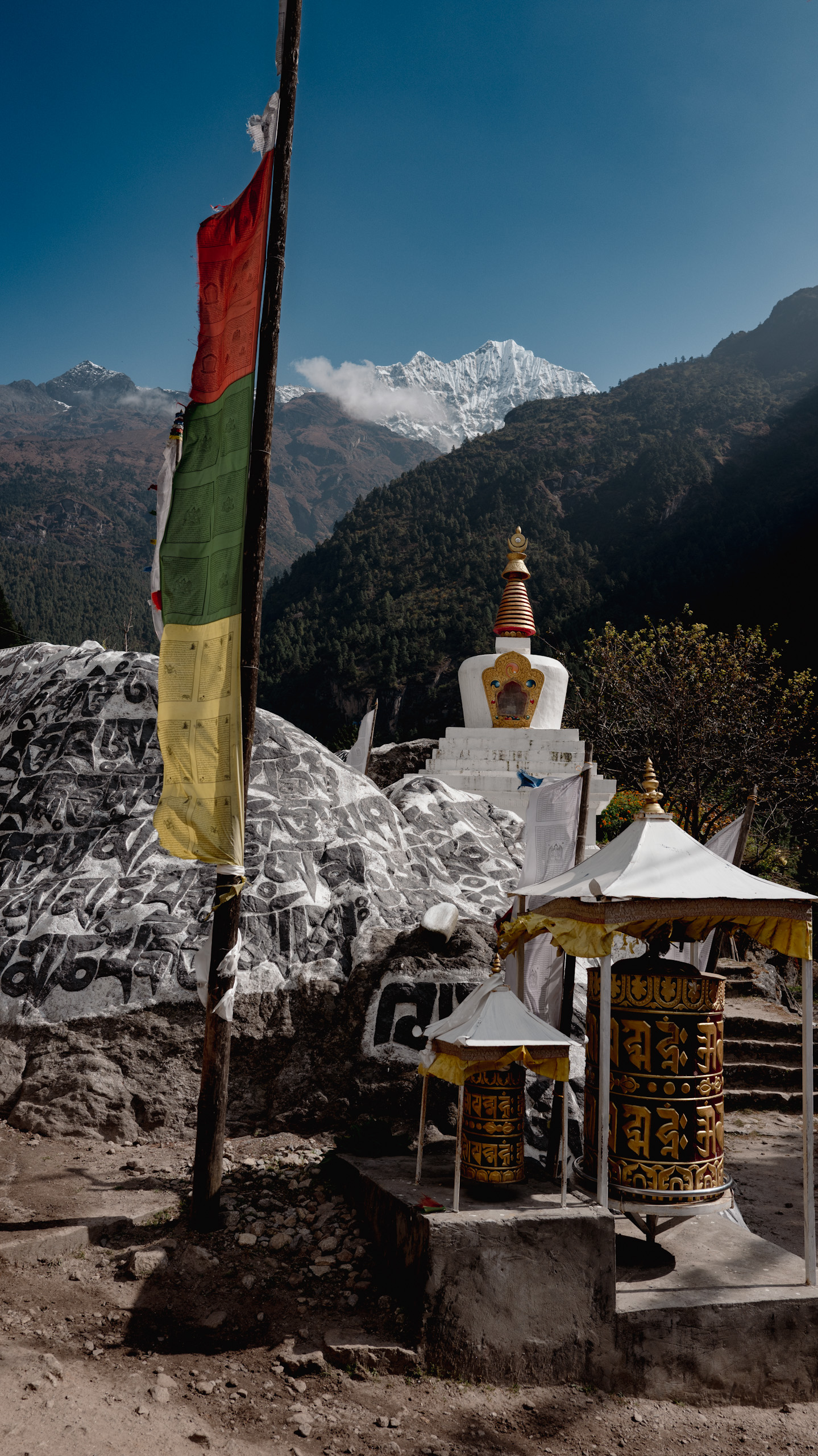
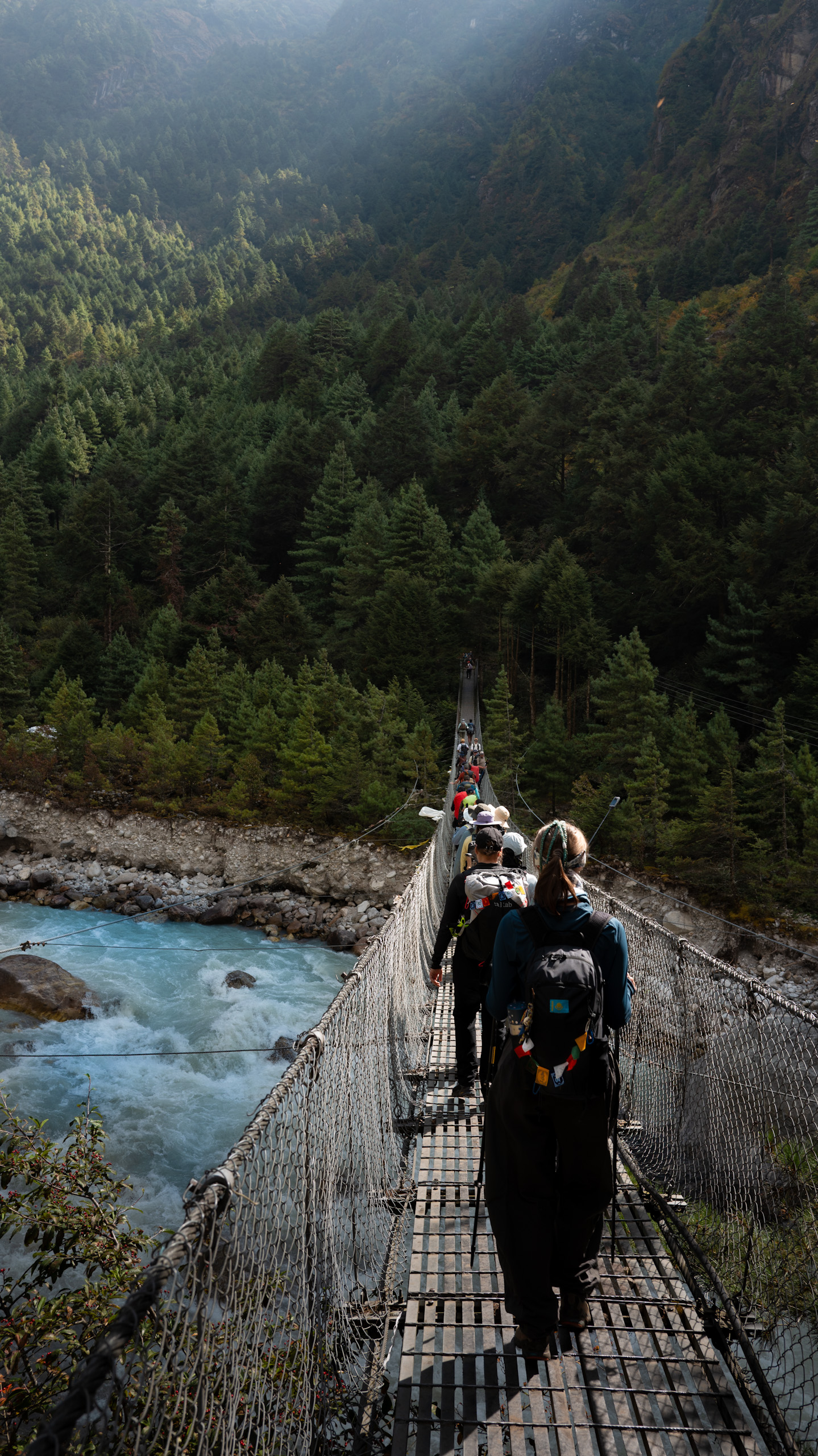
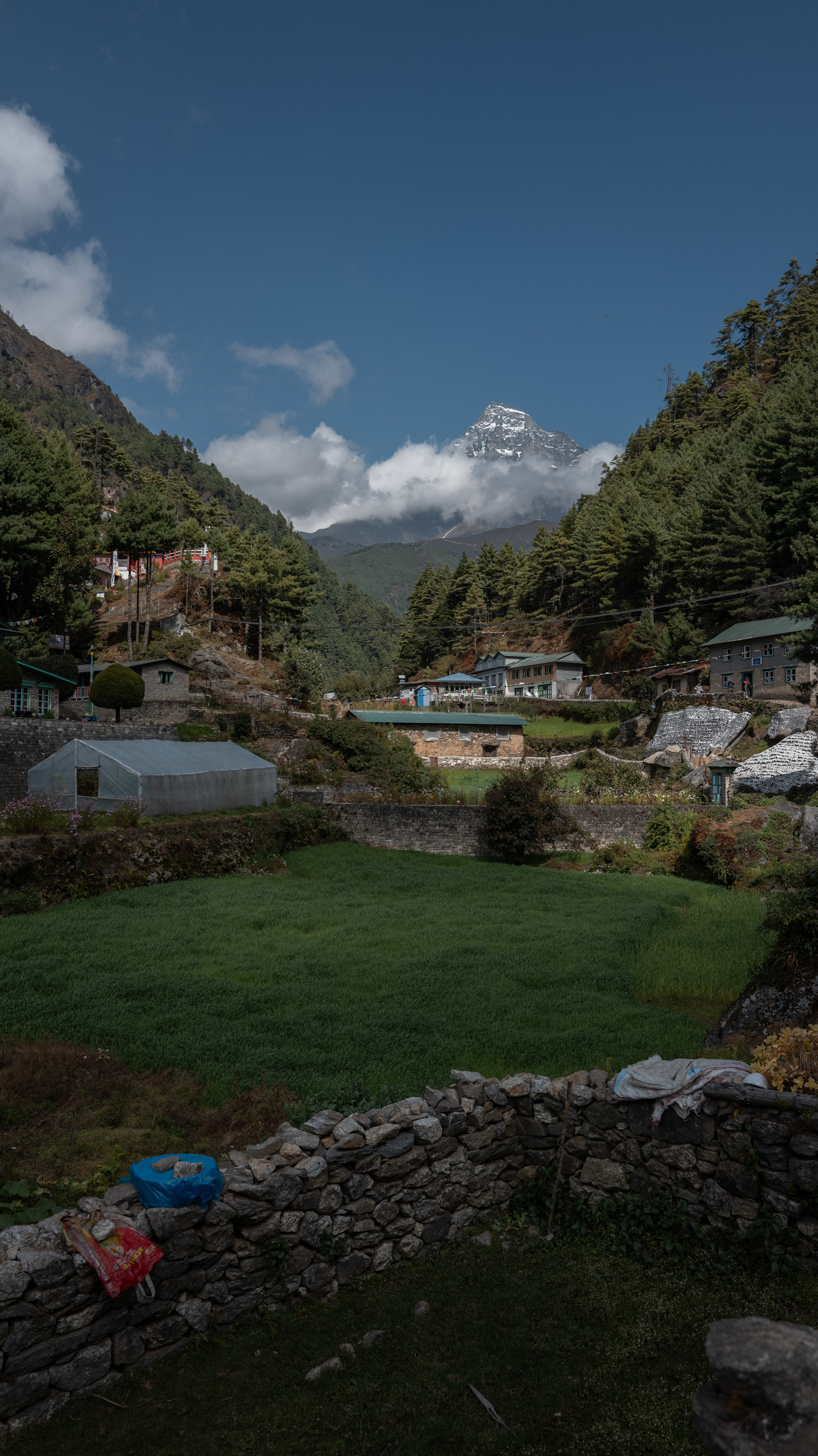
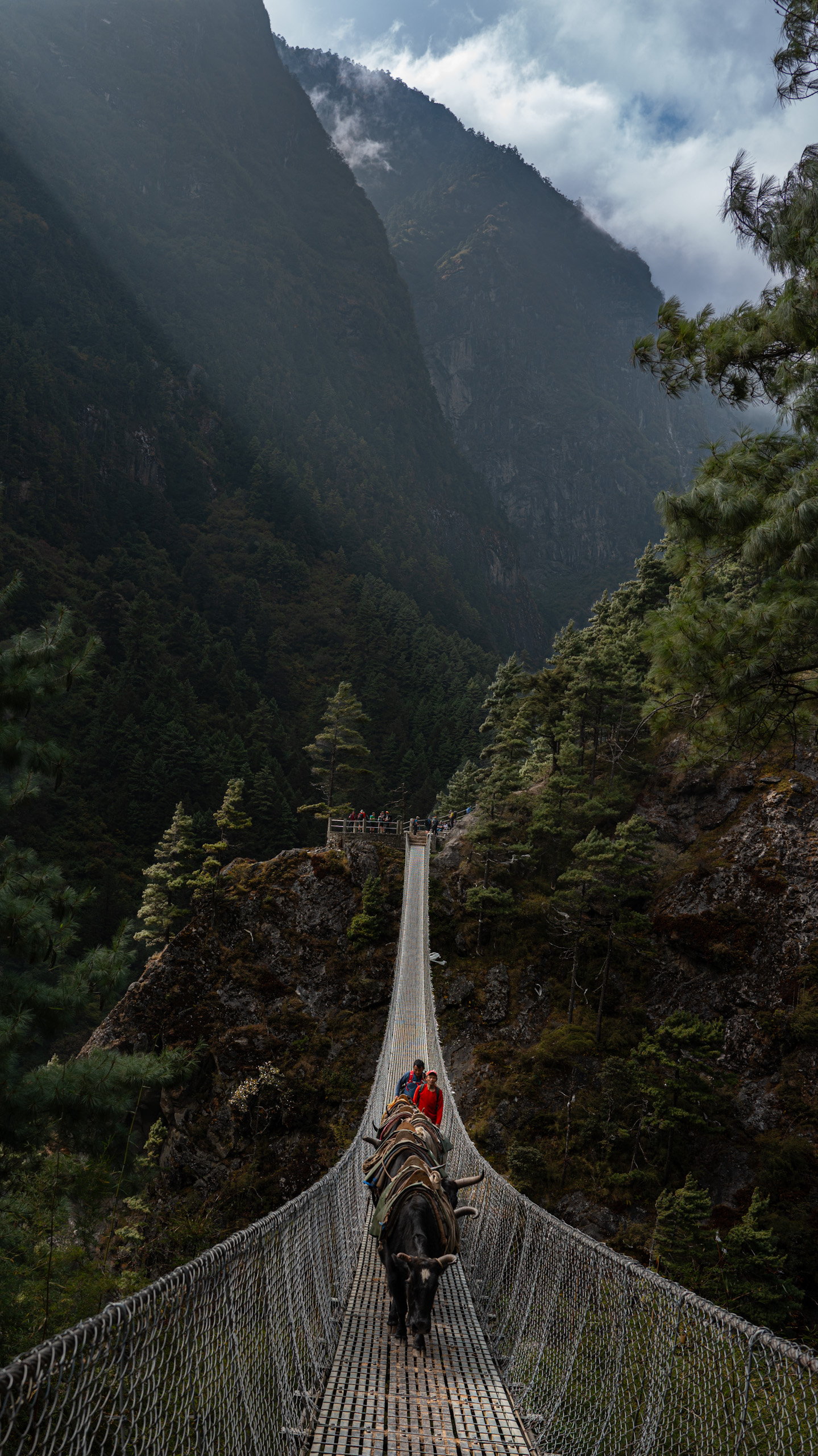
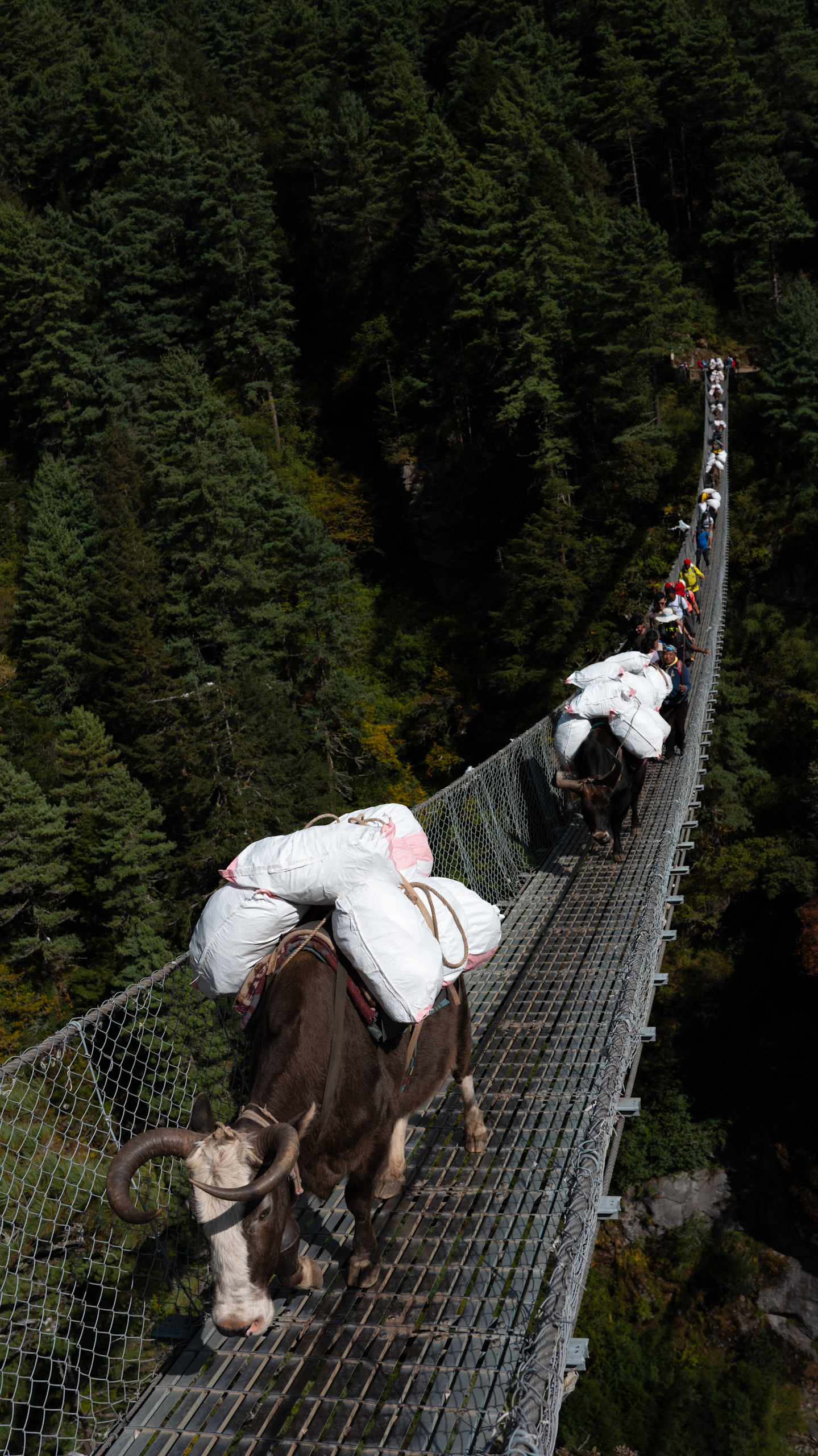
Today’s Leg
Every day up here, your body works with less oxygen than it did the day before. Fitness helps, but it doesn’t save you. Strategy does: how fast you go, when you rest, when you listen to your body and when you turn around.
Today, Phakding to Namche Bazaar, is famously one of the hardest days of the whole route. You follow the Dudh Kosi river up the valley, cross a string of swaying suspension bridges, and then the trail tilts up and stays that way for the last couple of hours into Namche, the Sherpa capital and the gateway to the high Khumbu. Roughly 900 meters of gain over about eight hours. It’s the day that tells you how the rest of the trek might go.
A Warm Bed, a Cold Night
Last night’s teahouse was a decent size, and we got a single room. Clean blanket, and an electric warmer on the bed, which felt like luxury. The night turned cold, so I ran the warmer about half the time and switched it off whenever it got too toasty.
Two firsts. For the first time on this trip, I didn’t touch any work. And for the first time in days, I slept a full eight hours. The past few nights I’d been waking every two hours and forcing myself back to sleep. Last night I just slept. Turns out unplugging works.
Dinner and breakfast confirmed my suspicion: every teahouse up here has the exact same menu. Meat is off-limits because it isn’t fresh by the time it gets carried this high. So, tomato egg drop soup again. I’ll be honest, it’s bad. The “egg” is a few lonely drops floating around in there.
The morning was properly chilly. Thicker layers, light gloves, and off we went.
Five Things the Trail Taught Me
The first five hours were an easy walk. Snow mountains appeared, and we stopped for photos. With nothing to do but put one foot in front of the other, my mind wandered to what actually makes a trek like this succeed. The longer I walked, the more I realized it’s the same list that makes a life and a career succeed. Here’s what I came up with.
1. Be the Turtle: One Percent a Day
You can’t rush a mountain. And in life, don’t chase quick wins at the expense of the long game. Don’t chase short-term glamour or shiny medals, and don’t push past your limits just to keep up with the people around you.
I see so many people sprinting after success. They become rabbits: chasing what looks impressive, burning out on a long road, living under crushing stress. Some literally work themselves into a heart attack. The turtle doesn’t care about any of that. It just walks its own walk and enjoys the whole journey.
But here’s the thing about the turtle: it doesn’t win because it’s slow. It wins because it never stops. Slow doesn’t mean standing still. Keep learning, keep picking up skills, and get a little better every day, even just 1%. Whatever doesn’t kill you makes you stronger; just don’t kill yourself trying. And here’s the fun part: 1% a day, compounded over a year, makes you about 37 times better than where you started. On a mountain and in life, small, steady steps go the farthest. That’s exactly how you get to Base Camp.
2. Wait for Your Weather
In Chinese we say success needs 天时、地利、人和: the right timing, the right ground, the right people. Unless you’ve been tested by life and death, it’s hard to truly understand what that means. Everest climbers learn it with their lives on the line.
From the Base Camp we’re heading to, the 8,849-meter summit doesn’t look that far. Yet climbers usually spend around six weeks getting there. Most of that time isn’t spent charging upward. It’s up, down, and up again: climb to Camp 1 or Camp 2, then come back down to Base Camp to recover; a few days later, climb higher, then come back down again. Mountaineers call it “climb high, sleep low,” and with every round trip the body adapts a little more to the thin air. That’s the right ground: knowing the mountain, and knowing yourself.
Then comes the waiting, for the right timing. The summit sits in the path of the jet stream, with winds strong enough to knock a person off their feet. Only for a handful of days a year, usually in mid-to-late May, does the jet stream shift away and the wind drop. That’s the summit window. Many climbers sit at Base Camp for a week or two, checking the forecast every day and telling themselves: not yet. When the window opens, they have only a few days to make the final push through the “death zone” above 8,000 meters.
And the right people. Without Sherpa guides fixing ropes, setting ladders, and carrying oxygen, and without teammates watching each other’s backs, nobody stands on top of the world alone.
What truly experienced climbers know best is when to turn around. If the weather turns, they turn back. If their body isn’t right, they turn back, even a few hundred meters from the top. Twice, ten times, it doesn’t matter. The mountain will always be there; you only get one life. Turning back isn’t failure. Pushing on in the wrong conditions is.
Reaching the summit in life works exactly the same way. The work you’re putting in today is like those up-and-down acclimatization rotations: it can feel like going in circles, even going backward, but your ability and your foundation are quietly growing. Many people fall not because they didn’t work hard enough, but because they were in too much of a hurry and pushed before their window opened.
If you’re still on the road, putting in everything and not yet seeing results, remember this: every day you spend waiting at Base Camp counts. Get ready, stay patient, don’t rush. The window will open. And when it does, everything you’re putting in today will pay off, all at once.
3. Discipline When No One’s Watching
The Chinese idea of 慎独 comes from the Doctrine of the Mean: a person of character stays careful and true to themselves even when they’re alone and no one is watching. Real discipline isn’t a performance for others. It’s what you do when nobody is checking.
Here’s a pattern I’ve watched many times: someone gets a little success and starts indulging, in drinking, in affairs, in every kind of distraction, and slowly wastes everything they built. And here’s the funny thing: temptation rarely shows up when life is hard. When you’re gritting your teeth and pushing forward, you don’t have room for it. It shows up when things get comfortable. That’s when it starts winking at you and throwing an arm around your shoulder: one more drink, one more dinner, one more “you’ve earned it, treat yourself.” It feels so friendly, so reasonable.
Climbers understand this better than anyone. On a mountain, every ounce of energy and every bit of focus is limited, and whatever you waste, you pay back later. They don’t sleep around and they don’t drink hard, because they know distraction makes them weaker and costs them their reputation and their luck.
Life works the same way. We only get so much time and energy. People who keep themselves clean get to spend theirs on what actually matters: becoming better, taking care of their families, and building up their teams. The ones who let themselves go usually aren’t short on ability. They just spend it, bit by bit, on things that aren’t worth it.
Don’t gamble with your life. It’s precious. Your reputation is your passport to success. With a good one, doors open. With a bad one, people avoid you like the plague.
4. Build a Team That Holds the Rope
What’s the point of walking this earth living only for yourself? Your team is your spouse, your kids, your parents and extended family. At work, it’s the people who rally with you and the people who lift you up. Without a team, you’re limited. With a good one, you’re ten times more likely to reach what you’re aiming for. Without one, you’re a lone wolf in the forest: you can get lost, go hungry, or get attacked with no one to help. We’re social animals. We’re not built to go it alone.
So look around. Who has a strong team? That’s probably someone worth getting close to. And test your own team, too. Is it just drinking buddies, something shallow that only works when times are good? Or are these people who’ll stick their necks out for you when it really counts? Some “teams” will push you off the cliff the moment you’re in trouble.
Knowing how to build a good team is real leadership. It’s not about getting ahead of others or making more money than they do.
5. Grow Like a Lotus
Almost no one gets a perfect environment in life. Unfairness, petty people, a team with a bad culture: adversity like that is simply part of the deal. But the lotus grows in mud. It doesn’t run from it. It roots itself there, draws nourishment, and eventually blooms above the water. People who hold on to their integrity, and wisely take the best and leave the rest, can stand out and accomplish something in any environment.
Some people soak up whatever surrounds them. Others take what’s valuable and keep their own standard intact. What separates them is a solid sense of who you are and what you stand for, built long before you walk into that room. That sense of self works like a filter.
The psychologist Jonathan Haidt, in The Righteous Mind (2012), argues that our moral intuitions fire fast and automatically, often before conscious reasoning even shows up. People with well-developed intuitions can feel when something is off, whether it’s a person, a deal, or a group dynamic, before they can explain why. There’s nothing mystical about it. It comes from experience, reflection, and living by consistent values. Trust that alarm and act on it, and it protects you. The person who walks into a corrupt room and walks out richer instead of damaged usually isn’t lucky. They’re steering by an internal compass the others in that room don’t have.
The Huangdi Neijing, the ancient classic of Chinese medicine, puts it this way: 正气存内,邪不可干. When upright energy lives inside you, the bad can’t get in. People with that inner steadiness know who they are and what they’re doing. Crooked people tend not to bother tangling with them, and if someone does try to deceive them, their sharp instincts pick up that something’s off and they steer well clear.
But I don’t mean a naive, black-and-white kind of righteousness. I mean something closer to a horse tamer on the open grassland: fearless in front of a wild horse, full of that deep, unshakable courage the Chinese call 浩然之气. Yet he also reads the horse, makes judgment calls, and knows when to pull the reins and when to let go. Courage alone isn’t enough. It takes intelligence, and it takes relentless hard work and struggle, day after day, without letting up.
Writing this, I thought of my father. A lifetime of grinding, building, breaking new ground. That’s exactly what carried him: this kind of upright courage, plus brains, plus sheer hard work.
So don’t slide downhill and blame everyone else. Keep pointing yourself upward. You can even learn from people who aren’t good. That’s 取其精华,去其糟粕: take the best, leave the rest.
And One More Thing
Be affectionate. Enjoy it. Smile. A pure heart is the source of happiness, and above all, it’s what keeps you young and healthy in every way.
The Long Climb
Back to the trail. I felt good today. My feet started complaining around the six-and-a-half-hour mark, which seems fair. Our guide kept saying: slowly, very slowly. After lunch nobody needed reminding, because the last couple of hours were straight uphill. I’m trying to keep my heart rate under 150, and a few times it crept over.
I kept thinking back to my Camino in Spain. That first day wiped me out, and by day two my knee hurt. None of that here. Today actually felt easier than the little mountain I hike back home near Seattle. All that training is paying off.
The trail got busier today: more trekkers, and more donkeys and cattle hauling heavy loads. On the narrow stretches, we and the animals politely took turns letting each other by. As the Chinese saying goes, 道不同,不相为谋: different paths, no point teaming up. They were hauling cargo up the mountain; we were hauling ourselves. We walked through tiny villages and past little roadside restaurants. And then the mountains really started to show themselves. I got my first shot with a mountain and the river together in one frame. A good way to end a hard day.
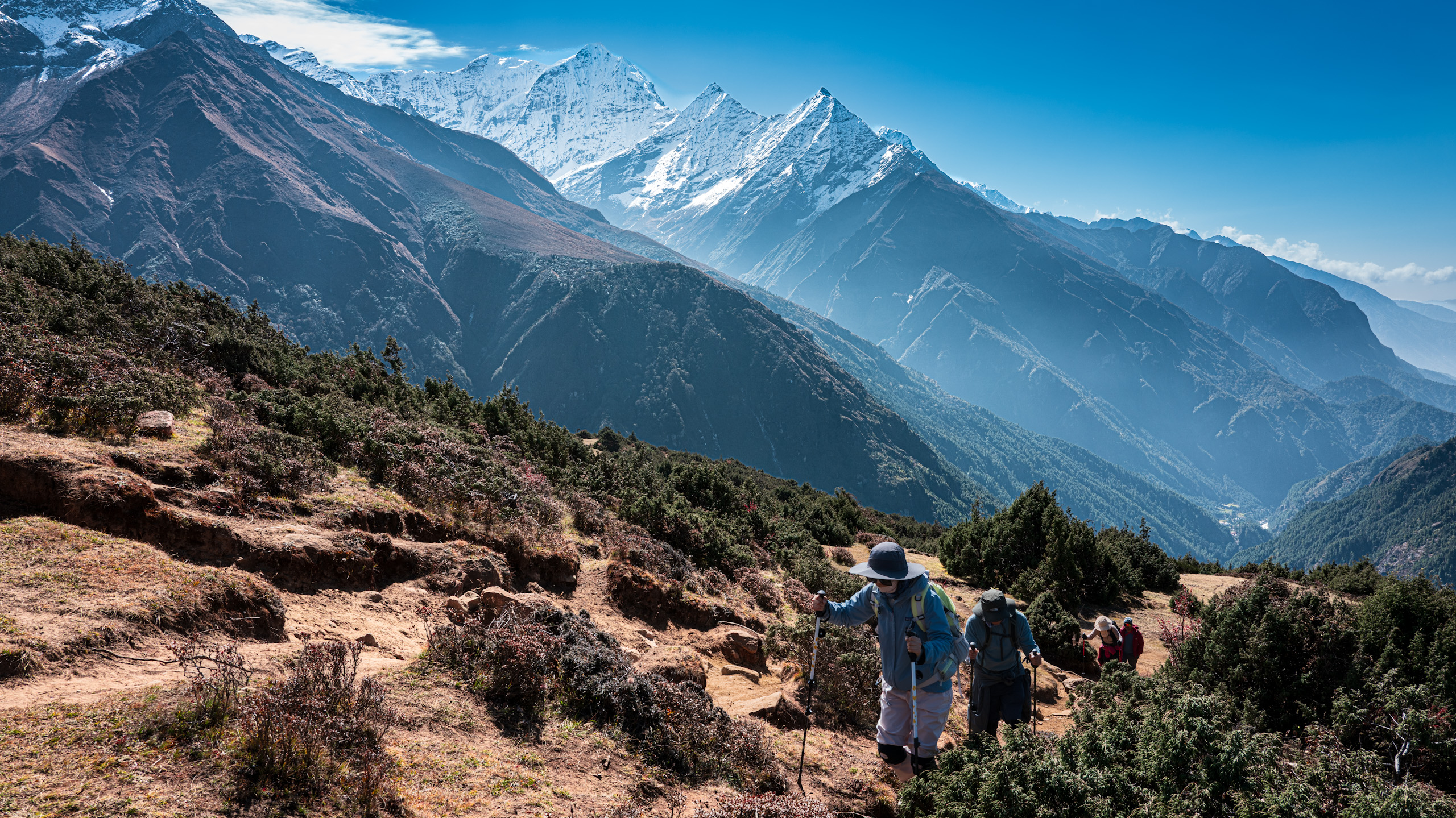
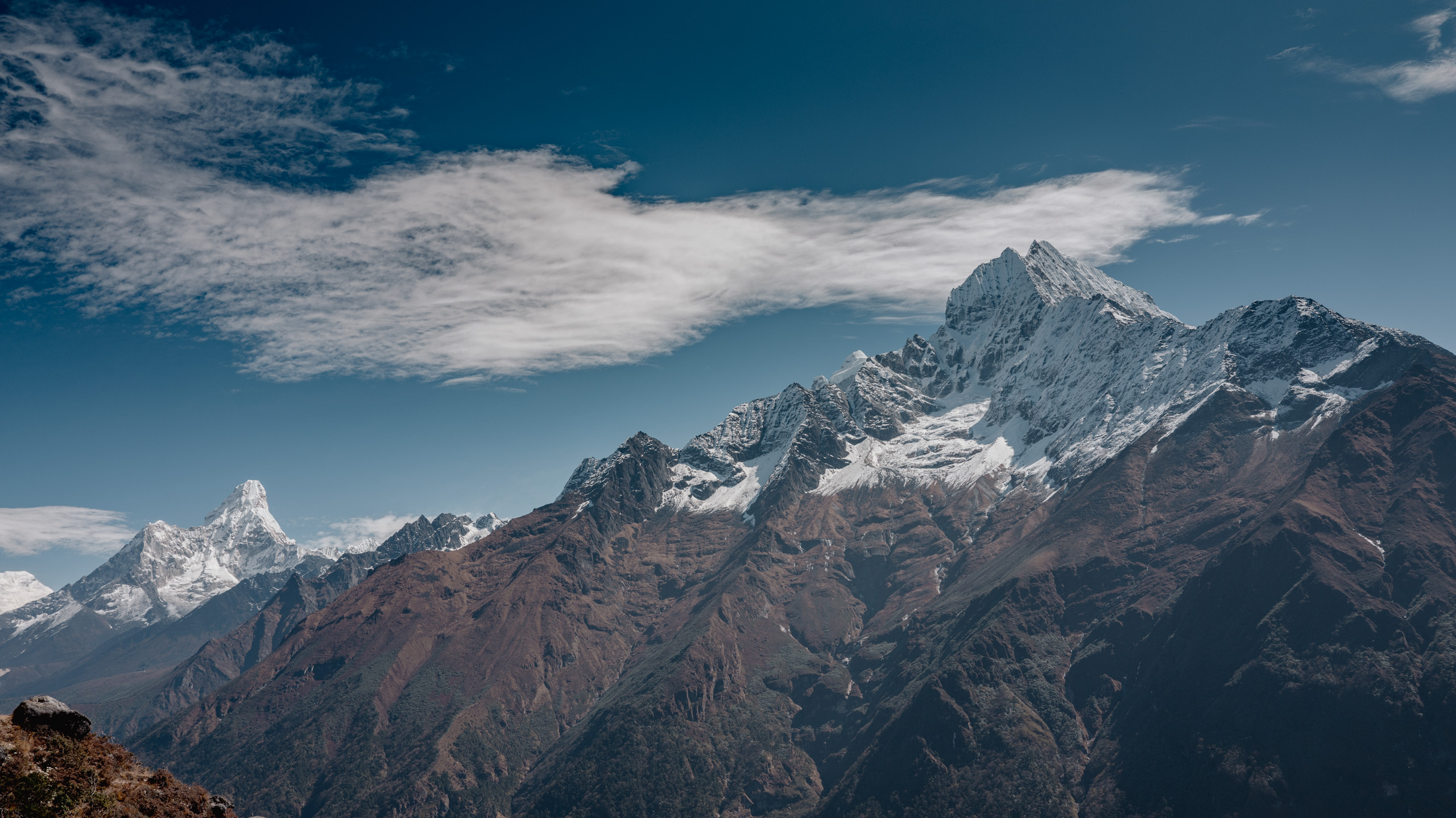
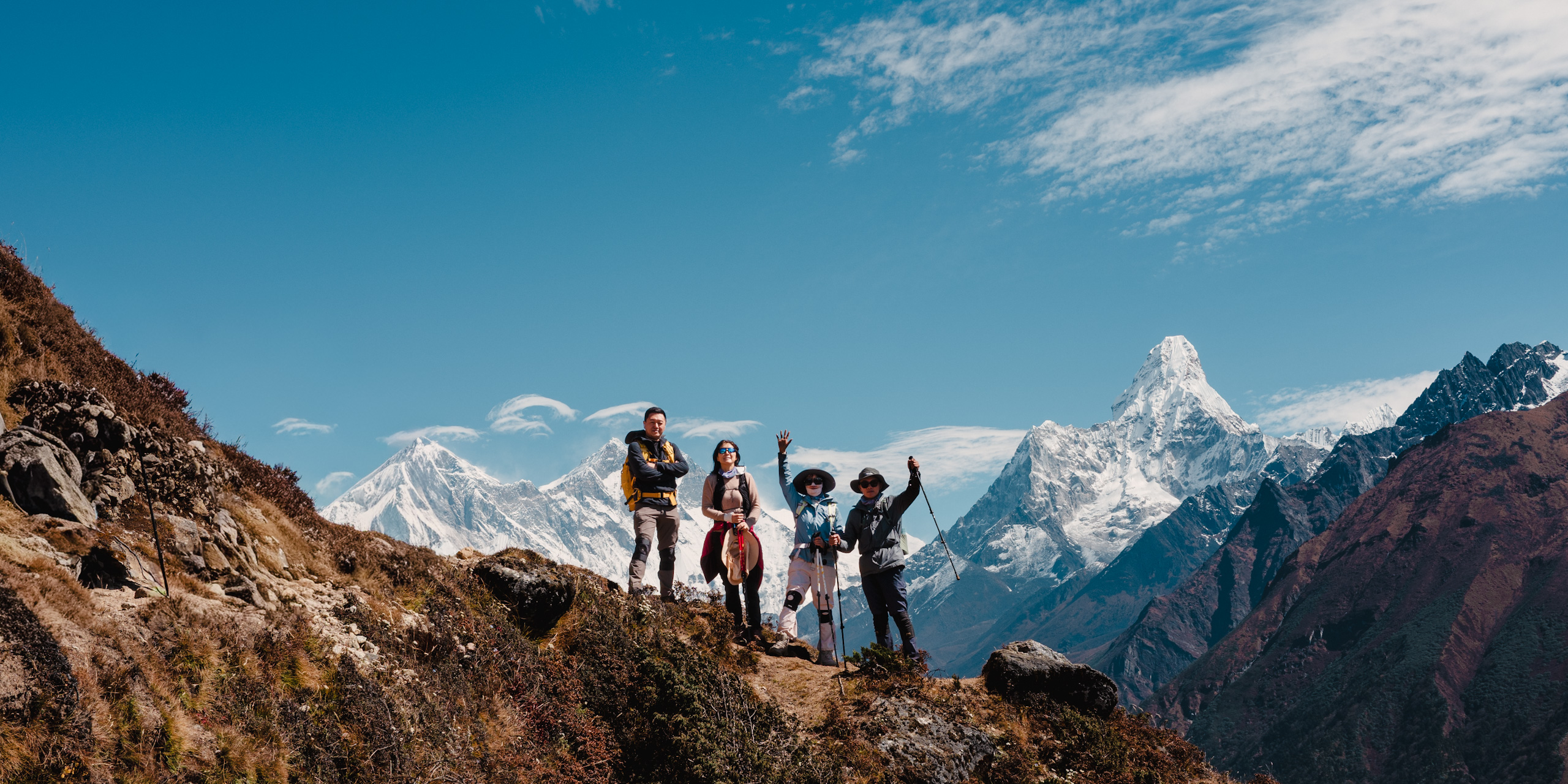
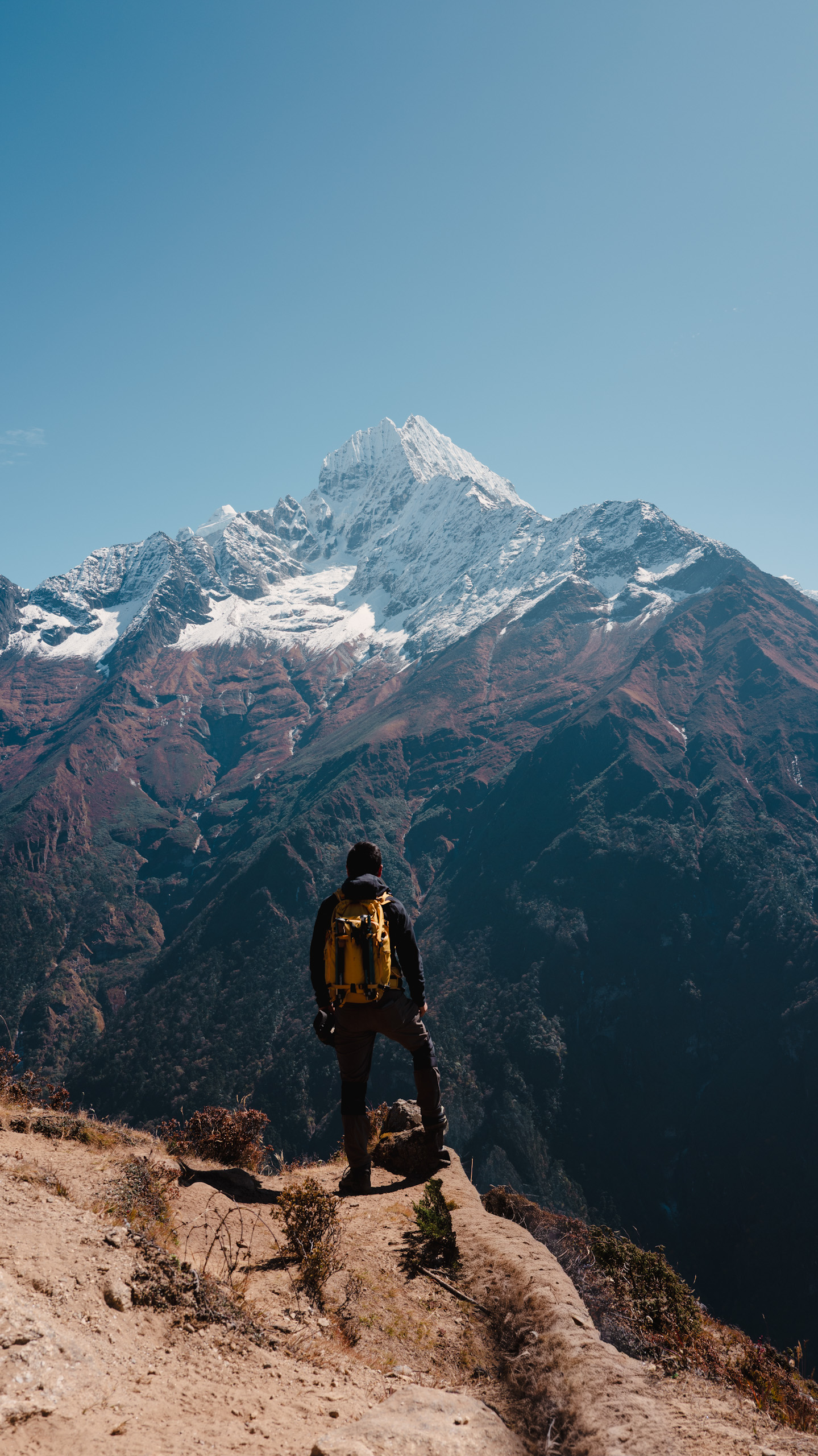
Day 5 · October 19 — First Sight of Everest
Acclimatization day: Namche Bazaar (~3,440 m) → viewpoint (~3,750 m) → Namche · 5.0 km · 4 hours · +363 m
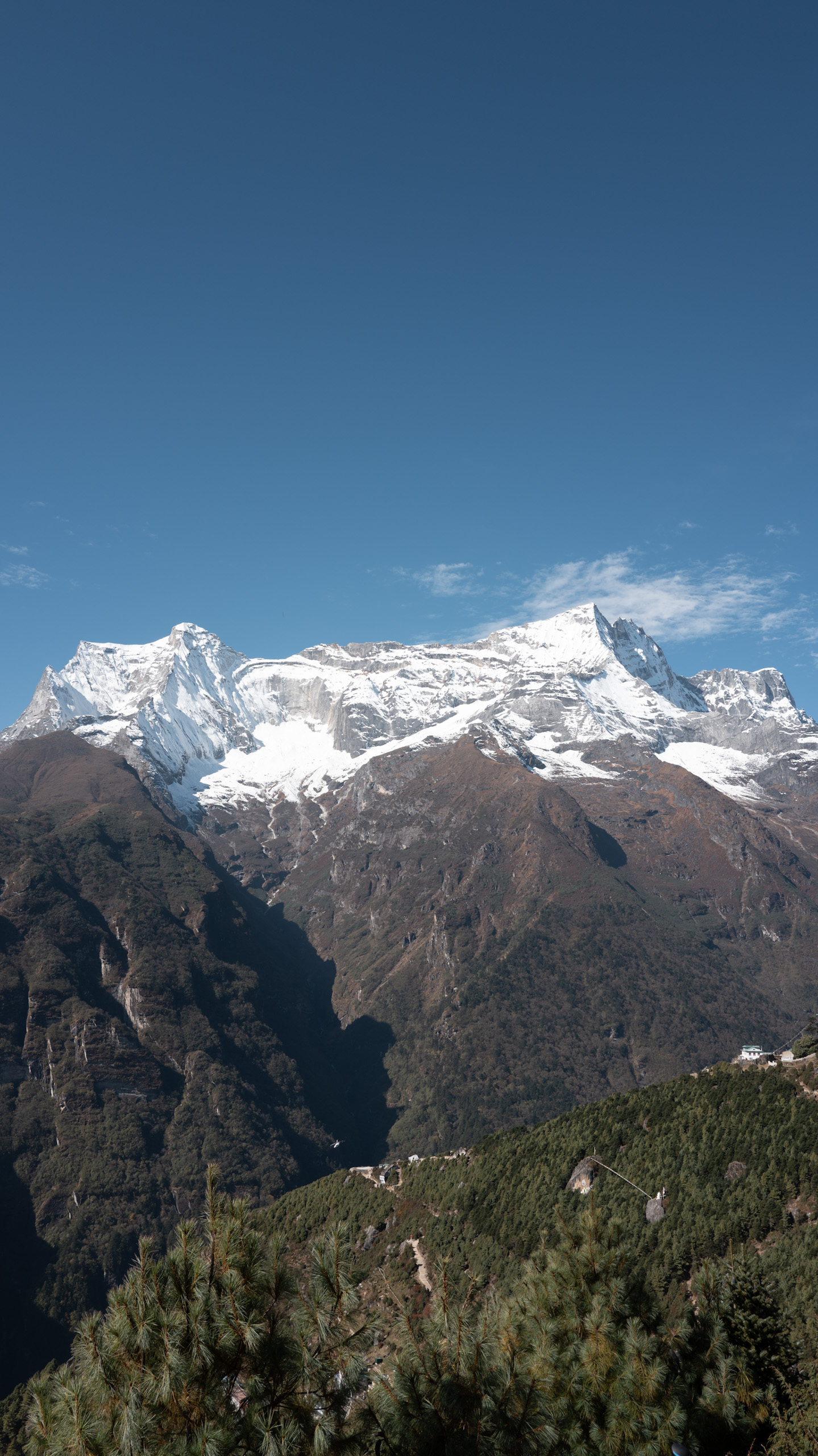
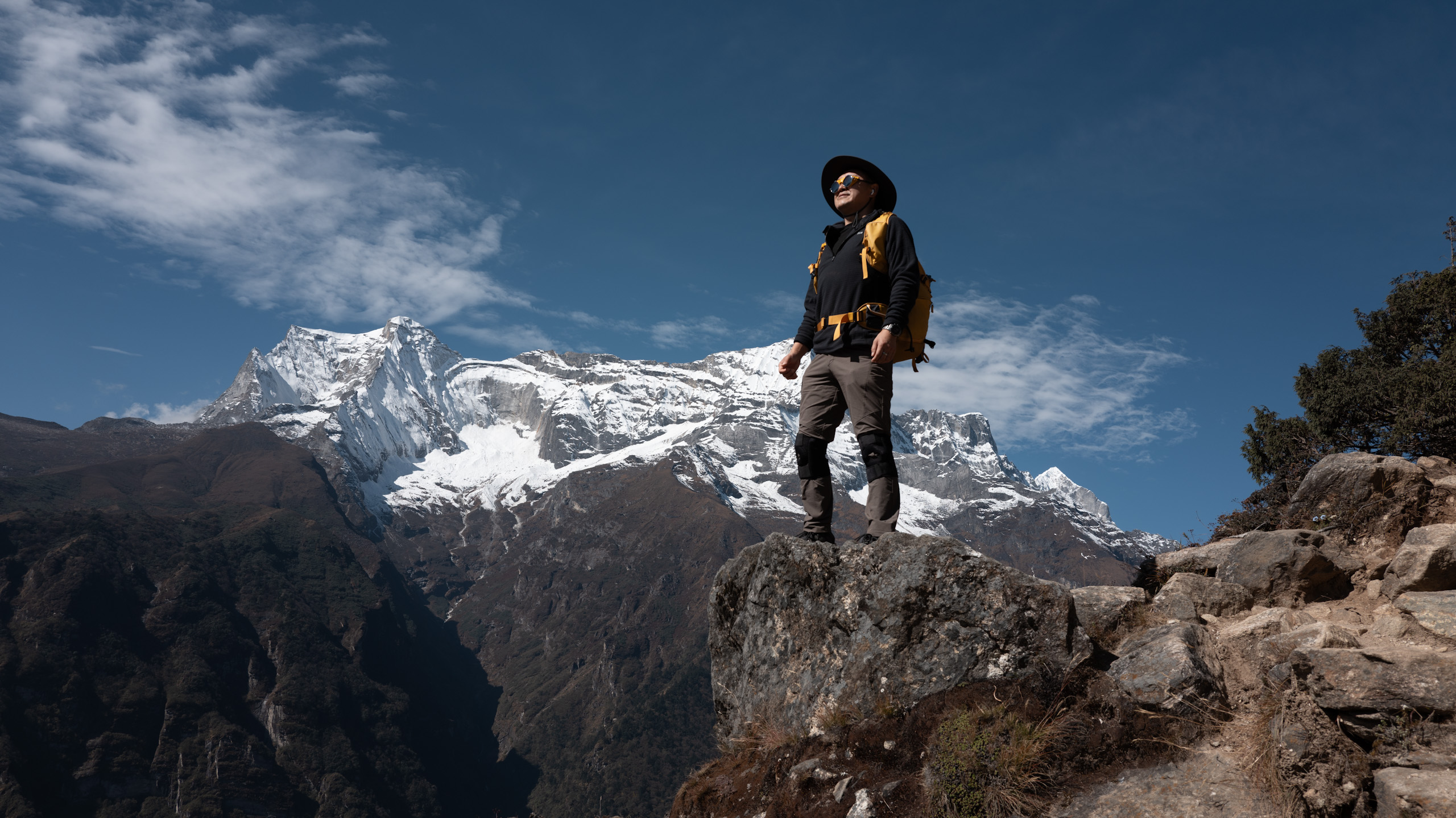
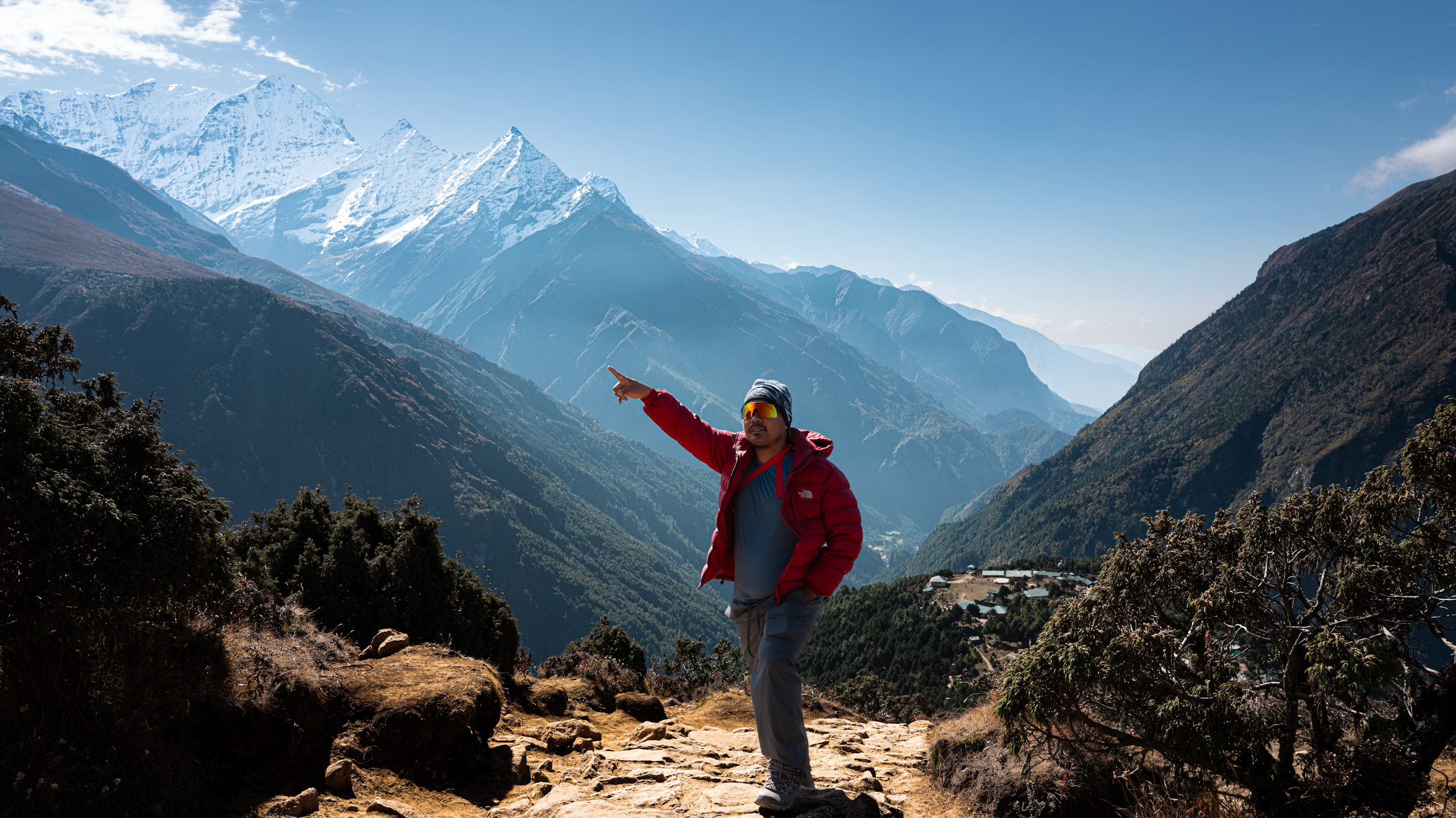
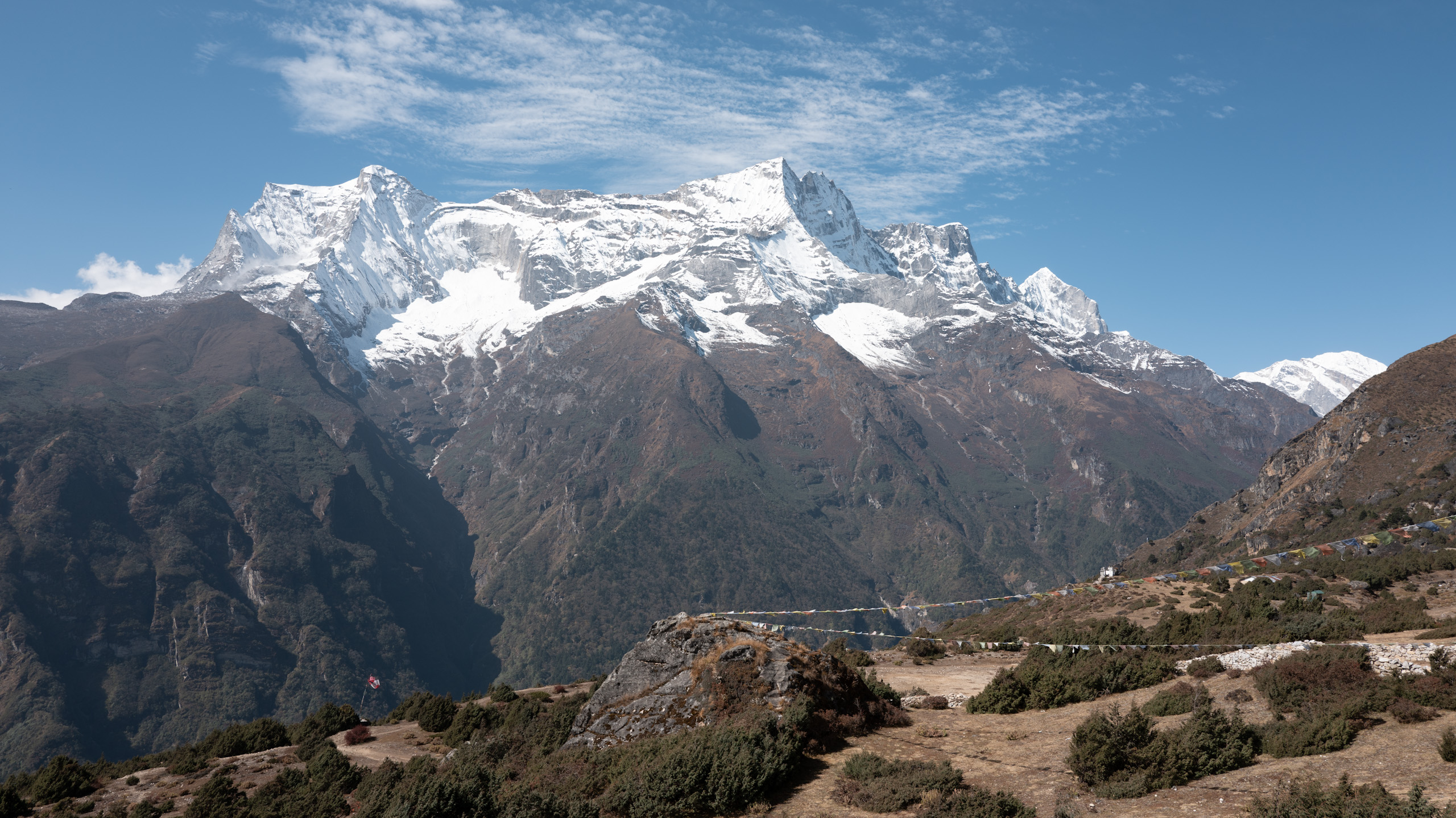
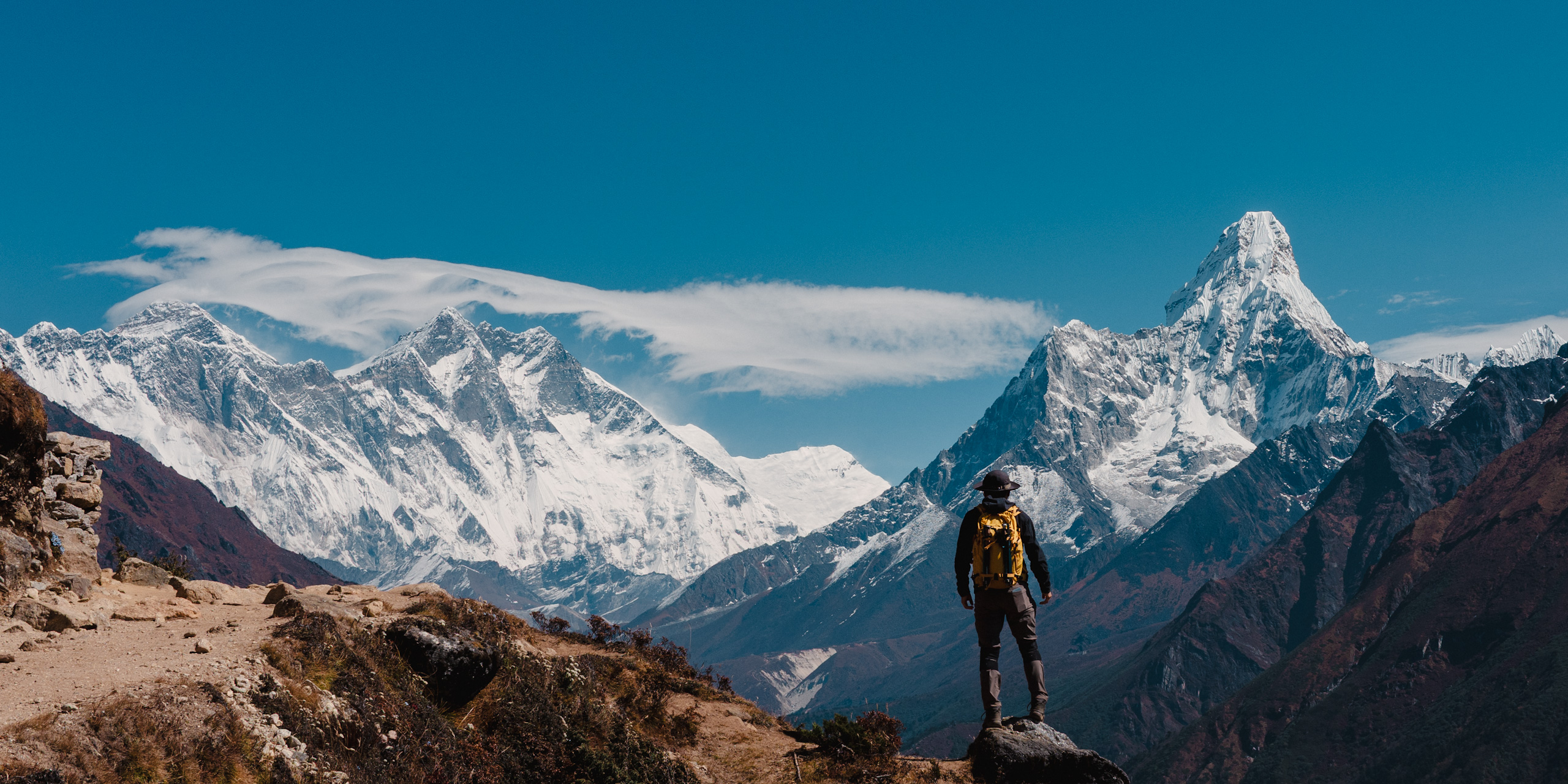
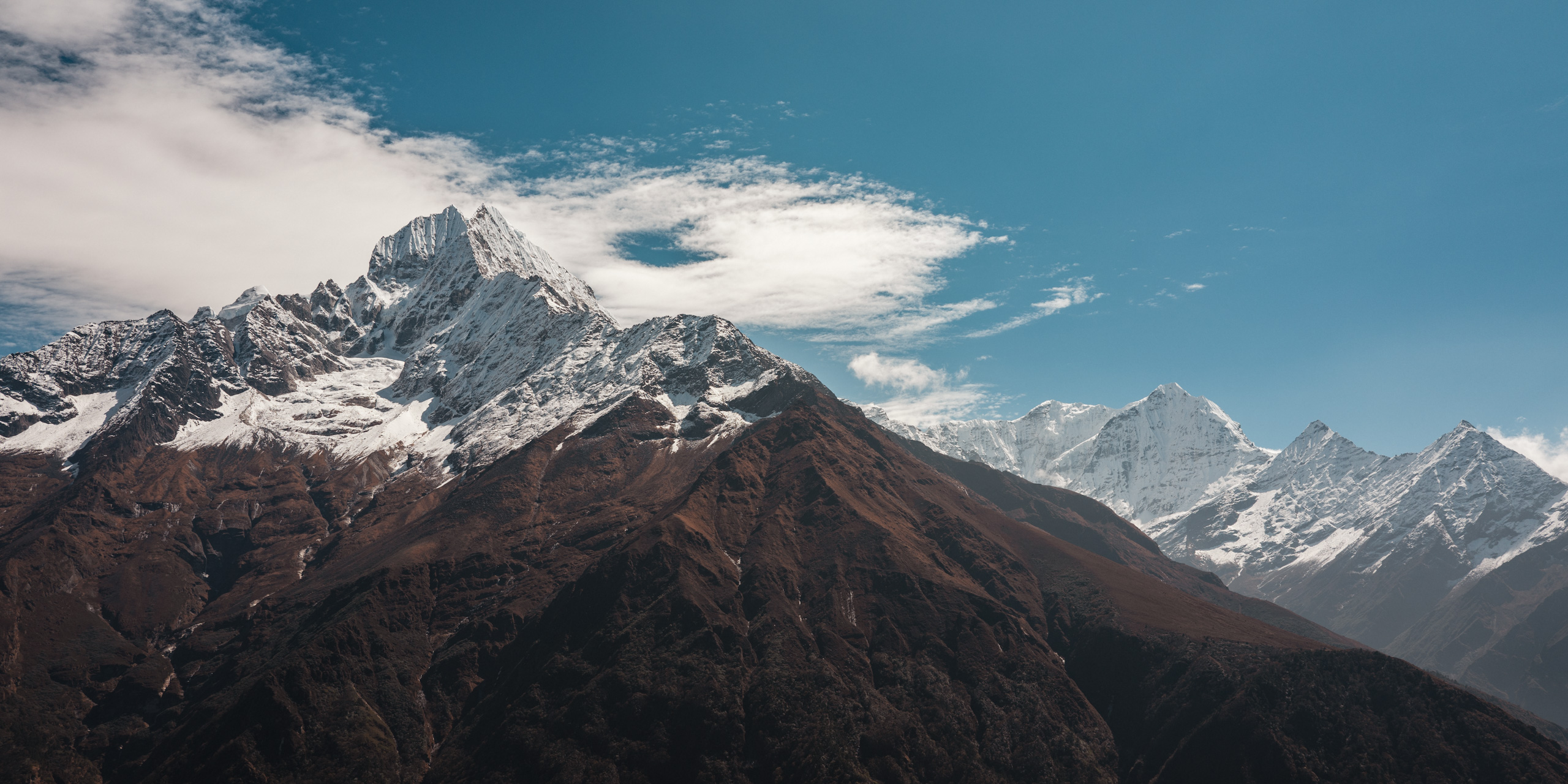
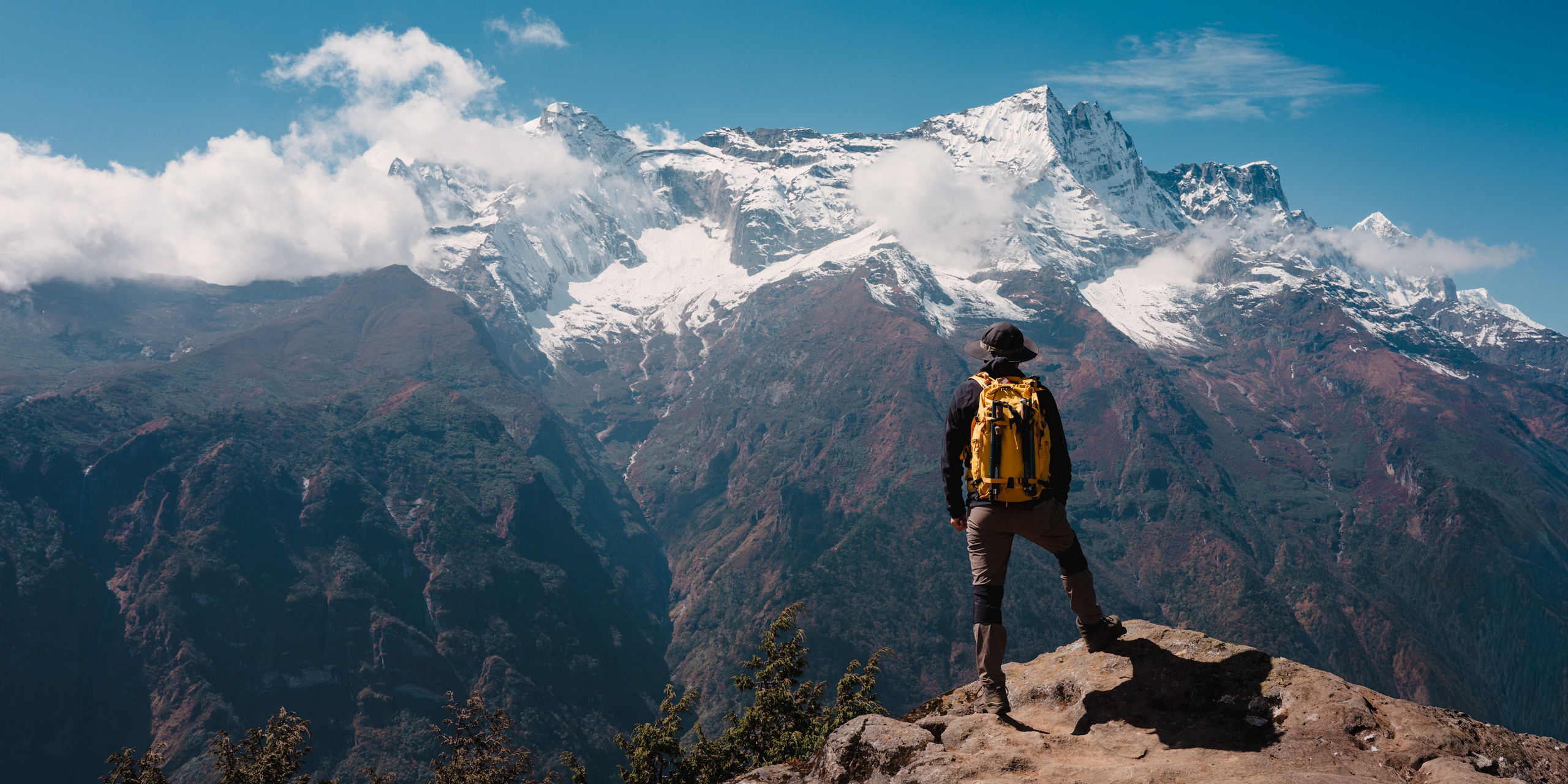
Spoiled-Meat Dumplings: A Childhood Memory
Last night we went to a Japanese restaurant in Namche Bazaar because a few teammates were craving ramen. I’m still wary of meat up here. With my first bite of the pork, I spat it right out. It had turned.
I knew that taste instantly, because I grew up with it. When my grandmother’s children brought her pork, she could never bear to eat it. She had no refrigerator, so she kept it as long as she could, saving it, until it began to smell. Even then, nothing was thrown away. She wrapped that meat into dumplings, set the plate in front of me, and sat watching me eat.
Those dumplings trained my nose and tongue for life. Today, even the faintest hint of spoiling meat gives itself away to me. Strange, the gifts our childhoods leave us.
A Quiet Battle Beneath Warm Blankets
After sorting photos, writing the diary, and catching up on work, I went to bed around 10. The room was chilly, but the bed warmer kept the blankets cozy. I woke a few times when my hands had slipped outside the covers and gone cold, then tossed around until I was comfortable again.
I woke up feeling great, yet the numbers told a different story. Blood oxygen was 89%, normal for about 3,400 meters. But my HRV had fallen from my usual low 40s to 27 ms, and my Body Battery read just 23%.
HRV, heart rate variability, measures the tiny variations in time between one heartbeat and the next. A healthy heart doesn’t tick like a metronome. When the body is relaxed and recovered, the “rest and digest” side of the nervous system is in charge, and the gaps between beats vary more, so HRV is high. When the body is under stress, whether from illness, exhaustion, or thin air, the “fight or flight” side takes over, the rhythm stiffens, and HRV falls. That makes it one of the best early warnings of how hard the body is working, often before you feel anything at all. A single number matters less than the trend against your own baseline.
So while I felt fine, my body had spent the night fighting a quiet battle, rebuilding itself for thinner air.
When I rest, my drink is always the same: lemon, ginger, and honey tea.
Everest Lifts the Veil of Temptation
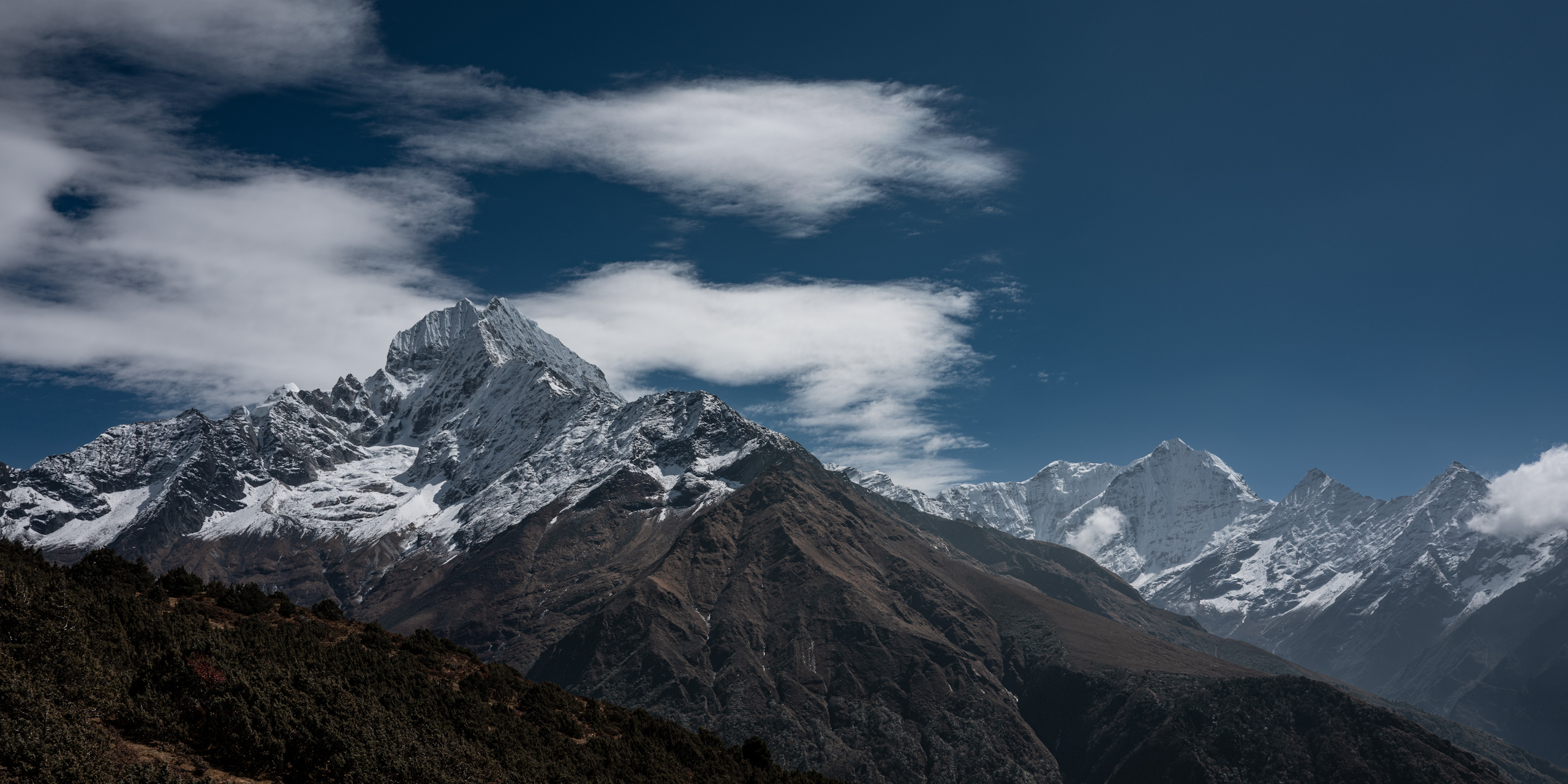
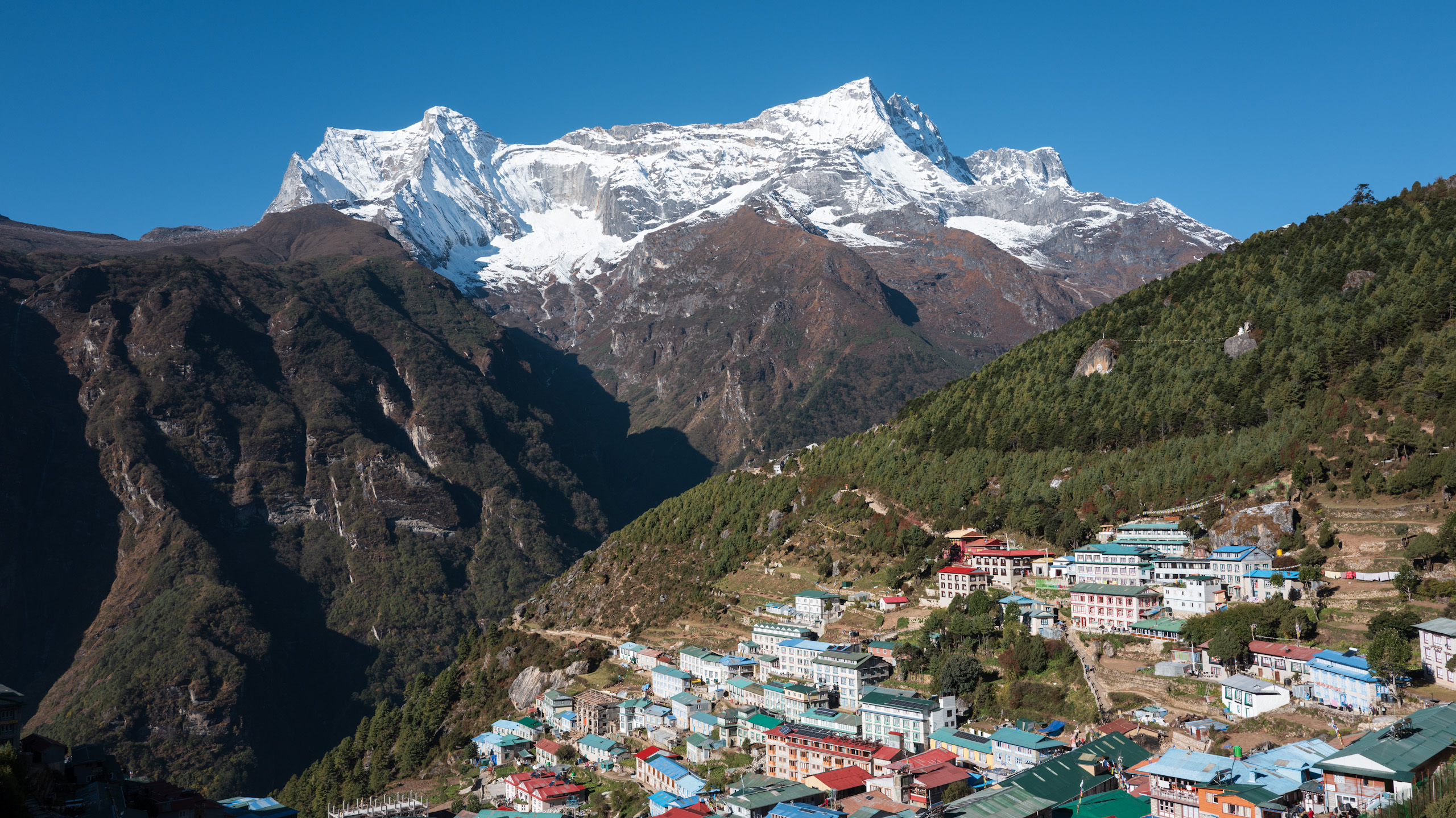
Namche Bazaar is the capital of the Everest region, a mountain town packed with shops, spas, and restaurants. It is also the first place on the trail where Everest reveals itself, standing among a crowd of other great peaks, beautiful and beckoning.
Today was an acclimatization day by design: climb about 350 meters to meet the mountains, then come back down to sleep low.
The altitude is beginning to make itself felt. One of our teammates had trouble breathing at night. He told us he had to sit up several times and breathe slowly through his nose before he could settle again.
Everywhere I turned, mountains were waving at us from afar. On the trail I met a mother traveling with her three children, the youngest just nine. Each of them keeps a daily journal. Somewhere out there, four more diaries are being written about these same mountains.
Three Treasures for the Climb
Once again we climbed slowly. All those 100 kg squats paid off with every vertical step, and still I held back to keep my heart rate under 150.
Up here, I believe a climber’s three most precious possessions are muscle, heart, and mind.
Muscle is the foundation, and it cannot be borrowed on the day you need it. Every step I take today was paid for months ago, in the gym, on Mount Si, under a weighted vest. Life works the same way. Health, skills, savings, and relationships are all built in quiet seasons when nobody is watching, and drawn on when the mountain finally arrives.
Heart has two meanings, and I need both. One is the engine in my chest that must not be pushed past its limit. The other is breadth of spirit: the patience to let faster hikers pass without feeling defeated, to stop comparing, and to accept the mountain’s terms instead of demanding my own. People with a broad heart usually carry a great goal inside them, and so they aren’t troubled by the petty things of everyday life. A narrow heart burns energy on pride and trivia. A wide one saves it for the climb.
Mind is judgment, knowing when to push and when to stop. When the beauty is right in front of you, the temptation is to rush toward it, and that is exactly when the danger lies. Hurry and you sweat; stop to rest and that sweat chills you, and up here a cold can become something far worse. In life too, many of our worst decisions happen within sight of the prize.
Success here isn’t measured by who arrives first. It’s measured by who arrives, and who comes home. The wise keep a steady pace and make sure they survive to see tomorrow’s view.
At the top, my reward is always a hot chocolate. Coffee is off the table for me. It sets my heart racing and makes it work even harder.
A Bowl of Soup, Spoon by Spoon
For lunch, our guide arranged a freshly killed local goat soup. Commercial slaughter isn’t allowed here, he told us; only the police may do it.
At home I eat fast, and Benny is always reminding me to slow down. Today I listened to him, even from half a world away. I tasted the soup spoon by spoon. About 1.5 kg of meat was shared among the team, and in my bowl I counted four small bones. I finished my fried rice too, though the egg was nearly impossible to find.
Vertical Limit: The Mountain Shows No Mercy
After lunch, at the Liquid Bar, we watched Vertical Limit.
The film opens with a father who orders his son to cut the rope that holds him, so that his two children can live. Years later, his daughter is trapped in a crevasse high on K2, because a wealthy expedition leader pushed for the summit against the weather and the clock, hungry for glory. Her brother gathers a team and climbs into the storm to bring her back.
Beneath the explosions and the drama, the film’s message is simple. The mountain does not care about your money, your plans, or your ego. It punishes impatience and arrogance, and the true heroes are not the ones who reach the top, but the ones who make hard choices out of love.
Watching it here, with Everest just over the ridge, it felt like a lecture on everything I’d thought about on the trail this morning. I’ll watch it again with Benny when I get home. It will be a good reminder of the promise I made him.
Day 6 · October 20 — Who We Come Here For
Namche Bazaar → Tengboche (~3,860 m) → Deboche (~3,820 m) · 13.7 km · 8 hours · +826 m
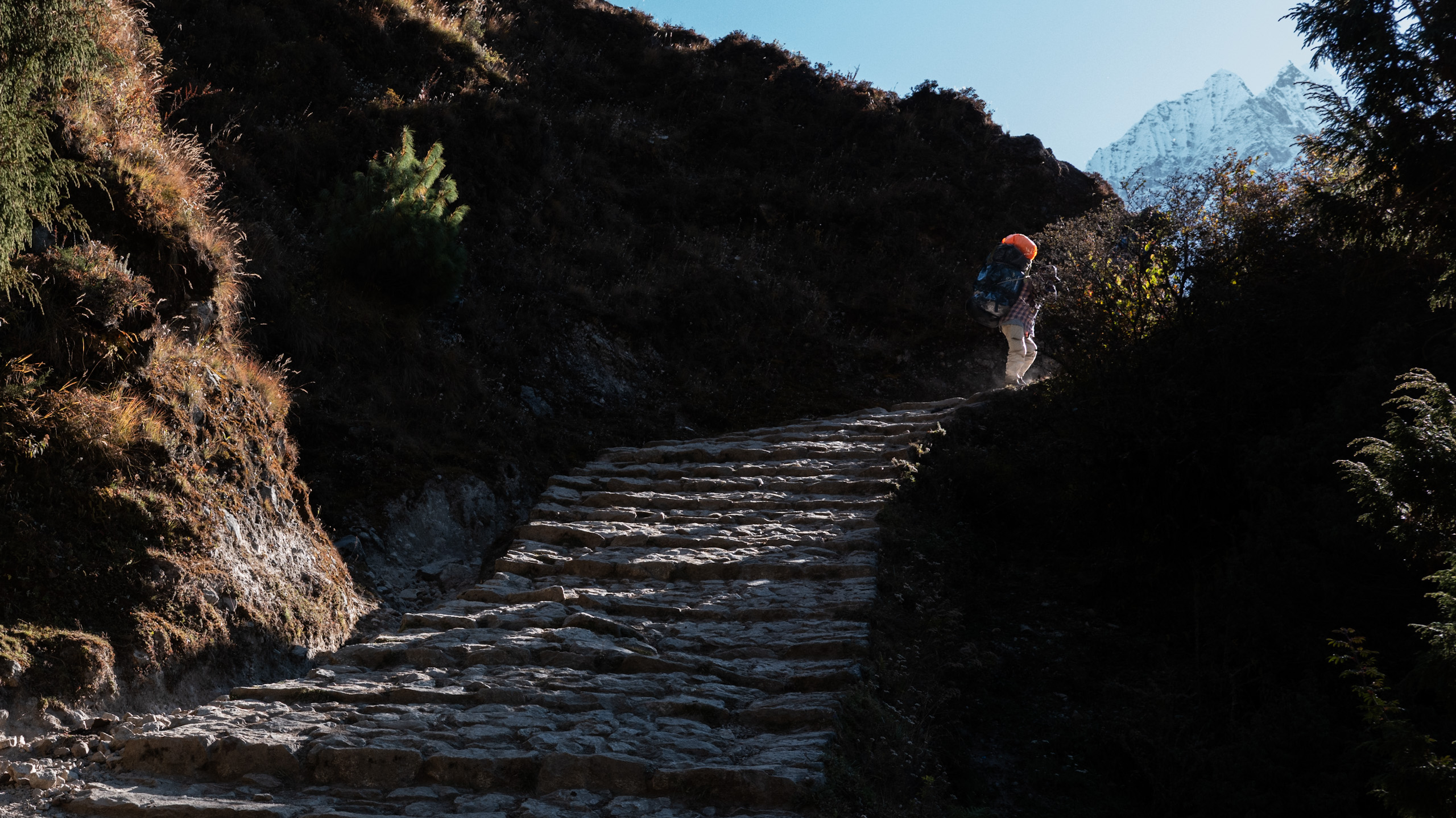
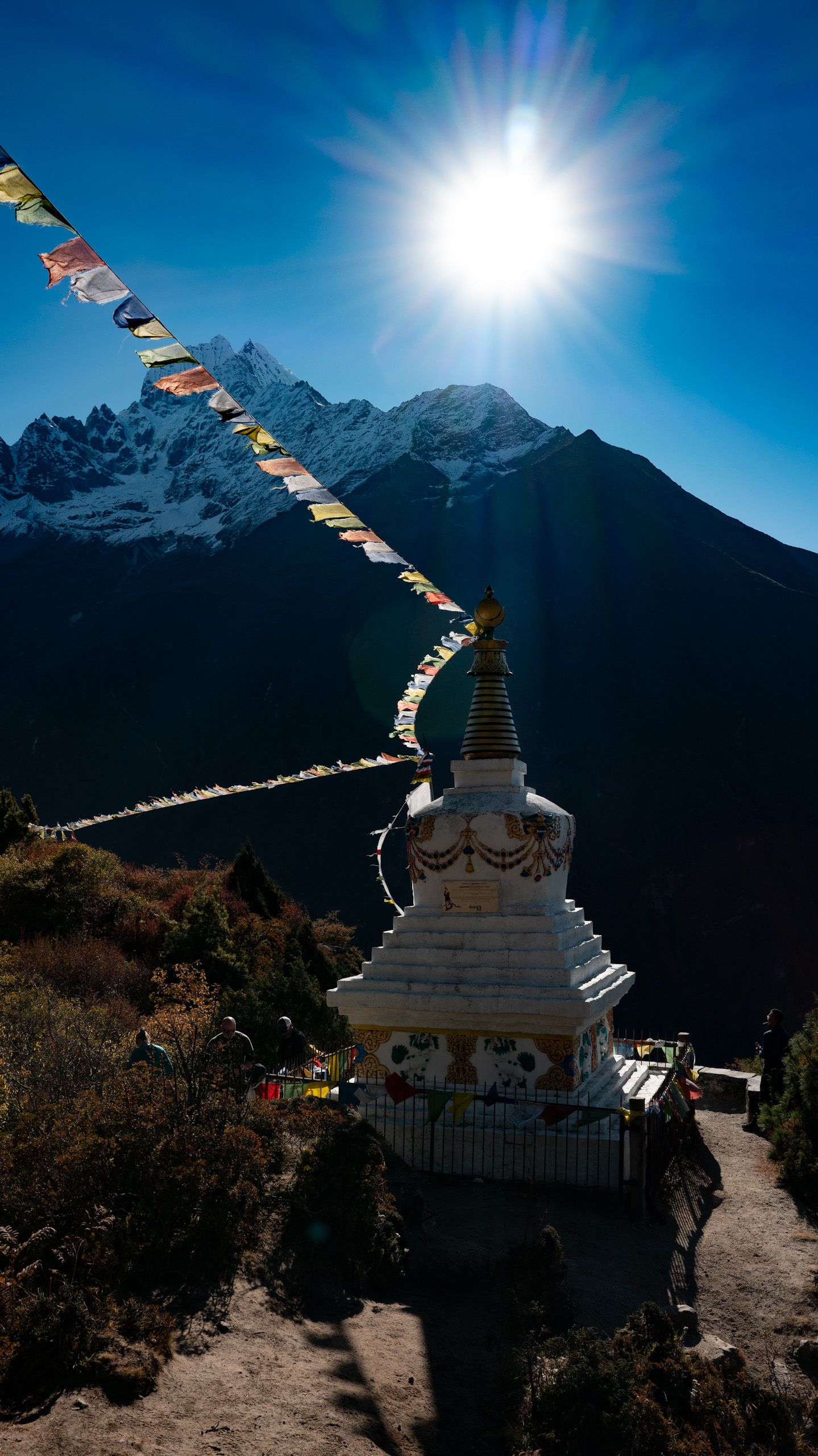
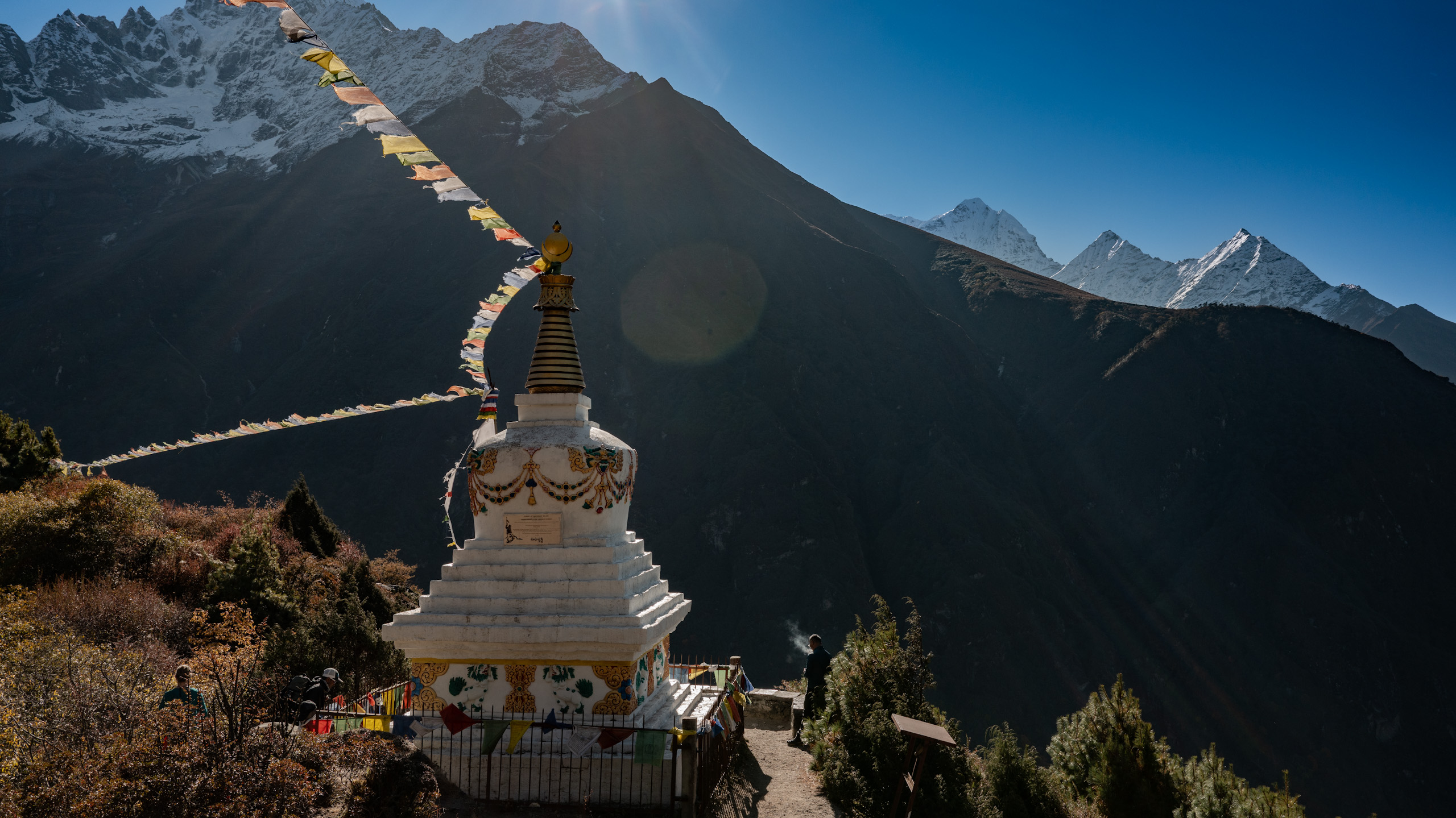
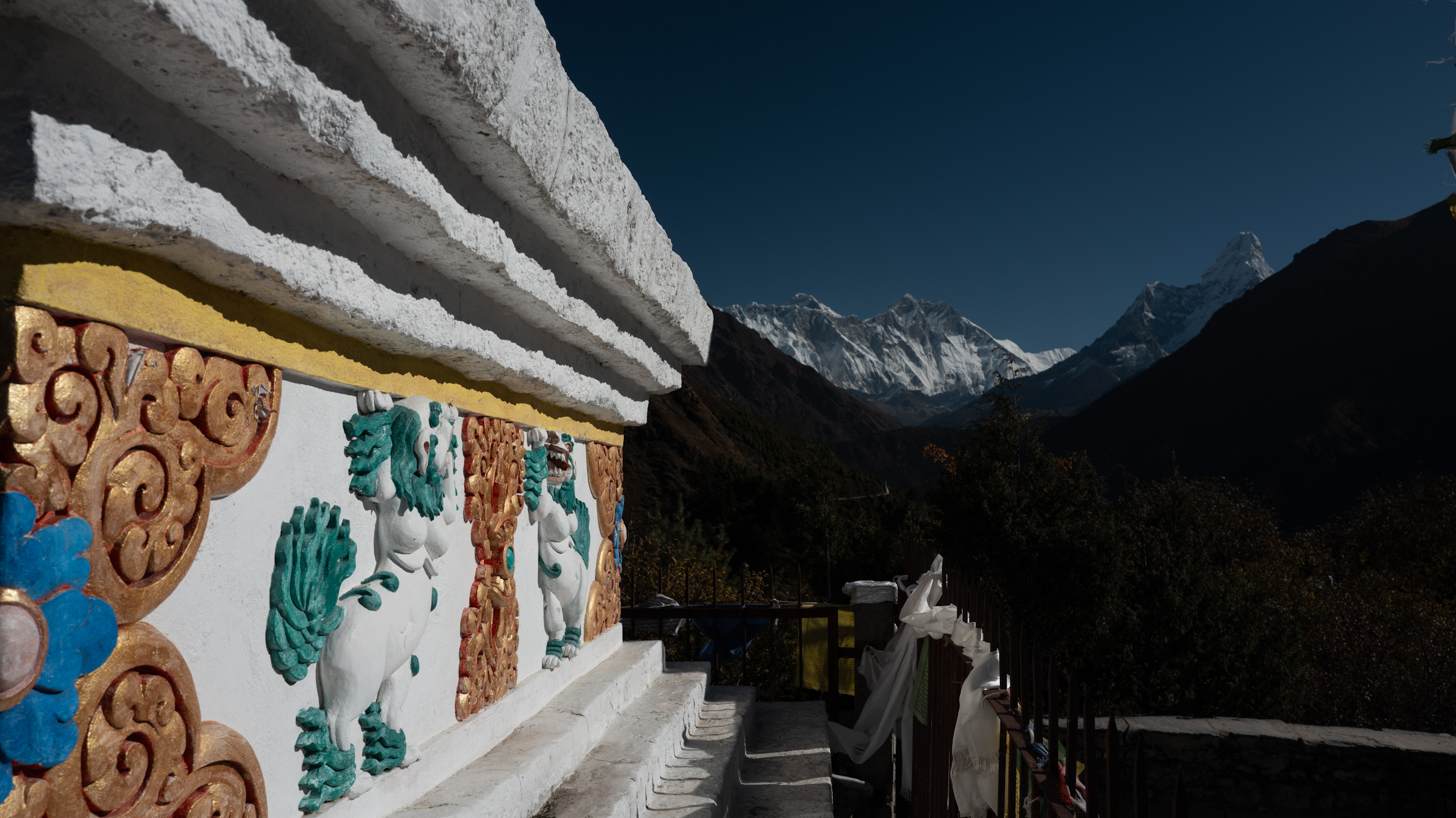
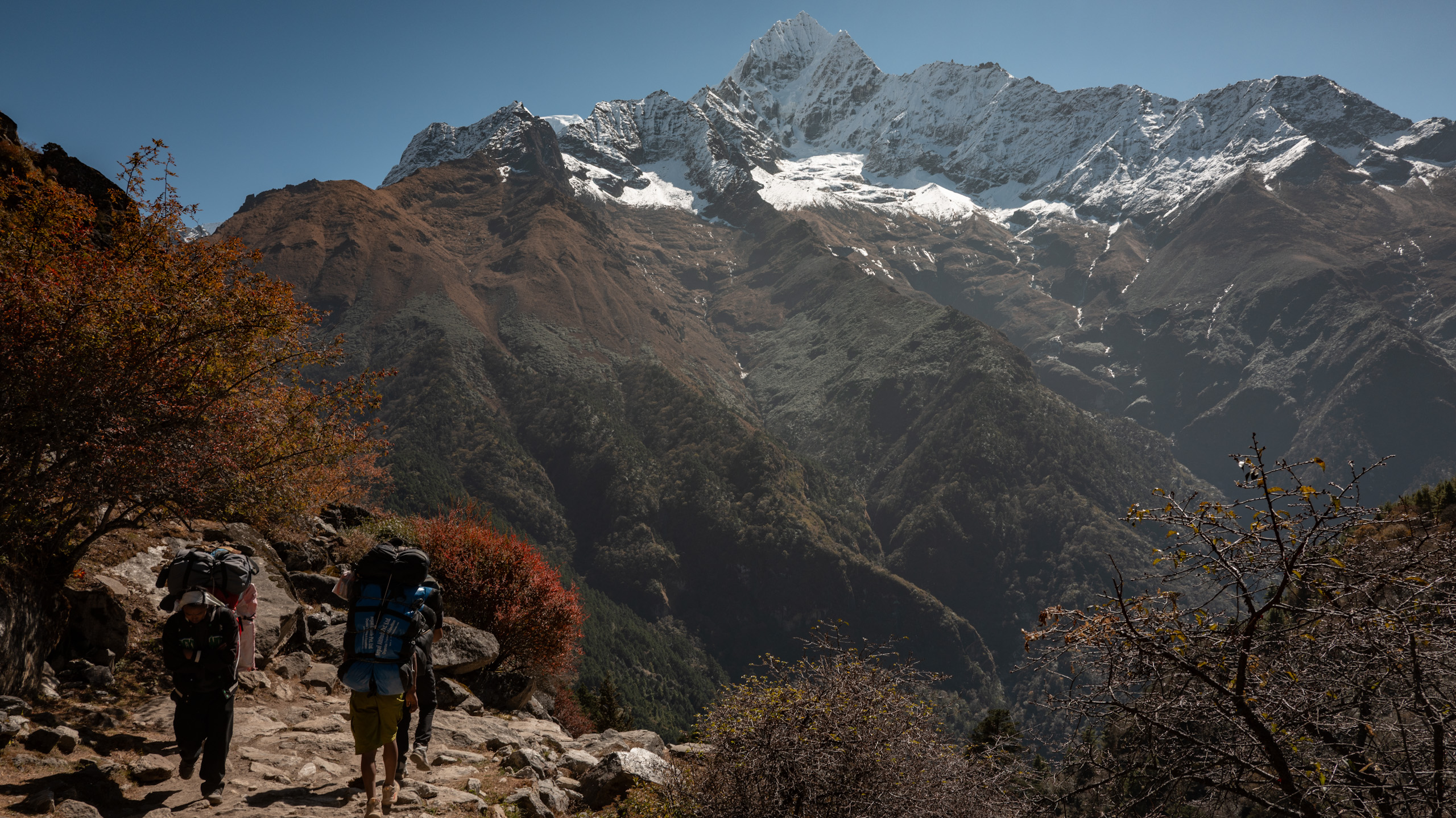
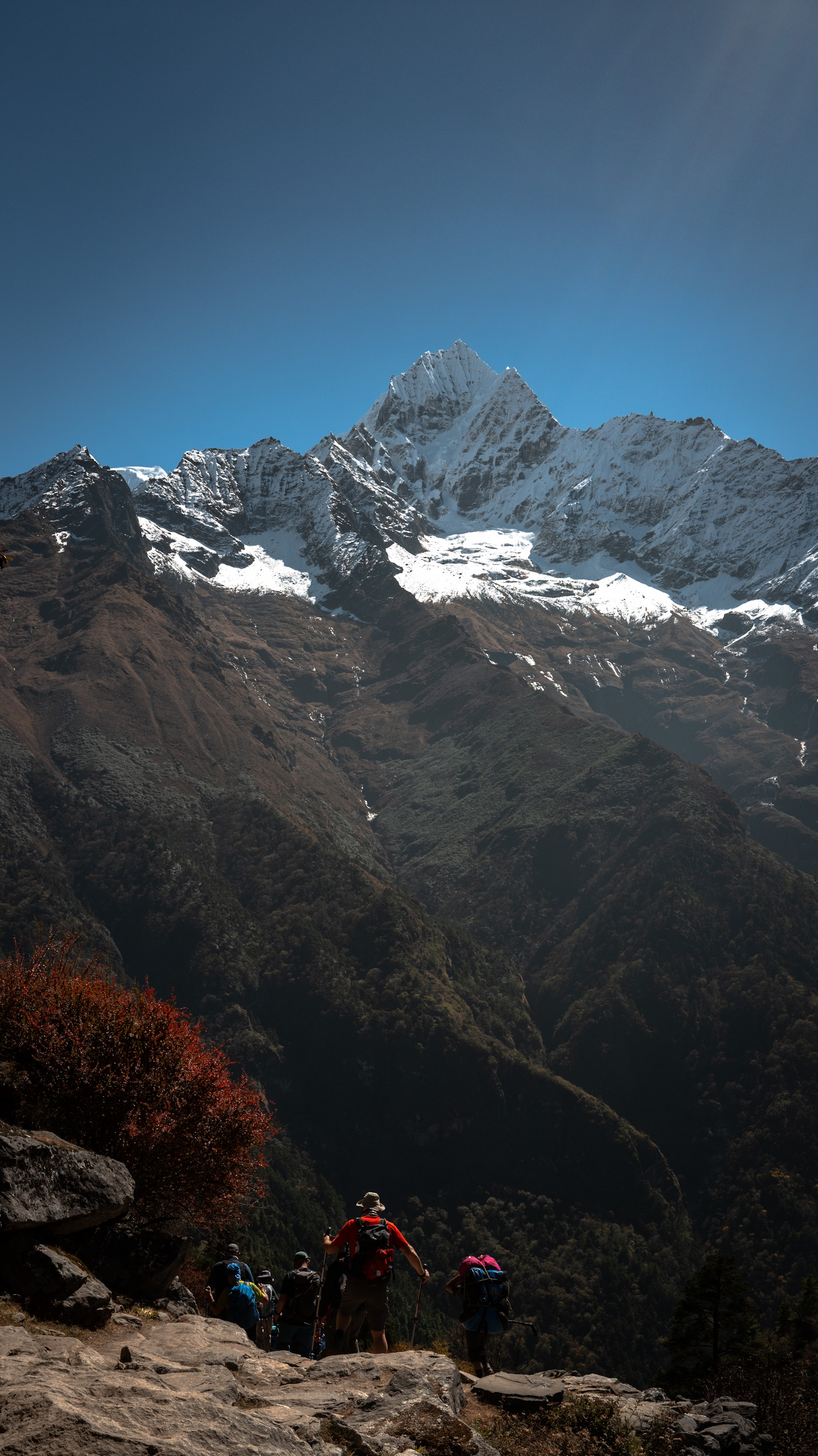
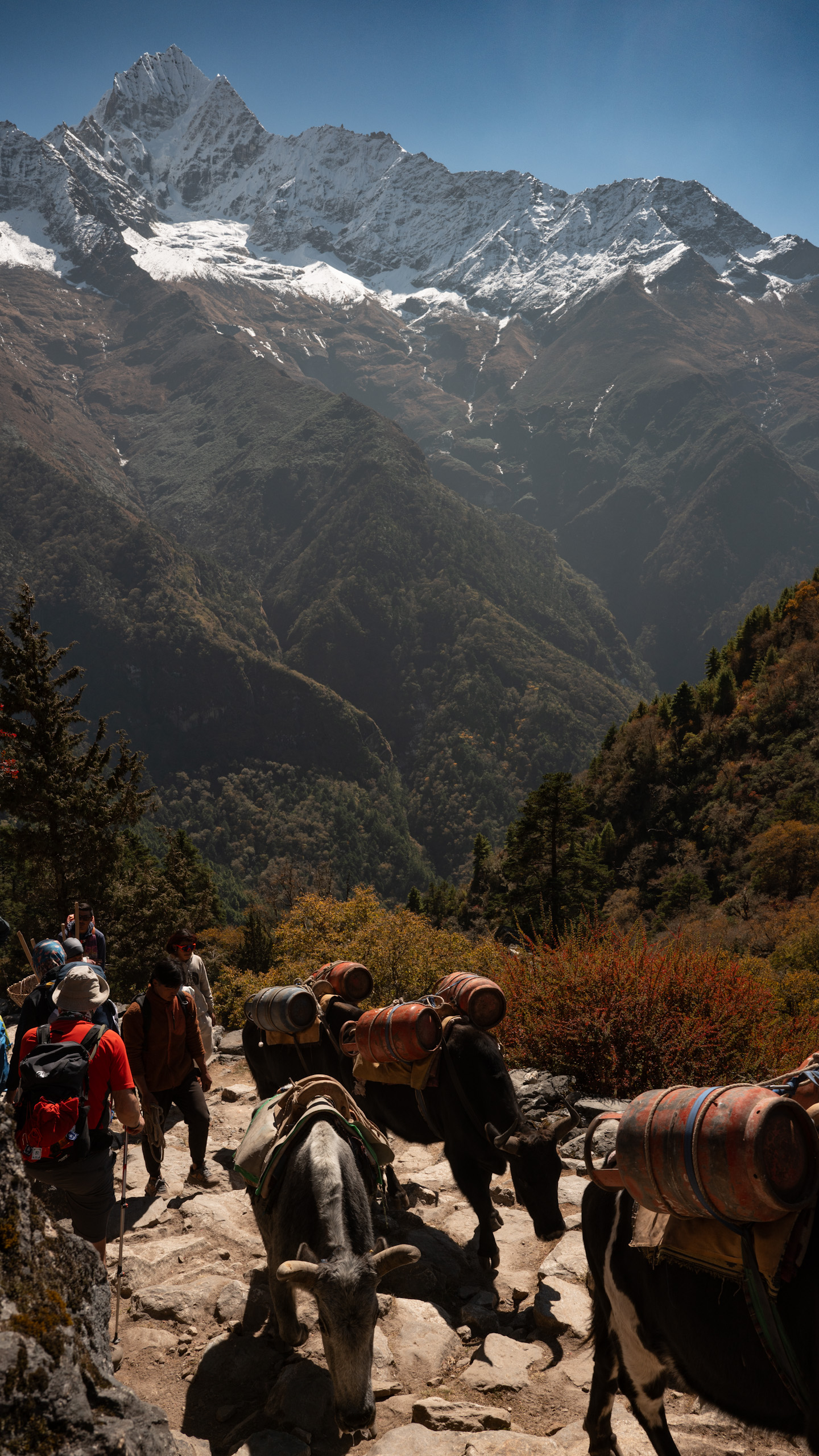
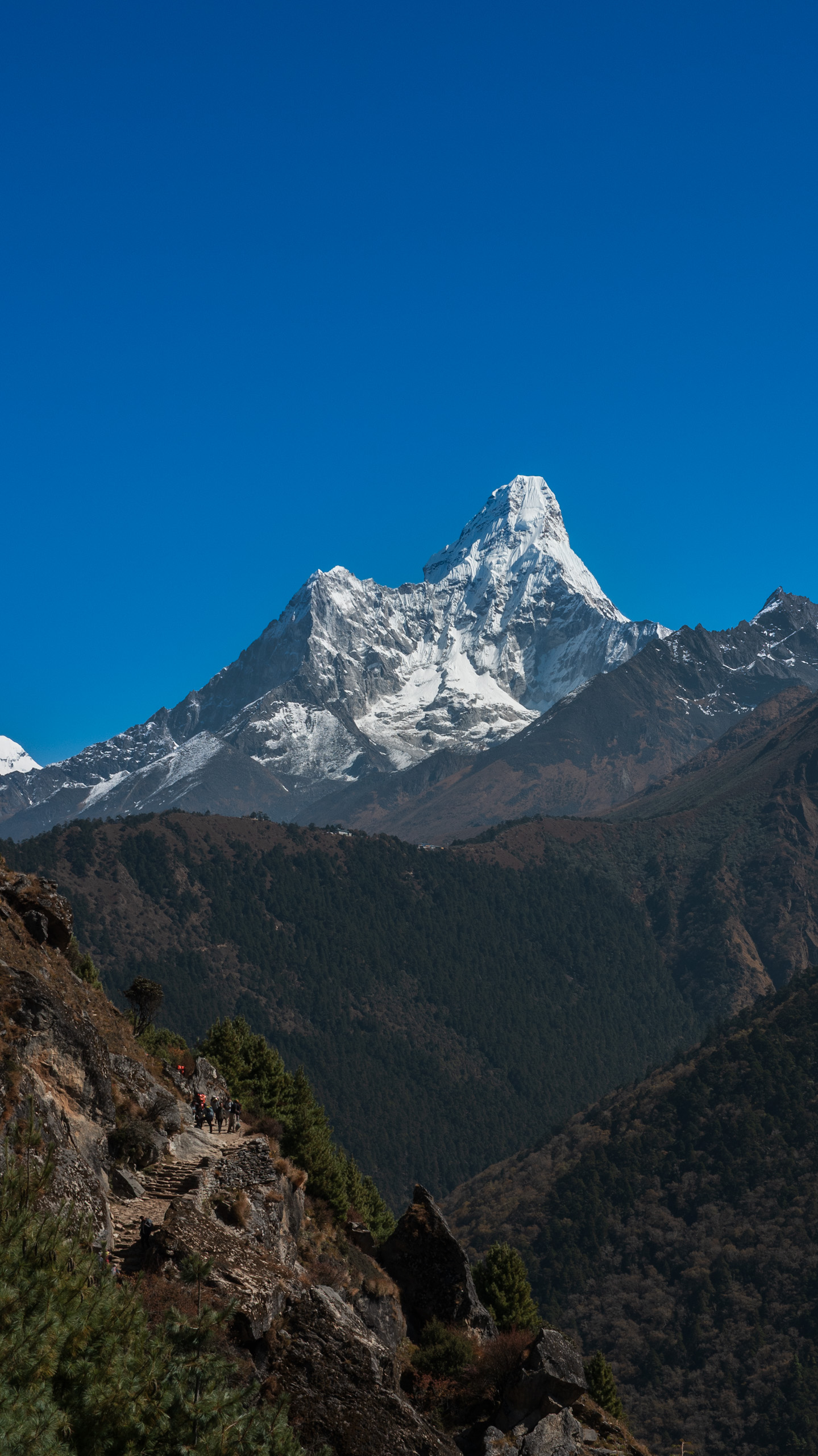
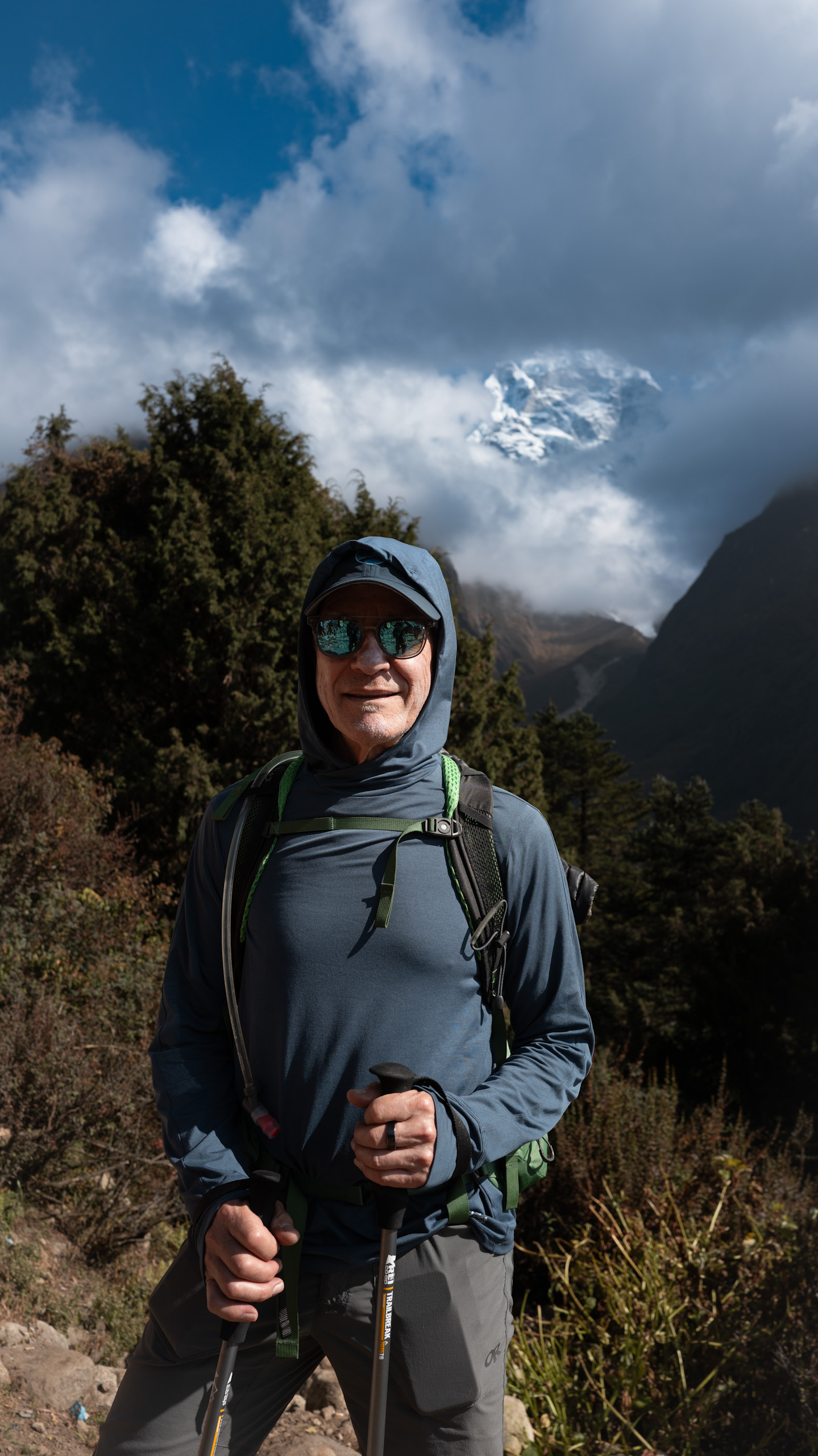
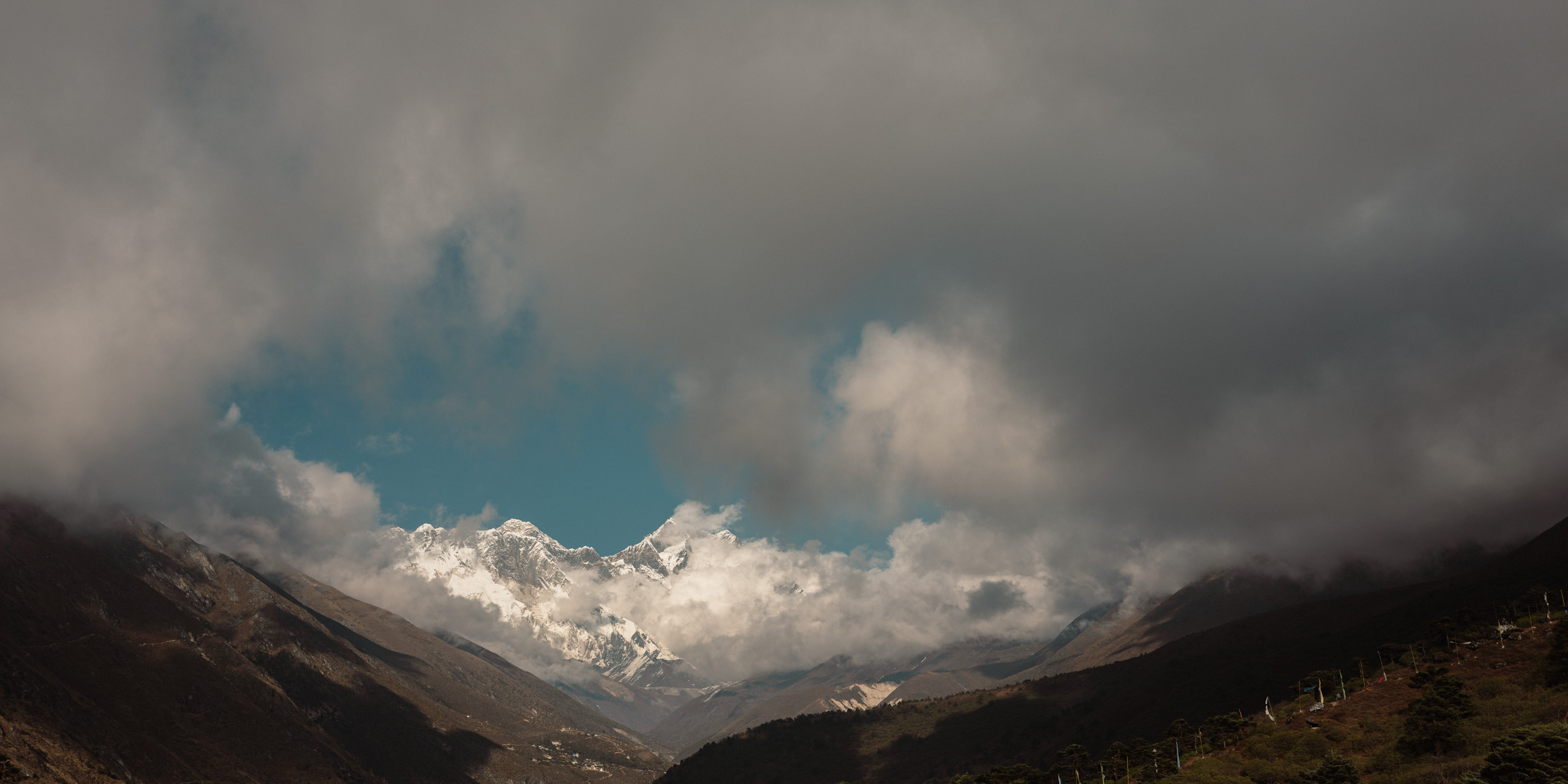
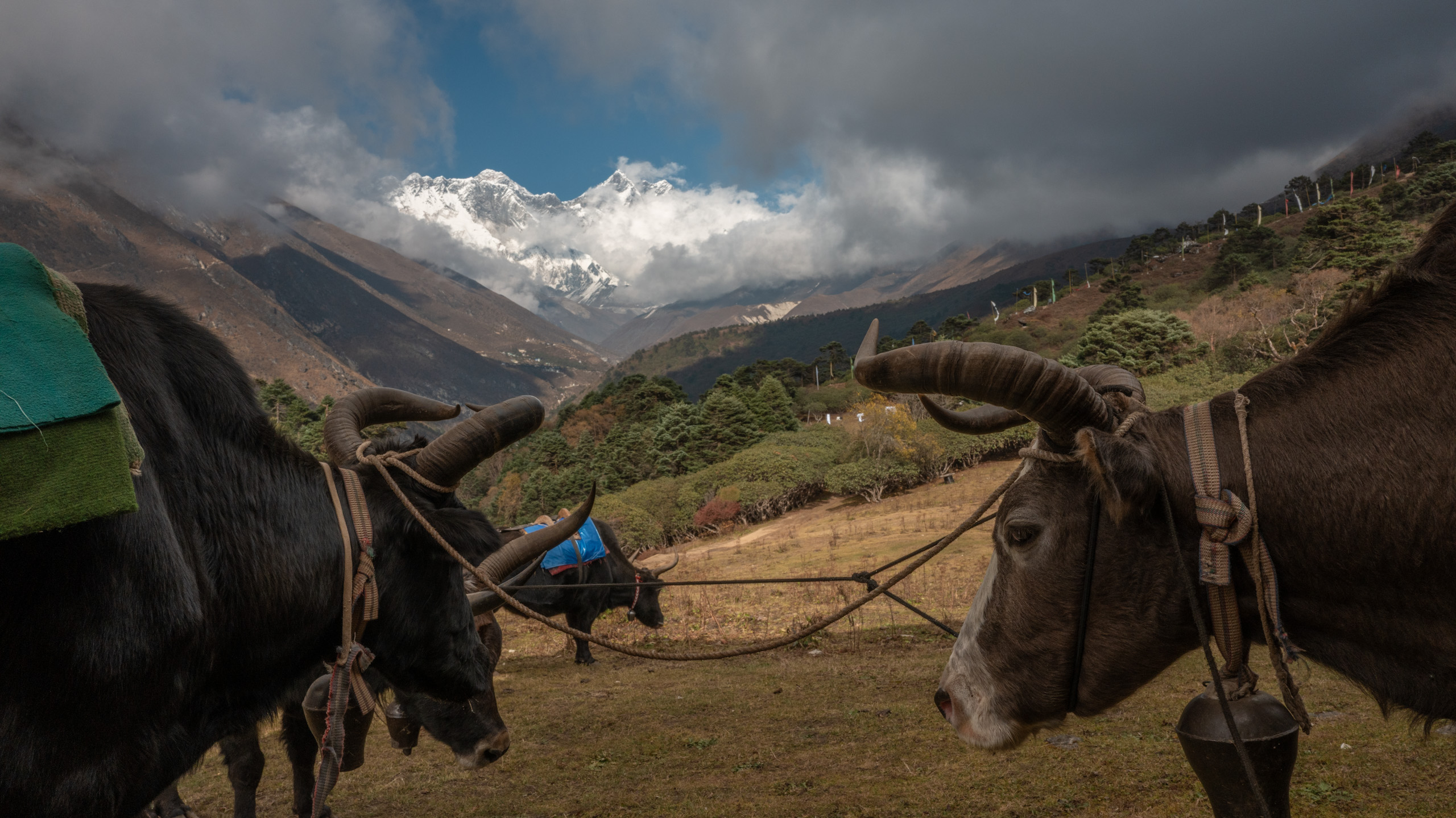
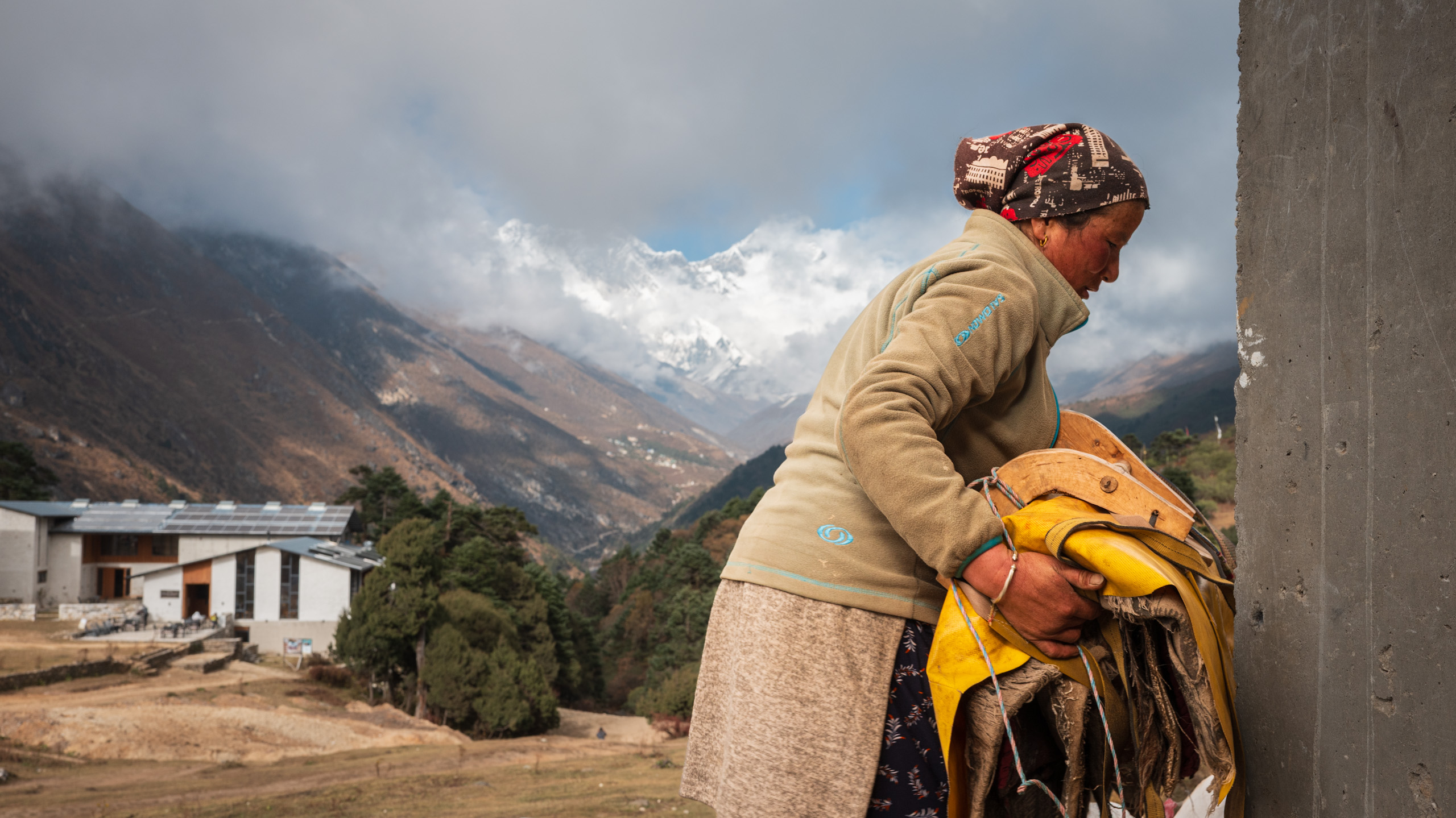
Today’s route from Namche Bazaar (about 3,440 m) to Deboche (about 3,820 m) covers roughly 11 km on the map and usually takes 6 to 7 hours; my watch logged 13.7 km and eight hours. The first stretch contours high above the Dudh Kosi gorge, with Ama Dablam (6,812 m), Lhotse and Everest appearing around the bends. The trail then drops about 200 m to the river at Phunki Tenga (around 3,250 m), followed by the day’s real test: a steep climb of roughly 600 m through pine and rhododendron forest. At the top sits Tengboche Monastery (about 3,860 m), the largest Buddhist monastery in the Khumbu, first built in 1916. From there, the trail descends gently through rhododendron forest for about 20 minutes to Deboche, our stop for the night.
The Day My Heart Stopped Rushing
A quick recap: on our first trail day we flew into the mountains and hiked three hours to our first stop. The second took us up to Namche Bazaar. The third was acclimatization in Namche, up and down. Today, the fourth day of hiking, was supposed to be harder.
Something fundamental changed today. Looking back, it was obvious that the first three days were all effort, straining and forcing ourselves forward. We tried our best, but in some way I was still the rabbit. Today, after three days on the trail, every step felt intentional. Every step was slow and at ease. With every step, I listened to my heart.
Over the past few days, my Garmin alerted me several times that my heart rate had crossed my preset limit of about 150. Today, not a single alert. That is the change: my mind and my heart are finally in sync. I let go of the hurry. I let go of impatience. I let go of anxiety. I paid attention to my steps and let nothing distract me, except the dangers worth watching: loose rocks, a slip off the edge of the path, a long-horned cow swinging past.
My legs are fine. No pain, not much soreness. I no longer lead the team. I walk behind them on purpose, so I can gather my thoughts and let them grow. Every turn reveals another beautiful mountain, and I enjoyed every one.
Two One-Way Tickets
Two members of our team did not buy return tickets. One is Sara. She planned eleven years of traveling the world; four are done, seven to go. The other lady sold her house right before this trip and has no plans to go back. Her journey around the world is just beginning.
I’m on a different path. I want to squeeze everything I can out of Everest: something that purifies me, makes me stronger, and shows me what matters and what doesn’t. But I still want to save time. So after we reach base camp, instead of walking three days back down, I’ll take a helicopter, saving the time and seeing Everest’s grandeur from above.
I asked Buddhi about his clients. His oldest was 78, and they did seven treks together. His youngest was 13. His success rate: 100 percent.
Steep Trails, Hard Winters
The steep climb after lunch took me back almost thirty years, to Mount Tai in Shandong, where the trail is so steep that the shoes of the person ahead are right in front of your face. The climb got harder, but because I’m better at controlling my pace now, it actually felt easier than the previous days.
Walking through the forest, I remarked that the trees looked like azaleas, only very tall. They are rhododendrons, the azalea’s tree-sized cousins and Nepal’s national flower. With the pines mixed in, the whole forest felt a lot like Seattle. The azalea also happens to be the city flower of Changsha, a teammate’s hometown.
As I climbed, I thought about the life I grew up with in a village in Inner Mongolia. It was damn hard. No hot water. No heater, no AC. Winters ran 20 to 30 degrees below zero Celsius. My parents were used to it. They knew there was no shortcut. They knew they had to make one pair of shoes at a time, one blanket at a time, for the family.
People who live through that kind of hardship have two choices. You can complain, but the moment you start complaining, you are already half defeated. Or you can keep your head down and look for the best rock, the best path, the best person to follow, and the little food you can find to feed your children.
In all my memory, my dad and my mom never complained. Not once did my dad say, “This is too hard, we can’t do it.” I could feel it when things were hard. He would go silent and find a way. And he knew how to encourage the people around him, how to say the thing that made them feel better about themselves. He had that motivating spirit, that vibe. That’s why, so many evenings, friends came over just to talk with him. No matter how hard life is, you have to make happiness out of it.
First Conversation: The Mountains Beyond the Mountains
My first conversation today was with our guide, Buddhi, whose name means “intelligence.” I asked him whether he takes his family on vacation. He has guided on Everest for eighteen years, yet he has never taken his wife and two children outside the capital. When I asked why, he couldn’t really say.
I told him about a sentence I wrote in my high school graduation book: “Many people complain they were born at the wrong time. I don’t complain about that, but I do wish I had been born in a different place.” That simple sentence became the fire in my heart, driving me from Inner Mongolia all the way to America. I kept studying, never satisfied with my salary at the bank. All I could think about was English, the TOEFL, the GMAT, and going to America. Against one-in-a-million odds, I beat fate, got my visa, and went to Texas A&M.
These valleys were once crossed by traders and seekers chasing fortune and knowledge over the Himalayas. Staying in these mountains is Buddhi’s own choice. But his children’s future can hold far more possibilities.
I suggested he take his children abroad, maybe to Singapore, to let them open their eyes. Once they see the wider world, they’ll know what they want from life, and very likely they’ll become self-driven. He was intrigued and asked what the best age would be. Around twelve, I said. That’s a turning point toward maturity, and roughly the age when some noble European families sent their children off to boarding school for experience and training.
Then he asked, “Sean, can you sponsor me? Can you invite me to America? I want to see.” I gladly said yes.
Second Conversation: A Father Who Paints on Ice
The second conversation was with a gentleman who had been listening, nodding and smiling, while I told a joke about a foreigner with poor English. At the next stop, I asked about him. He looked about seventy, maybe older.
His name is Dr. Arnie Stokol, and he is from Dallas. I told him I used to live in Houston. Then I asked how many times he had come to Everest. “This is my ninth,” he said. Why? “For my son. In honor of my son.”
His son died at twenty-six, three weeks before he was to start medical school that July. He was adventurous, a risk-taker, and came to the Himalayas in the wrong season, without a guide, and just kept going, until he disappeared. The father hired fifty sherpas and searched for three weeks. They found nothing. Six years later, the government called: they had found his son’s body in a glacier crevasse, frozen in time. He recognized him from a photo of the tattoo on his leg. Since then, every few years, he comes back to paint at the place where his son died.
He is seventy-four now, a retired eye doctor who came to America at twenty-six and has been married for more than fifty years. He walked effortlessly, so I asked how he stays so healthy. “Eighty percent diet, twenty percent working out,” he said. He weighs only a few pounds more than he did at sixteen, under 160 pounds, with 9.5 percent body fat. Four years ago, his cardiovascular age tested at about thirty-seven. At seventy, he was still mountain biking and snowboarding. He never eats rice or bread, and eats plenty of eggs, other protein and vegetables.
He recommended a book, and as soon as he named the author, I said, “Outlive!” I had read it on Mr. Wang Jinlong’s recommendation, and it inspired me to create and publish my children’s book, The Dreams of the Penguins, which teaches children how to take care of their bodies and minds and stay away from chronic disease.
I told him my father is seventy-seven and couldn’t possibly climb to Everest Base Camp. His answer surprised me: “He probably can. He just doesn’t realize it. Body weight is the biggest problem. If he reduces his weight and body fat, he’ll be very fit. That’s the one thing that can transform his health.”
He said his son, though he died so young, is his greatest teacher. Because of his son, he lives this healthy life, keeps this fit body, and enjoys every day.
When I asked about his philosophy of life, he said, “Live in the moment. That’s the key.” From a man who has lost what he has lost, those words carry a weight few people could give them. They also echoed what I had felt on the trail that morning, when I stopped hurrying and simply listened to each step.
Third Conversation: “We Will Meet Again Tomorrow”
My third, shorter conversation came at the last stop. I raised my camera toward a woman leading a team of cattle, and she shouted something in the local language. I thought she was angry and lowered the camera. My guide laughed: she had simply said, “Hey, brother!”
So I asked if I could take her photo, and whether the house behind us was hers. She answered instantly: “If this house were mine, you could live here with me for free.” I couldn’t stop laughing. “Thank you! I’ll have to have a drink tonight. Thank you for your kindness.” I took a couple of photos. The guide guessed she was 42 to 45.
When I said goodbye, she replied, “You can leave today. We will meet again tomorrow.” The guide smiled and said, “What a romantic farewell.”
In the Himalayas, hospitality is more than courtesy; welcoming a guest is close to a sacred duty. Her invitation wasn’t mere flirtation. It was the mountain people’s way of saying, “You belong here too.” And her parting words carried the Buddhist sense that runs deep in these valleys: every meeting and parting is temporary, and today’s goodbye may be tomorrow’s reunion. Under Everest, where the air is thin and hearts are vast, I learned that love is not possession. Sometimes it is the generous space we make for someone to rest in our lives, however briefly.
Who We Come Here For
One question kept rising in my head today: Why do we come here? Who do we come here for?
The doctor comes for his son. And meeting him gave me one of the meanings of my own trip: it’s for my dad’s health. Here was a living example of how to stay fit as you age. There is still time to change your body and your health simply by changing your diet, even if you already work out diligently.
I came here to show my six-year-old, Benny, and the kids that Everest, the one from the movies, however challenging it is, is a place Dad can just pack up and go to. That’s the courage I want to pass on to them. Nothing is impossible. I want them to dare things ordinary people wouldn’t.
I came here for my team at Cloud 9. We’re at a turning point, reaching for the next altitude, and the whole team needs to acclimatize to this new height. When you realize the impact you’re making and what you’re building, you bring out the best in yourself and do amazing things.
So my answer is this: I came here for my parents, for my family, and for my team. And for myself too, to think through what I can do for all of them.
The burden of this journey has become its gift.
Day 7 · October 21 — The Wind That Comes From Behind
Deboche → Dingboche (~4,410 m) · 11.9 km · 7 hours · +886 m · overnight low −15 °C
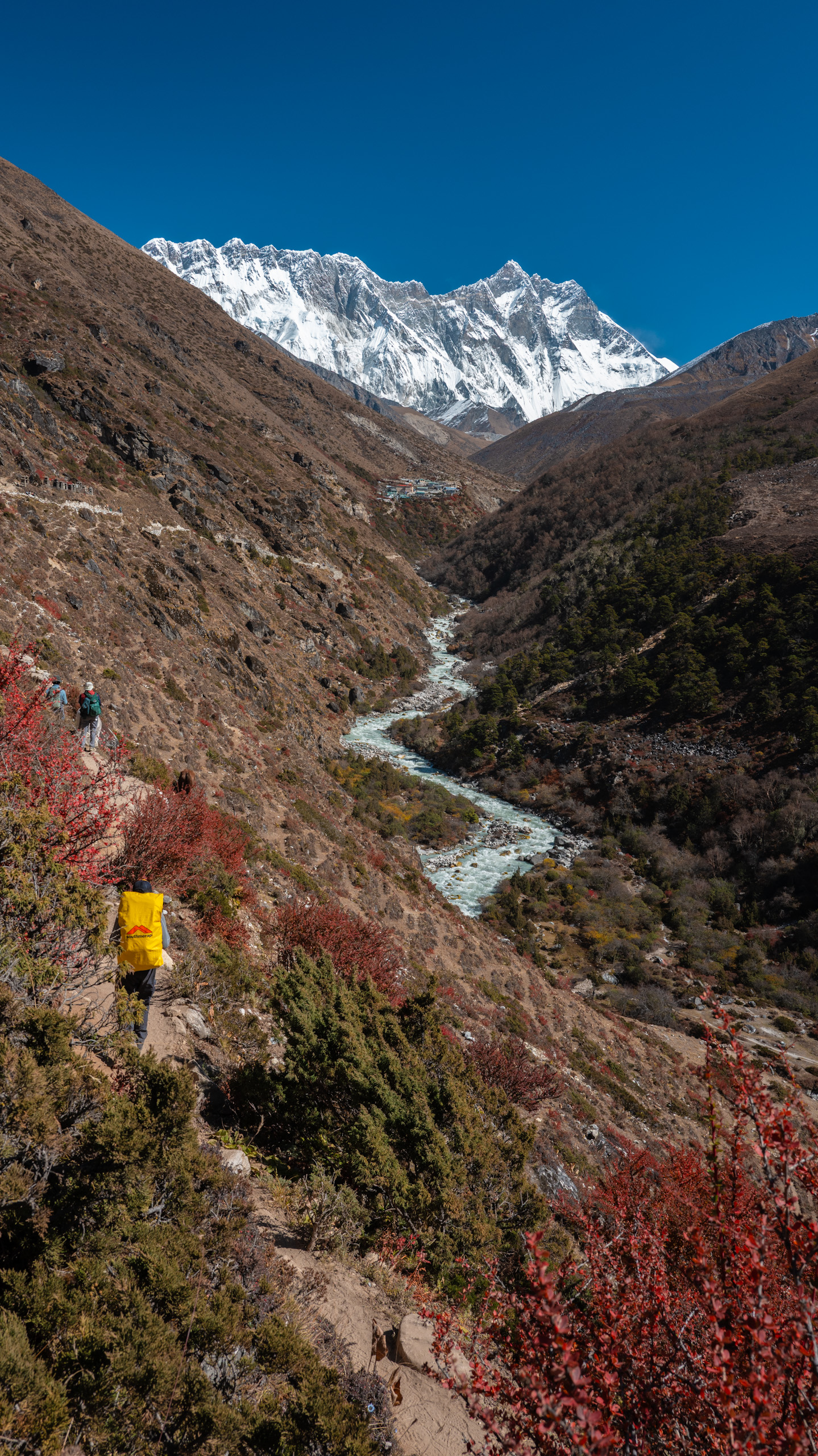
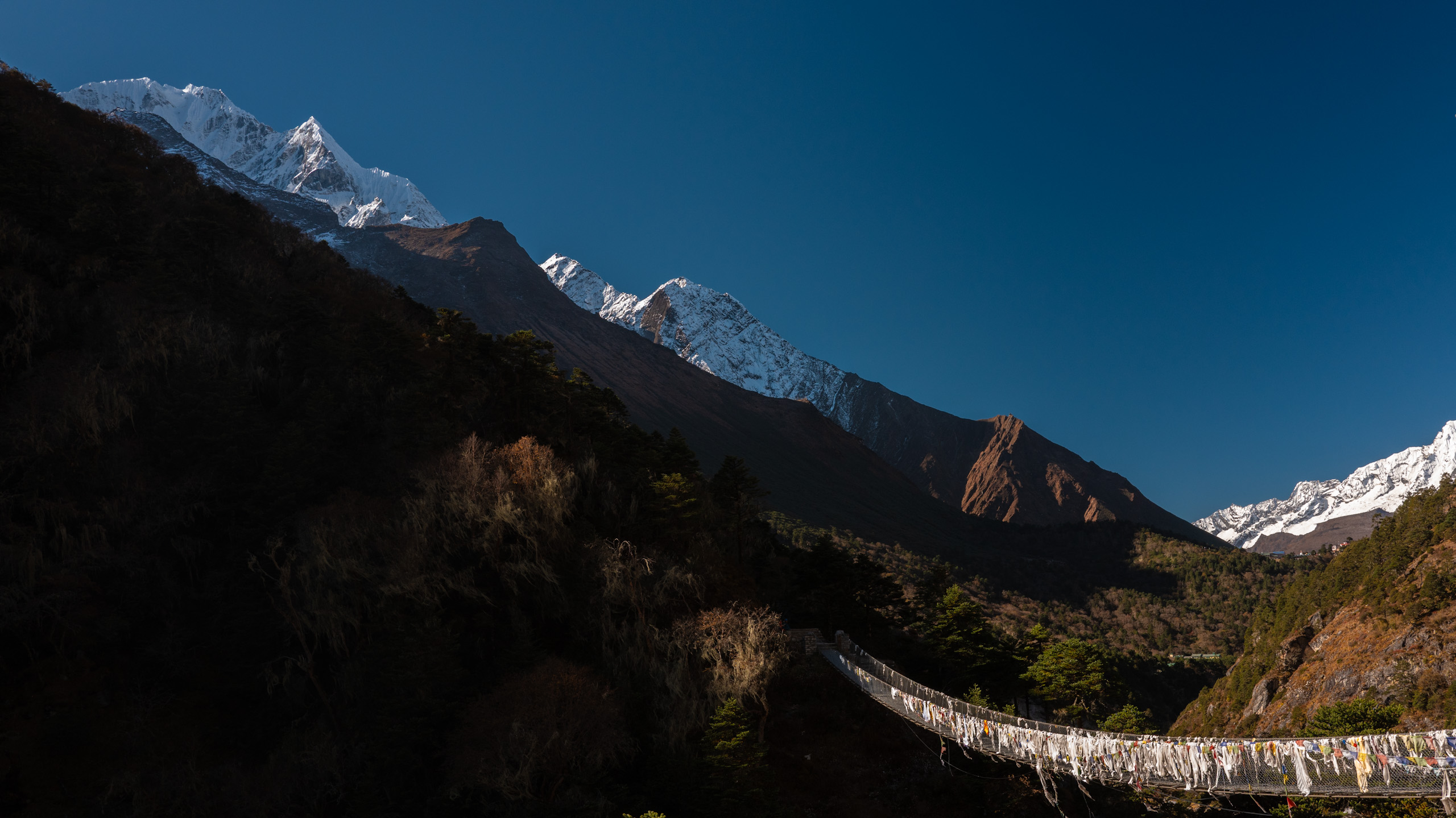
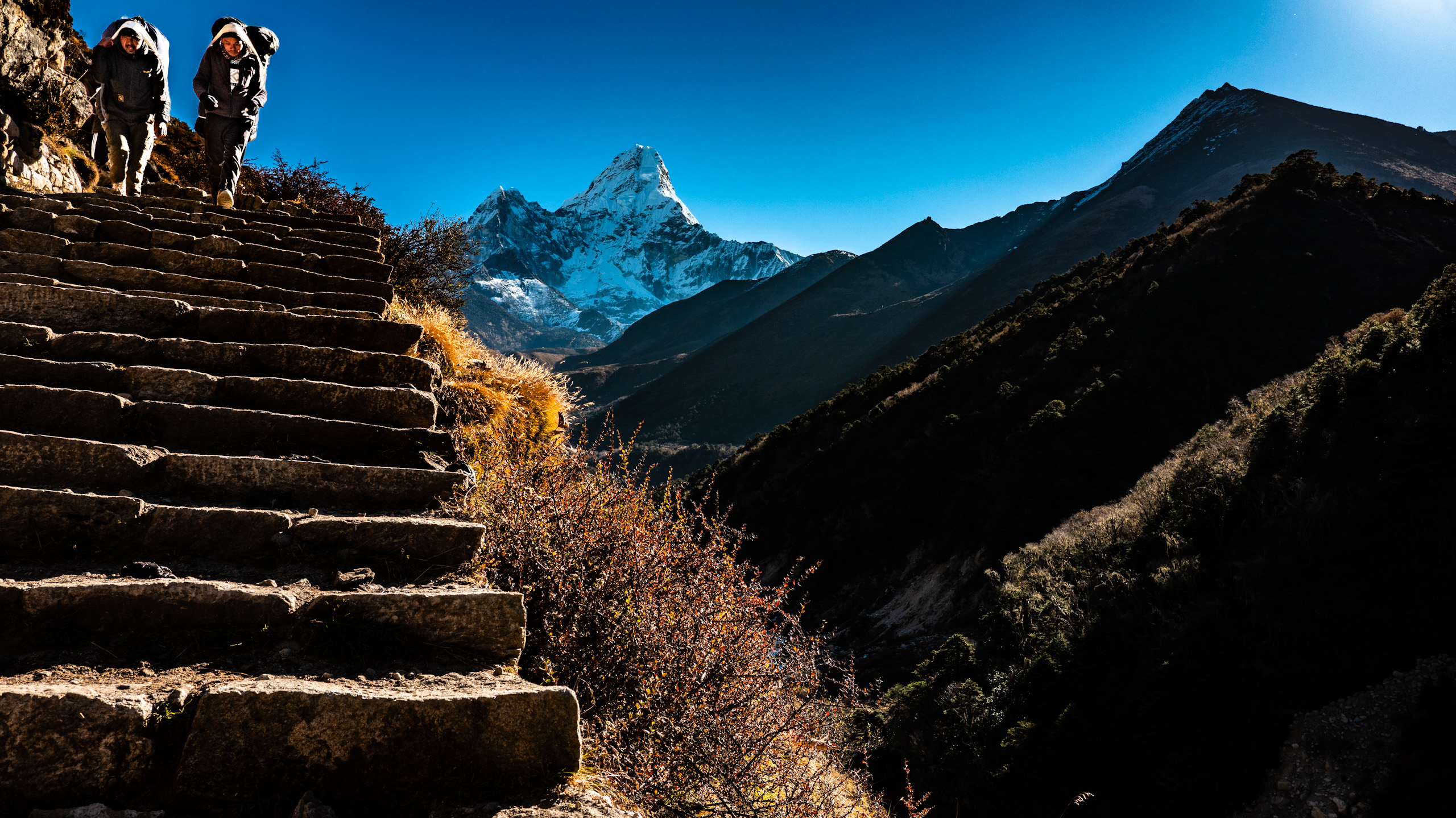
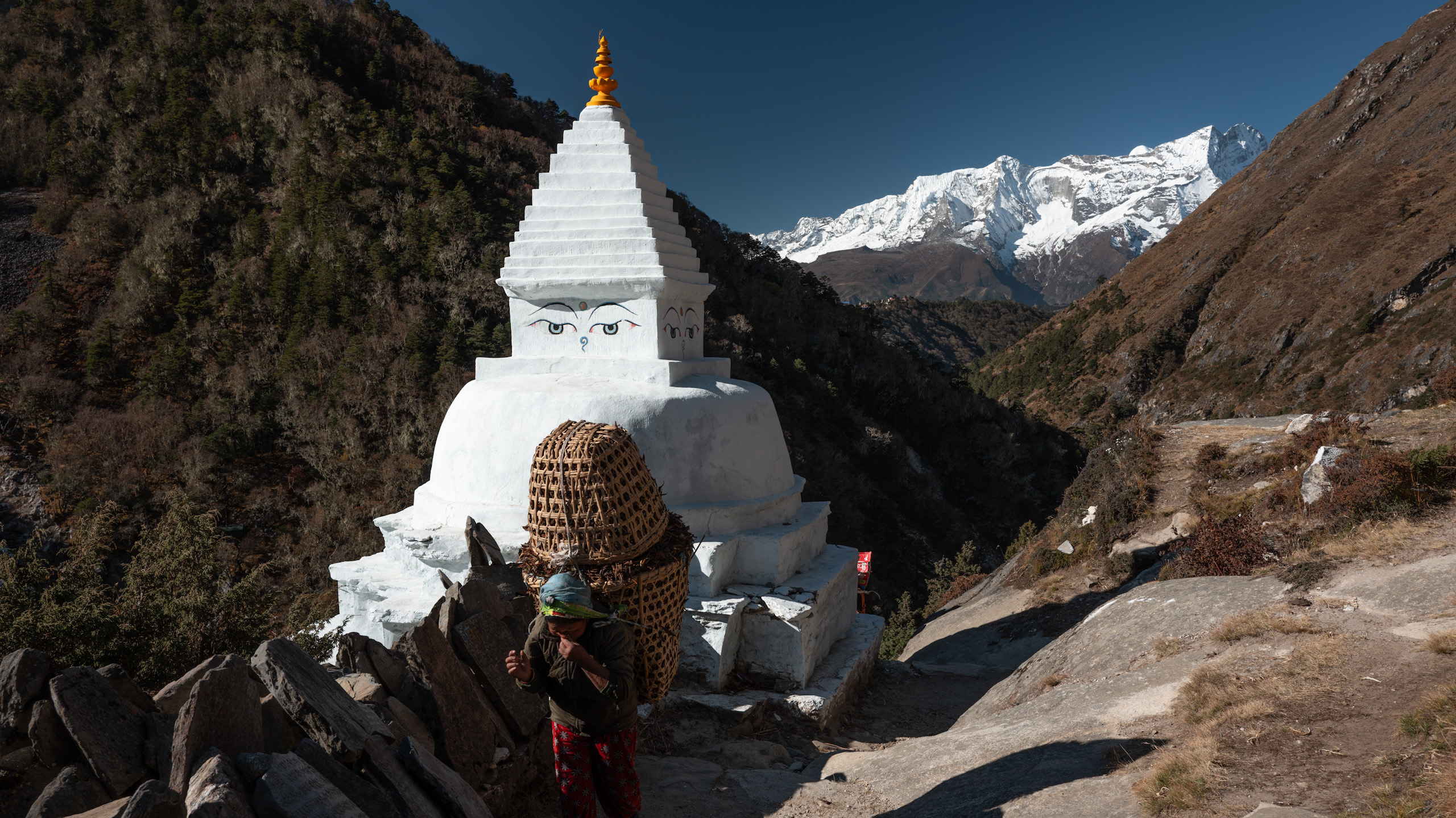
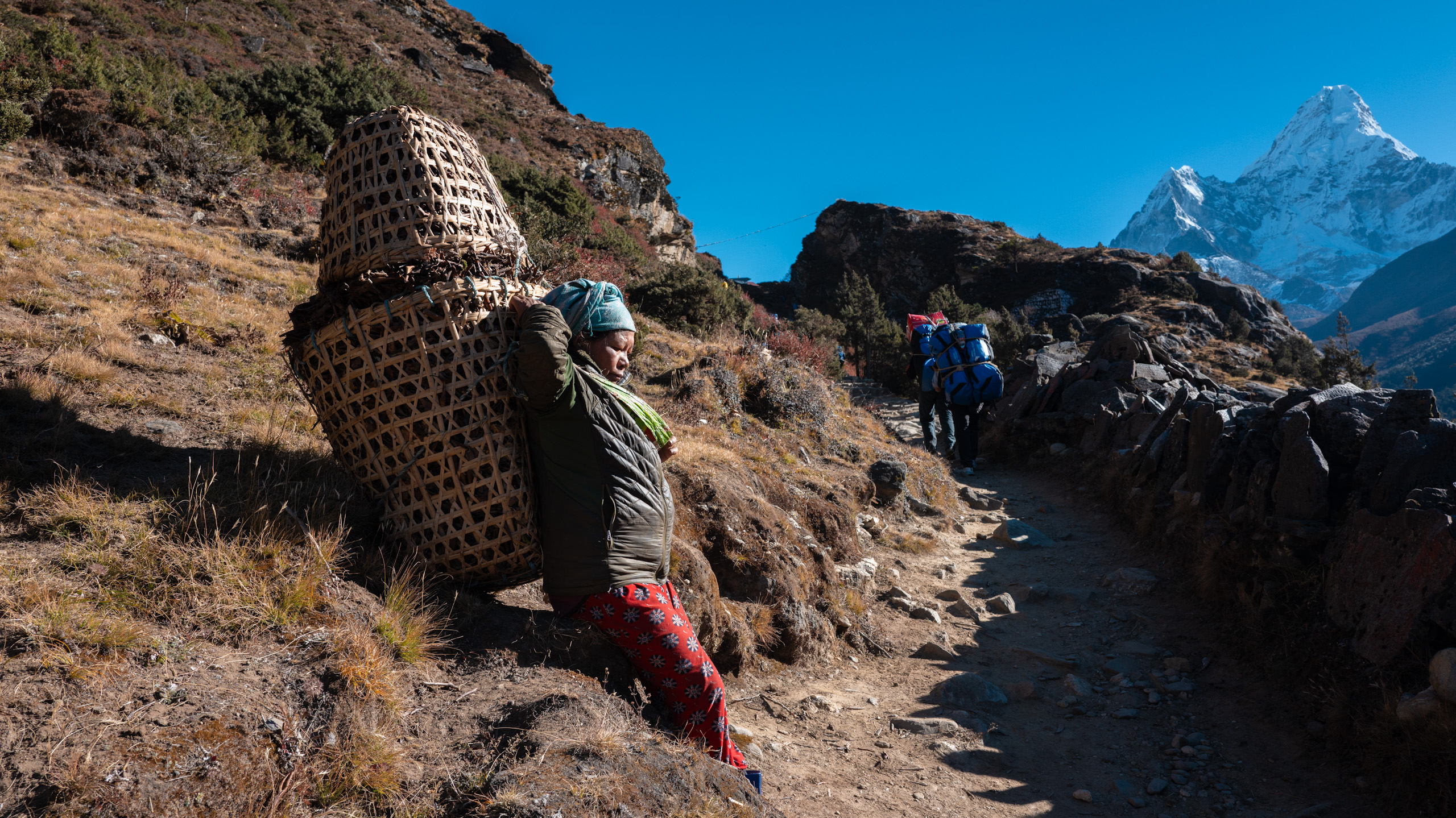
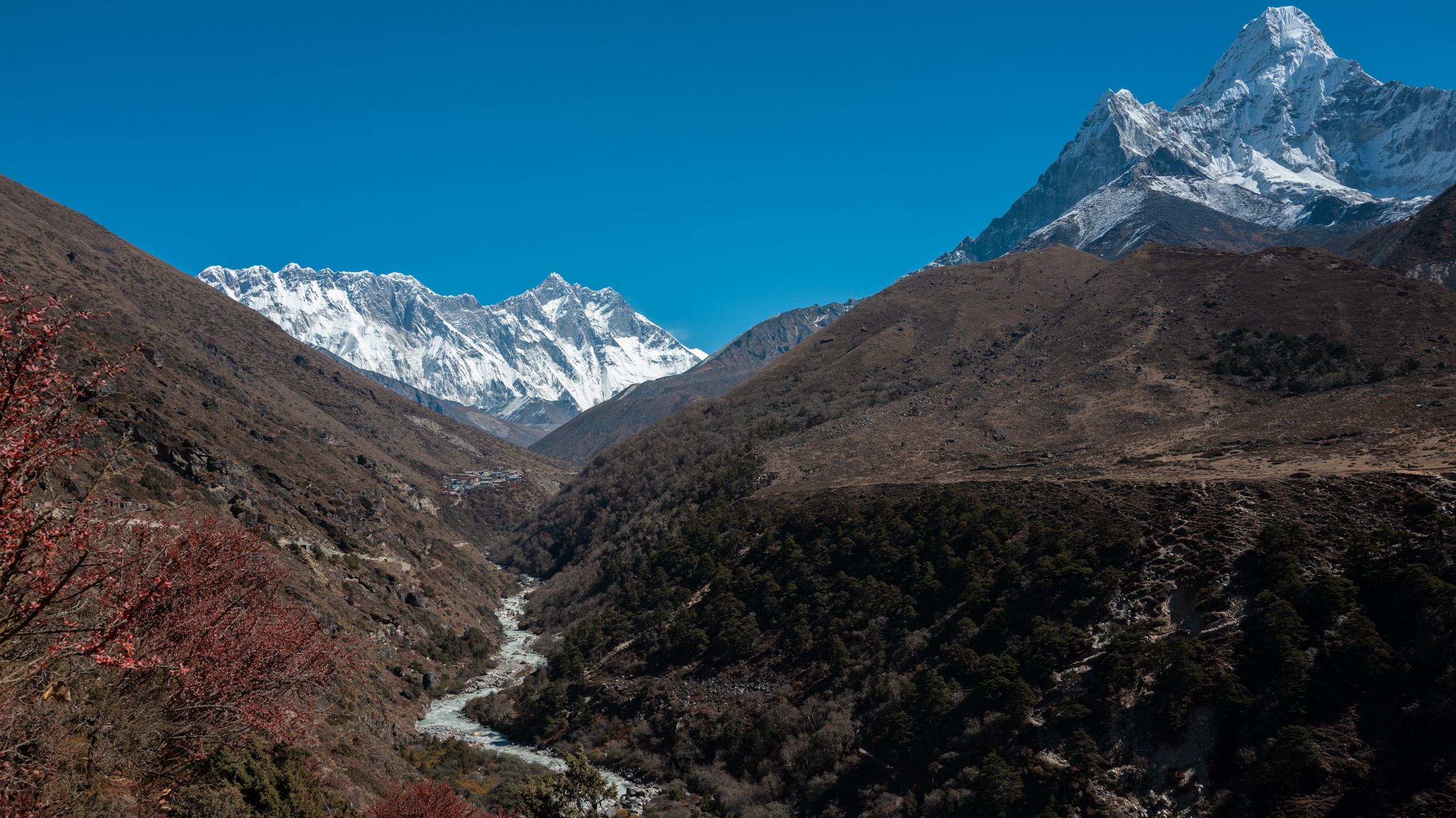
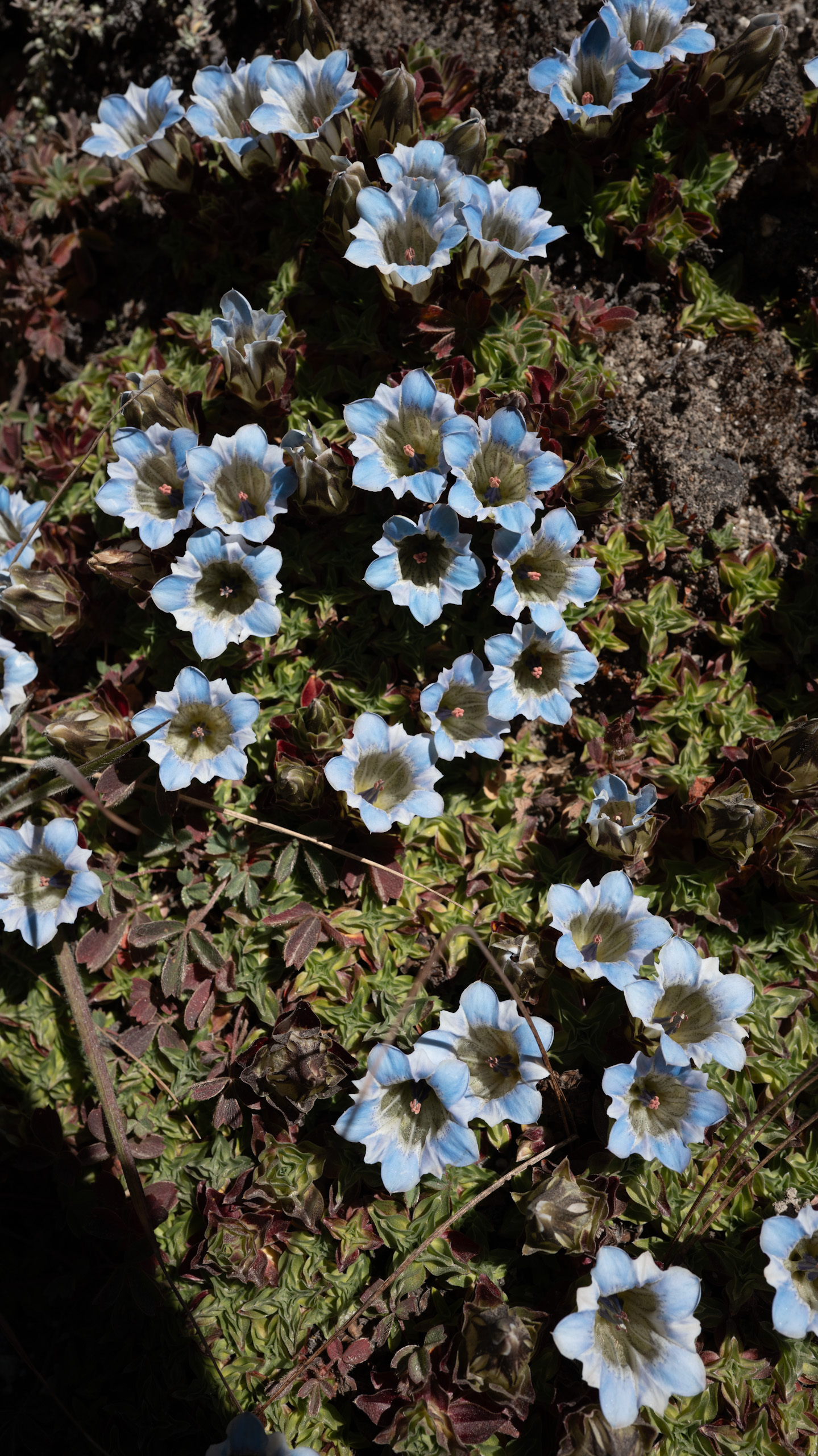
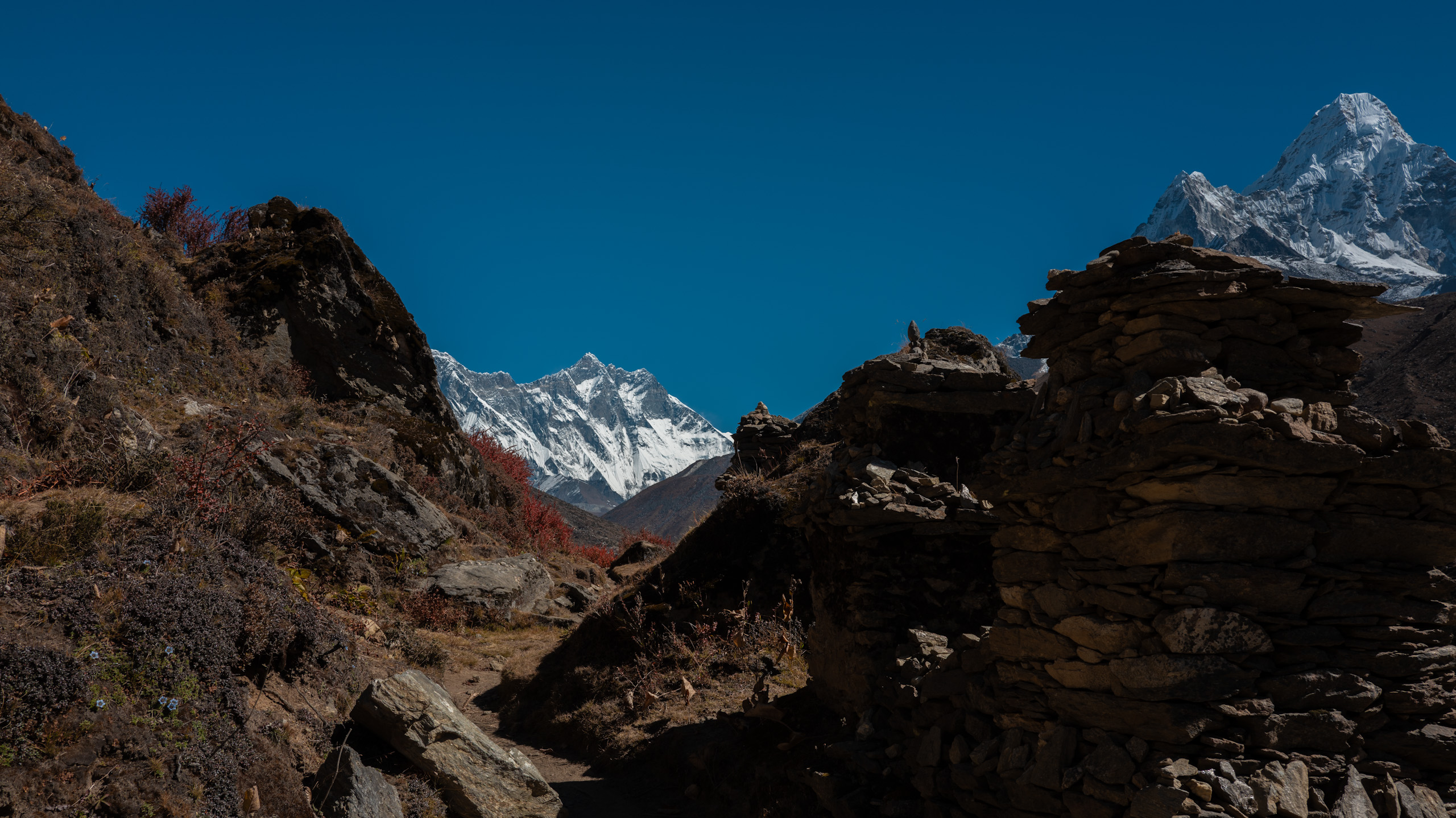
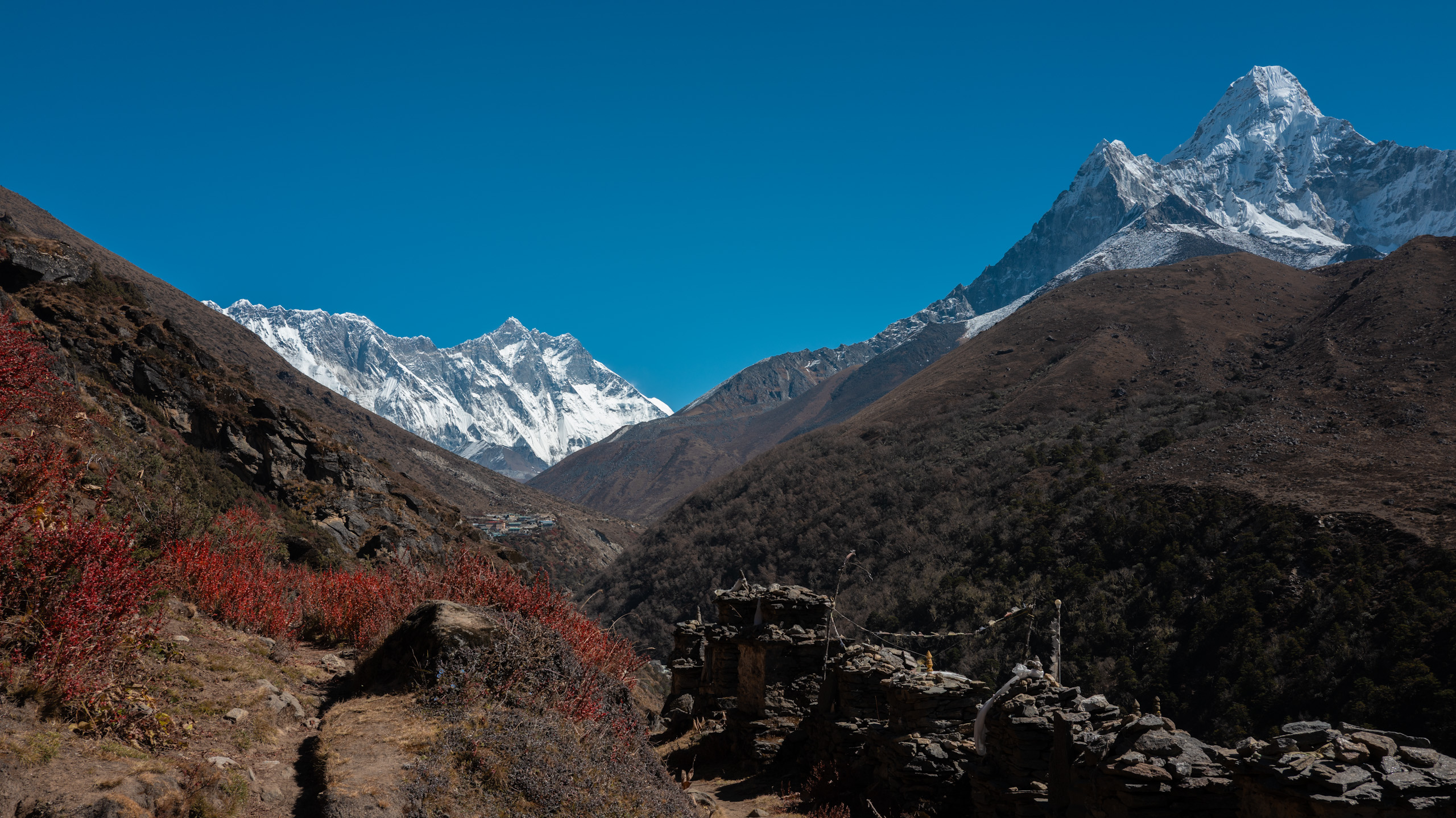
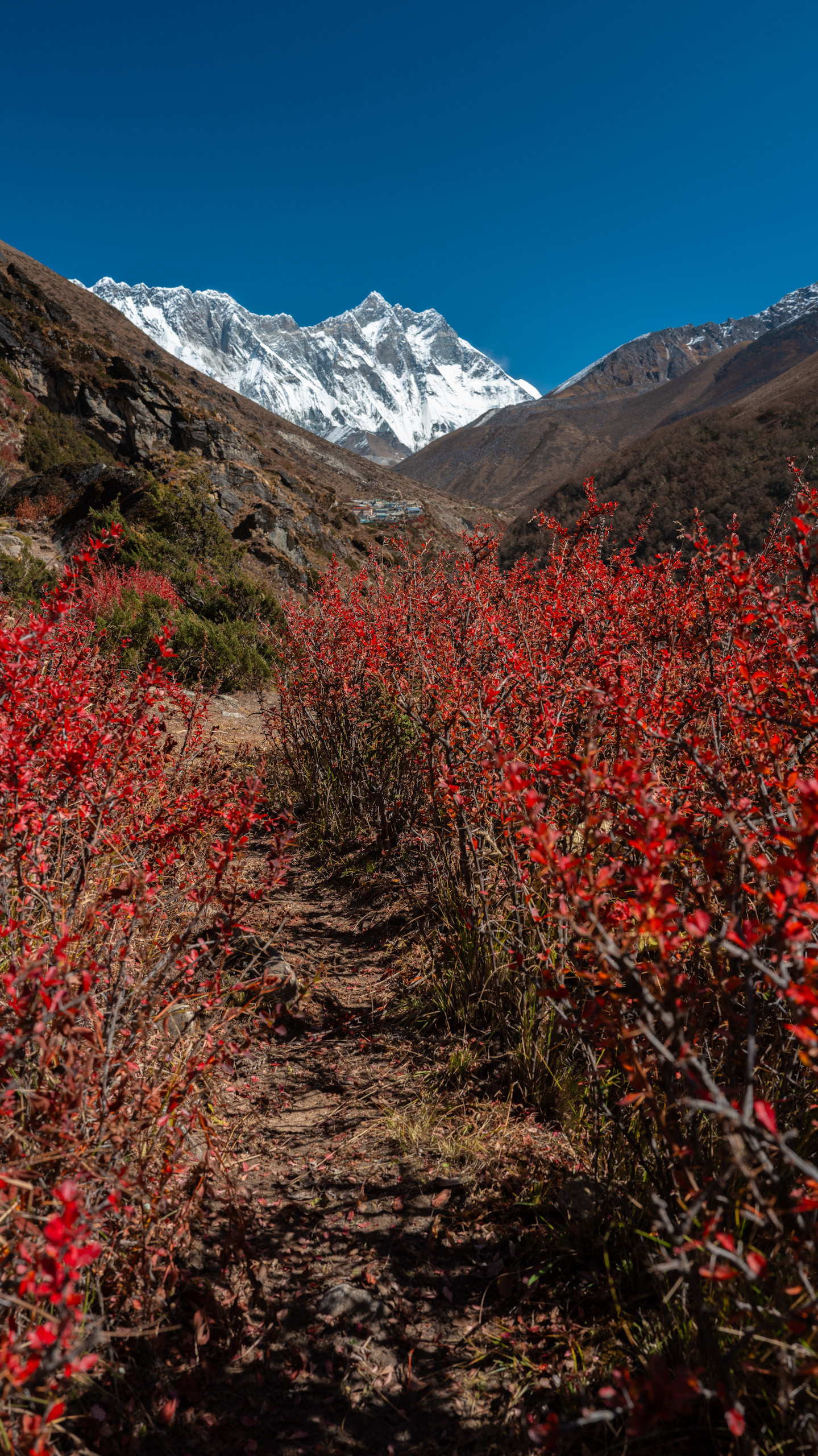
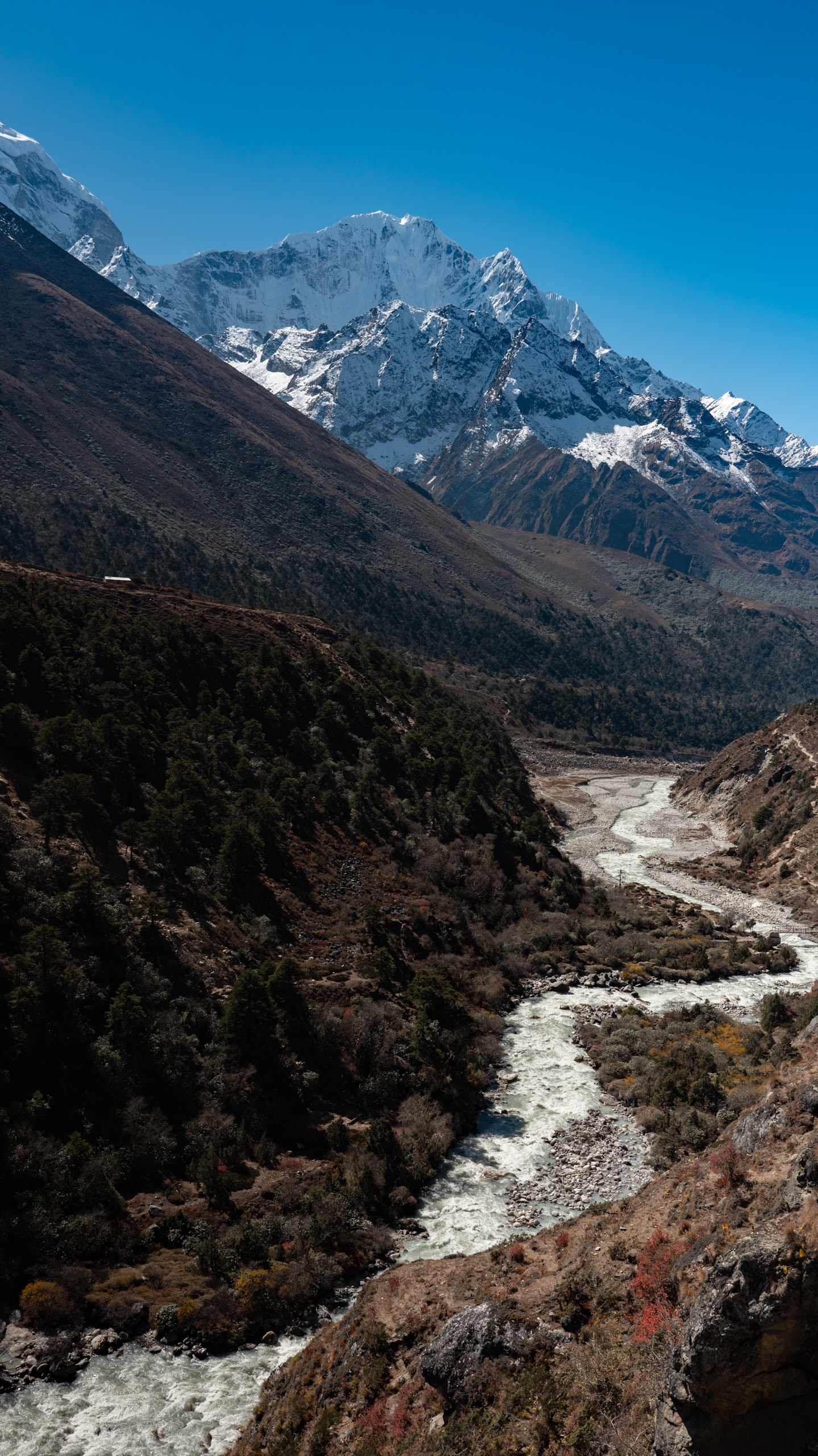
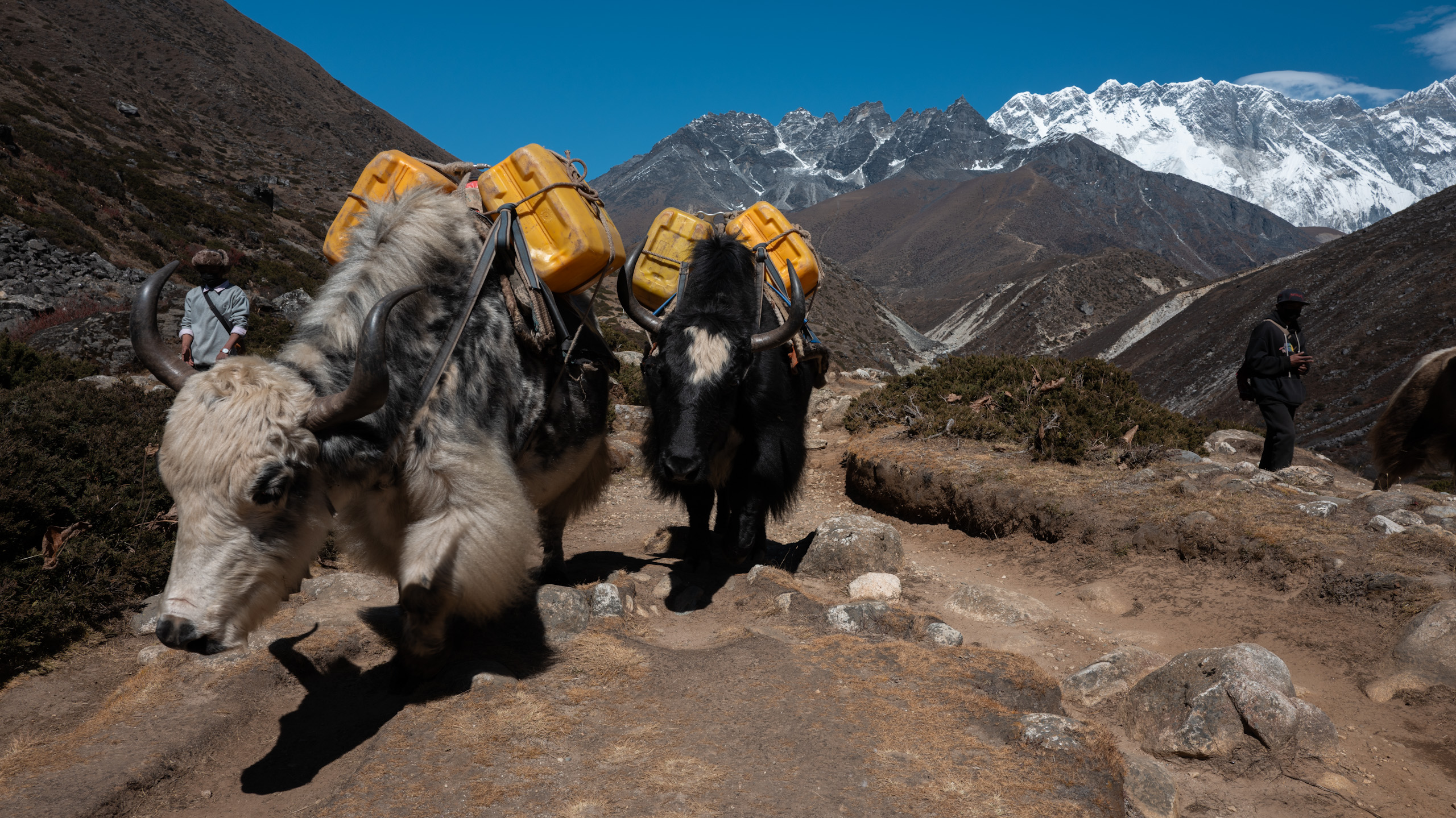
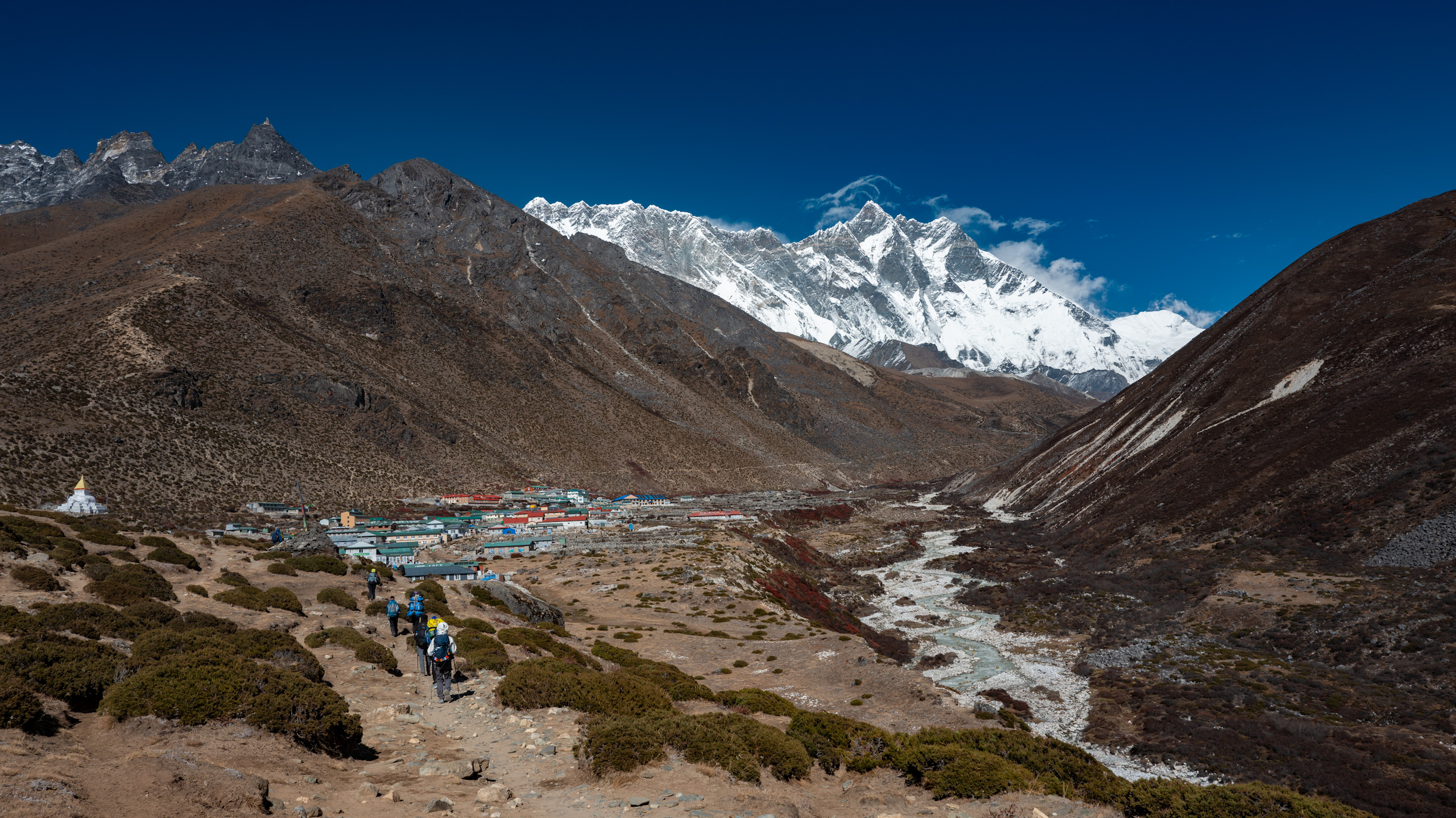
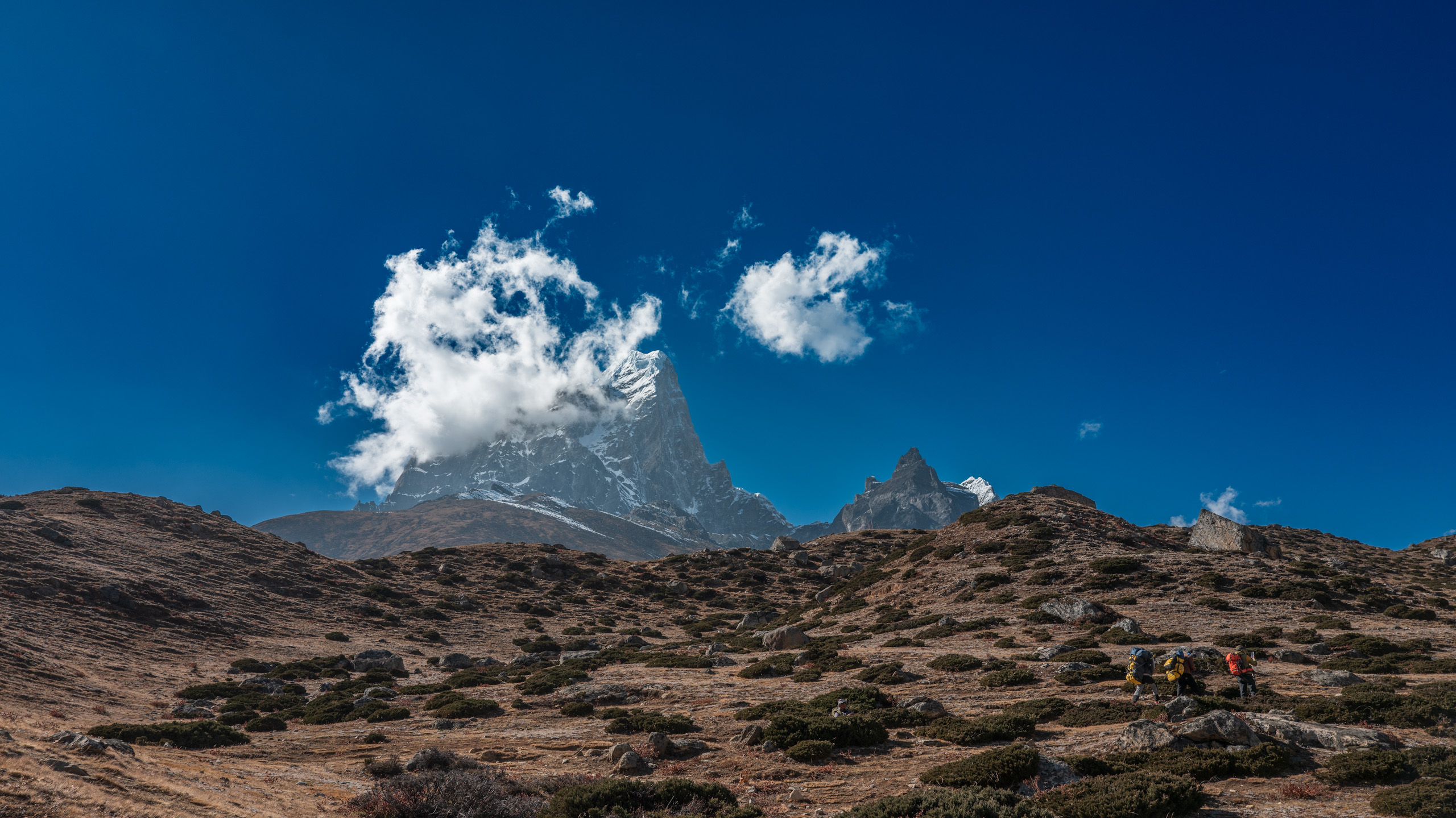
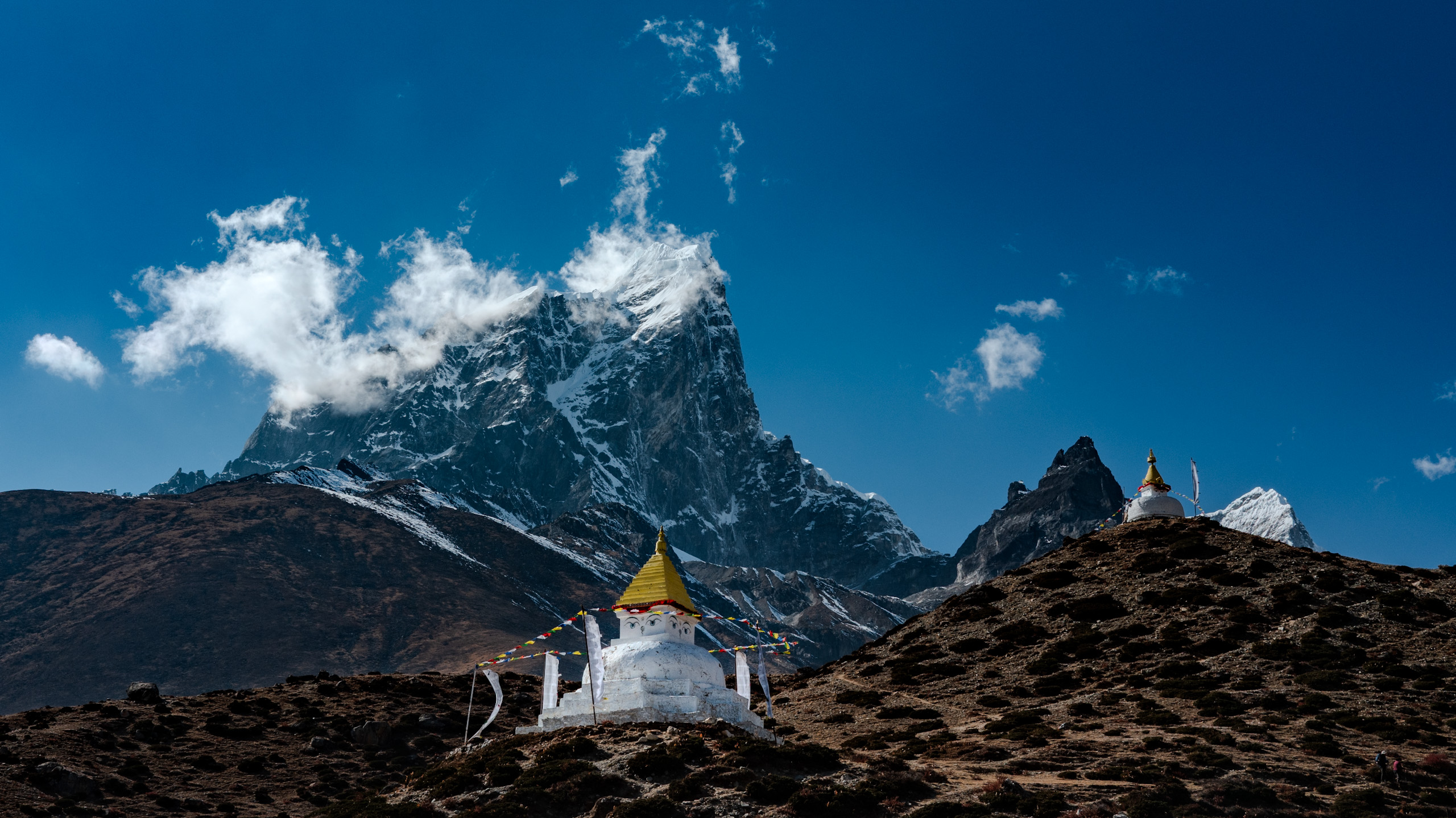
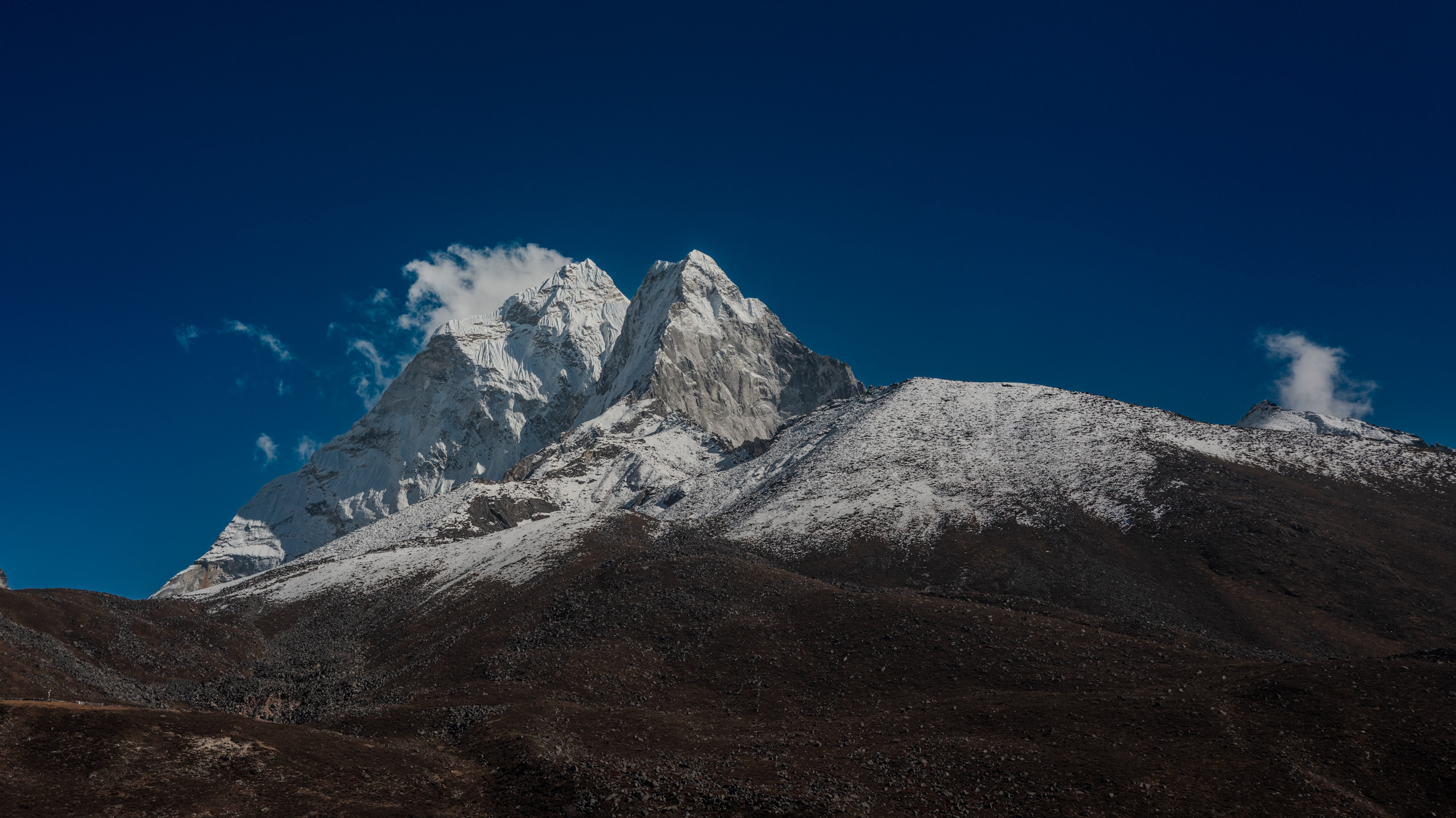
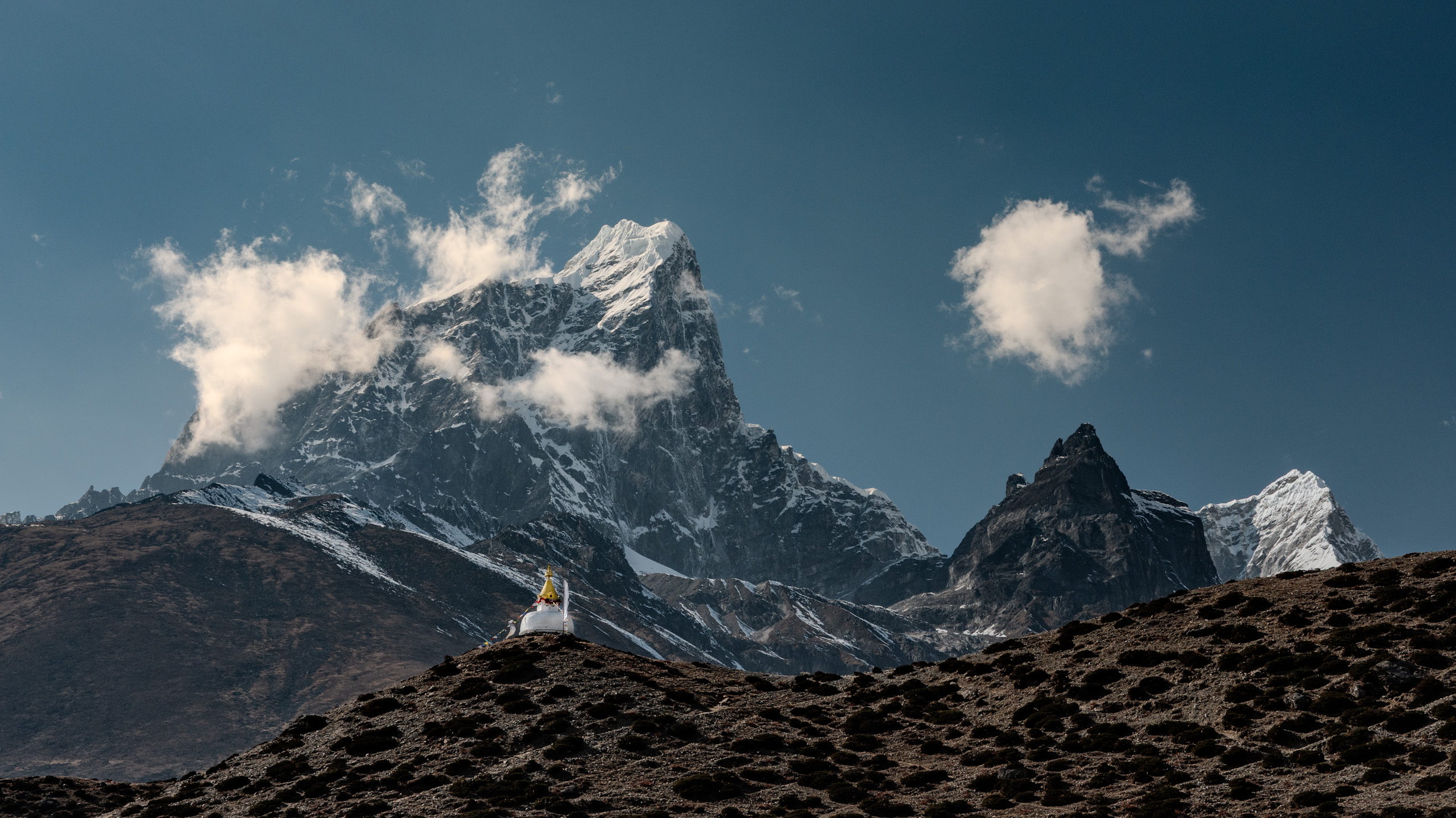
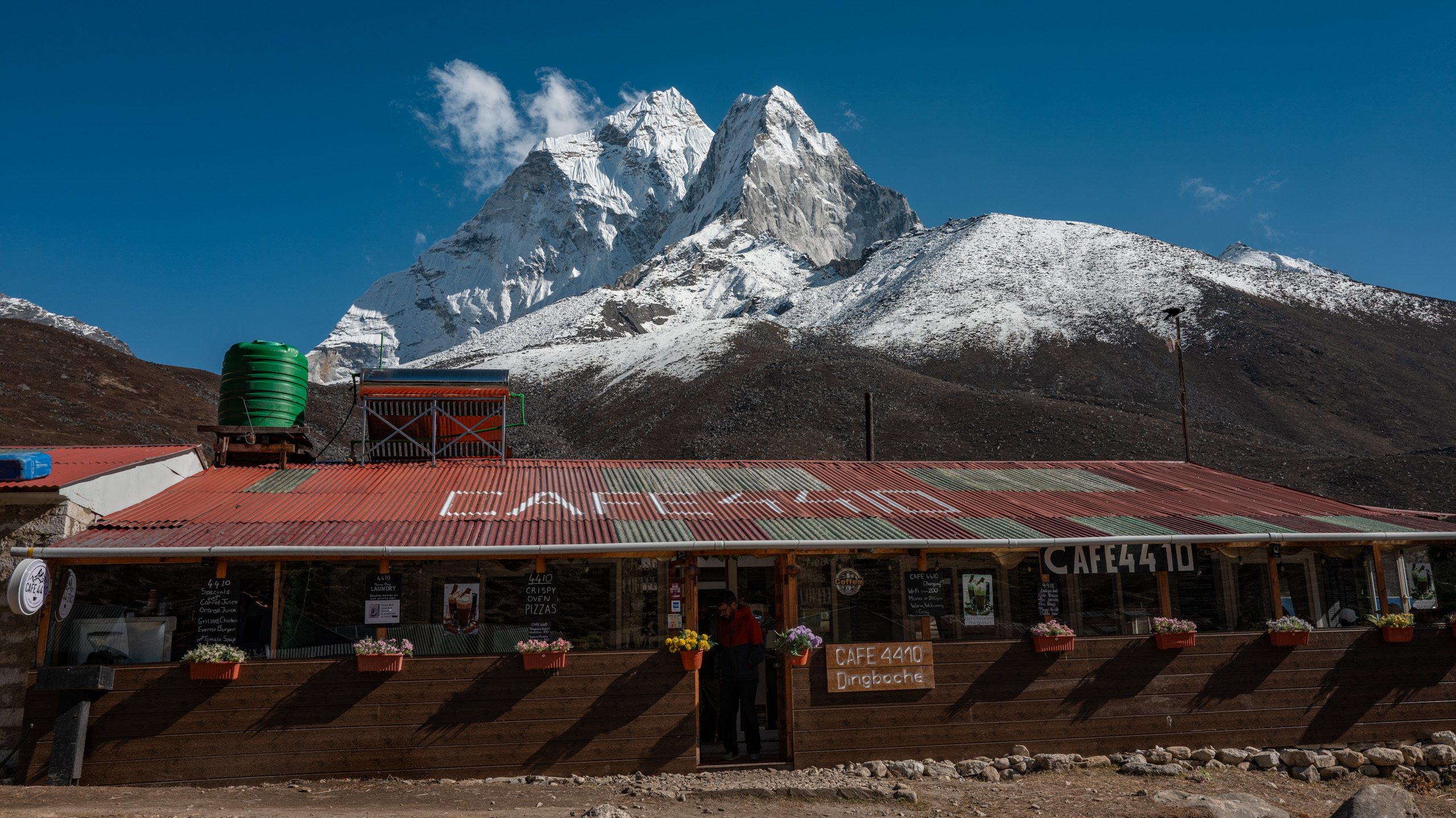
Today we climbed from Deboche to Dingboche, 4,410 meters above the sea. This is the height where many trekkers first feel the mountain’s real strength. The altitude doesn’t announce itself; it creeps in, quiet at first, then impossible to ignore. We walked about seven hours. We’ll sleep here tonight and again tomorrow night, giving our bodies time to start adjusting to the high altitude.
Where the Shelter Ends
This was our fifth day on the trail, and the first time the land opened up around us. Below, the valleys had held us close. Up here there was nothing between us and the wind, and it found us from behind, settling cold on the back of the head. That kind of cold brings on headaches, and at this altitude you can no longer tell an ordinary headache from the first whisper of altitude sickness.
Two Free Hands
Five days in, and I still haven’t unfolded my trekking poles. I almost always have my camera in hand, and the landscape keeps asking for both of my hands. Poles also feel like extra work to me. I’m saving them for the stretches that are truly hard.
The Mountain’s First Exam
One of our teammates is already feeling it: headache, nausea, and lips turning a purplish blue. He was thinking about calling a helicopter, seeing Base Camp from the air, and heading back down. We all encouraged him to keep going. He could still talk calmly and easily, and that is a good sign. But after dinner he made his decision: a helicopter first thing tomorrow morning, straight to Base Camp, then down the mountain. He felt today had already taken him past his limit. The mountain tests each of us in its own way.
After we checked into the lodge, a headache found me too. I started the altitude medicine as a precaution.
Layers Against the Thin Air
My clothing has worked well these past few days: lightweight KUHL hiking pants, an Arc’teryx mid-layer jacket, and a Smartwool T-shirt as a base layer. It’s been enough to stay warm without overheating, which keeps sweat to a minimum. At this altitude, staying dry matters as much as staying warm.
Smoke, Eyes, and the Six Realms
This morning we passed a house full of cooking smoke. It made the morning feel lived-in and human. There is something comforting about smoke rising from a chimney at 4,000 meters.
Along the way I talked with our guide, Buddhi, about religion. He explained that Buddhism describes six realms of existence: the hell realm, the realm of hungry ghosts, the animal realm, the human realm, the realm of demigods, and the realm of gods. Each is its own kind of suffering, its own kind of consciousness, turning in the wheel of rebirth.
When Buddhists pray, he said, the hands move from the head to the mouth to the heart. The head holds positive thoughts. The mouth speaks words that encourage rather than wound. The heart stays kind and forgiving.
We passed several stupas painted with the eyes of the Buddha. Those eyes stand for justice, watching over every being with compassion. Below them is a swirling symbol that means unity, the oneness of all things.
I asked him, “Is there punishment in Buddhism?”
“No,” he said. “If someone scolds me, I choose whether to react, whether to be upset. Why punish yourself because someone else is unhappy?”
It’s a way of protecting yourself, and a philosophy that feels especially useful when the mountain is testing both your patience and your body.
Guarding the Back of the Head
Today asked for constant attention because of the wind. If your head isn’t well covered, a headache comes easily, and so does a cold with a running nose. That’s unpleasant anywhere. Up here it can be dangerous.
Aside from a mild headache, nothing worries me. My thighs felt a little tired today for the first time, but overall I’m still in good shape.
The Restless First Hours of Night
Last night, though, I couldn’t fall asleep for the first couple of hours. I kept getting up: once to answer a business message, once to adjust the bed warmer, and once more because I’d forgotten my pills. I take a sleep supplement, something for muscle recovery, and something to support my heart. I feel they give me more energy and really help me recover.
A Chick Named Everest
Every morning I try to video call Benny. He always has questions about the trip. One day he said, “Daddy, don’t climb anymore. Come back, okay?” He has just hatched three chicks at home, and he named one of the yellow ones Everest. He thinks it must be the strongest and bravest of them all.
The Last Easy Stretch
Five days in, three to go, and those three will be far harder. The first five days have been fairly comfortable. There are shops all along the trail, so anything you’re missing, water included, is easy to buy. Every lodge has power outlets, so staying in touch has been easy.
That is about to change.
Tonight it already has. For the past few nights the temperature dropped to about −3 °C. Tonight it plunged to −15 °C. I’m planning to get up early tomorrow morning to take photos. Whether I’ll actually manage it in this cold, I don’t know.
I eat a couple of snacks, including protein bars, before and after lunch, and I drink water about every hour to stay well hydrated.
Today taught me that the wind to guard against isn’t only the one in your face. It’s the one at your back.
Life works the same way. The hardships coming at us head-on, we can see; we lower our heads, zip up, and push through. What hurts us most often comes from behind: the carelessness of easy times, the health we take for granted, and the adversaries who never confront you openly, but wear you down slowly where you can’t see. It isn’t fierce like a headwind. It’s like cold air on the back of your head, day after day, until by the time you notice, the headache has already set in.
You can’t see the wind at your back, so you can’t wait until you feel cold to guard against it. Covering the back of your head isn’t about constant alarm. It’s about habit: holding your boundaries, keeping your foundation solid. But as my guide said, someone else’s ill will is no reason to punish myself. Keep the wind out, and keep it out of your heart, too.
Every morning my Garmin tells me my Body Battery is low and my training readiness is low. We press on anyway. The mountain doesn’t care about your readiness score. It only cares whether you respect it enough to listen to what it’s telling you.
Day 8 · October 22 — Nine Peaks Catch the First Light
Acclimatization day in Dingboche (~4,410 m) · sunrise climb at 5:36 AM · about −10 °C · afternoon hike +200 m
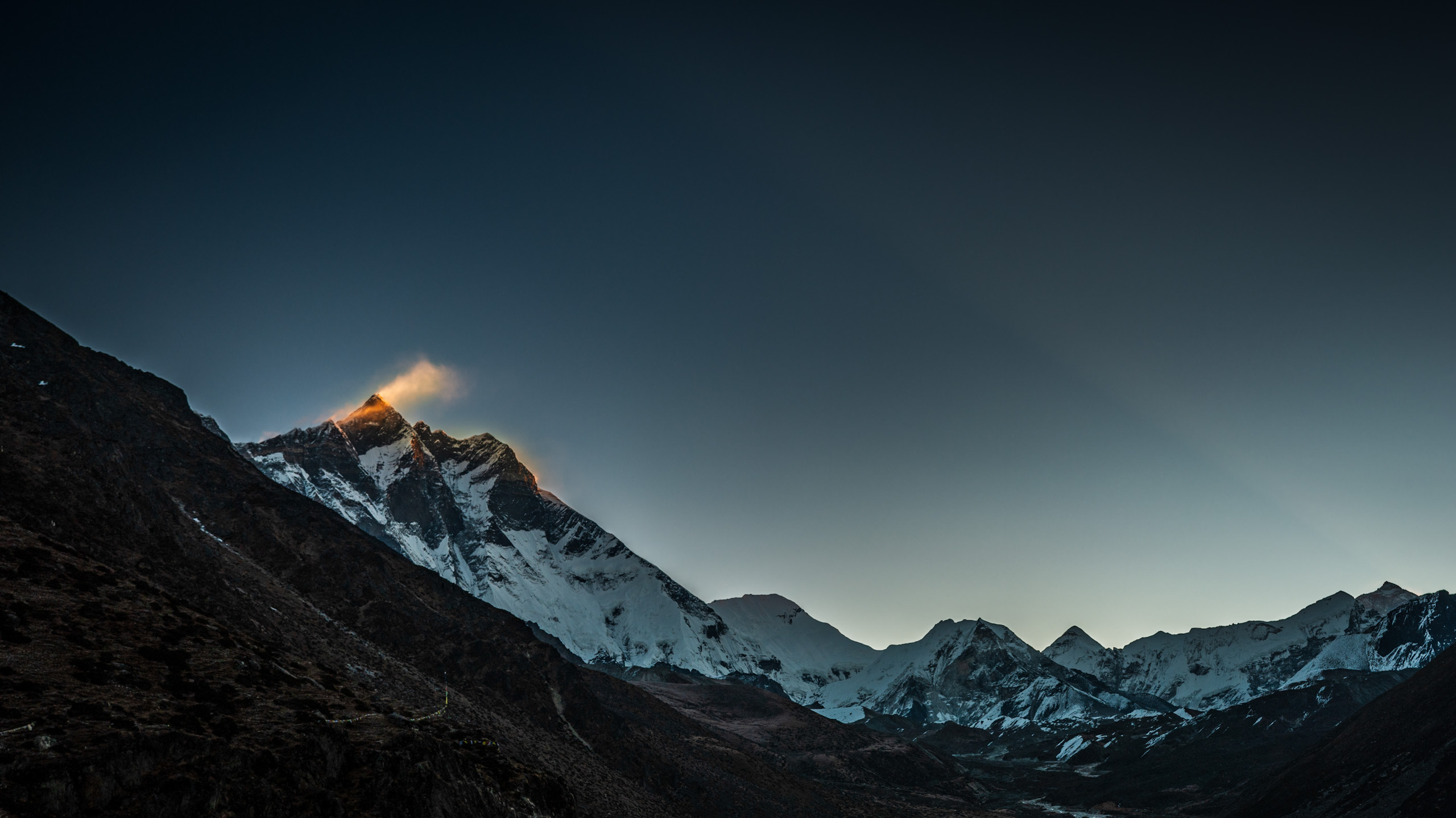
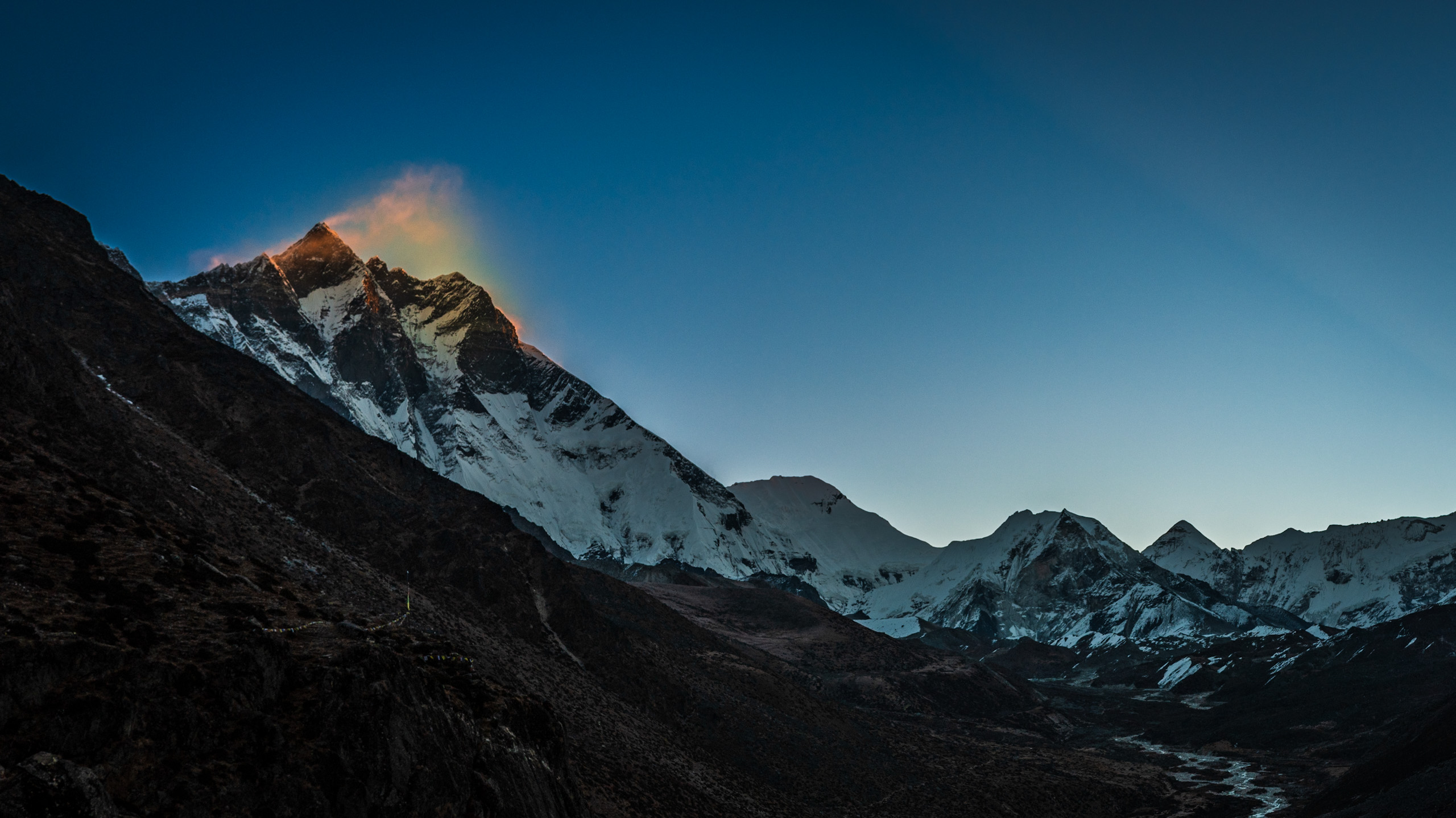
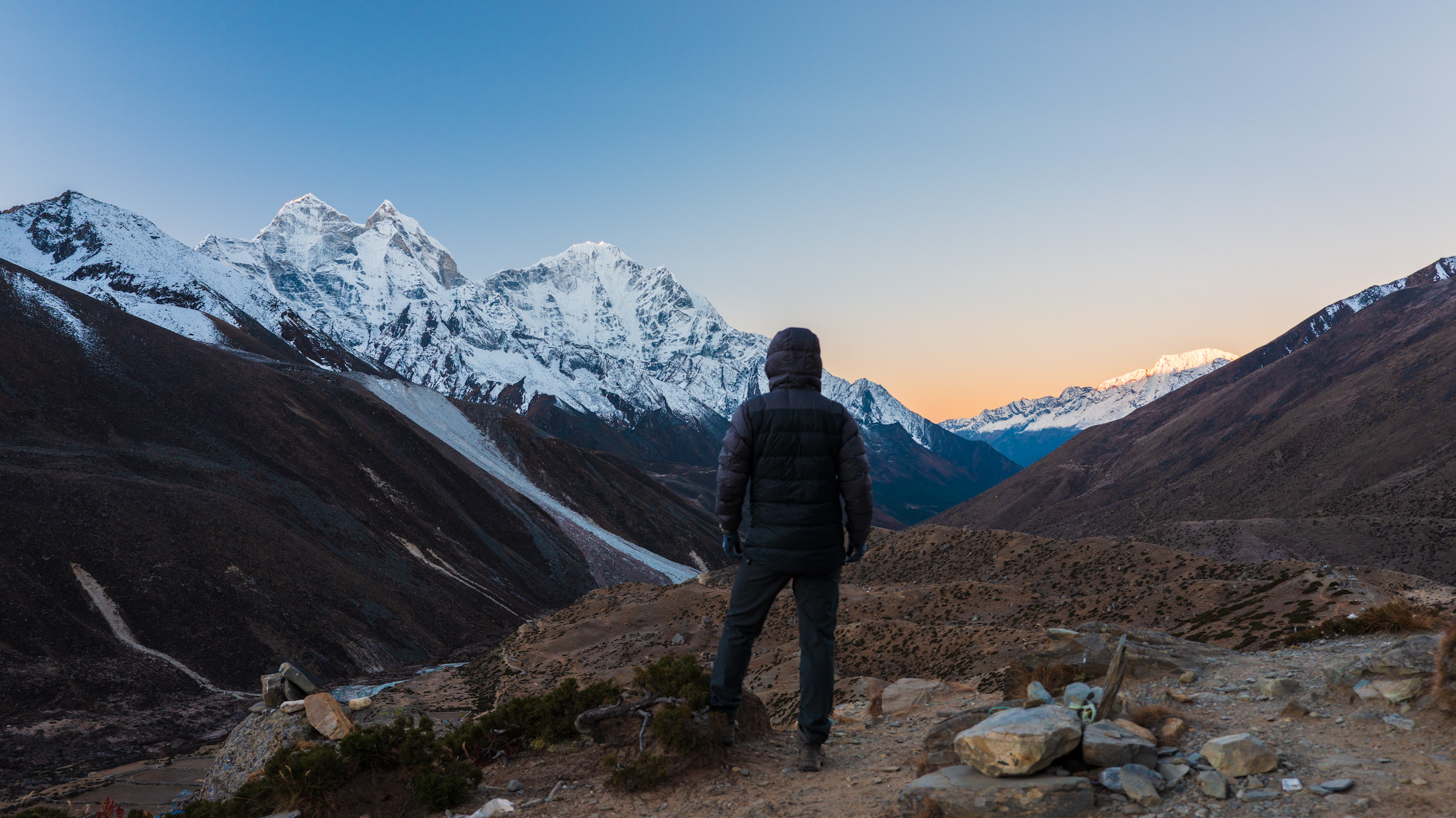
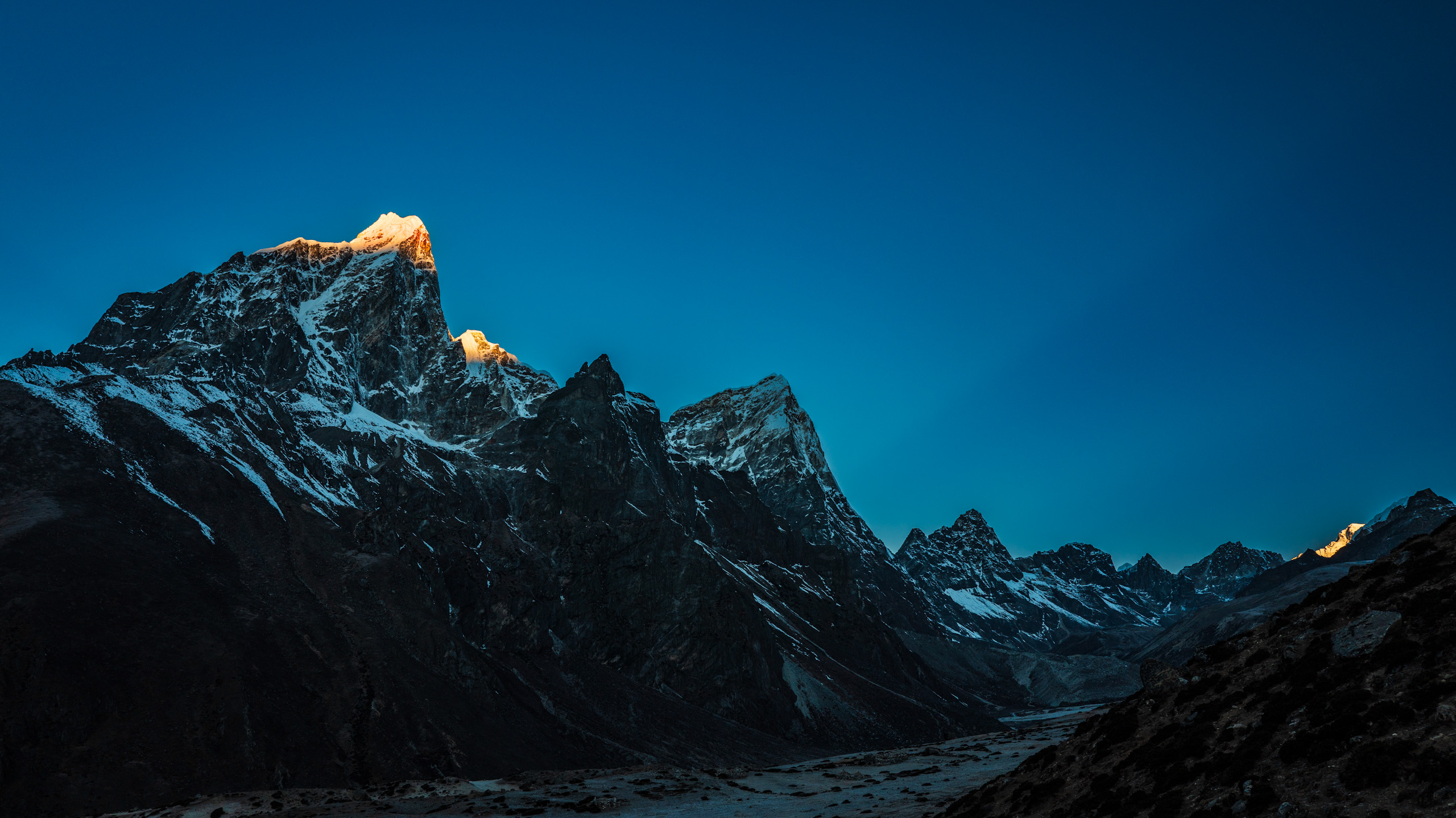
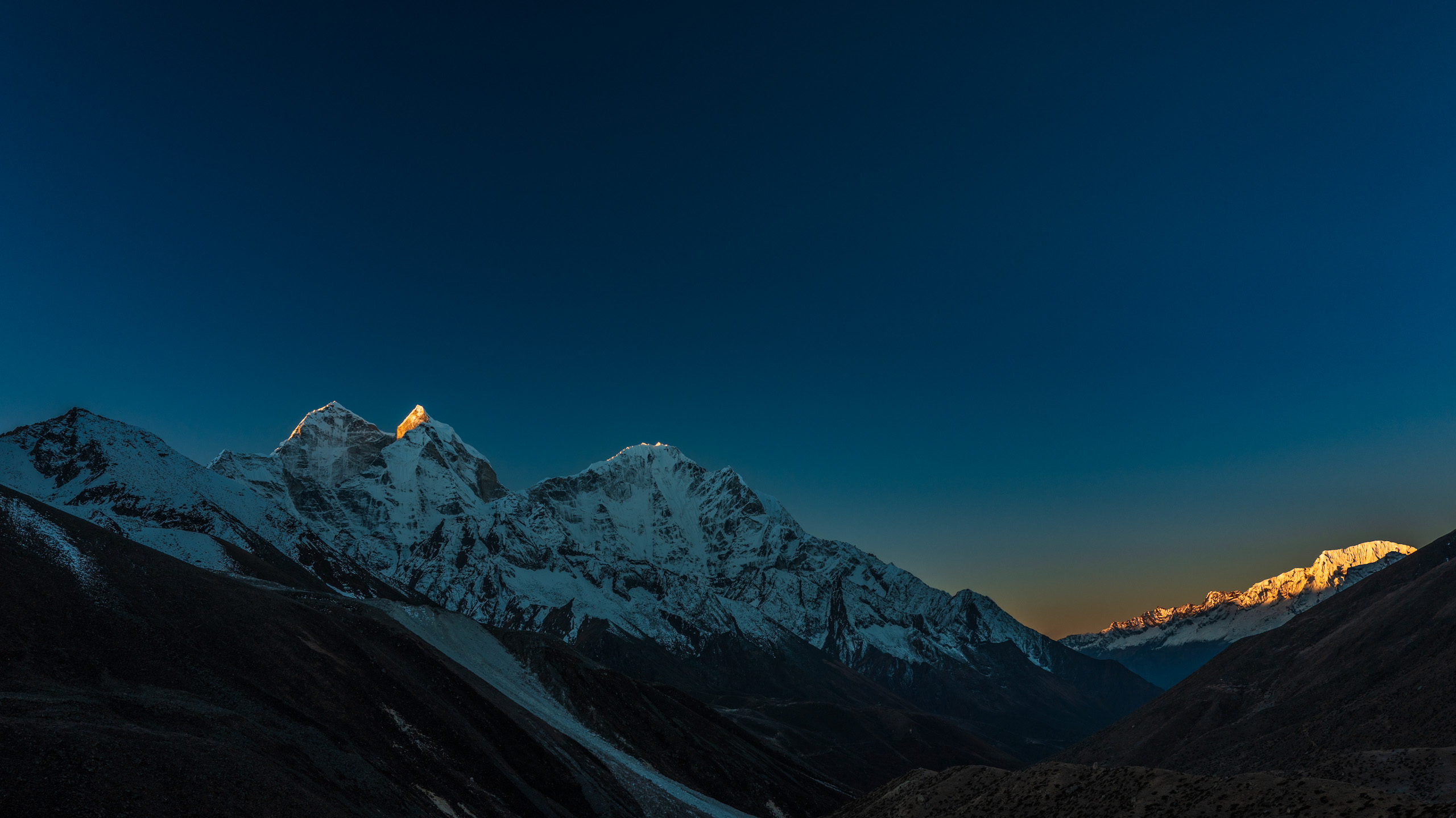
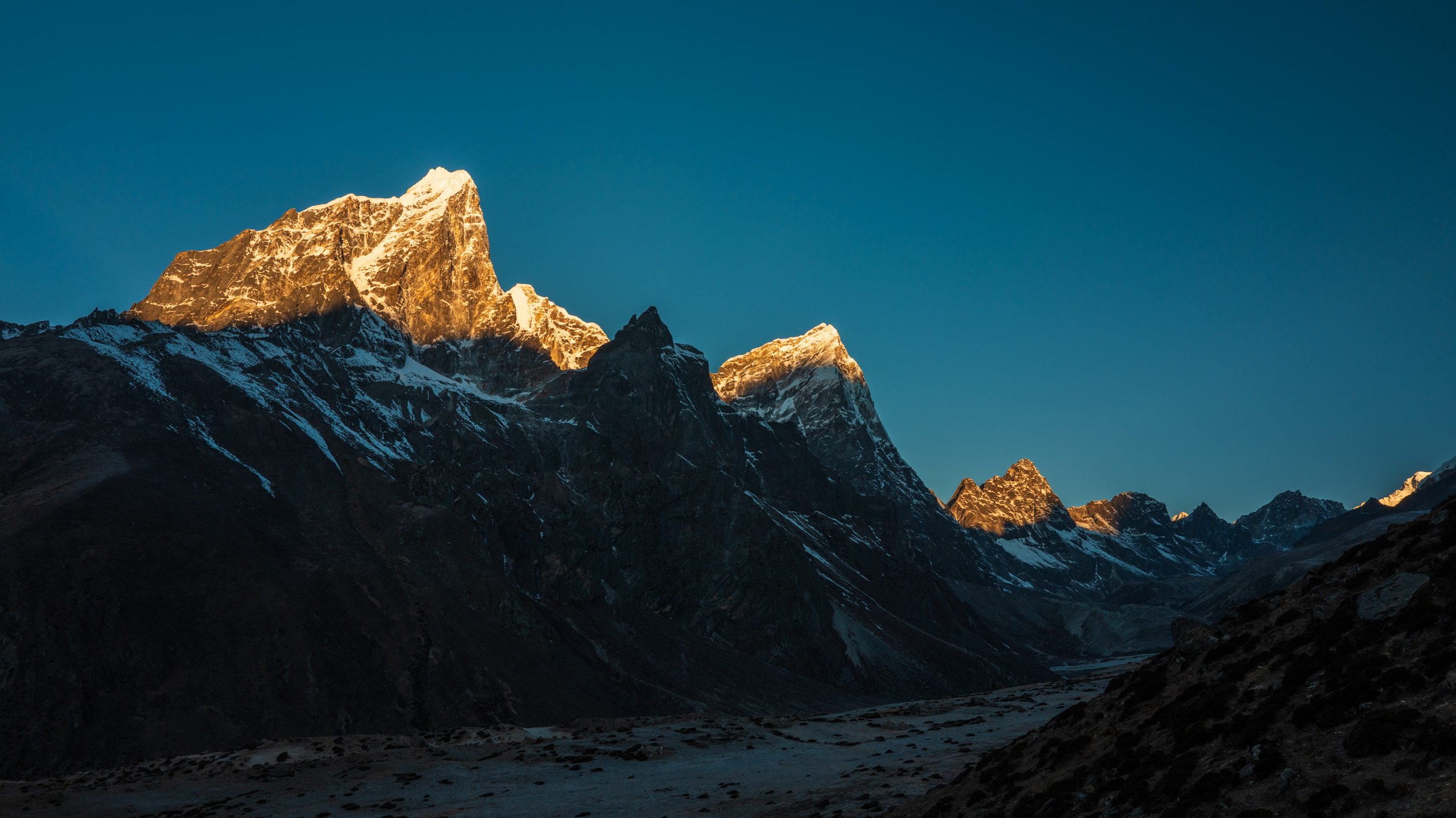
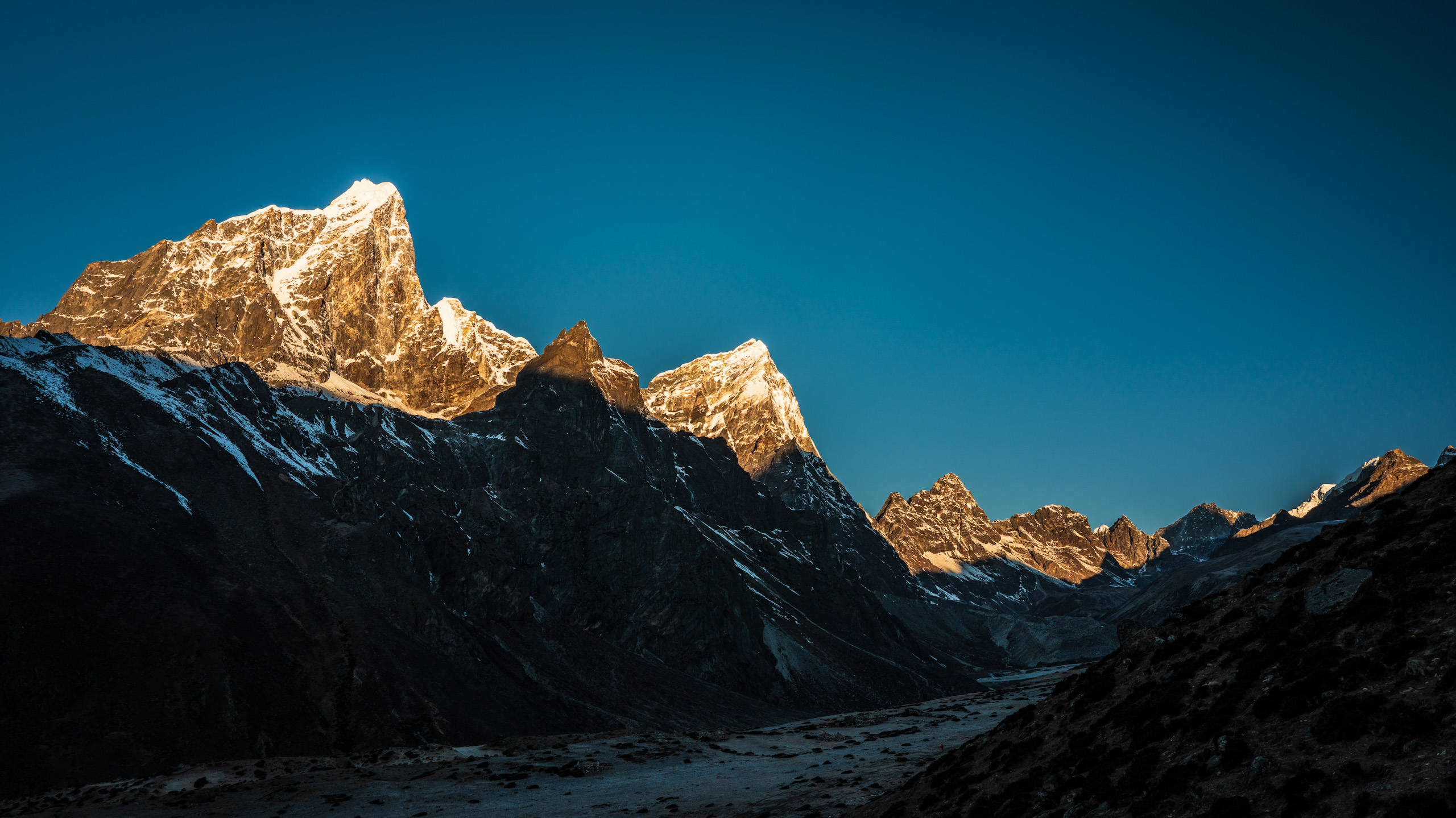
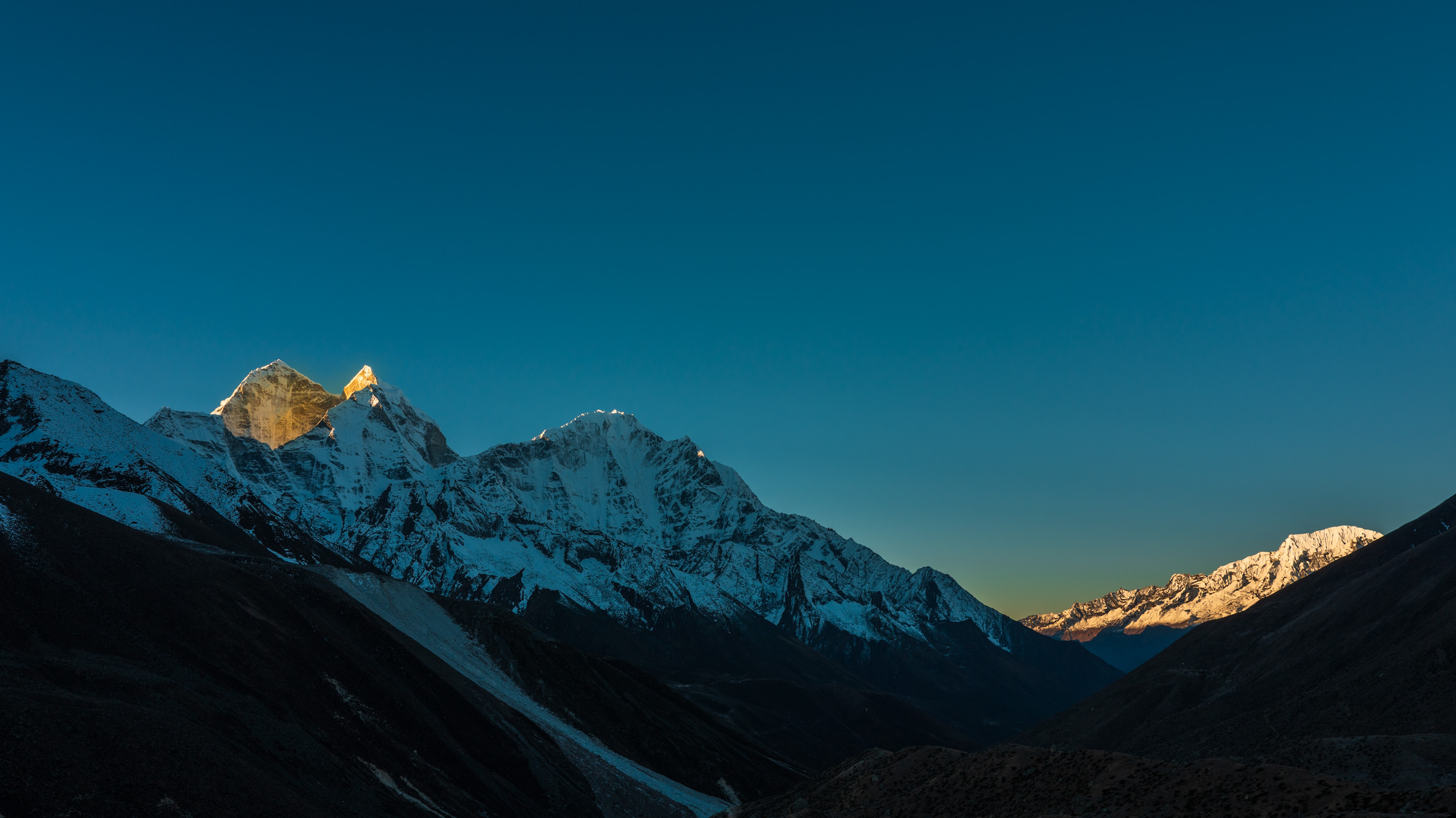
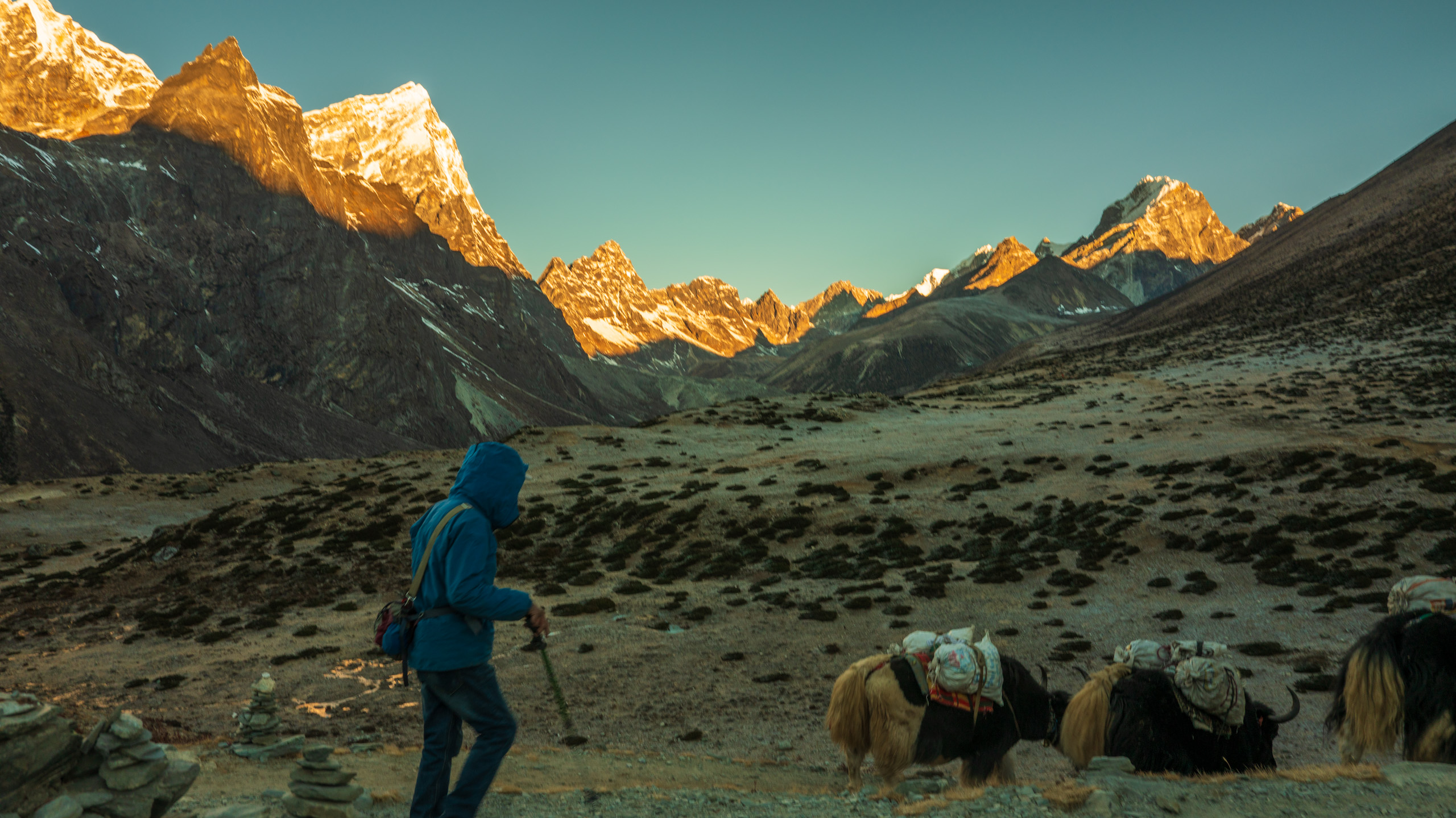
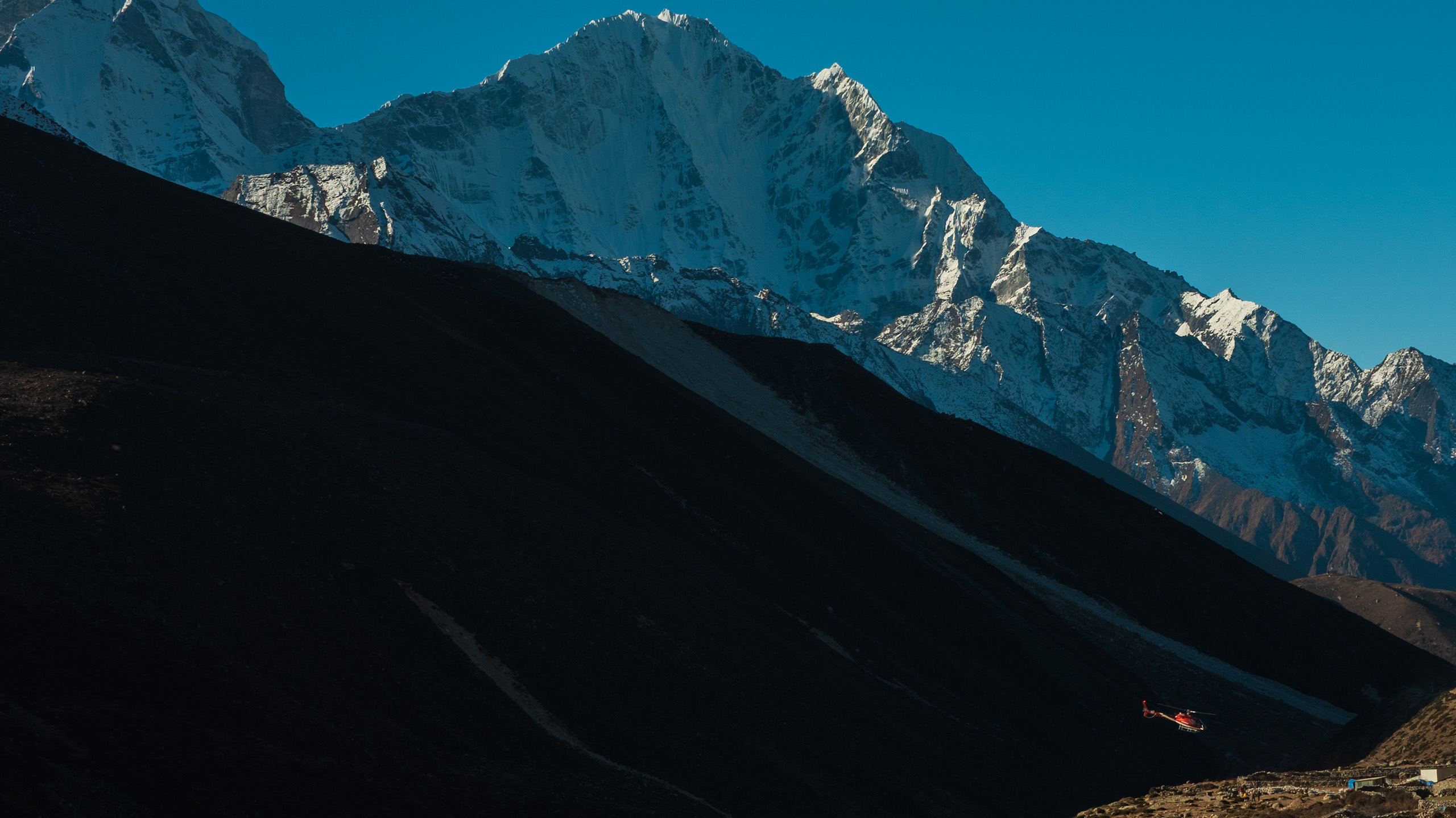
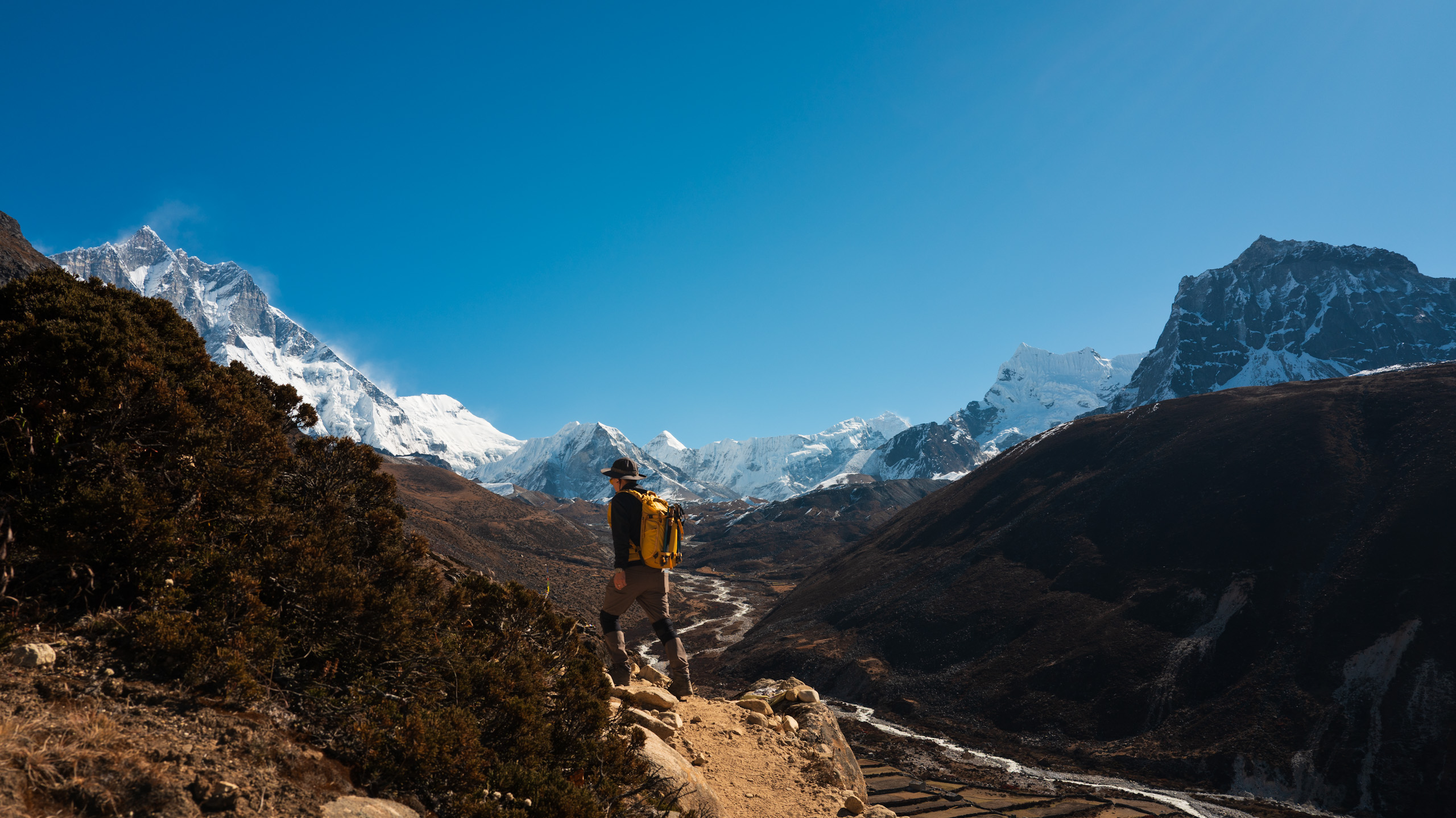
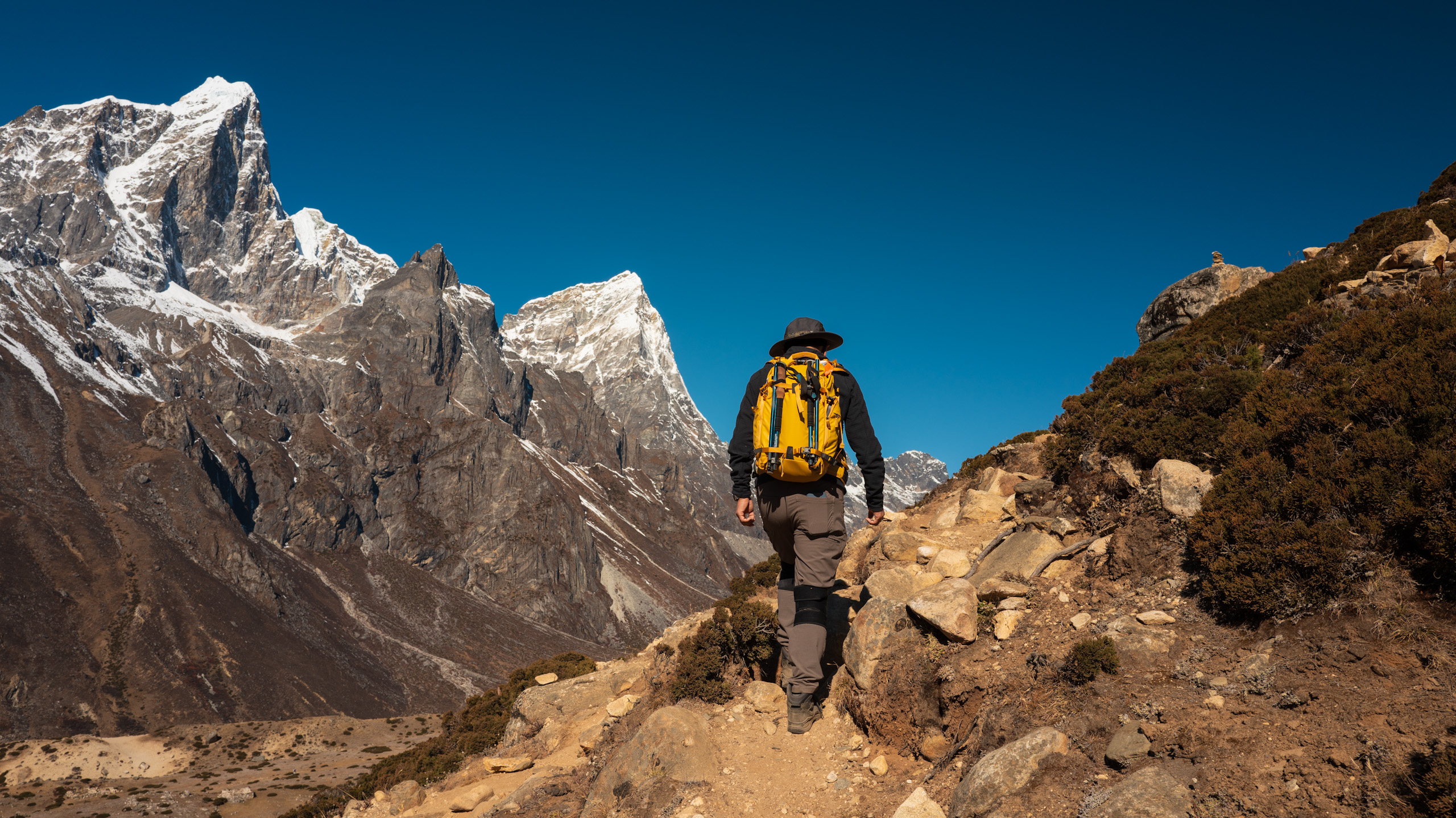
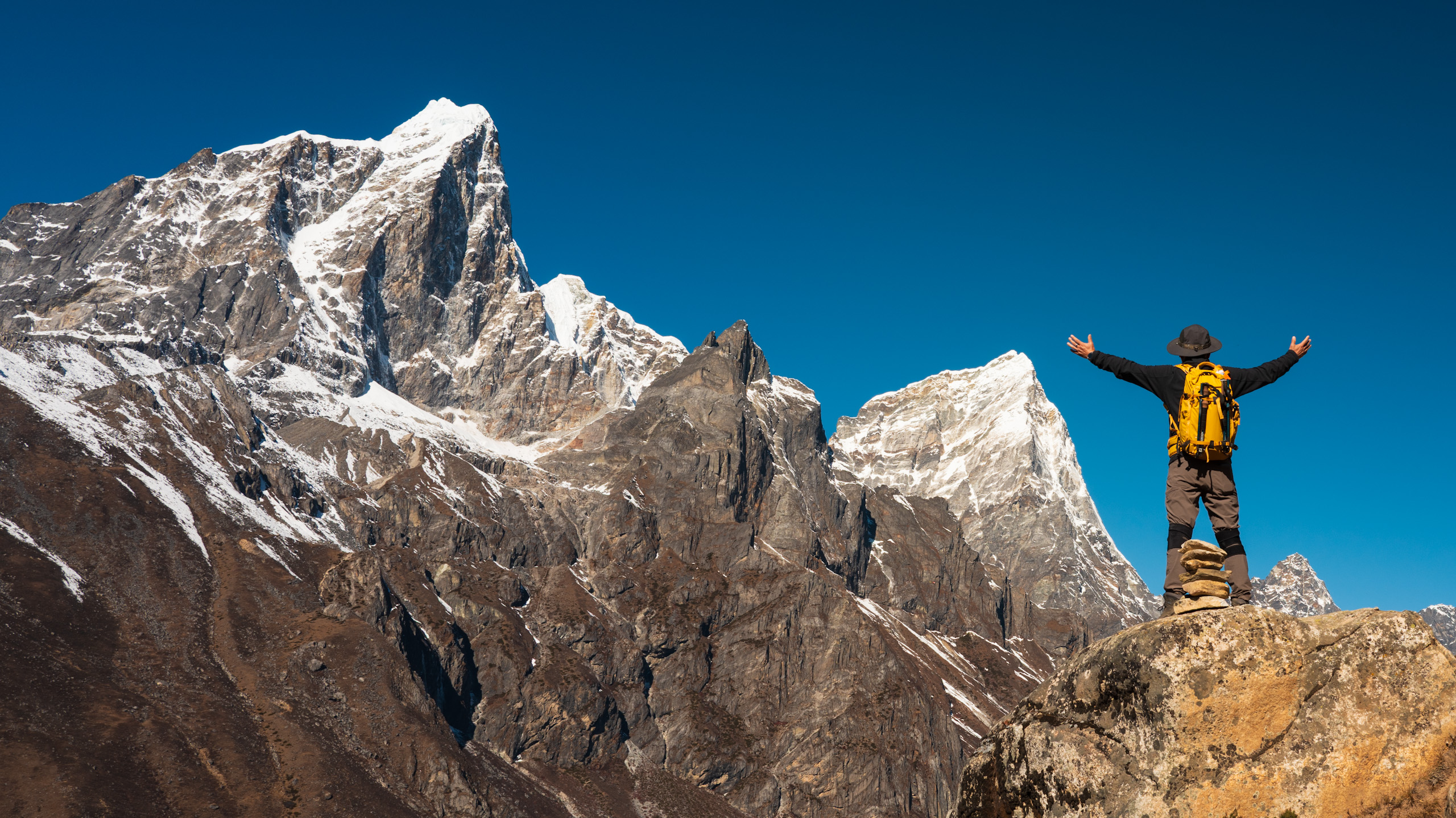
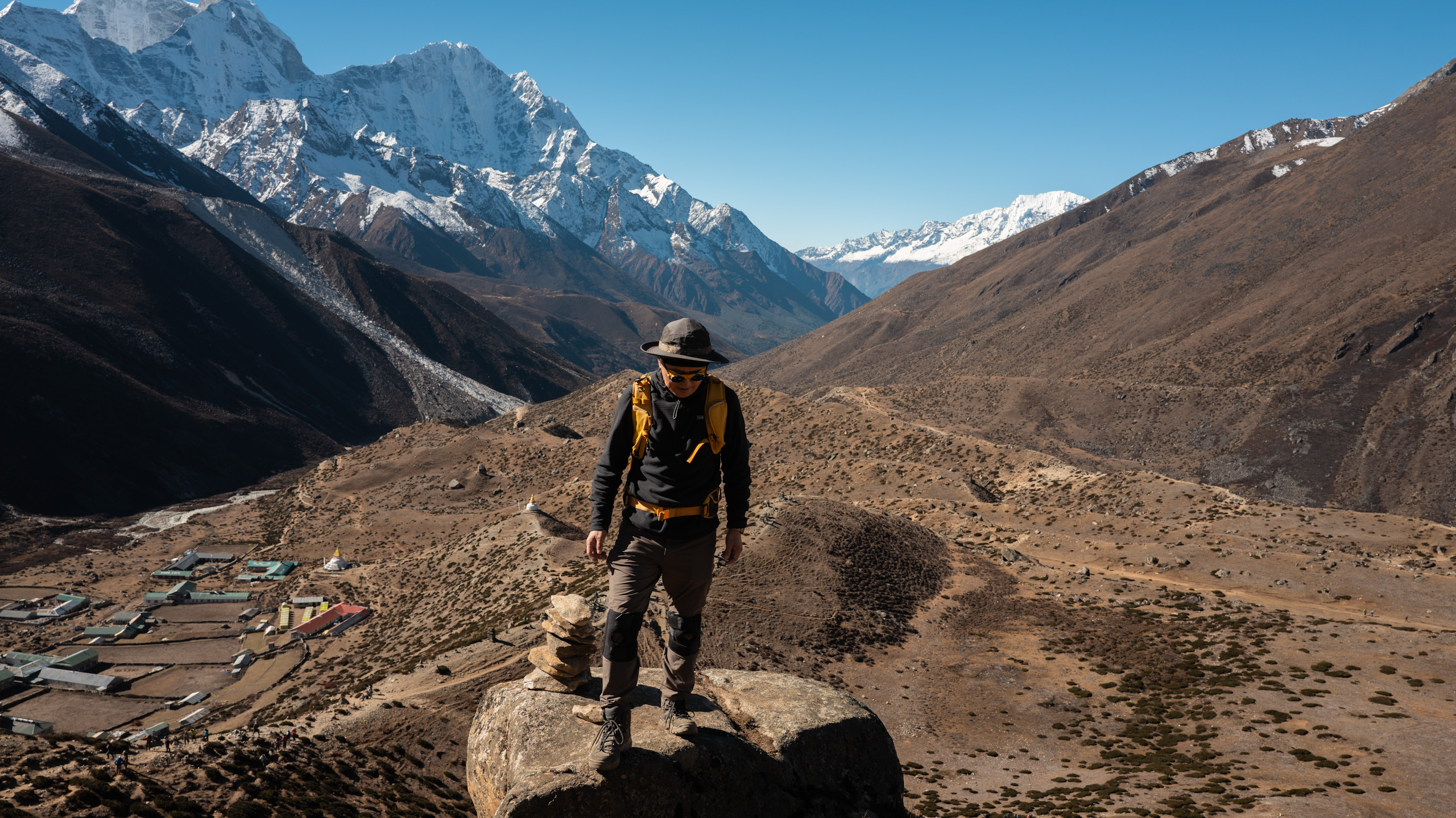
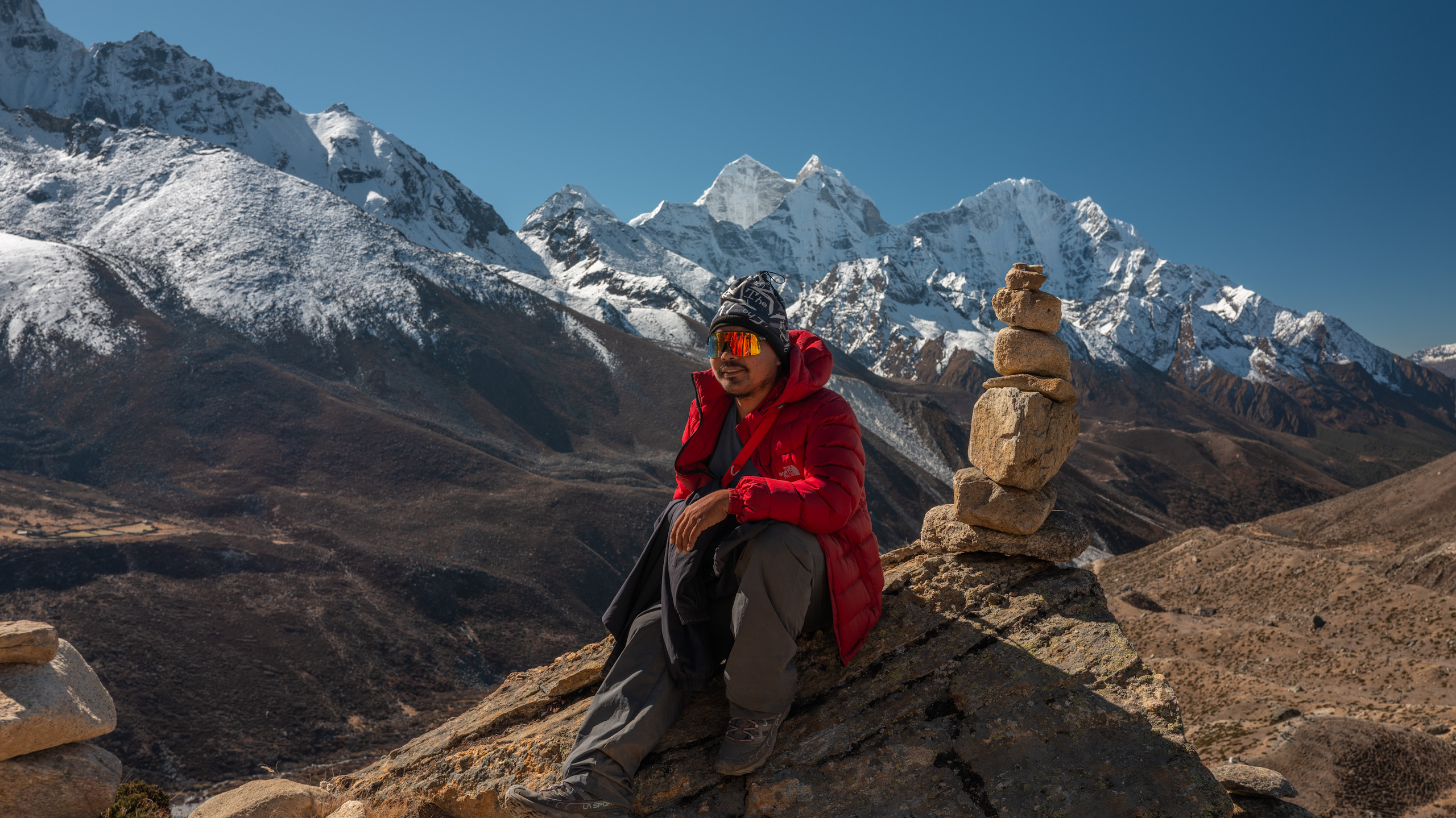
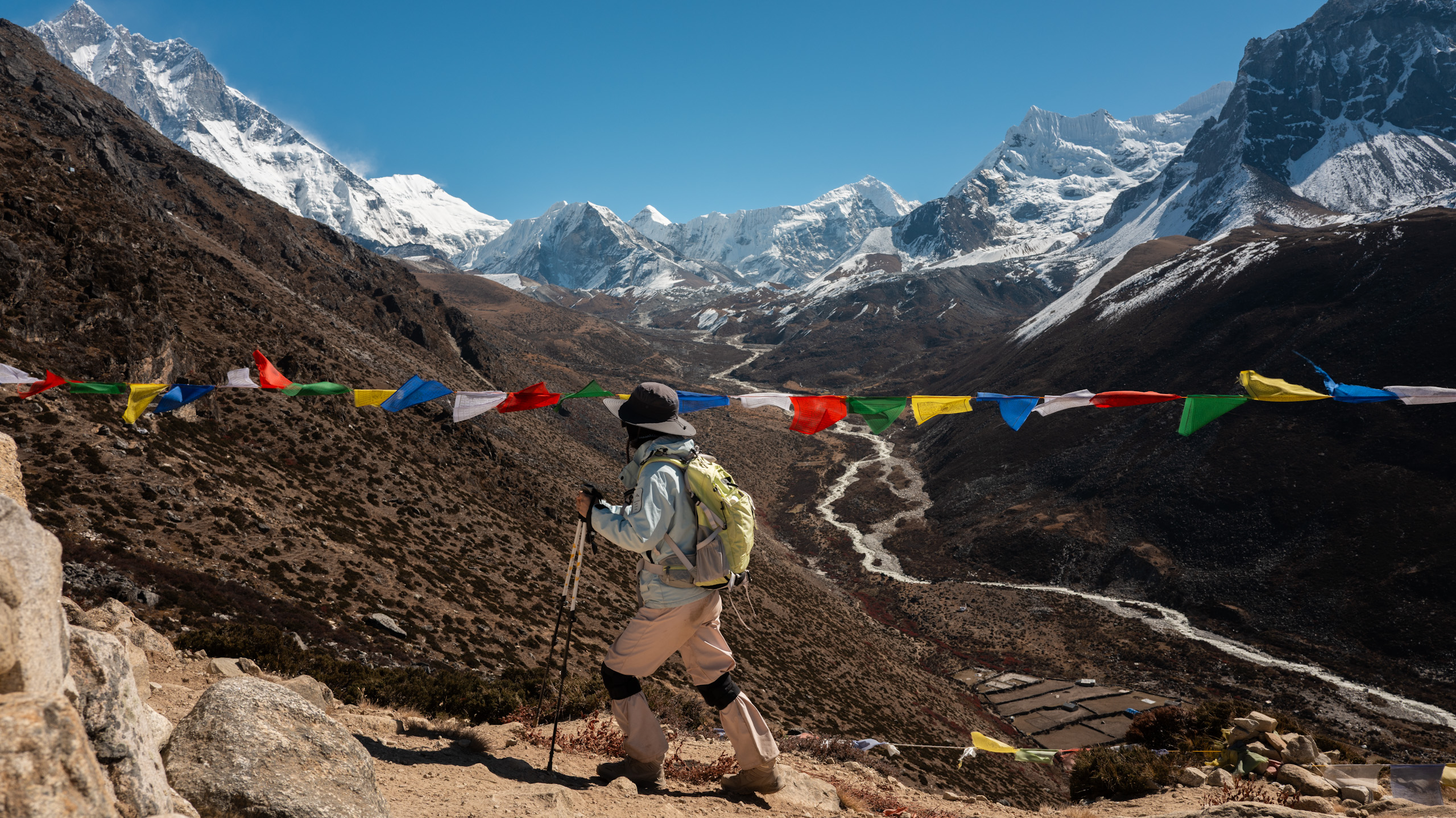
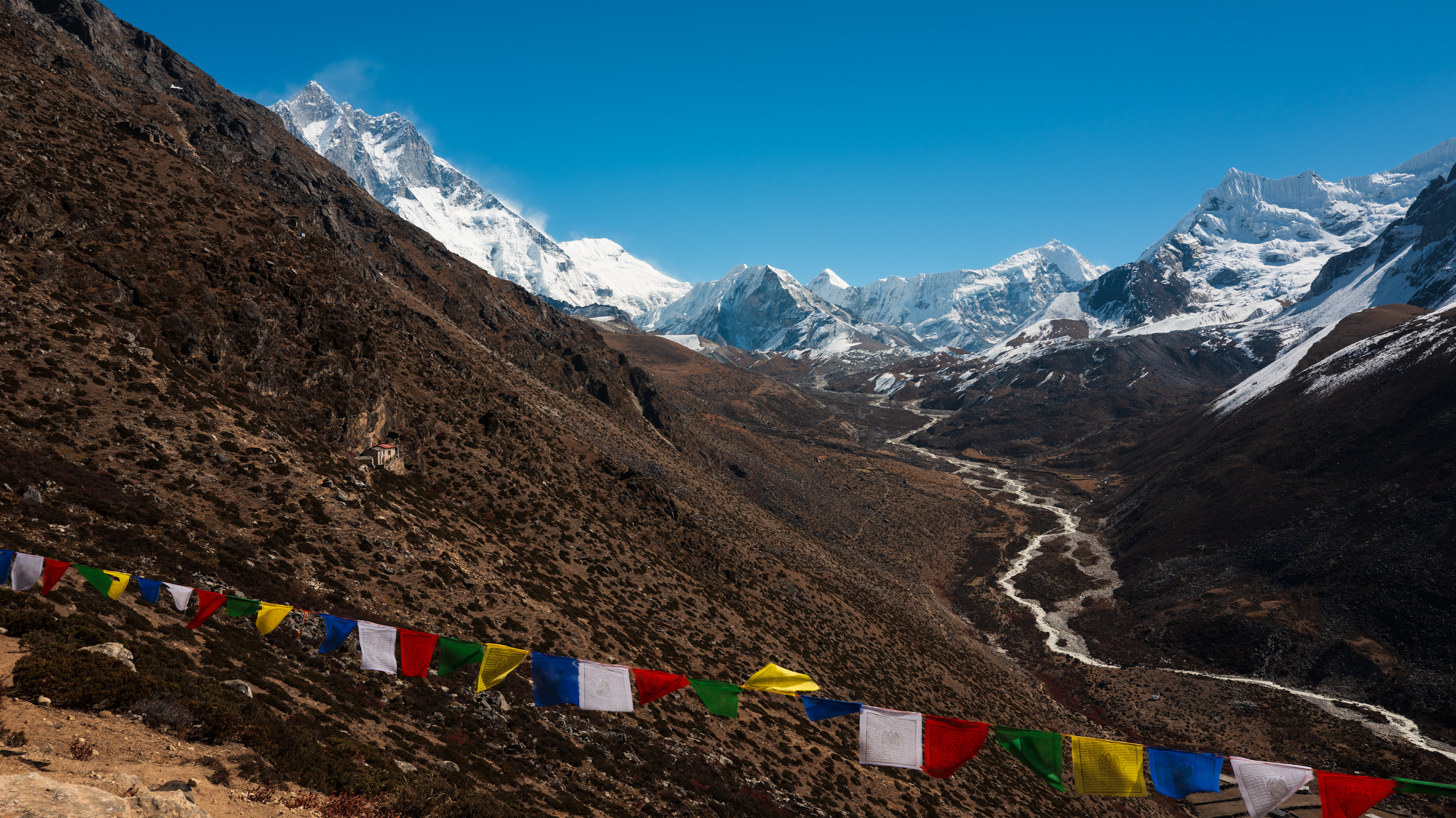
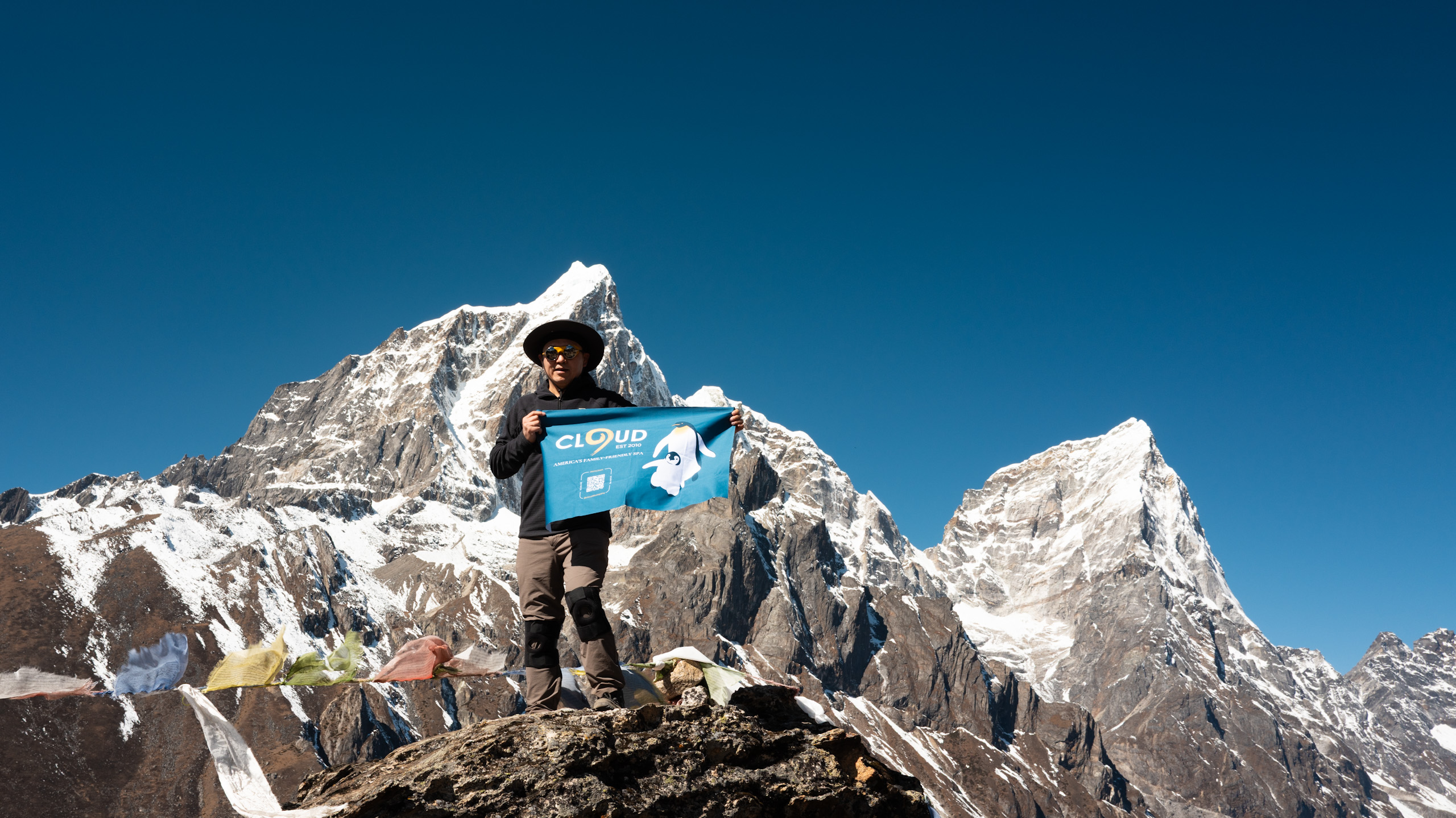
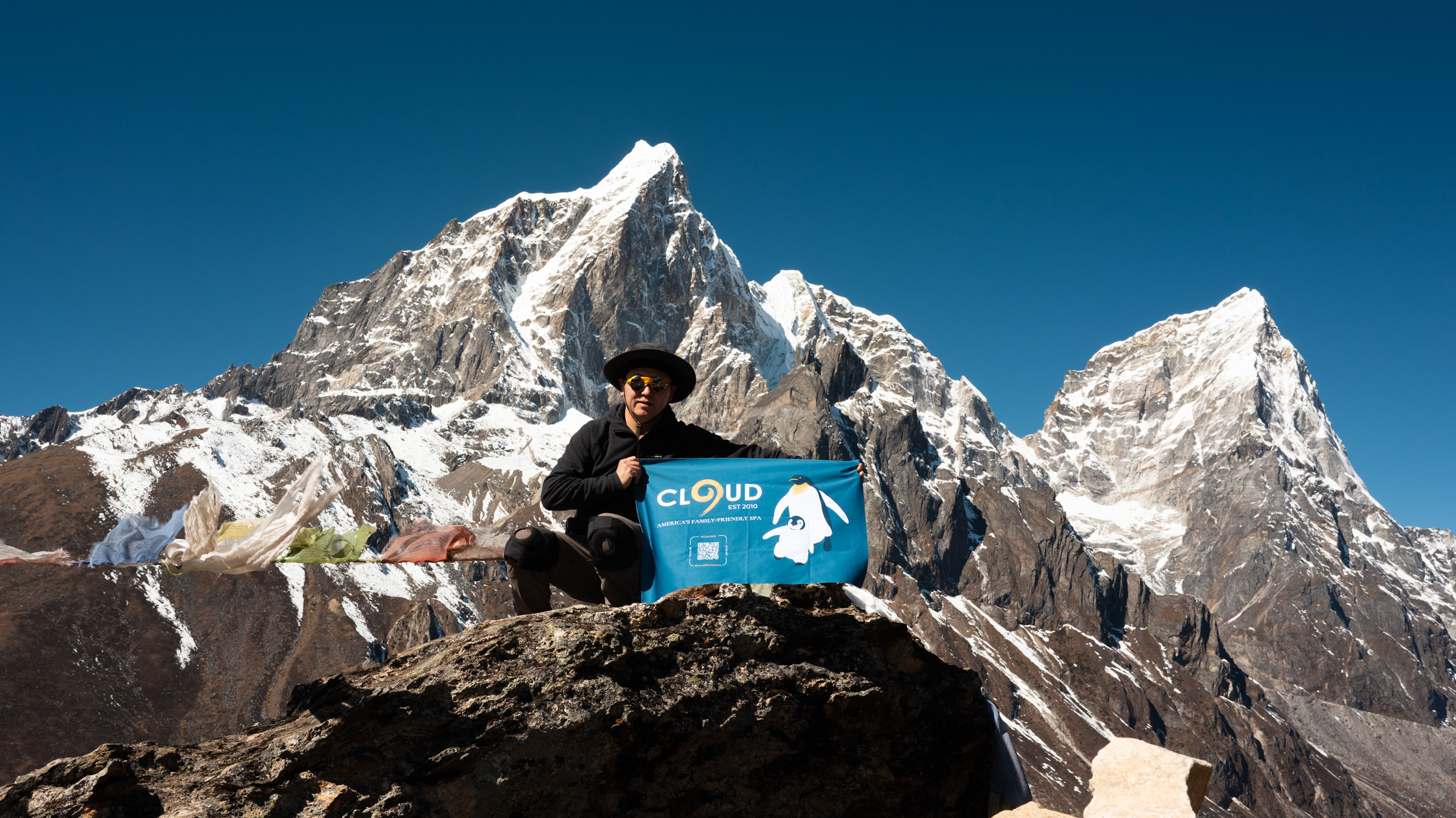
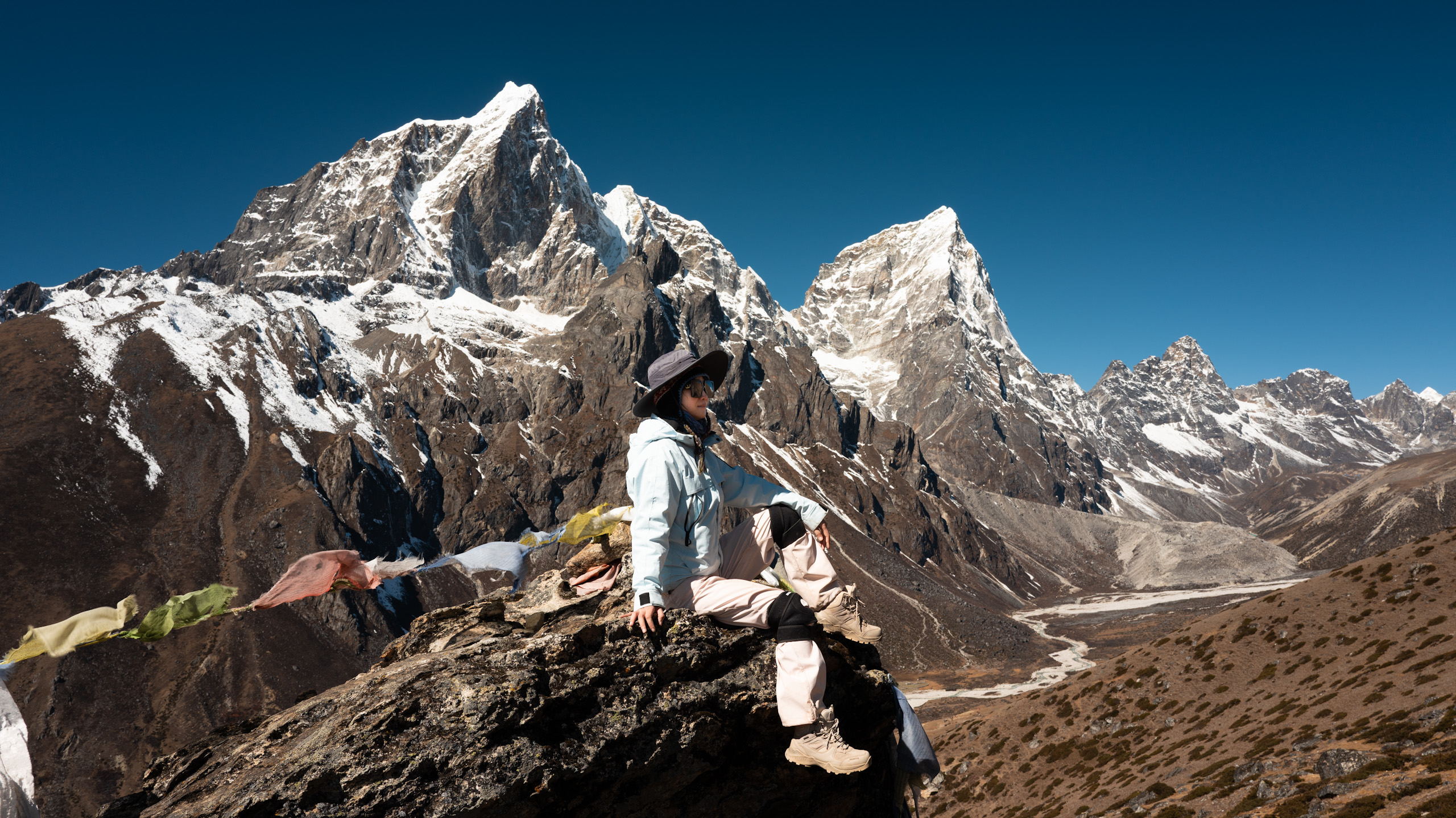
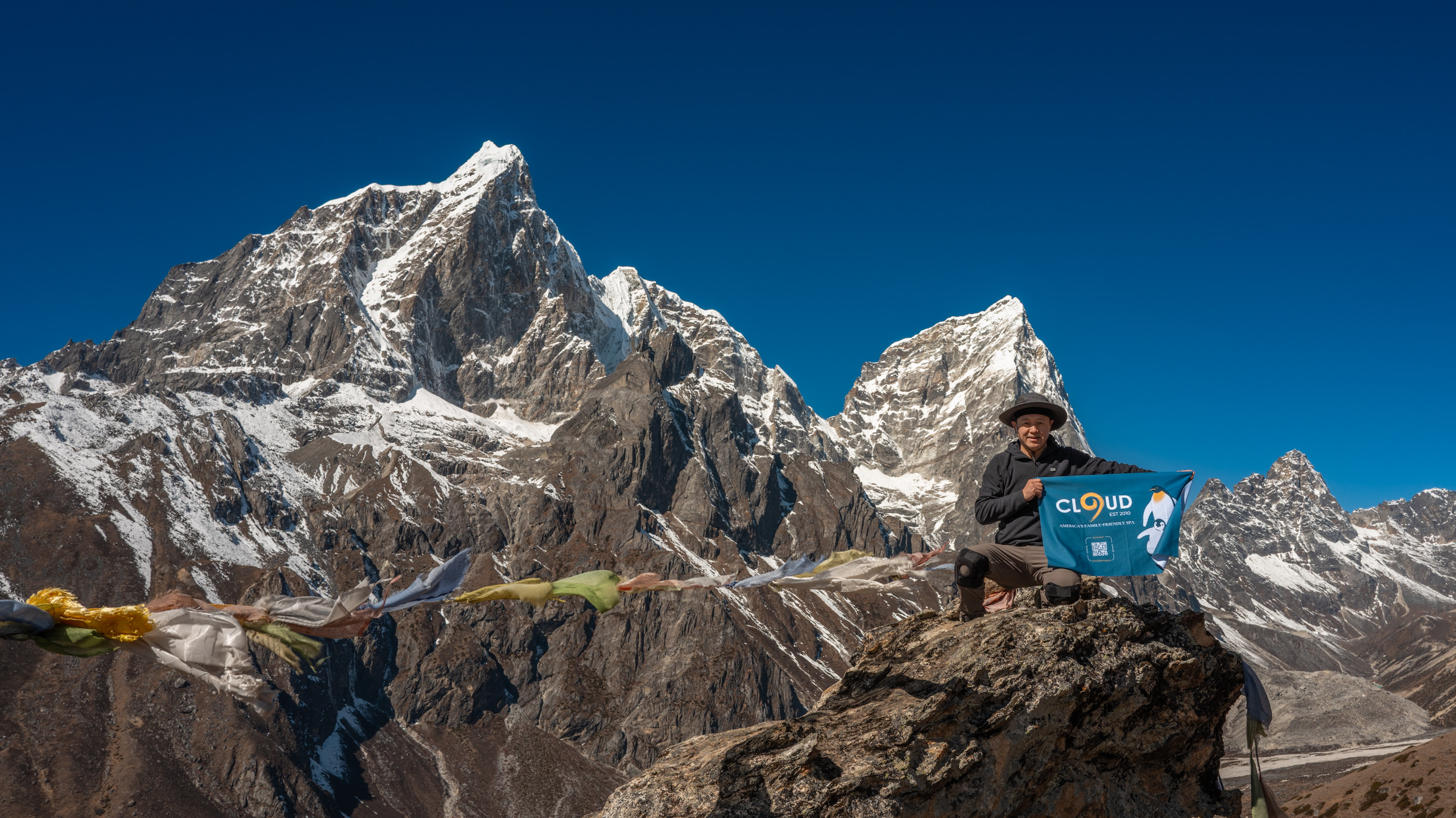
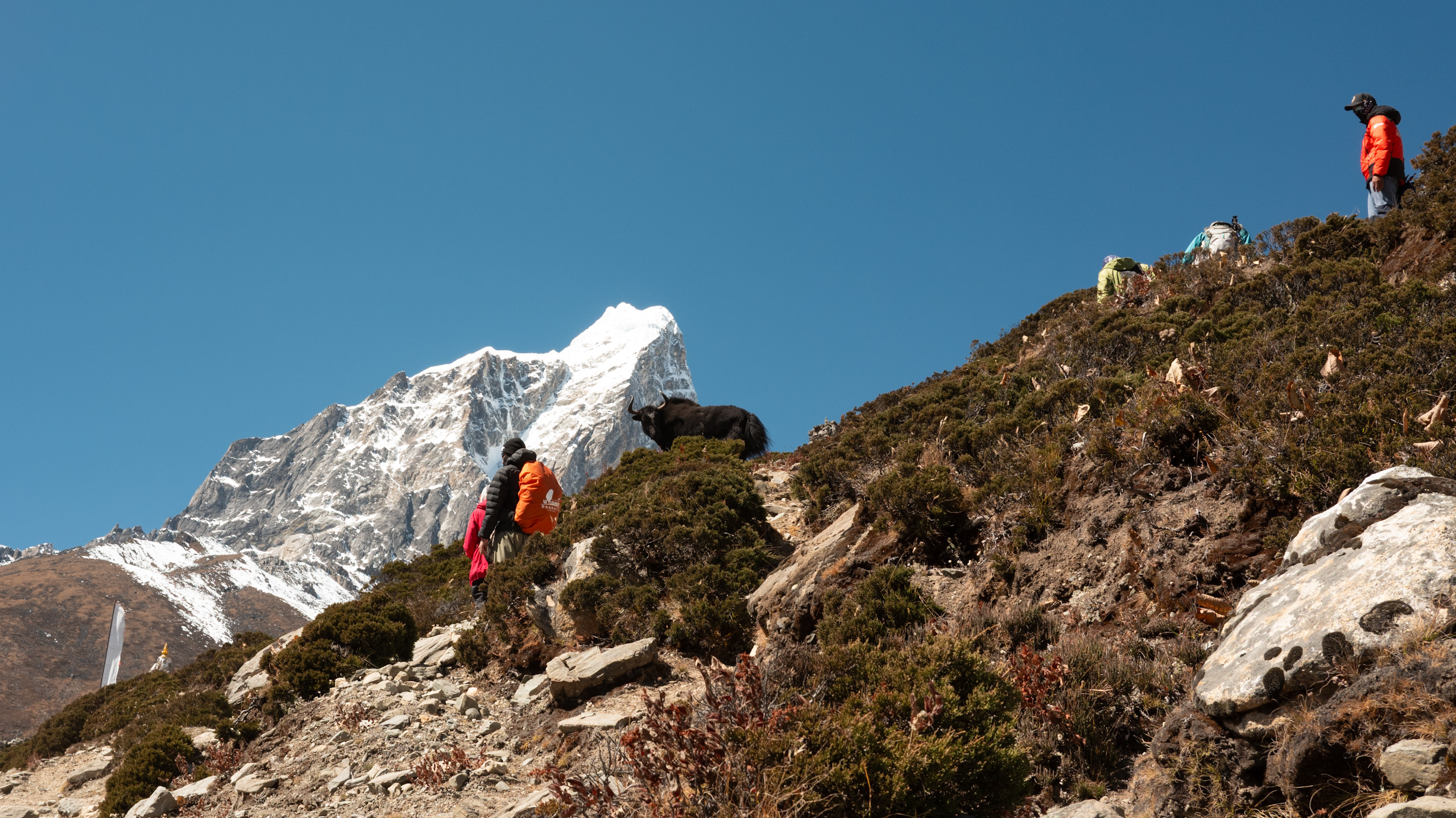
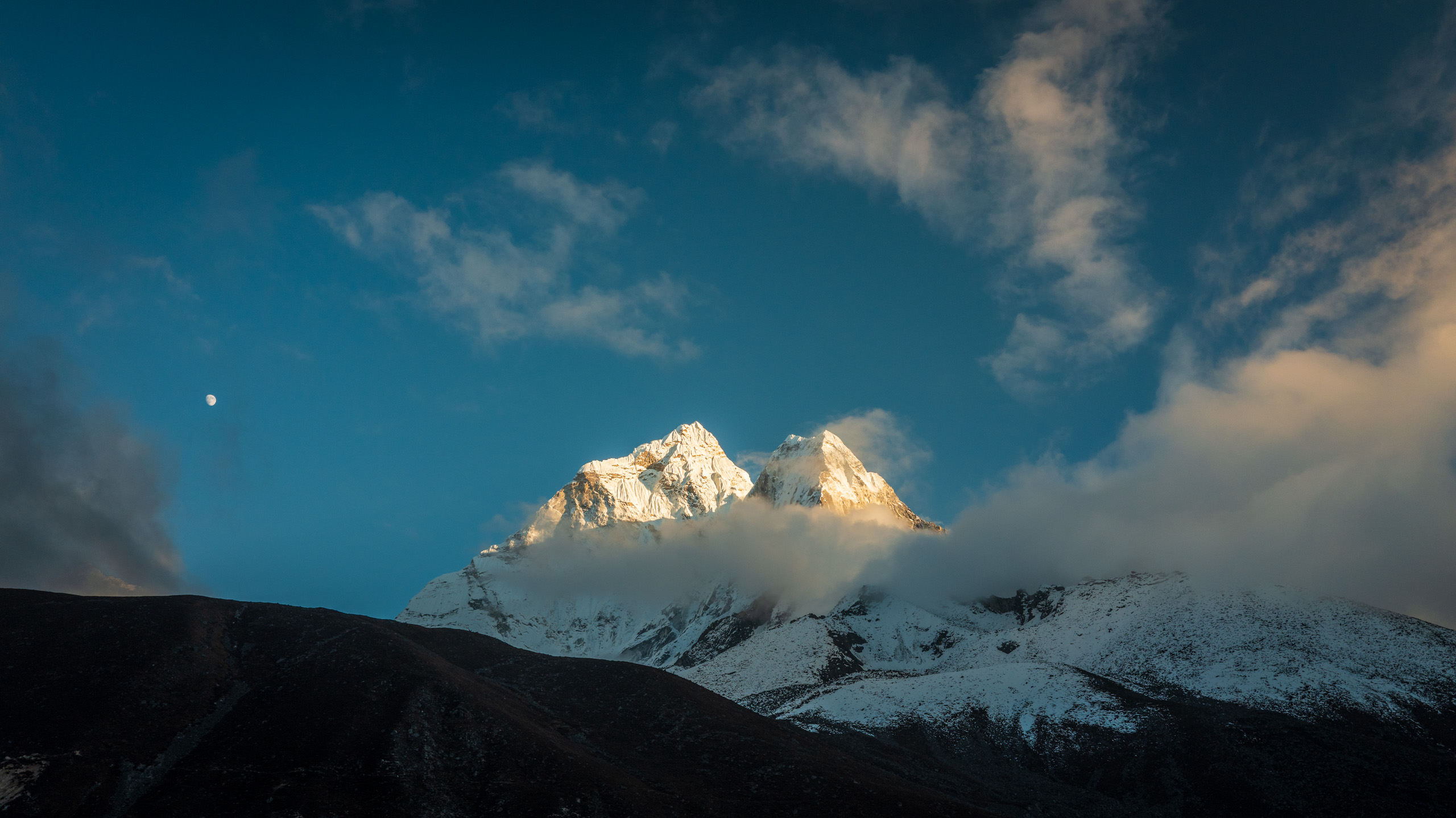
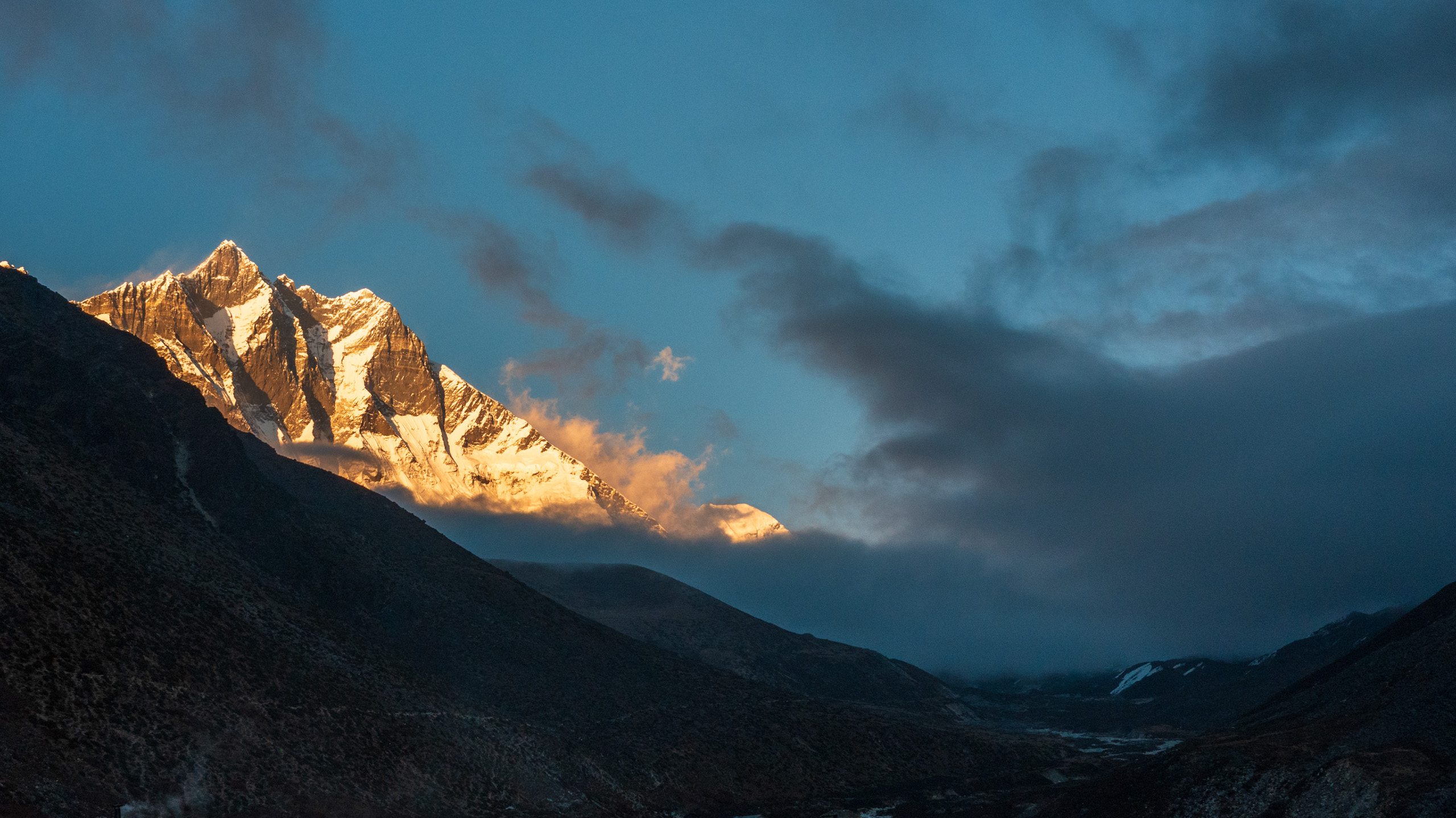
“Wooo!” At about 6:05 in the morning, I shouted out my excitement from the top of the hill above Dingboche, mountains all around me.
The Mountain’s Softest Breath
To the east, the ridgeline glowed with a thin golden outline. The wind lifted snow off the summits, and it drifted away like the softest breath the mountain exhaled. Then the sunlight kissed the very tip of a peak, and it blushed a faint cherry pink. It looked as if a flame were being passed from mountain to mountain: first the one to the east, then the one to the south, and last the one to the west. One by one, they were lit, quietly and gently. They were the most tender, most romantic colors I have ever seen.
This was sunrise at Dingboche.
Inside a circle no more than twenty meters across, I kept turning, looking through my trusty Leica Q3 and pressing the shutter, catching one frame and then another. It was so quiet. The whole village was still asleep down in the valley. The temperature was around −10 °C, yet I didn’t feel the cold at all.
Last night I told our guide I would get up early to shoot the sunrise. No one else wanted to come. Before bed, I laid out all my warm clothes. The Rab down jacket has been my savior.
I woke around 4:40. The bed warmer only runs for two hours, from 8 to 10 pm. My legs are too long for the bed: if I stretch out fully, my feet get cold. So I spent the whole night with my legs folded, and my thighs never got a real rest.
“Sir, Let’s Go”
The alarm went off at 5:30. I put on every layer, strapped on my headlamp, and left the room at 5:36. When I stepped out of the lodge, I found Buddhi standing outside, waiting for me.
I was surprised. Breakfast is at 6:45 every day, and I hadn’t wanted to trouble him to get up so early. He simply said, politely, “Sir, let’s go.” I am very grateful. Without him, I would have taken the wrong path and missed the sunrise.
I jogged at a quick pace, trying to rush to the top, and my heart rate soon jumped to 150. I had to slow down.
Maybe five hundred people are staying in this village, yet I saw no one else heading up the hill. From the top we could see mountains on three sides. It’s hard to imagine a better spot.
A Frame for Safekeeping
I always prepare for the worst. What if the light is bad when we reach Base Camp? What if I can’t reach Base Camp at all? I needed to capture this moment. From here on, everything else is a bonus. Those who know contentment are always happy.
A Meeting of Nines
To the west, I counted nine mountains. So many nines have crossed my path lately. Back home on Mount Si, I met a woman summiting it for the 99th time. Here I met a gentleman on his ninth trip to Everest. And now nine mountains stood looking at me, as if they had been waiting for me for thousands of years. I moved my eyes from one peak to the next, watching each one catch the golden light.
The full panorama, as best I can name it: to the west stood Taboche (6,495 m), Cholatse (6,440 m), Arakam Tse, and the Lobuche peaks. To the south rose Ama Dablam (6,812 m), the closest and most striking of all, with Kangtega and Thamserku behind it. To the east, up the Imja Valley, were Island Peak (6,189 m) and the peaks around Chukhung.
Sunrise was at 6:00. The golden light touched the first summit around 6:09, and we left around 6:25. Coming down, we arrived right on time for breakfast.
The early bird gets something to eat. And the early riser always sees the best moment of the day, and starts it in the best mood.
One Fewer on the Trail
After breakfast, we said goodbye to Xia. His respiratory infection had gotten worse, so he called a helicopter to fly up to Base Camp and then back to Kathmandu.
The Cloud 9 Penguin Before Nine Peaks
The rest of us set off uphill again. Today was another acclimatization day: we climbed about 200 meters over roughly two hours. With the nine mountains behind us, we took a few photos I will never forget. While we were shooting beside a huge boulder, I stepped on two rocks and sent them over the cliff edge. Our Cloud 9 Penguin flag unfurled in the wind before the nine snow peaks, and my heart soared with it.
There is an old Chinese saying: on a journey of a hundred li, ninety is only halfway. The last stretch is the hardest. Our penguins are ready for the final ten li, and for the altitude that comes with them.
Double the Effort
Buddhi said I put in double the effort today. Yes. I came tens of thousands of miles to be here, and I need to make the most of it. I can sleep more at home.
Running a company has taught me the same thing over the years: be diligent, get up early, put in twice the effort, just to make sure things go as planned. There is no easy route, and no one holds your hand. You do your best in the moment, and you think ahead to the next day.
The Gift of Dawn
The best scenery and the best moment are there every morning, but most people never rise for them. Dawn doesn’t announce itself, and it doesn’t wait for anyone. It asks you to wake at 4:40 in a dark room, to step into −10 °C, and to leave a warm bed for a hill you can barely see. Most of the five hundred people in Dingboche slept through it. Not because they didn’t care, but because the bed was warm and the morning felt far away.
That is the price of the gift: a little discomfort, paid in advance, with no guarantee. Clouds could have rolled in. The light could have been flat. But dawn rewards those who show up, and what it gives, broad daylight never can: the softest colors, the quietest air, and a mountain that seems to be waking up just for you.
Once you break out of your comfort zone, you see a striking beauty that no other hour can offer. I think life works the same way. The best chances rarely arrive at a convenient time. They come early, in the cold, when no one else is watching.
In the afternoon I wandered out alone for a few minutes, studying the villagers’ stone houses one by one. They took me back to Defa Village, where I was born. The house I was born in was made of mud bricks, not stone. But the muddy roads, the clothes and cow dung drying in the sun, the crooked gates, the women bent over their washing: all of it was exactly the same.
Sunlight Too Hot to Hold
Later I sat alone in the teahouse. Warm sunlight poured through the window as I sorted through my thoughts. I picked up my thermos and nearly dropped it: it was so hot it burned my hand. The sun at this altitude is that fierce.
Yesterday afternoon’s headache is gone, and I feel rested. My thighs are a little tired, from the cramped bed and this morning’s rush up the hill.
The Real Test Begins
The next two days are our final push to Base Camp at 5,364 meters. Why are they harder than everything that came before?
First, the air. Tomorrow we climb to the 8000 Inn just above Lobuche, at about 5,050 meters, and the day after to Gorak Shep, at about 5,164 meters, before walking on to Base Camp. Up there, each breath holds only about half the oxygen it would at sea level. Every step costs more, the heart works harder, and sleep grows shallower.
Second, the risk. Above roughly 4,500 meters, mild altitude sickness can turn serious quickly, with fluid in the lungs or swelling of the brain. These are the conditions that send trekkers down by helicopter. A headache that would mean little lower down can’t be ignored up here.
Third, the trail and the cold. Past Lobuche, the path crosses the rocky moraine of the Khumbu Glacier, rough and uneven, where every step needs care. Base Camp day is the longest of the trek: from Lobuche to Gorak Shep, then on to Base Camp. Nights fall well below −10 °C, and the lodges grow simpler, with fewer supplies and fewer comforts.
The oxygen will keep thinning, the cold will deepen, and our bodies will become more unpredictable. The real challenge is coming.
Wish the penguins luck!
Day 9 · October 23 — Heart and Body at Their Limit
Dingboche (~4,410 m) → Thukla Pass → Lobuche → 8000 Inn (~5,050 m) · sleeping altitude up about 640 m
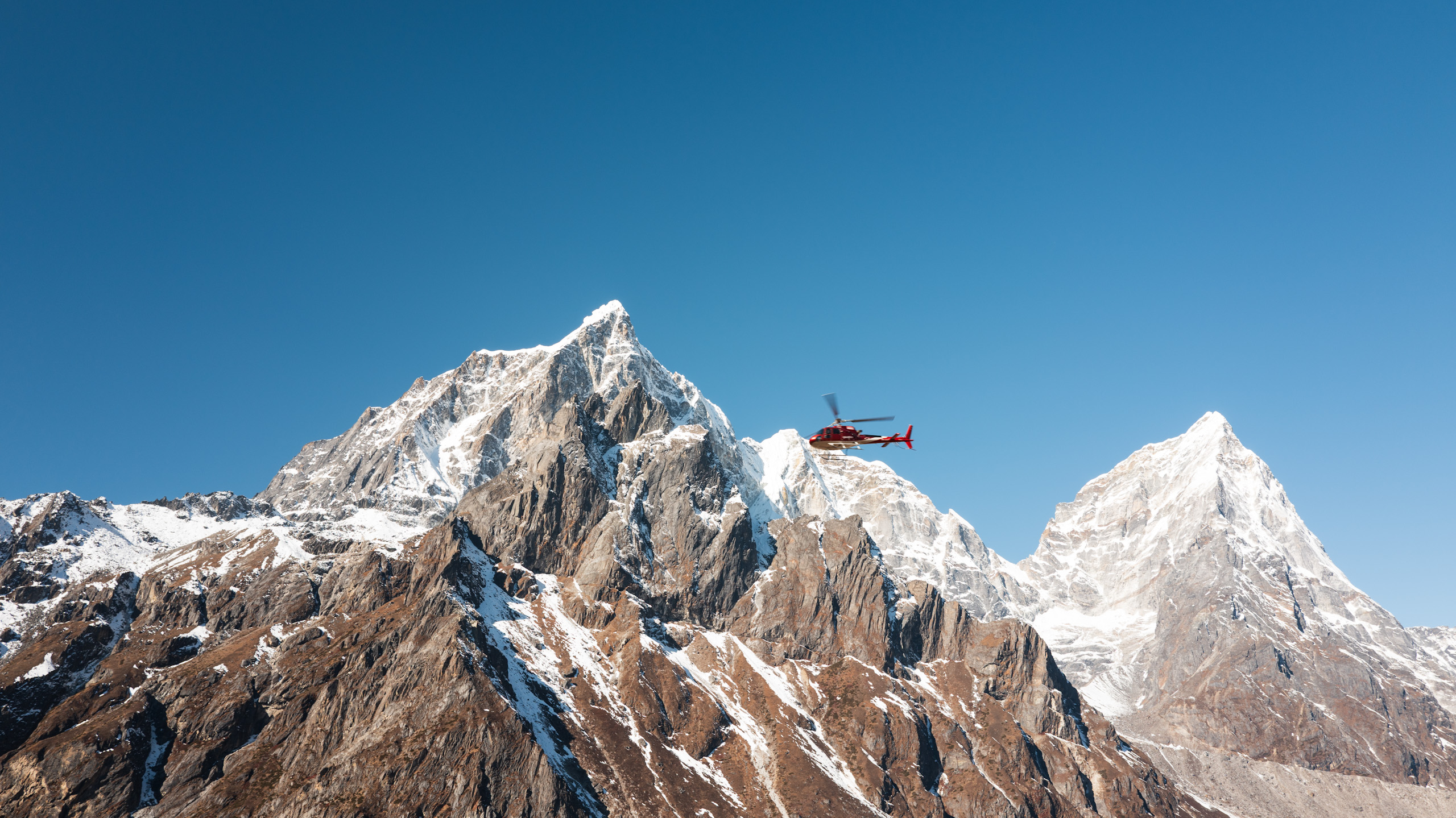
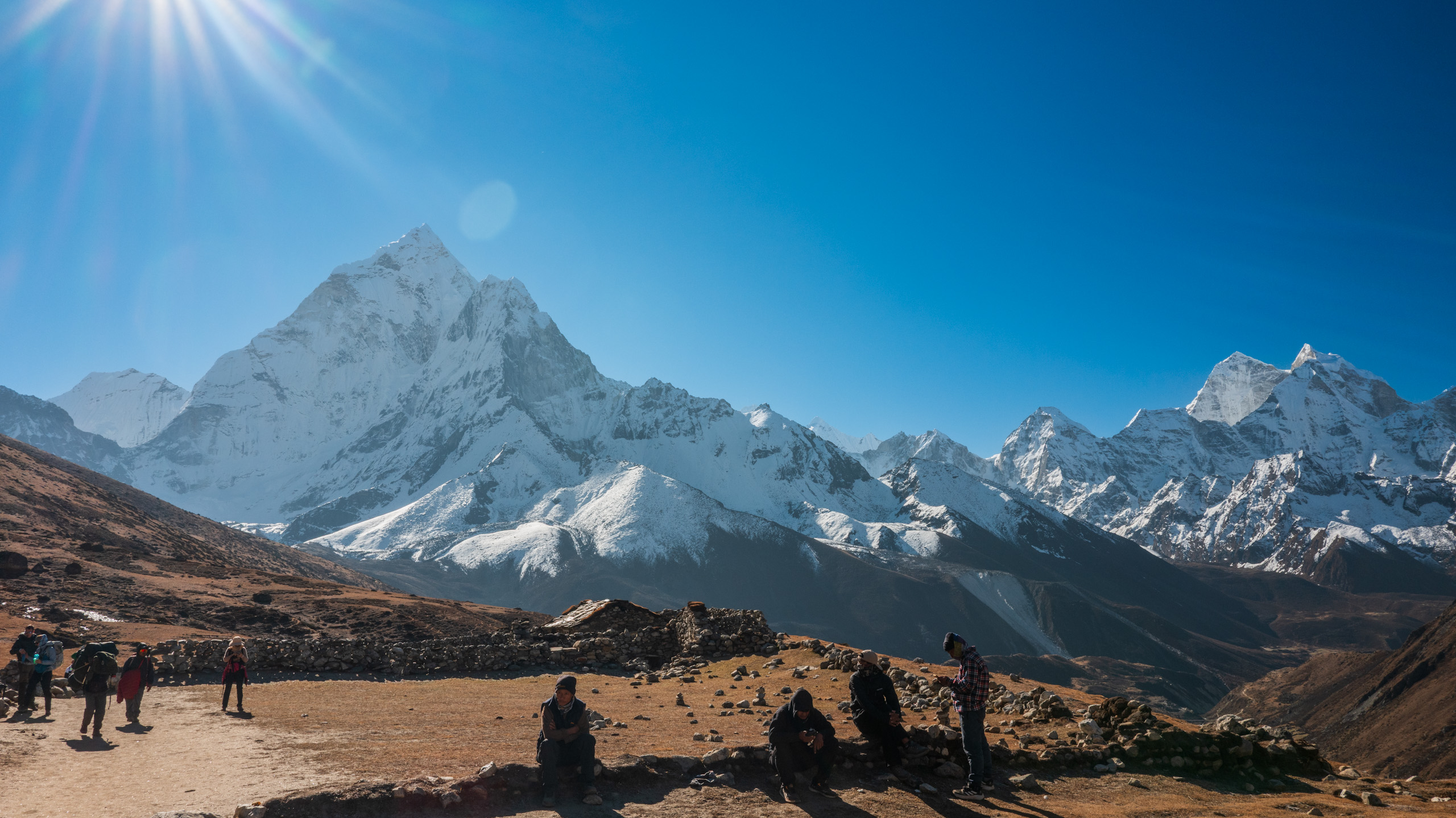
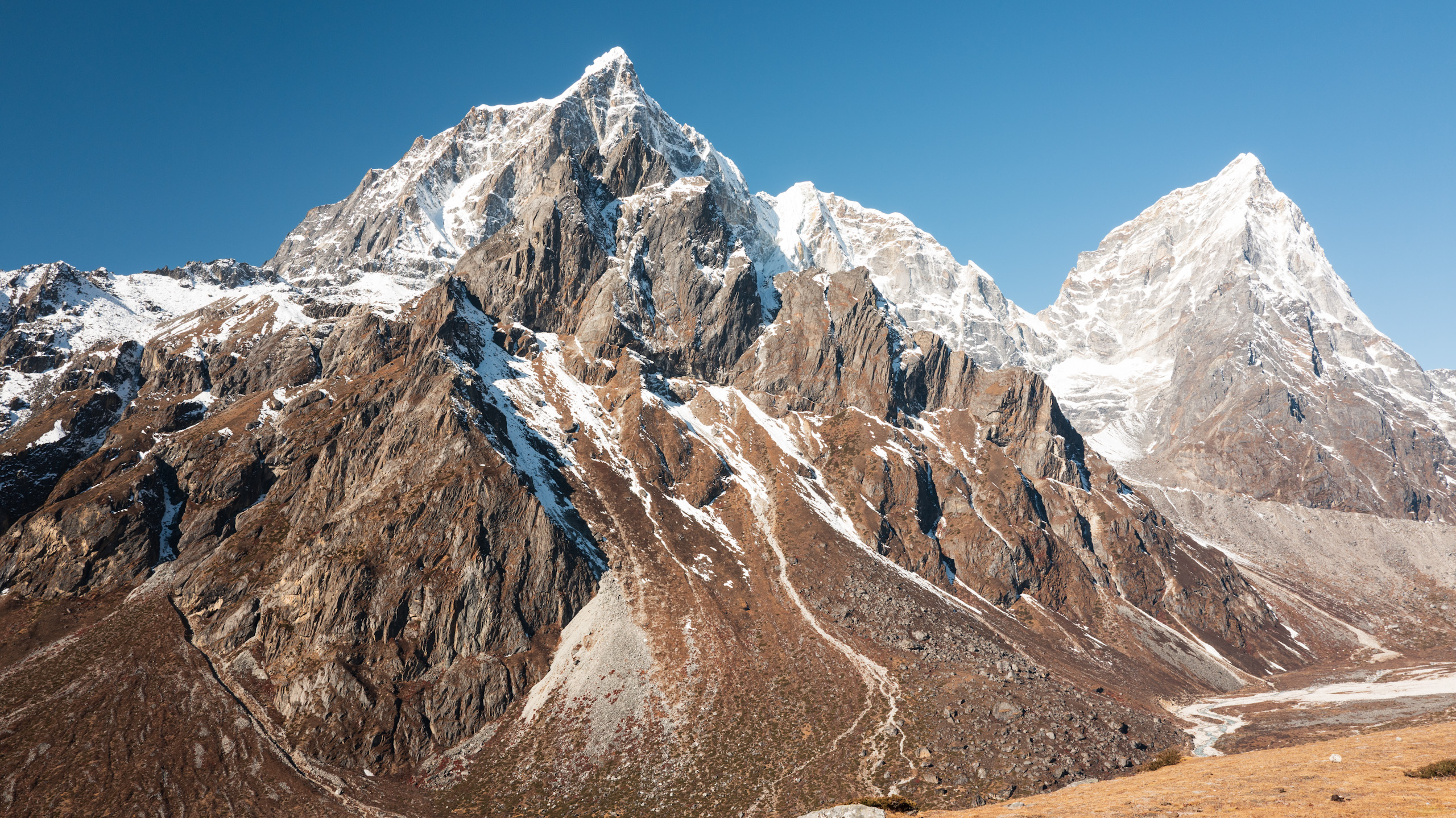
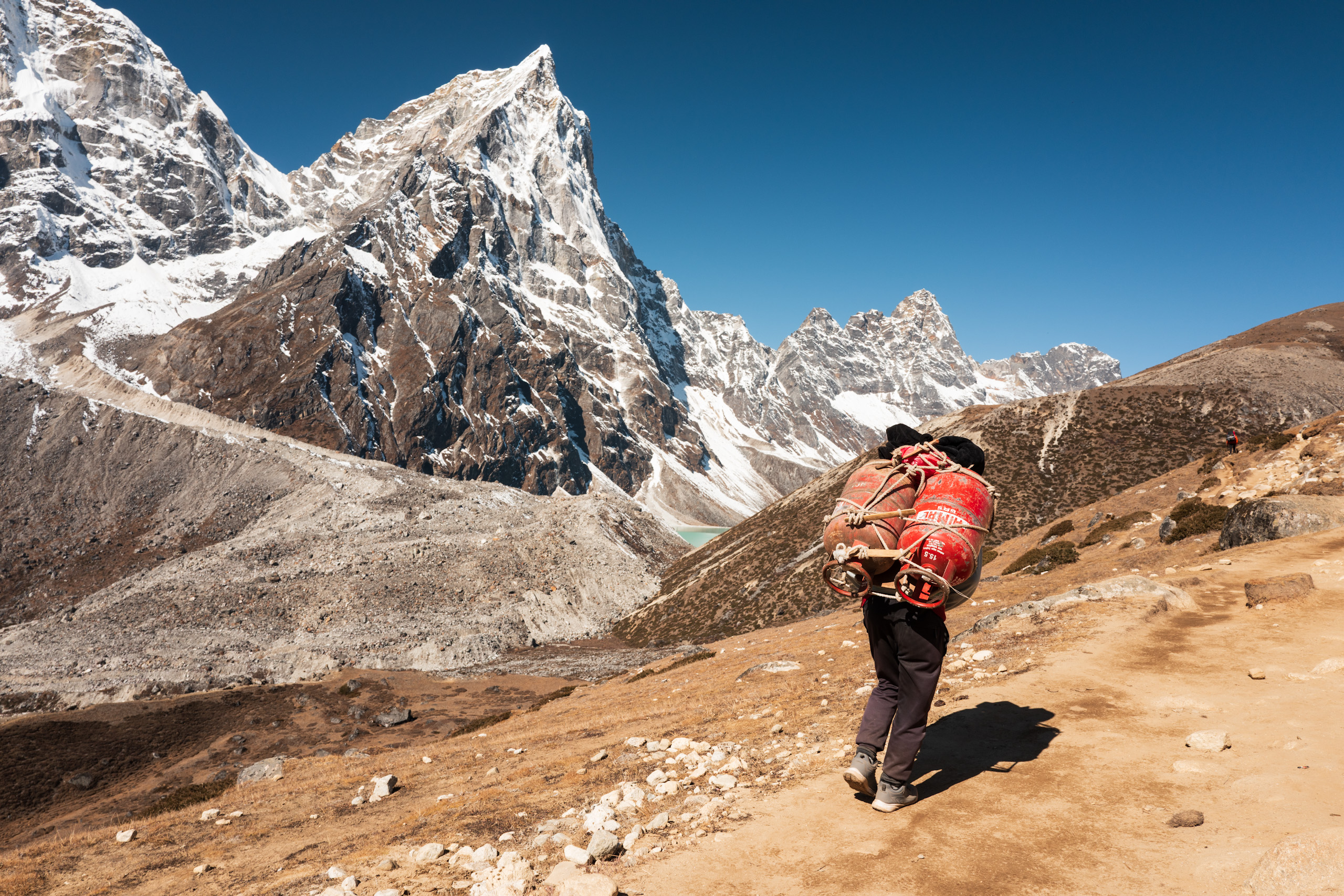
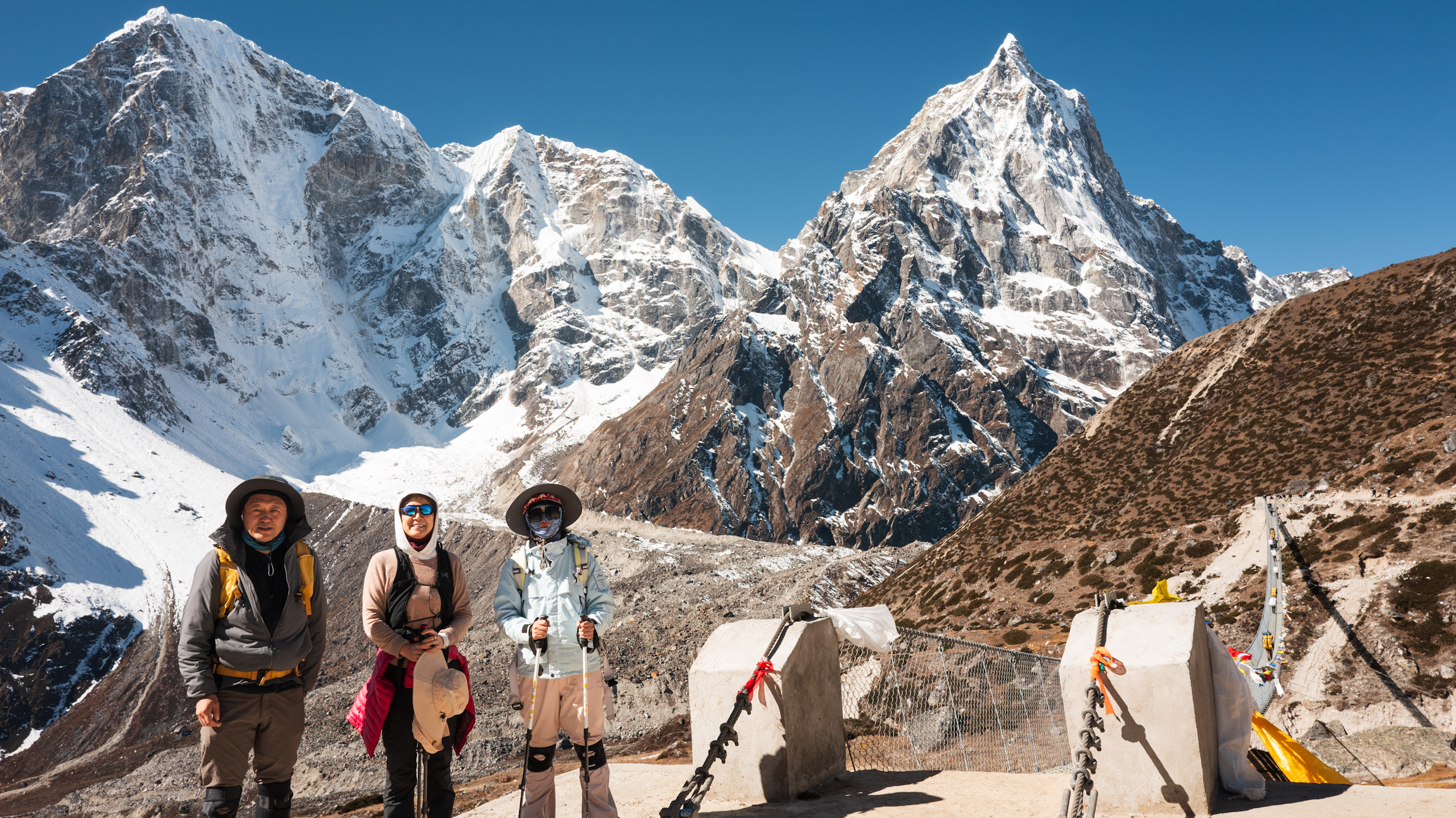
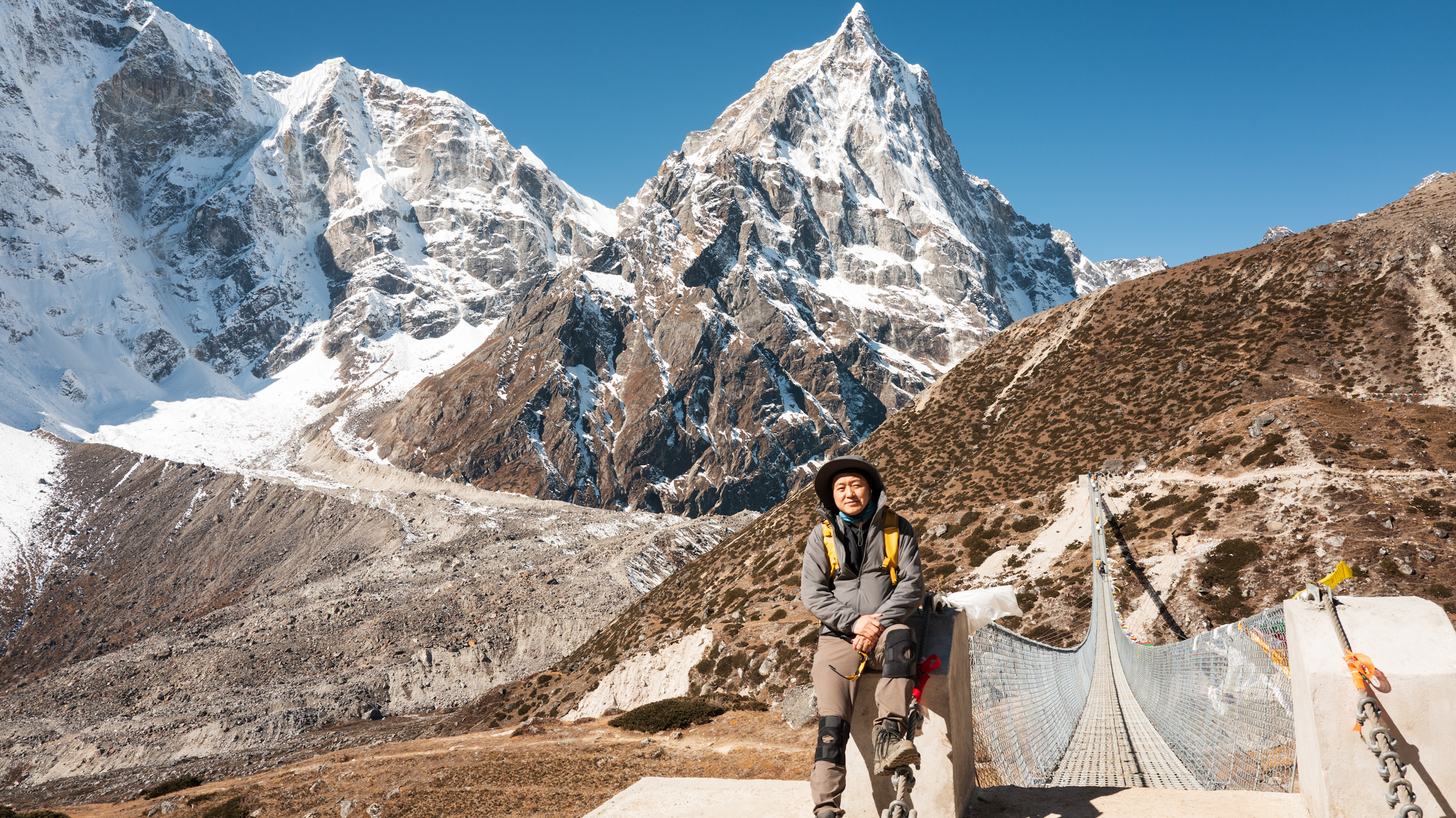
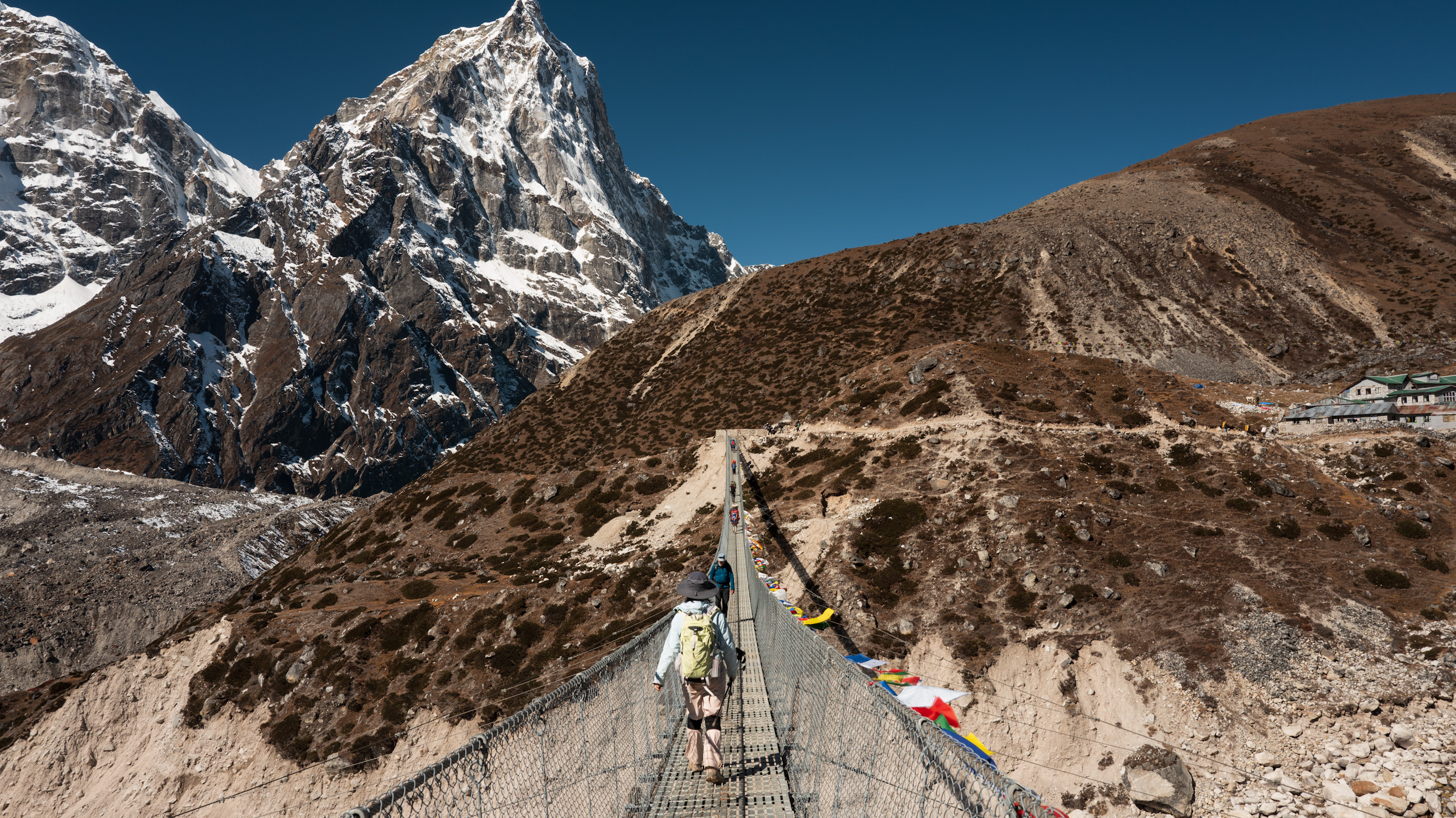
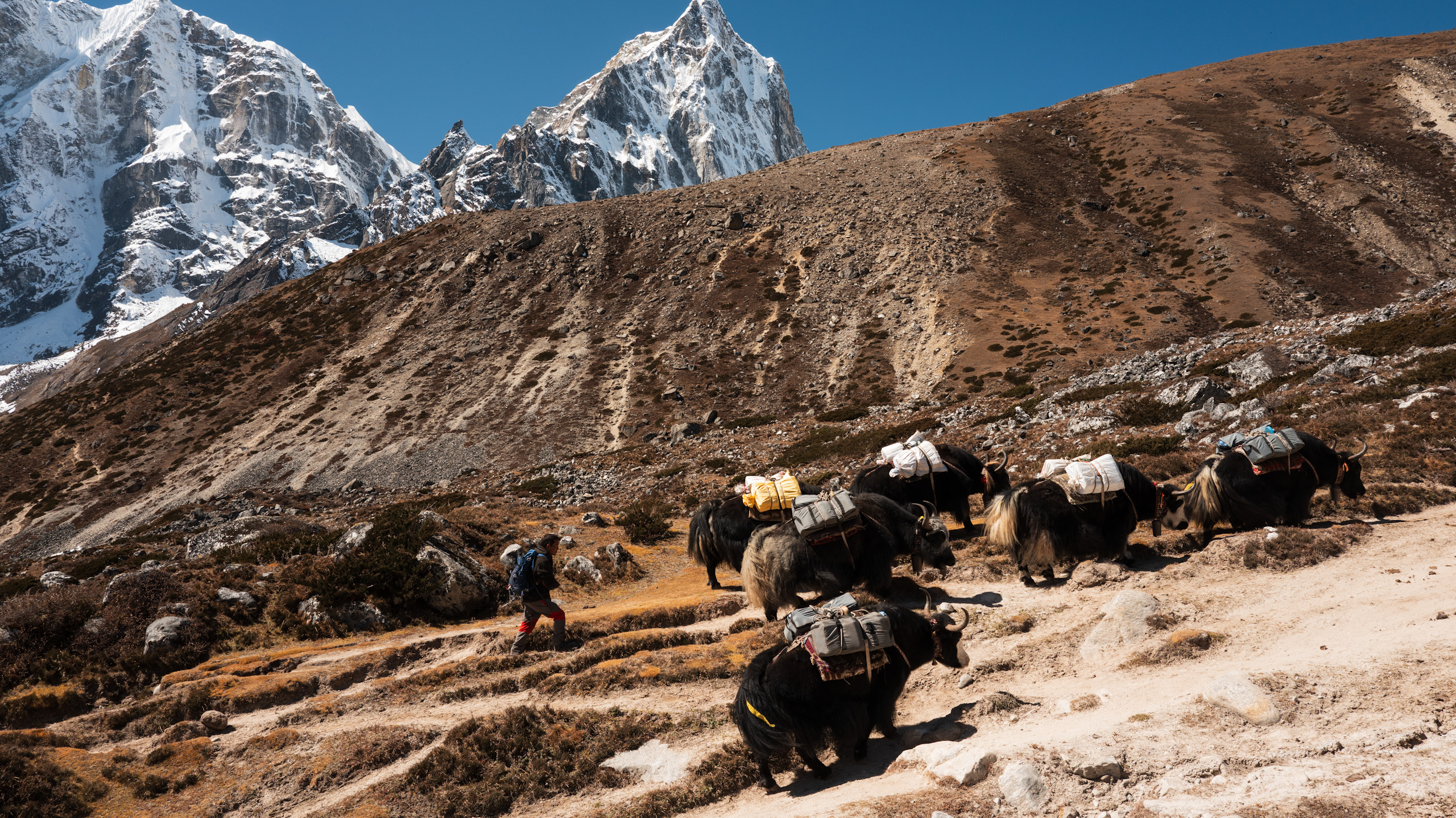
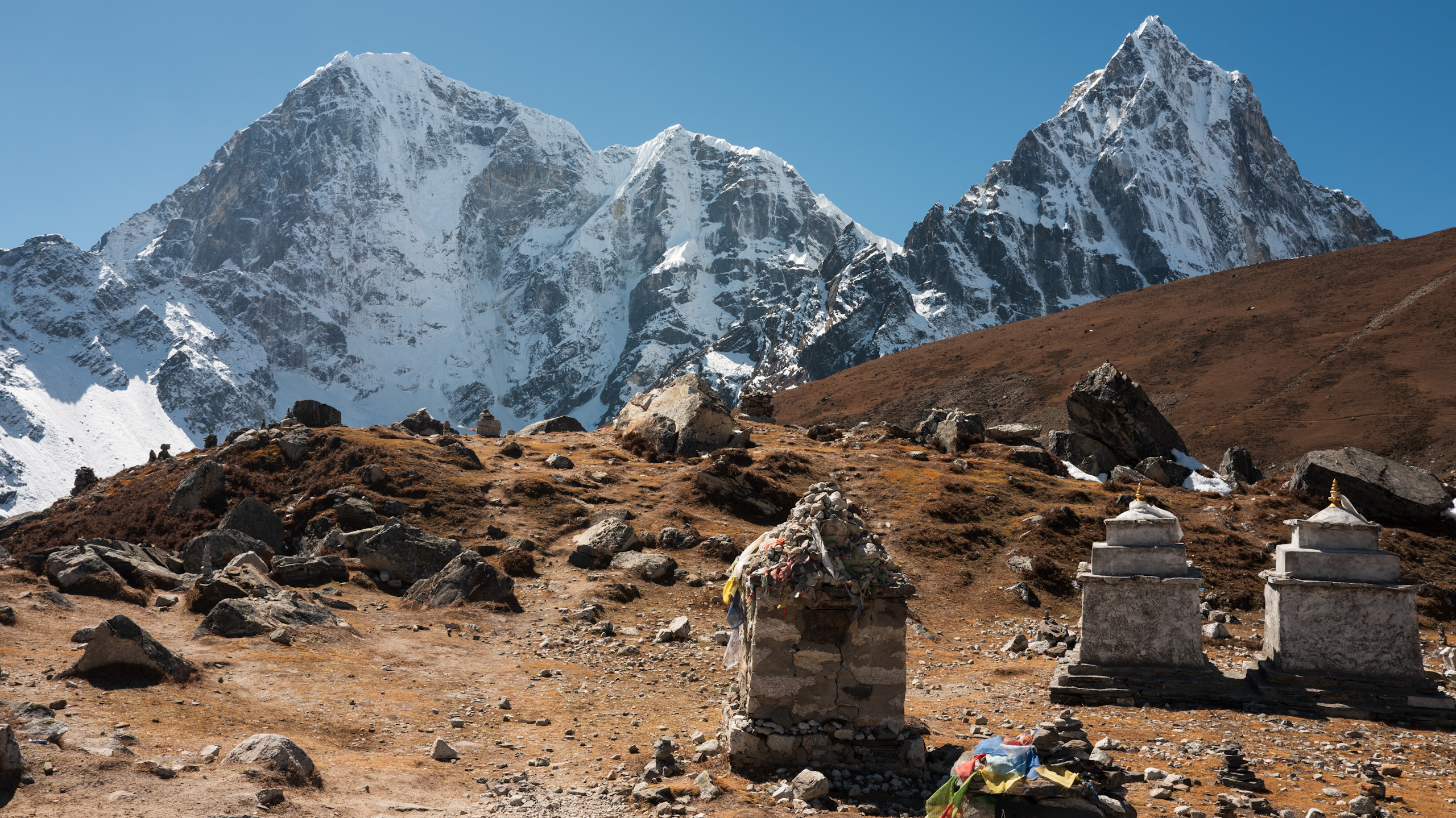
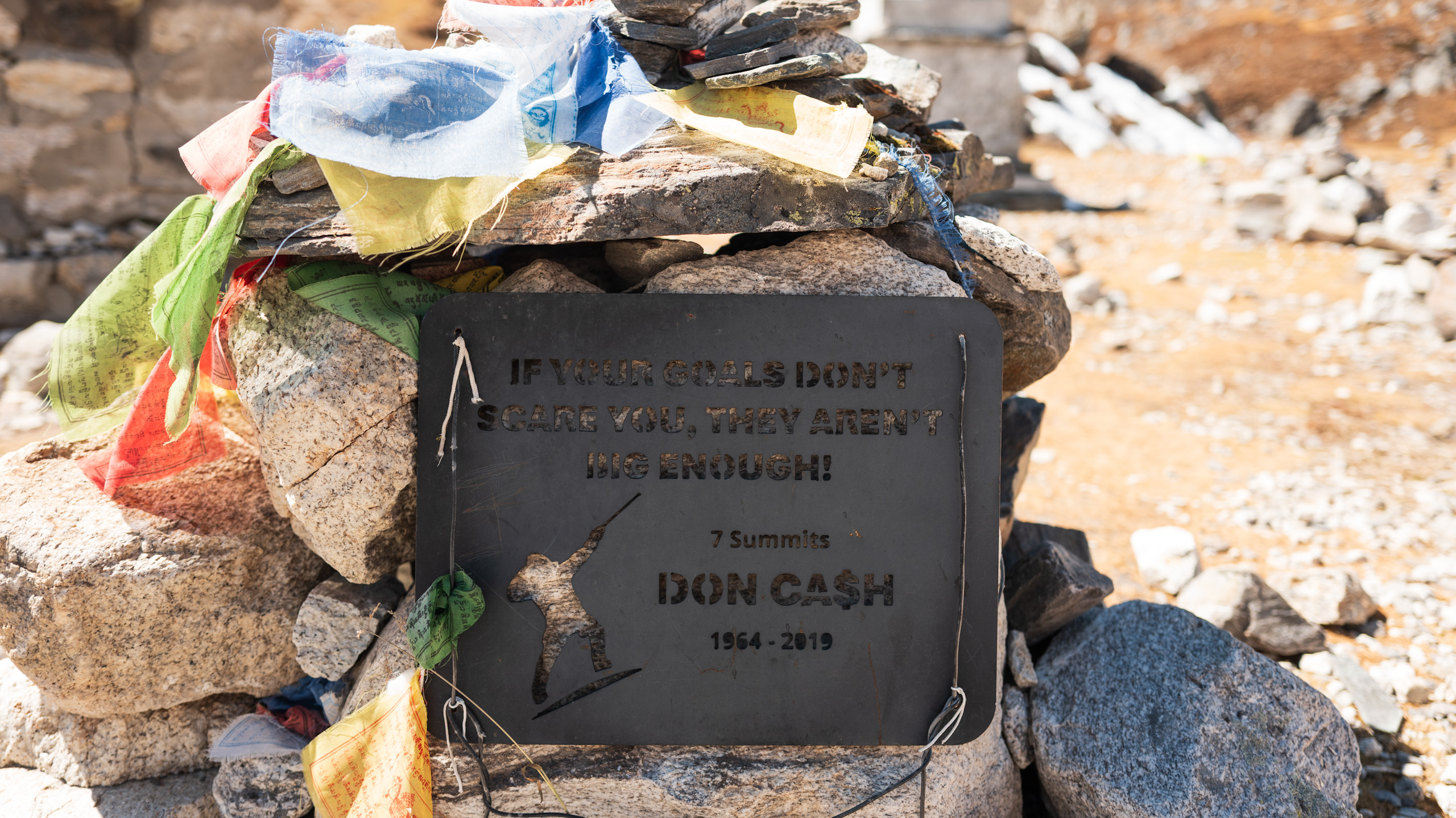
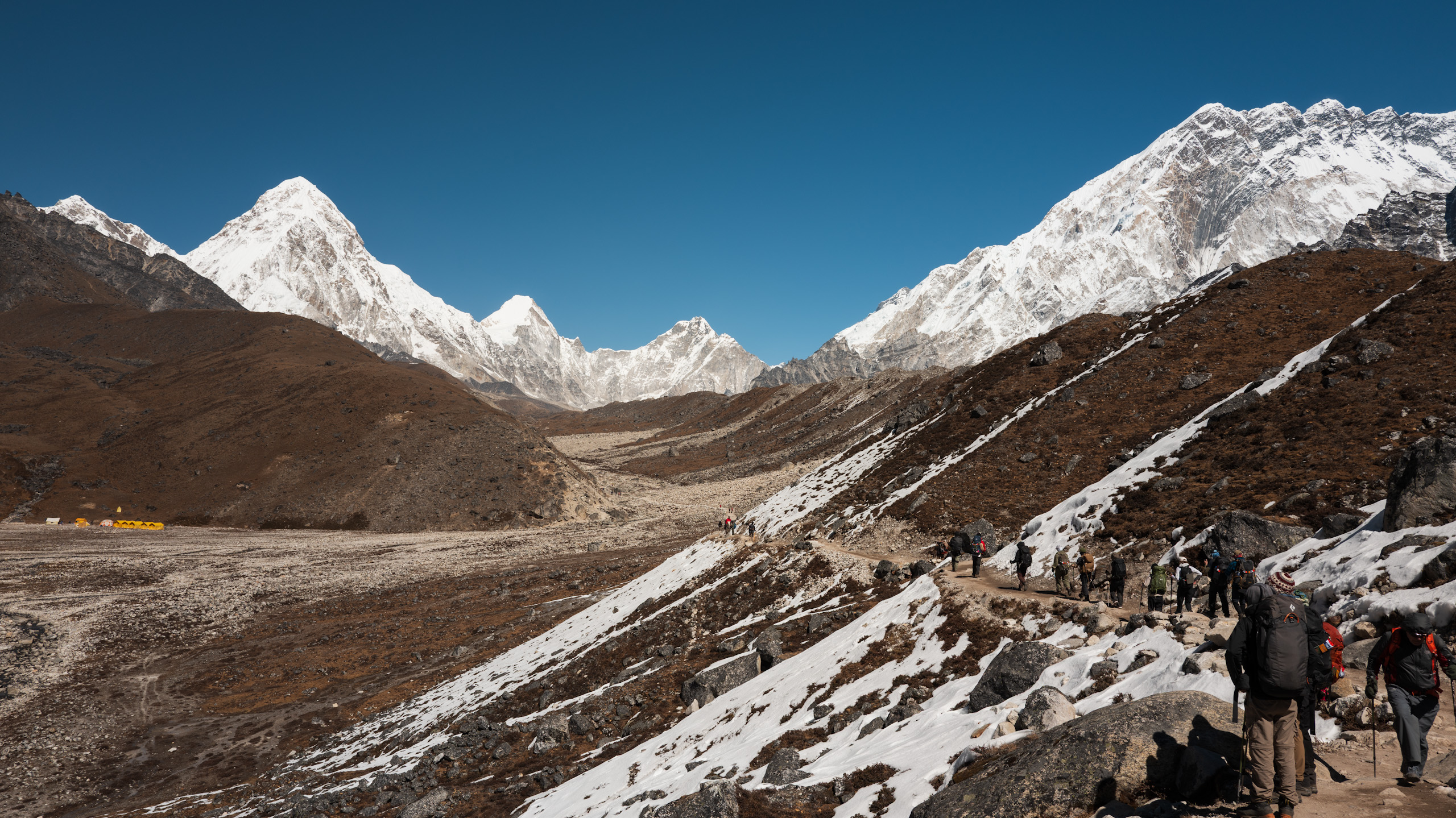
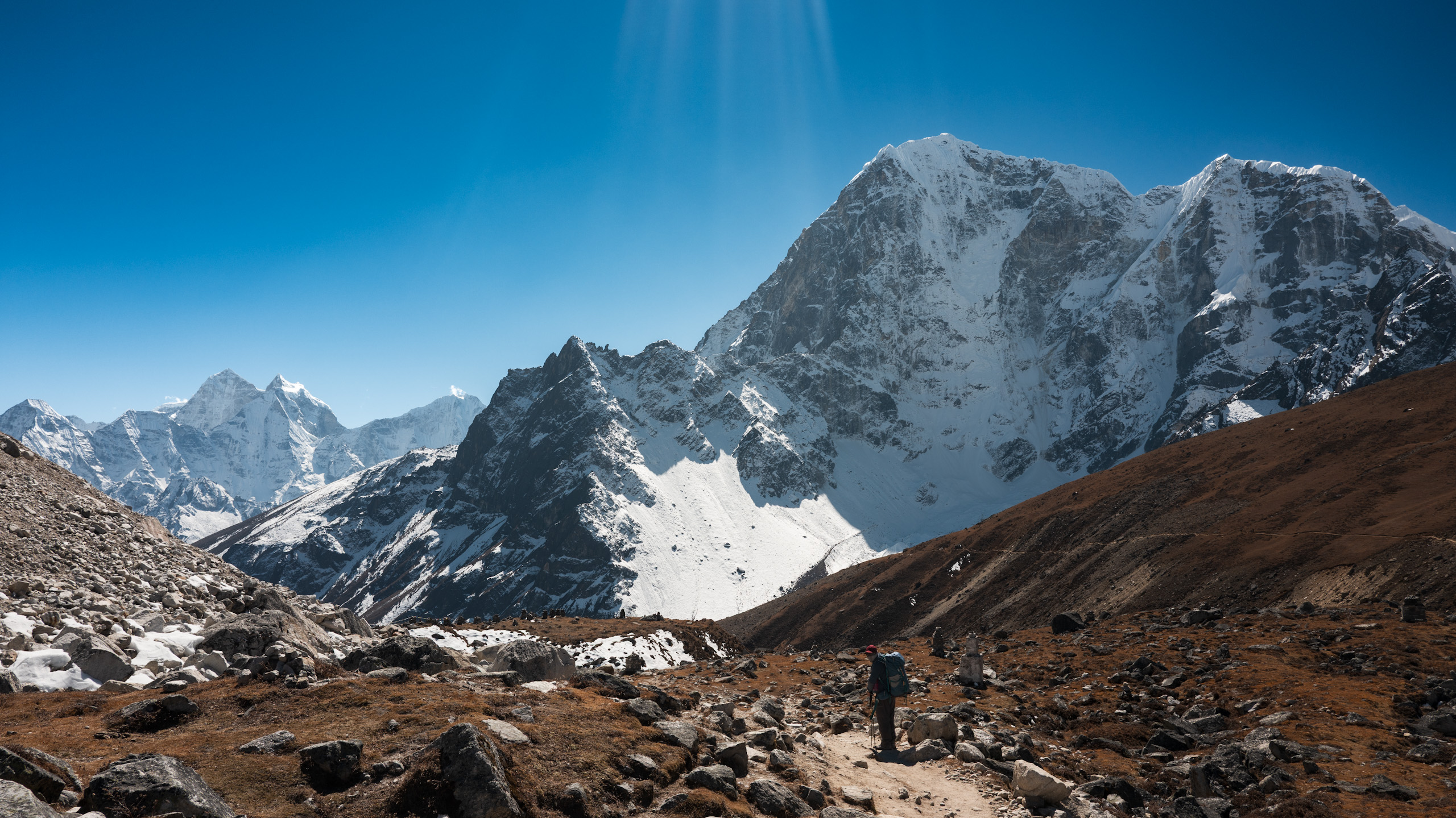
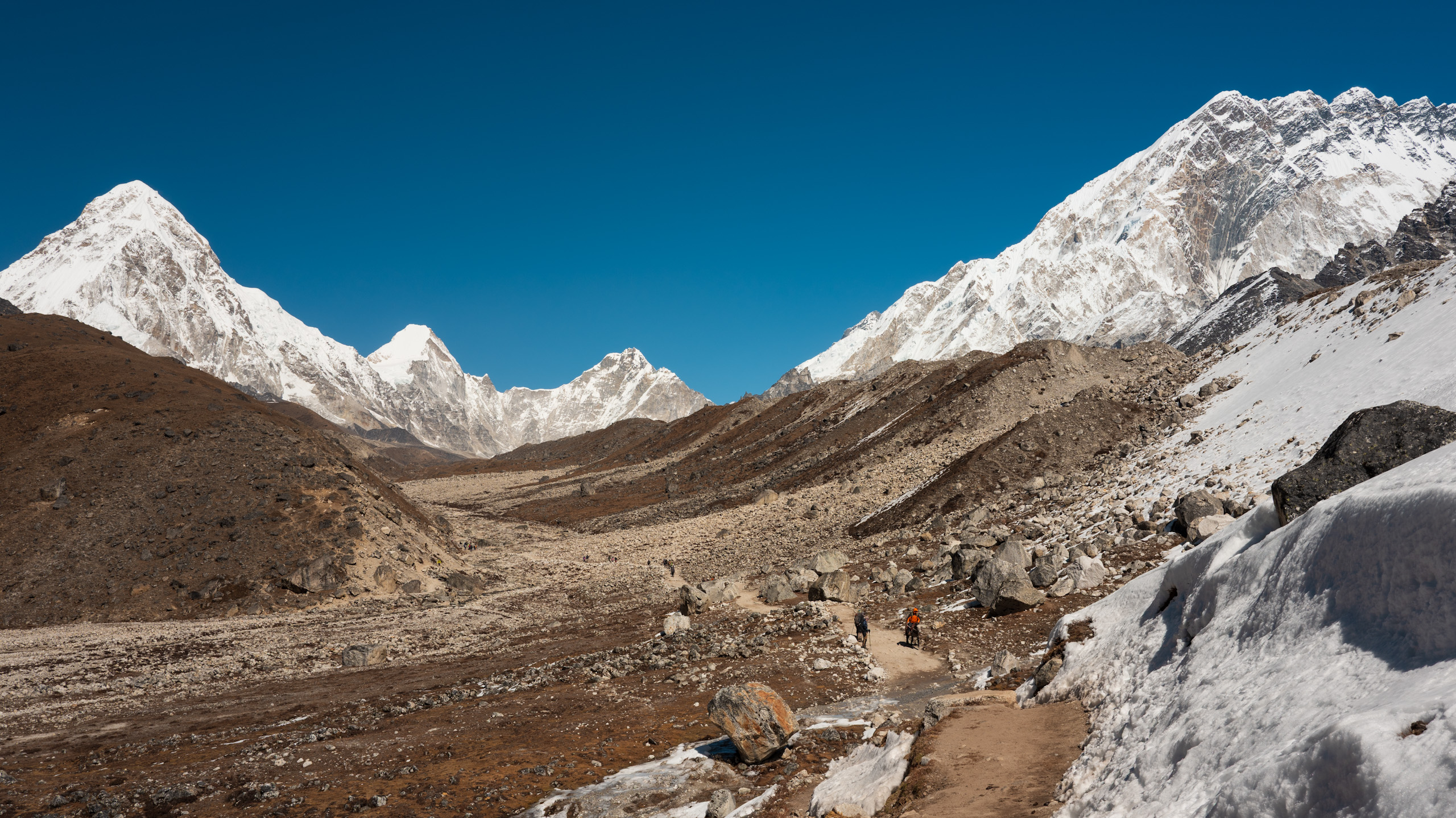
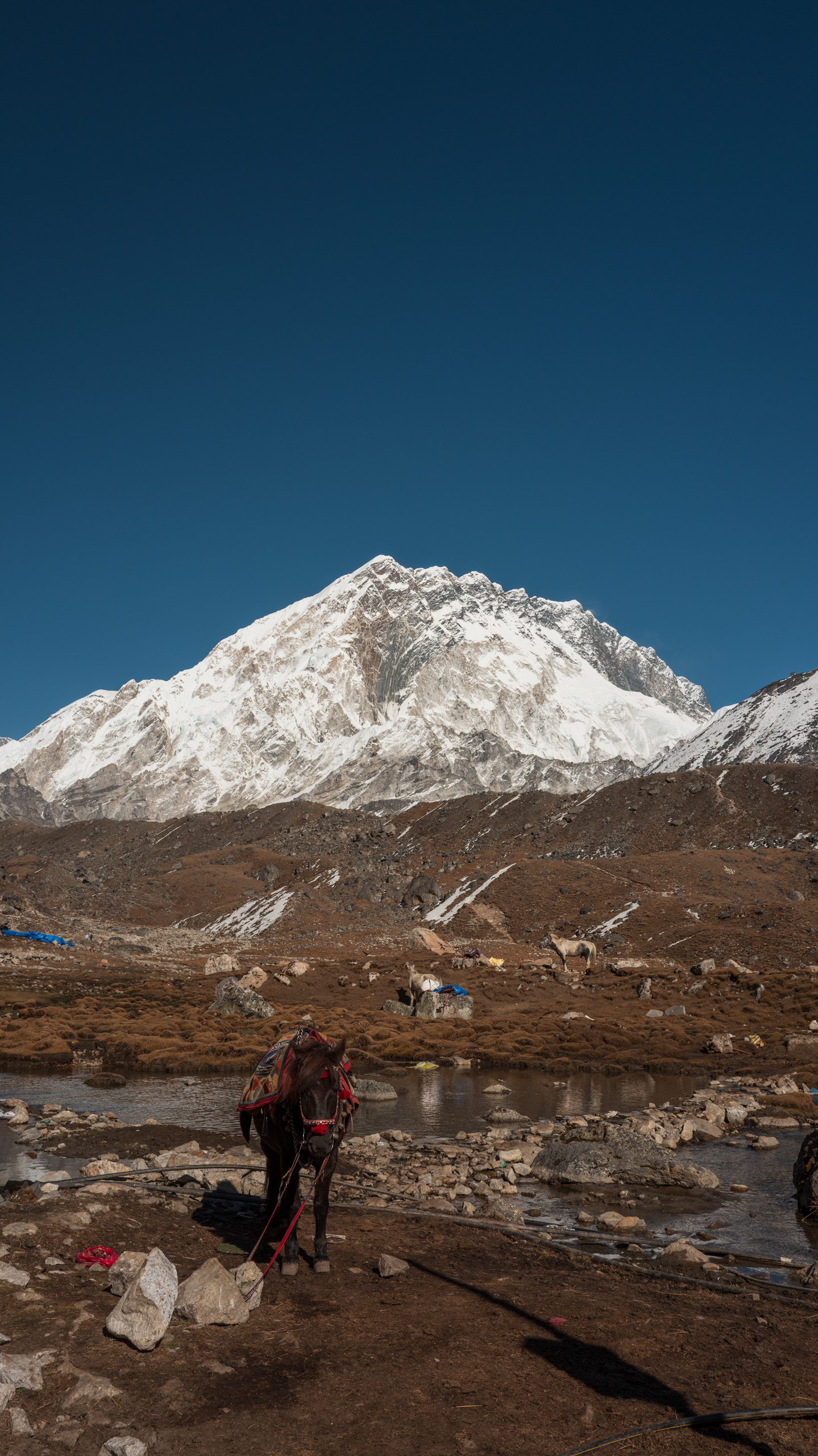
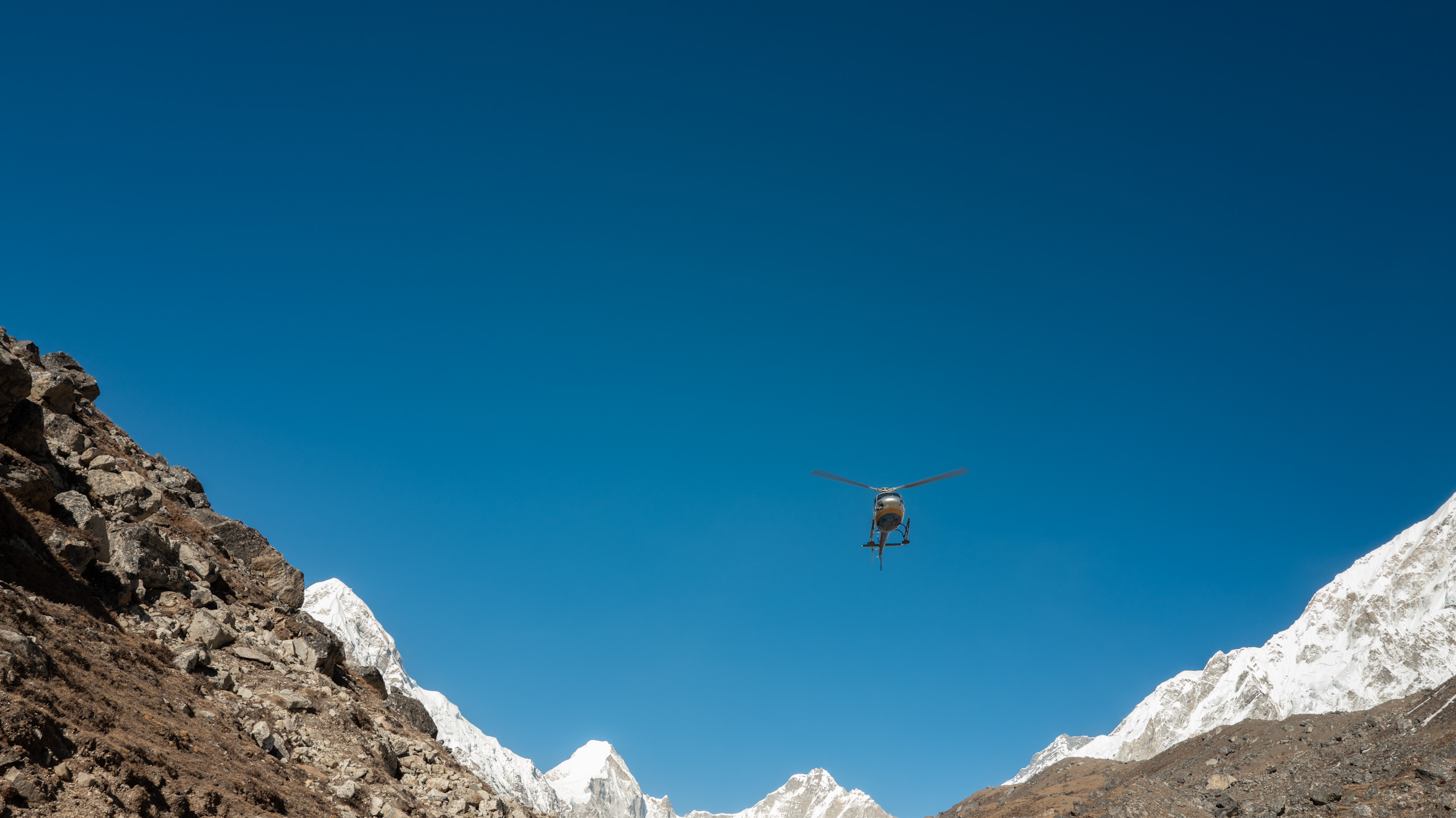
Tonight I sleep at the 8000 Inn, a little above Lobuche village, 5,050 meters above the sea. Tomorrow is Base Camp. Today was the day that asked the most of me.
The stretch from Dingboche to Lobuche looks short on the map, but the body feels every meter of it. The last green fades behind us, and we climb into a world of rock and ice. The trail runs up a broad, windswept valley to the foot of the Khumbu Glacier, then climbs straight up its terminal moraine at Thukla Pass, a steep staircase of loose boulders left behind by the ice, where the Everest memorials stand. Beyond it, the path picks its way through rubble along the glacier’s edge to Lobuche. What makes it so hard is the altitude. Today we crossed 5,000 meters, and our sleeping elevation jumped about 640 meters, more than the roughly 500 meters a day that mountain medicine recommends above 3,000 meters. Add a week of accumulated fatigue, the cold, the dry wind, and air holding only half the oxygen of home, and every step becomes a negotiation.
EBC asks for no technical skill. It tests something else: how much altitude, time, and steady wear a body can take.
A Night the Earth Trembled
Last night the house shook. A magnitude 7 earthquake had struck in Tibet, and I felt it through the walls and the bed. I didn’t sleep well after that. Every two hours I woke, answered a few messages and emails, and drifted off again.
My body was fighting something too. Mucus, a hint of fever. My watch confirmed it: body temperature up by one degree. On the night before the hardest day, that is not what you want to see.
And yet, by morning, I felt fine. Fully recovered. The mountains give, and the mountains take.
Breathing in Long Notes
Before lunch, the trail was kind. We walked along the valley and crossed the longest suspension bridge of the trek. Then the path turned upward, high and steep, a staircase of stone where every single step cost energy and breath.
So I fell back on the breathing my teacher taught me for my wind instrument: deep, slow breaths, filling the lungs all the way down, as if holding a long note. It helped.
Still, the headache came for me. No nausea, just the headache, and a heartbeat pounding so hard it felt unbearable. I slowed down, then slowed down more, keeping fatigue on a short leash. This was the hardest stretch of all seven days. At this altitude, the thin air is not a background detail. It is the main character.
I still refuse to use hiking poles. Among so many rocks, they just feel cumbersome. But I did something today I have never done in my life: I put on lip balm. My lips had gone dry, very, very dry. The Himalaya finds a way to humble everyone.
Stones That Remember
After lunch we reached the memorial site for those who lost their lives on Everest. Many of the memorials here date from the 1996 disaster onward, and in the years since, many others have laid their plaques among the stones.
One of them read: If your goals are not big enough, if they are not scary enough, then they are not big enough.
True. Mountaineers are brave souls. What kind of person walks away from the comfort of home to live in an environment this harsh? And here we are, still below Base Camp. From Base Camp to the summit there are nearly 3,500 more vertical meters, tremendous effort in a far crueler world: biting cold, and a place where every careless movement could kill you.
For many people who want to feel Everest, Base Camp is a good goal. A worthy one.
And the mountain teaches something about the journey of life: you do not need to rush. Go slowly, methodically. Rushing will cost you here, no matter how strong you are. You will not get much further ahead of anyone else, because the oxygen is the same for all of us.
Sixty Kilograms of Love
On the trail we passed a porter carrying two gas tanks, about sixty kilograms. I tried to imagine how he could even lift them. His face showed only determination, nothing else.
Who knows? Perhaps his children and his wife are waiting at home for the bread he will bring.
Where the Glaciers Begin
I am still content with yesterday’s sunrise and sunset photos. That was perfect timing, and I don’t need more today.
The remaining trail was rough. We began to see glaciers, snow-covered hills, and slopes buried under fallen rock. As I walked on, my mind went two directions at once: toward the hardest part still ahead, and toward home.
Did I learn anything from this trip? Yes. A lot. Without undertaking a trek like this, some things are very hard to understand.
I see people of every color here. This close to Base Camp, there are no children, only adults. The oldest, we know, is between 70 and 80 years old. Wherever they come from, each person carries their own quiet reason for walking this path, a kind of self-searching.
Garlic Soup and Our Final Push
By the time we reached the inn, all three of us were exhausted, almost ready to fall asleep on the spot. We had to push ourselves just to check in and eat dinner. Unlike the previous nights, the rooms at this inn are shared by several people. But since Xia had left the trek early, I had a room to myself.
What does 5,000 meters actually do to a body? Up here the air pressure is only about half of what it is at sea level, so every breath brings in roughly half the oxygen. The body fights back the only way it can: breathing faster and driving the heart harder. Even walking slowly, the heart works as if you were running. Most people lose around a third of their maximum exercise capacity at this height, which is why every step feels like climbing with a heavy load. Sleep turns restless, with irregular breathing that jolts you awake. Appetite fades. The dry, cold air pulls water out of you with every breath. Headache and fatigue are the common, mild signs of altitude sickness, and a few people go on to develop pulmonary or cerebral edema, where descent becomes urgent. The highest permanent human settlement on Earth sits at about 5,100 meters. Tonight, we sleep right at the edge of where people can live.
We measured our blood oxygen. I tested my fingertip three times, and it read 57%. That number is frightening. At sea level, normal is 95–100%. Even here at 5,050 meters, a well-acclimatized trekker usually reads somewhere around 75–85%. A true 57% would mean severe hypoxemia: blood carrying so little oxygen that the brain and heart are under real strain. That is the territory where high-altitude pulmonary or cerebral edema becomes a serious worry, and the standard response is oxygen and immediate descent.
But my fingers were ice cold. A pulse oximeter shines light through the fingertip and reads the color of the blood pulsing beneath. When fingers are cold, the tiny blood vessels clamp down to keep the body’s core warm, the pulse signal grows weak, and the device can badly underestimate. So I wrapped my fingers around a cup of hot drink, let them warm up, and measured again: 83%. That is the number to trust, and for 5,050 meters, it is pretty decent. Lesson learned: at altitude, warm your fingers before you believe the number. I didn’t panic.
My heart told the same story. At home, my resting heart rate is around 50. Today, sitting still, it read 90, nearly double. Even at rest, my heart was working hard to make up for the missing oxygen.
Sara suggested riding a horse to Base Camp instead of walking: about five hours up and two hours down. The two ladies managed to find one horse. I still want to walk. If I sleep well tonight, I should be fine. My headache is already gone, and I have no other symptoms. So I will walk with our guide. Breakfast at 5:30, out the door around 6:00, so we can still catch the sunrise.
The plan: if we reach Base Camp tomorrow afternoon, we will call a helicopter to fly down. Bad weather is forecast around October 27. The original plan of walking down for three days would run into that weather, and the small airport at Lukla may not be able to fly for days. The whole team agreed: helicopter.
Today, all three of us reached the limit of our strength. It was an extreme test of the heart and the body. For me: foot pain, exhaustion, headache. Luckily, nothing more, so it should be normal. Still, when I think about tomorrow, my heart is uneasy.
They say the hardest step is the last one, because that is when people grow afraid. Whatever happens, tomorrow will test our limits. Our goal is to reach Base Camp, and at the same time to manage risk carefully. Unnecessary risk, we will not take. Safety and health come first.
Fortunately, our guide Buddhi is very experienced, eighteen years of guiding, and he walks really slowly. Tomorrow I will ask him to take a few more breaks near the end to keep the headache away.
Up here, the menu choice comes down to vegetable fried rice or vegetable noodles. Nothing else feels safe to eat. For dinner I ordered potato soup, hoping to revisit a childhood memory. It wasn’t as good as my mother’s. We also drank garlic soup: practically raw garlic, boiled for a few seconds in water. It doesn’t taste good, but we drank it. The locals believe it helps the blood circulate and eases altitude sickness.
I took melatonin, put in my earplugs, and stacked two pillows under my head, afraid my breathing might falter in the night. Then I laid out tomorrow’s clothes, every warm layer I have. Ready for the final push.
A Word From the Summit
Junko Tabei, who in 1975 became the first woman to stand on top of Everest, reminds me what will carry me tomorrow:
“Technique and ability alone do not get you to the top. It is the willpower that is the most important. This willpower you cannot buy with money or be given by others. It rises from your heart.”
Tomorrow, Base Camp. And then, home.
Day 10 · October 24 — Above the Peaks, Between Flying and Staying
8000 Inn above Lobuche (~5,050 m) → Gorak Shep (~5,164 m) → Everest Base Camp (5,364 m), reached at 10:55 AM · helicopter to Kathmandu
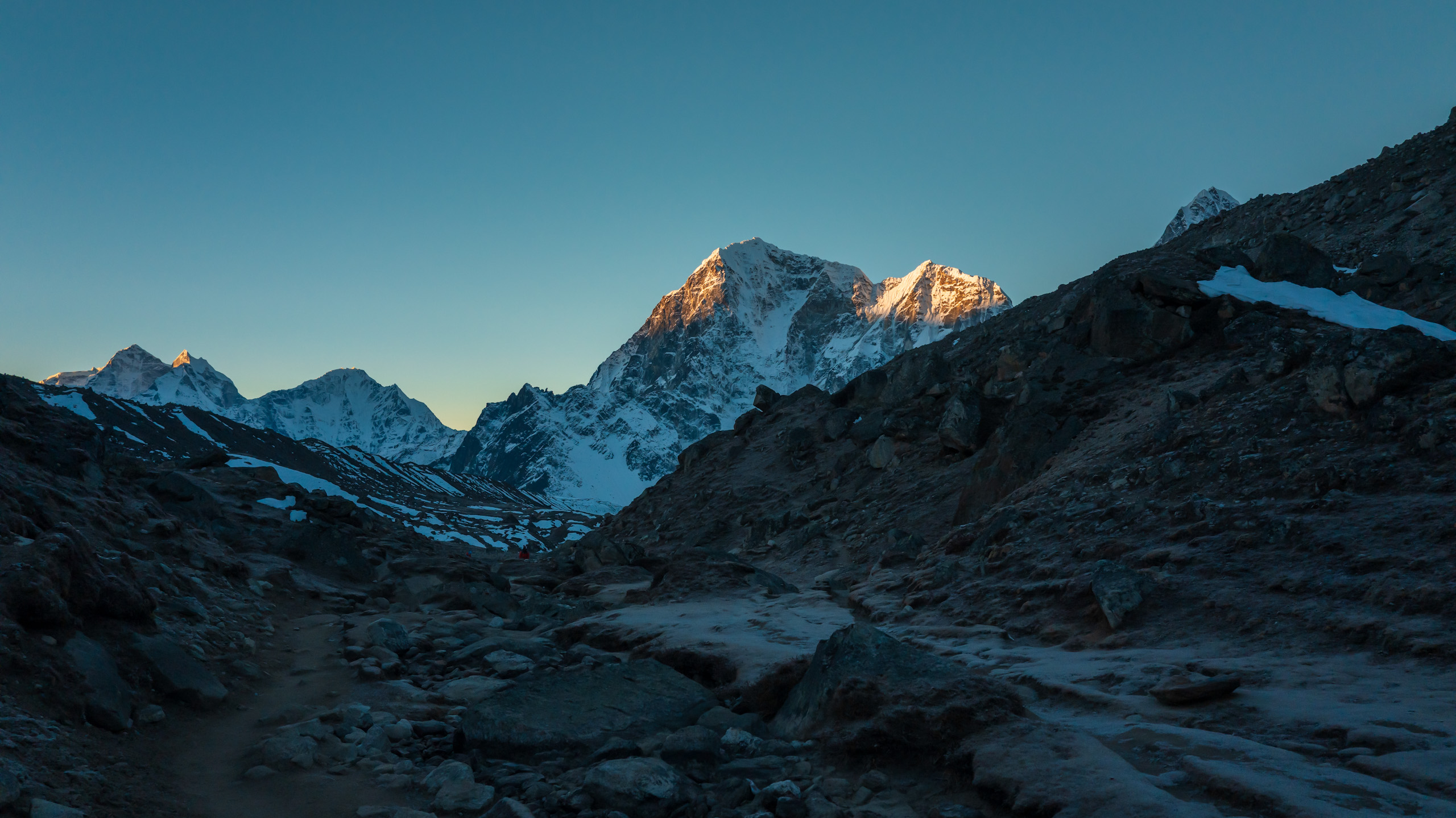
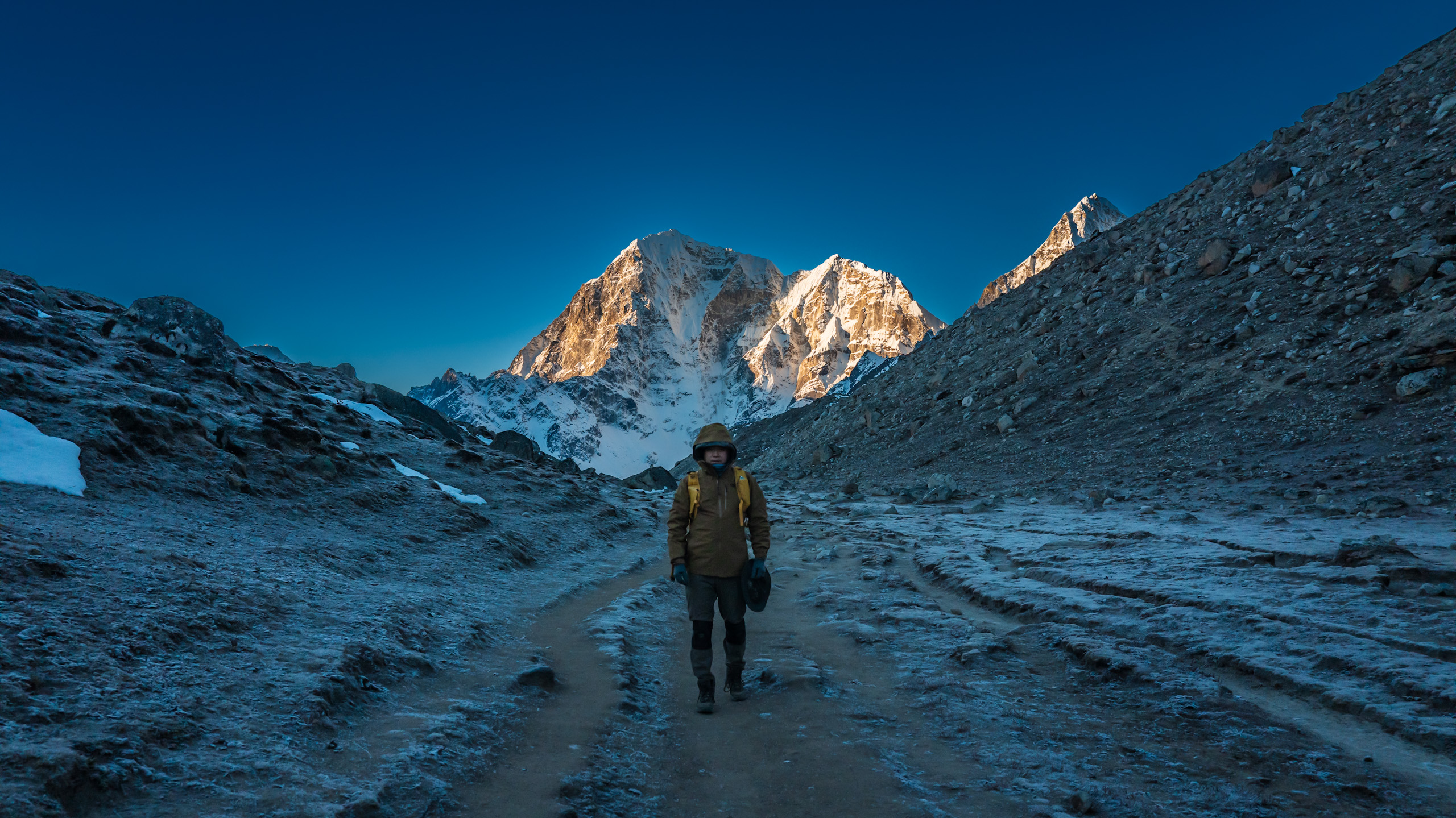
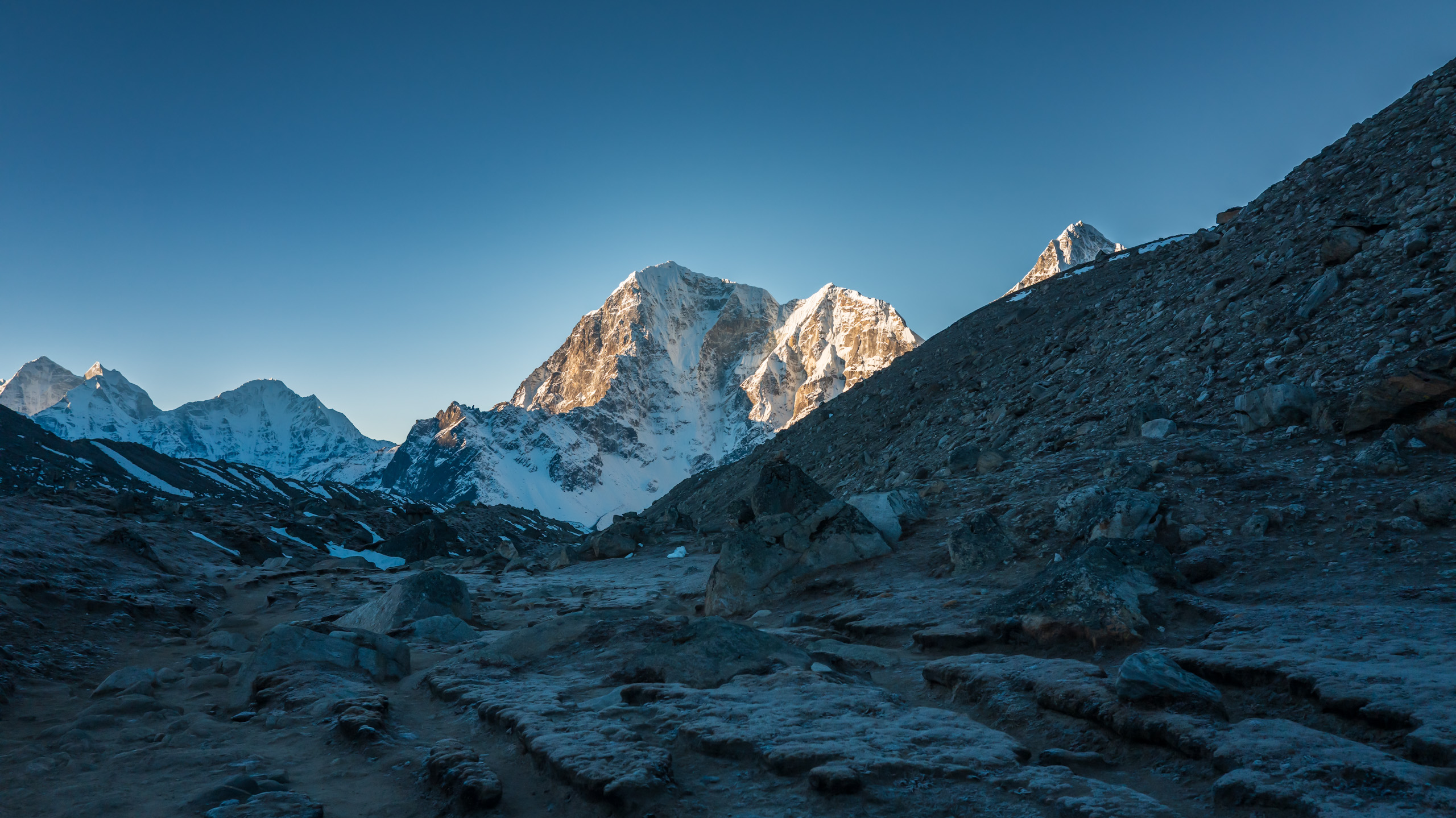
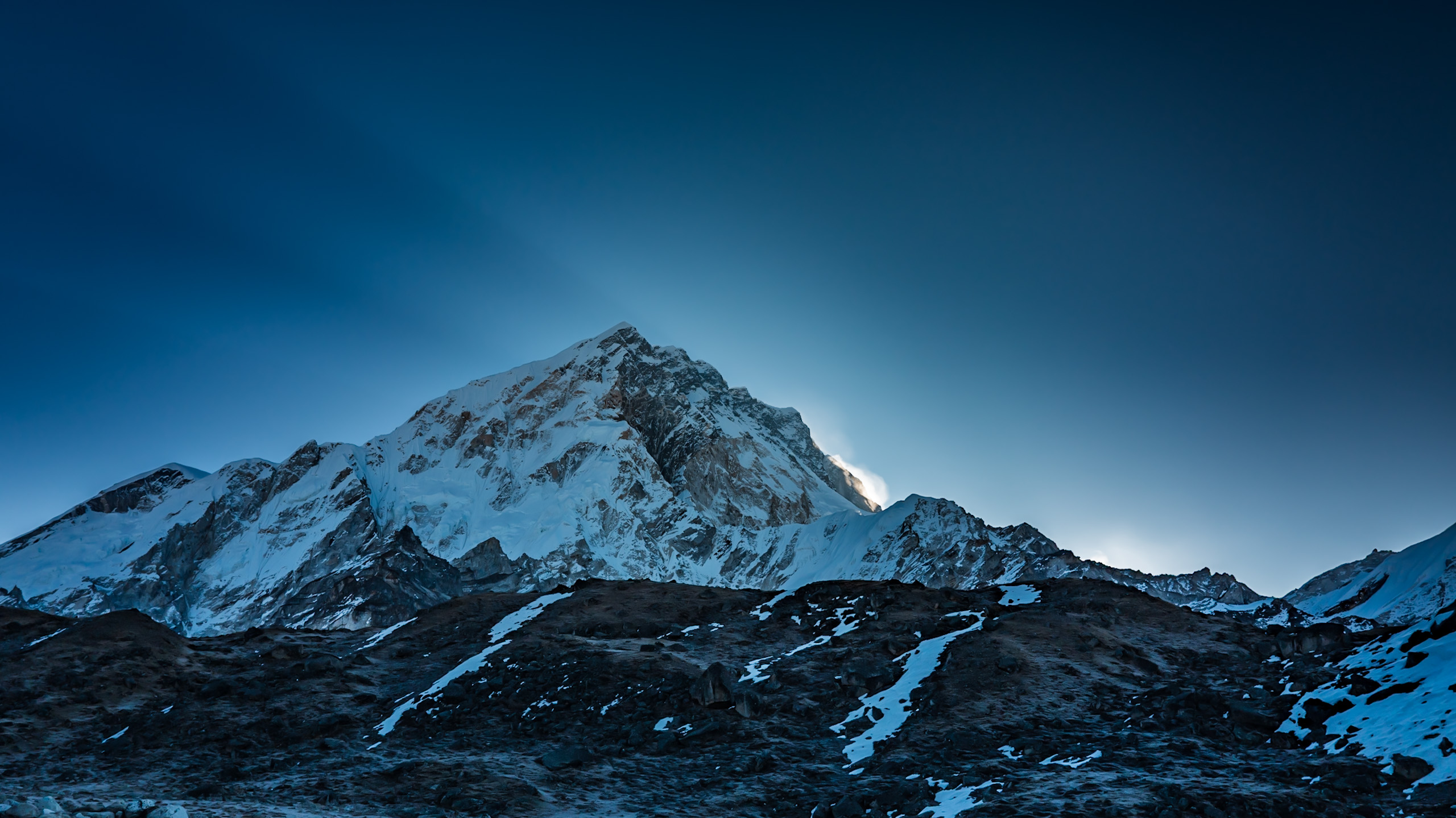
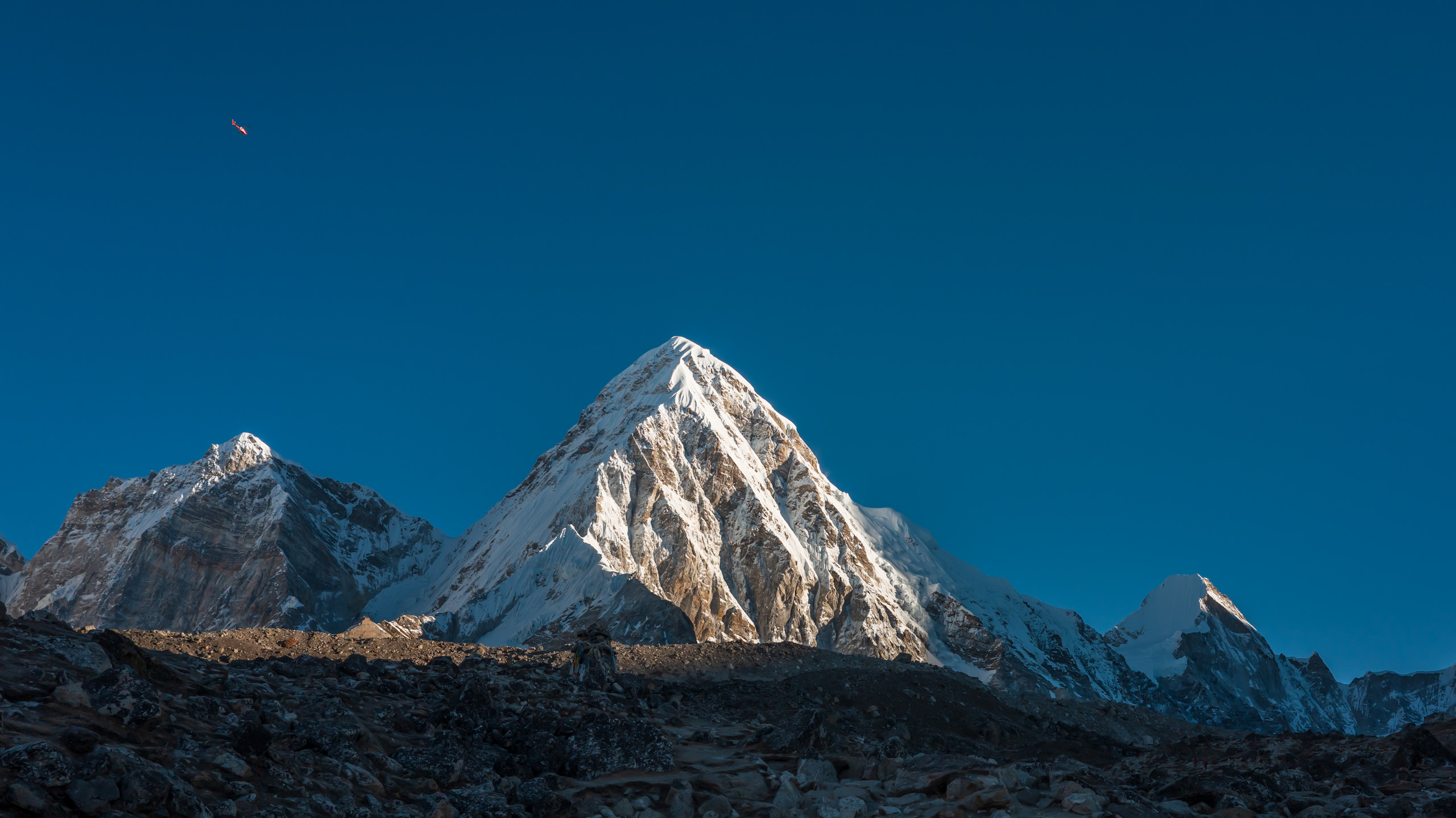
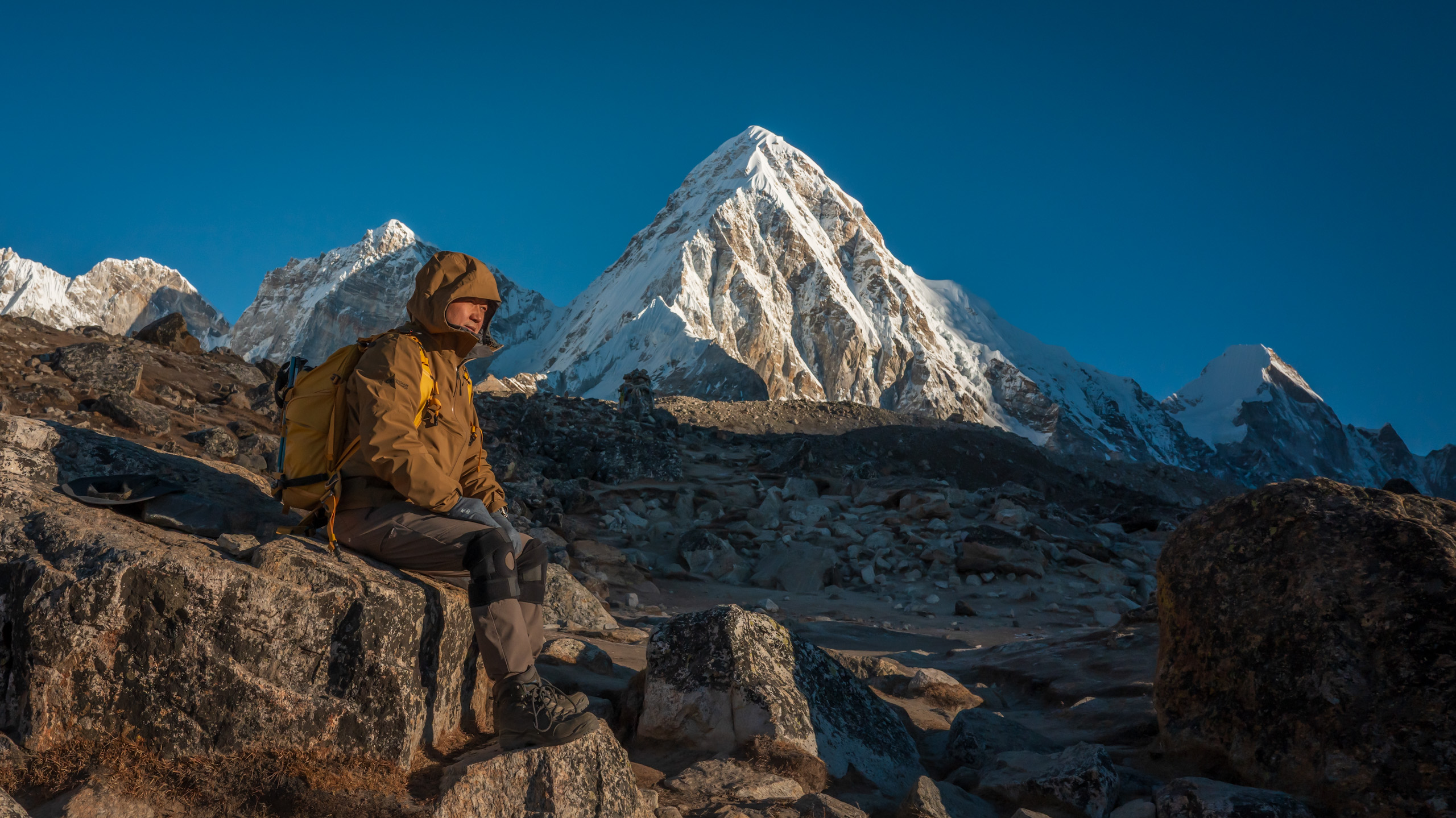
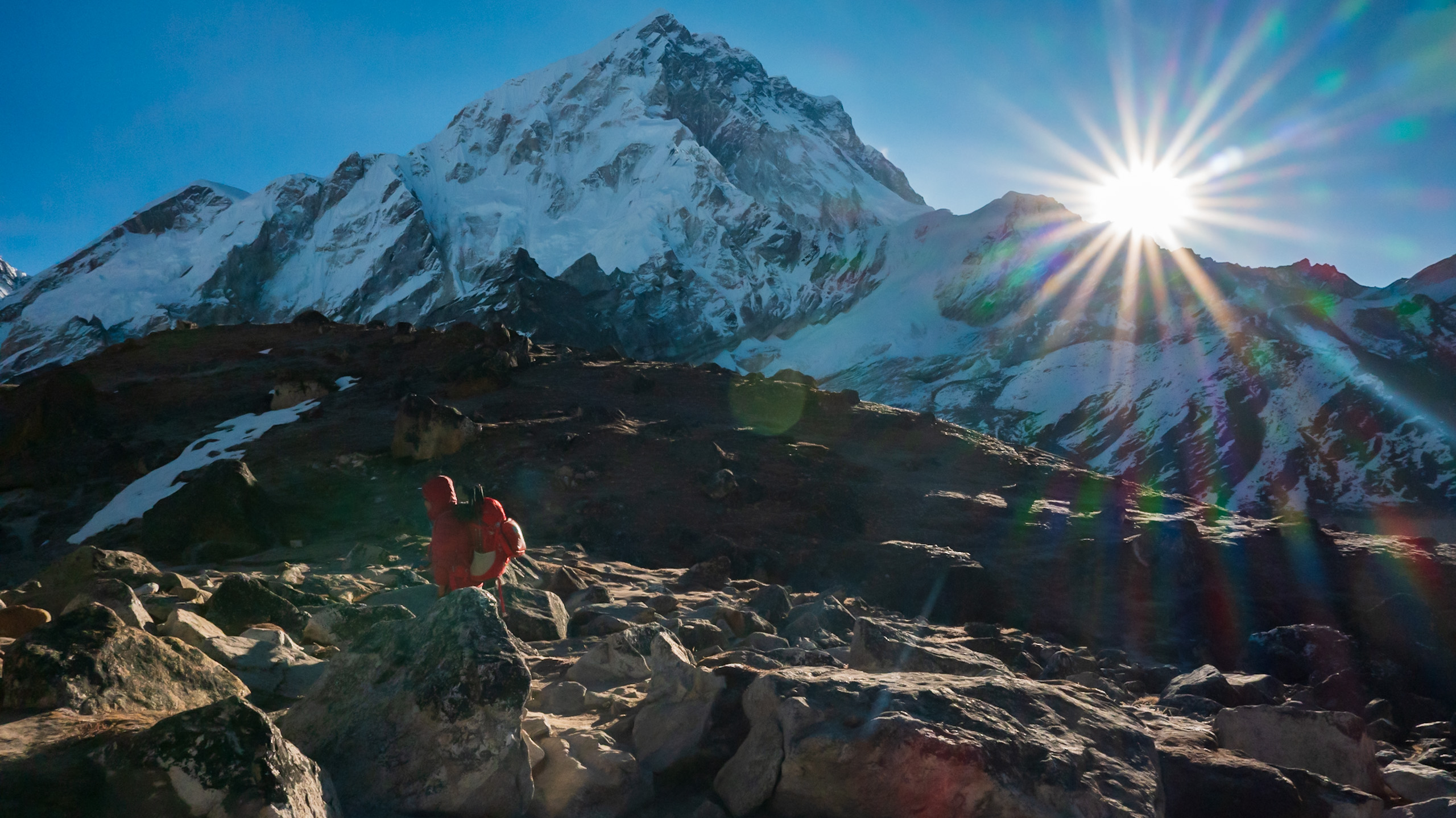
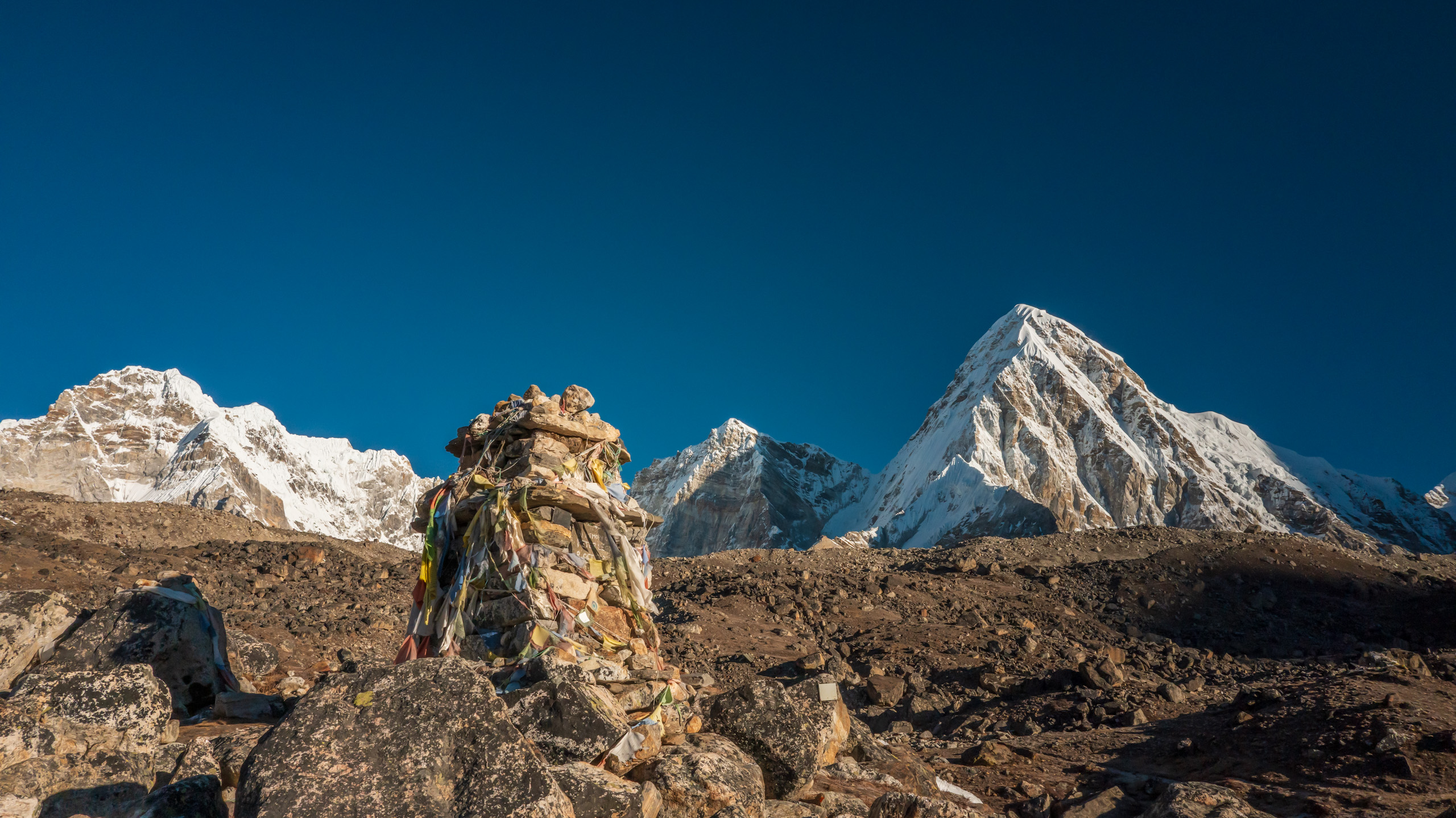
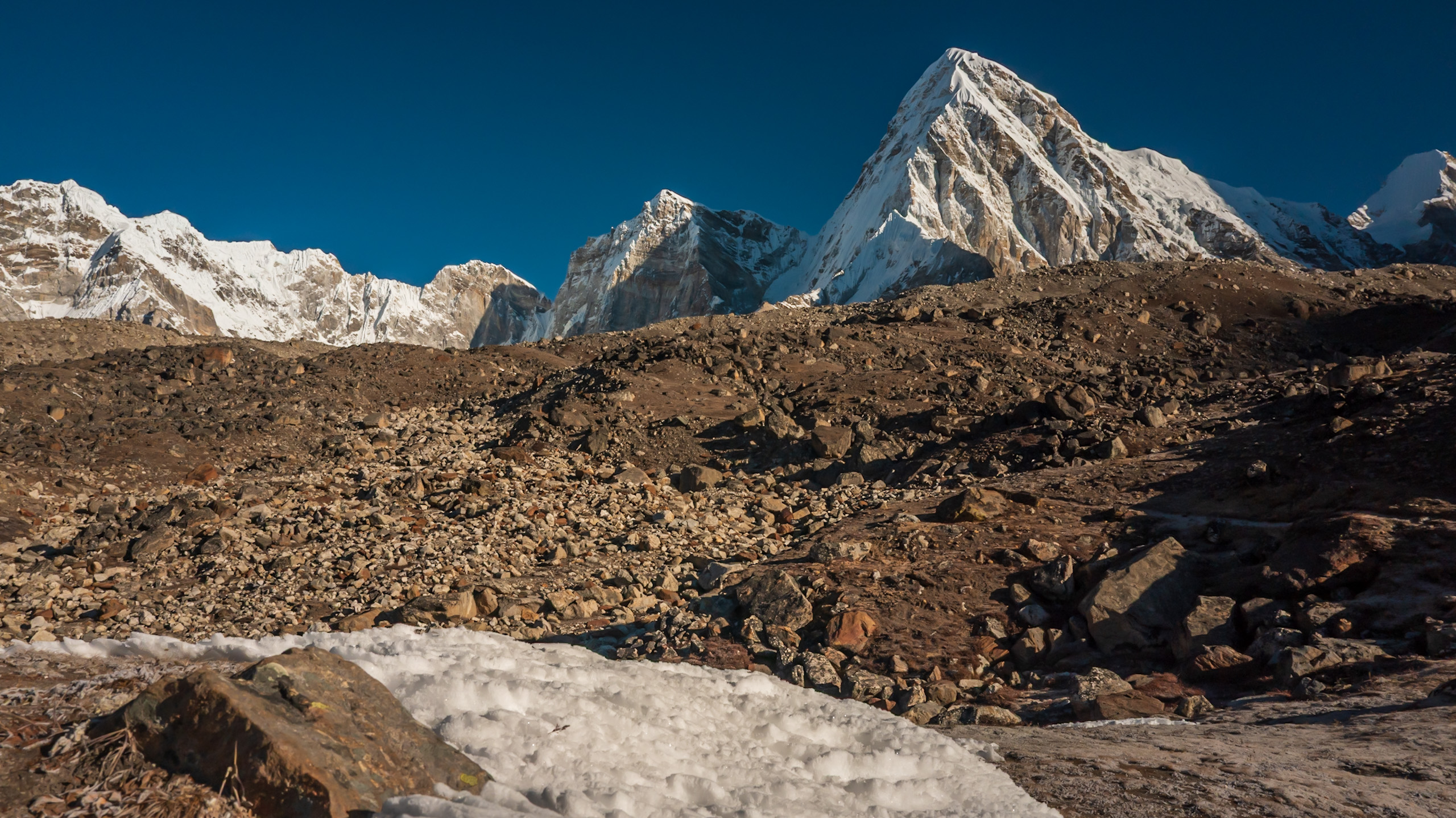
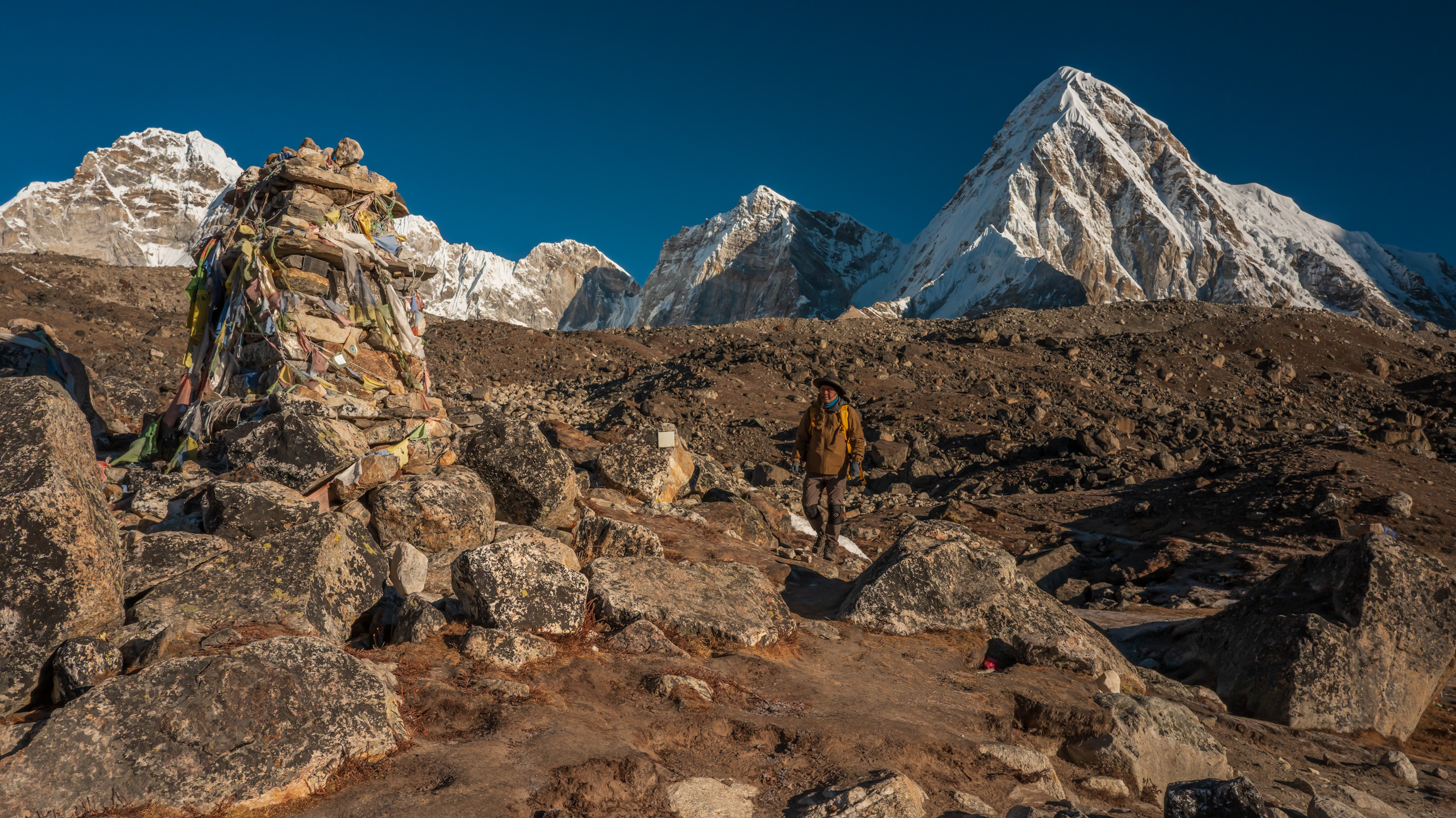
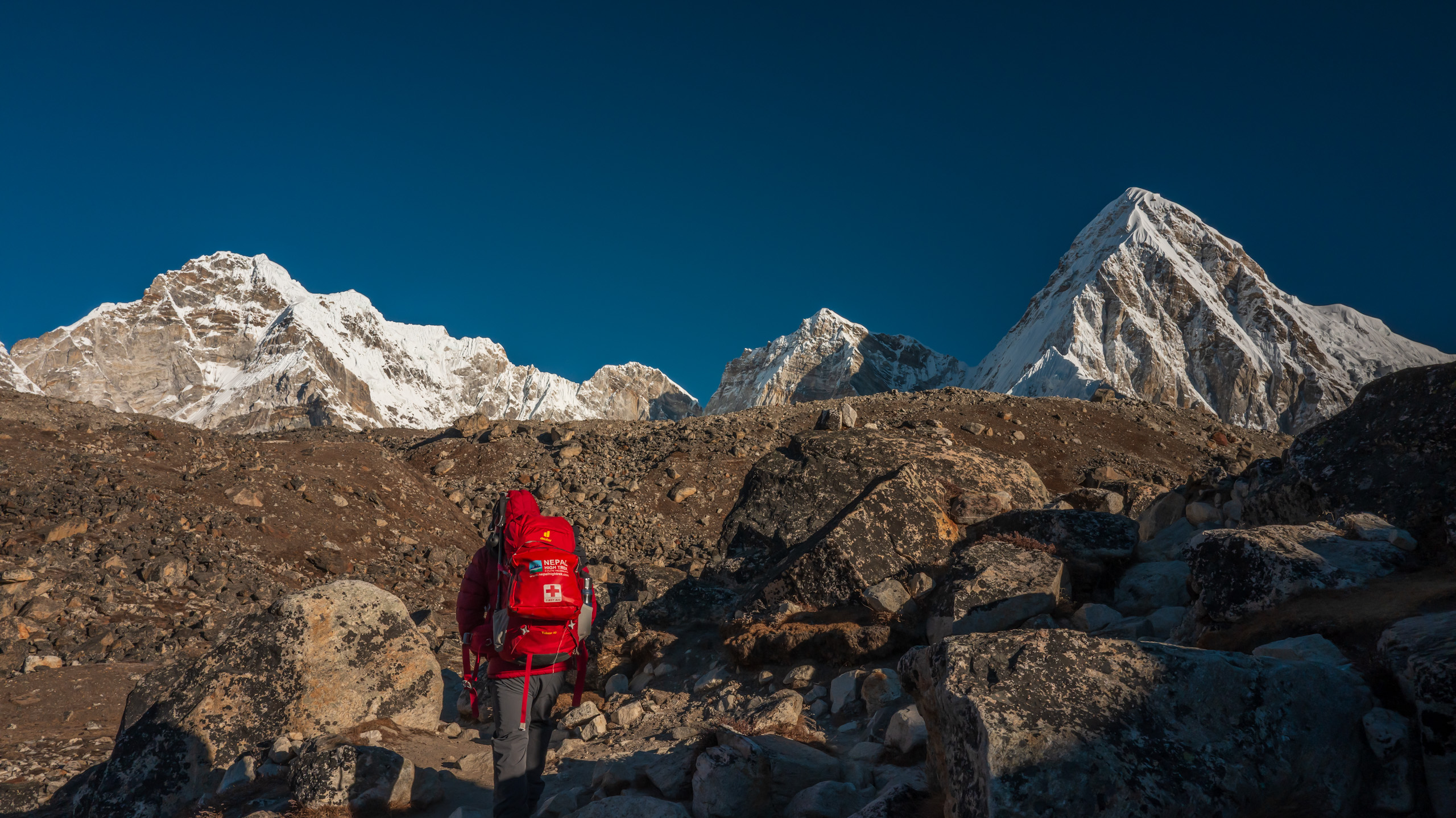
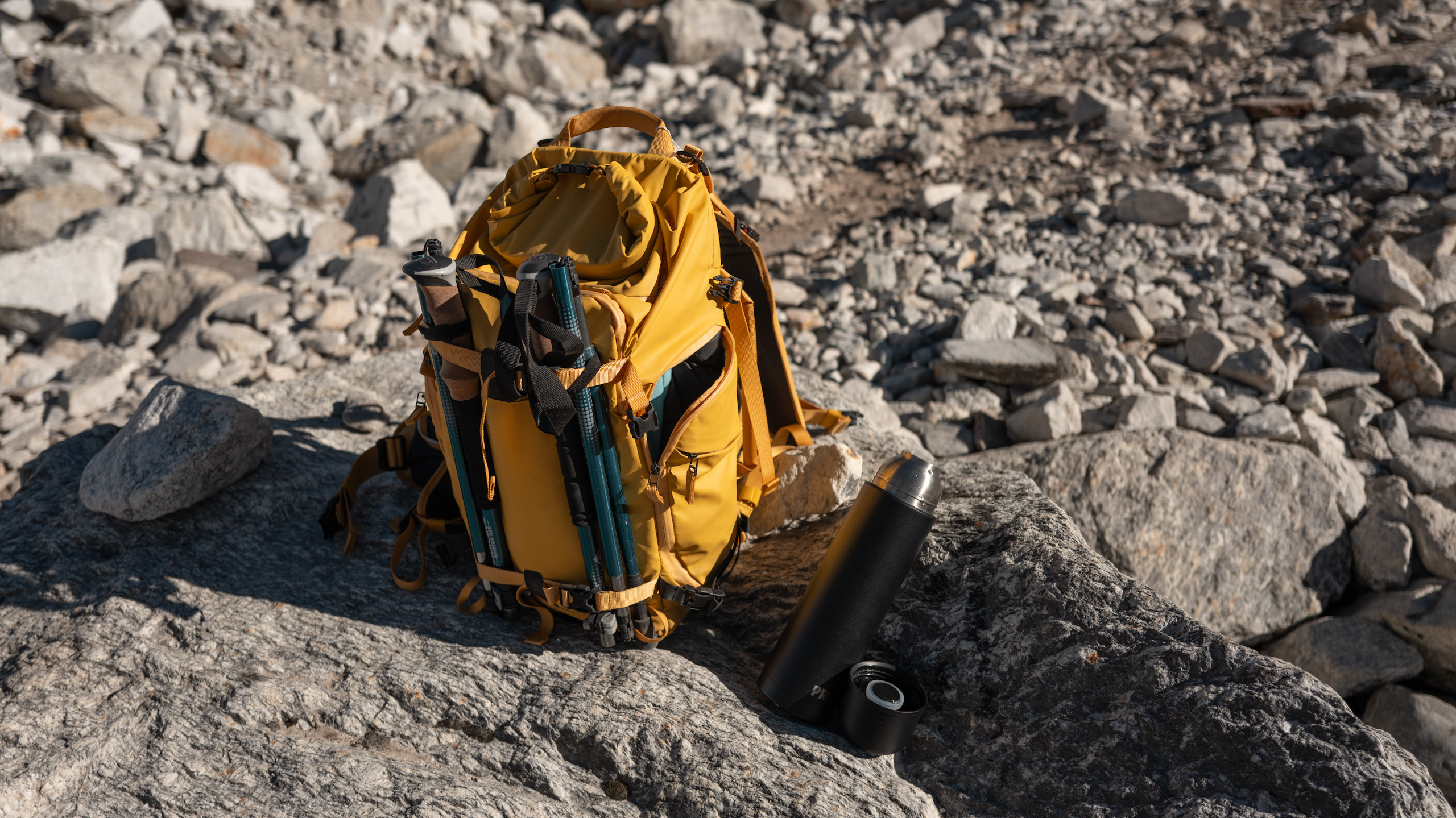
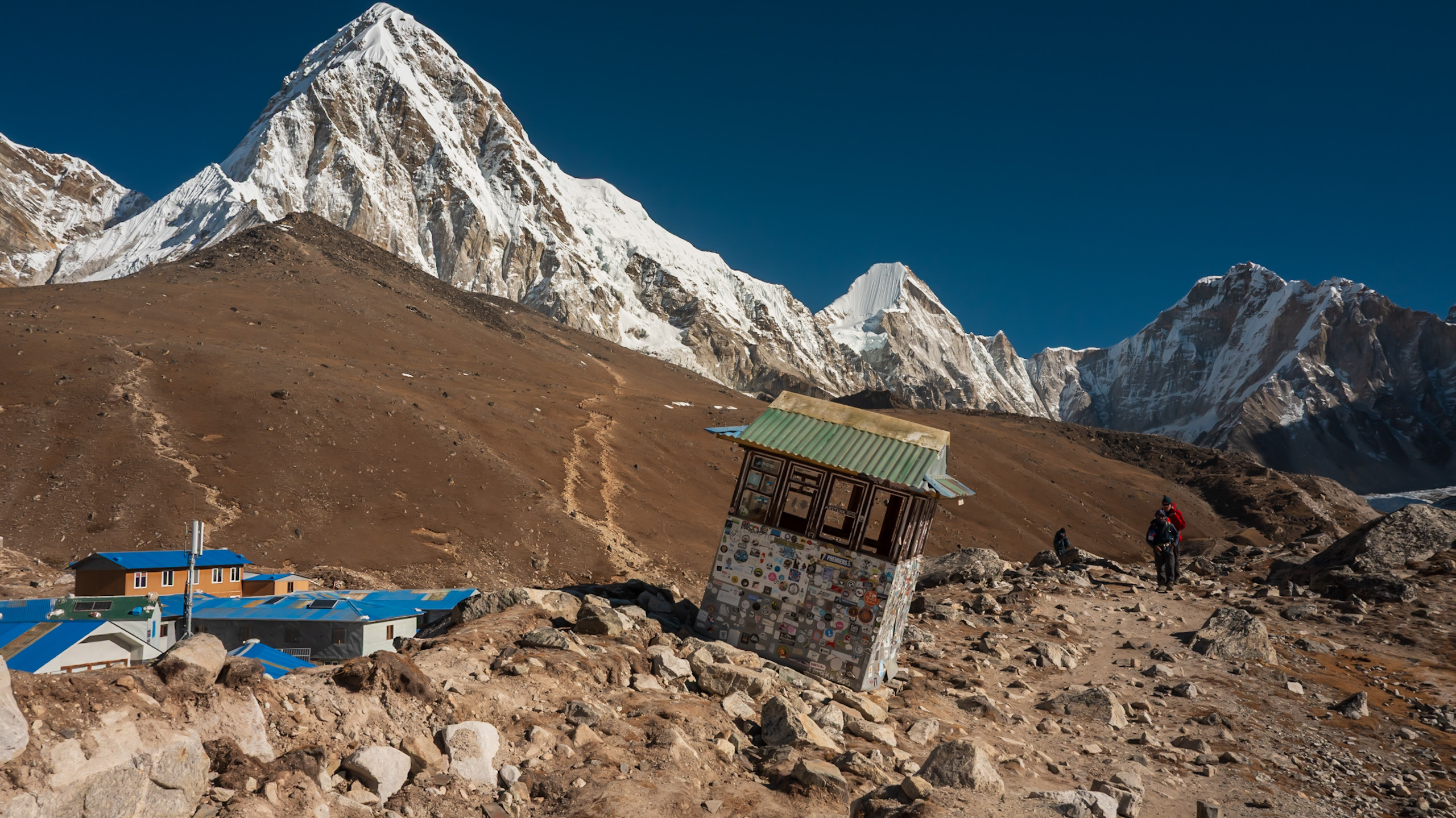
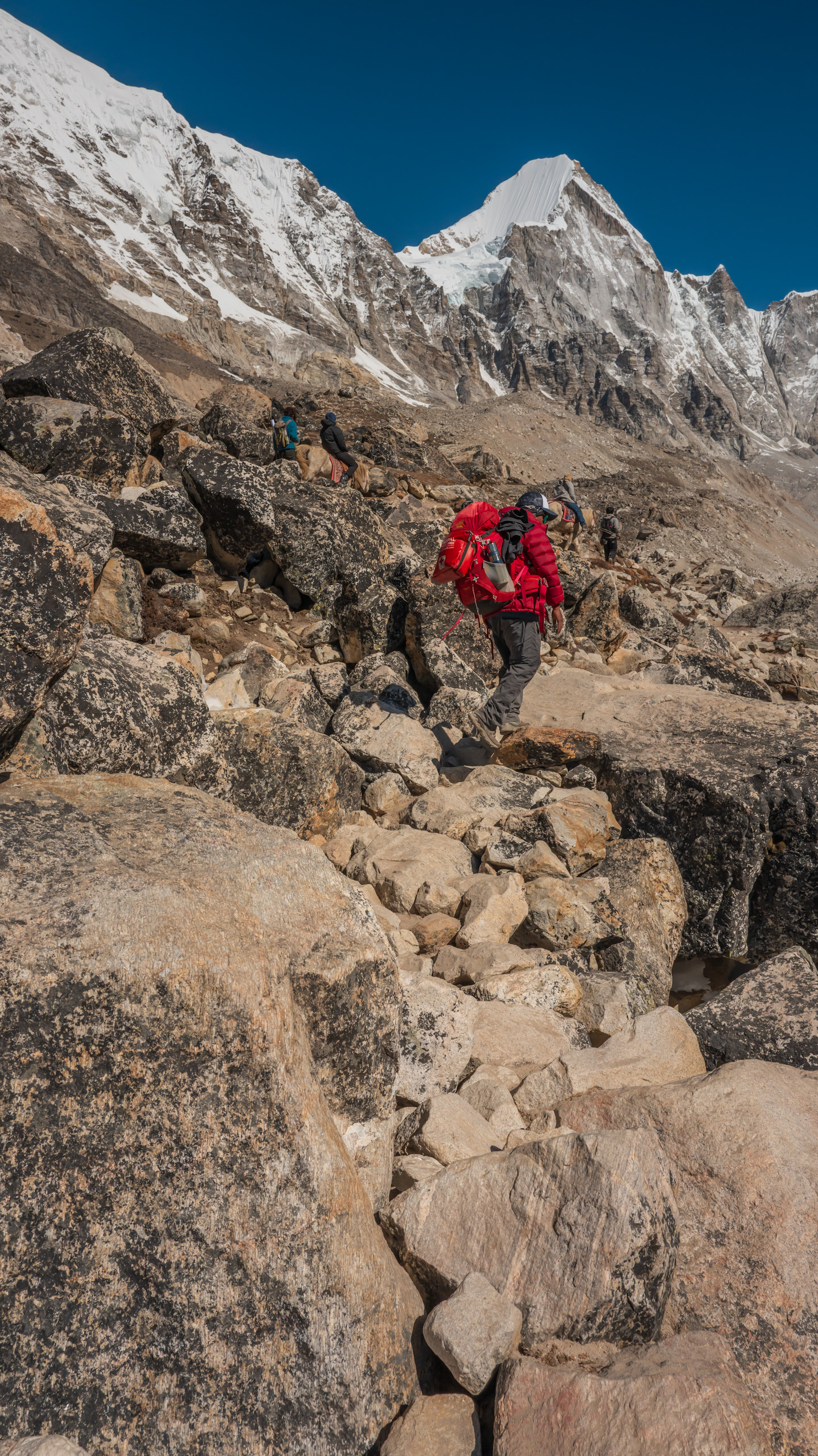
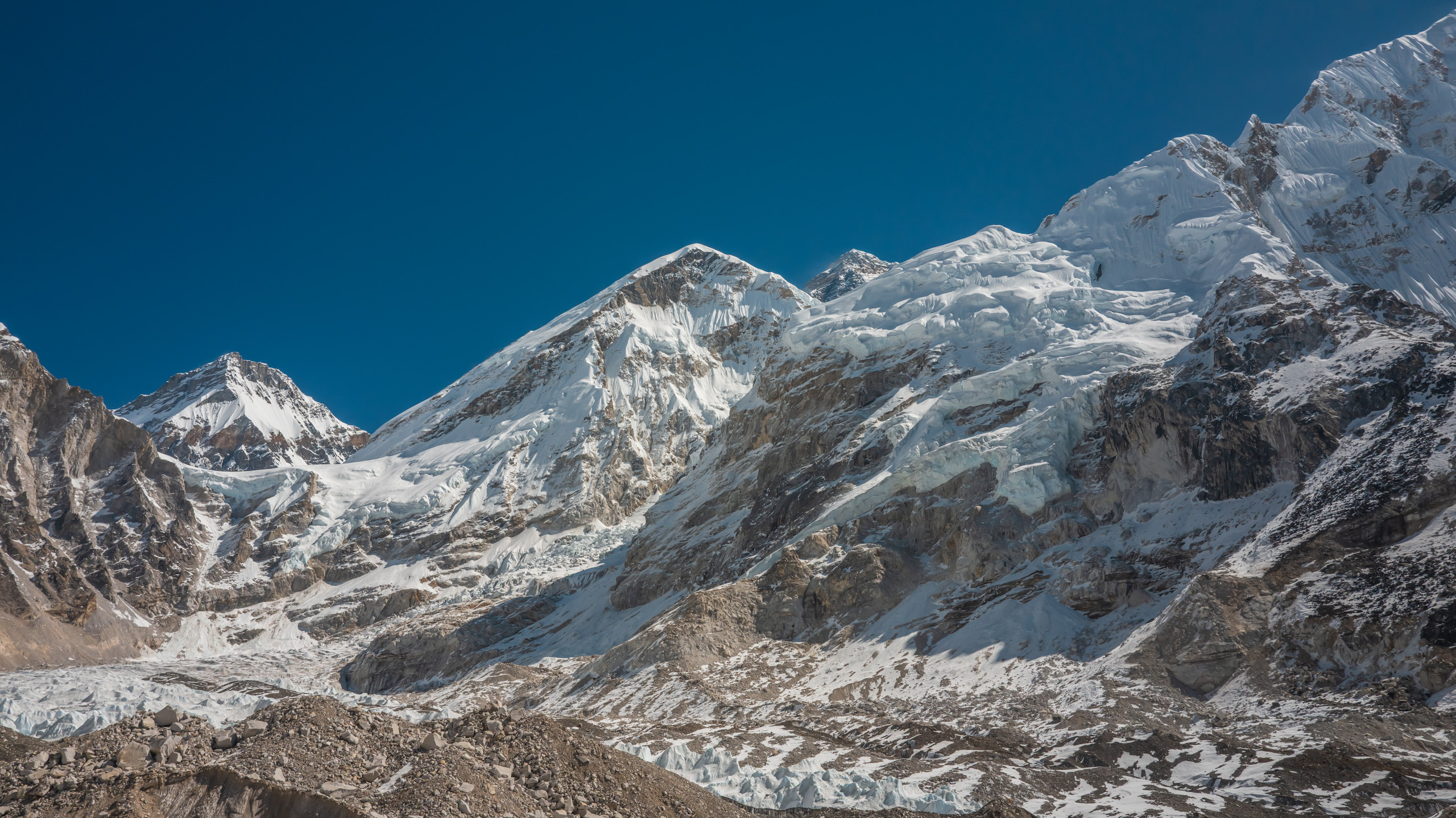
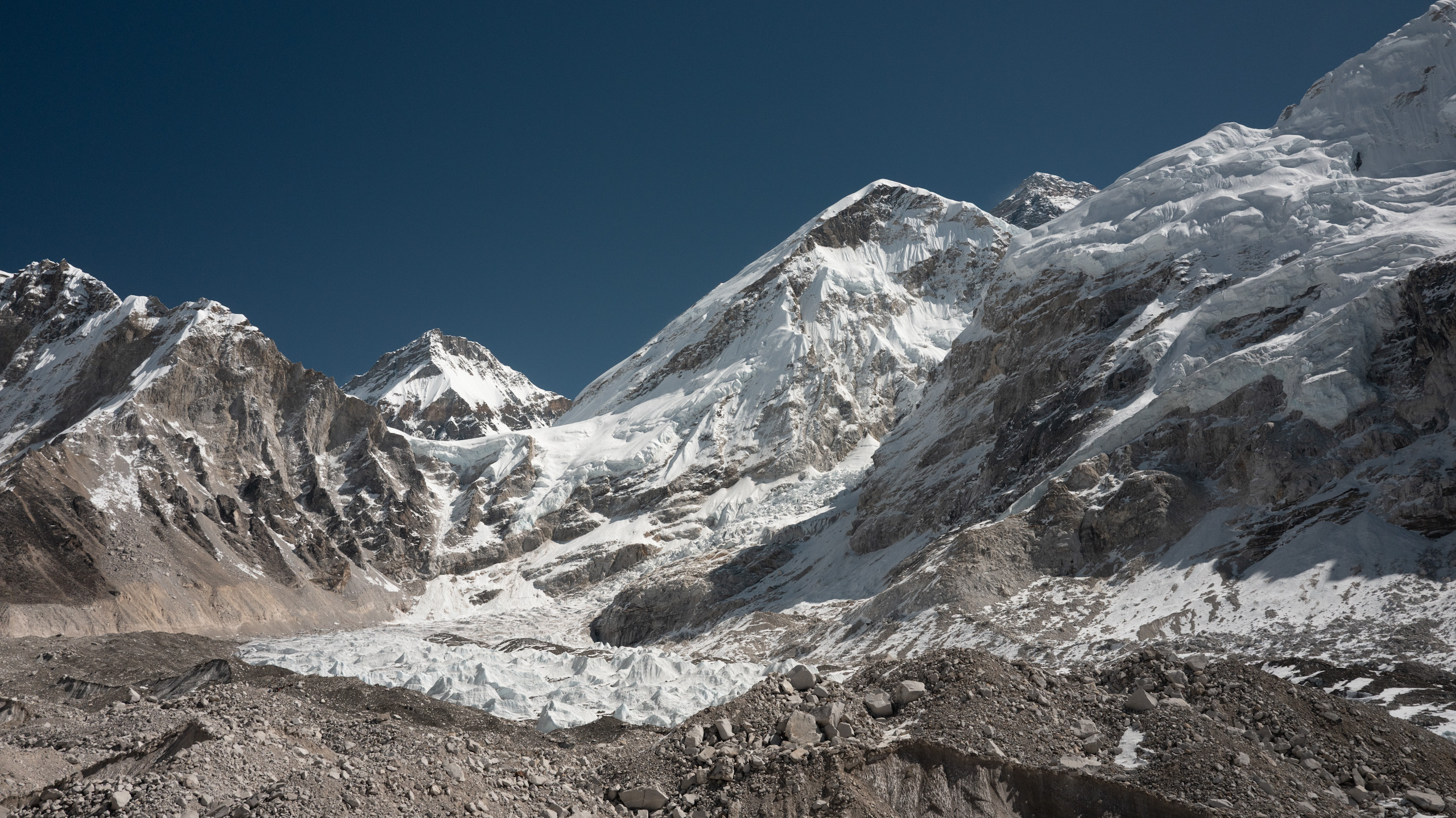
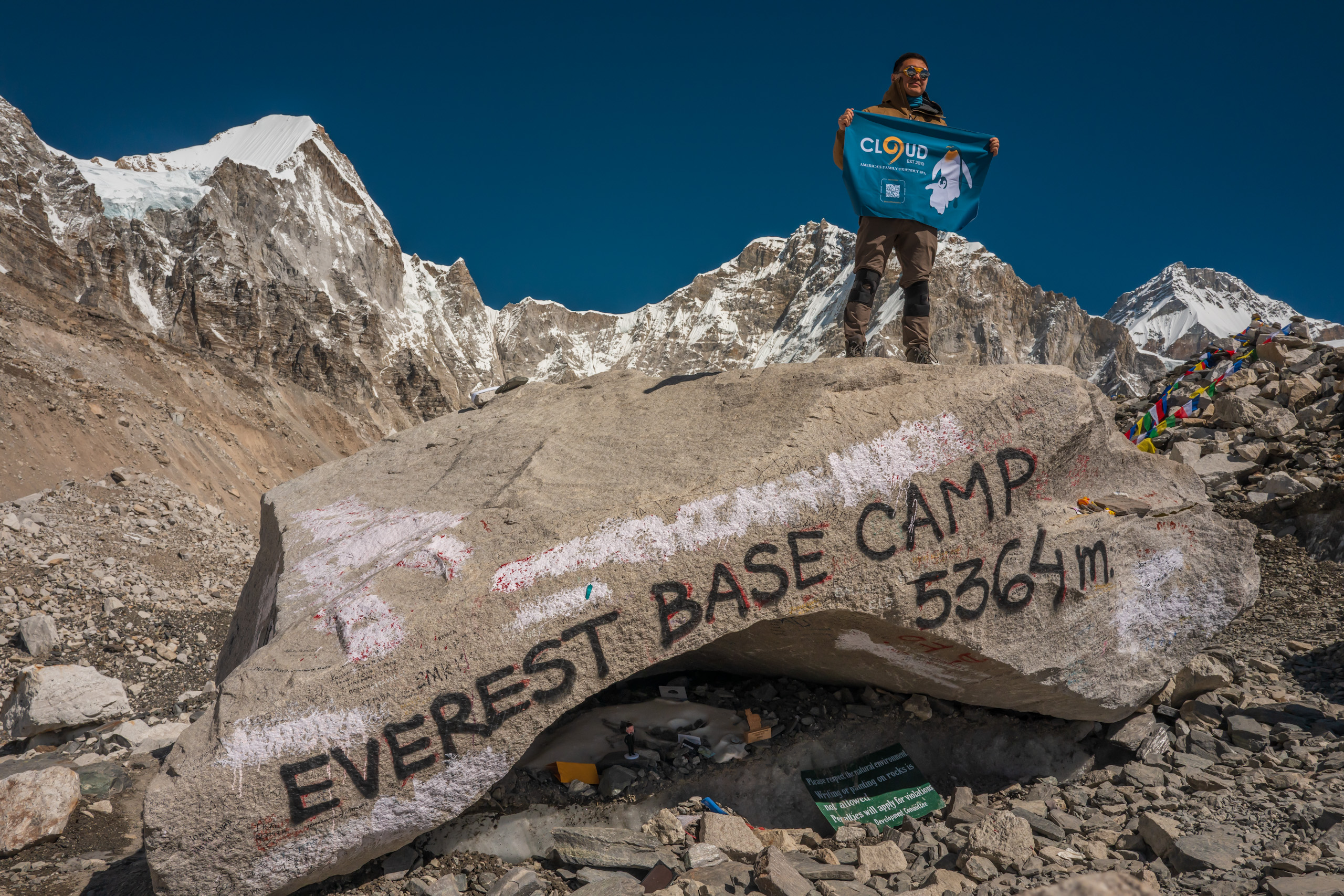
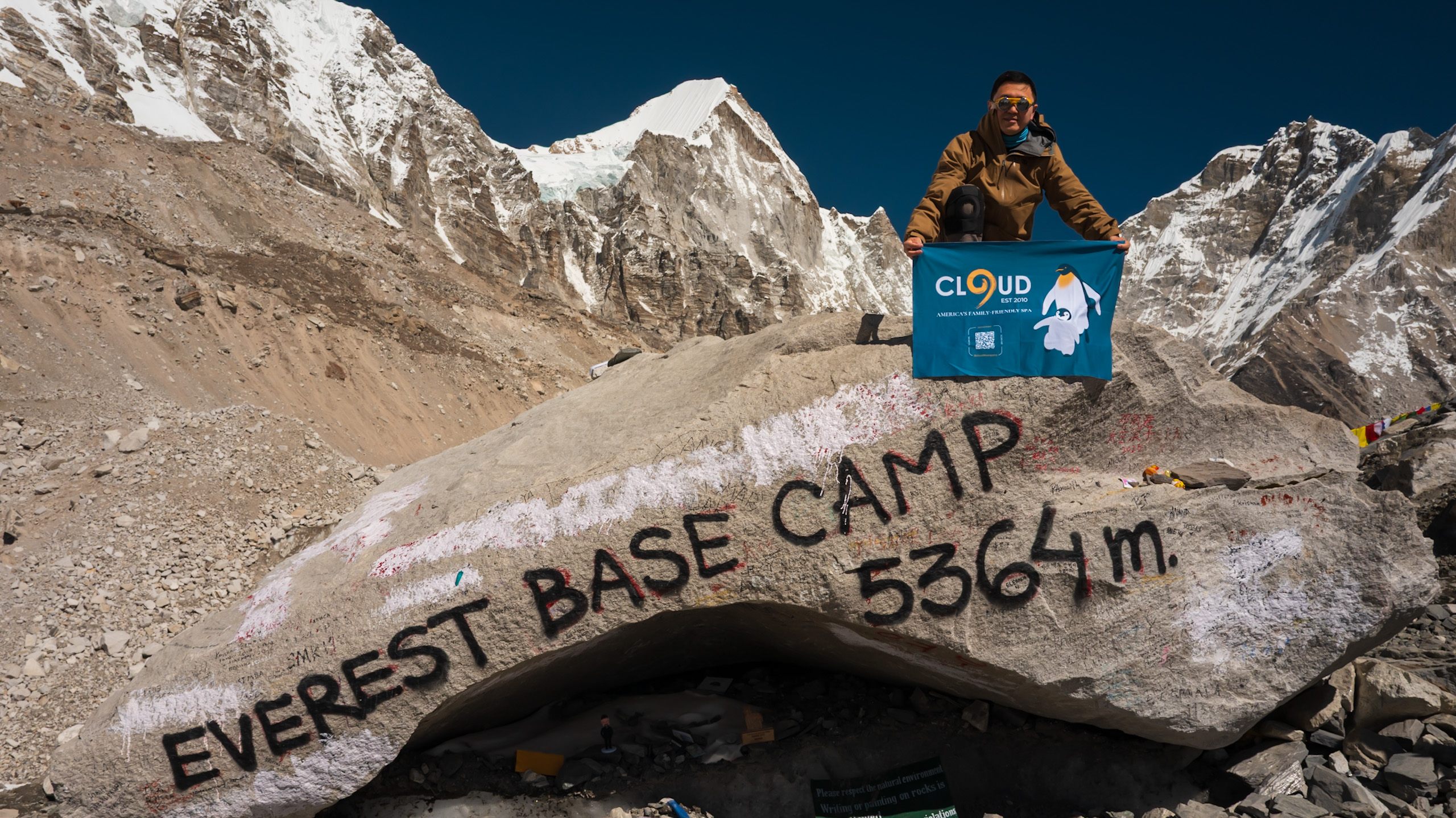
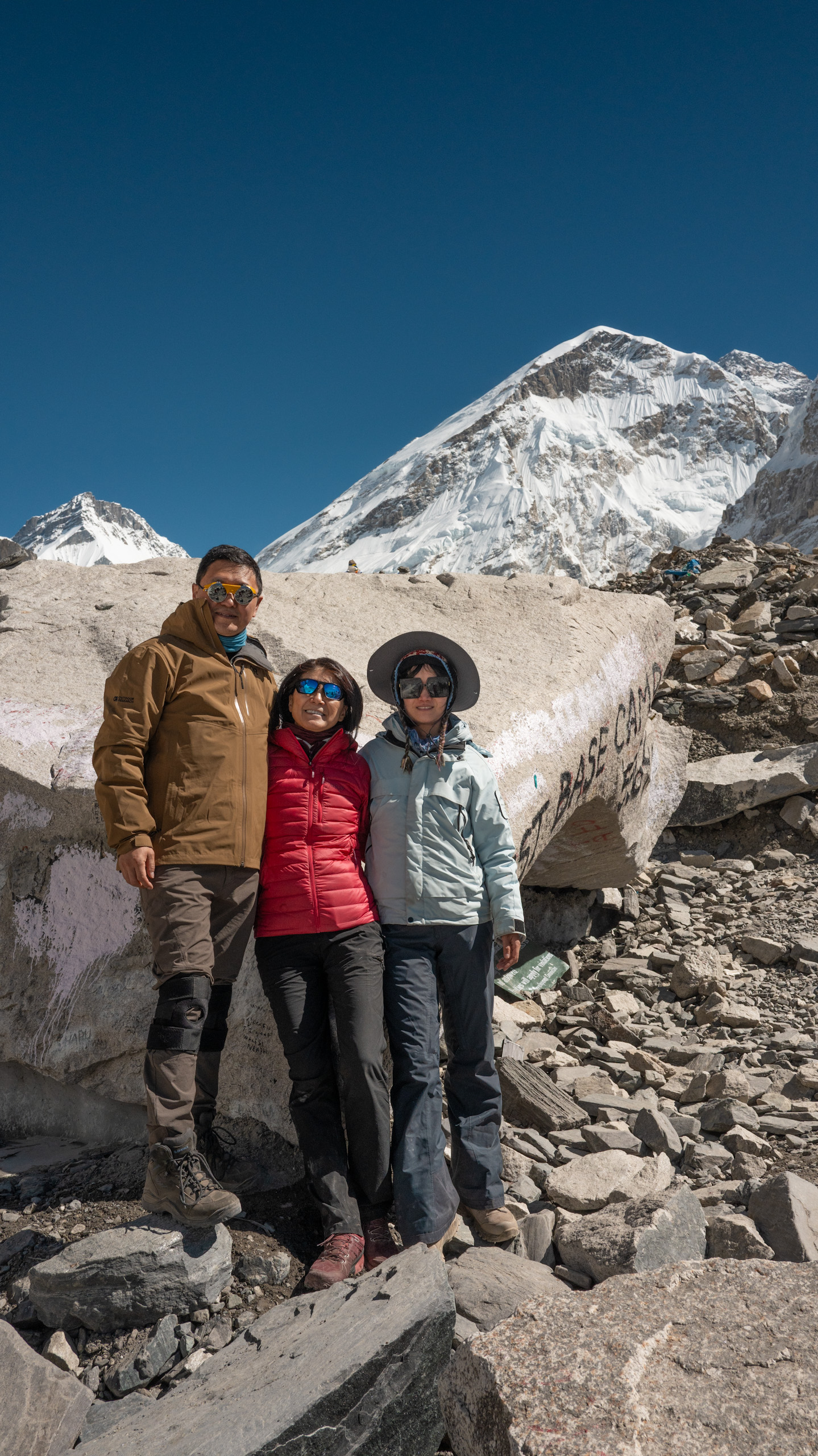
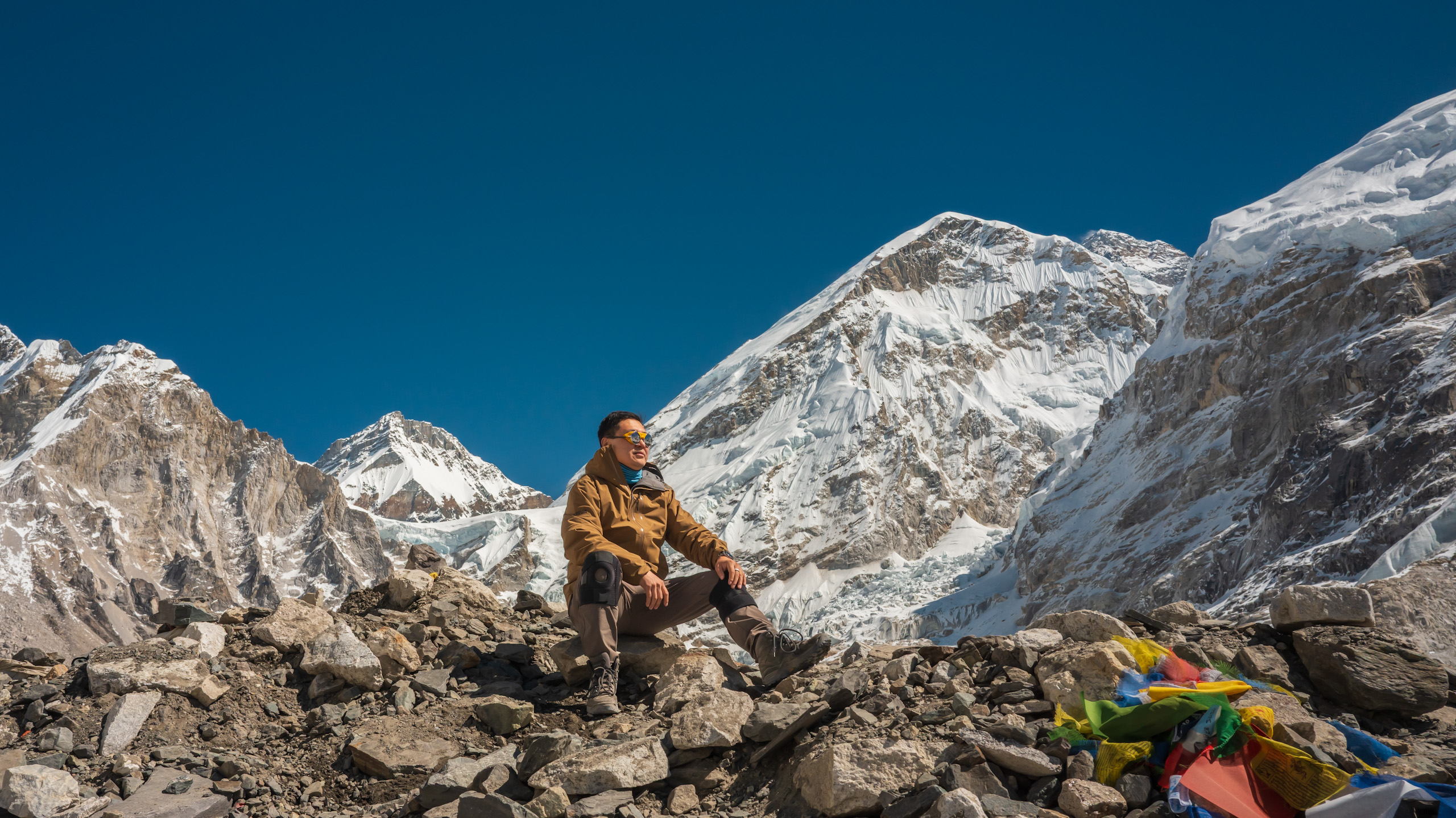
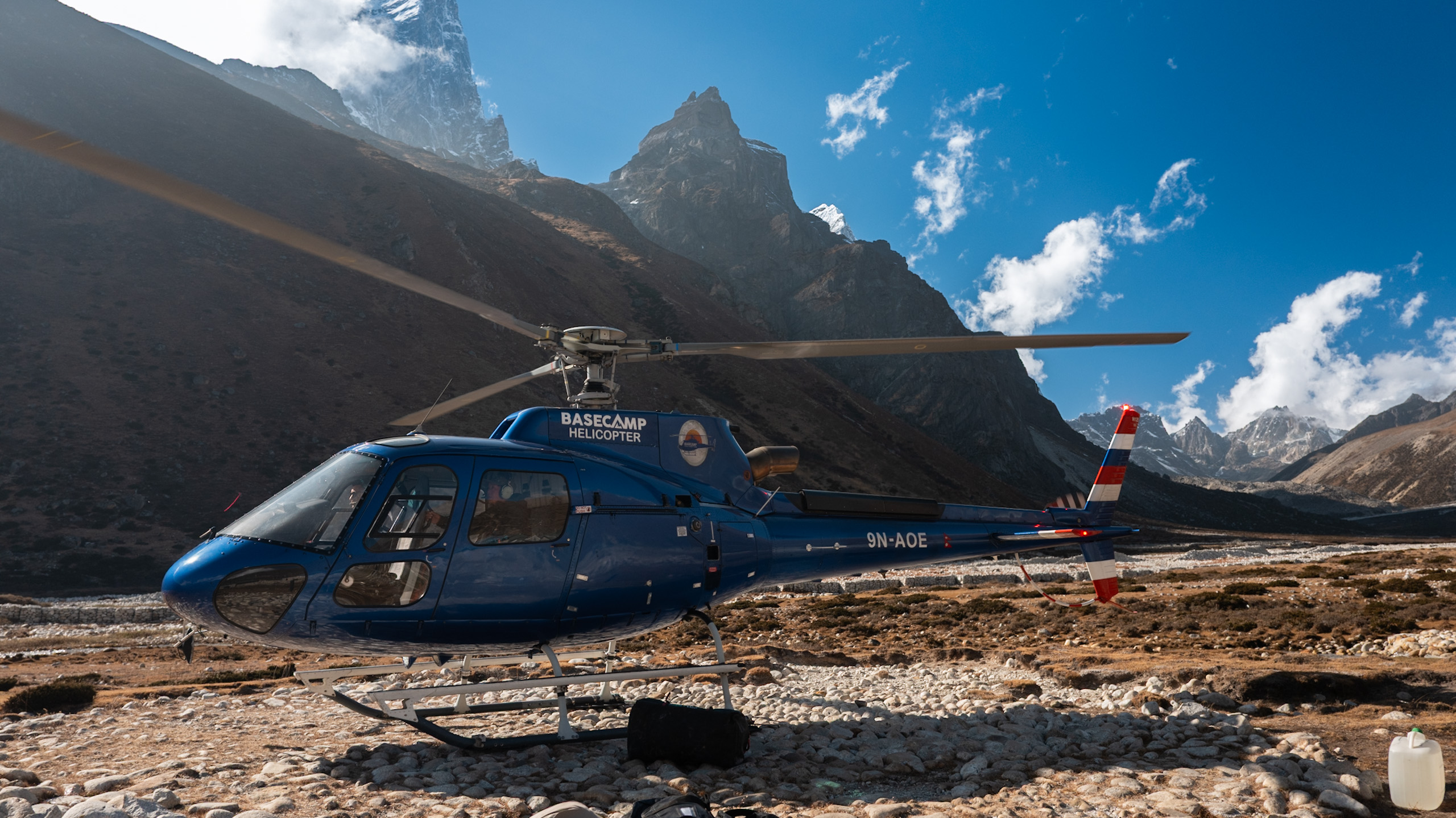
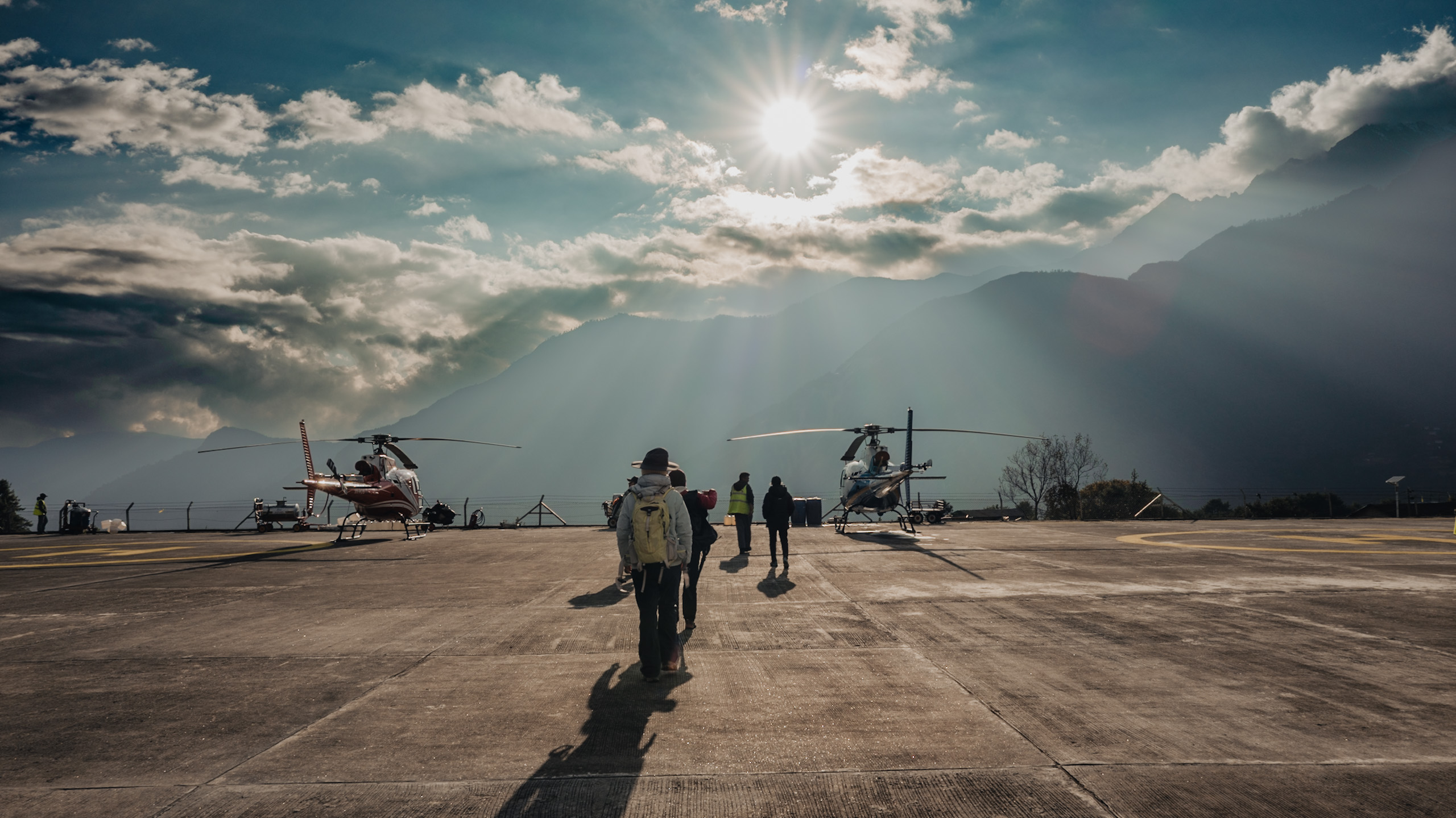
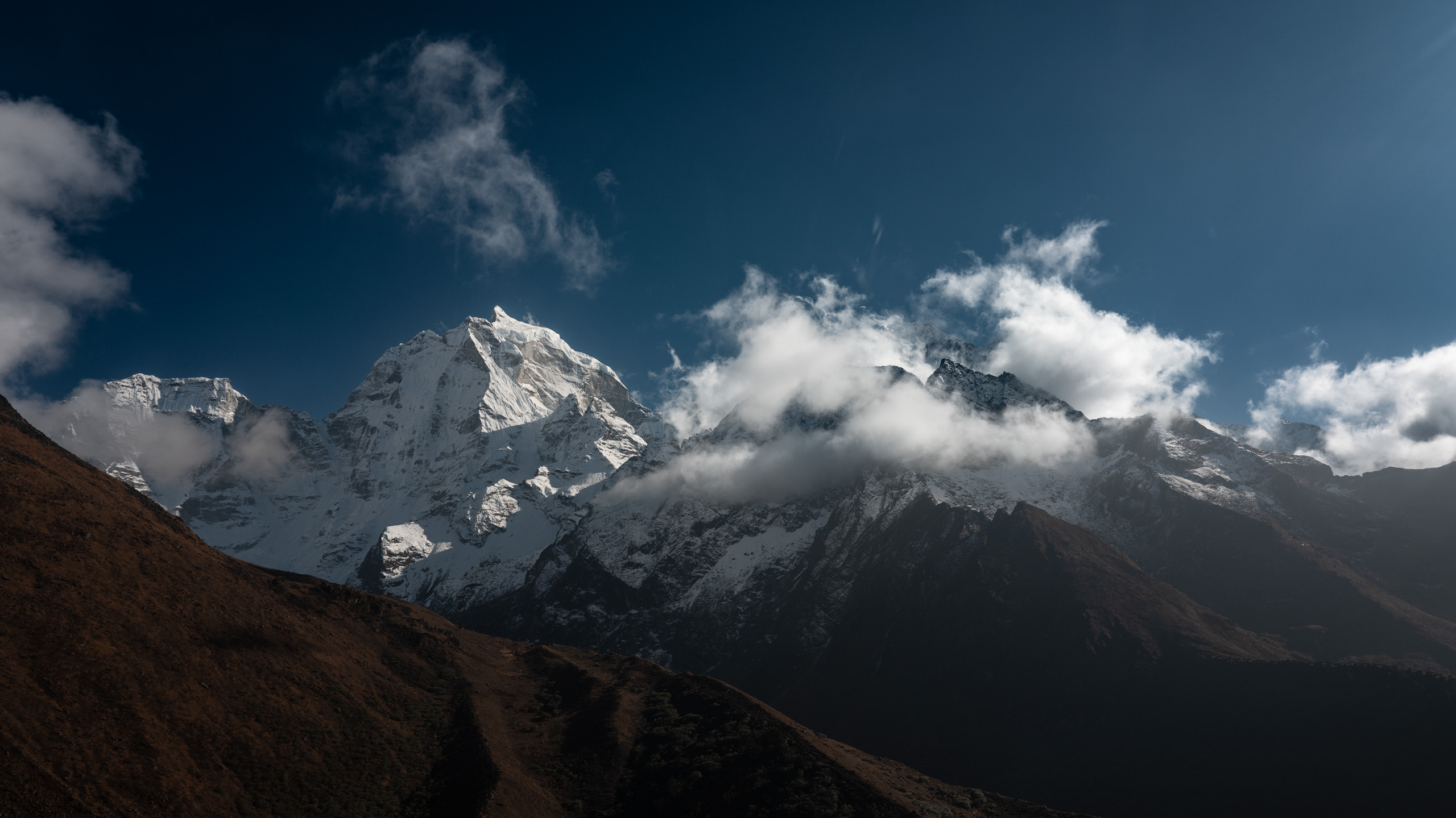
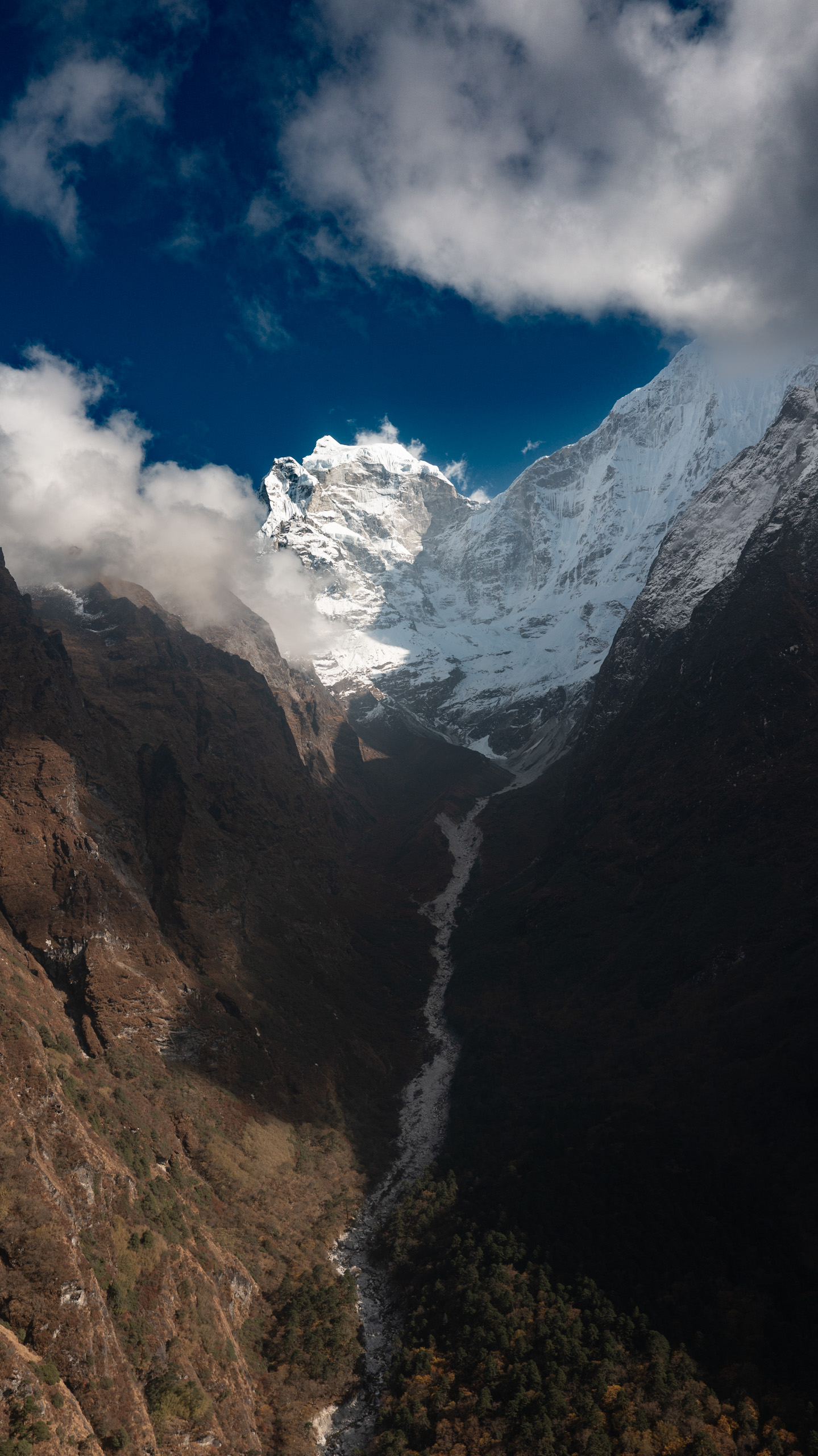
Today’s route ran from Lobuche through Gorak Shep, the last village on the trail, to Everest Base Camp. On paper it was the longest day of the climb: the itinerary listed 11.7 kilometers and seven to eight hours, against 7.9 kilometers yesterday. The whole day is spent above 5,000 meters, where each breath carries only about half the oxygen it would at sea level. The trail follows the moraine beside the Khumbu Glacier, a field of loose rock that climbs and drops again and again, so much of the height you gain has to be earned twice. We would climb from 5,050 meters to 5,364. Yesterday had already pushed me to my limit; today would be harder still.
If yesterday was a test of heart and body, today was a test of will. Last night’s rest brought my body back a little, but the mind still needed every ounce of determination to keep moving. Today was the last day of the climb, the day the whole trip has been pointing toward.
A Ritual Before Dawn
We all went to bed early last night, around 8 PM, right after sharing the day’s journal. The electric blanket was on and I ran hot; my watch said my body temperature had climbed about two degrees Fahrenheit. I had earplugs in, but I could still hear someone coughing through the night. My nose filled up, so I could only breathe through my mouth, and soon my mouth felt parched, almost burning. A cold or allergies? I didn’t know. I couldn’t remember whether I’d taken my allergy pill.
When I woke, my head was okay, but my watch showed my Body Battery below 10 out of 100. It also said I had actually slept six hours, though I’d been lying down for nearly nine. Bit by bit, I cleared out my nose. My two teammates had it worse. One couldn’t sleep after 1 AM. The other had trouble breathing, and she heard a neighbor making sounds like someone who needed medical help. It had been a hard night for everyone. Sleep is hard at this altitude anyway: the body breathes irregularly at night, and waking every hour or two is common even for well-acclimatized trekkers.
I was up at 4:50 AM, getting everything ready: folding clothes, deciding what to carry and what to leave. It felt like a ritual. This was the last day, the Base Camp day, and a rush of emotion came over me as I packed. Today would be the challenge.
The two ladies decided to ride horses and would leave at 7. I would leave at 6, on foot. How it would go, the trail would decide.
Two Steps In, Two Steps Out
We set out as the sun was coming up. The first stretch was fairly flat. After yesterday’s exhaustion, I focused on my breathing. My heart rate started at 140, so I settled into a rhythm: two steps breathing in, two steps breathing out. It worked better than I expected. My heart rate came down from 140 to 110.
Just a few short years of playing the digital sax (电吹管), and it paid off here, on the last leg to Base Camp. Before the trek, my teacher, Ms. Zhu, worked with me again and again on the classic “Iron Blood, Loyal Heart” (《铁血丹心》), teaching me to keep my breath steady and full. She said I tend to pour out the emotion too early, which leaves the later phrases weak and unsteady. Here at the top of the world, I finally felt how right she was: playing and climbing turn out to be the same. Hold back early, and the strength is there at the end. The melody kept playing in my head:
LYRICS: 《铁血丹心》 Iron Blood, Loyal Heart
Ride horse in all directions, following green grasses in the vast desert
Unafraid of snows and frosts blowing on face
Draw bows, Shoot condors. Gallop on the land to the north of the Great Wall
Sky is blue. Grassland is boundless
Have suffered hundreds of tribulations.
Still in my heart
Hardly able to forget gratitude and loyalty
Wasn’t that exactly what these eight days were? Meeting wind and frost head-on, enduring every hardship, with the heart and the loyalty I started with never changing.
The Peak That Lit Up Slowly
As we walked, the sun rose behind us and lit the mountains one by one. Ahead stood a sharp, handsome peak, catching the light little by little. I wanted to rush to the top of the hill to photograph it, but the hill was brutally steep. Buddhi suggested we stop halfway. I said, “Keep going!” My heart rate climbed back to 145.
At the top I looked back down a slope so steep it felt close to a cliff. What a beautiful, beautiful view. Buddhi filmed me standing there, and it became one of the most beautiful moments of the whole trip. We were doing well. Very well.
A Butterfly in the Wind
About an hour after we left the teahouse, I asked Buddhi to sing “Butterfly.” He sang it for me, right there on the trail; it was just the two of us. “Butterfly” is what he calls “Resham Firiri,” Nepal’s best-loved folk song, sung by guides and porters all along the Khumbu. In Buddhi’s words, it is a song about a butterfly fluttering in the wind. The melody, the emotion rushing in with it, the light on the peaks: it was a perfect morning.
Rocks the Glacier Left Behind
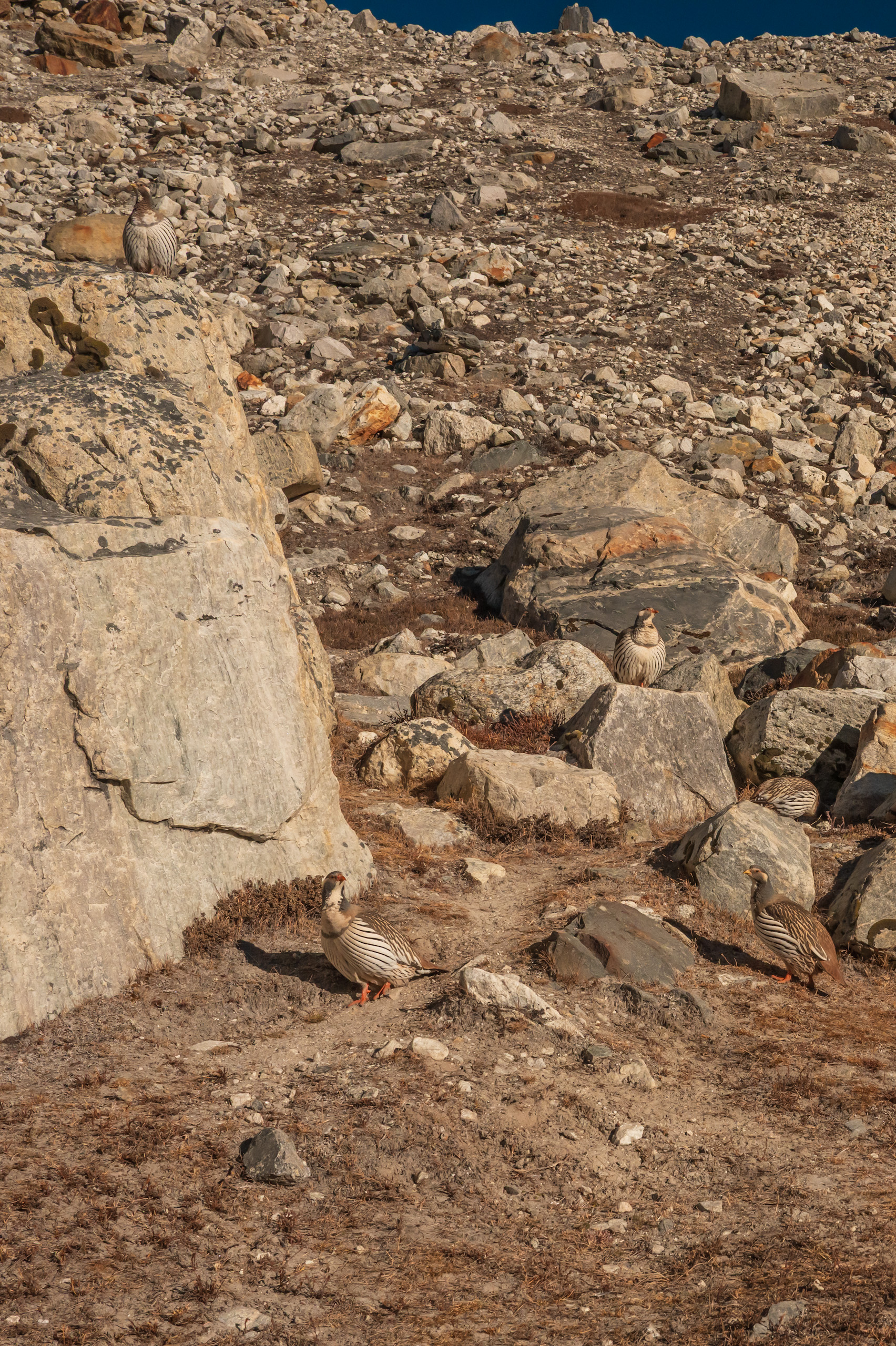
Then the trail turned hot. Hard rock lay everywhere: moraine, the debris the Khumbu Glacier has pushed aside, its ice still flowing beside the trail toward Base Camp. Around then, a headache started. But I felt closer to the mountain with every step. The only sounds were birdsong, the tap of hiking poles on stone, breathing, and coughing. Just ahead to my left, two big black, yellow-billed birds were calling, clear and bright, their songs rising and falling among the rocks. Buddhi told me they were alpine choughs, which live high in the Himalayas, around 5,000 meters and above. They love to follow brave climbers, he said, singing to them all the way up. In that moment, I truly felt they were cheering me on. Farther on, Tibetan snowcocks foraged among the rocks.
Two and a half hours after setting out, we reached the village of Gorak Shep, our lunch stop. We were still ahead of the teammates on horseback; the two ladies were half an hour behind us. For the first time on this trek, I had no appetite, so I just had a drink and some protein. Buddhi and I decided to keep charging ahead and meet them at Base Camp.
Slowly, Slowly
Twice, Buddhi offered to carry my pack, which weighed about 6 to 7 kilograms. He had seen how rough we looked yesterday. I thanked him and asked only that he take some photos and video of me. He kept saying, “You are doing really well, sir,” and “Slowly, slowly.” Even at that pace, we cut about an hour off the hike.
The weather was remarkably kind. It wasn’t cold at all, and my warmest down jacket never came out of the bag.
As we drew closer to Base Camp, I congratulated everyone coming down. Their answers came back strong: “You’ll get there too!” I believe every one of them had a reason for this climb that could bring you to tears.
As Base Camp came into view, a hunger like nothing I’d ever felt slammed into me, fast and brutal. My stomach felt hollowed out, my legs went weak, and I was close to collapsing. Since setting out at 6 AM, I’d had only a drink and some protein at Gorak Shep, and I hadn’t touched lunch. Altitude suppresses the appetite, but every step above 5,000 meters burns fuel, and the deficit had been quietly building all morning. Now, with the finish in sight, it all broke loose at once. At the same time, excitement was surging in my chest. I could no longer tell hunger from elation. Only a few steps from victory, I had to sit down right where I was. Like a soldier dismounting before the final pass, I sat on a rock and ate a protein bar, bite by bite, waiting for the strength to return to my body and for my heart to grow still. Victory was just ahead, and I wanted to walk into it steady.
At 10:55 AM, I finally stood at Everest Base Camp. The moment I arrived, I hugged Buddhi and each of my teammates, one by one, and thanked them for walking with me, and felt my eyes sting. Thank you, Sara, for making it possible for me to set foot on this ground at Everest.
A Penguin Flag at 5,364 Meters
Cloud 9 (九霄) is the company my team and I have built together over sixteen years. The moment I held up the Cloud 9 Penguin flag at Base Camp, I knew exactly what to do with our team and our company.
For sixteen years, we have trekked this same way: one step at a time, slowly and surely. We didn’t get lost. We didn’t lose focus. We have served so many clients. We lost some team members along the way, but every one of them made a real contribution. Reaching our destination isn’t about rushing. It’s about a disciplined “slowly,” and knowing where we’re going.
Under the Rock
Taking the group photo beneath the Base Camp rock, what I felt was gratitude. We are honest with each other. We support one another. We show up for each other. It’s a powerful connection, across time, across space, and everything in between.
It had been so hard, and the melody of “Butterfly” kept echoing in my head. I don’t know why the rhythm hits me so deeply. One line goes, “I don’t know if I should fly, or stay on the hilltop.” The song uses the cat, the dog, and the deer to express love of home, then calls to a lover: will you fly with me? Such a tender, powerful emotion. Should I stay, or should I fly? Everyone asks themselves that, all through life.
This trip began with Lei. He said EBC was on his life’s bucket list. Later he switched to a different route and different dates, but Sara and I held to the original plan. Of the ten people who once planned to come, six didn’t make it. Sara plans to visit all 195 countries on an eleven-year journey around the world. With a schedule that full, she still routed her travels back to Nepal once again to walk this stretch with us, and I’m deeply grateful.
I congratulated her on her bestselling travel book, The World Is Made for Play (《世界是用来玩的》). Four years ago, on our trip to Africa, I encouraged her to publish. Now she’s signed with one of the best publishers in China, and the book’s success is funding even more of her travels. Even before all this, she was smart enough to set herself up financially to quit her job and live to travel and write. I’m so happy for her freedom, and for what she shares with the world. She is touching so many souls.
You can find her on WeChat by searching for her public account, 猴面包的树 (The Baobab Tree). She told us why she chose that pen name. The baobab is a strange, thousand-year-old tree. Its bark is too soft to build with, and the liquid inside can’t be drunk by people or animals, so for a thousand years it has been spared from being cut down. It is a “useless” tree, as odd as some creature from another planet, and it lives free. To her, that is one way of understanding freedom: living quietly, and living free. All along the trail, whenever we talked something through, she gave me her most direct and honest advice.
Fate and the Next Step
I believe fate sometimes sets our path. But willpower decides how far we go. We all have something in us. The difference is whether we’re willing to take one step at a time, day in and day out. Ms. Zhu’s “don’t pour out the emotion too early,” Buddhi’s “slowly, slowly,” the sixteen years Cloud 9 has walked: they all say the same thing. Steady your breath, know where you’re going, and take it one step at a time, in pursuit of your dreams and your happiness.
A Triumphant Return
Thank you to my friends and family for all your care, encouragement, and blessings. Everyone cheered us on, and someone even told me straight out: come back alive!
Flying down to Kathmandu by helicopter felt like the closing scene of a Mission: Impossible film: joy, and closure. Flying into the glowing sky, each of us sat quietly, our thoughts drifting far away. Where there’s a will, there’s a way. Thirty years ago, when Mr. Kong encouraged me to come to America, he said those very words to me, and now they echoed in my ears. I kept my promise through hard work and eight unforgettable days of challenging myself on the world’s highest mountain. I’m lucky to have lived it, to come home a better man for my family, my team, and my friends.
On the morning I left, Benny and I made a pinky promise: I would not climb to the summit of Everest. I stood at Base Camp, went no higher, and now I’m coming home safe. Getting to the top is optional; getting home is mandatory. The promise I made with my little finger, I have kept.
I’m bringing Benny a tiny stone I picked up above 5,000 meters, to encourage him to walk well, one step at a time. He has my adventurous spirit and my careful nature. May each of my children be as strong as this mountain, as resilient as this trail, and as brave as the butterfly that chooses to fly.
To My Teammates
Lei: Thank you for proposing this trip in the first place; without you, we never would have gone. And thank you for leaving me your medicine. Knowing you’re built like a bear, I didn’t dare take the two pills a day the label called for. I took half, and by the last two, I think it was working. When you have time, share the views from your route and what you took away from it. Our friendship has carried us all the way from Africa to Everest!
Joanne: You’ve lived every kind of life there is: five degrees, ten different careers, success at every turn, and still a pure heart. How rare that is! I hope you soon meet someone who truly understands you.
Xia: A real man knows when to pick things up and when to let them go! After the storm comes the rainbow; over this mountain, another view is waiting. Wishing you all the best!
Sara: Without you, I could hardly have kept going; without you, I might have canceled the trip altogether. Sharing the baptism of the world’s highest mountain with someone whose spirit flies free was a joy I’ll never forget. It helped me step outside everyday life and keep a young heart. This wasn’t just a climb; it was a way back to what is most true. May the next seven years of your eleven-year journey around the world bring surprises everywhere, sunshine always, and safe passage through every danger. When we meet again, may we each bring a little more joy and a little more wisdom! Thank you for walking forward with us, and for capturing so many precious moments with your pen.
Nine, Lasting, Evergreen
Morning sun on the glacier, the snow peaks clear;
sixteen springs and autumns, walking the same road.
Only by walking slowly do you learn the mountain’s way;
only by steadying the heart does the breath ring long.
Alpine choughs sing the glacier into dawn;
the butterfly’s song drifts off, light as the mist.
I come home true to a pinky promise;
hand in hand on Cloud 9, lasting, evergreen.
Epilogue · October 27 — From 5,364 Meters to the Bus Stop
Kathmandu → Hong Kong (two nights of rest) → Seattle → the school bus stop
I. The Cold I Never Felt
Up there, the nights sank to minus twenty Celsius, and the mornings held at minus fifteen. On paper, those numbers sound brutal. On the trail, I barely registered them. I was so focused, one step, one breath, one switchback at a time, that the cold and the hardship never fully reached me. The mountain asked for my whole attention, and I gave it. There was simply no room left for complaint.
It’s only now, warm and at sea level, that I can look at those numbers and understand what my body was carrying.
II. Heartwarming Hong Kong
After coming down from Base Camp, I booked the same-night flight to Hong Kong. There was only one, so there was no decision to make.
The young woman in the seat next to me was 28 and had just finished the Annapurna Circuit, which she said is as tough as EBC. So there we were, both wiping our runny noses, talking the whole flight. She told me proudly that her father had once trekked to Everest Base Camp. For her, this was the hardest mountain trek she had ever done. All five in her group came down coughing. They had managed to dodge the floods of the days before and the snowstorm on its way, and they felt lucky. She is a film photographer.
Hong Kong gave me two nights to rest, and it reminded me why I love this city.
The moment that stayed with me was a small one. I had a cough, and an older woman pointed me to a pharmacy for medicine. I took it twice, and the cough simply stopped. Simple, effective, kind. After the days I’d just lived through, that small act of generosity felt so heartwarming.
III. After the Limit
Something changed in me on the way down. It’s hard to put precisely, but it feels as if my brain has been rewired: I’m like an alien who has just landed on Earth, and everything I see looks so beautiful. Every person, every meal, every moment of simply watching and being, all of it feels more precious. I see life from a different angle now.
Friends posted congratulations, and some of them truly understood the physical challenge. They saw it as courage.
I was near my physical limit up there, and at times past it. But I did it, and I congratulate myself for that. It was a move for life, and for something bigger than myself.
I’ve been curious what actually happens to a body and a mind pushed that far, so I looked into it.
The body keeps its own diary. My neighbor Adam told me that a challenge like this makes white blood cells surge. He’s right, though only for a while. Hard, long exercise does push up the white blood cell count, part of the body’s response to stress and to muscle damage. In one study of a 120 km march, the count rose after 16 hours and then fell back to baseline before the march was even over. So the surge is real, but short. The thin air leaves a longer mark: when oxygen is scarce, the kidneys release a hormone called EPO, which tells the body to make more red blood cells to carry oxygen. That adaptation builds over weeks at altitude and fades over the weeks after coming down. And the dry, freezing air explains the rest of what I brought home: the cough that so many trekkers call the “Khumbu cough,” and the long crack in my lips that Benny spotted right away.
The mind keeps one too. Psychologists who study awe, such as Dacher Keltner and Paul Piff, have found that standing before something vast, like a mountain range, gives people a “small self”: personal worries shrink, and people feel more connected to others and act more generously. One of my classmates wrote that we go to the mountains and seas to “meet the small self.” Science says the same thing in its own language. Richard Tedeschi and Lawrence Calhoun, who developed the theory of posttraumatic growth in the 1990s, found that some people come out of real crises not just recovered but changed: more appreciative of life, closer to others, clearer about what matters (Posttraumatic Growth: Positive Changes in the Aftermath of Crisis, 1998). A trek I chose is not a crisis, so I borrow the idea loosely. Viktor Frankl, in Man’s Search for Meaning, argued that even suffering can carry meaning.
The limit is a teacher. Jim Loehr and Tony Schwartz, in The Power of Full Engagement (2003), argue that managing energy, physical, emotional and mental, matters more than managing time, and that we grow capacity by deliberately pushing past our comfort zone and then recovering. Being near and past my limit, and finishing anyway, is a data point about who I am. I want to remember it the next time I doubt myself.
The white blood cells have long since settled. The extra red blood cells will fade in a few weeks. What I hope stays is the other change, the one in how I see. So I’m writing it down, before routine life absorbs it back. What feels different now? Where else in my life have I been holding back that this climb says I can handle?
IV. The Screen That Brought It Back
After editing the video in Hong Kong, I sat there and watched it. I didn’t expect what happened next: my eyes welled up.
Seeing it from the outside, the trail, the faces, the flag, the long climb, I finally saw what I had been too busy living to notice. The transformation is real. And the friendship is real. The people who walked beside me shaped this journey as much as the mountain did. That is what the camera caught, and that is what caught me.
I wasn’t the only one. After watching it, Lynn told me: “The music is so beautiful. I want to cry listening to it.”
V. Voices from Afar
While I was walking, friends were walking with me through the diary, day by day. Now that I’m down, their words have found me:
“Congratulations! I thoroughly enjoyed reading about your journey. Not only was it an incredible testament to what the human body can endure, but the thoughts you shared were so profound. I found myself listening to your music as I followed along with your progress. Thank you so much for sharing your journey with us.”
“Congratulations!! Amazing achievement 👏🏼 and thanks for all the invaluable information and advice… I plan to do it in 2028, so really appreciate it. Safe trip home!”
“Loved reading & following your daily progress & journey! Truly an inspiration. A big congrats!!”
“Congratulations Sean! I’m so happy your journey was successful. Thank you for your journal. My oxygen level went down when I read yours read 57% the other day. This trip will mean so much for you, family and team. Well done! Enjoy your return home.”
“I hope you’ll watch the movie Tenzing, newly released on Apple TV. Many familiar scenes for you. Like yours, another inspiring story. Have a safe trip home.”
“Congratulations on reaching Everest Base Camp! 🎉 What an incredible achievement! I know how challenging the journey must have been, both physically and mentally. Your determination, courage, and perseverance are truly inspiring. You’ve earned every step of this amazing accomplishment. So proud of you!!”
And from old classmates back in China, who still call me 老班长, Old Class Monitor:
“Old Class Monitor, I read this piece twice. The first time for the scenery, the second time for life. The rocky slopes, the moraine, the yellow-billed choughs, Buddhi’s singing… the images are so vivid. But what moved me most was your ‘slowly, slowly.’ Sixteen years on the Cloud 9 road and eight days on the Everest road are really the same path: stay steady, see the direction clearly, one step at a time. And that little stone for Benny: the best education isn’t a lecture, it’s the life a father lives. So proud of you! 👍👍”
“It really wasn’t easy. I could tell from your writing how thoroughly you prepared, especially building up your legs with heavy weighted squats. Amazing! Life is just a series of experiences: go see the mountains, the seas, heaven and earth, and there, among them, meet your small self. Keep going! 👏”
“Old Class Monitor, I just carefully read through your trek diary and your beautiful photos. Through dust and wind, carrying the hardship of the high plateau, you reached Everest Base Camp as you wished. We can’t go that far ourselves, but following your journey, it felt as if we were standing before the snow mountains with you. Not everyone has the courage to set out on such a long, hard road, and I truly admire your passion and persistence. Life is short; being able to see different landscapes and foreign lands while you’re healthy is one of life’s blessings. Your endurance, willpower and courage are beyond what I’d even dare imagine. Even a trip to America feels like a challenge to me 🤦, let alone a journey this tough. Pushing your limits is exhausting, but it’s also what’s most worth remembering and treasuring. All I can do is envy you 👏👏🌹🌹 And thank you, Old Class Monitor, for sharing, so that a scaredy-cat like me could also see the Base Camp of the Everest in my heart ⛺️🙏🙏”
I set out to test my own limits. I didn’t expect the journey to reach so many people along the way, on both sides of the Pacific, or that one of them would now be planning their own trek for 2028.
VI. Who Is Base Camp For?
I keep turning this question over. Who should make this journey? My answer:
Anyone searching for the meaning of life. Anyone who feels trapped in their life. Anyone looking for a real challenge. Anyone who wants to give someone a gift that will change them.
Go through it, and you will come back with a fresh perspective on life. Not a slogan, but a new pair of eyes.
VII. A Hug at the Bus Stop
At customs in Seattle, an officer first pulled me aside for a random check. But as soon as he heard I had just come down from Everest, he waved me straight through, welcomed me home, and congratulated me on finishing safely.
Today I picked up Benny from the bus stop.
He saw me and ran straight into me, arms locked around me so tight, as if he were afraid I might go away again. I held on just as tightly. Whatever I carried up that mountain, this was what I carried it for.
I had brought him three things: the white rock from Everest, my medal, and an oil painting of a trekker. But before he even looked at his gifts, he looked at me. He noticed right away the long crack in my dry lips and asked, “Was it too cold?”
Six years old, and the first thing he checked was whether his dad had been okay.
Yes, buddy. It was cold. But I kept our pinky promise, and I came home.
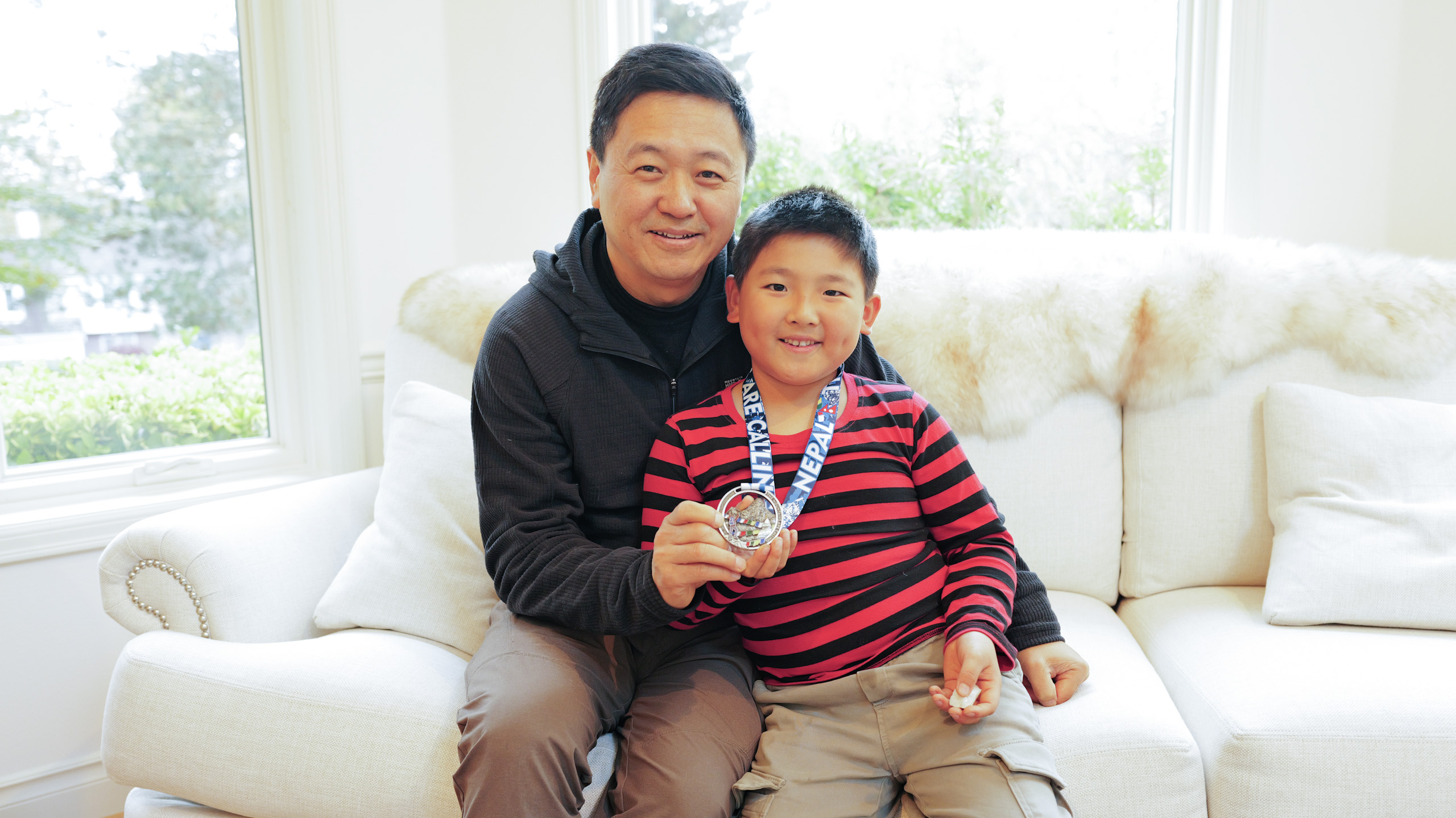
VIII. “I Am an Amazing Worker”
Tonight Benny and I watched Tenzing, the movie a friend had recommended in her congratulations. She was right: so many scenes felt familiar.
The film came out on Apple TV on October 16. Directed by Jennifer Peedom and based on true events, it tells the story of Tenzing Norgay, who with New Zealand climber Edmund Hillary became the first to reach the summit of Everest in 1953. On the British expedition, Tenzing has to prove that he belongs on the climbing team, not merely in its service. Where the Western climbers see “Everest” as something to conquer, he reveres “Chomolungma” as the sacred mother goddess.
The moment that made me tearful was a simple one. Tenzing kept saying, again and again, with a goofy grin, “I am an amazing worker.” No matter what was in front of him, he said it. So persistent, and so hopelessly positive.
I think I understood him a little better for having walked part of his trail. Up there, you don’t get through on strength alone. You get through by telling yourself, one more time, that you can. And sitting next to my son, watching a man refuse to give up on himself, I hoped Benny was hearing it too.
Seattle’s autumn leaves have already fallen to the ground. In this late autumn, looking at the fallen leaves outside my window, my heart feels warm.
中文版: 慢慢来:八天走到珠峰大本营
2026年10月,我和好友Sara、几位同伴,在向导Buddhi的带领下,徒步到了尼泊尔海拔5,364米的珠峰大本营。一路上我每天写日记:白天在步道上口述记录,晚上在茶屋里整理成文。这里是全部的日记,从我离开西雅图的那个早晨,一直到我去校车站接儿子的那个下午。
- 第1天 · 10月13日|出发
- 第2天 · 10月16日|出发前一天
- 第3天 · 10月17日|走进群山
- 第4天 · 10月18日|龟步登上南池
- 第5天 · 10月19日|初见珠峰
- 第6天 · 10月20日|我们为谁而来
- 第7天 · 10月21日|风从背后来
- 第8天 · 10月22日|九座山峰的第一缕晨光
- 第9天 · 10月23日|心脏与身体的极限挑战
- 第10天 · 10月24日|山巅之上,去留之间
- 尾声 · 10月27日|从5,364米回到校车站
第1天 · 10月13日|出发
西雅图 → 香港 → 加德满都 · 飞行约14小时,再加3.5小时
出发当天早上,我又检查了一遍行李。我拿出一副手套腾出空间,又加了一个小数码收纳包,装迷你闪光灯和各种充电线,包括佳明手表和Oura戒指的充电线。登山杖也带上了,就是两年前在西班牙朝圣路上陪我走过的那一副。
我洗澡的时候,Benny跑上楼来对我说”爸爸,我爱你”,然后在出门赶校车前又给了我一个大大的拥抱。我们拉钩约定:我不会去登珠峰顶。前几天他一直让我别去,还问我:”你为什么不能直接买一张珠峰的照片呢?”
临行前的几个晚上,我常常半夜醒来,心里放不下即将开业的两家新店,也惦记着接下来十二天的徒步。过去几个月的自我训练没有白费。体重没减多少,但腿部肌肉明显结实了,整个人感觉很好,很有力量。
去机场的路上,我感谢Lynn一直支持我的探险旅行。出发前一晚,我把San Ramon新店开业的最后几项工作交给了她,拉斯维加斯新店的开业事宜则由Angela负责。我很感激她们。
过安检的那一刻,心头忽然涌起一阵感触:这个国家给了我们自由和保护。外面的世界总是难以预料。人还没走,我已经盼着回家了。
为什么是珠峰
这个念头是几件事一起促成的。那时我正在读《舒适危机》(The Comfort Crisis),公司也正经历成长的阵痛。我想挑战自己,亲眼去看喜马拉雅壮丽的雪峰。世界上十四座八千米以上的高峰,有八座在尼泊尔。
需要说明的是,我并不是去登顶珠峰,而是徒步到珠峰大本营。大本营位于尼泊尔一侧,海拔5,364米,是登顶队伍出发前的营地。走到那里不需要绳索,也不需要登山技术,靠的只是自己的双脚。经典路线从飞往卢卡拉开始,那条小小的跑道常被称为世界上最危险的机场之一。之后往返大约130公里,走十二天左右,途经南池市集、丹波切寺,以及萨加玛塔国家公园里的一个个夏尔巴村庄。
难点不在技术,而在海拔。到了大本营,每一口呼吸里的氧气只有海平面的一半左右。整个行程都围绕着慢慢爬升和适应日来安排,让身体逐步适应。即便如此,无论体能多好,高原反应都可能找上任何人。可每年仍有来自世界各地的数万人走上这条路。对大多数人来说,这是此生离地球最高点最近的一次。一路上你会从阿玛达布拉姆峰、洛子峰和努子峰脚下走过,在大本营上方的卡拉帕塔,还能清楚地看到珠峰本身。对很多人来说,这也是一场远离日常舒适、检验自我的旅程。
Benny曾说他朋友Jack的爸爸去过珠峰大本营,后来才知道,那是两个六岁小孩自己编出来的故事。
我从来不满足于现状,想法总是很活跃。我的童年是在内蒙古和山东两地度过的,最深的记忆里有许多漫长的旅途。
这次是Sara(笔名“猴面包的树”)邀请我同行的。她是真正的世界旅行者,曾经三次彻底辞职。我知道她有把一切规划得细致入微的本事。她写的旅行书在中国成了畅销书。她卖掉了西雅图的房子,送掉了所有家当,我还收到了她的电视和音响。她才华横溢,却不喜欢现代社会的社交,反而最享受和最偏远村落里的村民相处。我小时候性格内向,花了很多年才走出来。在这一点上,我们很像。
我对自己说,需要去做一件真正艰难的事,把自己从日常的舒适里拉出来,给自己留一些思考的空间。珠峰似乎是最合适的地方。我热爱风光摄影,从西雅图附近野花漫坡的雷尼尔山,到瑞士童话般的马特洪峰,群山都在我心里留下了美好的回忆。它们都很美。而珠峰,我想,会是另一种震撼,壮丽而磅礴。
三十年前,我一位研究易经的朋友王阿姨亲笔为我写下了一生的运势。她说我勤奋,却永不满足。我觉得她说得对,她写下的预言年复一年都应验了。那张手写的纸条,我在一个小公文包里珍藏了三十年。在十四个小时的航程中,我又一次读起它。墨迹早已褪色,我想着自己的人生。
飞机上
飞机上我几乎没睡。按照Claude的建议,我设置好了佳明手表的徒步数据页面和提醒。设置比想象中复杂,但学到了不少,也很实用。之后我读了埃德·维斯特斯(Ed Viesturs)的自传《登顶没有捷径》(No Shortcuts to the Top)。Viesturs登顶了全部十四座八千米高峰。
书里有两点让我印象很深。第一:如果你不在意,那就无所谓。第二:人们总是一味往上看,却忘了怎么下山,而下山往往才是最危险的。登顶是可选的,回家是必须的。
这最后一句,像是我早已许下的承诺:和一个小男孩,用小拇指拉过钩。
第2天 · 10月16日|出发前一天
加德满都
昨晚,夏从上海赶来与我们会合。我们去了一家叫 Paradise Spa 的水疗馆做90分钟按摩,结果一塌糊涂。按摩师完全掌握不好力道,手法也不行。我连换了两次,第三位才勉强及格。好在晚饭找补了回来:一家湖南餐厅,中餐做得不错。
这里的商业街又窄又挤,各种杂货琳琅满目。今天上午我们去采购最后一批物资。我买了些蛋白棒、一个钥匙扣,还有一枚给 Benny 的奖牌,带回家让他戴上、摆起来。我想让他骄傲。
花园酒店里的思考
随后我们坐在花园酒店,聊起各自为什么来尼泊尔。
我的理由是这样的:过了五十岁,我越来越常回顾自己的人生。日复一日忙忙碌碌,却也安逸舒适。我想停下来,做一件真正有挑战的事,无论是身体上还是心理上。Sara 问我这是不是中年危机。我告诉她,我的中年危机比大多数人来得早,三十多岁就来了,熬过去之后,我感觉好极了。
直面高山的危险
我们静静地花了些时间,讨论如何应对高原反应。这绝不是儿戏。它分三个阶段:第一阶段是一般高原反应,症状有头痛、恶心、呕吐;第二阶段是高原肺水肿(HAPE);第三阶段是高原脑水肿(HACE)。关键在于:一旦出现任何严重症状,绝不硬撑,立刻掉头下撤。
我们到这里才两个晚上,每天都会听到有登山者遇难的消息。有一个人倒下后舍不得花钱叫直升机,拒绝了救援,要求花一万元人民币请背夫把他背下山。后来他失去意识,他的姐妹选了最便宜的方案:不救援。他就这样走了。还有一位中国女孩,没请向导,夜里登山,迷路后想抄近道,结果直接走下了悬崖。
喜马拉雅山见证过无数这样的悲剧。珠穆朗玛峰,尼泊尔语称萨加玛塔(Sagarmatha),藏语称珠穆朗玛(Chomolungma),世世代代既是神山,也是致命的挑战。在这片山中生活了几个世纪的夏尔巴人对她怀有深深的敬畏,每次登山前都会举行佛教仪式。然而即便有这样的智慧与敬意,他们也明白,珠峰要求每一个走近她的人保持谦卑。
据说每年约有800人登顶珠峰,而遇难的大多是不了解危险的业余爱好者。
我们的约定
我们半开玩笑地问彼此:如果真遇到危险、病情严重,谁会跟救援直升机讨价还价?大家一致同意:绝不犹豫,花钱保命。随后,我们把每个人的直升机救援保险单号和联系电话都整理到群里。万一有人陷入危险无法自救,其他人就能替他呼叫救援。
Sara 一遍遍提醒我们有多危险,几乎要把我们吓到了。出发前,我已经把 1Password 里的关键密码移到一个私密文件夹,与妻子和生意伙伴共享,万一发生什么,他们能拿到一切。
我们敬畏自然,也清楚其中的风险。我们会谨慎,我们会聪明行事。
梦想与目标
我的目标之一是拍出震撼人心的风光照片。如果走不到大本营,我的备选计划是叫直升机去航拍。从大本营乘直升机下到卢卡拉机场大约700美元。
我们四个人似乎有着共同的目标:来到这座世界上最壮丽的山峰,经历一次净化,洗涤心灵,为前方的旅程重新充电。我没有宗教信仰,但这次冒险对我来说多少带着些灵性的意味。
五十二岁,从村庄走到珠穆朗玛峰,这值得庆祝。因为训练,腿部肌肉还有点酸,但我对整体体能感觉很好,体重也控制住了。
明天,我们将真正开始攀登。
第3天 · 10月17日|走进群山
加德满都 → 飞往卢卡拉(约2,860米)→ 帕克丁(约2,610米)· 徒步约3.5小时
告别加德满都
早上五点半起床。我认认真真洗了个澡,比平时多洗了一分钟,因为一旦上了山,就不能再洗澡了。保持温暖干燥,是预防高原反应的一部分。六点整,我们在大堂集合。我对向导说,我们都已经付了全款,你还准时出现,我很高兴。他笑了。他个子不高,四十五到五十岁的样子,一张天生带笑的脸。
坐在面包车里穿过城市,远处是厚厚的云层。空气比白天好一些,但仍能闻到尘土和汗水的味道。路上的人穿着各式各样的衣服,连狗都懂得怎么过马路,仿佛比谁都更明白这里的交通。街上到处是宗教标语和海报。
给家人和团队的话
昨晚我给 Cloud 9 的团队发了一条消息,鼓励大家为 Cloud 9 即将带来的新态度做好准备。今天早上,我给家人发了消息,鼓励他们打破舒适,人生中要经常换挡。两条消息说的其实是同一件事:享受生活,但也要尝试不容易的事。Lynn 一路以来一直在背后支持着这个家的梦想。
机场
国内航站楼挤满了人,形形色色,各种肤色,很多人和我们一样,要飞往那座小小的山区机场,准备开始徒步。来自世界各地的人,带着专业装备和远征行李。光值机就花了将近一个半小时。
今天我也开始了一个新习惯:用 Obsidian 的快速记录插件,边走边语音口述,插入到 EBC 日记的末尾,每晚睡前再整理。
飞行
飞机非常小,只有18个座位,我们17人登机,而且噪音极大。有一位约七十岁的先生来自荷兰,一个大片国土低于海平面的国家,这已经是他第九次来这里,手里拿着一台大相机。我坐在左侧,抓拍了几张山景照片和视频。心率一下子飙到160,大概是太兴奋了。
人们都说这是世界上最危险的机场。跑道只有500米长,一端是1000米的悬崖。我们从悬崖一侧进场,落在上坡的跑道上,飞机很快减速,然后右转进入停机位。说实话,没那么可怕。我估计回程起飞时会更惊险。我们降落时海拔约2,860米。
我在微信上分享了这段经历。爸爸回复说:一定要记住,无论去哪里,安全第一。
步道上的第一天
第一天本应轻松:正常大约三个半小时,先下降两三百米,再上坡到帕克丁小村,大部分是石板路。我感觉完全没问题。
Joanne 就不一样了。她脸色很苍白,感到疲惫、寒冷、头痛,路上不得不休息了两次。这让我很担心,怕她没法再往更高处走。希望只是睡眠不足:她昨晚只睡了三个小时,我睡了六个小时。我留了两个橘子,到终点时给了她,希望能帮她恢复点体力。我觉得她从食物中摄取的能量不够。
这里主要的运输方式是人力和牲畜。背夫用一根带子勒在头上,背着大堆行李,还有驴和牦牛。我自己的背包只有六七公斤。
向导叮嘱我们不要吃肉,否则可能导致严重腹泻。我们可不想那样,所以连鸡肉也没吃。我点了蔬菜和番茄蛋花汤,味道不怎么样。
裁缝的一课
第一个村庄里满是卖户外服装的店,各种大牌,全是假货。生意最好的反而是那位裁缝,守着一台缝纫机,忙个不停,而周围的店铺却没有顾客。即使在尼泊尔,也最好不要在太普通的东西上和所有人竞争。
第4天 · 10月18日|龟步登上南池
帕克丁(约2,610米)→ 南池市集(约3,440米)· 爬升约900米 · 约8小时
今日路段
在这里,往上走的每一天,身体能用的氧气都比前一天少。体能有帮助,但救不了你;真正决定成败的是策略:走多快、何时休息、何时倾听身体、何时果断回头。
今天从帕克丁到南池市集,是全程公认最艰难的日子之一。沿着杜德科西河谷上行,走过一座又一座摇摇晃晃的吊桥,最后两个小时山路陡然上扬,一路爬进南池。这里是夏尔巴人的首府,也是进入昆布高海拔地区的门户。八小时左右,爬升约900米。这一天,基本能告诉你接下来的路会怎么走。
暖床与寒夜
昨晚的茶屋规模不错,我们分到一间单人房。被子干净,床上还有电热毯,简直是奢侈。夜里很冷,我大概开了一半时间,一热就关掉。
两个“第一次”。这是此行第一次完全没碰工作;也是好几天来第一次睡足八小时。前几晚我差不多每两小时醒一次,只能强迫自己再睡。昨晚,一觉到天亮。看来放下工作真的有用。
晚饭和早饭证实了我的猜测:这一路的茶屋,菜单一模一样。肉不能吃,背到这么高早已不新鲜。于是又是番茄蛋花汤。说实话,很难喝,所谓蛋花只有零星几滴。
早上冷得透骨。换上厚衣服,戴上薄手套,出发。
行者五悟
头五个小时走得很轻松。雪山出现了,我们停下来拍照。一路只需一步一步往前走,思绪便飘到了:这样一次徒步,到底靠什么成功?越走越觉得,这份清单和人生、事业成功的清单,其实是同一份。以下是我想到的。
一、龟行致远,日拱一卒
爬山急不得。人生也一样,最忌急功近利。不要追求短期的光环和闪亮的奖章,也不要为了跟上身边的人而透支自己。急功近利的人,眼里只有眼前的回报,往往为了一时的成绩牺牲长远的根基,走着走着就把自己走垮了。
我见过太多人拼命冲刺。他们成了兔子:追逐表面的风光,在漫长的路上耗尽自己,活在巨大的压力下,有人甚至把自己累到心脏病发作。乌龟不在乎这些,只管走自己的路,享受整段旅程。
但乌龟能赢,不是因为慢,而是因为它一步不停。慢不是停。不断学习,不断增长技能,每天进步一点点,哪怕只有1%。凡杀不死你的,都会让你更强大,只是别把自己拼垮了。有个好玩的事实:每天进步1%,一年复利下来,大约是起点的37倍。山上如此,人生亦然:稳稳的小步,走得最远。走到大本营,靠的也正是这个。
二、天时地利人和
中国人说,成事要靠天时、地利、人和。没有经过生死考验的人,很难真正理解这句话。而珠峰登山者,每一次都是拿命去体会。
从我们要去的大本营到8,849米的峰顶,看似不远,登山者却通常要花六周左右。这六周里,大部分时间不是在往上冲,而是在“上去、下来、再上去”:先爬到一号、二号营地,再退回大本营休息;过几天爬得更高,再退回来。登山界有句话叫“高处攀登,低处睡觉”,身体就在这一上一下之间,慢慢适应稀薄的空气。这是地利:读懂山,也读懂自己。
然后是等,等天时。珠峰顶上常年刮着高空急流,风大到人站不住。一年里只有短短几天,通常在五月中下旬,急流移开,风停下来,那就是登顶窗口。很多人在大本营一等就是一两个星期,每天看天气预报,每天告诉自己:还不是时候。窗口一开,就要在几天之内完成最后的冲刺,穿过八千米以上的“死亡地带”。
还有人和。没有夏尔巴向导修路架梯、背运氧气,没有队友彼此照应,没有人能独自站上世界之巅。
而真正老练的登山者,最懂得的是掉头。天气变了,掉头;身体不对,掉头。哪怕离顶峰只剩几百米,该回头就回头,两次、十次都无所谓。山永远在那里,命只有一条。回头不是失败,在错误的时机硬闯才是。
人生登顶,道理一模一样。你今天的付出,就像那一上一下的适应训练:看起来在原地打转,甚至在后退,其实你的能力和底气都在悄悄长高。很多人倒下,不是因为不够努力,而是因为太急,在窗口还没打开时就硬冲。
如果你还在奋斗的路上,付出了那么多却迟迟看不到结果,请记住:你在大本营等待的每一天,都不是白等。准备好,耐住性子,稍安勿躁。窗口总会打开。到那时,你今天所有的付出,都会一并得到回报。
三、慎独自律
“慎独”出自《礼记·中庸》:君子在无人看见、无人听见的地方,也一样谨慎自守。真正的自律,不是做给别人看的,而是独处时、没人监督时,依然守得住。
我多次看到这样的轨迹:一个人小有成就,便开始放纵,酗酒、外遇、各种诱惑,一点点把自己建立的一切挥霍掉。有意思的是,诱惑很少在你最艰难的时候找上门。那时你咬着牙往前走,顾不上别的。玩物丧志,总是在你安逸的时候来抛媚眼、勾肩搭背:再喝一杯,再来一个饭局,再来一句“辛苦了,该犒劳一下自己了”。它看起来那么亲切,那么理所当然。
登山者对此再清楚不过。在山上,每一分体力、每一点专注都是有限的,浪费在哪里,就要在哪里还回来。他们不拈花惹草,不贪杯,因为他们知道,分心会削弱自己,毁掉名声,也毁掉运气。
人生也是这样。一个人的时间和精力就那么多。洁身自好的人,才能把它们用在真正重要的地方:完善自我,造福家庭,成就团队。那些放纵自己的人,往往并不缺能力,只是把能力一点点花在了不值得的地方。
别拿人生去赌,它太珍贵了。名声是你通往成功的护照。名声好,处处有门;名声坏,人们会像躲瘟疫一样躲着你。
四、众行致远
如果活在世上只为自己,意义何在?你的团队是你的配偶、孩子、父母和大家庭;在工作中,是与你并肩的人,是托举你的人。没有团队,你的能力有限;有一支好团队,实现目标的可能性高出十倍。否则你就是森林里的一匹孤狼:可能迷路,可能饿死,遇袭也无人相助。人是社会性动物,生来就不是为了独行。
所以看看身边:谁有一支强大的团队?那大概就是值得亲近的人。也要考验自己的团队:只是酒肉朋友、只能同甘不能共苦的浅交?还是在真正关键的时刻,愿意为你挺身而出的人?有些所谓的“团队”,在你遇险时会把你推下悬崖。
懂得建立好团队,才是真正的领导力。重要的不是超越别人,也不是比别人赚得多。
五、淤泥生莲
人生几乎没有完美的环境。不公、小人、风气不正的团队,这些逆境本就是人生的一部分。但莲花偏偏生在淤泥里:它不逃避,而是扎根其中,吸收养分,最终开出水面。真正能守住节气、聪明地取其精华、去其糟粕的人,在任何环境里都一样能脱颖而出,有所作为。
有些人会全盘吸收周遭的一切;另一些人能汲取有价值的部分,同时守住自己的标准。两者的区别在于:你是否早已建立了稳固的自我认知,清楚自己是谁、坚守什么。这种认知就像一道过滤网。
心理学家乔纳森·海特在《正义之心》(2012)中指出,道德直觉反应迅速且自动,往往先于理性思考出现。道德直觉成熟的人,能察觉到某个人、某笔交易或某种群体氛围“不对劲”,哪怕一时说不出原因。这并不神秘,而是经验、反思和一贯价值观累积的结果。信任并听从这种警觉,它就会保护你。走进一个腐败的环境,却能带着收获而非伤痕离开的人,通常不是靠运气,而是靠一枚别人没有的、精准的内在罗盘。
《黄帝内经》说:正气存内,邪不可干。正气存内的人,清楚自己是谁、在做什么。歪门邪道的人一般也不愿和你纠缠;即便有人想骗你,你敏锐的嗅觉也会让你察觉不对,远远避开。
但我说的正气,不是天真幼稚、非黑即白的正气。它更像草原上的驯马手:面对烈马毫无惧色,胸中有一股浩然之气;同时又懂马性、会判断、有手段,知道何时收缰、何时放手。光有胆气不够,还要有聪明才智,再加上艰苦卓绝的努力和奋斗,日复一日,从不松懈。
写到这里,我想起了父亲。他一生打拼、开拓,靠的正是这样的正气、智慧和苦干。
所以,不要一路往下滑,然后怪罪别人。让自己始终向上。甚至可以向不好的人学习,这就是取其精华,去其糟粕。
最后一句
要有爱,要享受,要微笑。纯净的心是快乐的源泉,更重要的是,它让你保持年轻,身心全面健康。
漫长的上坡
回到山路。今天状态不错。走到六个半小时左右,脚开始抗议了,也算合理。向导一直说:慢,再慢一点。午饭后不用他提醒了,因为最后两个小时是一路直上。我尽量把心率控制在150以下,有几次还是超了。
我一直想起西班牙的朝圣之路。那次第一天就累垮了,第二天膝盖开始疼。这次完全没有。说实话,今天比在西雅图家附近爬的那座小山还轻松。之前的训练没有白费。
今天路上热闹多了:更多徒步者,更多驮着重物的驴和牛。窄路相逢,我们和它们互相谦让,客客气气。毕竟道不同,不相为谋:它们往山上运货,我们往山上运自己。我们穿过小小的村落,经过路边的小餐馆。然后,群山终于开始真正显露身姿。我拍下了第一张山与河同框的照片。为艰难的一天画上了一个好句号。
第5天 · 10月19日|初见珠峰
适应日:南池市集(约3,440米)→ 观景台(约3,750米)→ 南池 · 5.0公里 · 4小时 · 爬升363米
臭肉饺子:儿时的记忆
昨晚我们在南池市集一家日本餐厅吃饭,几位队友特别想吃拉面。我对这里的肉依然很警惕。咬下第一口猪肉,我立刻吐了出来——肉已经坏了。
那个味道我一尝就知道,因为我是吃着它长大的。儿女们给外婆送来猪肉,她总是舍不得吃。家里没有冰箱,她就这么一天天省着、存着,直到肉开始发臭。即便如此,她也舍不得扔。外婆把这些肉包成饺子,端到我面前,坐在一旁看着我吃。
那些饺子练就了我一辈子的鼻子和舌头。如今哪怕肉里只有一丝变质的气息,也逃不过我。童年留给我们的礼物,有时就是这么奇特。
暖被窝下的无声战役
整理完照片、日记和工作,我十点左右上床。房间很冷,电热毯却把被窝烘得暖暖的。夜里醒了几次,都是手露在被子外面冻醒的,翻来覆去才又舒服下来。
早上醒来感觉很好,数据却讲了另一个故事。血氧89%,在海拔3400米左右算正常;但心率变异性从平时的40多毫秒降到了27毫秒,身体电量只剩23%。
心率变异性(HRV)衡量的是相邻两次心跳之间时间间隔的微小变化。健康的心脏并不像节拍器那样分秒不差。身体放松、恢复良好时,负责”休息与消化”的副交感神经占主导,心跳间隔变化更大,HRV就高;当身体承受压力——无论是疾病、疲劳还是稀薄的空气——负责”战斗或逃跑”的交感神经接管,心跳节奏变得僵硬,HRV随之下降。因此它是反映身体负荷最好的早期信号之一,往往在你自己还毫无感觉时就已发出预警。单个数字不如与自己基线相比的变化趋势重要。
所以,虽然我感觉良好,身体却在一夜之间打了一场无声的战役,为稀薄的空气重建自己。
休息时,我只喝一样东西:柠檬姜蜂蜜茶。
珠峰揭开诱惑的面纱
南池市集是珠峰地区的”首都”,一座挤满商店、水疗馆和餐馆的山城。这里也是徒步路线上珠峰第一次露出真容的地方,它站在一群巍峨的高峰中间,美丽而充满诱惑。
今天按计划是适应日:向上爬约350米去见群山,再下来回到低处睡觉。
高原开始显露它的威力。我们队里有一位队友夜里呼吸困难,他说自己不得不几次坐起来,用鼻子慢慢呼吸,才能重新躺下。
无论转向哪里,群山都在远方向我们招手。路上我遇到一位妈妈,带着三个孩子同行,最小的才九岁。他们每人每天都写日记。此刻,还有四本日记正写着同一片群山。
登峰三宝
我们又是慢慢往上爬。深蹲100公斤的训练在每一级上升中都得到了回报,即便如此,我仍要克制自己,让心率保持在150以下。
在这里,我相信登山者最宝贵的三样东西是:肌肉、心胸、头脑。
肌肉是根基,而且无法临时借来。今天迈出的每一步,都是几个月前在健身房里、在Si山上、背着负重背心时就已付过的账。人生也是如此:健康、本事、积蓄、人情,都是在无人注视的平静日子里一点点攒下的,等到大山真正出现在面前时,才拿出来用。
心胸有两层意思,我们两样都需要。一是胸膛里那颗心脏,不能超出它的极限去压榨。二是胸怀:耐得住性子,让走得快的人先过而不觉得输了;不去攀比;接受大山的规矩,而不是要求大山听自己的。有胸怀的人,往往心里装着大目标,因而不会被庸常琐事所烦扰。心胸狭窄的人把力气耗在面子和琐事上,心胸开阔的人把力气留给攀登。
头脑是判断力,知道何时该冲、何时该停。美景近在眼前时,人最想冲过去,而危险恰恰就藏在那一刻。走得太急就会出汗,一停下休息,汗水或许让你着凉感冒,在高原上,一场感冒可能演变成大麻烦。人生也一样,许多最糟糕的决定,都是在目标唾手可得时做出的。
在这里,成功不看谁先到达,而看谁能到达,并且平安回家。聪明人保持稳定的节奏,确保自己能活着看到明天的风景。
每天登顶后,我的奖励永远是一杯热巧克力。咖啡我不能喝,它会让心跳加速,让心脏更辛苦。
一勺一勺的慢时光
午饭时,向导为我们弄来了当地现宰的山羊汤。他说这里不允许商业屠宰,只有警察才可以。
在家我吃饭很快,Benny总提醒我慢一点。今天我听了他的话,哪怕他远在半个地球之外。我一勺一勺地品着汤。全队分了大约1.5公斤的肉,我在碗里数出了四块小骨头。炒饭也吃完了,只是里面的鸡蛋几乎找不到。
垂直极限:大山从不怜悯
午饭后,我们在Liquid Bar看了电影《垂直极限》。
电影一开场,一位父亲命令儿子割断系着自己的绳子,好让一双儿女活下来。多年后,女儿被困在K2高处的冰缝里,起因是一位富豪领队为了名声,不顾天气和时间强行冲顶。哥哥召集一支队伍,冒着风暴上山去救她。
在爆炸和惊险场面之下,电影的内核很简单:大山不在乎你的金钱、计划和自尊。它惩罚急躁与傲慢;真正的英雄不是登顶的人,而是出于爱做出艰难抉择的人。
在这里看这部电影,珠峰就在山梁那边,它就像是对我今天早上在山路上所思所想的一堂总结课。回家后我要和Benny再一起看一遍,这也是对我向他许下那个承诺的一次提醒。
第6天 · 10月20日|我们为谁而来
南池市集 → 丹波切(约3,860米)→ 德波切(约3,820米)· 13.7公里 · 8小时 · 爬升826米
今天的路线从南池市集(海拔约3,440米)到德波切(海拔约3,820米),地图上全程约11公里,通常需要6到7小时;我的手表记下的是13.7公里、8小时。前半程沿着杜德科西河峡谷的高处蜿蜒,阿玛达布拉姆峰(6,812米)、洛子峰和珠穆朗玛峰在一个个转弯处次第展开。随后山路下降约200米,来到庞基滕加的河边(海拔约3,250米),接着是今天真正的考验:穿过松林和杜鹃林,一段约600米的陡峭爬升。山顶便是丹波切寺(海拔约3,860米),昆布地区最大的佛教寺院,始建于1916年。从这里再穿过杜鹃林缓缓下行约20分钟,就到了今晚的落脚点德波切。
心,不再急躁
简单回顾一下:徒步第一天,我们飞进山里,走了三小时到达第一站;第二天,登上南池市集;第三天在南池适应海拔,上上下下。今天是徒步第四天,按说会更难。
今天,有些根本性的东西变了。回头看,前三天明显是在用力使劲地往前推。我们尽了全力,但某种程度上,我依然是那只兔子。今天,走了三天之后,每一步都变得有意识。每一步都缓慢、从容。每一步,我都在倾听自己的心跳。
前几天,我的佳明手表多次提醒我心率超过了预设的上限,大约150。今天,一次提醒都没有。这就是变化所在:我的头脑和我的心终于同步了。我放下了匆忙,放下了急躁,放下了焦虑。我专注于脚下的每一步,不被任何事分心,除了提防真正的危险:松动的石头、滑出路边的可能、擦身而过的长角牛。
双腿还好,不疼,也不怎么酸。我不再走在队伍前面,而是刻意跟在后面,好让思绪沉淀、生长。每一个转弯都有一座美丽的山峰,我享受着每一个转弯。
两张单程票
我们队里有两个人没有买回程机票。一位是Sara。她计划用十一年环游世界,已经走完四年,还有七年。另一位女士在出发前卖掉了房子,不打算回去了。她的环球旅程才刚刚开始。
我走的是另一条路。我想从珠峰汲取尽可能多的东西:能净化我、让我更强大、让我看清什么重要什么不重要的东西。但我依然想节省时间。所以到达大本营后,我不会花三天走下山,而是坐直升机,既省时间,又能从高处俯瞰珠峰的壮阔。
我问向导Buddhi带过的客人。年纪最大的78岁,他们一起走了七次徒步。最小的13岁。他的成功率:百分之百。
陡坡与寒冬
午饭后的陡坡,把我带回了将近三十年前的山东泰山。那里的台阶陡到前面那个人的鞋就在你眼前。今天的路越来越难,但因为我更会控制节奏,反而比前几天轻松。
穿过林子时,我说这些树看起来像杜鹃,只是长得特别高。原来它们正是杜鹃,尼泊尔的国花。松林和杜鹃林交织在一起,很像西雅图。杜鹃花也恰好是同行伙伴家乡长沙的市花。
爬坡时,我想起在内蒙古一个村子里长大的日子。那是真苦。没有热水,没有暖气,没有空调。冬天零下二三十度。父母早已习惯。他们知道没有捷径,知道日子得一天天过,鞋要一双一双地做,被子要一床一床地缝,为了这个家。
经历过那种苦的人,有两种活法。一种是抱怨,但你一开始抱怨,就已经输了一半。另一种是不抱怨,埋头去找最稳的石头、最好的路、最值得跟随的人,还有能找到的那一点点食物,喂饱自己的孩子。
在我的记忆里,爸爸妈妈从来没有抱怨过。爸爸一次也没说过”这太难了,我们做不到”。我能感觉到日子难的时候,他会沉默,然后想办法。他也知道怎么鼓励身边的人,知道说什么能让人觉得自己更好。他就是那种能给人力量的人,有那种气场。所以很多个晚上,都有朋友来家里,只是想跟他聊聊。无论生活多难,都要从中创造出幸福来。
第一场对话:山外有山
今天第一场对话是和向导Buddhi,他的名字意思是”智慧”。我问他会不会带家人去度假。他做珠峰向导已经十八年了,却从没带妻子和两个孩子离开过首都。我问为什么,他也说不出什么理由。
我跟他讲起我高中毕业时在同学录上写的一句话:”很多人抱怨自己生不逢时。我不抱怨这个,但我真希望自己生在一个不同的地方。”这句简单的话成了我心中的一团火,推着我从内蒙古一路走到美国。我一直学习,从不满足于在银行挣的那份工资。我满脑子只有英语、托福、GMAT,还有去美国。在百万分之一的机会里,我战胜了命运,拿到签证,去了德州农工大学。
这些山谷曾经有商旅和求索者翻越喜马拉雅,追寻财富与知识。留在山里是Buddhi自己的选择,可他孩子们的未来,还可以有更多的可能。
我建议他带孩子出国看看,比如新加坡,让他们开开眼界。一旦见过外面的世界,他们就会清楚自己想要怎样的人生,很可能会变得自驱。他很感兴趣,问我最好是什么年龄。我说大概十二岁,那是孩子走向成熟的转折点,也差不多是欧洲一些贵族家庭把孩子送去寄宿学校历练的年纪。
然后他问我:”Sean,你能担保我吗?能邀请我去美国吗?我想去看看。”我欣然答应了。
第二场对话:在冰川上作画的父亲
第二场对话的主角,是一位在我讲一个”外国人英语不好”的笑话时站在旁边听、点头微笑的先生。到下一站时,我走过去问起他。他看上去七十岁左右,也许更大。
他叫Arnie Stokol医生,来自达拉斯。我说我以前住在休斯顿。我问他来过珠峰几次。”这是第九次。”为什么来?”为了我儿子。为了纪念我儿子。”
他的儿子二十六岁时去世,离七月入读医学院只剩三周。那孩子爱冒险,敢闯,在错误的季节、没有向导,独自来到喜马拉雅,一直往前走,从此消失了。父亲雇了五十名夏尔巴人搜寻了三周,什么也没找到。六年后,政府打来电话:他们在冰川裂缝里找到了他儿子的遗体,被时间冻结。他从照片里儿子腿上的纹身认出了他。从那以后,他每隔几年就回来,在儿子遇难的地方作画。
他今年七十四岁,曾是眼科医生,二十六岁来到美国,结婚已经五十多年。他走起路来毫不费力,我忍不住问他是怎么保持得这么健康的。”百分之八十靠饮食,百分之二十靠锻炼。”他的体重只比十六岁时多几磅,不到160磅,体脂率9.5%。四年前测的心血管年龄大约三十七岁。七十岁时,他还在骑山地自行车、玩单板滑雪。他从不吃米饭和面包,吃大量鸡蛋、其他蛋白质和蔬菜。
他推荐了一本书,他刚说出作者的名字,我就说:”《超越百岁》(Outlive)!”我是在王金龙先生推荐下读的,那本书启发我创作并出版了儿童绘本《企鹅的梦想》,教孩子们如何照顾好自己的身心,远离慢性病。
我告诉他我父亲七十七岁了,不可能爬到珠峰大本营。他的回答让我意外:”他可能可以,只是自己没意识到。体重是最大的问题。如果他能减轻体重、降低体脂,他会非常健康。这是能改变他健康的那一件事。”
他说,儿子虽然走得那么早,却是他最好的老师。因为儿子,他过上了这样健康的生活,保持着这样的体魄,享受着每一天。
当我问起他的人生哲学,他说:”活在当下,这是关键。”这句话出自一位经历过如此失去的人,分量是很少有人能给的。它也呼应了我今天早上在山路上的感受:不再匆忙,只是倾听每一步。
第三场对话:”今日你且去,明日我们再相逢”
第三场简短的对话发生在最后一站。我把相机对准一位赶着牛队运货的女人,她用当地话喊了一声。我以为她生气了,赶紧放下相机。向导笑了:她只是说”嘿,兄弟!”
于是我问能不能给她拍张照,又问身后那栋房子是不是她的。她脱口而出:”如果这房子是我的,你就可以跟我一起免费住在这儿。”我笑得停不下来:”谢谢!那我今晚得喝一杯了。谢谢你的好意。”我拍了几张照片。向导估计她大概四十二到四十五岁。
我跟她道别时,她说:”今日你且去,明日我们再相逢。”向导在一旁微笑着说:多么浪漫的告别。
在喜马拉雅,好客不只是礼貌,迎接客人近乎一种神圣的责任。她的邀请不只是调侃,而是山里人在说:”你也属于这里。”她的告别语里,带着深植于这些山谷的佛教意味:所有的相遇和离别都是暂时的,今天的再见,也许就是明天的重逢。在珠峰脚下,空气稀薄而心胸辽阔,我明白了爱并不是占有。有时,它是我们为一个人留出的那片宽厚的空间,让他在我们的生命里歇一歇脚,哪怕只是片刻。
我们为谁而来
今天,一个问题不断在我脑海里浮现:我们为什么来这里?我们为谁而来?
那位医生为儿子而来。而遇见他,让我找到了这趟旅程的一个意义:为了我爸爸的健康。他就是一个活生生的例子,告诉我人老了依然可以保持健康。只要改变饮食,就还有时间改变身体、改变健康,即使你已经在认真锻炼。
我来这里,是想让我六岁的儿子Benny和孩子们知道,珠峰,电影里的那座珠峰,无论多么有挑战,爸爸都可以收拾行囊说走就走。这是我想传给他们的勇气。没有什么是不可能的。我想鼓励他们去做普通人不敢做的事。
我也为我在Cloud 9的团队而来。我们正处在转折点,冲向下一个海拔,整个团队都需要适应这个新的高度。当你意识到自己正在创造怎样的影响、建造怎样的东西,你就会激发出最好的自己,做出了不起的事。
所以,我的答案是:我为父母而来,为家人而来,为团队而来。当然,也为我自己,去想好我能为他们所有人做些什么。
这段旅程的重负,已经化作了它的馈赠。
第7天 · 10月21日|风从背后来
德波切 → 丁波切(约4,410米)· 11.9公里 · 7小时 · 爬升886米 · 夜间最低零下15度
今天我们从德波切上行到丁波切,海拔4,410米。很多徒步者正是在这个高度,第一次真正感受到大山的力量。高原反应不会大张旗鼓地到来,它先是悄无声息,然后再也无法忽视。今天走了大约七个小时。今晚和明晚我们都住在这里,让身体开始适应高海拔。
庇护尽处
这是我们上路的第五天,也是第一次走进开阔地带。山下的峡谷一直把我们护在怀里;到了这里,我们和风之间再无遮挡。风从背后吹来,冷冷地压在后脑勺上。这样的寒意很容易引发头痛,而在这个海拔,你已经分不清那是普通的头痛,还是高原反应的第一声低语。
腾出双手给光影
走了五天,我的登山杖还一次都没打开过。我几乎总是端着相机,眼前的风景需要我两只手都空着。而且对我来说,拄着杖走反而更费力。我把它们留给真正艰难的路段。
高山的第一道考题
队里一位伙伴已经出现了高原反应:头痛、恶心,嘴唇发紫发青。他在考虑叫直升机,从空中看一眼大本营,然后下山。我们都鼓励他坚持下去,因为他说话依然平静、自如,这是好兆头。但晚饭后,他还是做了决定:明天一早叫直升机,直飞大本营,然后飞下山。他觉得今天已经超出了自己的极限。大山考验每个人的方式都不一样。
住进旅馆后,我也开始有些头痛,便开始服用高原药物,以防万一。
稀薄空气中的层层铠甲
这几天的穿着一直很合适:KUHL的轻量徒步裤、始祖鸟的中间层夹克,再加一件Smartwool的打底T恤。这样的组合足够保暖,又不会太热,出汗就少。在这个海拔,保持干爽和保持温暖同样重要。
炊烟、佛眼与六道
今天早上,我们经过一户人家,屋里满是做饭的烟火气,让清晨一下子有了人间的温度。在海拔四千米的地方,看到炊烟从烟囱升起,心里格外踏实。
路上我和向导Buddhi聊起了宗教。他说,佛教讲六道:地狱道、饿鬼道、畜生道、人道、阿修罗道和天道。每一道都是一种苦,一种心识,在轮回中流转不息。
他说,佛教徒祈祷时,双手从额头移到嘴边,再到心口。额头,是让头脑常怀正念;嘴边,是让说出的话鼓励人而不伤人;心口,是让内心保持善良与宽恕。
沿途我们看到好几座画着佛眼的佛塔。那双眼睛代表公正,以慈悲注视着众生。眼睛下方有一个旋涡般的符号,意思是”合一”,万物本是一体。
我问他:”佛教里有惩罚吗?”
“没有,”他说,”如果有人骂我,生不生气、要不要回应,由我自己选择。别人不开心,你为什么要惩罚自己?”
这无疑是一种保护自己的方式。当大山同时考验你的耐心和身体时,这样的心态尤其受用。
护好后脑勺
因为风大,今天一路都得时刻留神。头部如果没捂严实,很容易头痛,还容易感冒流鼻涕。这在哪里都不好受,到了这里,却可能是危险。
除了轻微头痛,我没有其他让人担心的症状。今天第一次觉得大腿有些累,但总体状态依然不错。
难眠的前半夜
不过昨晚,最开始的两个小时我一直睡不着,起来了好几次:一次是回复工作消息,一次是调整电热毯,还有一次是因为忘了吃药。我吃的有助眠的补充剂、帮助肌肉恢复的补充剂,还有保护心脏的。我觉得它们让我更有精力,恢复得也更好。
一只叫”珠峰”的小鸡
每天早上,我都尽量和Benny视频。他总有一堆关于这趟旅程的问题。有一天他说:”爸爸,别再爬了,回来好不好?”他刚在家里孵出了三只小鸡,给其中一只黄色的取名叫”珠峰”(Everest)。他觉得这应该是最强壮、最勇敢的。
舒适的最后一程
走了五天,还剩三天,而这三天会难上许多。前五天还算舒服,沿途商店很多,缺什么都容易买到,包括水。每家旅馆都有电源插座,和外界联系一直很顺畅。
但这一切就要改变了。
今晚,变化已经来了。过去几天夜里,气温大约在零下3摄氏度;今晚却骤然降到了零下15度。我计划明天一早起来拍照,在这样的寒冷里能不能做到,我也不知道。
午饭前后我会吃几样零食,包括蛋白棒;大约每小时喝一次水,让身体保持充足水分。
今天教会我:要提防的风,不只是迎面吹来的,更是背后吹来的。
人生也是如此。迎面而来的困难,我们看得见,自然会低头、裹紧衣服、咬牙顶住。真正伤人的,往往来自背后:一帆风顺时的松懈,习以为常的健康;还有那些不在明处的对手,不正面交锋,只在你看不见的地方一点点地削弱你。它不像迎面的狂风那样猛烈,却像后脑勺上的冷风,日复一日,等你察觉时,头已经疼了。
背后的风看不见,所以不能等感觉到冷才去防。护好后脑勺,靠的不是时时紧张,而是习惯:把边界守好,把根基扎稳。但正如向导所说,别人带着恶意,不该成为我惩罚自己的理由。防住风,却不让风吹进心里。
每天早上,Garmin手表都告诉我身体电量偏低、训练准备度偏低。但我们还是继续前行。大山不在乎你的准备度分数,它只在乎你是否足够敬畏它,愿意倾听它在对你说什么。
第8天 · 10月22日|九座山峰的第一缕晨光
丁波切适应日(约4,410米)· 凌晨5:36登山拍日出 · 约零下10度 · 下午再爬升约200米
“啊——!”早上6点05分左右,我站在丁波切村后的山顶上,群山环抱,忍不住大声喊了出来。
大山最轻柔的呼吸
东边的山脊镶上了一道细细的金边。风把峰顶的积雪吹起,雪雾缓缓飘散,像是大山呼出的最轻柔的一口气。接着,阳光吻上了一座山峰的尖顶,峰顶泛起淡淡的樱桃粉。那情景,就像一簇火种在群山之间传递:先是东边的那座,再是南边的那座,最后是西边的那座。一座接一座,安静而温柔地被点亮。那是我见过最温柔、最浪漫的颜色。
这就是丁波切的日出。
在一个不过二十米宽的圆圈里,我不停地转身,透过我信赖的徕卡Q3按下快门,一帧又一帧地捕捉。四周安静极了,整个村子还在山谷里沉睡。气温大约零下10度,我却一点也不觉得冷。
昨晚我跟向导说,我要早起去拍日出。其他人都不想去。睡前,我把所有保暖的衣服都摆在床上。那件Rab羽绒服简直是我的救星。
我大约4点40分就醒了。电热毯只开两个小时,从晚上8点到10点。床对我来说太短,腿一伸直,脚就冻得发凉。所以我整晚都蜷着腿,大腿没能真正休息好。
“先生,我们走吧”
5点30分闹钟响了。我穿上所有衣服,戴好头灯,5点36分出了房门。一走出旅馆,就看见Buddhi站在门外等我。
我很意外。我们每天6点45分吃早饭,我本来不想麻烦他这么早起来。他只是礼貌地说了一句:”先生,我们走吧。”我心里非常感激。要不是他,我很可能走错路,错过日出。
我快步小跑,想赶紧冲上山顶,心率很快就飙到了150,只好放慢脚步。
这个村子里可能住着五百来人,可出乎意料的是,我没看到一个人往山上走。从山顶望出去,三面都是雪山,很难想象还有比这更好的位置。
先存一张底片
我总为最坏的结果做准备。万一到了大本营光线不好呢?万一我根本到不了大本营呢?我必须把这一刻拍下来。从现在开始,之后的一切都是额外的收获。知足者常乐。
九的相逢
我数了数,西边一共有九座山峰。最近遇到了好多个”九”:在家爬Si山时,遇到一位第99次登顶的女士;在这里,遇到一位第九次来珠峰的先生;而此刻,九座山峰静静地望着我,仿佛已经在这里等了我几千年。我的目光从一座山峰移到另一座,看着它们一一被金光点亮。
能叫出名字的全景是这样的:西边,是塔博切峰(6,495米)、乔拉泽峰(6,440米)、阿拉卡姆峰和罗布切诸峰;南边,是离我们最近、也最夺目的阿玛达布拉姆峰(6,812米),身后是康特加峰和塔姆塞库峰;东边,沿着伊姆加河谷,是岛峰(6,189米)和丘空一带的群山。
日出时间是6点整,金光大约在6点09分照到第一座峰顶,我们6点25分左右下山。下山后,正好赶上早饭。
早起的鸟儿有虫吃。早起的人,总能看到一天中最美的时刻,并以最好的心情开始这一天。
少了一位同行者
早饭后,我们和夏道别。他的呼吸道感染更严重了,于是叫了直升机,先飞到大本营,然后返回加德满都。
九峰前的九霄企鹅旗
其余的人再次出发上山。今天又是适应日,我们向上爬了大约200米,用时两个小时左右。我们以九座山峰为背景,拍下了几张难忘的合影。在一块巨石旁拍照时,我不小心把两块石头踩下了峭壁。九霄的企鹅旗在九座雪山前迎风展开,我的心也跟着飞扬起来。
行百里者半九十。我们的企鹅已经准备好迎接最后十里的挑战和高度。
双倍的努力
向导说我今天付出了双倍的努力。是的,我跨越万里来到这里,就要不负此行。睡觉,回家再补。
这些年做企业也教会了我同样的道理:要勤奋,要早起,要付出双倍的努力,才能确保一切按计划进行。没有捷径,也没有人会牵着你的手。我们能做的,就是把眼前做到最好,同时为第二天做好打算。
黎明的馈赠
最美的风景、最好的时刻,每个清晨都在那里,可大多数人从不为它早起。黎明不会大声宣告自己的到来,也不会等任何人。它要你在凌晨4点40分的黑暗中醒来,走进零下10度的寒冷,离开温暖的被窝,去爬一座几乎看不清的山。丁波切的五百来人,大多都睡过了这一刻。不是他们不在乎,而是被窝太暖,清晨又显得太远。
这就是这份馈赠的代价:先付出一点不舒服,而且没有任何保证。云可能会涌上来,光线可能平淡无奇。但黎明总会回报那些到场的人。它给的,是大白天永远给不了的:最柔和的色彩,最安静的空气,还有一座仿佛只为你醒来的山。
一旦走出舒适区,你就会看到其他任何时刻都看不到的、震撼人心的美。我想人生也是如此。最好的机会,很少在方便的时候出现。它们总是来得很早,来在寒冷里,来在无人注视的时候。
下午,我一个人在外面转了几分钟,端详着村民们一座座石头房,想起了我出生的德发村。我出生的那座房子是泥坯房,可那泥泞的路、晒在阳光下的衣服和牛粪、歪斜的大门,还有弓着腰洗衣服的妇女,都是一模一样。
烫手的阳光
下午,我一个人坐在茶屋里,暖暖的阳光透过窗户洒进来,我整理着自己的思绪。拿起保温杯,竟然烫得我手一缩,赶紧放下。高原的阳光竟如此之烈。
昨天下午的头痛已经消失了,我感觉休息得不错。大腿有一点累,是蜷着睡了一夜,又加上早上急着冲上山的缘故。
真正的考验开始了
接下来的两天,是我们冲向海拔5,364米大本营的最后一程。为什么这两天比之前所有的路都难?
首先是空气。明天我们要上到罗布切村稍高处、海拔约5,050米的8000客栈,后天再到约5,164米的戈拉克谢普,然后继续走向大本营。在那样的高度,每一口空气里的氧气只有海平面的一半左右。每走一步都更费力,心脏负担更重,睡眠也更浅。
其次是风险。海拔大约4,500米以上,轻微的高原反应可能迅速变得严重,比如肺水肿或脑水肿。很多徒步者正是因为这些情况,被直升机送下山。在低处无足轻重的头痛,到了这里就不能掉以轻心。
再次是路况和寒冷。过了罗布切,路要穿过昆布冰川的乱石冰碛,坑洼不平,每一步都要小心。去大本营那天是整段行程中最长的一天:从罗布切到戈拉克谢普,再走到大本营。夜里气温会远低于零下10度,旅馆越来越简陋,补给更少,条件也更艰苦。
氧气会越来越稀薄,天气会越来越冷,身体状况也会越来越难以预料。真正的挑战就要来了。
祝企鹅好运!
第9天 · 10月23日|心脏与身体的极限挑战
丁波切(约4,410米)→ 图克拉山口 → 罗布切 → 8000客栈(约5,050米)· 睡眠海拔升高约640米
今晚,我住在罗布切村稍高处的8000客栈,海拔5,050米。明天,就是大本营。今天,是这一路上对我要求最多的一天。
从丁波切到罗布切,地图上看并不远,身体却能感受到每一米。最后一点绿色消失在身后,我们走进了一个只有岩石和冰的世界。山路先沿着一条宽阔、风大的山谷向上,来到昆布冰川的脚下,再沿着冰川的终碛垄直直地爬上图克拉山口。那是一段由冰川推来的乱石堆成的陡峭台阶,珠峰遇难者纪念碑就立在那里。翻过去之后,小路在冰川边缘的碎石中穿行,一直通到罗布切。这段路之所以难,关键在海拔。今天我们越过了5000米,睡觉的高度一下子升高了约640米,超过了高原医学建议的标准:海拔3000米以上,每天睡眠高度的增加不宜超过500米左右。再加上一周积累下来的疲劳、寒冷、干燥的风,以及只有家里一半氧气的空气,每一步都像在讨价还价。
EBC不考验技术,它考验的是:一个身体能承受多少海拔、多少时间,和多少日积月累的消耗。
大地颤抖的夜晚
昨夜,房子晃了起来。西藏发生了7级地震,我从墙壁和床板上都感觉到了震动。之后便睡不好了。每隔两个小时醒一次,回几条信息和邮件,再迷迷糊糊睡去。
身体也在和什么东西较劲。流鼻涕,有一点发烧。手表也证实了:体温升高了一度。在最艰难的一天的前夜,这可不是想看到的数字。
然而到了早上,我感觉很好,完全恢复了。山会给予,山也会索取。
吹一口长音
午饭前,路还算温和。我们沿着山谷前行,走过了这次徒步最长的一座吊桥。随后山路陡然向上,又高又陡的石阶,每一步都要耗费体力和呼吸。
于是我用上了老师教我吹电吹管时的呼吸方法:深深地、慢慢地吸气,让空气一直灌满肺底,就像吹一个长音。这很有帮助。
可头痛还是找上了我。没有恶心,只是头痛,还有心跳,跳得几乎难以忍受。我放慢脚步,再放慢,把疲劳牢牢地控制住。这是七天里最艰难的一段。在这个海拔,稀薄的空气不是背景,而是主角。
我依然拒绝用登山杖。在这么多石头之间穿行,它们只显得累赘。但今天我做了一件这辈子从没做过的事:涂润唇膏。我的嘴唇干了,干得厉害。喜马拉雅总有办法让每个人谦卑。
铭记的石头
午饭后,我们来到了珠峰遇难者纪念地。这里的许多纪念碑始于1996年那场山难,此后,又有许多人把纪念牌安放在了这片石头之间。
其中一块上写着:如果你的目标不够大,不够令人生畏,那它就还不够大。
的确。登山者都是勇敢的灵魂。什么样的人,会离开家的舒适,来到如此严酷的环境?而我们,甚至还在大本营之下。从大本营到峰顶,还有近3500米的垂直高度,那是巨大的付出,和更残酷的世界:刺骨的寒冷,以及任何一个疏忽的动作都可能致命的地方。
对很多想体验珠峰的人来说,大本营是一个好目标,一个值得的目标。
而大山也在讲述人生旅程的道理:不必着急。慢慢来,一步一步,有条不紊。在这里,急躁会让你付出代价,无论你多强壮。你也不会比别人领先多少,因为我们呼吸的,是同样的氧气。
六十公斤的爱
路上,我们遇到一位背夫,背着两个煤气罐,大约六十公斤。我无法想象他是怎么背起来的。他的脸上只有坚定,别无其他。
谁知道呢?也许他的孩子和妻子,正在家里等着他带回面包。
冰川开始的地方
我对昨天拍的日出和日落照片依然很满足。那是完美的时机,今天不需要更多了。
剩下的路很崎岖。我们开始看到冰川、覆雪的山丘,还有被落石掩埋的山坡。一边走,我的思绪一边飘向两个方向:前方最艰难的部分,和家。
这次旅行,我学到了什么吗?是的,很多。如果不亲身经历这样一次艰苦的徒步,有些东西是很难真正懂得的。
在这里,我看到各种肤色的人。离大本营这么近的地方,没有孩子,全是成年人。我们知道,年纪最大的在七十到八十岁之间。无论来自哪里,每个人都带着自己内心的理由走上这条路,一种自我的寻找。
大蒜汤与最后的冲刺
到达客栈时,我们三个人都筋疲力尽,几乎当场就能睡着。我们不得不咬牙撑着,办完入住,吃完晚饭。和前几晚不同,这家客栈的房间是几个人合住的。因为夏提前退出了,我一个人住了一间。
5000米对一个人的身体意味着什么?这里的大气压只有海平面的一半左右,每吸一口气,进入身体的氧气大约也只有一半。身体只能靠加快呼吸、加快心跳来补偿。哪怕慢慢走,心脏也像在奔跑。一般人在这个高度,最大运动能力会下降大约三分之一,所以每一步都像背着重物在爬。夜里呼吸会变得不规律,容易憋醒;食欲下降;又干又冷的空气,随着每一次呼吸带走身体的水分。头痛、乏力是常见的轻度高原反应,少数人会发展成高原肺水肿或脑水肿,那时必须马上下撤。世界上最高的常住人类定居点大约在5100米。今晚,我们就睡在人类能够生存的边缘。
我们测了血氧。我做了3次指尖测试,显示57%。这个数字令人心惊。在海平面,正常值是95%到100%。即便在海拔5050米,适应良好的徒步者通常也在75%到85%左右。如果57%是真实的,那意味着严重的低氧血症:血液携带的氧气少到让大脑和心脏承受巨大压力,已经进入需要高度警惕高原肺水肿、脑水肿的区间,标准做法是立即吸氧并下撤。
但我的手指冰凉。血氧仪是用光穿过指尖,读取下面搏动血液的颜色。手指冰冷时,末梢的小血管会收缩,把热量留给身体核心,脉搏信号变弱,仪器就可能严重低估。于是我把手指捂在热饮杯上,等手暖和了再测:83%。这才是可信的数字,在5050米,算是相当不错了。教训是:在高原,先把手指捂热,再相信数字。我没有慌。
心跳也说明了同样的事。在家里,我的静息心率在50左右。今天坐着不动,显示90,几乎翻了一倍。即使在休息,心脏也在拼命工作,弥补缺失的氧气。
Sara建议明天骑马去大本营,而不是步行:上去大约五个小时,下来两个小时。两位女士找到了一匹马。我还是想走。如果今晚睡得好,应该没问题。我的头痛已经消失了,也没有其他症状。所以,我决定跟着向导走。早上5:30吃早餐,6点左右出发,这样还能赶上日出。
计划是:如果明天下午顺利到达大本营,我们就叫直升机下山。天气预报说10月27日前后天气会变坏。原定步行三天下山的计划会撞上坏天气,卢卡拉的小机场可能好几天都无法起飞。全队一致同意:坐直升机。
今天,我们三个人都达到了体力的极限,这是对心脏和身体的极限挑战。我自己脚痛,疲惫,头痛。幸运的是,没有别的症状,应该属于正常。想到明天,心里很忐忑。
人们说,最难的是最后一步,因为那时人会心生畏惧。无论如何,明天都将是对极限的考验。我们的目标是到达大本营,同时也要做好风险控制。不必要的风险,我们不冒。安全与健康第一。
幸好,我们的向导Buddhi经验非常丰富,带队十八年了,而且走得特别慢。明天我会请他在最后一段多安排几次休息,减轻头痛。
这一路的饭菜,选来选去无非就是蔬菜炒饭或者蔬菜面条,其他的都不敢吃。晚饭我点了土豆汤,想重温儿时的记忆,可惜没有妈妈做的好。我们还喝了大蒜汤:几乎就是生大蒜在水里煮几秒钟。味道不好,但我们还是喝了。当地人相信它能促进血液循环、缓解高原反应。
我吃了褪黑素,戴上耳塞,把两个枕头摞起来垫高,怕夜里呼吸出问题。然后把明天的衣服摆好,所有保暖的衣物都拿了出来。为最后的冲刺做好准备。
来自峰顶的一句话
1975年成为第一位登顶珠峰女性的田部井淳子,提醒我明天靠什么走下去:
“光有技术和能力,到不了顶峰;最重要的,是意志力。这种意志力,用钱买不到,别人也给不了,它来自你的内心。”
明天,大本营。然后,回家。
第10天 · 10月24日|山巅之上,去留之间
罗布切8000客栈(约5,050米)→ 戈拉克谢普(约5,164米)→ 珠峰大本营(5,364米),上午10:55抵达 · 乘直升机返回加德满都
今天的路线从罗布切出发,经过步道上最后一个村子戈拉克谢普,抵达珠峰大本营。按行程表,这是整段攀登中最长的一天:11.7公里,七到八小时,比昨天的7.9公里还长。全天都在海拔五千米以上,每一口呼吸里的氧气只有海平面的一半左右。山路沿着昆布冰川旁的冰碛延伸,乱石松动,上上下下,爬上去的高度,常常又要先下去再爬回来。我们要从5,050米走到5,364米。昨天已经把我推到了极限,而今天,是难上加难。
如果说昨天是对心脏和身体的考验,那么今天考验的是意志。一夜的休息让身体恢复了一点,但内心仍需要极大的决心才能继续往前走。今天是攀登的最后一天,整个旅程都指向这一天。
黎明前的仪式
昨晚分享完当天的日记,大家晚上八点左右就早早睡了。电热毯开着,我觉得太热,手表显示体温升高了大约两华氏度。我戴了耳塞,但整夜仍能听到有人在咳嗽。鼻涕堵满了鼻子,只能用嘴呼吸,很快嘴里就干得像着了火。是感冒还是过敏?我不知道。我已经记不清昨晚有没有吃抗过敏药。
醒来时,头还好,但手表显示身体电量不到10(满分100)。手表还显示我实际睡眠6小时,虽然躺了近9个小时。我一点点把鼻子清理干净。另外两位队友情况更糟。一位凌晨一点后就再没睡着;另一位呼吸困难,还说听到隔壁的人发出像是需要医疗救助的声音。显然,这是所有人都难熬的一夜。在这个海拔,睡眠本就艰难:夜间呼吸会变得不规律,即便适应良好的徒步者,每隔一两个小时醒一次也很常见。
我凌晨4:50起床,开始准备:叠衣服,决定带什么、留什么。这像一种仪式。这是最后一天,是去大本营的日子。收拾行装时,一阵情绪涌上心头。今天,将是挑战的一天。
两位女士决定骑马,七点出发。我六点出发,徒步。至于结果如何,交给脚下的路吧。
两步吸,两步呼
太阳升起时,我们出发前往大本营。第一段路比较平缓。经历了昨天的疲惫,我专注于控制呼吸。起步时心率140,于是我用了一个节奏:两步吸气,两步呼气。效果出奇地好,心率从140降到了110。
短短几年吹电吹管的功夫,竟在冲刺大本营的最后一段派上了用场。登山前,朱老师一遍又一遍地教我,如何把经典曲目《铁血丹心》的气息吹稳、吹足。她说我总是过早地抒情,结果后面的气息反而不稳、不强。此刻在这世界之巅,我才真正体会到她说得多么正确:吹奏与攀登,竟如此相通。前面沉住气,后面才有力量。脑海里,那段旋律一直在回响:
《铁血丹心》 Iron Blood, Loyal Heart
逐草四方沙漠苍茫,哪惧雪霜扑面
射雕引弓塞外奔驰,笑傲此生无厌倦
天苍苍,野茫茫,万般变幻
身经百劫也在心间,恩义两难断
(也可在微信视频号观看:点此打开)
这不正是这八天的写照吗?迎着风霜,历经千难万险,初心与情义始终不改。
一点点亮起的山峰
我们一路走,太阳一路升起,把四周的群山一座座照亮。前方一座尖峭俊朗的山峰,被阳光一点一点点亮。我想冲上坡顶去拍照,可那段坡实在太陡了。Buddhi建议在半坡歇一歇,我说:”继续走!”上坡时心率又升到了145。
到了坡顶回头往下看,坡陡得几乎像悬崖。太美了,真的太美了。Buddhi给我拍了一段视频,那是这趟旅程最美的时刻之一。我们状态很好,非常好。
风中的蝴蝶
离开茶屋大约一小时后,我请Buddhi唱《蝴蝶》。他就在山路上为我唱了起来,这一路只有我和他两个人。他说的《蝴蝶》,就是尼泊尔最广为传唱的民歌《Resham Firiri》,昆布地区的向导和背夫一路都在唱。用Buddhi的话说,这是一首关于蝴蝶在风中飞舞的歌。旋律之美,随之涌来的情感,再加上峰顶的晨光,这是一个完美的早晨。
冰川留下的石头
随后,山路变得炎热起来。坚硬的石头遍地都是。这是冰碛,是昆布冰川推挤到两侧的碎石,冰川至今仍在步道旁朝大本营方向缓缓流动。头也开始疼了。但每走一步,我都感觉离大山更近一些。耳边只有鸟鸣、登山杖敲击石头的声音、喘息声,还有咳嗽声。左前方有两只黑色黄嘴的大鸟,叫声清脆悦耳,在乱石间此起彼落。Buddhi告诉我,那是黄嘴山鸦,常年生活在喜马拉雅五千米左右的高山上。它们最喜欢跟随登山的勇士,一路向着你歌唱。那一刻,我真觉得它们是在为我加油。再往前走,乱石坡上,成群的藏雪鸡在觅食。
出发两个半小时后,我们到了戈拉克谢普村,这是我们的午餐点。我们依然走在骑马的队友前面,两位女士还在后面半小时的路程。这是这趟徒步中我第一次没有胃口,只喝了点东西、补了些蛋白质。我和Buddhi决定继续往前冲,到大本营和她们会合。
慢慢来,慢慢来
Buddhi两次提出帮我背包,我的背包大概有六七公斤。他看到了我们昨天有多狼狈。我谢过他,只请他帮我拍些照片和视频。他一直说:”先生,您走得非常好”,还有”慢慢来,慢慢来”。即便这样慢慢走,我们还是比计划快了大约一个小时。
天气格外配合,一点也不冷,我最暖的羽绒服始终没从包里拿出来。
越来越接近大本营时,我向每一个下山的人道贺。他们的回应坚定有力:”你也会到的!”我相信,他们每一个人都有一个让人热泪盈眶的攀登理由。
即将到达大本营时,一阵前所未有的饥饿猛然袭来,来得又急又狠。胃里像被掏空,双腿发软,整个人几近崩溃。从清晨六点出发,我只在戈拉克谢普喝了点东西、补了些蛋白质,午饭一口未动。高原会压住食欲,可在五千多米的高度,每一步都在燃烧能量,身体的亏空一直在悄悄累积,直到终点近在眼前,才一下子全部爆发。与此同时,胸中的兴奋也在翻涌。我已分不清哪个是饿,哪个是激动。离胜利只差最后几步,我却不得不就地坐下。就像战士在最后一道关隘前翻身下马,我坐在石头上,一口一口吃下一块蛋白棒,等力气慢慢回到身体,等心沉静下来。胜利就在前方,我要稳稳地走过去。
上午10:55,我终于站在了珠峰大本营。抵达的那一刻,我一一拥抱了Buddhi和队友,感谢他们一路相伴,眼圈一热。感谢Sara,让我得以踏上这片珠峰的土地。
海拔5,364米的企鹅旗
九霄是我和团队一起经营了十六年的公司。当我把九霄的企鹅旗展示在大本营的那一刻,我清楚地知道该如何带领我们的团队和公司。
十六年来,我们一直这样跋涉:一步一个脚印,稳扎稳打。我们没有迷路,没有失去方向。我们服务了那么多客户。一路上也有团队成员离开,但他们每一个人都做出了重要的贡献。抵达目的地靠的不是急,而是有纪律的”慢”,并且清楚自己要去哪里。
巨石之下
在大本营的巨石下拍合影时,我心中满是感恩。我们彼此坦诚,互相支持,始终守在彼此身边。这是一种跨越时间、跨越空间、跨越一切的强大连接。
这一路实在太辛苦了,《蝴蝶》的旋律一直在我脑海里回响。我说不清为什么那个旋律如此打动我。其中有一句歌词:”我不知道该飞走,还是留在山顶。”歌里用猫、狗和鹿来表达对家的眷恋,又呼唤爱人:你愿意和我一起飞吗?那是如此温柔又有力的情感。该留下,还是该飞走?每个人一生都在这样问自己。
这趟旅程最初是雷发起的。他说这是他人生的愿望清单之一。后来他换了路线和时间,而Sara和我坚持了原计划。最初计划同行的十个人里,有六个没能来。Sara计划用十一年的环球之旅走遍全世界195个国家。行程如此紧凑,她却为了我们,让旅程再次落脚尼泊尔,陪我们走完这一程,我由衷感激。
我祝贺她的旅行畅销书《世界是用来玩的》。四年前我们一起去非洲时,我鼓励她出书。如今她签约了中国最好的出版社之一,书的畅销让她能走得更远。其实在此之前,她就已经很聪明地实现了财务自由,彻底辞职去旅行、去写作。我真心为她的自由感到高兴,也为她与世界的分享感到高兴。她正在影响着那么多人的心灵。
大家可以搜索她的公众号「猴面包的树」。她说,取这个笔名,是因为猴面包树是一种奇异的千年古树:树皮特别软,无法用作建材;树里的汁液,人和动物都无法饮用。于是千百年来,它免于被摧残砍伐。它是一棵”无用”的树,奇特得像外星生物,却自由地活着。这是她对自由的一种诠释:安然,却自由地生活着。一路上我们讨论一些问题,她总是给出最直接、最诚恳的建议。
命运与下一步
我相信,有时人生的命运是注定的,但意志力决定你能走多远。我们每个人心里都有些东西。区别在于,你是否愿意一步一步、日复一日地走下去。朱老师说的”别过早抒情”,Buddhi说的”慢慢来”,九霄十六年走过的路,其实说的都是同一件事:沉住气,看清方向,一步一个脚印,去追求自己的梦想和幸福。
凯旋归来
感谢朋友和家人的关心、鼓励和祝福。大家都在为我们加油,还有人直接说:一定要活着回来!
乘直升机飞回加德满都的路上,我感觉就像《碟中谍》结尾那一幕:喜悦,与圆满。迎着霞光,我们每个人都静静的,思绪飞向远方。有志者事竟成。30年前,孔先生鼓励我来美国时说的这句话,此刻在我耳边回响。我用努力兑现了承诺,在世界最高的山上完成了八天刻骨铭心的自我挑战。我很幸运能有这段经历,让自己变得更好,为了我的家人、我的团队和我的朋友。
出发那天早上,Benny和我拉钩约定:我不会去登珠峰顶。如今我站在大本营,没有再往上走一步,平安回家。登顶是可选的,回家是必须的。这个用小拇指许下的承诺,我做到了。
我会把在海拔5000多米的地方拾到的一块小石头带回给Benny,鼓励他一步一步走好人生的路。他有我爱冒险的精神,也有我稳重的性格。愿我的每一个孩子,都像这座山一样坚强,像这条路一样坚韧,像那只蝴蝶一样,勇敢地选择飞翔。
致队友
雷:谢谢你最初的提议,没有你,我们根本不会成行。也谢谢你留给我的药。想到你壮如熊的体质,我没敢照说明书一天吃两粒,减半吃了,最后两粒应该是管用了。有空时,也和我们分享一下你那条路线的美景和感悟吧。我们的友谊,从非洲一路延续到了珠峰!
Joanne:人生的每一种滋味,你都体验过了。五个学位,十份不同的工作,做得风生水起,却始终保持着一颗纯净的心,这是多么难得!祝愿你早日遇到懂你的人。
夏:拿得起,放得下,才是男子汉大丈夫!风雨之后,总会有彩虹;翻过这座山,又是另一番风景。祝你顺心如意!
Sara:没有你,我很难坚持下来;没有你,我可能早就取消了行程。和一个心灵自由的人一起接受世界之巅的洗礼,是多么惬意,多么难忘。它让我更超脱于现实,保持一颗年轻的心。这不只是一次攀登,更是一次找回本真的旅程。愿你十一年环球之旅接下来的七年,处处有惊喜,时时有阳光,总能化险为夷。等我们再相聚时,愿彼此都多几分欣喜,多几分感悟!谢谢你陪我们一路向前,也谢谢你用文字记下了这么多珍贵的时刻!
九久常青
冰川晨照雪峰晴,
十六春秋一路行。
慢步方知山有道,
沉心始得气长鸣。
山鸦唱彻冰河晓,
蝴蝶歌飞雾霭轻。
归去不负钩指约,
九霄携手久常青。
尾声 · 10月27日|从5,364米回到校车站
加德满都 → 香港(休整两晚)→ 西雅图 → 校车站
一、不曾察觉的严寒
山上的夜晚降到零下二十度,清晨也有零下十五度。纸面上,这些数字听起来很残酷;可在步道上,我几乎没有感觉到。我太专注了,一步、一口气、一个弯道接一个弯道,寒冷和辛苦根本没能真正抵达我。大山要我全部的注意力,我也全给了它,再没有空间留给抱怨。
直到现在,身处温暖的海平面,回头再看这些数字,我才明白当时身体扛下了什么。
二、温馨的香港
从大本营下来后,我订了当晚飞香港的航班。只有这一班,没得选。
航班上,坐在我身边的是一个 28 岁的女孩,她刚刚走完安纳布尔纳环线(ACT)。她说 ACT 和 EBC 的难度差不多。就这样,我们俩一边抹着鼻涕,一边聊了一路。她很自豪地告诉我,她的父亲曾经走过珠峰大本营,而这是她第一次挑战这么艰难的高山徒步。她们五个伙伴都是咳嗽着下的山。她们成功避开了前些日子的洪水灾害,也躲过了即将到来的风雪,觉得自己很幸运。她是一位胶片摄影师。
香港给了我两晚的休整,也让我想起自己为什么爱这座城市。
真正留在心里的,是一个很小的瞬间。我一直咳嗽,一位年长的阿姨给我指了一家药房买药。我吃了两次,咳嗽就停了。简单、有效、善良。经历了前些天的一切之后,这样一份小小的善意,显得格外暖心。
三、极限之后
下山的路上,我身上有什么东西改变了。很难准确描述,但感觉就像大脑被重新接了线:自己像一个外星人来到地球,看着一切都是那么美好。每一个人、每一顿饭、每一个静静看着、单纯存在的时刻,都变得更加珍贵。我开始从一个不同的角度看待生活。
朋友们纷纷发来祝贺,其中有些人真正理解这份体力上的挑战,把它看作一种勇气。
在山上,我已经接近、有时甚至超过了自己的体能极限。但我做到了,我为自己喝彩。这是为了生活而迈出的一步,也是为了比我自己更大的东西。
我很好奇,一个人的身体和心灵被推到这样的极限之后,究竟会发生什么,于是查了一些资料。
身体有它自己的日记。 邻居 Adam 告诉我,这样的挑战会让白细胞激增。他说得对,只是持续时间不长。长时间的高强度运动确实会让白细胞数量上升,这是身体对压力和肌肉损伤的反应。有一项关于 120 公里行军的研究发现,白细胞在行军 16 小时后升高,可还没走完全程,就已经回落到原来的水平。所以激增是真的,但很短暂。稀薄的空气留下的印记更久:缺氧时,肾脏会分泌一种叫 EPO 的激素,促使身体制造更多红细胞来运送氧气。这种适应在高原上要几周才能建立,下山后也会在几周内慢慢消退。而干冷的空气,解释了我带回家的其余”纪念品”:很多徒步者都称之为”昆布咳”的咳嗽,还有 Benny 一眼就发现的那道长长的唇裂。
心灵也有。 研究敬畏感的心理学家,比如 Dacher Keltner 和 Paul Piff 发现,人站在雄伟的山脉这样宏大的事物面前,会产生一种”小我”的感觉:个人的烦恼变小了,人与人之间更有连结,也更愿意慷慨待人。一位老同学写道,去见山、见海、见天地,于山海天地间去见小我。科学用它自己的语言,说了同样的话。Richard Tedeschi 和 Lawrence Calhoun 在 1990 年代提出了”创伤后成长”理论:有些人在经历真正的人生危机之后,不仅恢复如初,还发生了改变,更珍惜生活,与他人更亲近,更清楚什么才是重要的(见《Posttraumatic Growth: Positive Changes in the Aftermath of Crisis》,1998 年)。我主动选择的徒步并不是危机,所以只是借用这个概念。维克多·弗兰克尔在《活出生命的意义》中也认为,即便是苦难,也可以承载意义。
极限是一位老师。 Jim Loehr 和 Tony Schwartz 在《精力管理》(The Power of Full Engagement,2003 年)中提出,管理好身体、情绪和心智的精力,比管理时间更重要;人的能力是在有意突破舒适区、再充分恢复的过程中成长的。接近甚至超过体能极限,仍然走完了全程,这本身就是关于”我是谁”的一个证据。下次再自我怀疑时,我想记起它。
白细胞早已恢复平静,多出来的红细胞也会在几周内消退。我希望留下来的,是另一种改变,是看待世界的眼光。所以我把它写下来,趁日常生活还没把它重新吞没。和上山前相比,什么变了?生活中还有哪些方面我一直在退缩,而这次攀登告诉我,其实我做得到?
四、屏幕里的回声
在香港编辑好视频后,我坐在那里看。没想到,我眼眶湿润了。
从旁观者的角度看,那条路、那些面孔、那面旗、那段漫长的攀登,我终于看见了当时忙于行走而来不及注意的东西。蜕变是真实的,友谊也是真实的。一路同行的人塑造这段旅程的力量,不亚于大山本身。镜头捕捉到了这些,而这些也击中了我。
被打动的不只是我。Lynn 看完视频后对我说:”音乐太美了,听着听着就想哭。”
五、远方的回响
我在山上走的时候,朋友们也通过日记,一天一天地陪我走。如今我下山了,他们的话语也找到了我:
“恭喜!我非常享受阅读你的旅程。这不仅是人体耐力的惊人证明,你分享的思考也非常深刻。我一边跟着你的进度,一边听着你的音乐。非常感谢你和我们分享这段旅程。”
“恭喜恭喜!了不起的成就 👏🏼 也谢谢你分享这么多宝贵的信息和建议……我计划 2028 年去走,所以真的非常感谢。一路平安回家!”
“很喜欢阅读和追随你每天的进度与旅程!真的很鼓舞人心,大大的恭喜!!”
“恭喜 Sean!真为你的旅程圆满成功而高兴。谢谢你的日记,那天读到你的血氧只有 57% 时,我的血氧也跟着降了。这趟旅程对你、你的家人和团队都意义非凡。干得漂亮!好好享受回家的时光。”
“希望你去看看 Apple TV 新上映的电影《Tenzing》,里面很多场景你都会觉得熟悉。和你的故事一样,又是一个鼓舞人心的故事。一路平安回家。”
“恭喜你抵达珠峰大本营!🎉 多么了不起的成就!我知道这段旅程在身体和心理上一定都非常艰难。你的决心、勇气和毅力真的很鼓舞人心。这份了不起的成就,每一步都是你应得的。为你骄傲!!”
还有国内的老同学们,他们至今还叫我”老班长”:
“老班长这篇,我读了两遍。第一遍看的是风景,第二遍看的是人生。乱石坡、冰碛、黄嘴山鸦、Buddhi的歌声……画面感太强了。但最让我感慨的是你说的’慢慢来,慢慢来’:十六年九霄的路,八天珠峰的路,其实走的是同一条,沉住气,看清方向,一步一个脚印。还有那块带给Benny的小石头,最好的教育不是说教,是父亲活出来的样子。为你骄傲!👍👍”
“太不容易了,从文字中能感受到你做了非常充足的前期准备,尤其腿部肌肉储备,像大重量负重深蹲,太棒了!人生不过是一场经历,去见山、见海、见天地,于山海天地间去见小我。继续加油!👏”
“老班长刚刚认真看了一下你的行程日记和精美图片,一路风尘、扛着高原的艰难,如愿抵达珠峰大本营。我们没法亲自奔赴远方,可跟着你的行程,仿佛也一同站在了雪山跟前。不是谁都有勇气奔赴这样遥远艰苦的路途,特别佩服你的这份热爱和坚持。人生真的是很短暂,能在自己健康的时候多去体验不同的风景感受异国风光,乃是人生幸事,佩服你的耐力!毅力和勇气,我想都不敢想,去美国玩都觉得是挑战🤦更何况是这样艰苦的路途,挑战极限的旅行很辛苦但也是最值得纪念和珍惜的。我只能是羡慕你了👏👏🌹🌹也谢谢老班长的分享,让我这胆小鬼也跟着看看心中的珠穆朗玛大本营⛺️🙏🙏”
我出发时只想挑战自己的极限,没想到这段旅程一路上触动了大洋两岸这么多人,甚至有人因此计划在 2028 年踏上自己的徒步之路。
六、珠峰大本营,属于谁?
我一直在想这个问题:谁应该走这一趟?我的答案是:
在寻找人生意义的人; 觉得被生活困住的人; 渴望挑战的人; 想送别人一份能改变他们的礼物的人。
走过这一程,你会带着全新的人生视角回来。不是一句口号,而是一双新的眼睛。
七、校车站的拥抱
回到西雅图过海关时,工作人员先把我拦下来做随机检查。可一听说我刚从珠峰下来,他立刻让我通行,欢迎我回家,还祝贺我平安完成。
今天,我去校车站接 Benny。
他看到我就跑了过来,一头扑进我怀里,紧紧抱住,好像生怕我又要走。我也紧紧抱着他。无论我背着什么爬上那座山,都是为了这一刻。
我给他带了三样东西:珠峰的白石头、我的奖牌,还有一幅徒步者的油画。可他还没看礼物,先看了看我。他一眼就发现我的嘴唇上干裂了一条长长的裂纹,问我:”是不是太冷了?”
才六岁,他最先关心的,是爸爸好不好。
是的,宝贝,很冷。但我遵守了我们拉钩的约定,我回家了。
八、”我是一个了不起的工人”
今晚,我和 Benny 一起看了《Tenzing》,正是一位朋友在祝贺留言里推荐的那部电影。她说得没错,很多场景都让我感到熟悉。
这部电影 10 月 16 日刚在 Apple TV 上线,由 Jennifer Peedom 执导,根据真实事件改编,讲述了丹增·诺尔盖(Tenzing Norgay)与新西兰登山家埃德蒙·希拉里在 1953 年首次登顶珠穆朗玛峰的故事。在英国登山队里,Tenzing 要证明自己是登山队的一员,而不只是为队伍服务的人。西方登山者把”Everest”当作要征服的目标,他却把”珠穆朗玛”敬为神圣的大地之母。
让我泪目的,是一个很简单的片段。Tenzing 一遍又一遍地傻笑着说:”我是一个了不起的工人。”无论眼前是什么,他都这么说。那么执着,那么无可救药地乐观。
走过他走过的一段路之后,我好像更懂他了一些。在那样的高度,光靠力气是走不过去的,要靠一次又一次地告诉自己:我能行。坐在儿子身边,看着一个人始终不肯放弃自己,我希望 Benny 也听进去了。
西雅图的秋叶已经落到地上,在这个深秋,看到窗外的落叶,我觉得心里很暖。
- Camera: LEICA Q3
- Copyright: All rights reserved